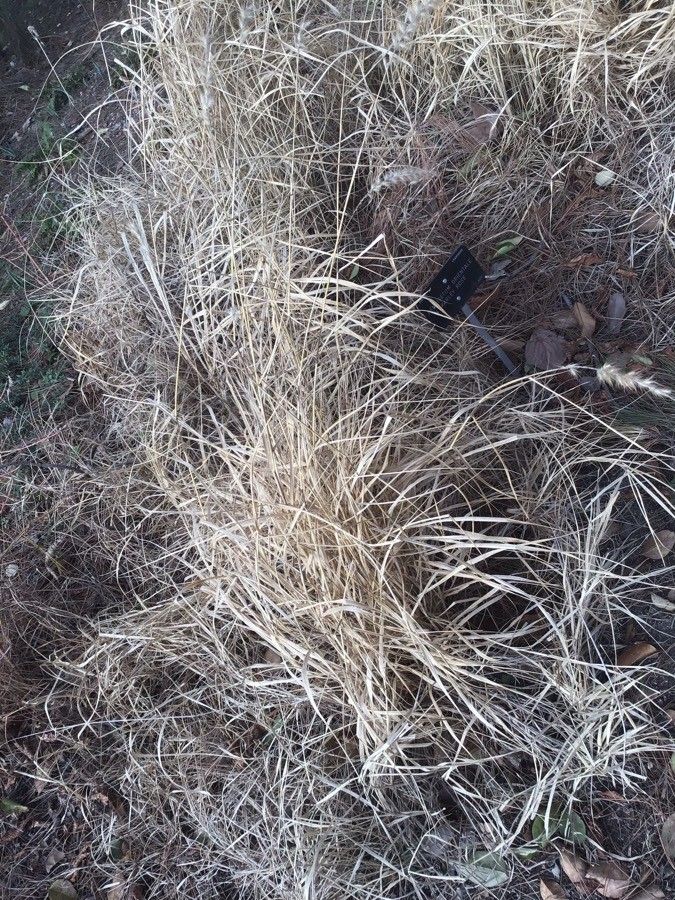
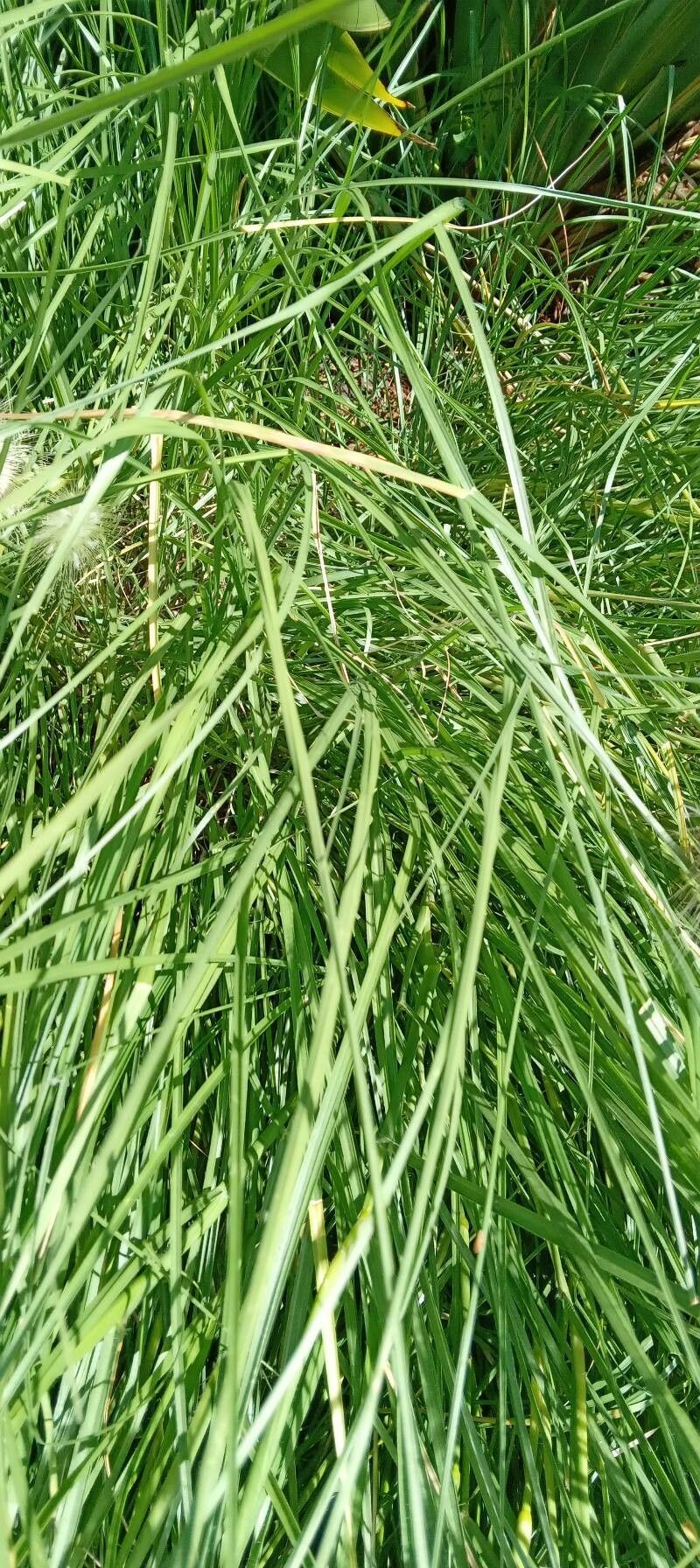
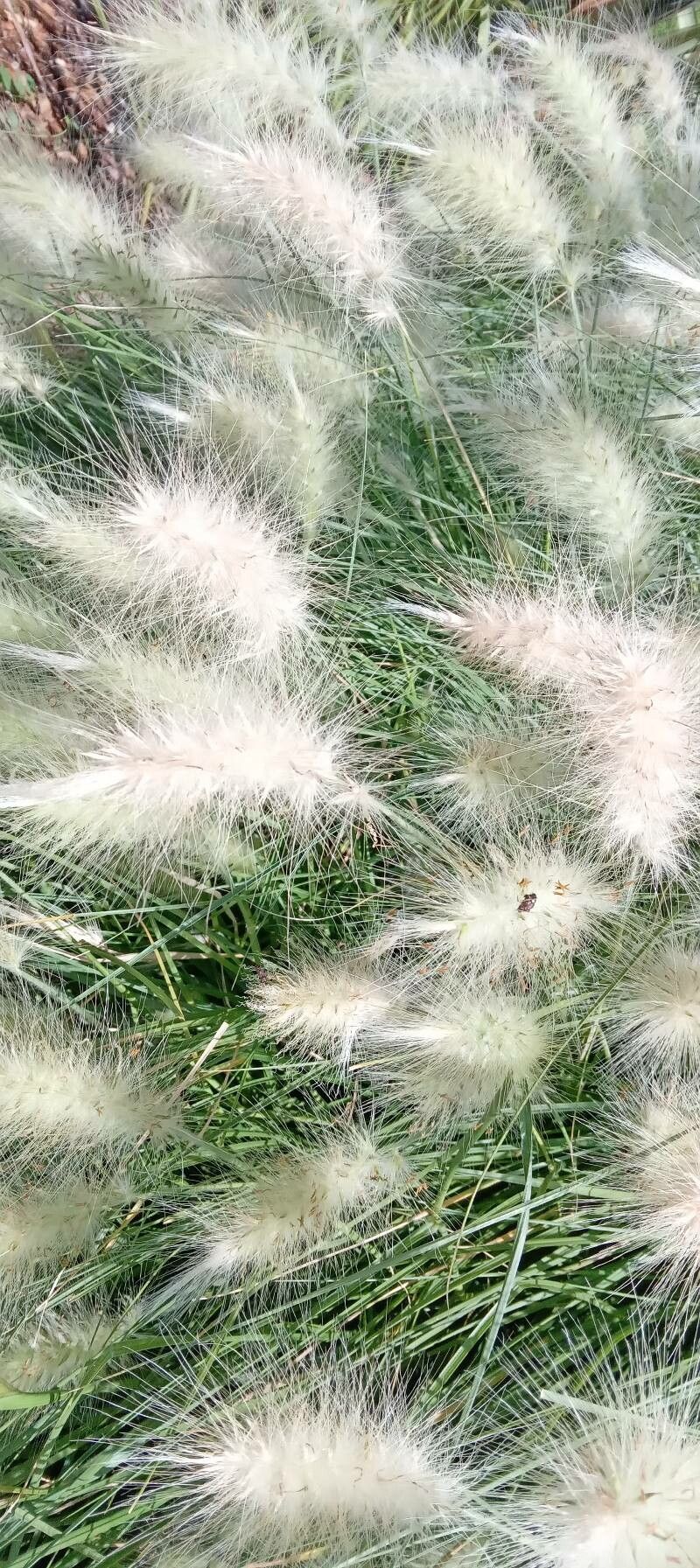
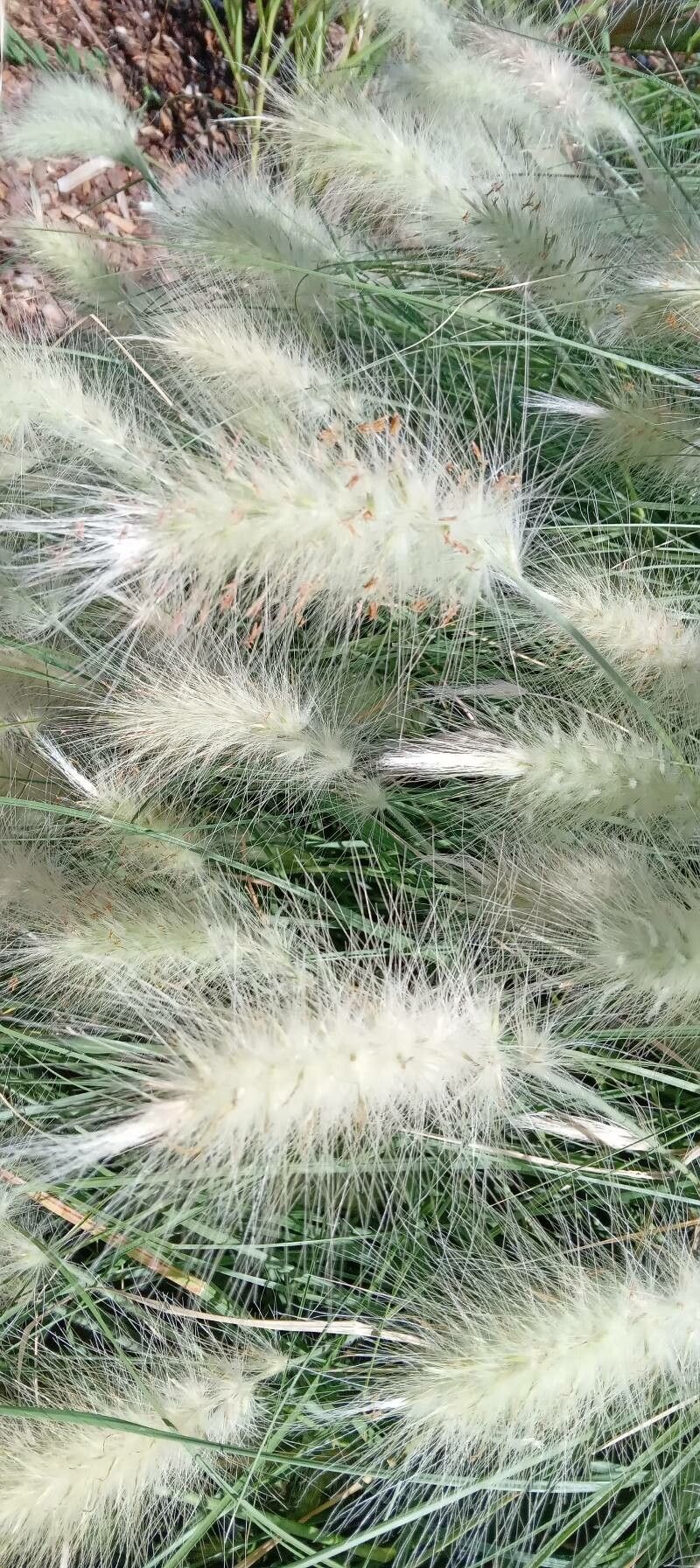
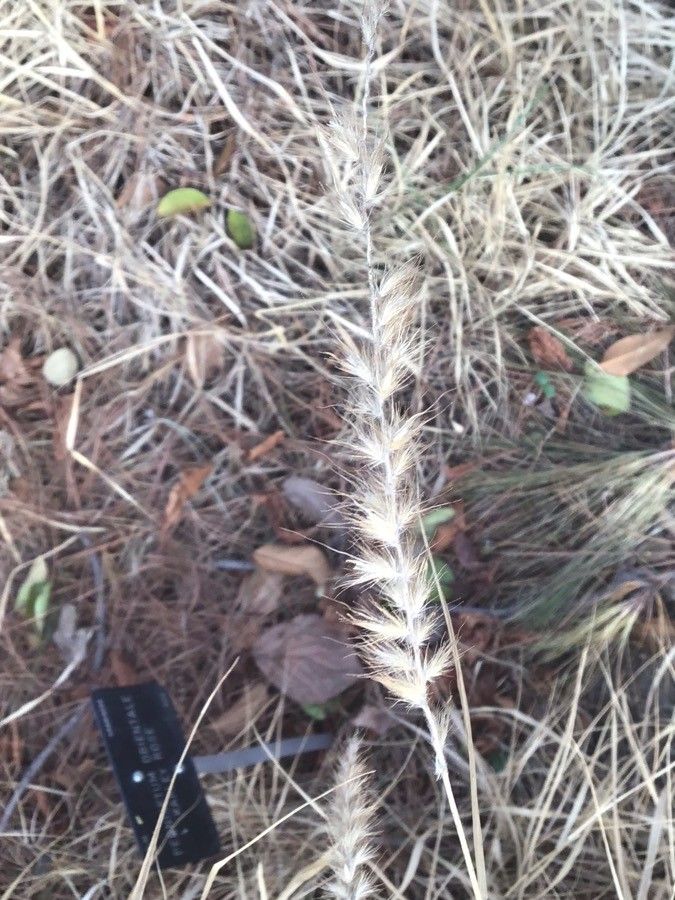
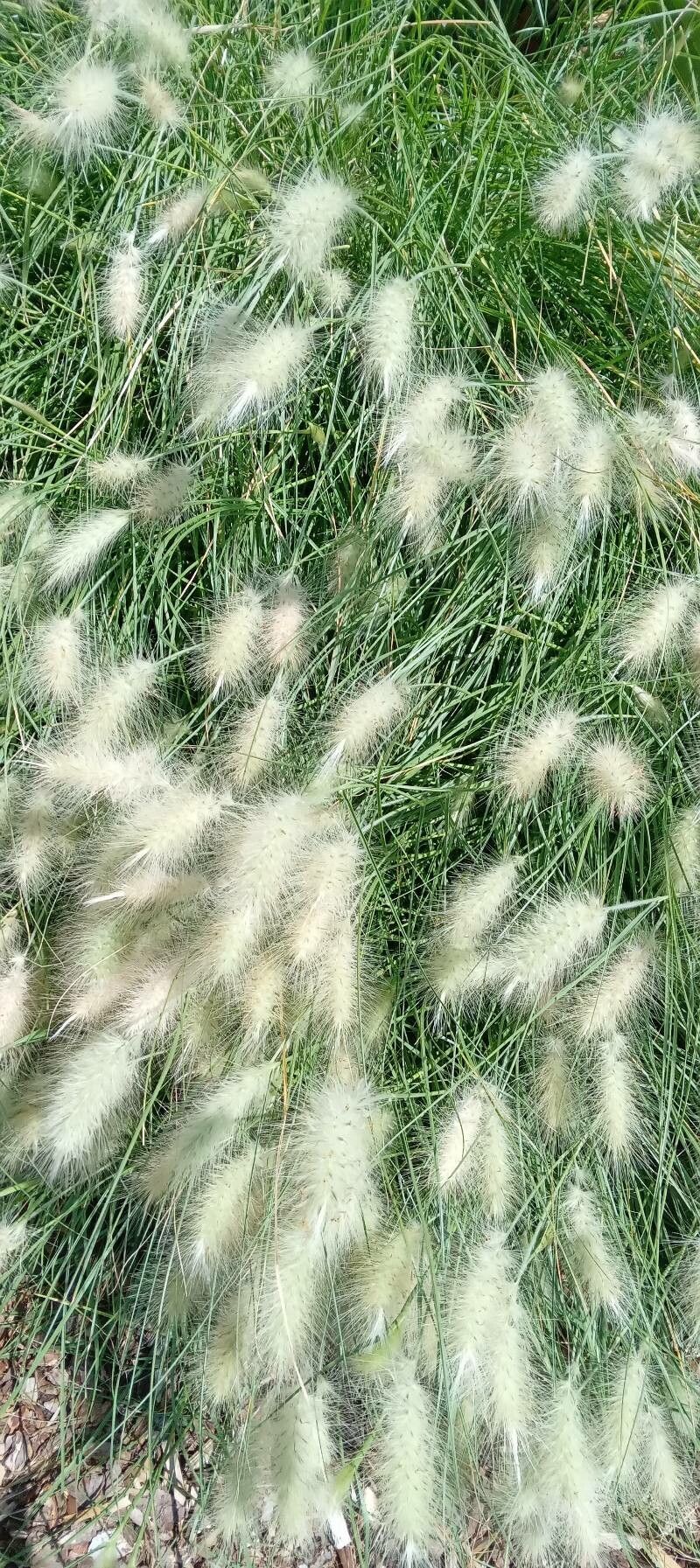
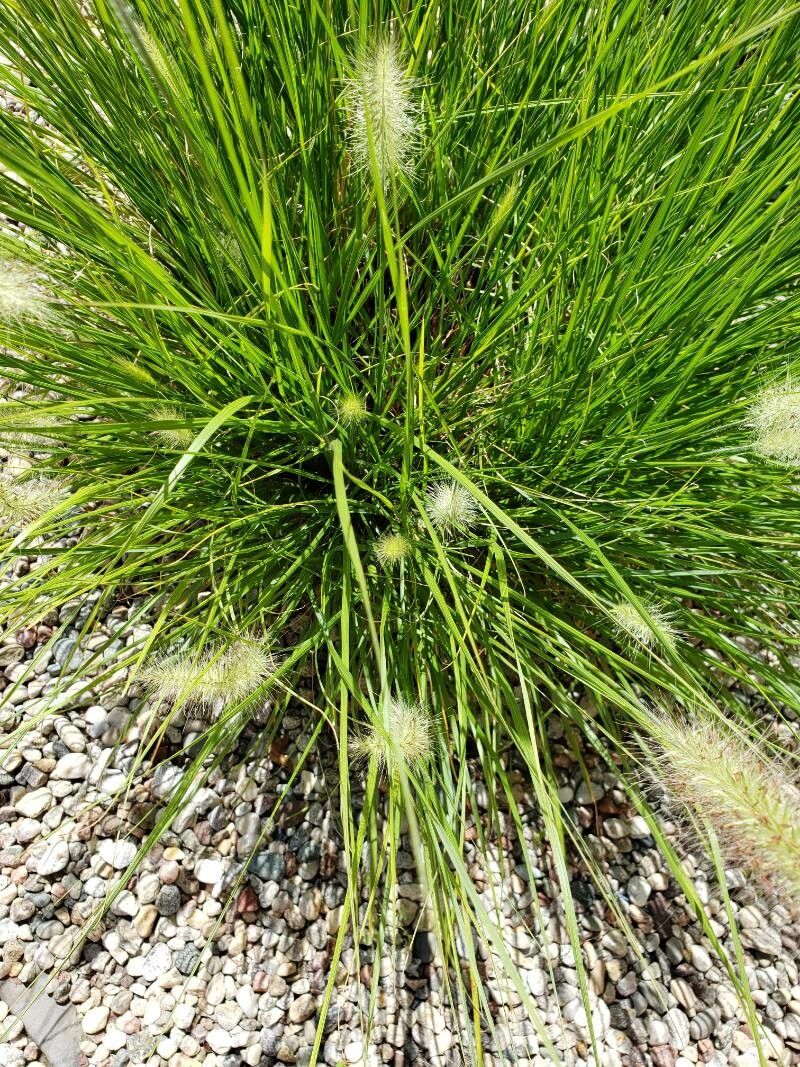
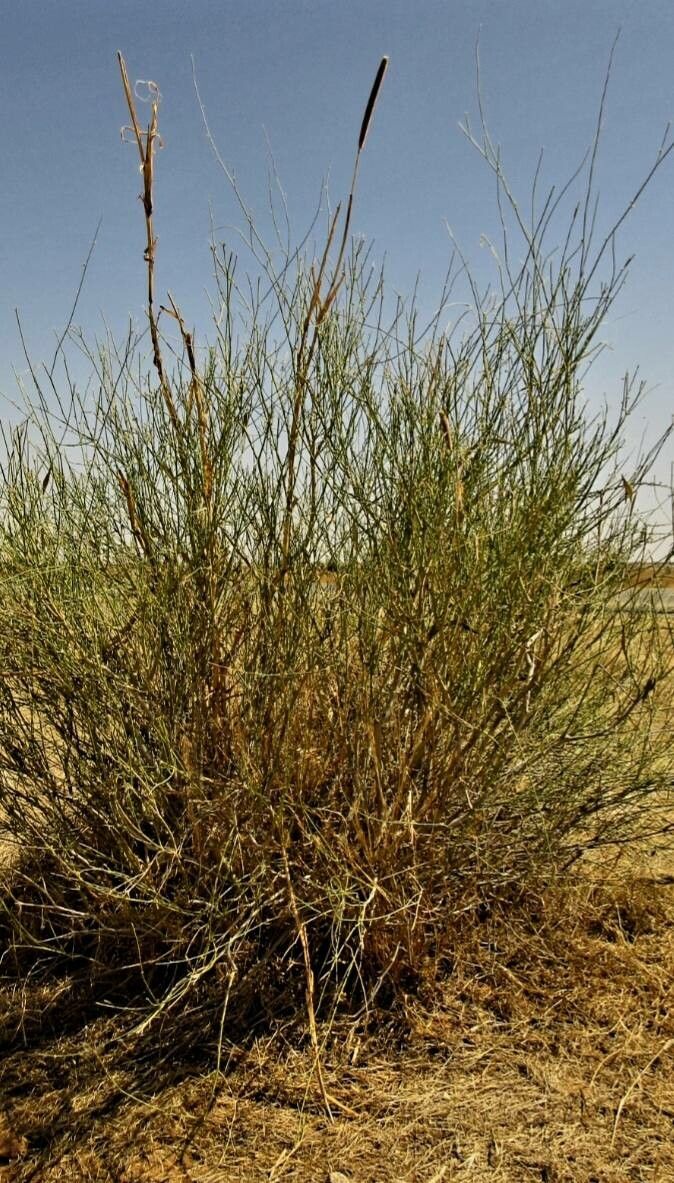
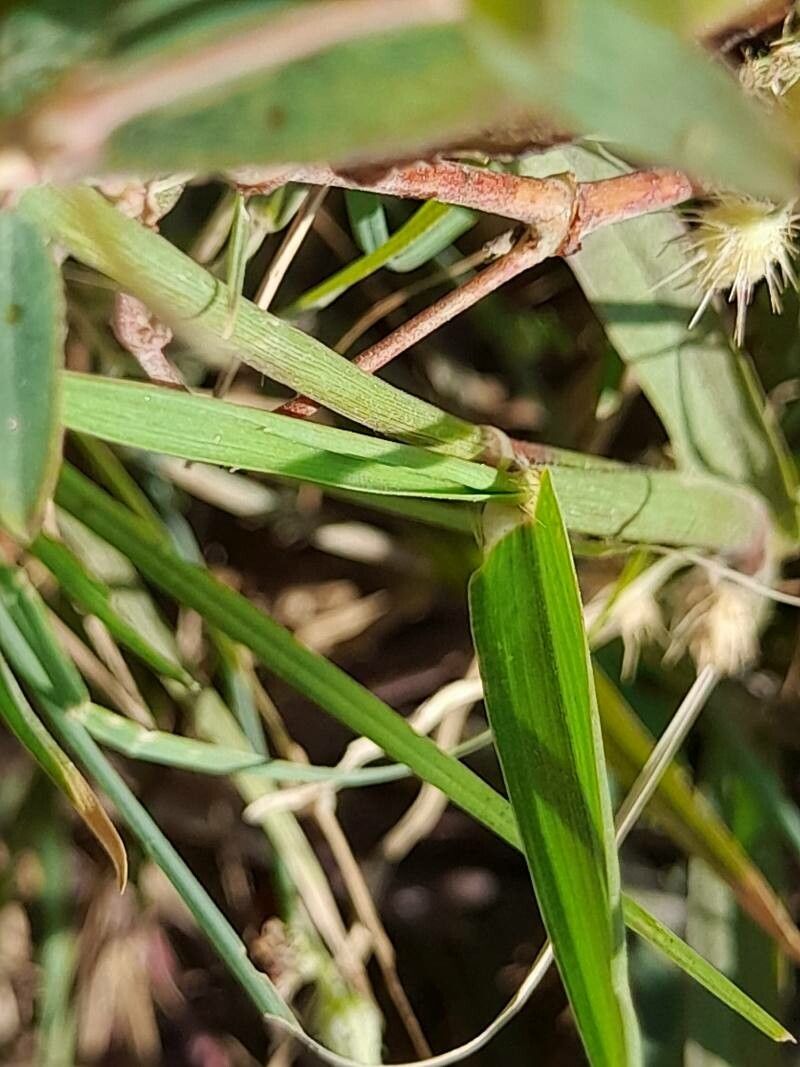
Cenchrus orientalis, commonly known as Oriental sandbur or Japanese sandbur, is a warm-season annual grass in the Poaceae family. Native to Asia, it has spread to many regions around the world, including North America and Australia.
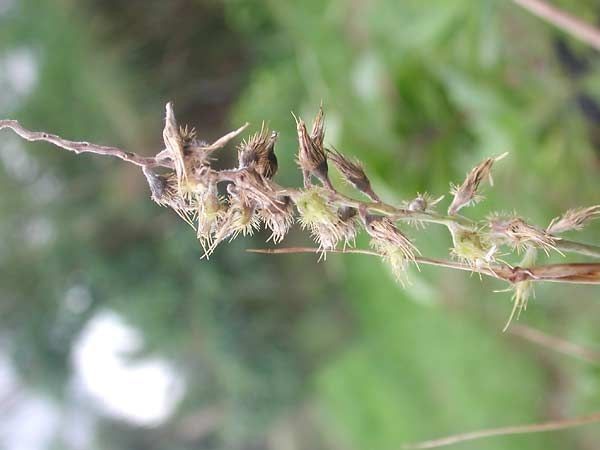
This grass exhibits a prostrate growth habit with stems that can extend up to 60 cm in length. Its narrow leaves can grow up to 15 cm long and have sharp edges that may cause skin irritation upon contact. The inflorescence of Cenchrus orientalis consists of spikelets arranged in clusters along the stem.
Cenchrus orientalis thrives in sandy soils and is often found in disturbed areas such as roadsides, fields, pastures, and waste areas. It is considered a weed due to its ability to compete with crops for nutrients and water.
The plant produces bur-like fruits covered in sharp spines, which easily attach to clothing or animal fur for dispersal.
Despite its invasive nature as a weed, Cenchrus orientalis has some potential uses, such as forage production due to its high protein content, and soil stabilization thanks to its deep root system, which helps prevent soil erosion.
Overall, Cenchrus orientalis serves both positive (forage production) and negative (weed) purposes, depending on how it is managed by humans, making it an important species from an ecological perspective.
Oriental fountain grass is fairly disease-resistant and typically not susceptible to illnesses. In terms of care, this plant is relatively low-maintenance. When grown outdoors it needs minimal watering, and larger plants usually do not require pruning. Smaller plants, however, should be pruned after they finish blooming. Oriental fountain grass is suitable for anyone with an outdoor area, such as a garden or a deck, and does not demand much gardening experience.
How to keep Cenchrus Orientalis.
Light
Oriental fountain grass performs best with abundant light, which is crucial for the plant's healthy development, especially during important growth stages. Its capacity to tolerate very high light levels stems from the open environments of its native habitat. Inadequate light can hinder growth, while excessive exposure can be damaging.
Water
Oriental fountain grass flourishes in semi-arid regions due to its excellent drought tolerance and ability to manage water reserves efficiently. To encourage healthy growth, it benefits from regular watering once a week without risking over-saturation. While it is usually cultivated outdoors, this grass thrives best in well-draining soil that mimics the conditions of its native habitat, ensuring it remains healthy and robust.
Temperature
Oriental fountain grass originates from temperate regions and prefers temperatures of 50 to 90 °F (10 to 32 ℃). It tolerates areas with shifting seasons but may need monitoring and regulation of its environment when temperatures become too low.
Fertilizer
Oriental fountain grass needs extra nutrients to encourage healthy new growth. In spring, applying compost around the plant’s base will effectively supply the nutrition it requires. Fertilizing helps support vigorous growth and improves the plant’s resistance to diseases and pests.
Pruning
Oriental fountain grass, known for its graceful arching plumes, is a popular ornamental plant. To promote new growth and maintain its shape, prune the grass in early spring, cutting it back to 3-4 inches above the ground. Regular pruning helps prevent overcrowding, enhances blooming, and keeps the plant looking neat and vibrant throughout the season.
Pot & Repot
Repot your oriental fountain grass every 2–3 years in the spring, using a larger container with good drainage. After repotting, keep the soil moist and place the plant in bright, indirect light to help it recover and thrive. By following these tips, you will support the health of your oriental fountain grass.
Botanical profile.
- Plant Type
- Grass
- Life Cycle
- Perennial
- Genus
- Cenchrus
- Family
- Poaceae
- Hardiness Zone
- 6-8
- Mature Height
- 61 cm to 91 cm
- Mature Spread
- 0.91 m to 1.52 m
- Leaf Color
- Green, Dark Green
- Leaf Type
- Semi-evergreen
- Flower Color
- Green
- Flower Size
- 0.51 cm to 0.76 cm
- Bloom Time
- Summer, Early fall
- Planting Time
- Spring, Summer, Autumn
- Harvest Time
- Late summer, Fall
Other names.
Reader questions.
What are the sunlight requirements for Oriental fountain grass?
Oriental fountain grass needs varying amounts of sunlight, depending on its growth stage and condition. Full sun exposure, defined as more than 6 hours of direct sunlight daily, is crucial for its overall health and vitality. However, it can also thrive in partial sun, which means about 3-6 hours of sunlight per day. Monitoring the movement of sunlight through your garden helps in selecting the ideal spots that ensure a balance of light and shade, crucial for the plant's happiness and growth.
What is the native climate for Oriental fountain grass?
Oriental fountain grass, scientifically known as Cenchrus orientalis, thrives best in temperate zones with temperatures ranging from 50 to 90 °F (10 to 32 °C). It is well-suited to regions with fluctuating seasons. However, when temperatures fall significantly, a regulated environment may be necessary to monitor and maintain the appropriate climate conditions. Despite its strong cold resistance, ensuring the plant is well-protected during extreme cold spells, especially if temperatures are expected to drop below -25°C, can be beneficial for its survival and health.
Why is sunlight essential for Oriental fountain grass, and how can artificial lighting be utilized?
Sunlight is paramount for the healthy growth of Oriental fountain grass, particularly during critical growth phases. Its native habitat's open environments have adapted it to tolerate high amounts of sunlight, with insufficient light potentially impeding its growth, and overexposure causing harm. When natural sunlight is not adequate, especially during winter or in less sunny spaces, artificial lighting becomes a vital solution. LED lights, recommended for their ability to provide specific wavelengths, can substitute natural sunlight. Full sun plants require 30-50W/sq ft, partial sun plants 20-30W/sq ft, and full shade plants 10-20W/sq ft of artificial light. The distance of artificial light should be about 12-36 inches above the plant, simulating natural sunlight, and most plants need 8-12 hours of light per day.
How should Oriental fountain grass be protected during winter?
To protect Oriental fountain grass during winter, especially in regions where temperatures may fall below -25°C, it is advised to cover the plant with insulating materials such as soil or straw. This provides necessary cold protection. Additionally, watering the plant abundantly before the first freeze of autumn is recommended. Ensuring the soil around the plant remains moist as it enters a frozen state can help prevent drought and water scarcity issues during the winter and early spring months, aiding the plant's resilience to cold weather.
What are the key symptoms of light deficiency or overexposure in Oriental fountain grass?
Symptoms of light deficiency in Oriental fountain grass include smaller new leaves, leggy or sparse growth, faster leaf drop, slow or no new growth, and lighter-colored new leaves, indicating a lack of chlorophyll and essential nutrients. Overexposure, on the other hand, can lead to chlorosis (leaves turning yellow), sunscald (pale or necrotic areas on leaves), leaf curling (to minimize water loss), wilting (loss of turgor pressure), and leaf scorching (brown, dry patches on leaves). These symptoms reflect the plant's struggle to adapt to inappropriate light levels.
What are the signs of temperature distress in Oriental fountain grass and how can they be addressed?
Oriental fountain grass shows different signs of distress under extreme temperature conditions. In low temperatures, particularly below -15°C and more so below -25°C, the plant may exhibit reduced or no sprouting during spring. The remedy for this includes removing any unsprouted parts in the spring. In high temperatures, specifically above 32°C and especially exceeding 35°C, symptoms like lighter leaf color, leaf curling, susceptibility to sunburn, and in severe cases, wilting and drying out of the plant may occur. Solutions involve trimming away sunburned and dried parts, relocating the plant to a shaded area or providing shade during the hottest parts of the day, and ensuring adequate soil moisture through morning and evening watering.
What solutions can address light-related issues for Oriental fountain grass?
To combat light-related issues, consider several strategies: For indoor plants, gradually move them to sunnier locations to receive at least 6 hours of direct sunlight daily, using south-facing windows. Artificial lights can also supplement sunlight, especially for large or immovable plants. Outdoor plants should be moved gradually to better sunlight spots to prevent sunburn. Minimizing obstructions like overhanging branches can improve sunlight exposure. If necessary, transplant smaller plants during their dormant period to locations with ample sunlight and good drainage. While damaged parts may not recover, new growth should return to health with improved light conditions.