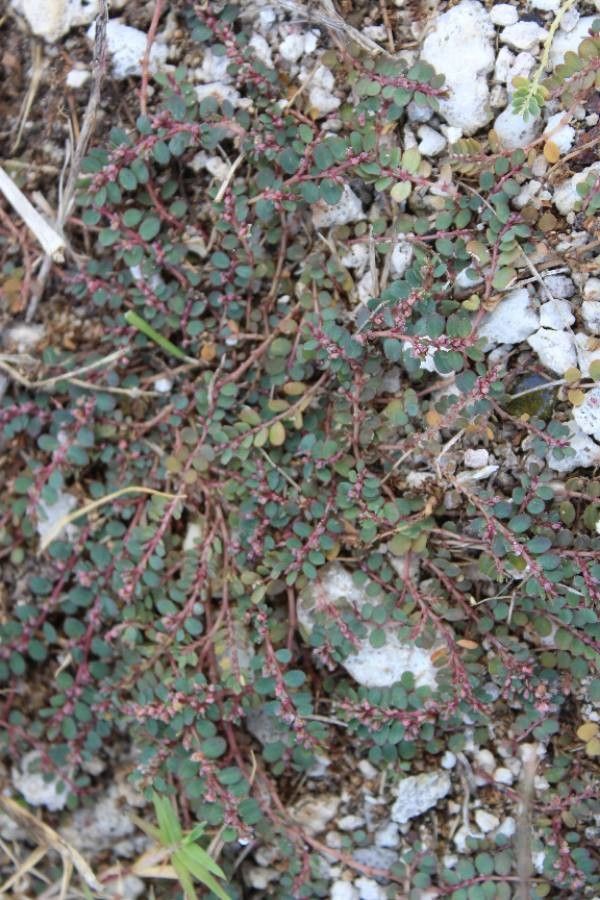
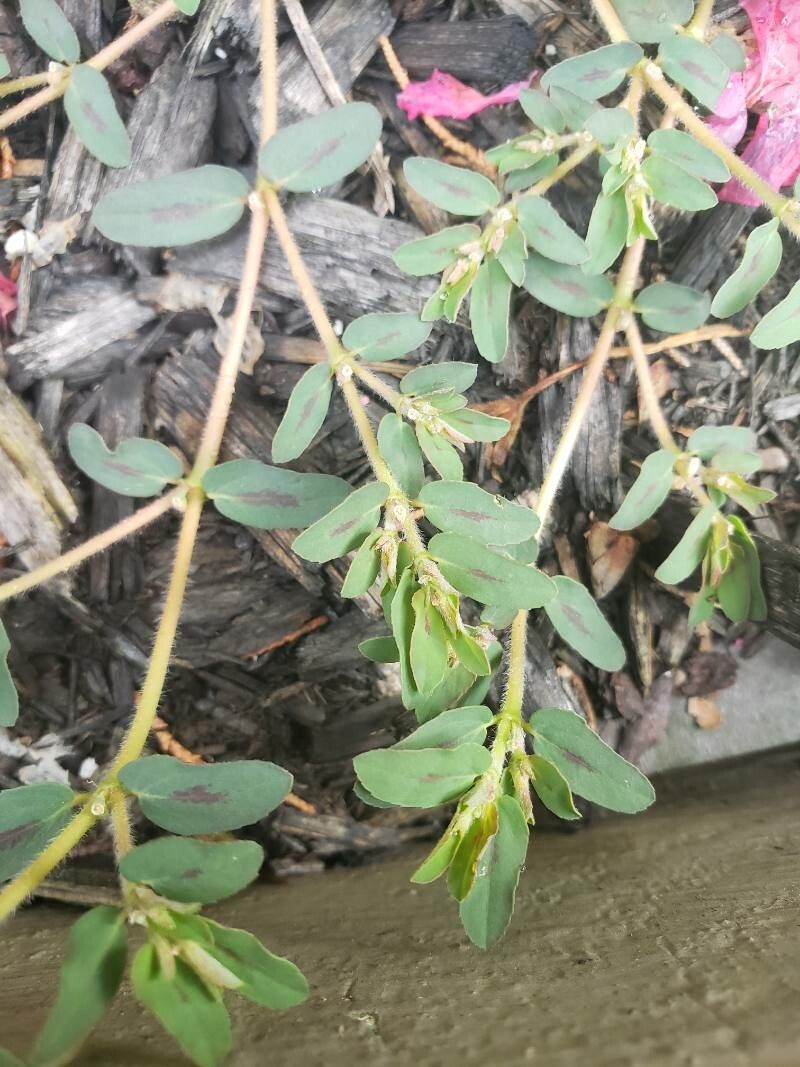
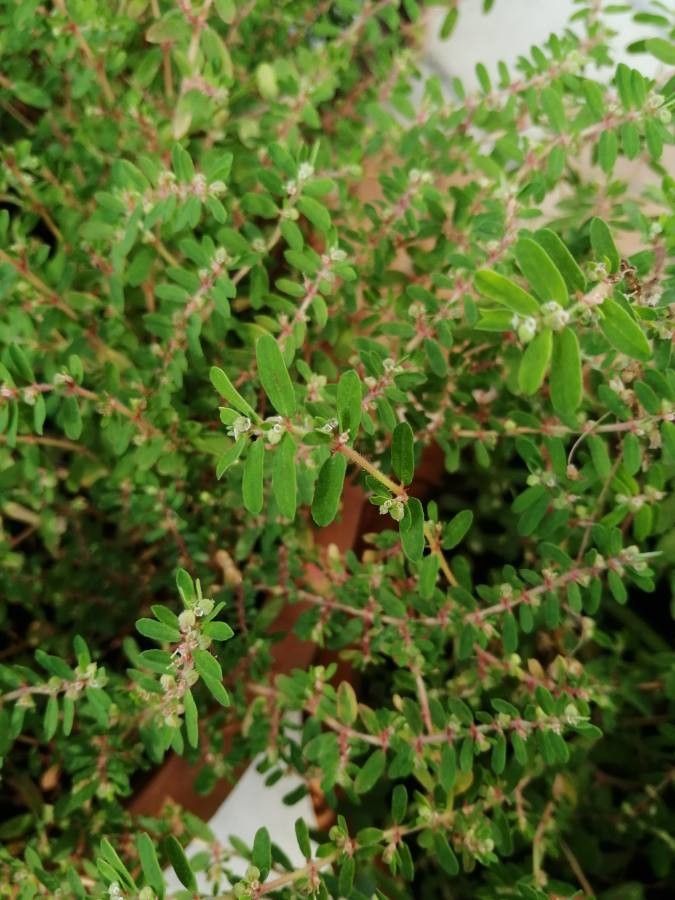
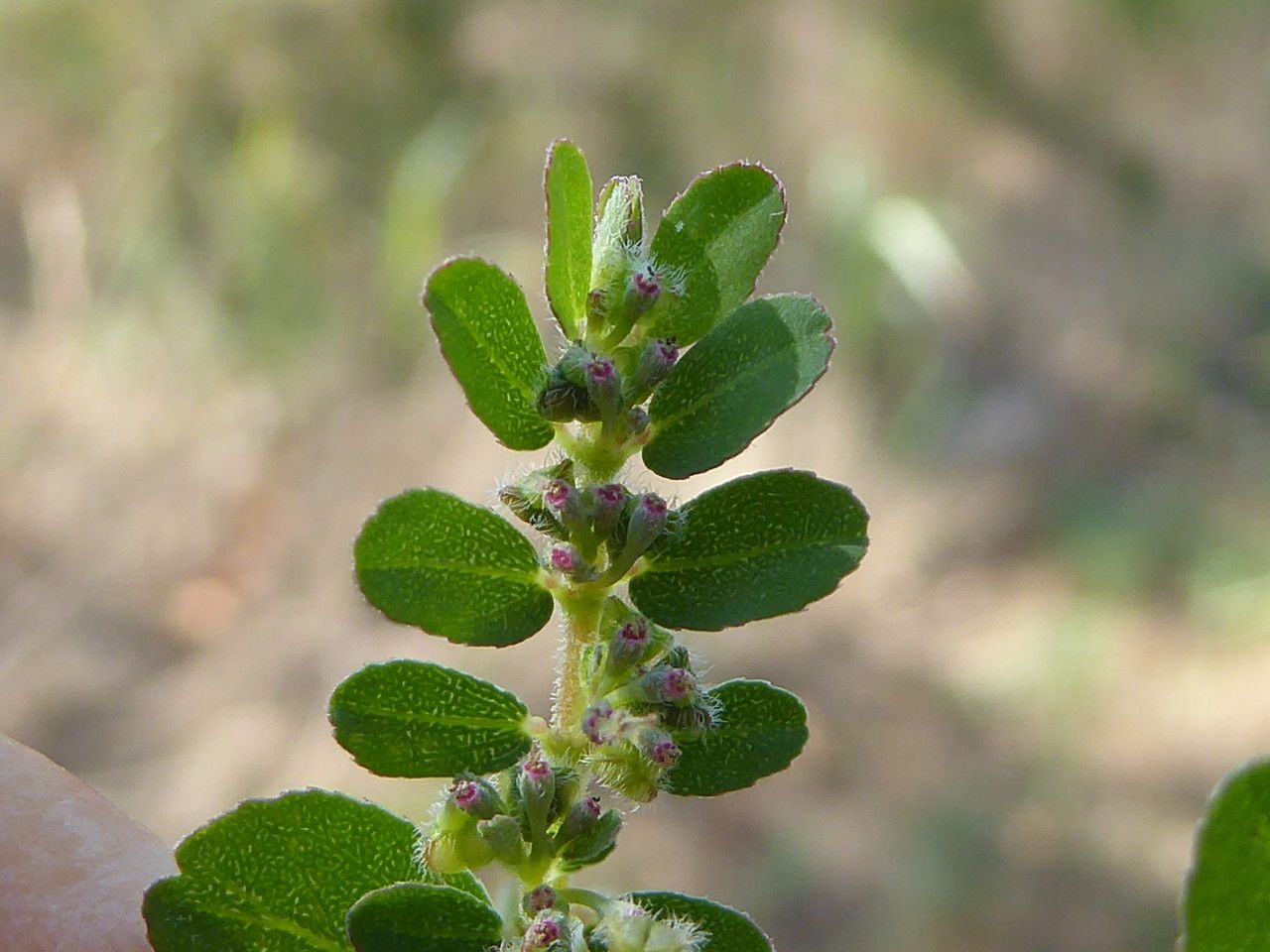
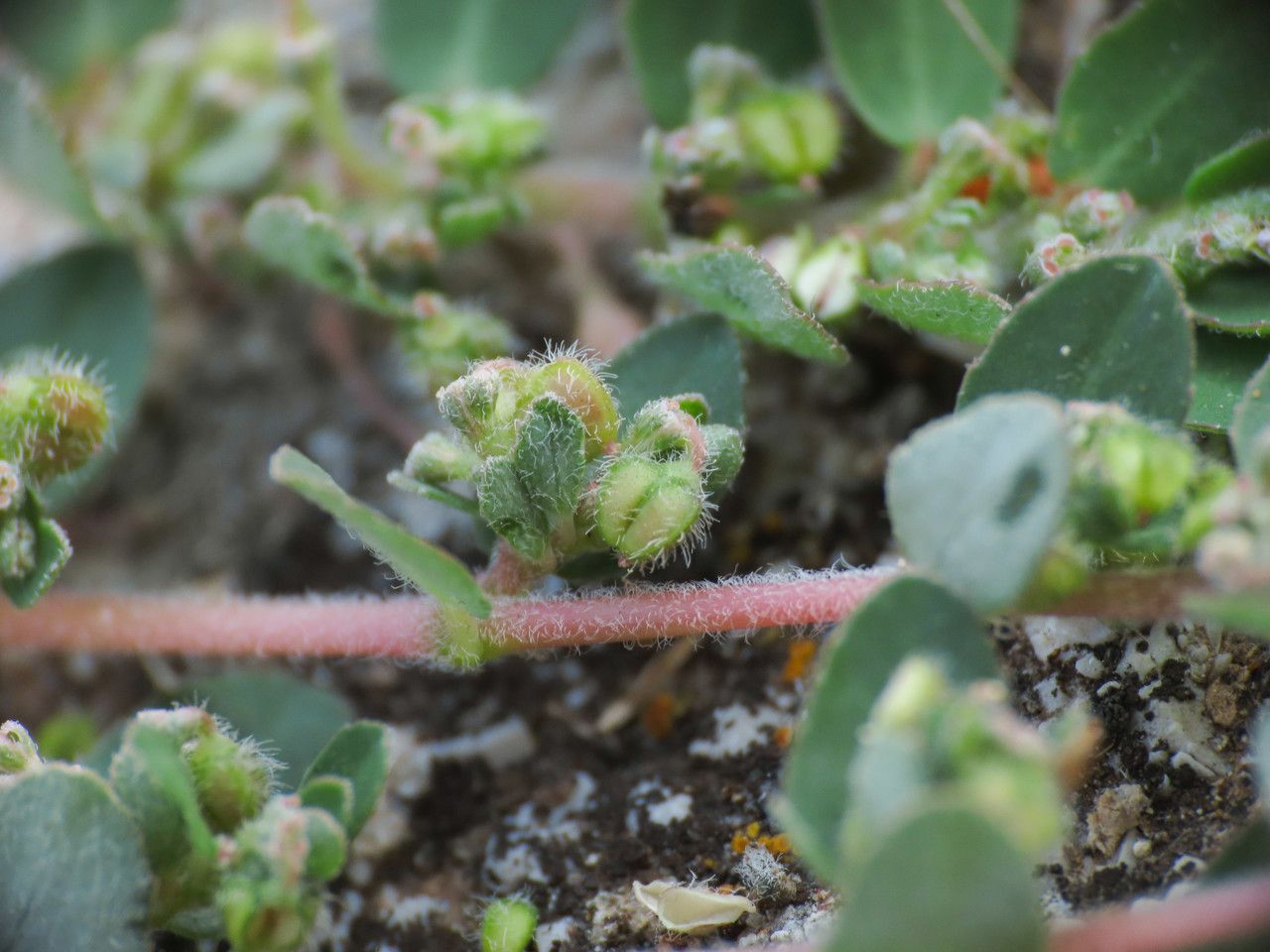
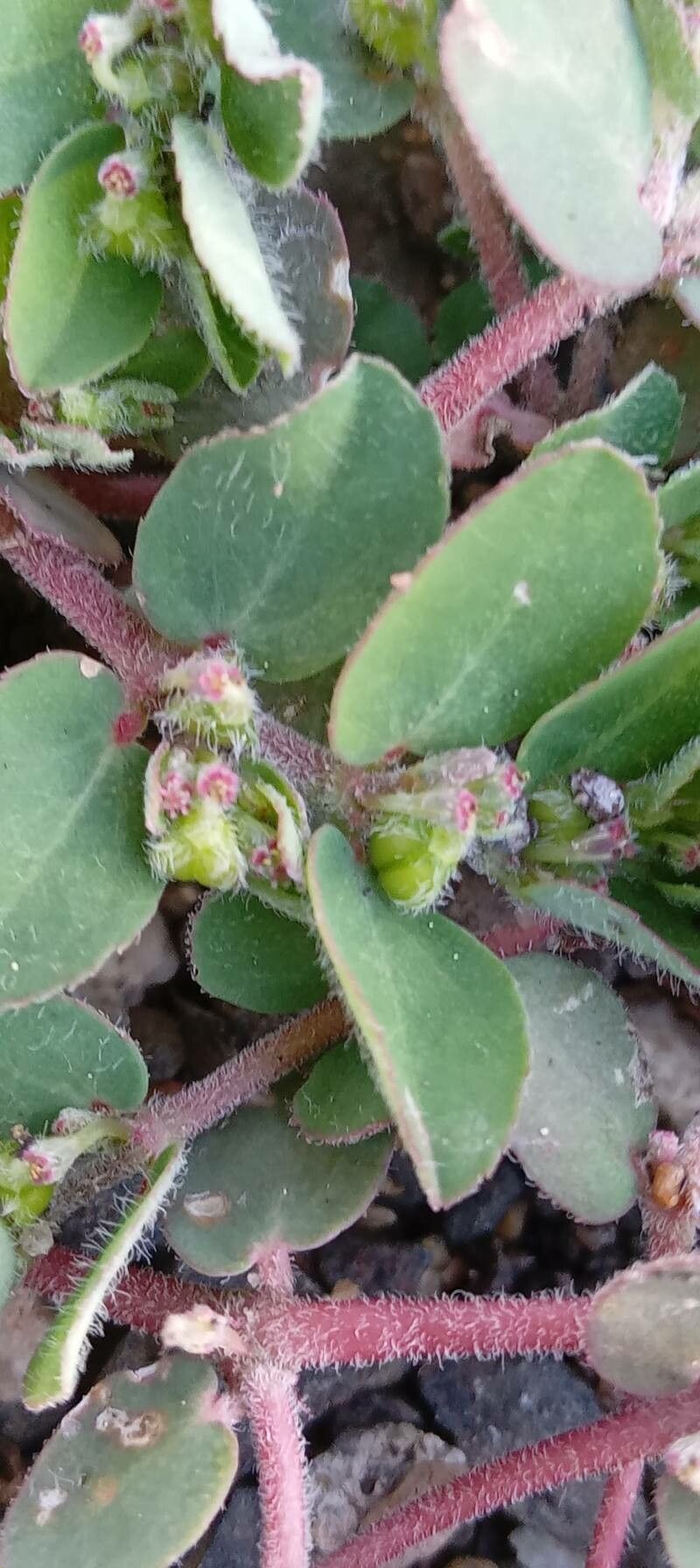
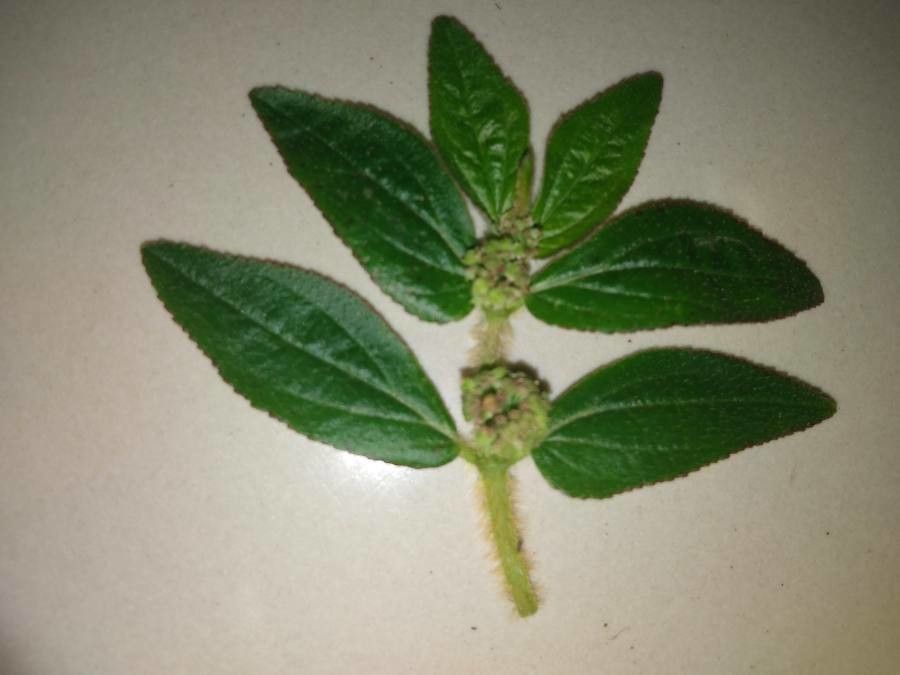
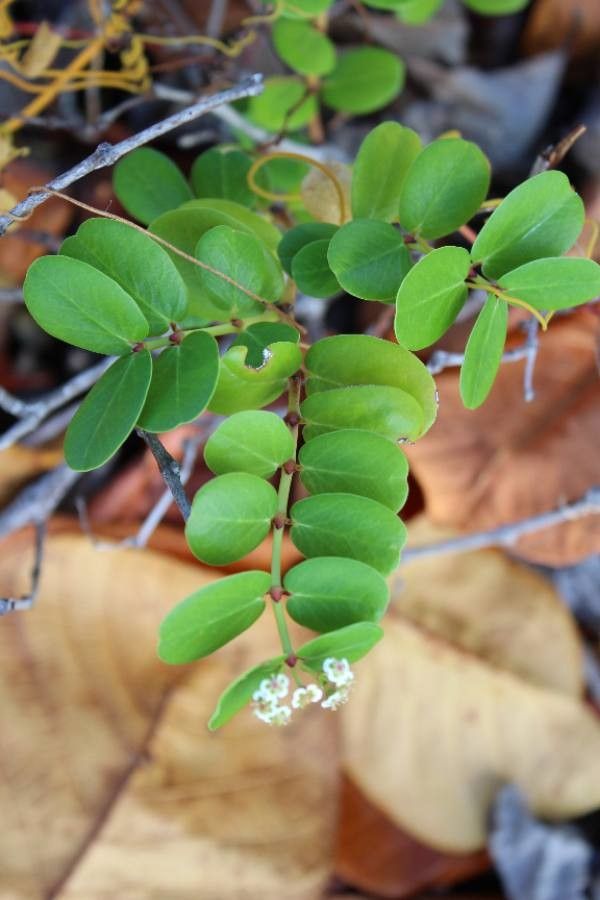
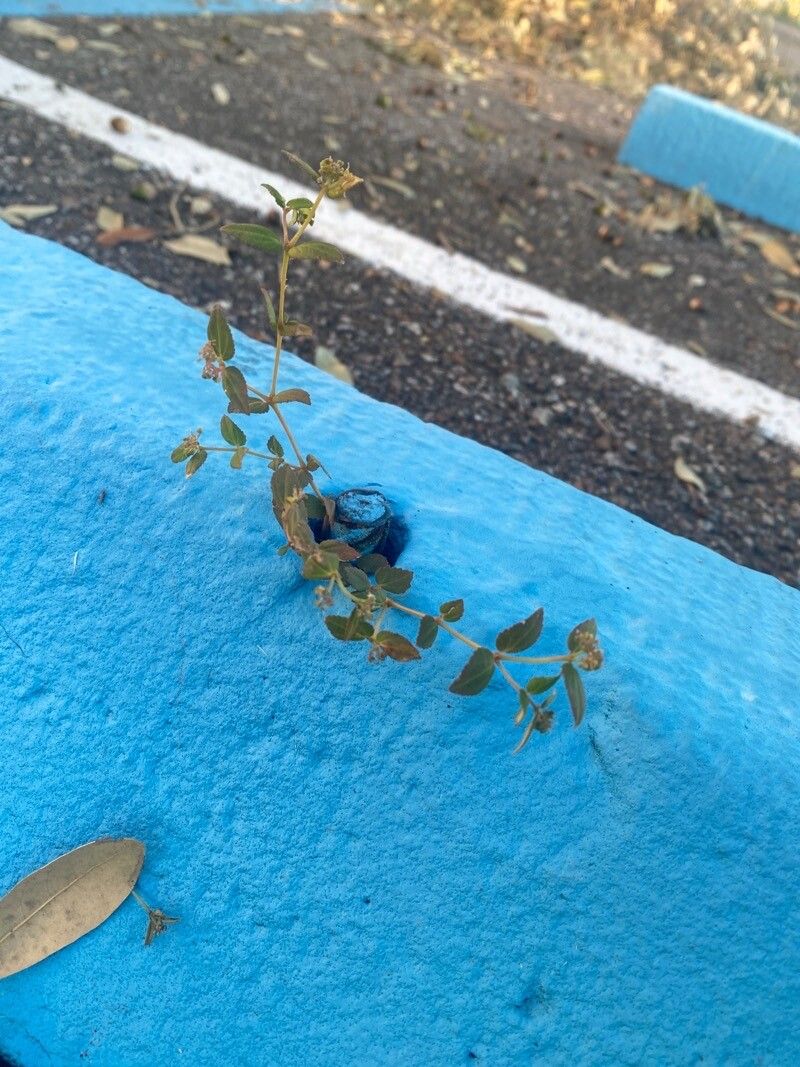
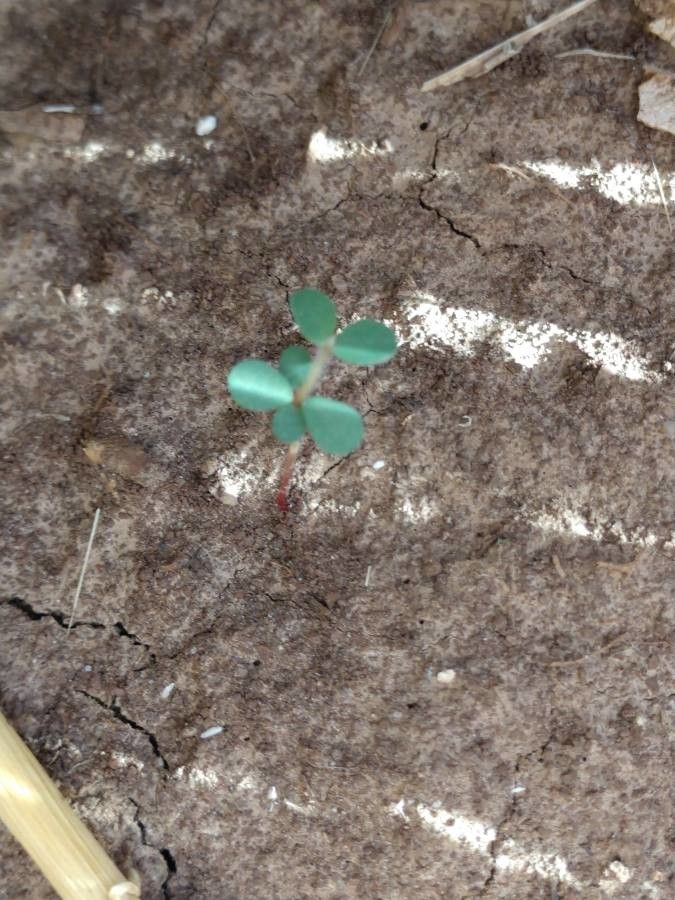
Chamaesyce prostrata, commonly known as prostrate spurge, is a low-growing annual plant in the Euphorbiaceae family. Native to North America, it thrives in various habitats, including fields, lawns, gardens, and disturbed areas. This plant has a sprawling growth habit, with stems extending up to 30 cm in length. Its small oval leaves have a distinctive reddish tint at their base. The flowers are tiny and inconspicuous, with greenish-yellow petals that bloom from June to September. Chamaesyce prostrata is renowned for its medicinal properties, containing compounds such as flavonoids, tannins, and alkaloids with anti-inflammatory effects. Traditionally, it has been used to treat skin conditions like eczema, psoriasis, and dermatitis. Ecologically, the plant plays a vital role by providing food for various insects, such as bees, which pollinate its flowers, and birds, which feed on its seeds. In summary, Chamaesyce prostrata is a fascinating plant species with medicinal value and significant ecological importance, supporting local ecosystems through the pollination services of insects attracted to its flowers.
Prostrate spurge has strong disease resistance and is generally not likely to suffer from diseases. However, it can be vulnerable to pests and illnesses present in its environment. These problems are normally not severe. Regarding care, this plant requires a moderate level of maintenance. It should be pruned regularly to preserve a tidy appearance and support healthy growth. Fertilizing can also help encourage flowering. Prostrate spurge is suitable for anyone who has outdoor space, such as a garden or patio, and does not demand extensive care experience. It may need more attention when grown indoors.
How to keep Chamaesyce Prostrata.
Light
Prostrate spurge grows best in areas that receive ample sunlight throughout the day. It can also tolerate locations with somewhat reduced sunlight. Both too little and too much sun can hinder its growth. Its native habitat provided those light conditions, supporting optimal development.
Temperature
Prostrate spurge is suited to warmer habitats, where temperatures generally fall between 68 and 95 °F (20 to 35 ℃). Growing it in cooler areas may necessitate supplemental heat, especially during the colder months.
Fertilizer
Prostrate spurge benefits from regular, dilute fertilizer applications to encourage healthy leaf growth. You should feed Prostrate spurge roughly once a month during the summer. Nitrogen is essential for foliage, and adding nitrogen-rich sources helps Prostrate spurge thrive.
Pot & Repot
When repotting Prostrate spurge, choose a pot that is 1-2 inches (2.5–5.1 cm) larger in diameter and that provides good drainage. Use a well-draining potting mix, and you may add perlite to increase drainage. Repot in spring or early summer, water thoroughly afterward, and keep it in a shady spot for the initial period.
Botanical profile.
- Plant Type
- Herb
- Life Cycle
- Annual
- Genus
- Chamaesyce
- Family
- Euphorbiaceae
- Hardiness Zone
- 4-9
- Mature Height
- 6 cm to 9 cm
- Mature Spread
- 49 cm
- Leaf Color
- Green
- Leaf Type
- Deciduous
- Flower Color
- White, Yellow, Green, Red
- Flower Size
- 0.10 cm to 0.20 cm
- Bloom Time
- Late spring, Early summer, Mid summer
- Planting Time
- Spring
- Harvest Time
- Summer
- Native Area
- Belize, Honduras, Mexico, Guatemala, Fiji, Jamaica, Colombia, Bahamas, Cuba, Bolivia, Venezuela, Guyana, Brazil, Nicaragua, Ecuador, Costa Rica
Other names.