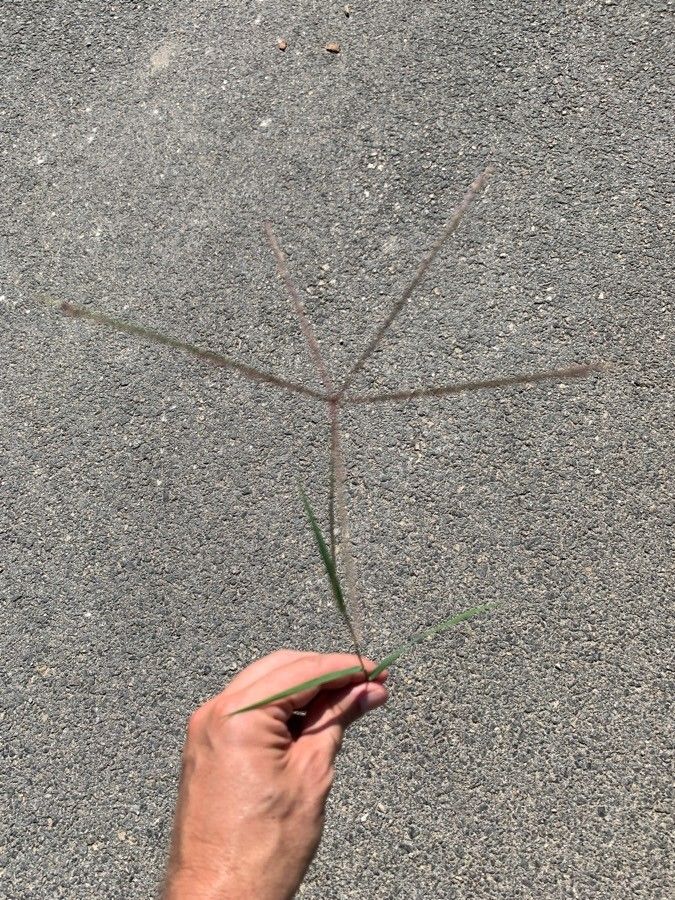
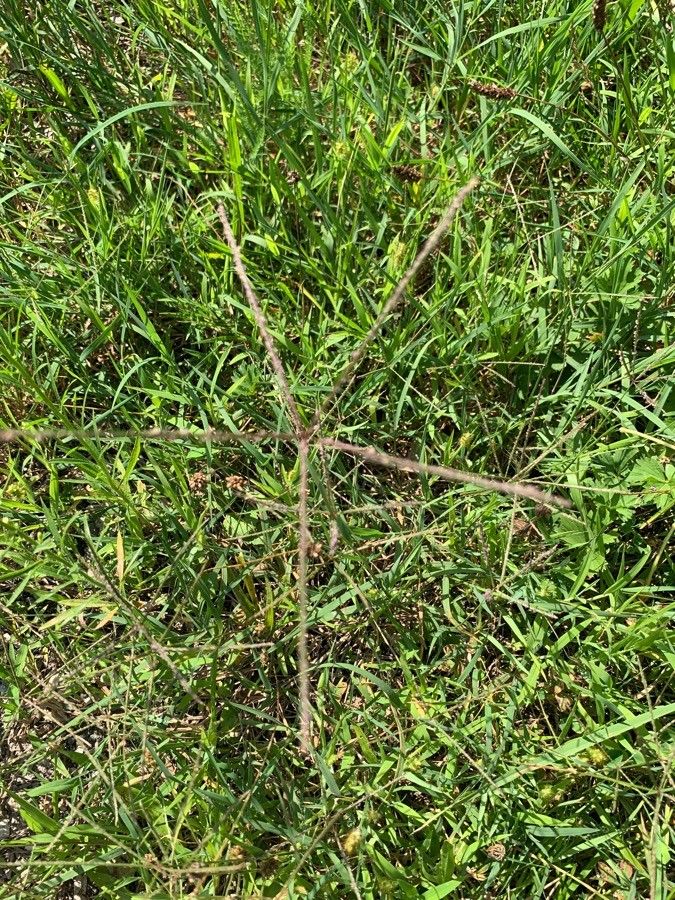
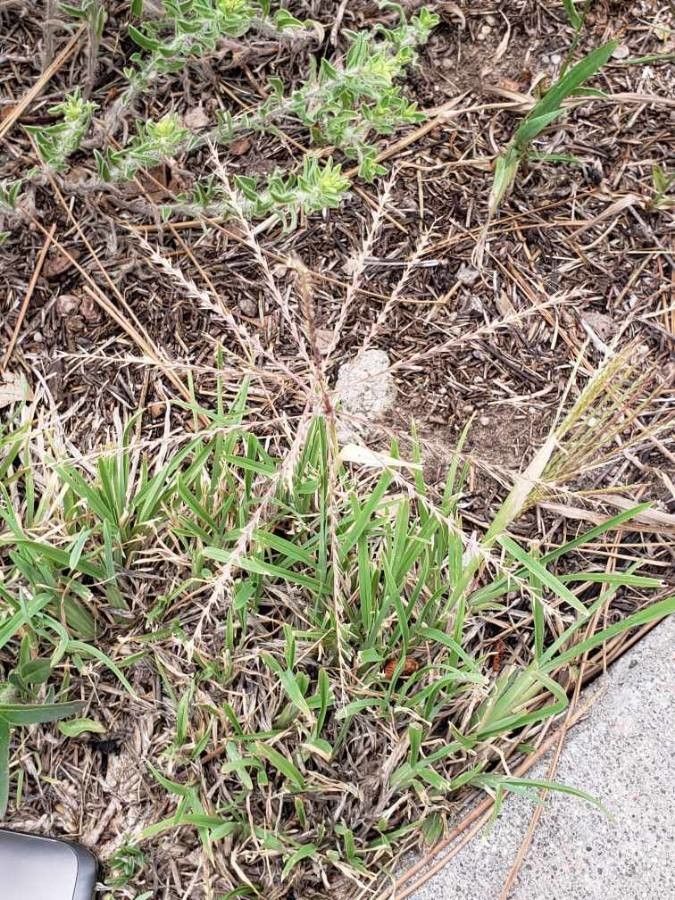
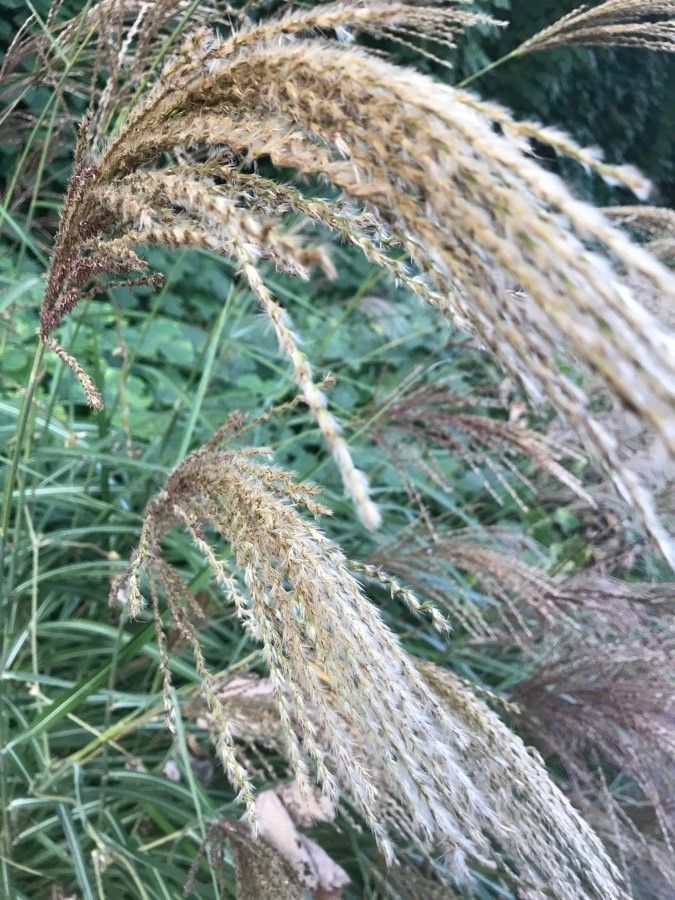
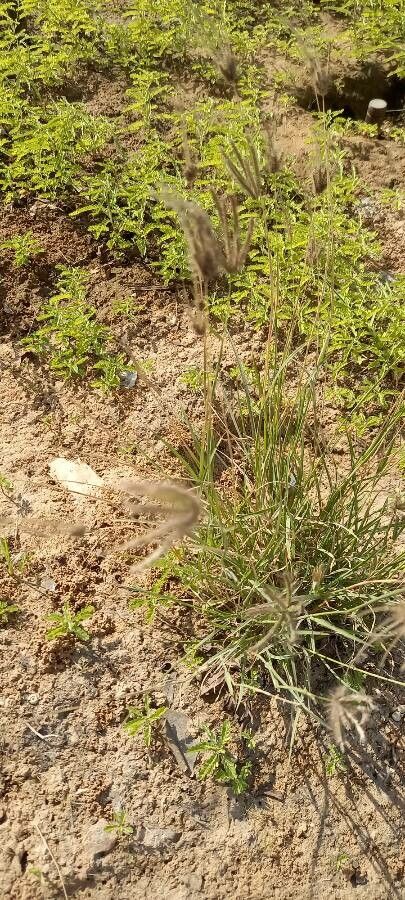
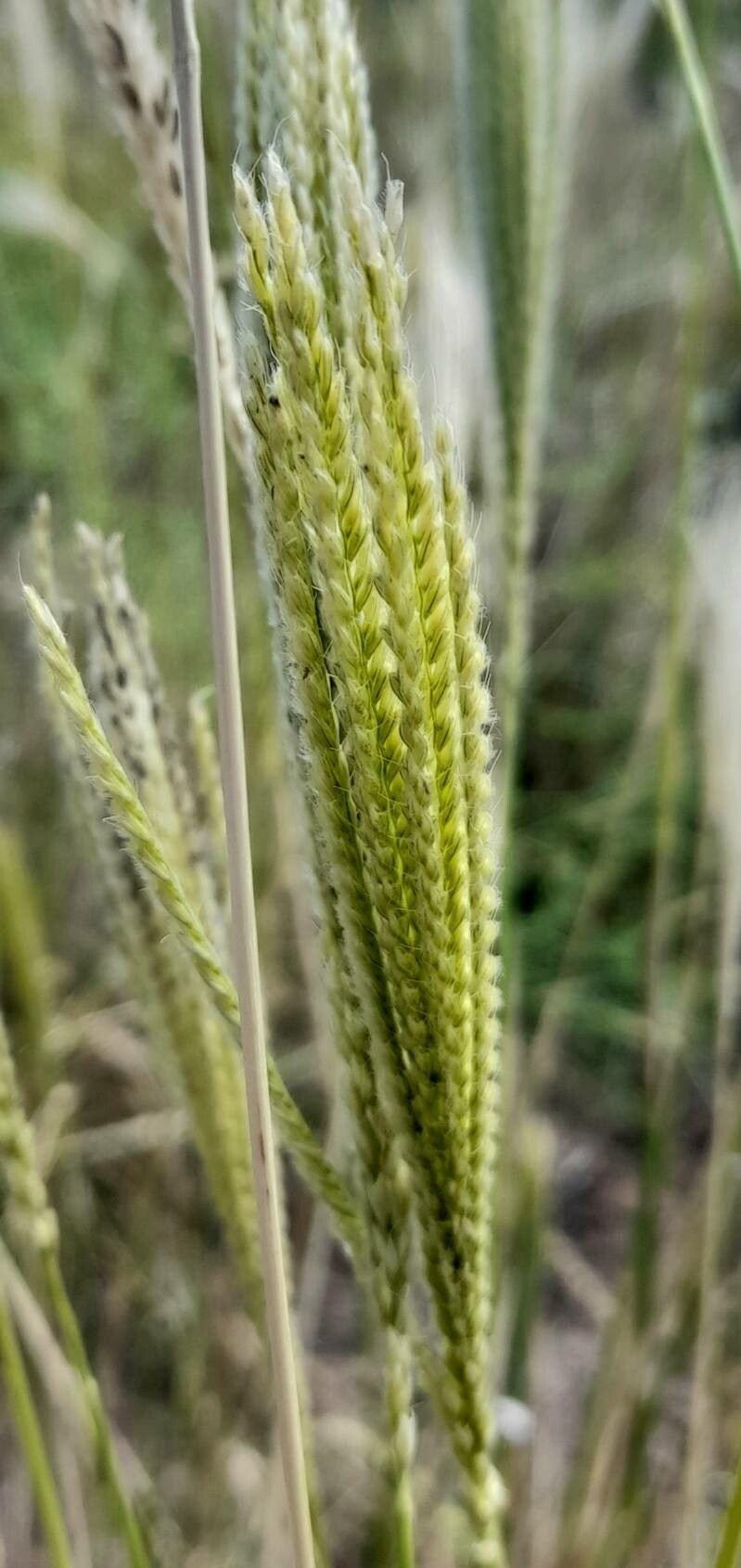
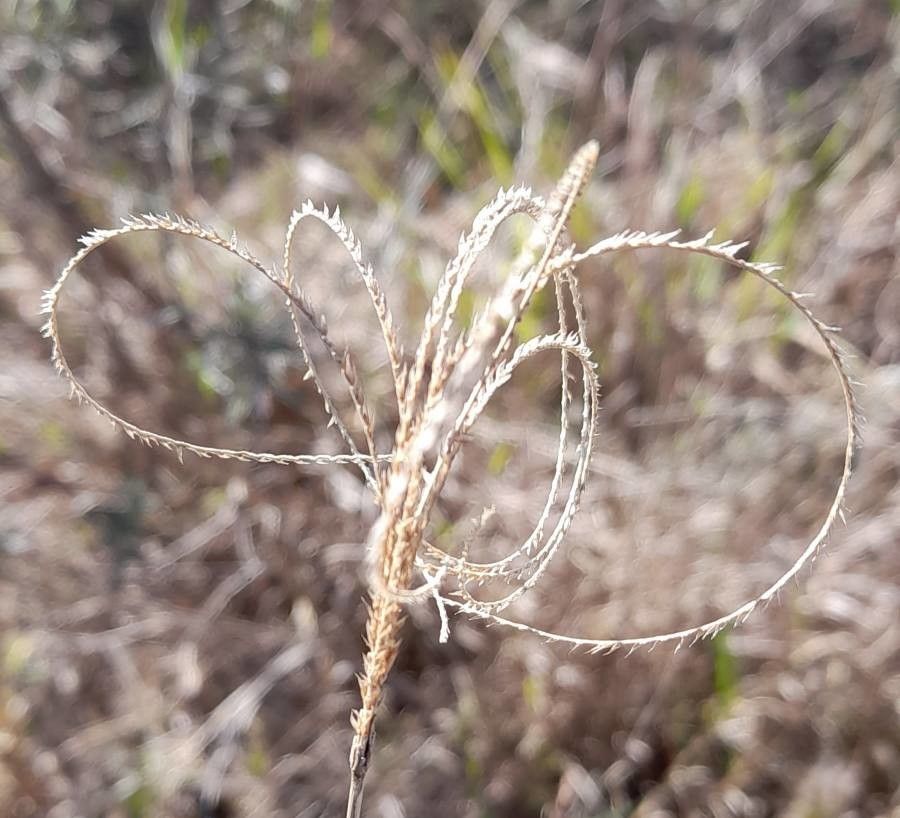
Chloris verticillata, commonly known as windmill grass, is a perennial grass species belonging to the Poaceae family. It is native to tropical and subtropical regions of Asia, Africa, and Australia. This plant features a tufted growth habit with erect stems that can reach up to 1 meter in height. The leaves are narrow, linear, and pointed, extending up to 30 cm in length.
Windmill grass produces small green flowers arranged in spikelets at the ends of its stems. These flowers bloom from summer through the fall.
This plant is frequently used for erosion control due to its deep root system, which helps stabilize soil on slopes or hillsides. Additionally, it serves as an excellent forage crop for livestock thanks to its high nutritional value.
Chloris verticillata prefers well-drained soils with moderate moisture levels but can tolerate drought conditions once established. It thrives best under full sun exposure but can also withstand partial shade.
Overall, Chloris verticillata is an important species both ecologically and economically, offering significant benefits for agriculture and livestock production systems.
Tumble windmill grass has strong disease resistance and is generally not susceptible to illnesses. Regarding care, this plant is fairly low maintenance. When grown outdoors it needs only minimal watering, and larger plants usually do not require pruning. Smaller plants, however, should be pruned after they have finished blooming. Tumble windmill grasst is appropriate for anyone with an outdoor area, such as a garden or deck, and does not demand much gardening experience.
How to keep Chloris Verticillata.
Light
Tumble windmill grass is a sun-loving perennial herbaceous plant native to open habitats, frequently found in meadows and grasslands. It prefers full sun but can also tolerate partial sun conditions.
Water
Tumble windmill grass, native to semi-arid regions, thrives in conditions with minimal moisture. To keep it healthy, water it once a week to maintain its hydration balance. It's important to replicate its natural dry conditions to prevent overwatering. This grass is an excellent choice for xeriscaping and does well in gardens that mimic the dry spells typical of its original climate.
Temperature
Tumble windmill grass can withstand a wide variety of temperatures, but its range may still be restricted by certain combinations of moisture and heat. It performs best in warm summer climates with enough rain or watering. Long periods of cloudy, rainy weather or prolonged high temperatures can make the grass more likely to die. In winter, protecting it from cold can increase its chances of surviving.
Fertilizer
Tumble windmill grass needs extra nutrients to encourage healthy new growth. In spring, applying compost around the plant’s base can effectively supply the nutrition it requires. Fertilizing supports vigorous growth and helps the plant resist diseases and pests.
Pruning
Tumble windmill grass is a resilient perennial with unique, windmill-shaped seed heads. To promote healthy growth and improve its appearance, prune the plant in early spring by removing dead stems and old flower stalks. Regular pruning helps prevent the grass from becoming invasive and enhances air circulation, which in turn reduces the risk of disease. Make sure to use clean, sharp tools for the best results.
Botanical profile.
- Plant Type
- Grass
- Life Cycle
- Perennial
- Genus
- Chloris
- Family
- Poaceae
- Hardiness Zone
- 5-9
- Mature Height
- 15 cm
- Mature Spread
- 15 cm
- Leaf Color
- Green
- Leaf Type
- Semi-evergreen
- Flower Color
- Yellow, Green, Purple, Brown
- Flower Size
- 0.25 cm to 0.51 cm
- Bloom Time
- Summer, Early fall
- Planting Time
- Spring, Summer
- Harvest Time
- Mid summer, Late summer, Early fall, Mid fall
- Native Area
- Mexico
Other names.
Reader questions.
What are the sunlight requirements for Tumble windmill grass?
Tumble windmill grass, or Chloris verticillata, thrives best in full sun conditions, requiring more than 6 hours of sunlight daily. However, it can also tolerate partial sun, with about 3-6 hours of sunlight. It's important to observe how sunlight moves through your garden to ensure that you place your plants in spots that offer the right balance of light and shade, thus promoting their health and growth.
How can artificial lighting be used for indoor Tumble windmill grass plants?
When natural sunlight is insufficient, artificial lighting is a necessary alternative for Tumble windmill grass, especially in indoor settings. LED lights are a preferred option because they can be customized to provide specific wavelengths of light beneficial for plant growth. Full sun plants require 30-50W/sq ft, partial sun plants need 20-30W/sq ft, and full shade plants 10-20W/sq ft of artificial light. The light source should be placed 12-36 inches above the plant to simulate natural sunlight conditions, and plants generally require 8-12 hours of light per day to mimic the natural daylight hours.
What are the common symptoms of insufficient light in Tumble windmill grass?
Tumble windmill grass shows various symptoms when exposed to inadequate lighting, including smaller new leaves, leggy or sparse growth, faster leaf drop, slower or halted growth, lighter-colored new leaves, and the development of conditions like chlorosis, sunscald, leaf curling, wilting, and leaf scorching. These symptoms indicate the plant's struggle to carry out photosynthesis effectively under poor lighting conditions.
What solutions can be applied for Tumble windmill grass suffering from light deficiency?
To address light deficiency in Tumble windmill grass, consider gradually relocating your plant to a sunnier spot, ensuring it receives at least 6 hours of direct sunlight daily. For indoor plants, place them near a south-facing window or use artificial lighting, such as desk lamps or professional grow lights, for at least 8 hours a day. For outdoor plants, it's crucial to move them to brighter spots gradually to prevent sunburn. If obstructions like trees block sunlight, prune them to improve light exposure. In cases where plants are small enough, consider transplanting during their dormant period to a location with better sunlight and drainage.