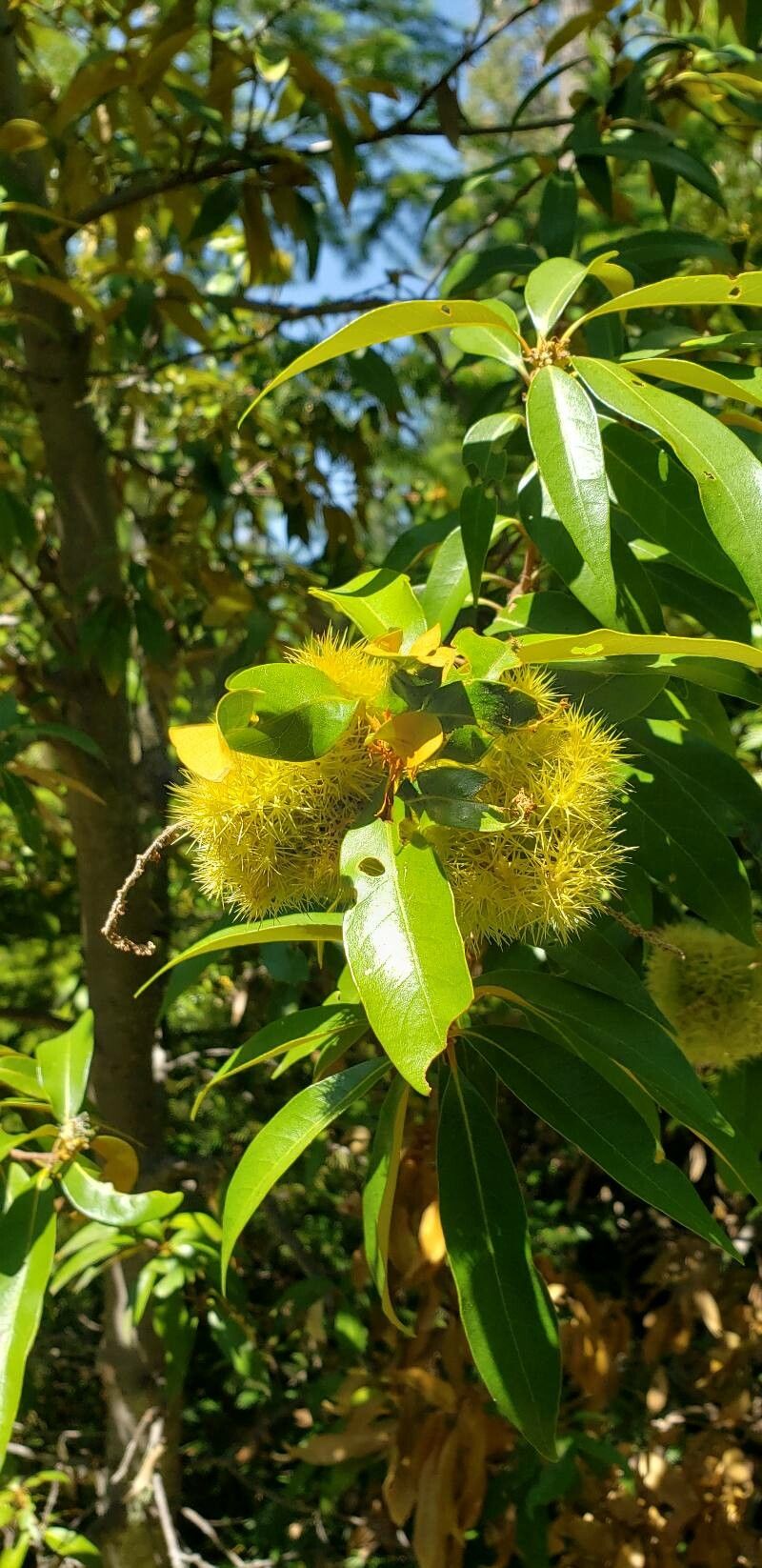
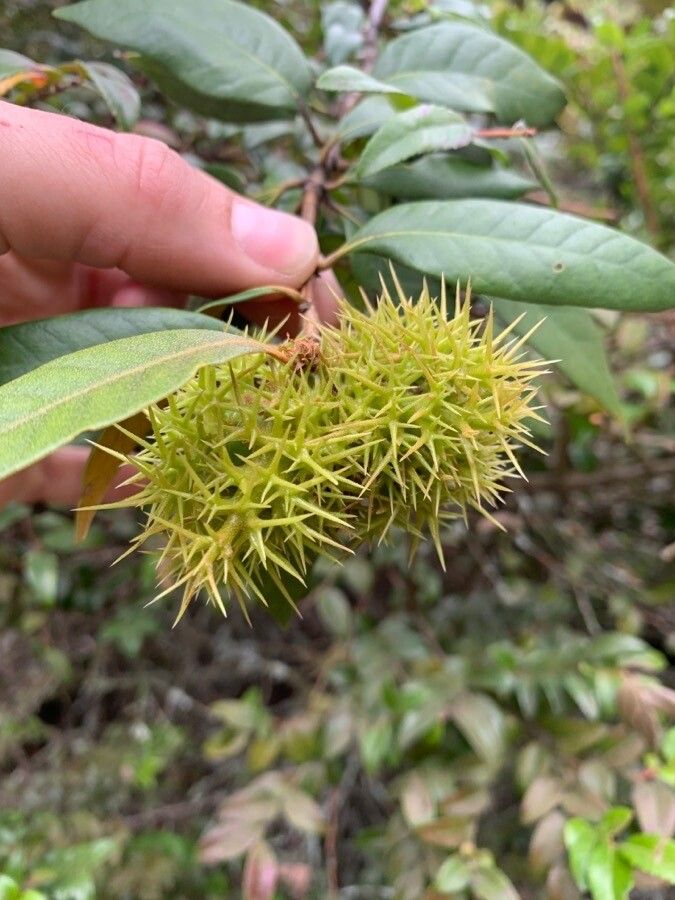
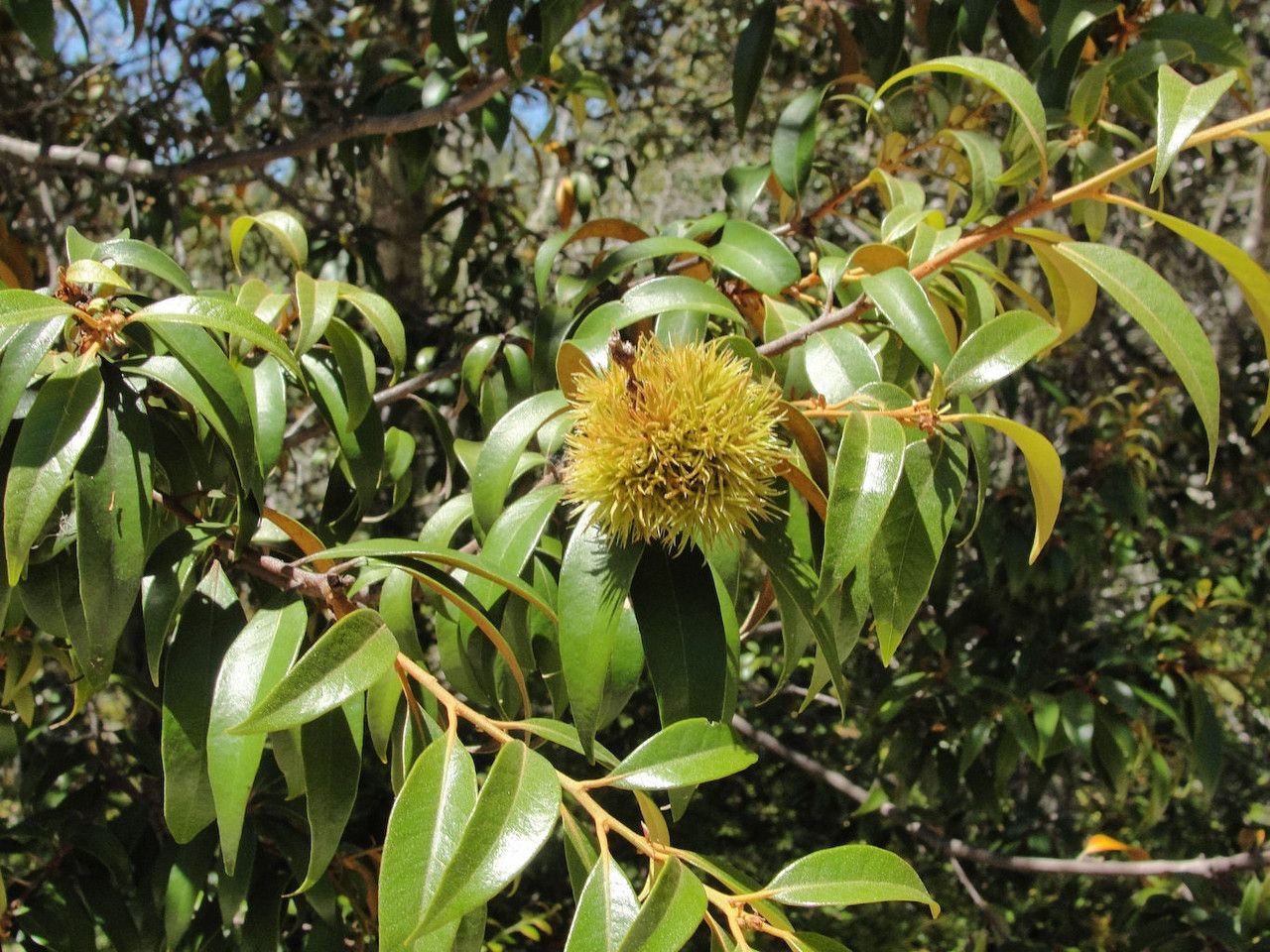
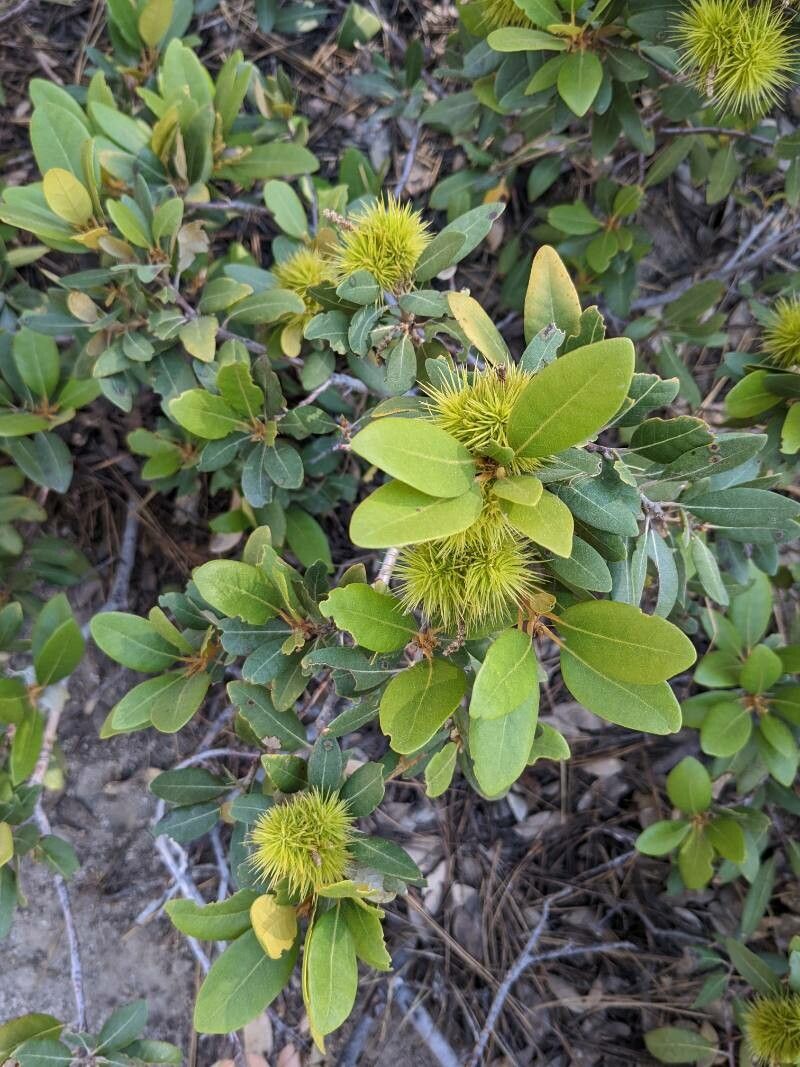
Chrysolepis chrysophylla, commonly known as the golden chinquapin or giant chinquapin, is an evergreen tree species belonging to the Fagaceae family. Native to western North America, it thrives in diverse habitats such as mixed conifer forests, oak woodlands, and chaparral.
This tree can grow up to 30 meters tall with a trunk diameter of up to 1 meter. Its leaves are glossy green on the top and have a golden-yellow underside, which is how it gets its common name. The tree produces small acorns that are edible for both humans and wildlife.
The wood of the golden chinquapin is highly valued for its strength and durability, making it ideal for construction projects such as bridges and railroad ties. The tree also holds cultural significance among Native American tribes, who have traditionally used its bark for medicinal purposes.
Despite its importance in various ecosystems, the population of Chrysolepis chrysophylla has been declining due to habitat loss from logging activities and urbanization. Various organizations are undertaking conservation efforts to protect this valuable plant species from further decline.
Golden chinquapin is highly resistant to disease and generally not susceptible to illnesses. In terms of care, this plant is fairly low-maintenance. Planted outdoors, it needs little watering, and larger specimens usually do not require pruning. Smaller plants, however, should be trimmed after they finish blooming. Golden chinquapin is appropriate for anyone with an outdoor area, like a garden or a deck, and does not call for much care experience.
How to keep Chrysolepis Chrysophylla.
Light
The golden chinquapin does best with moderate sunlight. Native to areas with intermediate light levels, the plant’s health is closely tied to that kind of environment. Too much or too little light can hinder its growth and may damage its overall health.
Water
The golden chinquapin, native to arid regions, is highly drought-tolerant and only needs watering every 2-3 weeks. Its resilience makes it perfect for outdoor cultivation, where it can take advantage of natural rainfall. As an evergreen, the golden chinquapin remains vibrant throughout the seasons with minimal watering.
Temperature
Golden chinquapin is native to habitats where temperatures typically range from 50 to 95°F (10 to 35°C). It does well in these conditions, but seasonal adjustments may be needed to maintain proper growth.
Fertilizer
Fertilize your Golden chinquapin in early spring to encourage healthy growth. Regular fertilization improves overall health, producing vigorous growth, better tolerance of challenging conditions, and increased resistance to pests and diseases. Maintain a specific fertilization schedule to ensure foliage that is vibrant, deeply colored, and lush in appearance.
Pruning
The golden chinquapin is an evergreen plant known for its leaves with a distinctive golden underside. To ensure the plant's health and promote new growth in spring, it is best to prune it from early to late winter. This timing minimizes stress on the plant. Important pruning techniques include removing dead branches and thinning out crowded areas. These steps help improve air circulation and reduce the risk of disease.
Botanical profile.
- Plant Type
- Tree
- Life Cycle
- Perennial
- Genus
- Chrysolepis
- Family
- Fagaceae
- Hardiness Zone
- 6-9
- Mature Height
- 7.62 m to 18.29 m
- Mature Spread
- 4.57 m to 17.98 m
- Leaf Color
- Dark Green, Gold
- Leaf Type
- Evergreen
- Flower Color
- Yellow
- Flower Size
- 0.76 cm
- Bloom Time
- Late spring, Early summer
- Planting Time
- Spring, Summer, Autumn
- Harvest Time
- Late summer, Early fall, Mid fall
Other names.
Reader questions.
What are the sunlight requirements for Golden Chinquapin?
Golden chinquapin requires partial sun, about 3-6 hours of sunlight per day. It thrives in environments with moderate sun exposure, which are native to its habitat. However, both insufficient and excessive light can harm the plant. Observing how sunlight moves through your garden helps in choosing spots that provide a balance of light and shade, ensuring the plant's well-being.
What is Golden chinquapin and in what conditions does it thrive?
Golden chinquapin, scientifically known as Chrysolepis chrysophylla, is native to environments where temperatures commonly range from 50 to 95°F (10 to 35°C). It thrives in these conditions, demonstrating strong cold resistance. Special frost protection measures typically are not necessary during the winter, given its resilience. However, to maintain proper growth, seasonal adjustments might be required, particularly in preparing the plant to withstand temperatures if they are expected to drop below -25°C.
How can artificial lighting support Golden Chinquapin's growth indoors?
When natural sunlight is insufficient, artificial lighting becomes a crucial alternative for Golden Chinquapin, especially during winter or in less sunny spaces. Opt for the right type of light, such as LED, tailored to provide specific light wavelengths. The required intensity varies: full sun plants need 30-50W/sq ft, partial sun plants need 20-30W/sq ft, and full shade plants need 10-20W/sq ft. Position the light source 12-36 inches above the plant and ensure it receives 8-12 hours of light per day to mimic natural daylight hours.
How should Golden chinquapin be cared for during winter?
To care for Golden chinquapin during winter, if temperatures are expected to drop below -25°C, it's important to protect the plant from the cold. This can be done by wrapping the trunk and branches with non-woven fabric or cloth. Additionally, before the first freeze in autumn, it is recommended to water the plant abundantly. This ensures the soil remains moist as it enters a frozen state, helping to prevent drought and water scarcity for the plant during winter and early spring.
What are the symptoms of light deficiency or excess in Golden Chinquapin?
Symptoms of light deficiency in Golden Chinquapin include smaller new leaves, leggy or sparse growth, faster leaf drop, slower or no growth, lighter-colored new leaves, and symptoms of excessive light include chlorosis, sunscald, leaf curling, wilting, and leaf scorching. These signs indicate the plant's struggle with its light environment, affecting its photosynthesis and overall health.
What are the symptoms and solutions for a Golden chinquapin exposed to low temperatures?
Golden chinquapin is cold-tolerant and thrives best when the temperature is kept above 10°C. However, during winter, it is crucial to keep it above -15°C. Exposure to temperatures below -25°C might not show immediate changes during winter, but come spring, the branches may become brittle and dry, potentially failing to produce new shoots. The solution in spring is to prune away any dead branches that have failed to produce new leaves. This helps the plant recover and supports new growth.
What solutions can mitigate light-related issues for Golden Chinquapin?
To address light-related issues, gradually adapt your Golden Chinquapin to changing light conditions by shifting it to sunnier spots each week for 3-6 hours of direct sunlight daily. For indoor plants that are either too large or not easily movable, artificial lighting such as desk or ceiling lamps, or professional plant grow lights, can provide sufficient light when kept on for at least 8 hours daily. Outdoors, moving plants to optimal sunlight spots and reducing obstructions like pruning trees helps. For those on the ground, consider transplanting smaller plants to sunnier locations with good drainage during their dormant period.
How to care for Golden chinquapin during high temperatures?
During the summer, it's important to keep the Golden chinquapin below 35°C. High temperatures exceeding 38°C may cause the leaves to lighten in color, tips to dry and wither, and increase susceptibility to sunburn. To address this, trim away sunburned and dried parts of the plant. Relocating the plant to a spot with shade from the midday and afternoon sun or using a shade cloth can offer protection. Additionally, watering the plant in the morning and evening helps keep the soil moist, thereby ensuring the plant remains healthy under hot conditions.