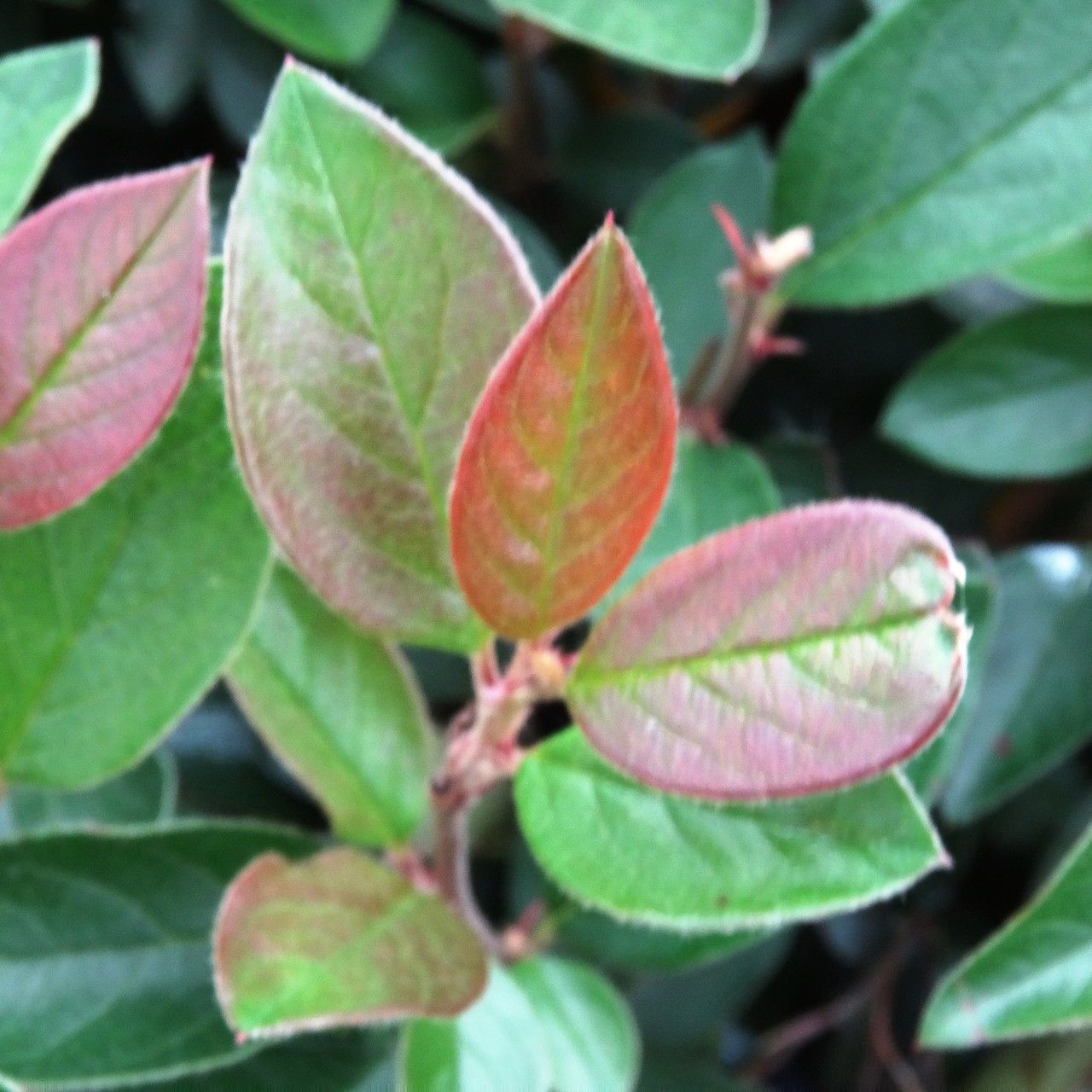
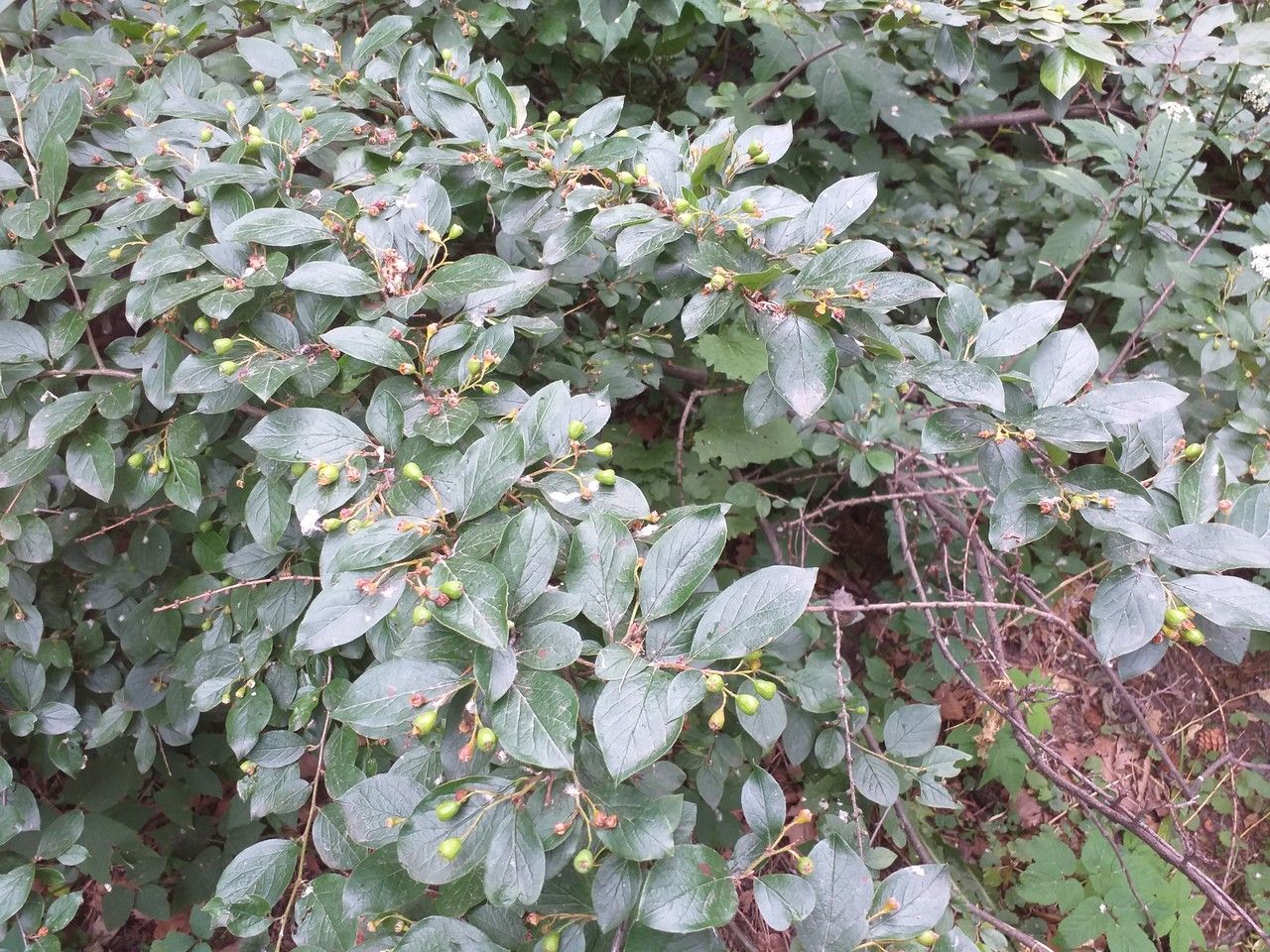
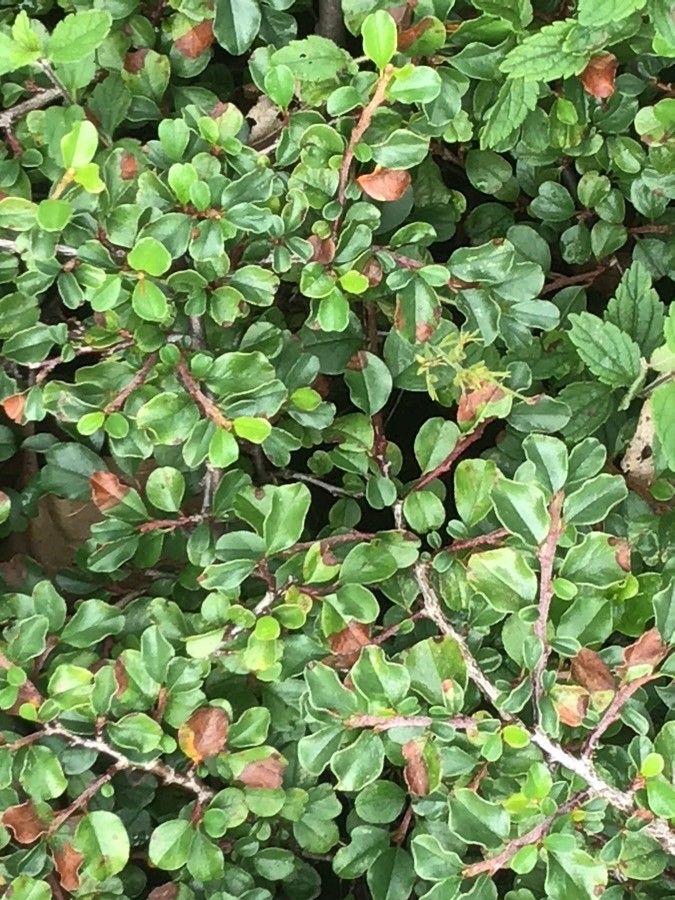
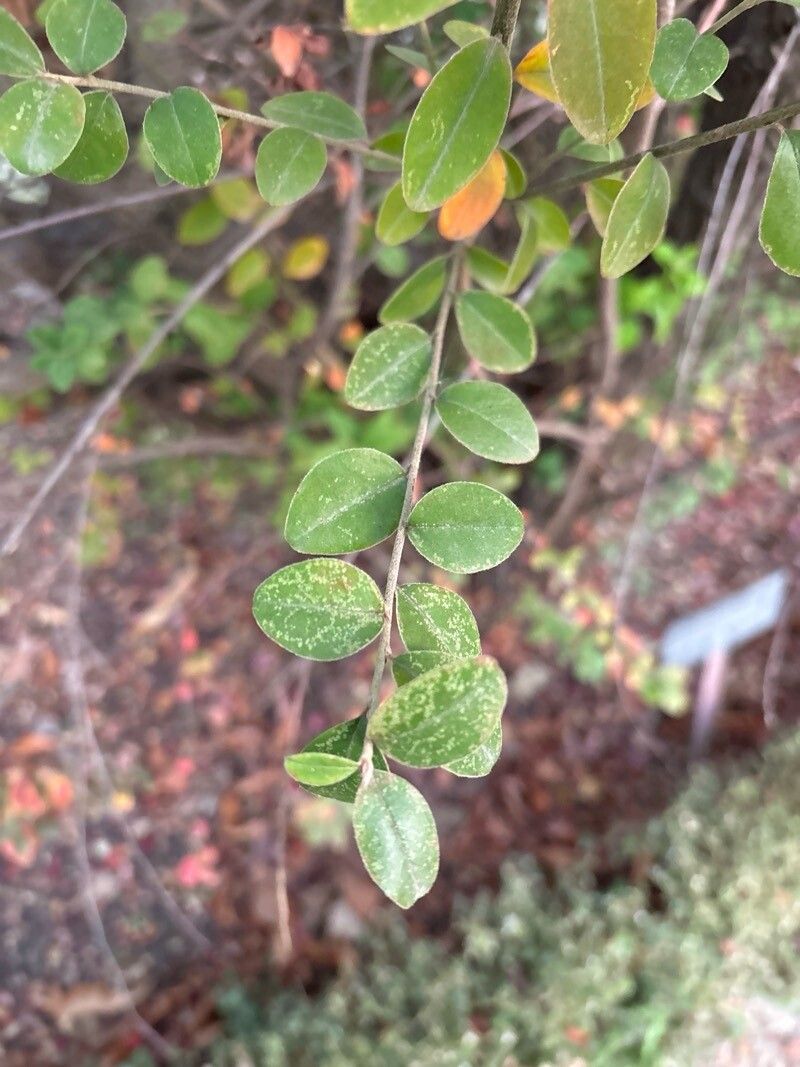
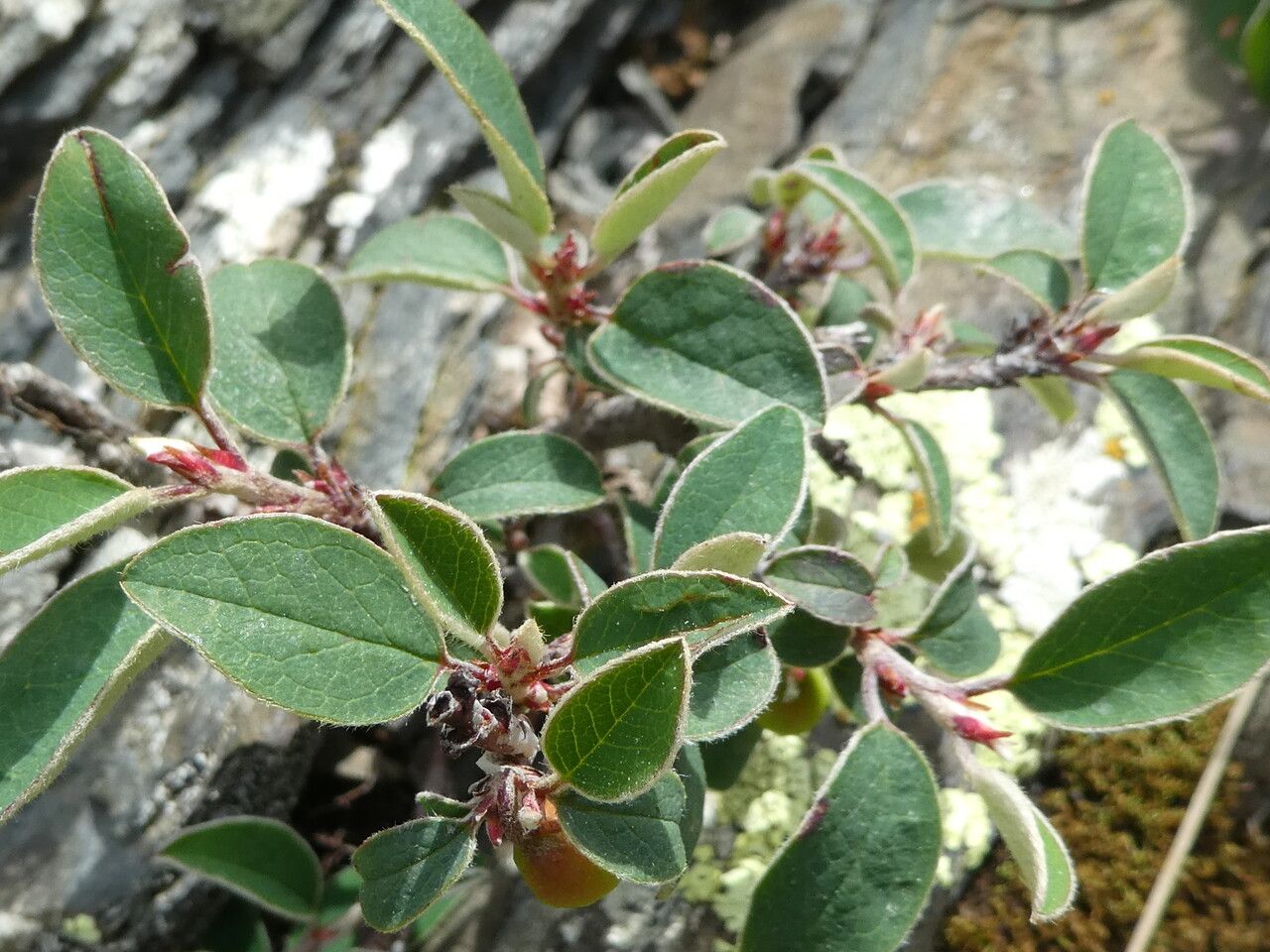
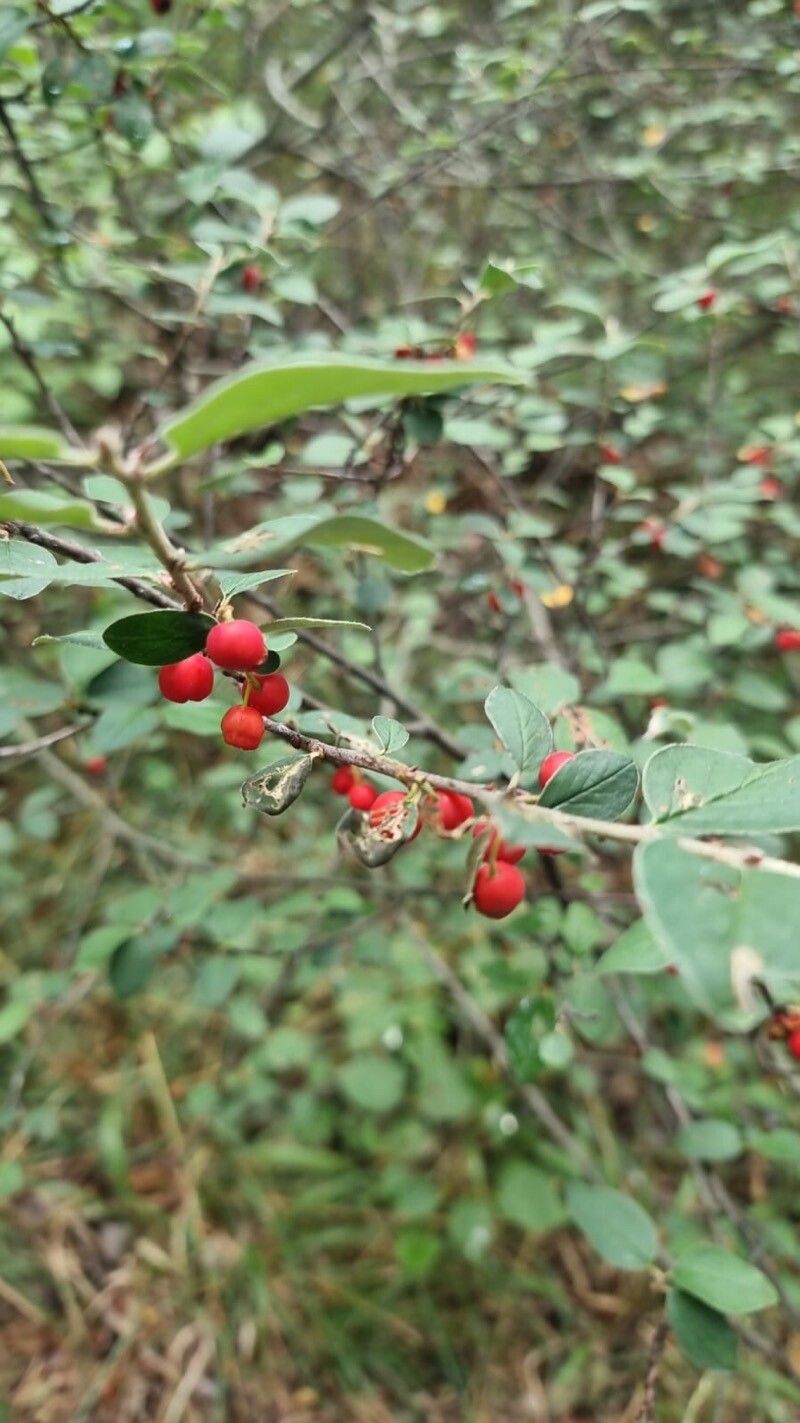
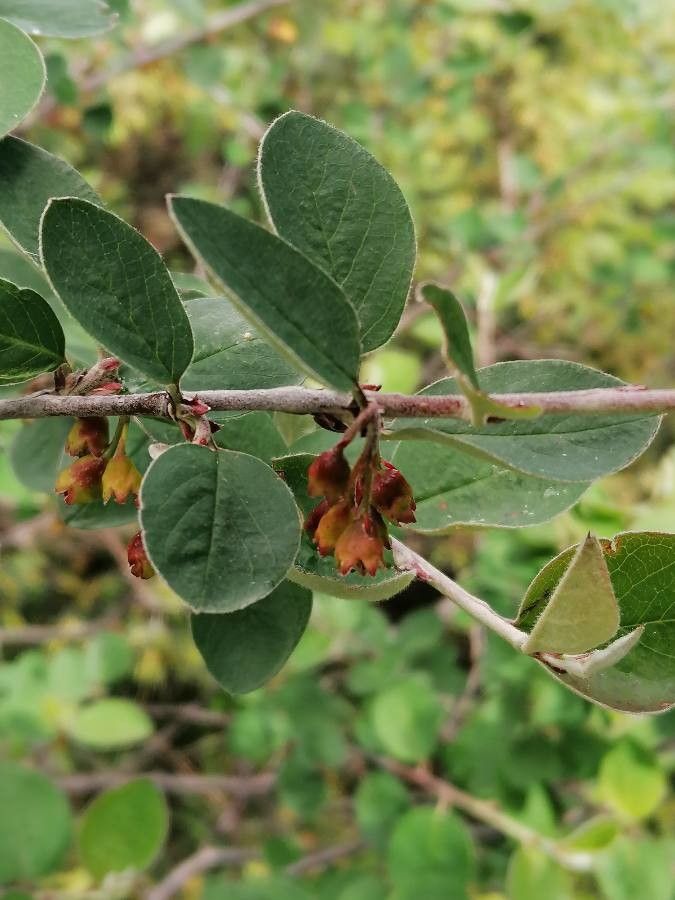
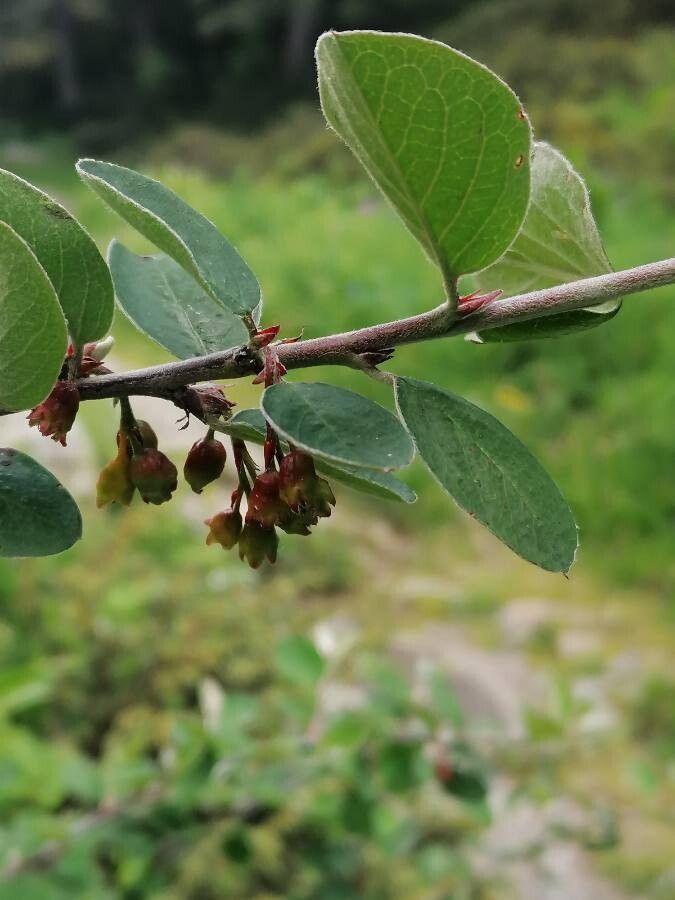
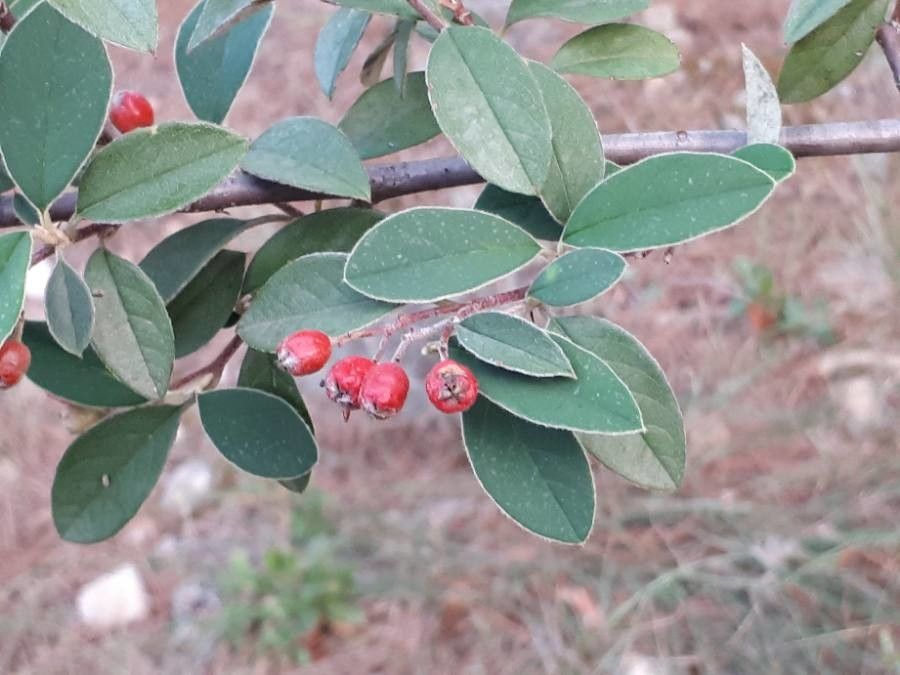
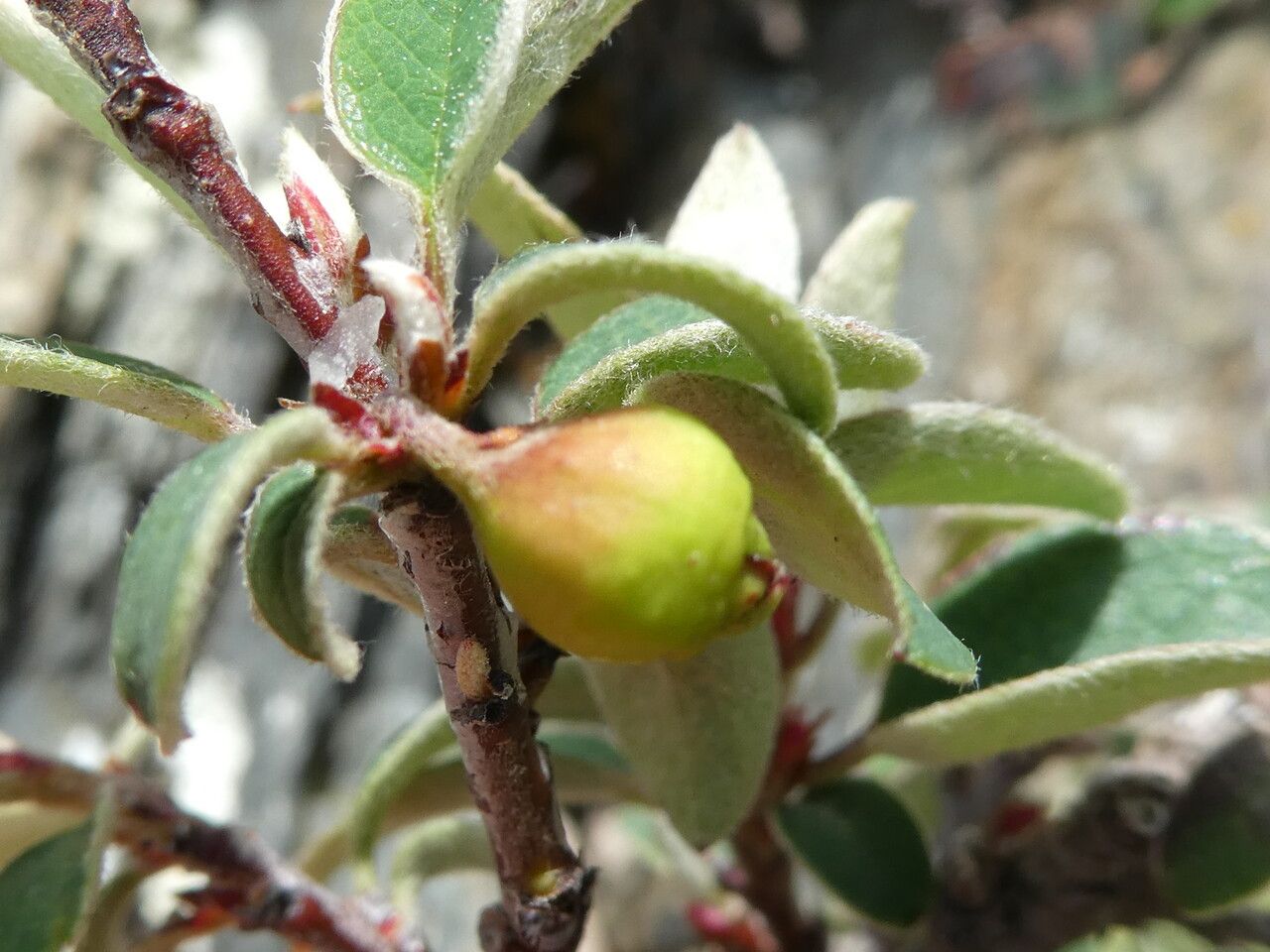
Cotoneaster integerrimus, the common cotoneaster, is a species of Cotoneaster native to central and eastern Europe and southwest Asia, from southern Belgium and eastern France south to Italy, and east through Germany to the Balkans, northern Turkey, the Crimea, the Caucasus and northern Iran; plants in Spain may also belong in this species. In the past, it was treated in a wider sense, including plants from Wales now split off as Cotoneaster cambricus and plants from Scandinavia now treated as Cotoneaster scandinavicus, but differs from these in genetic profile and detail of foliage and fruit.It is a deciduous shrub growing to 2 metres (6 ft 7 in) tall. The leaves are oval to oval-acute, 1–4 centimetres (0.39–1.57 in) long, green and thinly pubescent above at first, later glabrous, and densely pubescent below and on the leaf margin, with pale grey hairs. The flowers are produced in corymbs of one to four (occasionally up to seven) together in mid spring, each flower 3 millimetres (0.12 in) diameter, with five white to pale pink petals. The fruit is a dark red pome 6–8 millimetres (0.24–0.31 in) diameter, containing two or three seeds. It occurs on limestone soils, at altitudes of up to 2,800 metres (9,200 ft) altitude.
In the Home
Common cotoneaster shows good resistance to disease and is usually not prone to illnesses. In terms of maintenance, this plant is fairly low-maintenance. When planted outdoors it needs only minimal watering, and larger plants typically do not require pruning. Smaller plants, however, should be pruned after they have finished blooming. Common cotoneaster is suitable for anyone with an outdoor space, such as a garden or a deck, and does not demand extensive care experience.