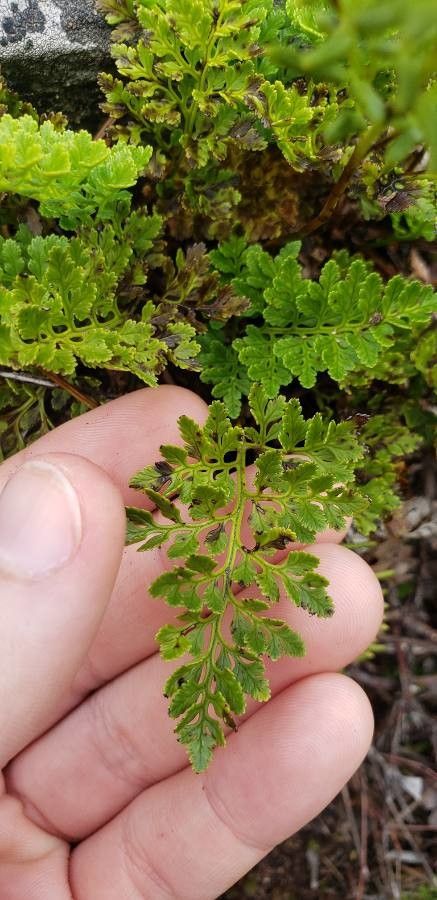
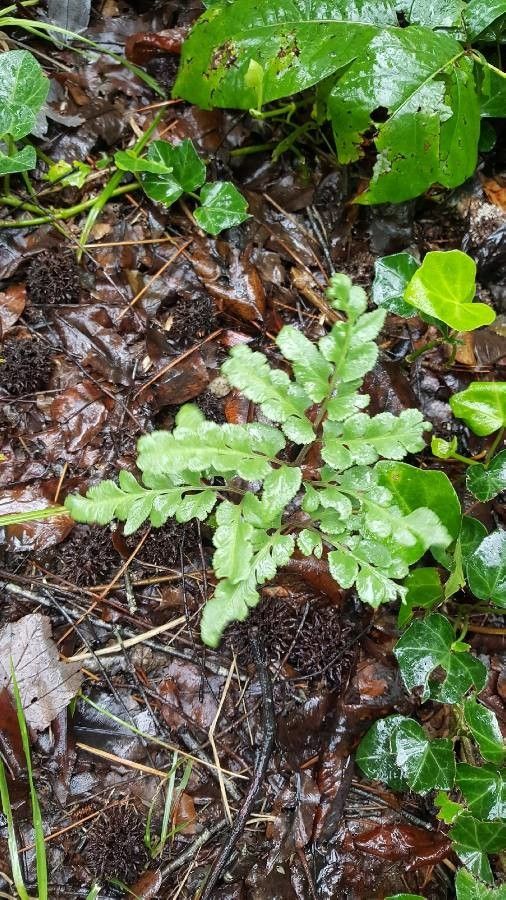
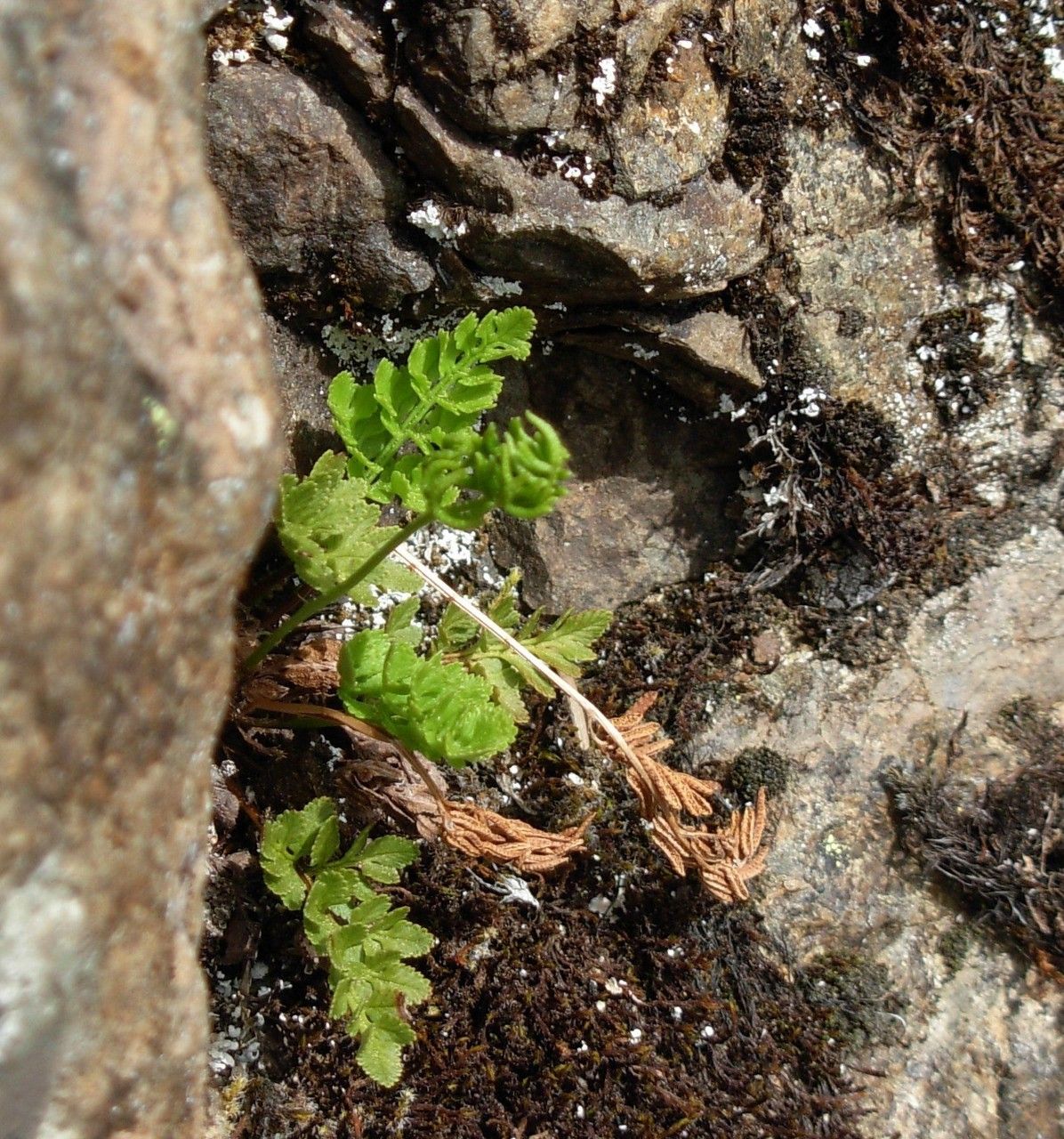
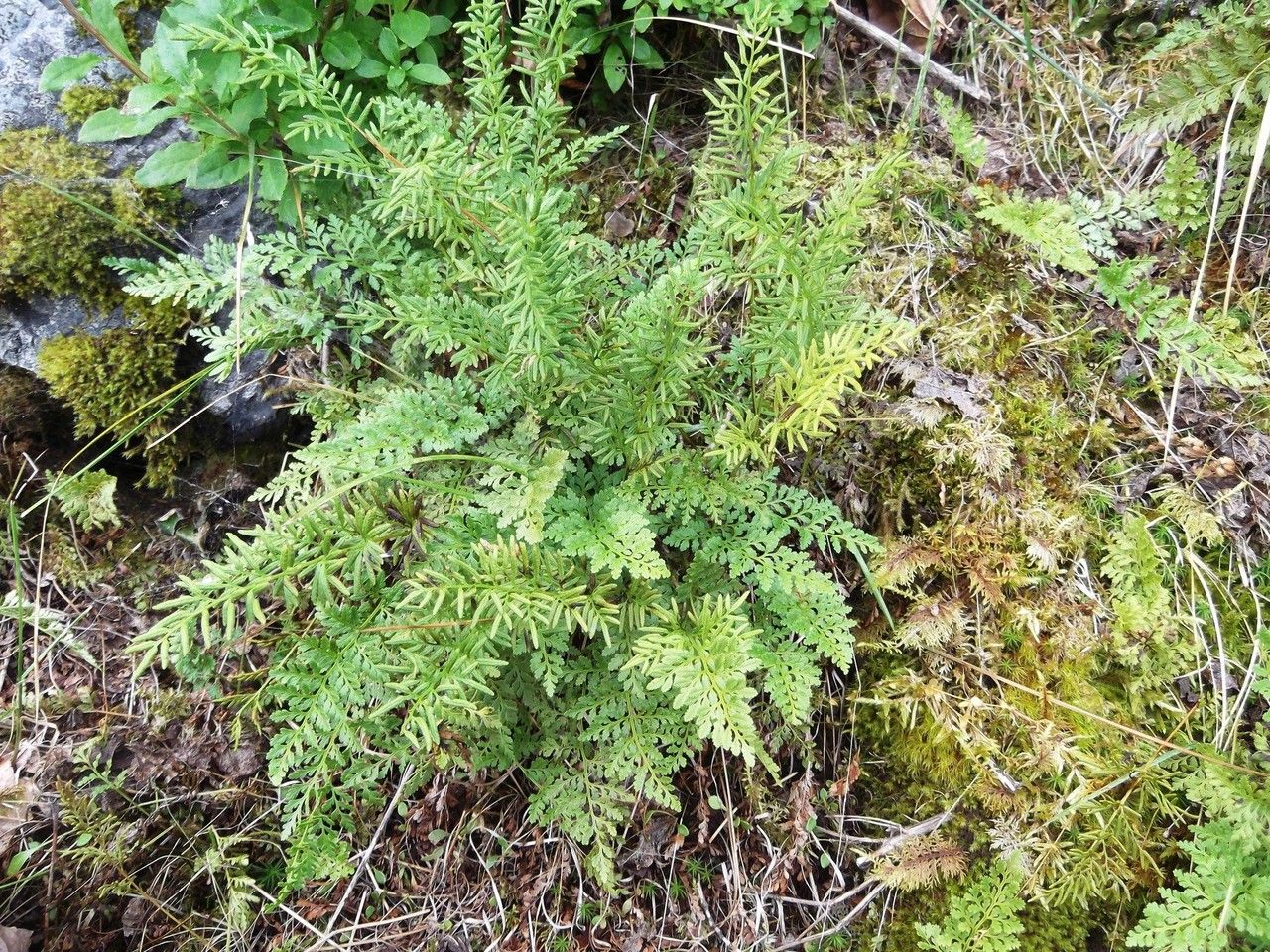
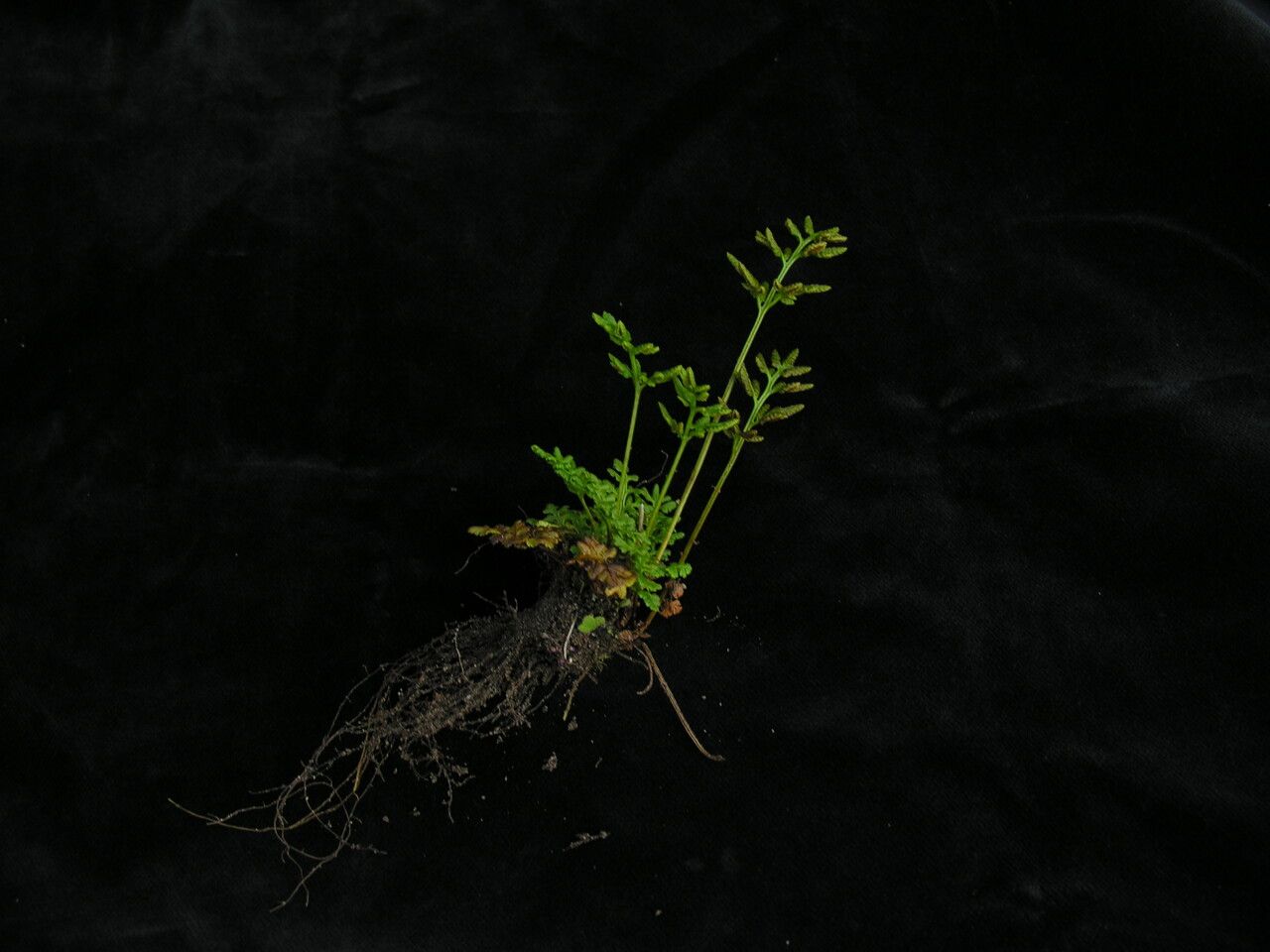
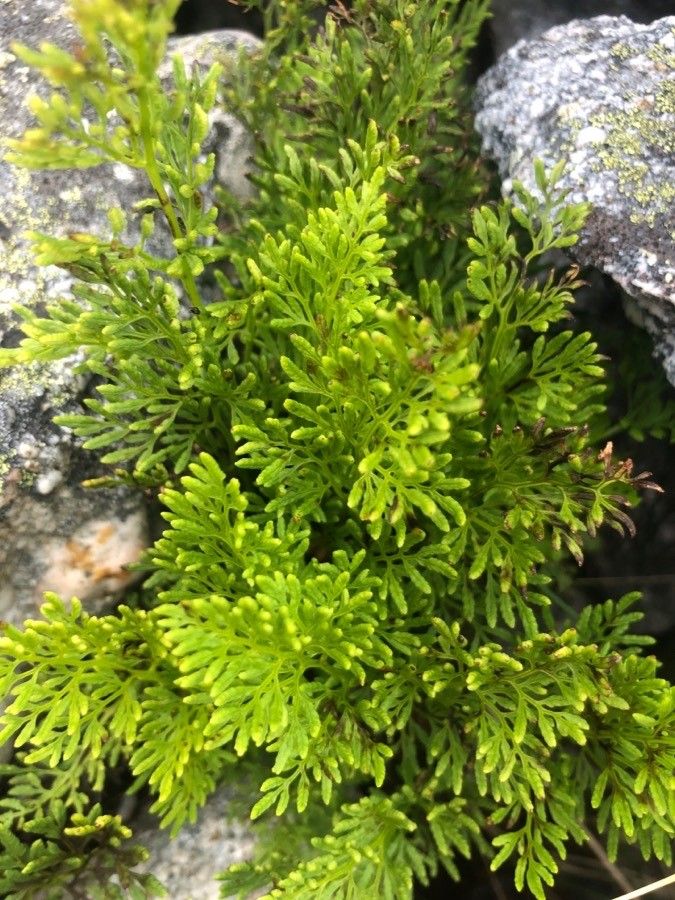
Cryptogramma acrostichoides is a fern species in the Cryptogrammoideae subfamily of the Pteridaceae. It is known by the common names American parsley fern and American rockbrake and is native to most of western North America, where it grows in the cracks of rocks in many types of mountainous habitat. Cryptogramma acrostichoides grows in a tuft from a rhizome. There are two leaf types. The sterile leaf has flat, oval-shaped lobed leaflets resembling parsley, and the fertile leaf is longer with narrow, thick, linear leaflets with their margins curled under to cover the sporangia on the undersides.
American rockbrake has good disease resistance and usually is not affected by illnesses. However, it can be vulnerable to pests and diseases present in its surroundings. These problems are typically not serious. For care, the plant requires moderate maintenance. It should be pruned regularly to preserve a good appearance and healthy growth. Fertilizing can also help encourage flowering. American rockbrake is suitable for anyone with outdoor space, such as a garden or patio, and does not demand extensive experience in plant care. It may need more attention if kept indoors.
How to keep Cryptogramma Acrostichoides.
Light
American rockbrake naturally occurs in habitats like forest understories or rocky sites, where it grows in natural shade. It prefers partial sun but can tolerate both full sun and full shade, showing its versatility and hardiness.
Water
The American rockbrake thrives in rocky, moist environments and needs consistent moisture without becoming waterlogged. Watering it weekly helps promote optimal growth. This plant prefers shaded outdoor areas and benefits from high humidity, which supports lush foliage during the growing season. It also has moderate tolerance to drought.
Temperature
The American rockbrake is naturally adapted to temperate climates, favoring temperatures between 32 and 90 °F (0 to 32 ℃). During colder months, making adjustments to keep temperatures at or above 32 °F (0 ℃) would be beneficial.
Fertilizer
One fertilizer application in spring is typically enough for American rockbrake, though repeated feedings can optimize growth. Apply fertilizer roughly every one to one and a half months. Feeding improves the leaves’ appearance and function, helping maintain uniform color and a healthy texture. It also promotes root development and nutrient uptake for the plant’s long-term health.
Pruning
Pruning American rockbrake in the spring, from early to late, promotes healthy growth by removing dead fronds. Be sure to cut close to the base while preserving new shoots, and avoid over-pruning to maintain the plant's natural shape. This practice not only enhances the plant's appearance but also supports its vitality, leading to denser growth and increased resilience.
Botanical profile.
- Plant Type
- Herb
- Life Cycle
- Perennial
- Genus
- Cryptogramma
- Family
- Pteridaceae
- Hardiness Zone
- 2-8
- Mature Height
- 10 cm to 25 cm
- Mature Spread
- 20 cm to 30 cm
- Leaf Color
- Dark Green, Forest Green
- Leaf Type
- Evergreen
- Planting Time
- Spring, Autumn
- Native Area
- Russia
Other names.
Reader questions.
What is the best environment for American Rockbrake?
American Rockbrake, scientifically known as Cryptogramma acrostichoides, thrives in temperate environments. It prefers temperatures ranging between 32 to 90 °F (0 to 32 °C). During colder seasons, it's advisable to ensure conditions do not drop below 32 °F (0 °C) to maintain plant health. Although this plant exhibits strong cold resistance, meaning special frost protection measures are not typically required, precautions should be taken if temperatures are expected to plummet below -40°C by covering the plant with soil or straw. Additionally, ensuring the soil is moist by watering abundantly before the first freeze can help prevent drought and water scarcity during winter and early spring.
How does American Rockbrake react to low temperatures?
American Rockbrake is well adapted to cold temperatures, thriving best when kept above 0°C. During winter months, the temperature should be maintained above -35°C. Exposure to temperatures falling below -40°C might not show immediate changes during the winter, but could lead to decreased sprouting or no sprouting in spring. To mitigate this, remove any parts of the plant in spring that have failed to sprout as a response to freezing temperatures.
What should be done if American Rockbrake is exposed to high temperatures?
During the summer, American Rockbrake should ideally be kept below 32°C. Exposure to temperatures above 35°C can cause the leaves to lighten in color, curl, become susceptible to sunburn, and in severe cases, can result in the entire plant wilting and drying out. To address this, sunburned and dried-up parts of the plant should be trimmed away. Moving the plant to a location that is shielded from the midday and afternoon sun or using a shade cloth to provide shade can be beneficial. Watering the plant in the morning and evening to maintain soil moisture is also advisable under these conditions.