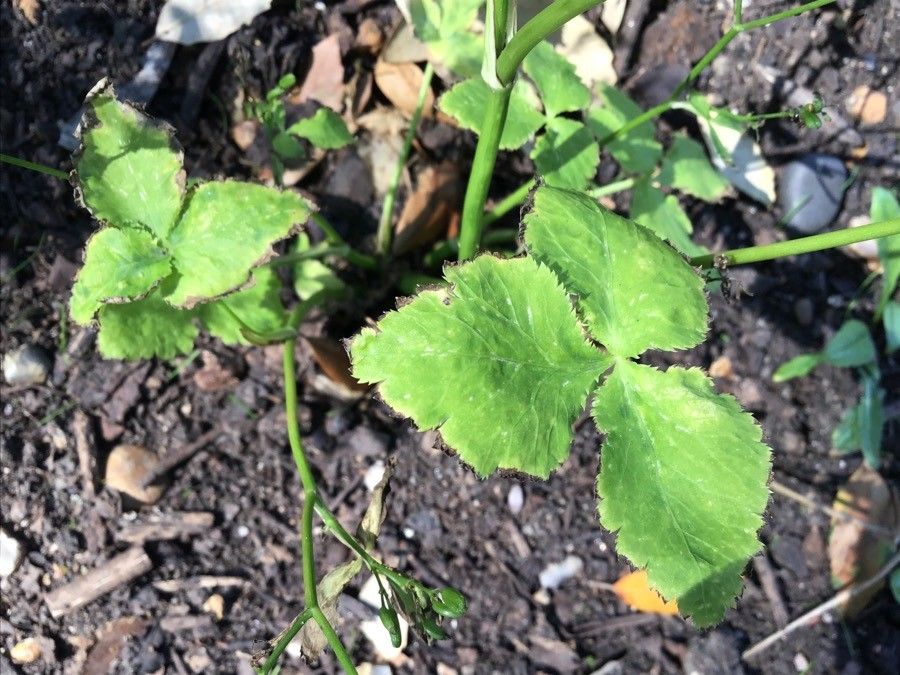
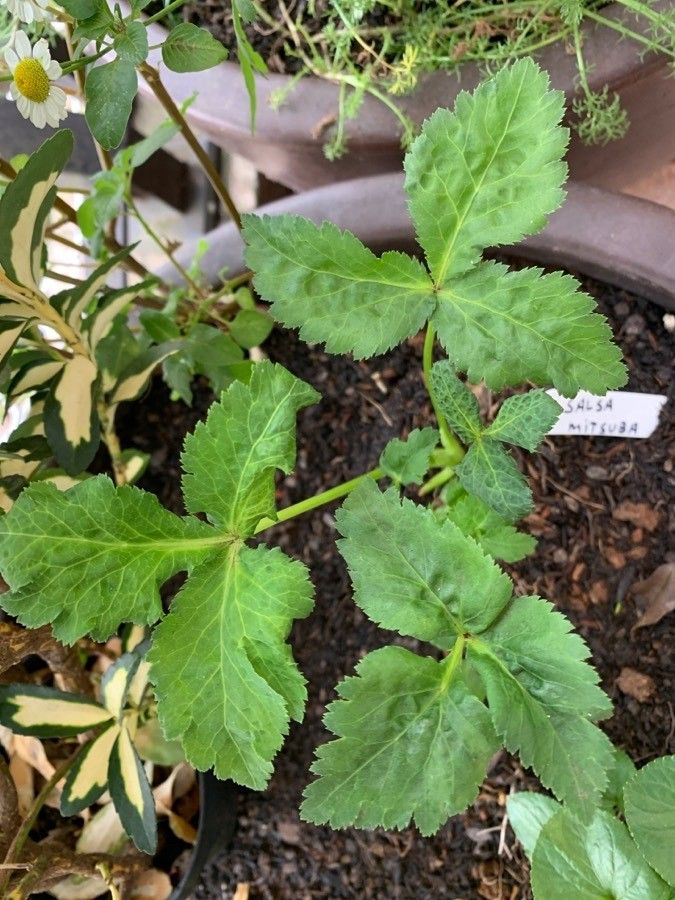
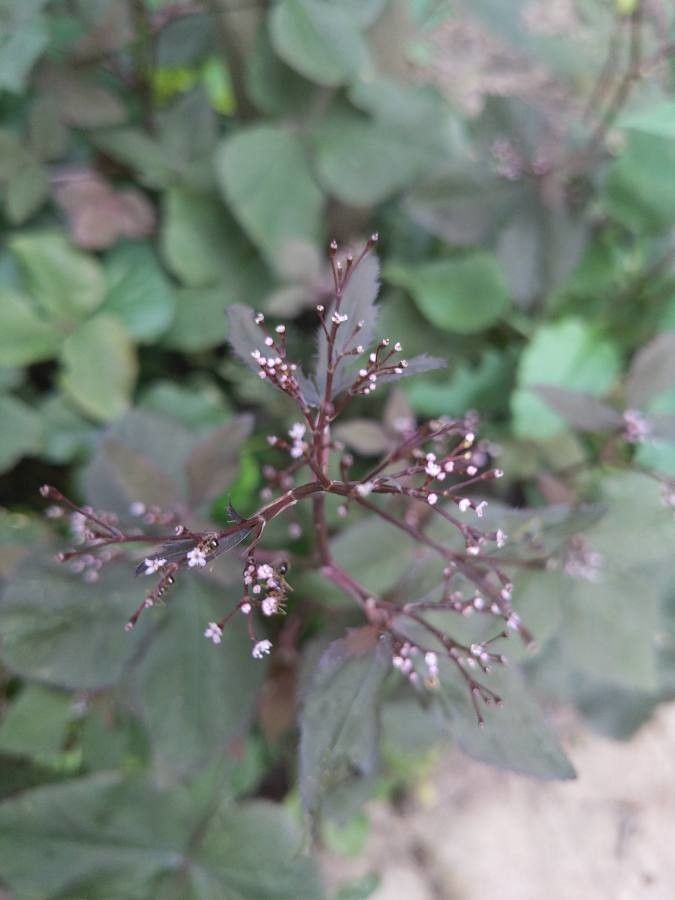
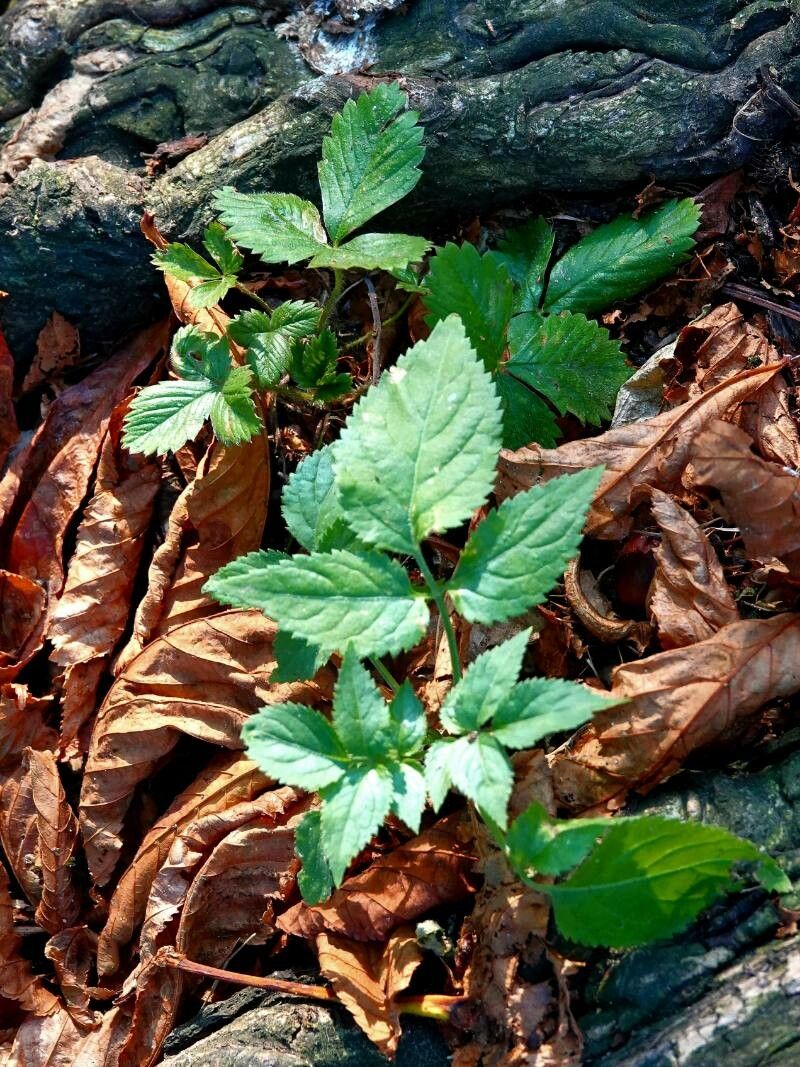
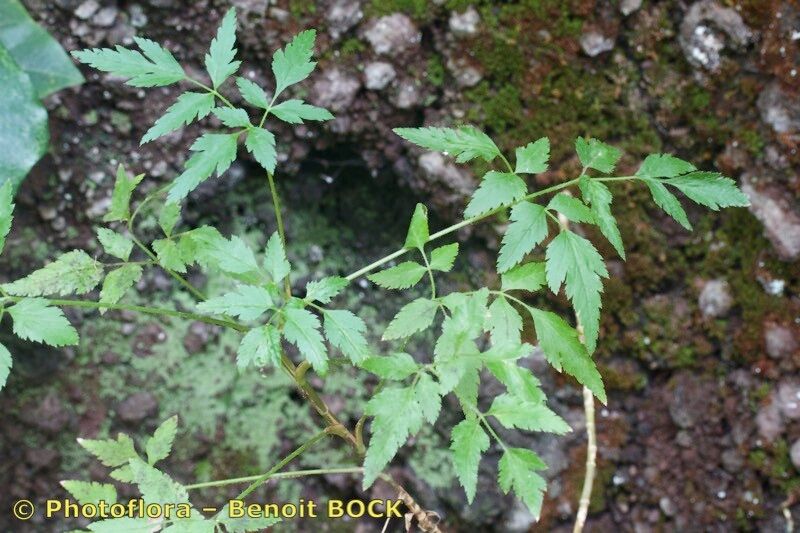
Cryptotaenia japonica, also called East Asian wildparsley, Japanese cryptotaenia, Japanese honewort, white chervil mitsuba, Japanese wild parsley, stone parsley, honeywort, san ip, trefoil, and san ye qin (from Chinese: 三叶芹; pinyin: sānyè qín) is a plant species native to Japan, Korea, and China. The plant is edible and is commonly used as a garnish and root vegetable in Japan, and other Asian countries.
Japanese honewort has moderate resistance to disease but can be vulnerable to ailments like leaf spot. Its proneness to insect pests varies by variety, although most varieties have relatively low resistance to pests. For care, Japanese honewort requires regular watering and fertilizing, and frequent removal of yellow leaves. It is important to manage pests and diseases when they appear and to harvest the plant promptly. Japanese honewort is best suited for people who can commit some time and effort to regular upkeep.
How to keep Cryptotaenia Japonica.
Light
Japanese honewort does best in places where sunlight comes through moderately, ideally where the day's heat is softened. Its growth can be suppressed by exposure to strong, intense sunlight. In its native habitat, this plant evolved with moderate sunbeams filtering through the overhead canopy.
Water
Japanese honewort, which originates from East Asian woodlands, thrives in consistently moist environments. To keep the soil evenly moist, water it weekly. As an herbaceous perennial, it grows well outdoors, where it benefits from natural rainfall and the seasonal availability of water.
Temperature
Japanese honewort is native to temperate regions and does well in temperatures from 41 to 89.6°F (5 to 32 ℃). In cooler environments, Japanese honewort may require additional warmth, especially in winter. If temperatures drop below this range, consider moving it to a warmer location.
Fertilizer
To get the best yield and taste from Japanese honewort, provide plenty of nitrogen throughout the entire growth period, from before planting through to harvest. Keeping plants well-watered and fertilized results in plentiful, healthy leaves and helps prevent bitterness. Before planting, improve the soil with organic matter such as compost or manure, preferably applied 2 to 8 weeks beforehand.
Pruning
Japanese honewort is a leafy herb that's great for salads. To encourage fresh growth and maintain its shape, prune the plant from early to late spring. Regularly trim away any dead or damaged stems, but avoid heavy pruning in the later seasons to prevent stressing the plant. Regular pruning improves air circulation and increases the plant's resistance to disease.
Pot & Repot
To maintain the bushy growth of Japanese honewort, repot the plant every 2-3 years during the spring. Choose a slightly larger pot with good drainage. After repotting, water the plant sparingly at first before gradually returning to its regular care routine. Make sure to provide consistent moisture and indirect light for optimal growth.
Botanical profile.
- Plant Type
- Herb
- Life Cycle
- Perennial
- Genus
- Cryptotaenia
- Family
- Apiaceae
- Hardiness Zone
- 4-8
- Mature Height
- 20 cm to 91 cm
- Mature Spread
- 61 cm
- Leaf Color
- Green
- Leaf Type
- Semi-evergreen
- Flower Color
- White
- Flower Size
- 0.10 cm
- Bloom Time
- Late spring, Early summer, Mid summer
- Planting Time
- Spring, Autumn
- Harvest Time
- Mid summer
- Native Area
- Russia, Vietnam, Japan, Koppen, South Korea, China
Other names.
Reader questions.
How should I water my Japanese honewort?
To ensure the health of the Japanese honewort plant, it is recommended to water it with filtered water at room temperature. Tap water may contain harmful particles that can affect the plant negatively. It is important to use water that is not too cold as the plant prefers warmer conditions. Avoid watering the plant from above as it can cause problems with the foliage. Instead, focus on watering the soil directly, ensuring it is thoroughly soaked. This helps to keep the roots moist and allows them to continue spreading through the soil to gather essential nutrients.
Why should I use fertilizer on my Japanese honewort?
Fertilization is important for the Japanese honewort as it provides essential nutrients for growth, both above and below ground. Although the Japanese honewort generally requires low fertilization, it can still survive without it. However, annual fertilization can greatly benefit the plant by promoting its overall health and enhancing flower quality and longevity. Therefore, for those who want their Japanese honewort to thrive and look its best, regular annual fertilization is recommended.
How much sun does Japanese honewort need to grow?
To help Japanese honewort thrive, it needs 3-6 hours of direct sunlight every day. However, during the hottest parts of the day, some shade is necessary to avoid sun damage. The best time for sunlight is in the morning, although Japanese honewort can handle some afternoon sun as long as it's not too hot. To achieve the right amount of sunlight, consider planting Japanese honewort in a spot with partial sun, like under a tree or on the east side of a building.
What temperature is best for growing Japanese honewort?
The best temperature for Japanese honewort depends on the time of year. There are two primary seasons to consider: the growing season and the dormancy season. During the growing season, when the plant starts to sprout, the ideal temperature range is between 65-80℉(18-27℃). If it gets colder than 15℉(-10℃), the plant may suffer, with browning and wilting of the leaves. However, if the cold snap is brief, the Japanese honewort may survive with some assistance. Similarly, during the warmer parts of the year, the plant should be protected from temperatures above 95-105℉ (35-40℃). Higher temperatures can damage the foliage and blooms, causing wilting, drooping, and sunburn on the leaves. It can be challenging for the Japanese honewort to recover from these issues. Fortunately, there are multiple quick and easy ways to combat this problem.
What do I do if I give my Japanese honewort plant too much water or too little water?
Overwatering and underwatering can both harm the health of your Japanese honewort, but overwatering is more common. When this plant gets too much water, its stems and leaves may wilt and turn yellow. Overwatering for a long time can also cause diseases like root rot, mold, and mildew that can kill your plant. Underwatering is less likely, as this plant can tolerate drought. However, it can still happen and result in brittle, brown leaves. It's important to notice signs of overwatering early on. Some diseases caused by overwatering, like root rot, may not be fixable if ignored. If you see early signs of overwatering, reduce watering immediately. Check the soil quality where your plant is growing. If it drains poorly, replace it with loose, well-draining potting mix. If your plant shows signs of not enough water, simply water more regularly until those signs go away.
When should I fertilize my Japanese honewort?
The best time to fertilize a Japanese honewort is in the late winter to early spring. This is when the plant is transitioning from its dormant phase to active growth, so fertilizing at this time promotes healthy growth. Fertilizing during the fall is also acceptable, but it is not recommended to feed the plant during summer or winter.
What happens when Japanese honewort doesn't get enough sunlight?
Japanese honewort can experience negative effects when it is too exposed to direct sunlight, such as yellowing, drying out, or burning of its leaves. Additionally, you might observe the plant wilting or not growing properly. To avoid sun damage, it is advisable to provide shade for Japanese honewort during the hottest times of the day. This can be achieved by using a shade cloth or by planting it near taller plants that can offer natural shade.
The temperature that the Japanese honewort needs during its first year or when it is a small plant.
If this is the first year you have a Japanese honewort plant outside, it may need extra attention during the coldest months. Frost can cause severe damage and prevent healthy regrowth in the spring. To prevent this, keep the plant at a temperature of 40℉(5℃) or above until it is well-established. This can be achieved by bringing the plant indoors for a month or two, or by using mulch or fabric barriers to protect it from frost. During the first year or two, it's best to plant Japanese honewort in a shadier area, as smaller and weaker plants struggle with temperature regulation in hot weather. Limit direct sunlight exposure to no more than five hours per day, especially if the temperature rises above 80℉(27℃). To control summer heat, use shadecloth and water or mist the plant frequently.
How frequently should I water my Japanese honewort plant?
If your Japanese honewort plant is in a pot, the most precise way to determine if it needs water is by checking the soil with your finger. If the top two to three inches of soil feel dry, then it is time to water it. For outdoor Japanese honewort plants in the ground, you can use a similar method to test the soil. Once you find that the first few inches of the soil have dried out, it means it's time to water. In the spring and early fall, you will typically need to water this plant about once a week using this method. However, during extremely hot weather, you may need to increase watering frequency to twice or more per week. That being said, mature, well-established Japanese honewort plants have an impressive ability to withstand drought.
When is the best time to not fertilize my Japanese honewort?
To prevent overfertilization and its complications, it is recommended to only fertilize your Japanese honewort during late winter and early spring. This plant has low fertilization needs, so one annual feeding is sufficient. However, if you missed fertilizing in spring, it is acceptable to feed it in the fall. It is not necessary to fertilize during the winter when the plant is in a dormant growth phase and does not produce new growth.
What happens if Japanese honewort gets too much sunlight?
Japanese honewort may become tall and lanky, with sparse foliage, if it doesn't receive adequate sunlight. If the leaves turn yellow or pale green, it suggests that the plant lacks enough sunlight to produce chlorophyll. To fix this issue, consider moving Japanese honewort to a sunnier location or trimming nearby foliage to increase the amount of light reaching the plant.
How can I keep Japanese honewort safe from very hot or very cold temperatures?
Here are some steps you can take to protect your Japanese honewort plant from frost or cold damage during the growing season if temperatures drop below 15℉(-10℃): 1. If you're growing Japanese honewort in a container, simply bring the container inside where it can receive bright, indirect light until the temperatures rise above the lower threshold again. 2. For Japanese honewort planted in the ground, you can use mulch or horticultural fabric to create a barrier around the plant. This insulation will help protect the plant from frost and cold wind. When temperatures are hotter than 80℉(27℃) in the shade during the day, you should take the following precautions: 1. Limit the amount of sunlight exposure to Japanese honewort to six hours or less per day, preferably in the morning. This can be achieved by putting up shade cloth or using a fine plastic mesh to reduce direct sunlight during the hottest parts of the day. 2. Consider installing a misting system that can release slow and cooling mist around the base of the plant during the day. This helps to lower ground temperatures and provide relief from the heat.