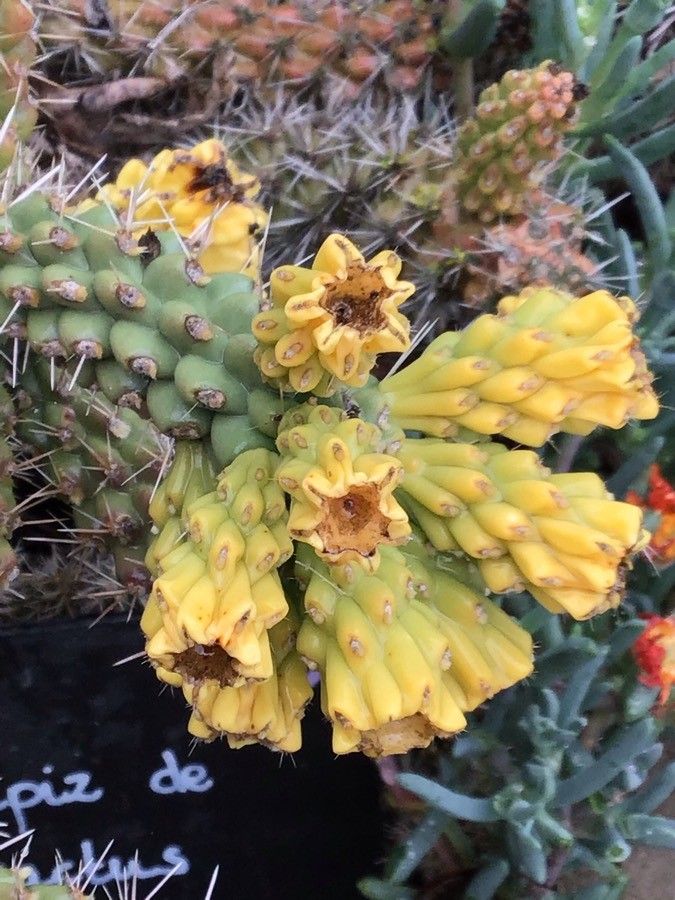
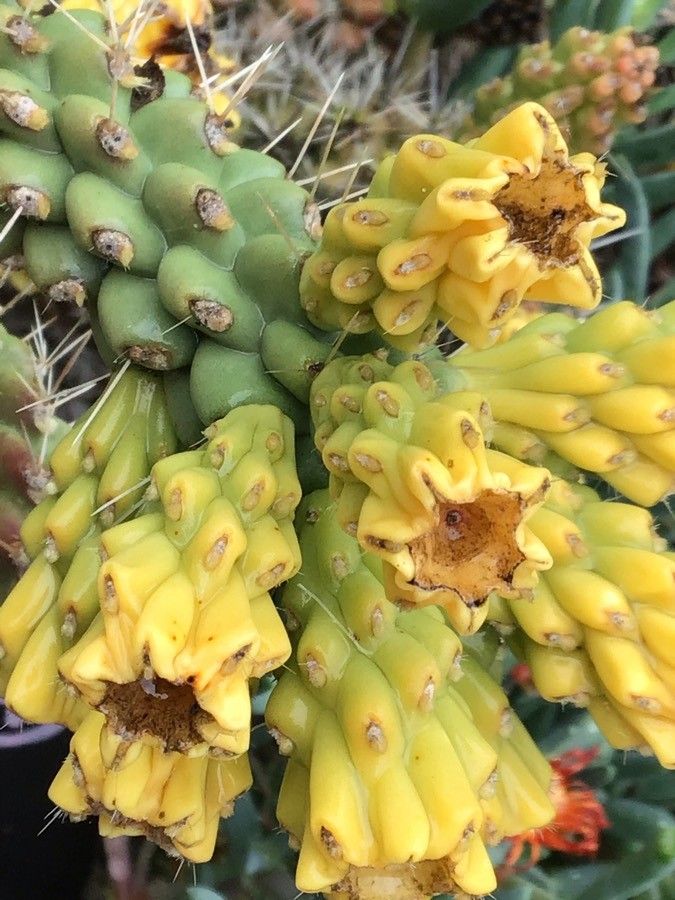
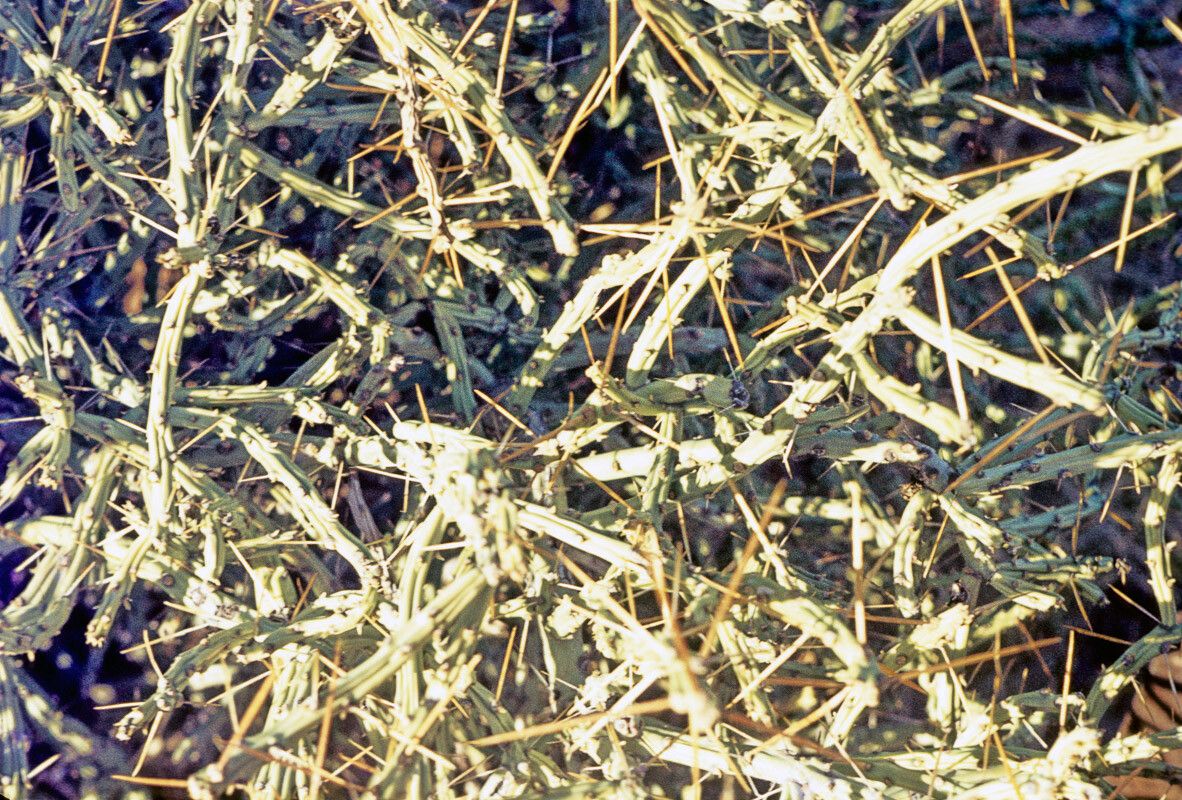
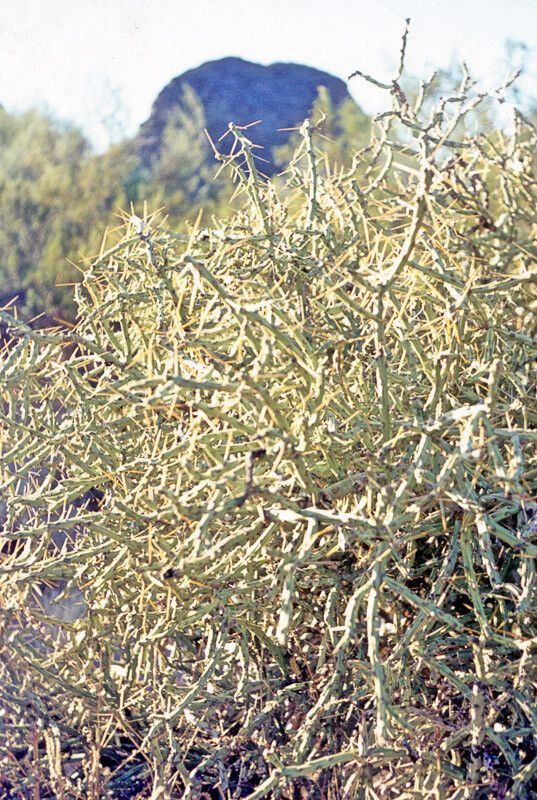
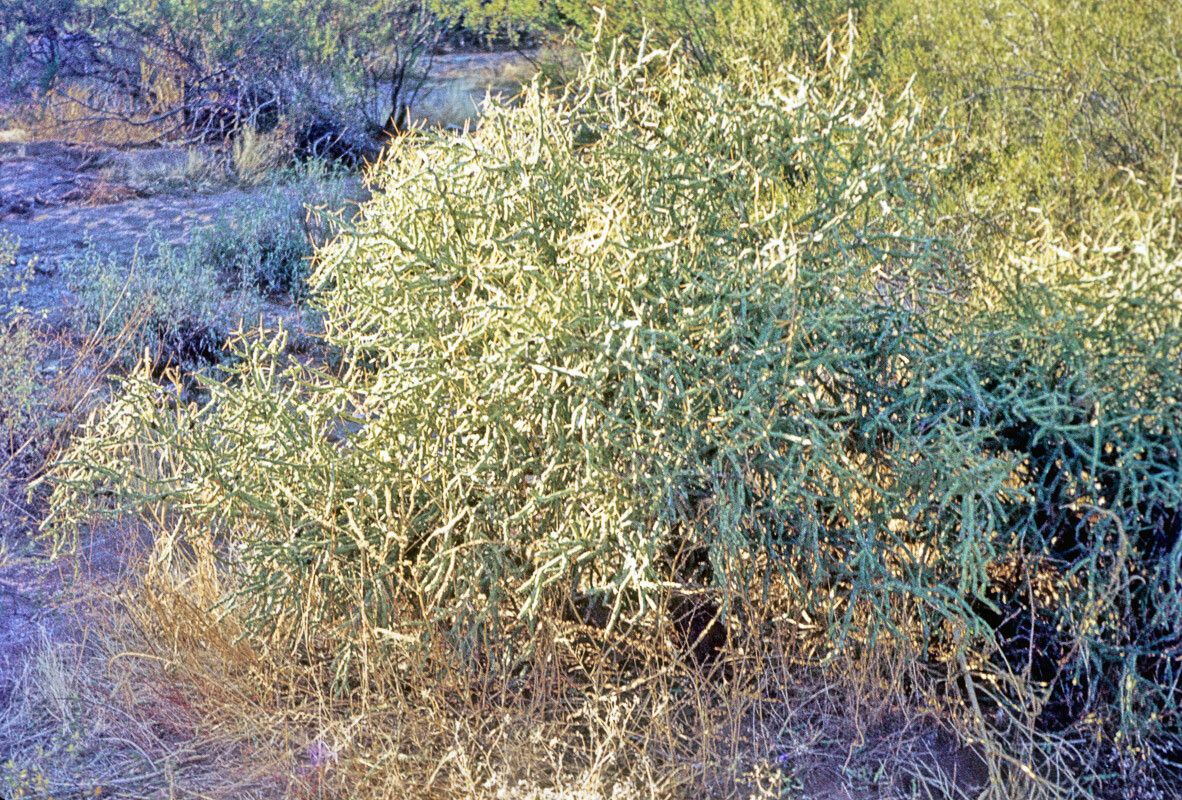
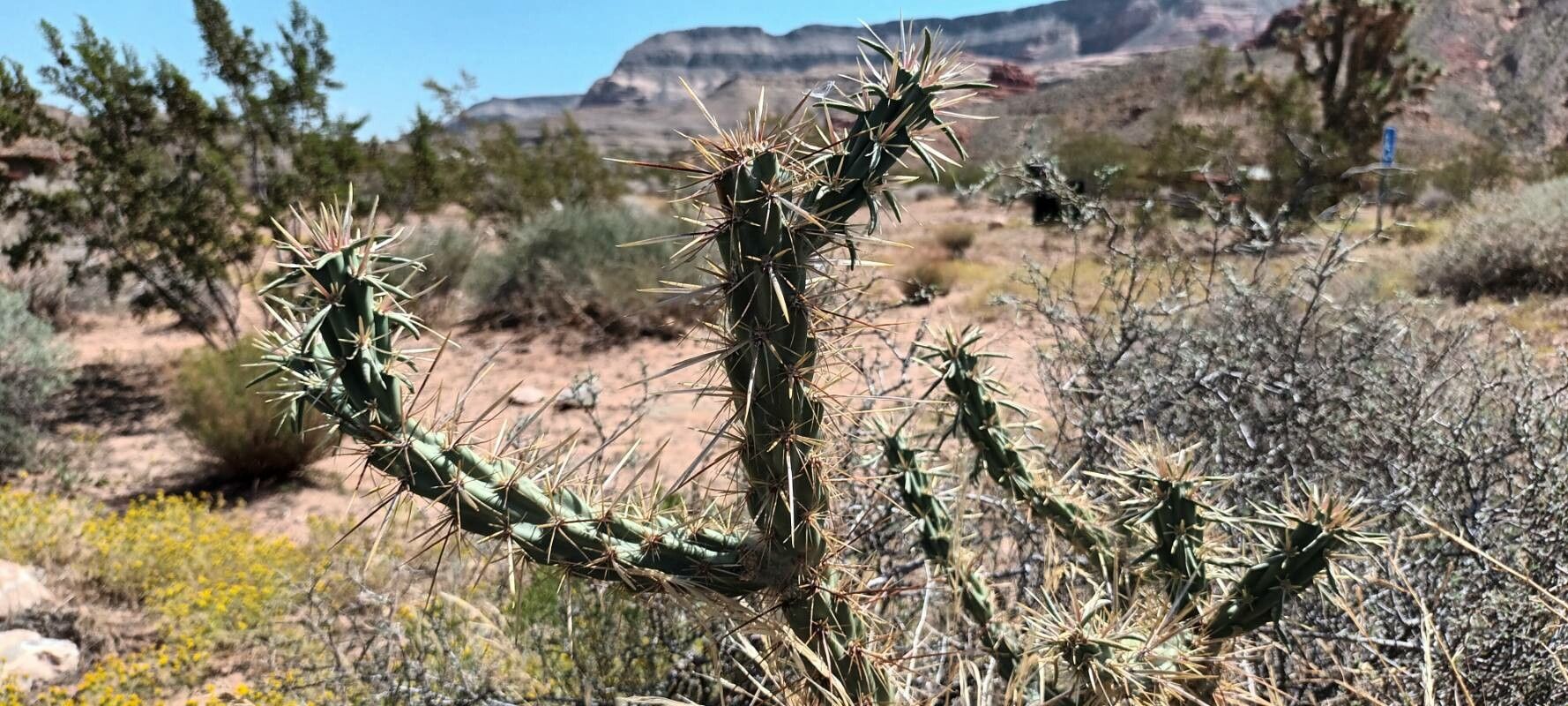
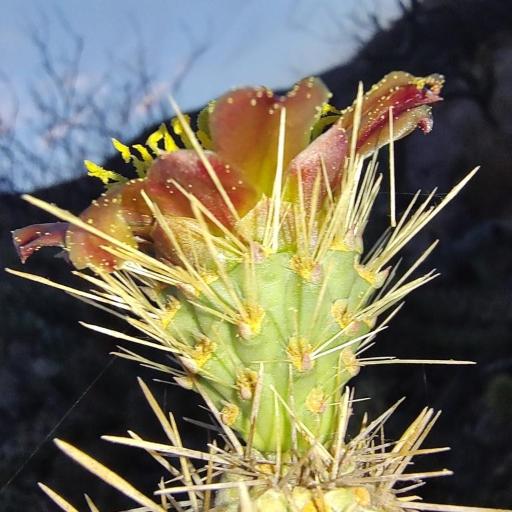
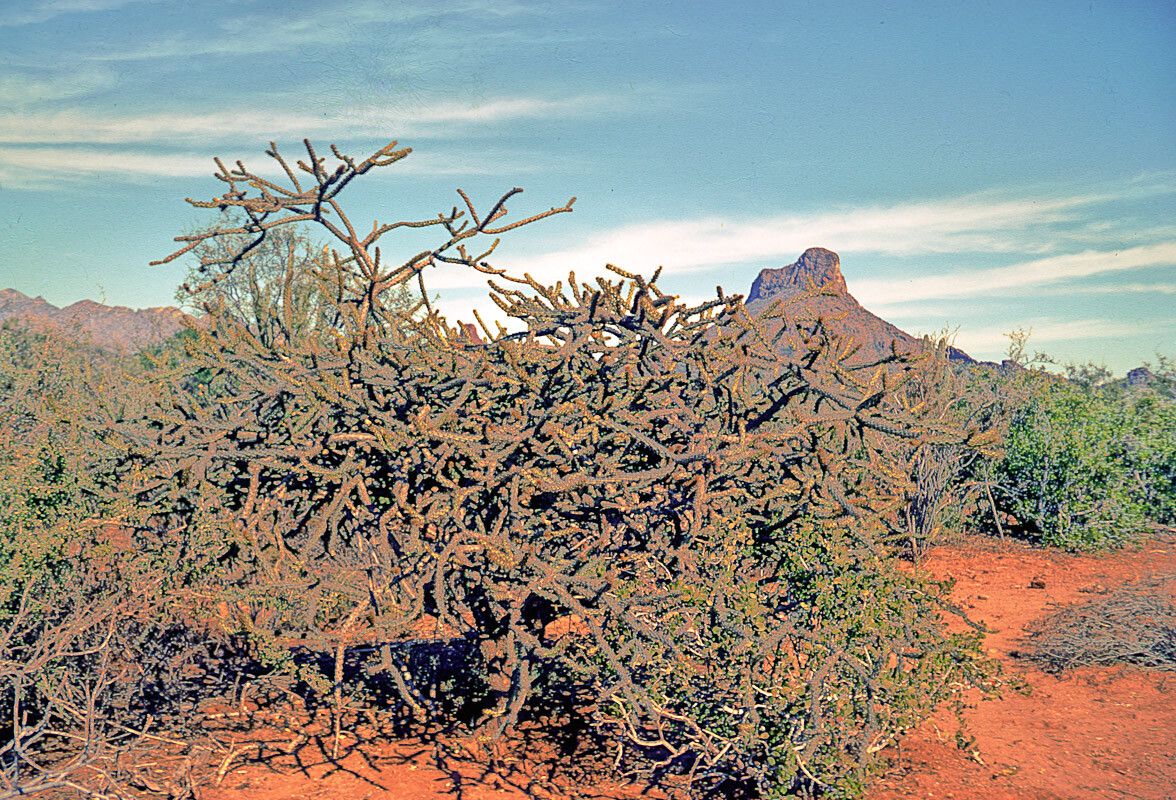
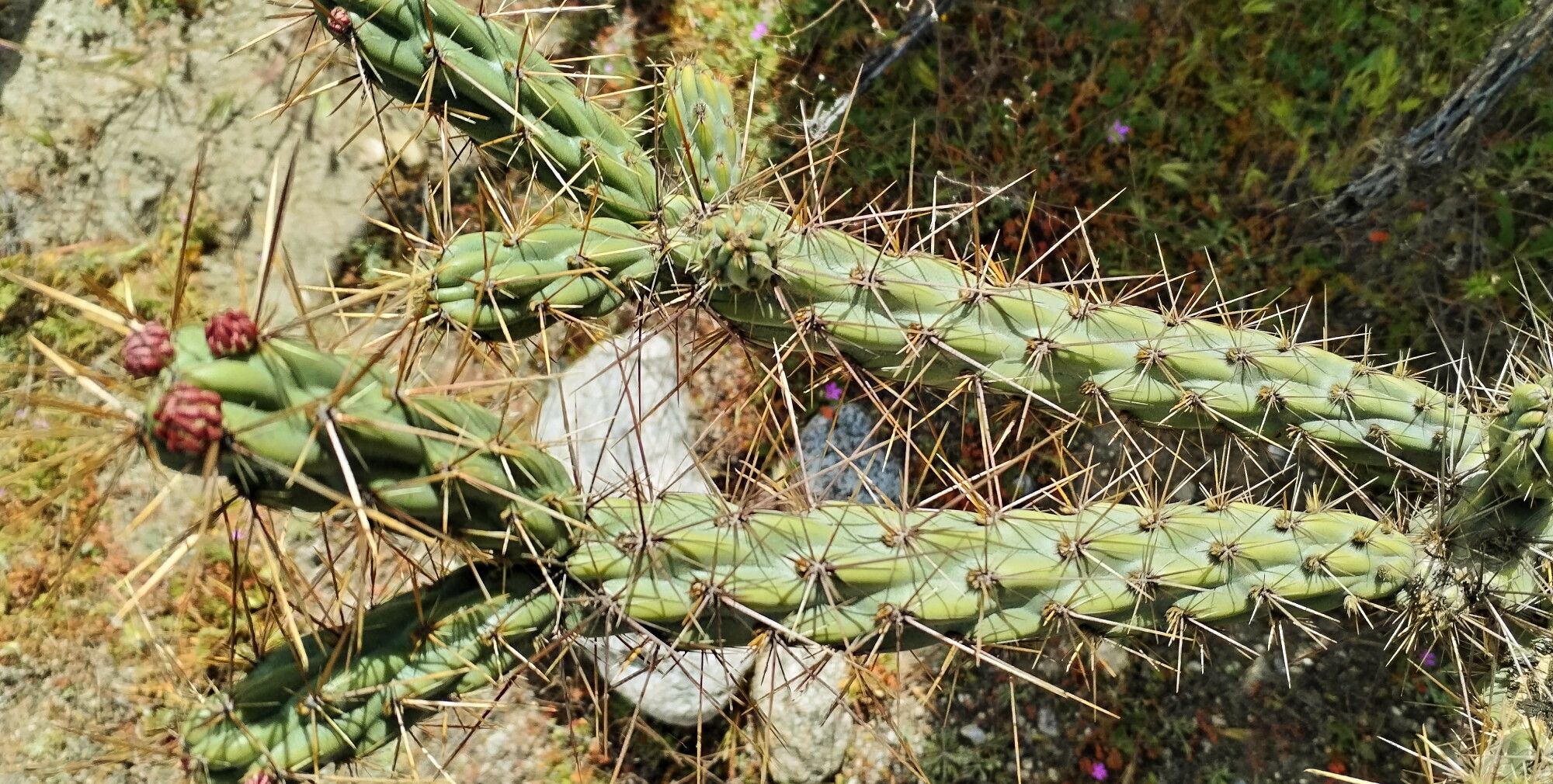
Cylindropuntia ramosissima is a species of cactus known by the common names diamond cholla and branched pencil cholla.
Pencil cholla shows strong resistance to disease and generally remains healthy under normal care without easily becoming ill. That said, it can be vulnerable to mealybugs; these pests may cause some harm but typically do not pose a serious danger. Regarding its care needs, Pencil cholla tolerates drought and does not require frequent watering. It can endure extended periods without water and needs little fertilizer. However, if light is inadequate and it receives too much water, it is very prone to root rot. In general, Pencil cholla is a good choice for people who prefer to spend less time on plant care, though it is still important to know and meet its basic requirements. It is especially appropriate for those who are away for long stretches and might forget to water regularly.
How to keep Cylindropuntia Ramosissima.
Light
Pencil cholla does best when exposed to sunlight for most of the day. Its origin in areas with strong sun has given it the capacity to grow well in full, unfiltered light. However, if that sunlight is either reduced or made more intense, the plant's growth can be negatively affected.
Water
The pencil cholla thrives in arid environments and requires very little water. To simulate the infrequent heavy rains it naturally encounters, it should be watered every three weeks. Its succulent stems store water, allowing it to withstand extended dry spells. This ability reflects its adaptation to a dry landscape and a growth cycle that aligns with sparse rainfall.
Temperature
Pencil cholla is native to temperate regions and does best at temperatures from 59 to 100 °F (15 to 38 ℃). In its natural habitat it prefers warmer conditions. When grown in colder areas, make sure the plant stays within this preferred temperature range, especially in winter.
Fertilizer
For Pencil cholla, light fertilizer applications 1-2 times a year during the growing season are sufficient. Avoid fertilizing in winter and summer when it is dormant. Reduce fertilizer for repotted plants and wait a couple of months after repotting before fertilizing. Fertilizing supports healthy growth and encourages blooms.
Pruning
Pencil cholla requires very little pruning. To encourage healthy growth, remove any withered flowers and branches. This allows the plant to direct its nutrients toward its stronger parts.
Botanical profile.
- Plant Type
- Succulent
- Life Cycle
- Perennial
- Genus
- Cylindropuntia
- Family
- Cactaceae
- Hardiness Zone
- 8-11
- Mature Height
- 1.83 m to 2.13 m
- Mature Spread
- 1.22 m
- Leaf Color
- Green, Blue
- Leaf Type
- Deciduous
- Flower Color
- Yellow, Green
- Flower Size
- 2.54 cm
- Bloom Time
- Mid spring, Late spring
- Planting Time
- Spring, Summer, Autumn
- Harvest Time
- Summer
- Native Area
- Mexico
Other names.
Reader questions.
What do I do if I give my Pencil cholla plant too much water or too little water?
Pencil cholla is a type of succulent that can withstand long periods without water. However, if you forget to water it for a month or more, you may notice signs of thirst or damage, such as a lackluster and wrinkled appearance, dried-up or brown and crispy stems, and completely dried-out soil. To remedy this, thoroughly water the plant by submerging the pot in water for 5-10 minutes until you feel moisture on the soil surface. Overwatering is harmful to Pencil cholla and can lead to root rot, which prevents the roots from absorbing nutrients and water. Symptoms of overwatering include yellow, swollen, and translucent organs that may burst open, browning or blackening of the plant, and easy falling off. To address overwatering, improve the plant's growing conditions by providing more air ventilation and adjusting the frequency of watering. If you suspect overwatering, examine the soil and roots. If root rot has set in, the roots will appear dark brown or black, soft, mushy, or slimy. If most of the roots are affected, it may not be possible to save the plant. In that case, you can try taking healthy stems to propagate a new Pencil cholla. If only a portion of the roots are affected, remove the unhealthy ones using sterilized cutting tools, dip the remaining healthy roots in fungicide, and repot the plant in fresh, well-draining soil. With proper care, the plant can recover and start producing new growth in the next growing season.
What happens if the Pencil cholla gets too much sunlight?
Pencil cholla plants can change colors to protect themselves from too much sunlight. People sometimes purposely expose them to mild sunlight stress in the summer to enjoy the vibrant red, pink, or orange shades. This is harmless, and the plants will go back to their normal coloring during the cooler months from autumn to spring. However, if moved too quickly into direct sunlight, pencil cholla can get sunburned. Sunburned plants will have white or brown spots on the leaves that were exposed to the most sun. If this happens, it's best to move the plant to a shadier spot and water it if needed. You can also remove the damaged leaves, and new growth will eventually replace them.
What temperature is best for your Pencil cholla?
The Pencil cholla thrives in a specific temperature range of 75-90℉ (25-32℃). It is important to ensure that the temperature does not drop below 75℉ (25℃) during early winter. If necessary, you can bring the Pencil cholla indoors for better protection. Although the Pencil cholla can survive in extreme temperatures, such as as low as 50℉ (15℃), it is not ideal. If winter conditions are expected outside, it is recommended to bring the plant inside.
How often should I water my Pencil cactus?
To determine how often to water Pencil cholla, it's best to check the soil and only water when it's completely dry. You can do this by either sticking your finger or a moisture meter in the pot to check the soil beneath the surface. If it feels slightly moist, wait a few days and check again. In general, most people will need to water Pencil cholla about every two weeks in summer and once a month in winter, but this frequency can be influenced by various factors. The section below provides a list of considerations that can help you determine how often to water.
How much sunlight does Pencil cholla require for growth?
Pencil cholla thrives in bright sunlight and should ideally receive 6 or more hours of sun per day. While the exact minimum hours may vary based on sunlight intensity and environmental factors, Pencil cholla can tolerate up to 14 hours of sun per day without any issues.
How do I change the temperature for my Pencil cholla at different times when it is growing?
Pencil cholla has distinct growing phases. The first stage involves the seed transitioning from dormancy to becoming a seedling. For this process, the dormant seeds require specific environmental conditions, including a temperature range of 75-90℉ (25-32℃) for successful germination. To ensure vigorous growth, it is best to expose the plant to around 85℉(30℃) during the summer months when the temperature is most suitable. During this time, you can move your Pencil cholla from indoors to a location where it can receive ample sunlight.
What do I need to think about when watering my Pencil cholla plant?
To ensure your Pencil cholla plant receives the right amount of water, there are various environmental factors to consider. These include the size of the container, type of soil, temperature, and humidity. Firstly, the container and soil you choose will determine the frequency and amount of water needed. It's important to use a container with enough drainage holes to allow excess water to escape. A smaller container will hold less moisture, requiring more frequent watering, while a larger pot will hold more water and need less frequent watering. Avoid using an oversized pot as this can lead to overwatering. When repotting, opt for a container that is just one size larger than the current one. Since Pencil cholla has shallow root systems, a shallow container is more suitable than a deep one. In terms of timing, Pencil cholla requires less water in winter when growth slows down and the plant uses less energy and water. The cooler winter air also results in less water evaporation, causing the soil to stay wet for longer. Additionally, the climate of your location plays a role in determining watering frequency. In a humid and rainy area, less frequent watering is needed compared to a dry and arid climate. Keep in mind that even within the same geographic location, conditions can vary with the season and indoor heating or air conditioning usage. For outdoor planting, once the Pencil cholla has established its root system in the ground, it generally doesn't need supplemental watering beyond natural precipitation and dew. However, during long dry periods, occasional watering may be necessary. In areas where Pencil cholla can only be grown in a container, it can be moved outside during suitable spring and summer temperatures, and brought back indoors when temperatures start to drop. It's important to note that a potted Pencil cholla kept outdoors usually requires more water due to increased sun exposure, even if it's on a shaded porch.
What kind of sunlight does Pencil cholla require?
Pencil cholla requires abundant sunlight to thrive. These full-sun plants can do well with direct light or bright indirect sunlight. While some varieties may tolerate partial sun, they generally prefer more sunlight for optimal growth.
How can I make sure my Pencil cholla stays warm during cold seasons?
To ensure your Pencil cholla plant thrives during winter, it's best to bring it indoors. While some people choose to buy grow lights for sufficient sunlight, it may not be necessary if your home is not too dark. Instead, place your plants where they will receive the most sunlight possible. This should provide enough light for the Pencil cholla to thrive. If you have multiple Pencil cholla plants, rotate their positioning to ensure they all get enough sunlight. However, if you live in northern areas with frigid weather, avoid placing the plants too close to the window. The extreme cold could potentially damage them.
How do I water Pencil cholla?
For optimal watering of Pencil cholla plants, it is best to thoroughly soak the soil and then allow it to dry out before watering again. These plants can tolerate drought, so it's alright to let them become quite dry before watering. It is preferable to underwater rather than overwater this type of plant. When watering, ensure that the entire pot's soil is thoroughly soaked by pouring water around the rim of the planter. Avoid concentrating the water in one spot. The amount of water needed will depend on the container size and soil absorption. Give enough water for it to drain out from the drainage holes, and let the drained water sit in the saucer for 20-30 minutes to be absorbed by any dry spots in the soil. Then discard any excess water to prevent overwatering. Bottom-watering is also an effective technique for Pencil cholla, as it ensures even moisture distribution. Place the pot in a saucer of water and allow the soil to absorb moisture through the drainage holes. You'll know the soil has absorbed enough water when the top layer is moist. Although bottom-watering takes longer than top-watering, it provides a more consistent distribution of water throughout the pot. In its natural habitat, the soil of Pencil cholla plants is dry with occasional heavy rainfall. To replicate this, bottom-water your plant when the soil is completely dry. Deep soil bathing is better than frequent light watering for Pencil cholla plants.
Do I need to keep Pencil cholla away from the sun?
Pencil cholla is a plant that thrives in hot, sunny areas and is well-suited to such environments, so it doesn't require protection from the sun. However, if you're planning to move your Pencil cholla to a location with intense sunlight, you need to be cautious. It's important to allow the plant time to adjust to different conditions. Begin by gradually introducing it to a few hours of direct sunlight each day, and then slowly increase the duration. Once it has acclimated, most types of Pencil cholla can tolerate full sun without any need for protection.
What happens to my Pencil cholla when it gets too hot or too cold?
Your Pencil cholla plant thrives in the summer and prefers warm temperatures around 90℉ (32℃). However, it is important to shield it from extreme hot weather. In the winter, it is best to keep the plant dry. Pencil cholla plants do well in temperate climates with temperatures between 75-90℉ (25-32℃). It is important to note that some gardeners may expose their Pencil cholla plants to extreme temperatures, causing stress to the plants. While temperatures between 90-95℉ (32-35℃) can enhance the vibrant colors of the Pencil cholla, caution should be exercised when experimenting with such temperatures. During the hot summer months, when temperatures are extremely high, it is advisable to move the plant to a shaded area or provide protection with a shade cloth to prevent the stem and root system from getting burned.