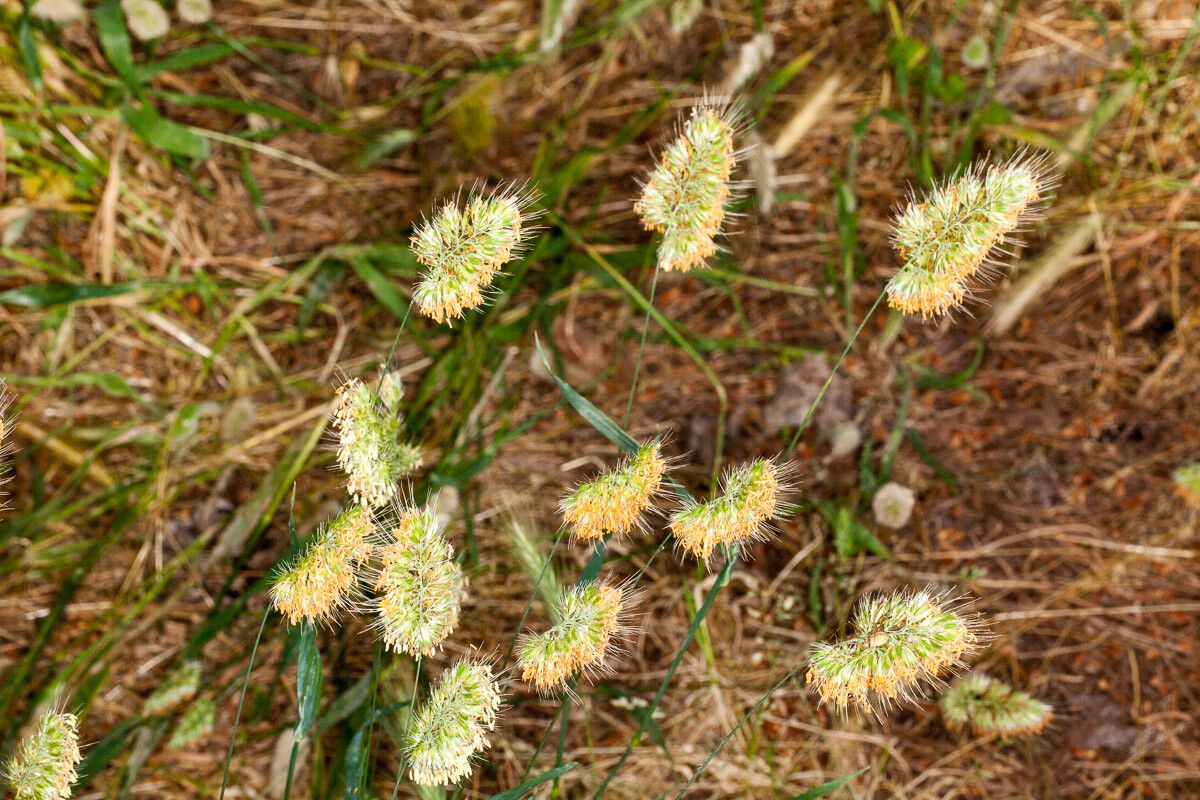
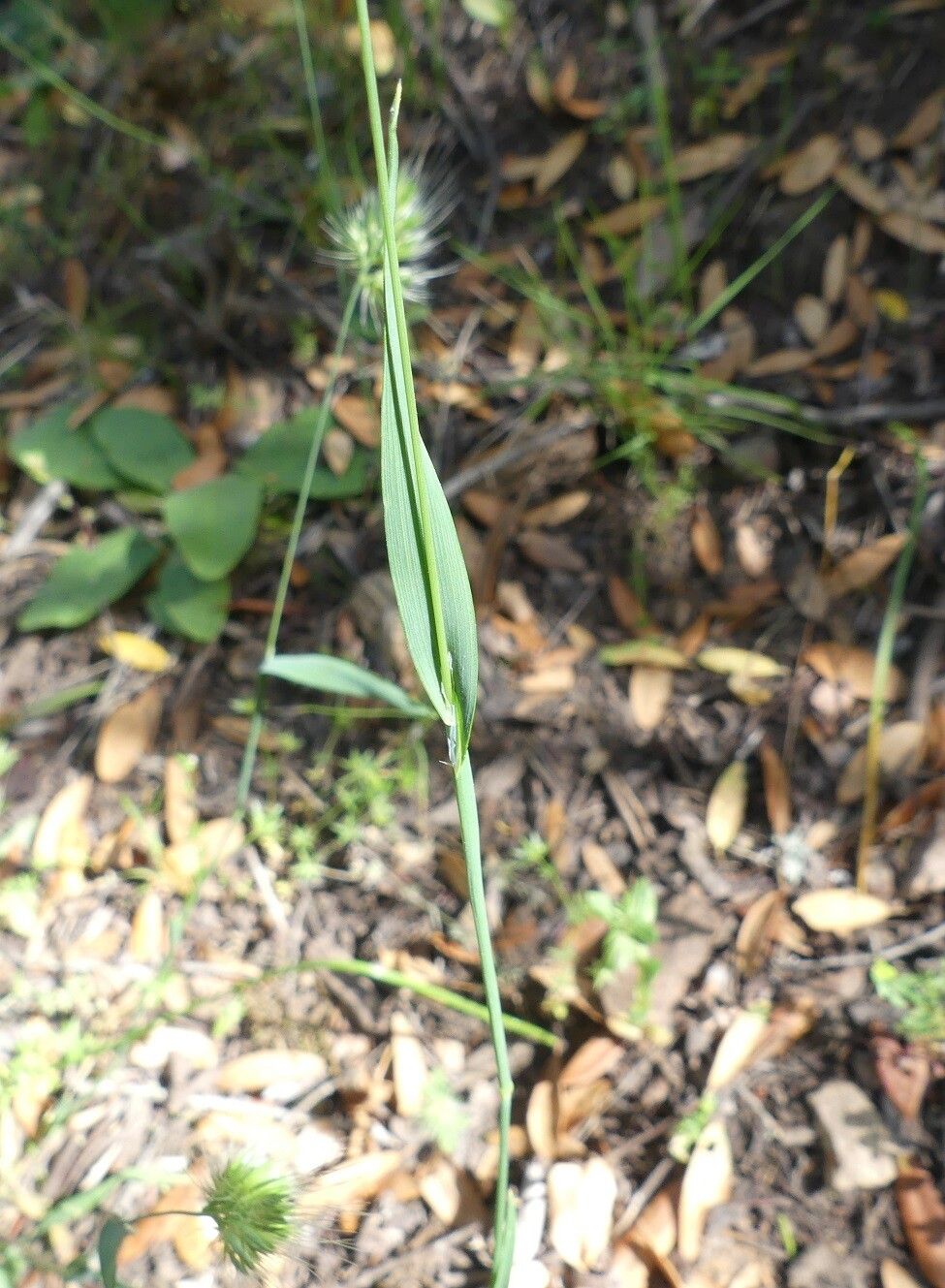
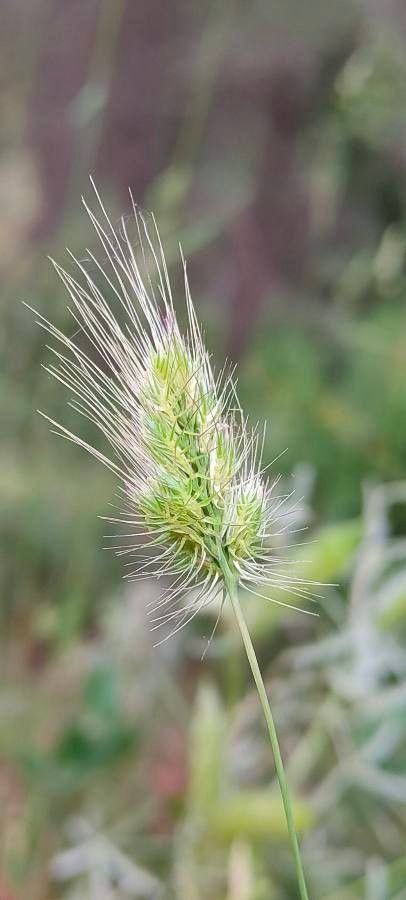
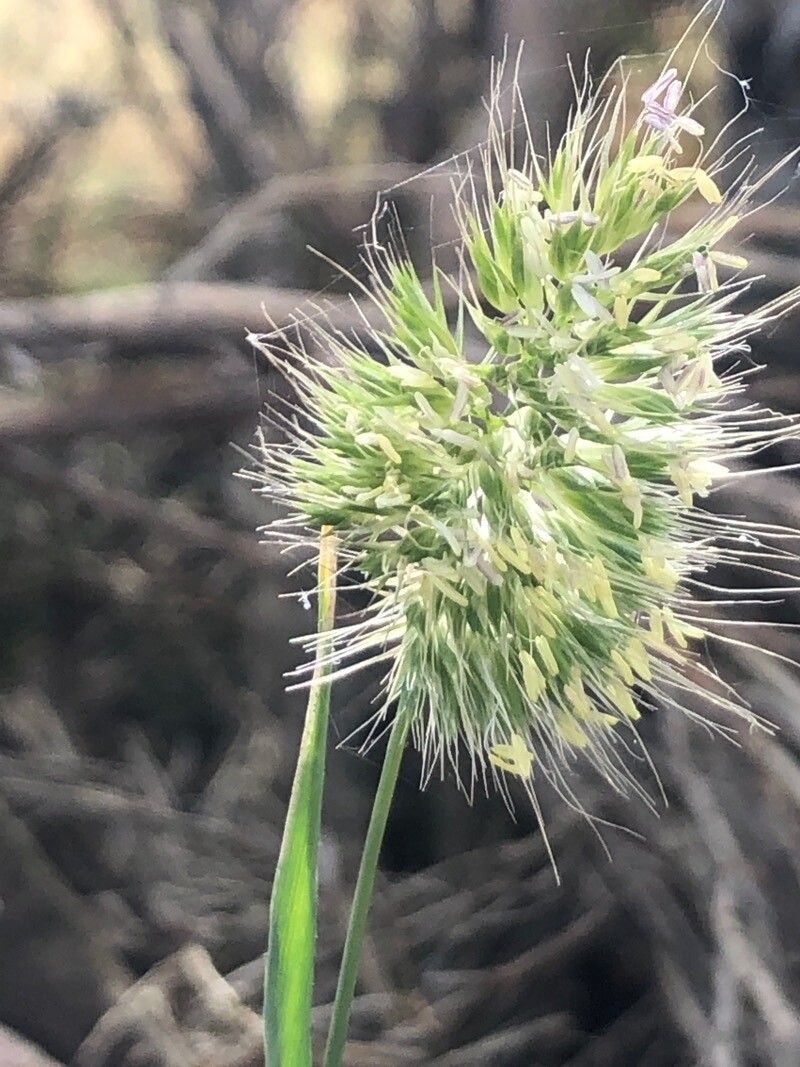
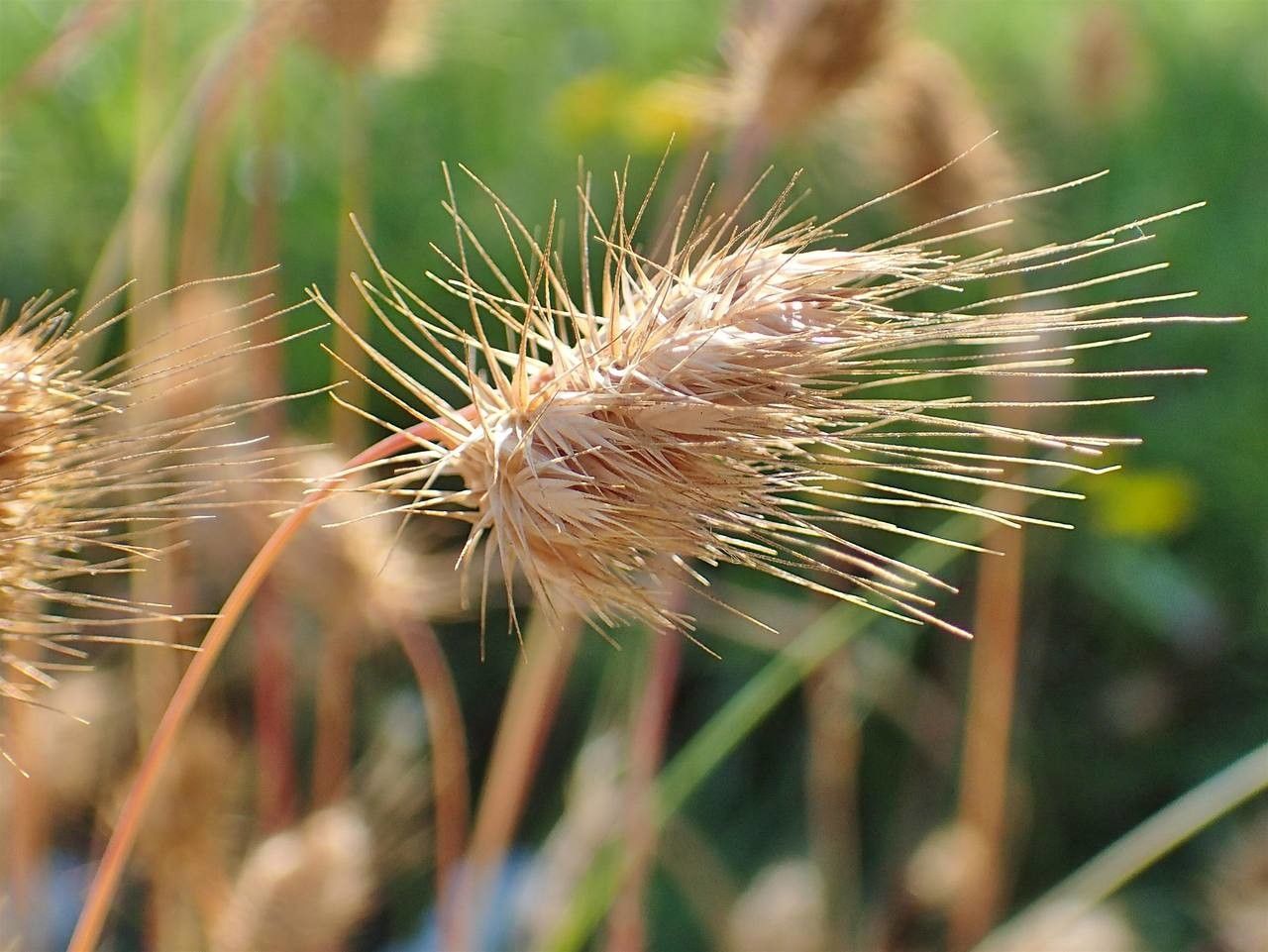
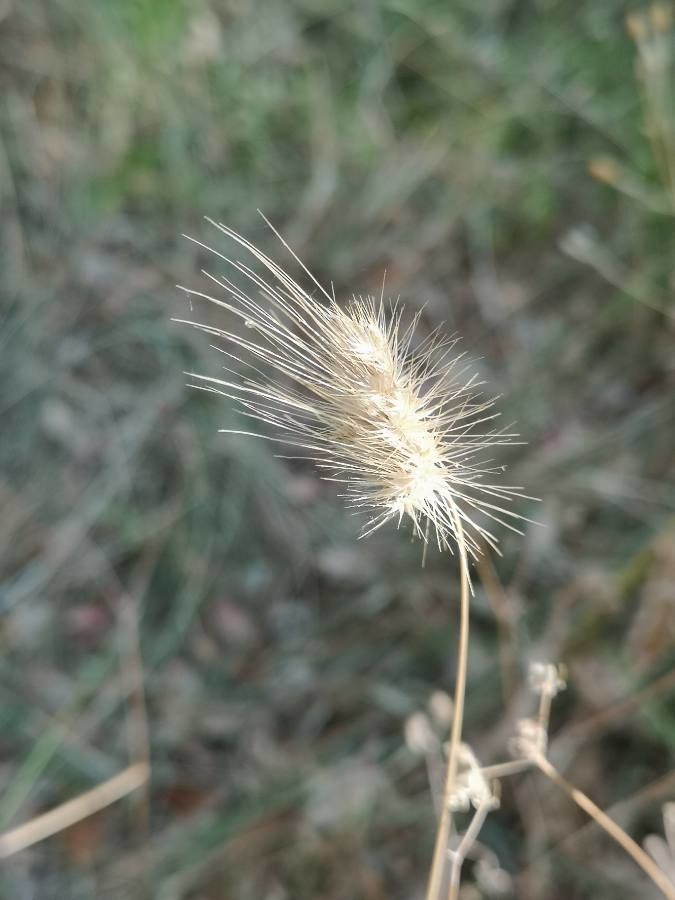
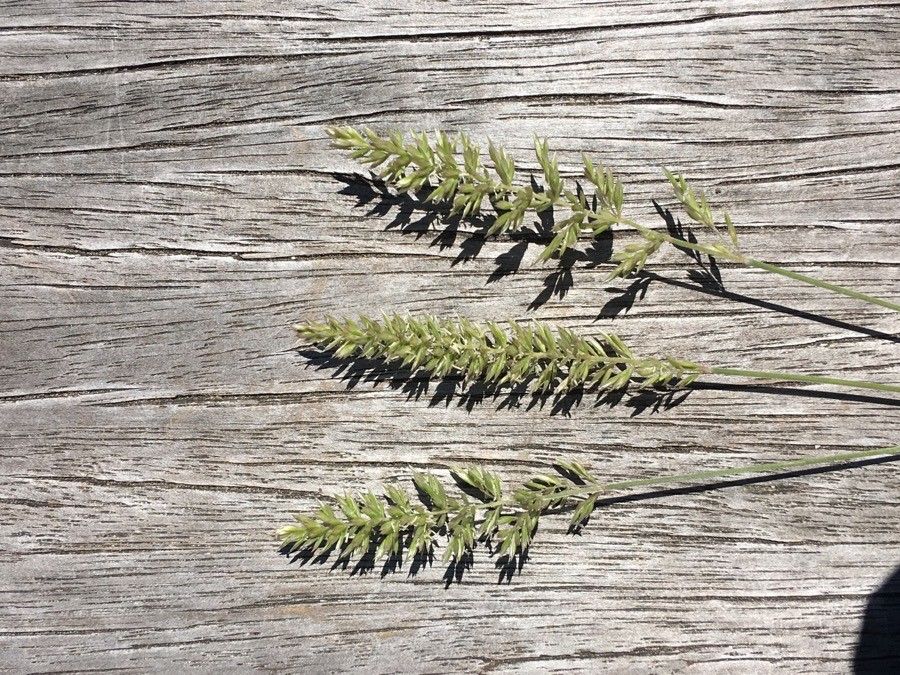
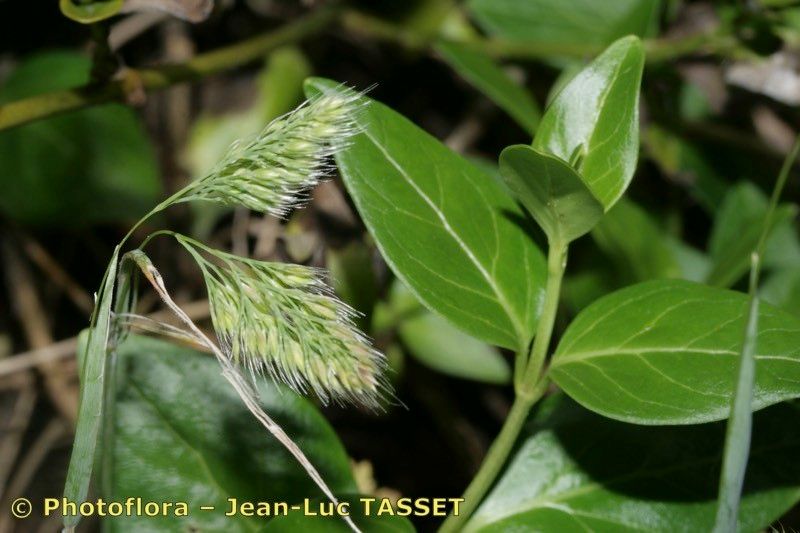
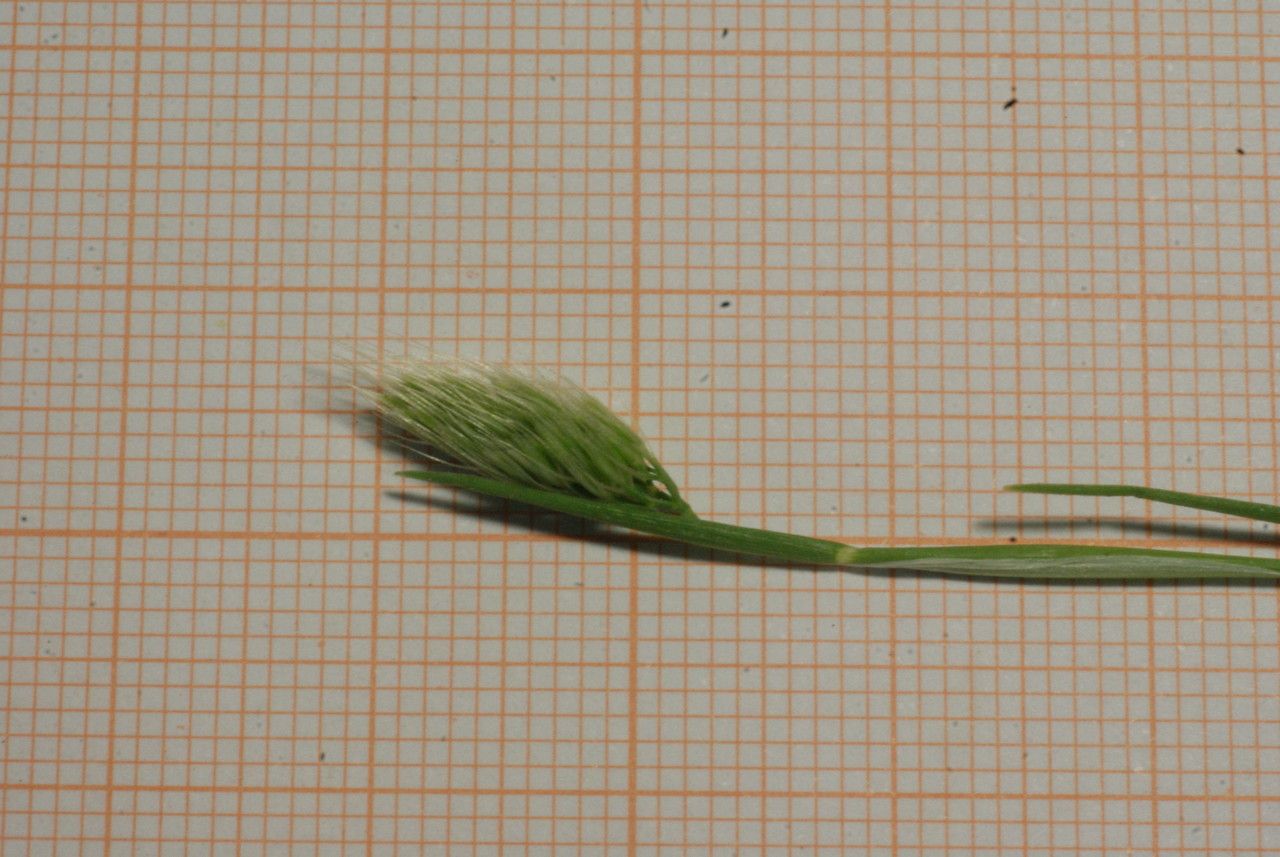
Cynosurus echinatus is a species of grass known by the common names bristly dogstail grass, rough dog's-tail and hedgehog dogtail. It is native to southern Europe, and it is known in the Americas and Australia as an introduced species and sometimes a noxious weed. An herbicide-resistant strain can be found growing as a weed in canola and wheat fields in Chile. This is an annual grass growing 10 to 50 centimeters tall. The inflorescence is a rounded or oval cluster or series of clusters of spikelets. The fertile spikelet has an awn up to a centimeter long. The awns clumped closely together into a tuft gives the inflorescence its bristly, hairy appearance.
Bristly dogstail-grass has strong resistance to diseases and is generally not susceptible to them. However, it can be affected by pests and diseases present in its environment. Such infections are generally mild. As for maintenance, this plant needs a moderate level of care. It should be pruned regularly to preserve its appearance and encourage healthy growth. Applying fertilizer can also help stimulate flowering. Bristly dogstail-grass is appropriate for anyone with an outdoor area, like a garden or patio, and does not demand extensive care experience. It may need more attention if cultivated indoors.
How to keep Cynosurus Echinatus.
Light
Bristly dogstail-grass performs best in locations receiving plentiful light throughout the day and can still grow well under partial shade. However, inadequate light can cause stunted growth. Although it originally occupied environments with broad, abundant light such as open fields, its health and vivid color may be impaired if light levels are either too low or too high.
Water
Bristly dogstail grass thrives in moderate moisture levels typical of temperate climates. To prevent drought or waterlogging, it should be watered weekly. During its growing season, the grass is particularly sensitive to soil moisture. It grows best in conditions that resemble its native habitat, which enhances its vigor and resilience.
Temperature
Bristly dogstail-grass can adjust to a broad range of temperature conditions, but its range may still be constrained by various combinations of moisture and heat. It grows best in warm summer conditions with sufficient rainfall or watering. Extended periods of cloudy, rainy weather or prolonged high temperatures can raise the likelihood of Bristly dogstail-grass dying. In winter, adequate protection from cold can improve the plant's chances of survival.
Fertilizer
Bristly dogstail-grass responds well to regular, light applications of fertilizer to encourage healthy leaf development. You should fertilize Bristly dogstail-grass about once a month during the summer. Nitrogen is important for foliage, and adding nitrogen-rich sources helps Bristly dogstail-grass thrive.
Pruning
To ensure optimal growth, bristly dogstail grass requires regular maintenance. Prune the grass from early to late spring to encourage new shoots while removing any dead foliage, but be careful to avoid heavy cutting. With timely care, you can enhance its dense appearance and control its spreading, keeping the bristly dogstail grass looking attractive throughout the growing season.
Botanical profile.
- Plant Type
- Herb
- Life Cycle
- Annual, Perennial
- Genus
- Cynosurus
- Family
- Poaceae
- Hardiness Zone
- 6-9
- Mature Height
- 10 cm to 49 cm
- Mature Spread
- 20 cm to 40 cm
- Leaf Color
- Light Green
- Leaf Type
- Semi-evergreen
- Flower Color
- Yellow, Green, Purple
- Flower Size
- 0.25 cm to 1.78 cm
- Bloom Time
- Late spring, Early summer
- Planting Time
- Spring, Summer
- Harvest Time
- Early summer, Mid summer
- Native Area
- Turkey, Slovakia, Montenegro, Croatia, Morocco, Slovenia, Russia, Iraq, Romania, France, Portugal, Tunisia, Cyprus, Bulgaria, Armenia, Greece, Ukraine, Serbia, Lebanon, Syria, Italy, Spain, Switzerland, Iran, Albania, Azerbaijan, Algeria
Other names.
Reader questions.
How should I water my Bristly dogstail-grass?
There are a few different ways you can water Bristly dogstail-grass, such as using a garden hose with a spray nozzle or a watering can. This plant doesn't require any specific type of water, as it can survive with rainwater, tap water, or filtered water. It's generally recommended to avoid watering this plant from overhead to prevent damage to the leaves and flowers, as well as the risk of disease. Setting up a drip irrigation system is often the most effective method for watering Bristly dogstail-grass, as it ensures even and direct watering to the soil. If you have a container-grown Bristly dogstail-grass, you can use a cup, watering can, or tap water to water it directly into the soil.
What are the sunlight requirements for Bristly dogstail-grass?
Bristly dogstail-grass requires full sun, which is above 6 hours of sunlight per day, to thrive optimally. It can also grow in partial sun, about 3-6 hours of sunlight per day. Watching how sunlight moves through your garden will help you find spots that provide a perfect balance of light and shade, ensuring the happiness of your plants.
What should I do if I either give my Bristly dogstail-grass too much water or too little water?
If you notice that your Bristly dogstail-grass is lacking moisture, the remedy is simple: water it more regularly. However, overwatering can be a more serious problem. If your Bristly dogstail-grass is overwatered, it can become susceptible to diseases that can cause it to decline and die. To prevent this, choose a suitable location for your plant that receives ample sunlight to dry the soil and has good drainage to prevent water from pooling. If you have overwatered your potted Bristly dogstail-grass, consider changing to a new pot with better drainage. When repotting, use loose soil and a pot that drains efficiently.
How essential is light for the growth of Bristly dogstail-grass?
Light is crucial for the growth of Bristly dogstail-grass, as it thrives best in areas with abundant light exposure throughout the day but can still grow satisfactorily in semi-shaded conditions. Originally found in open fields with ample light availability, its health and robust color could suffer if light exposure is overly insufficient or excessive. In case of inadequate natural sunlight, especially during winter or in less sunny spaces, artificial lights can be used to ensure optimal growth. For instance, LED lights, recommended for their ability to provide specific wavelengths, can help fulfil the plant's light needs.
How frequently should I water my Bristly dogstail-grass?
Bristly dogstail-grass requires regular watering throughout the growing season. In spring, water it once a week. As the season gets warmer, you may need to water it two to three times a week. However, be careful not to exceed this rate as it can harm the grass. Keep the soil moist but not wet, regardless of how often you water. When watering Bristly dogstail-grass in a pot, increase the frequency as the soil can dry out faster. Typically, water container-grown grass a few times per week compared to just once per week for in-ground plants.
What symptoms indicate insufficient light for Bristly dogstail-grass when grown indoors?
When Bristly dogstail-grass is grown indoors with inadequate light, it may exhibit signs such as smaller new leaves, leggy or sparse growth, faster leaf drop, slower or no new growth, lighter-colored new leaves, which are symptoms of light deficiency. These signs indicate the plant's struggle in low light conditions and its attempt to conserve resources.
How much water does my Bristly dogstail-grass require?
Determining the proper amount of water for your Bristly dogstail-grass can be done in a few ways. Some gardeners rely on checking the soil moisture by feeling it, usually aiming for the top six inches to be moist. Others prefer using a specific measurement, like two gallons per week, taking into account factors such as heat and soil dryness. However, strict guidelines may result in overwatering if your plant requires less water. When growing Bristly dogstail-grass in a container, a different approach is needed. Ensure all layers of dry soil are moistened, which can be checked by inserting a finger into the soil. Additionally, you can water until you see a slight trickle of excess water draining from the pot's holes.
What are the adverse effects of excessive sunlight on Bristly dogstail-grass?
Excessive sunlight can harm Bristly dogstail-grass, leading to chlorosis, sunscald, leaf curling, wilting, and leaf scorching. These conditions represent various ways in which too much sunlight damages the plant, affecting its ability to photosynthesize and ultimately its health and survival.
How can I know if I'm giving enough water to my Bristly dogstail-grass?
Avoiding overwatering Bristly dogstail-grass can be tricky. These plants have deep roots that need weekly moisture, but they are also prone to root rot and browning if overwatered. Underwatering is less common, as they can survive without regular watering, but if neglected for too long, they may wilt and develop dry leaves.
What solutions can be applied to resolve light-related issues for Bristly dogstail-grass?
To ensure optimal growth, gradually moving plants to a sunnier location each week until they receive at least 6 hours of direct sunlight daily is recommended. Utilizing a south-facing window and keeping curtains open during the day for maximum sunlight exposure helps for indoor plants. Additionally, if necessary, using artificial light, such as a desk or ceiling lamp for at least 8 hours daily or investing in professional plant grow lights, can offer ample light. For outdoor plants, gradual repositioning to sunnier spots while avoiding sudden changes in light intensity is crucial to prevent sunburn. Reducing obstructions by pruning trees or transplanting smaller plants during their dormant period to a location with ample sunlight can also be beneficial.
How do I water my Bristly dogstail-grass in different seasons?
As the season progresses, the water needs of your Bristly dogstail-grass will increase. In the spring, watering once a week should be sufficient. However, as the summer heat arrives, you will likely need to water your Bristly dogstail-grass more frequently, potentially three times a week. This is especially important if your Bristly dogstail-grass is growing in a container, as the soil can dry out faster in warm weather. In autumn, as the temperature cools and the sun is not as intense, your Bristly dogstail-grass may require less water while still in bloom.
How should I water my Bristly dogstail-grass as it grows?
Bristly dogstail-grass goes through different growth stages throughout the year, each with varying water needs. Starting from a seed, it needs more water during germination, so water often to keep the soil moist. Once it grows above the soil, it requires slightly less water. When mature, you can water it once per week. During flower development, you may need to increase watering slightly to help the process.