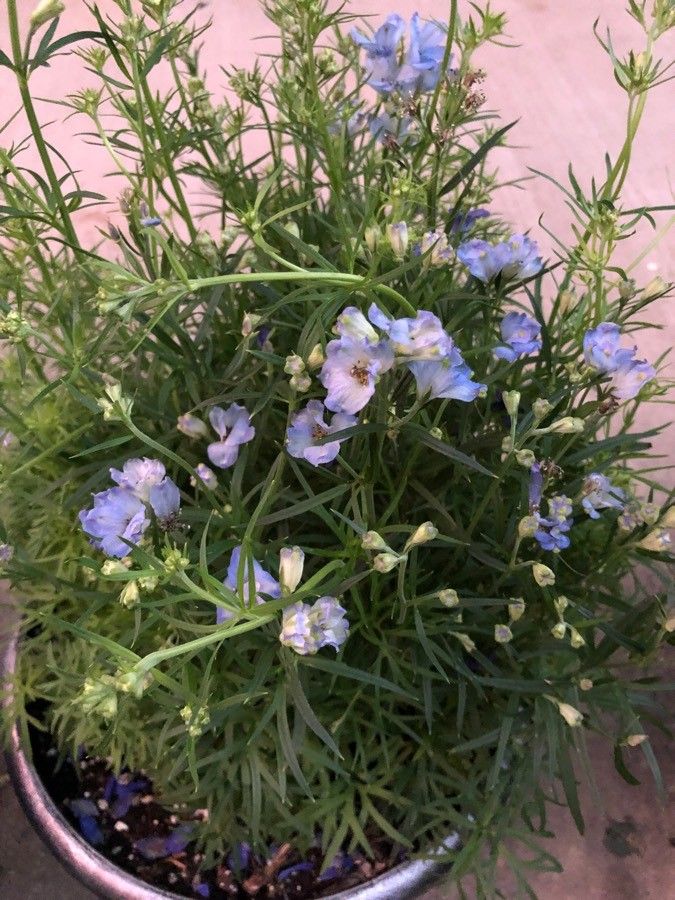
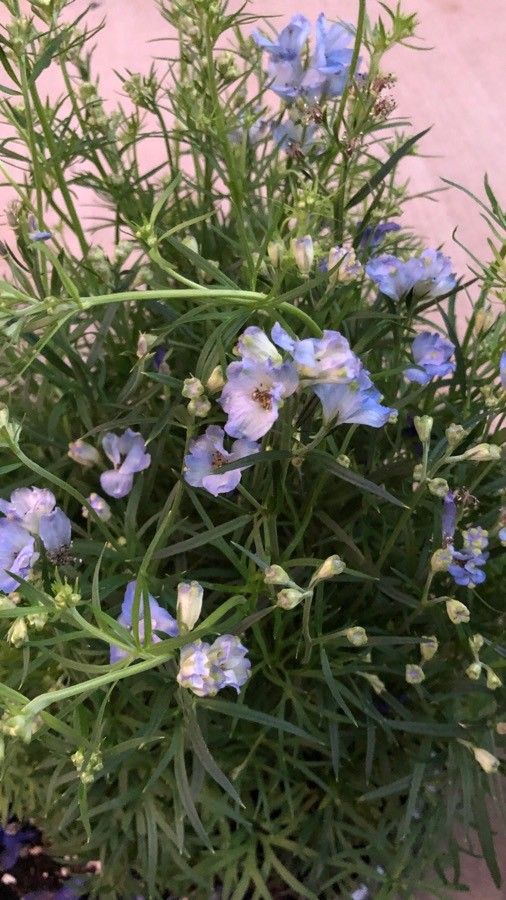
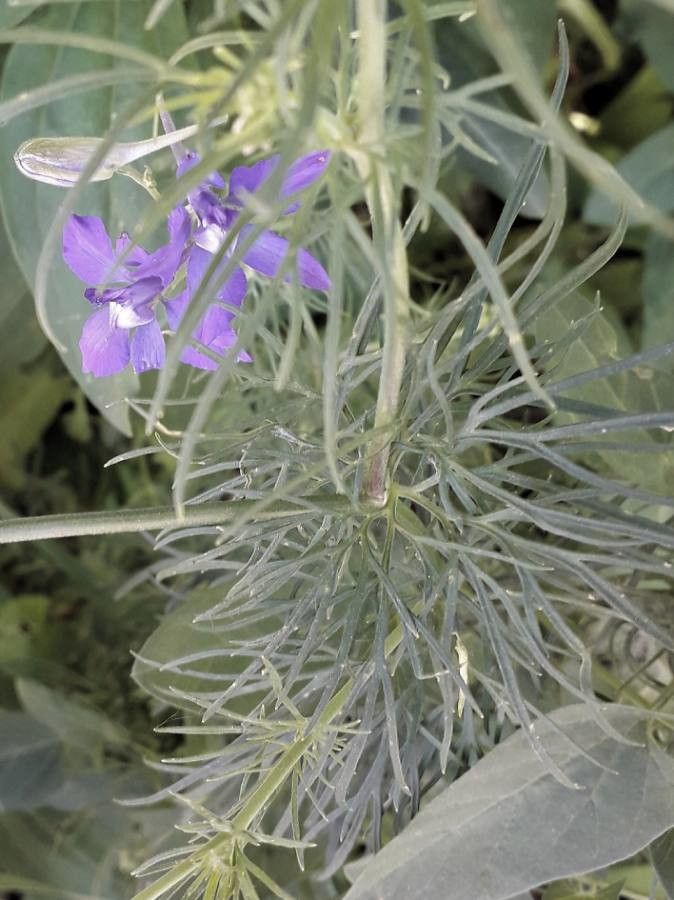
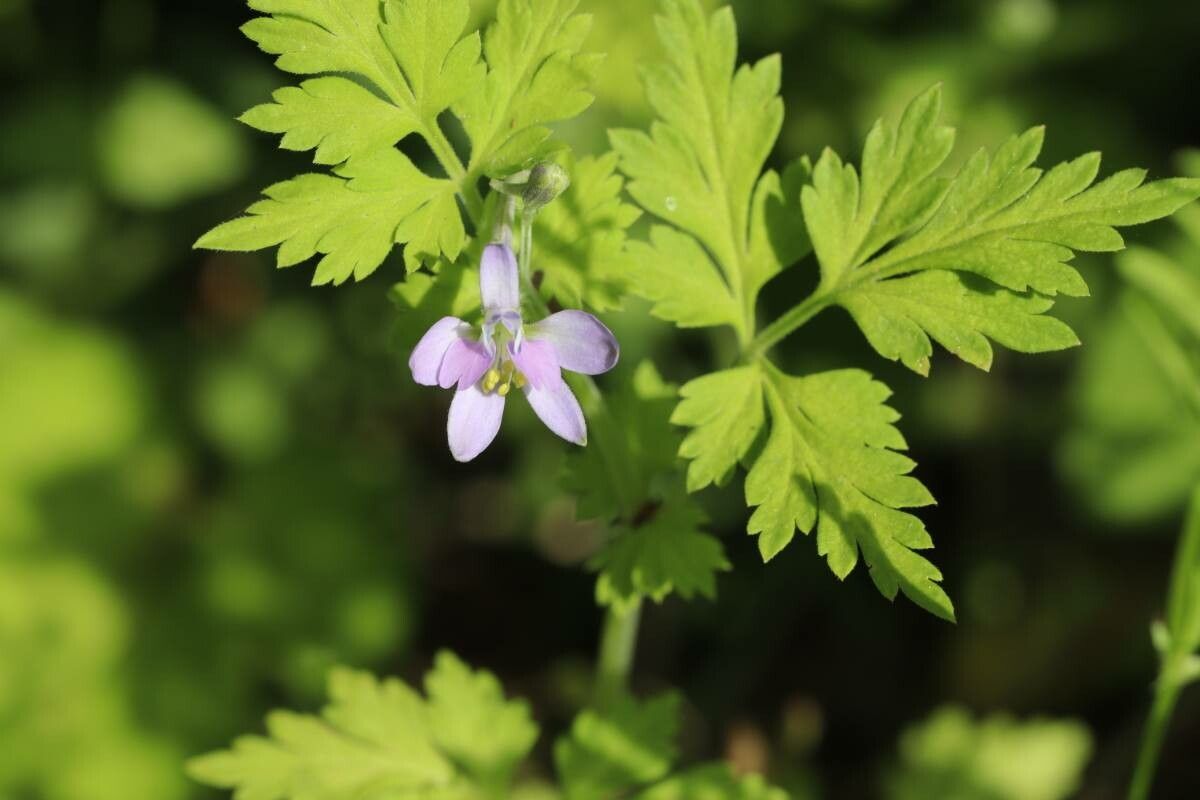
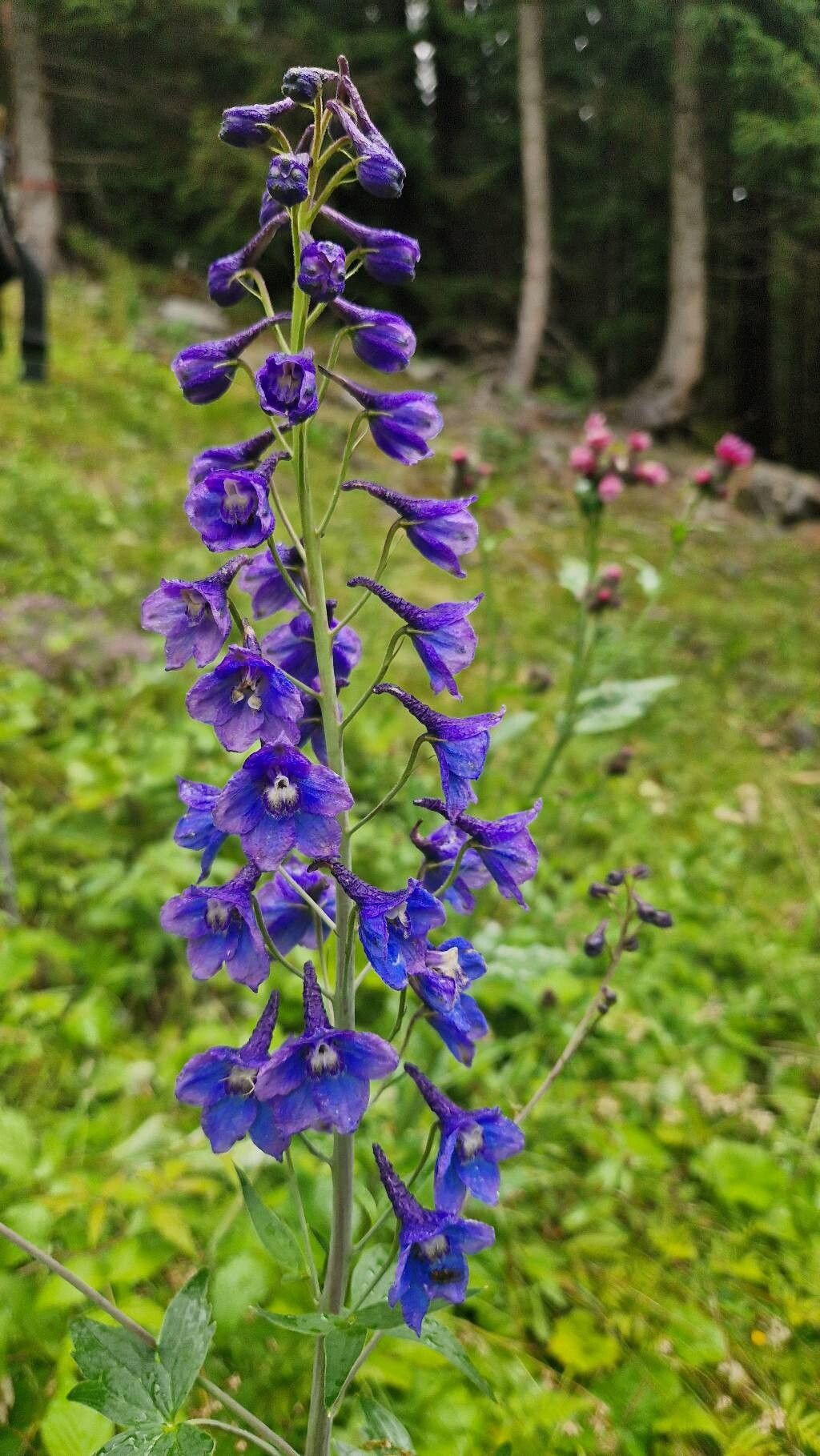
Delphinium geraniifolium, commonly known as the geranium-leaved larkspur, is a perennial herbaceous plant in the buttercup family (Ranunculaceae). Native to the Mediterranean region, it thrives in rocky areas and open woodlands.
This plant can grow up to 60 cm tall and features deeply lobed leaves that resemble those of a geranium. The flowers are arranged in tall spikes, reaching up to 30 cm in length. Typically, the flowers are blue or purple with white centers, but they can also appear in pink or white hues.
Delphinium geraniifolium blooms from late spring through early summer, attracting pollinators like bees and butterflies. It prefers well-drained soil and full sun exposure but can tolerate partial shade.
Historically, the plant has been used for its anti-inflammatory properties in medicinal applications. However, it is important to note that all parts of the plant are toxic if ingested.
Overall, Delphinium geraniifolium is a beautiful addition to any garden or landscape, with its striking blue-purple flowers and unique foliage that resembles geranium leaves.
How to keep Delphinium Geraniifolium.
Water
Clark Valley Larkspur needs consistently moist soil to produce healthy flowers. During dry periods, make sure to water the plant thoroughly, ensuring the soil remains damp at least 2.5 cm (1 inch) below the surface. Be careful not to overwater, as this can lead to root and crown rot.
Fertilizer
The Clark Valley Larkspur requires regular feeding, as it is a heavy feeder. After the roots have developed, apply a 10-10-10 fertilizer or an organic alternative every 2-3 weeks. It's important to avoid fertilizers high in nitrogen. If you prefer using chemical fertilizers, apply them twice during the growing season: once in the spring and again in the fall.
Pruning
Clark Valley larkspur is known for its tall flower spikes and divided leaves. For optimal growth and flowering, it is important to prune the plant in early spring. By removing dead stems and faded blooms, you promote healthier development. Additionally, thinning out crowded areas can improve air circulation and reduce the risk of disease. With these care techniques, you can ensure a robust display from your Clark Valley larkspur.
Botanical profile.
- Plant Type
- Herb
- Life Cycle
- Perennial
- Genus
- Delphinium
- Family
- Ranunculaceae
Other names.
Reader questions.
What are the sunlight requirements for Clark Valley Larkspur?
Clark Valley Larkspur, scientifically known as Delphinium geraniifolium, thrives under specific sunlight conditions. For optimal growth, it requires full sun, which means the plant should receive above 6 hours of sunlight daily. However, it can also tolerate partial sun conditions, where it gets about 3-6 hours of sunlight. It's worth noting the importance of monitoring sunlight patterns in your garden. Observing how sunlight moves through the space allows you to choose ideal locations for planting, ensuring a perfect balance of light and shade to keep your Clark Valley Larkspur happy.