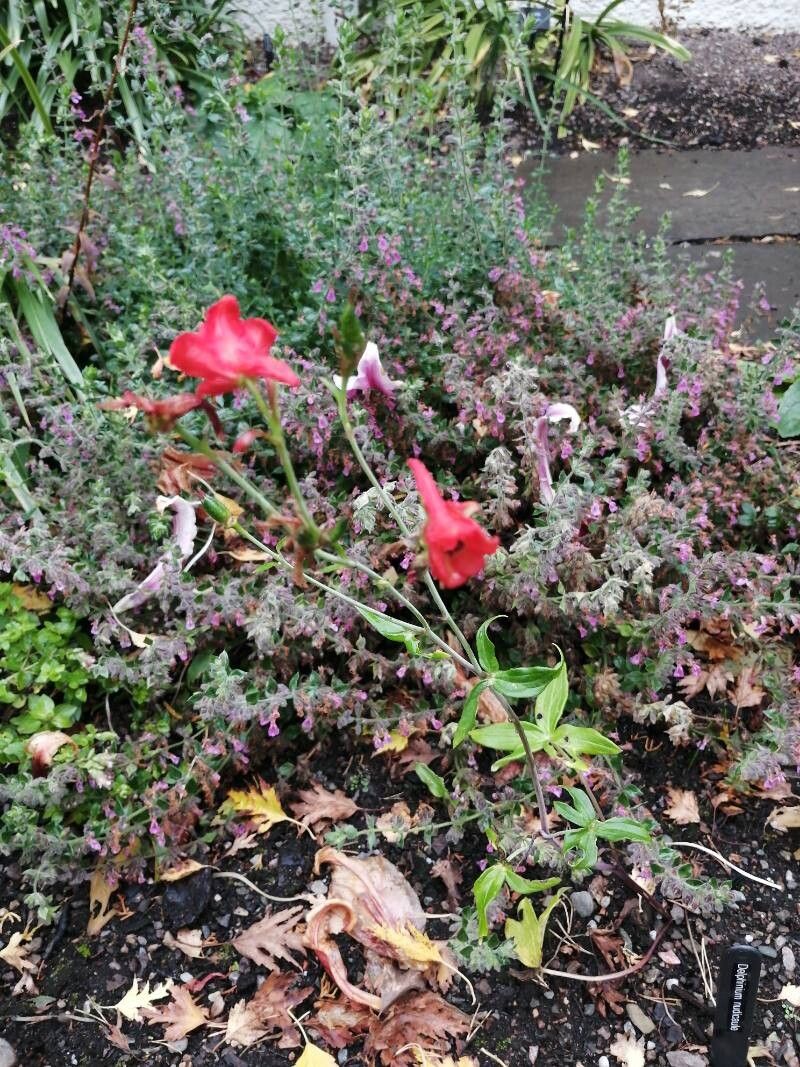
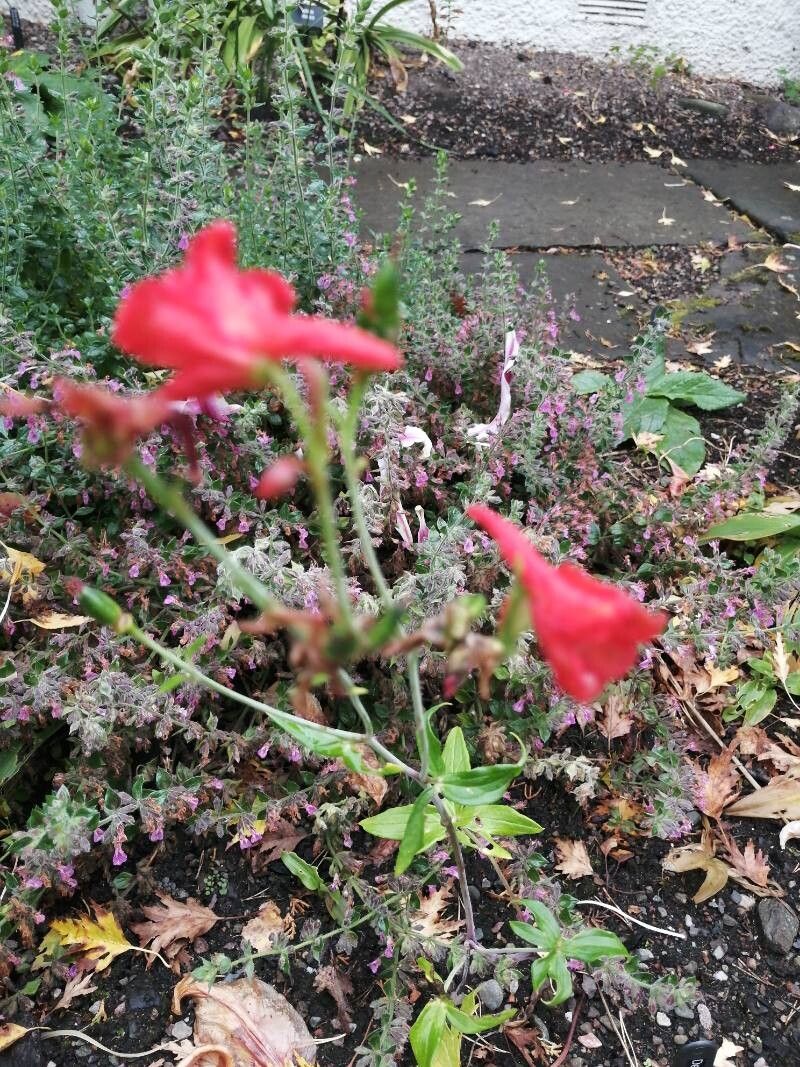
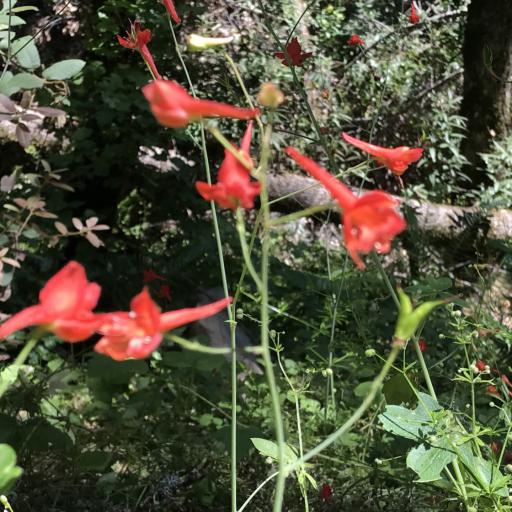
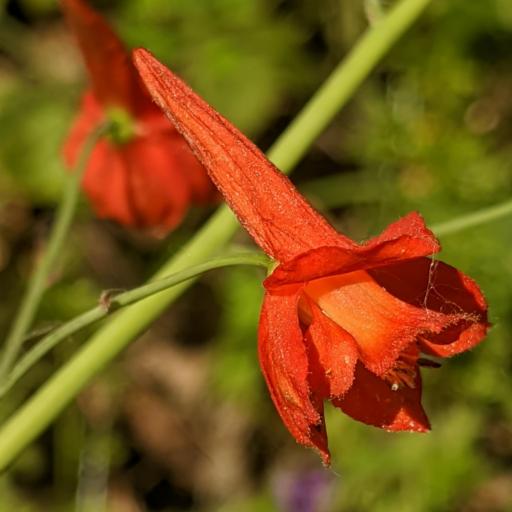
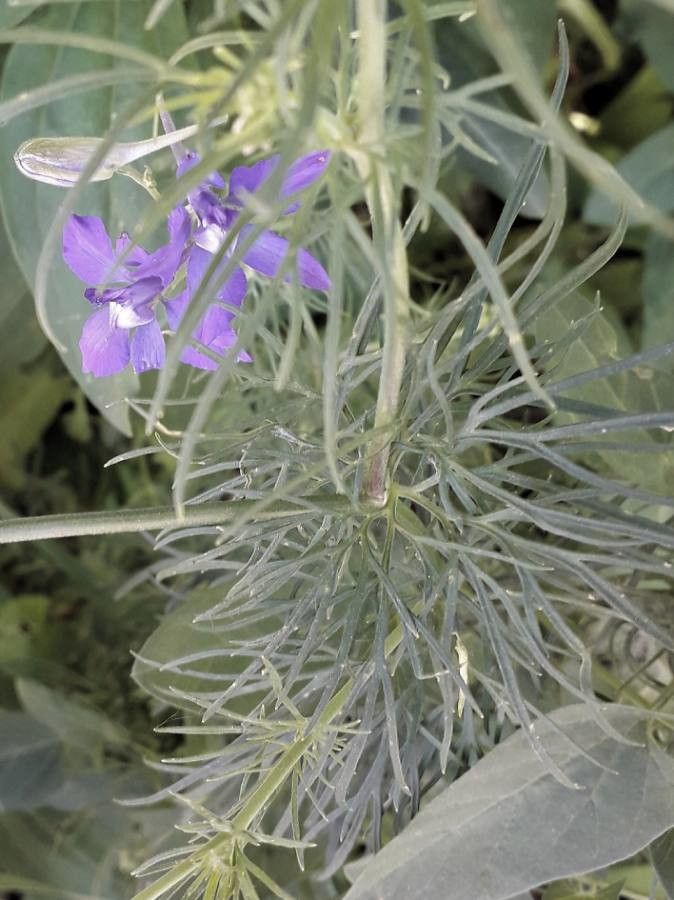
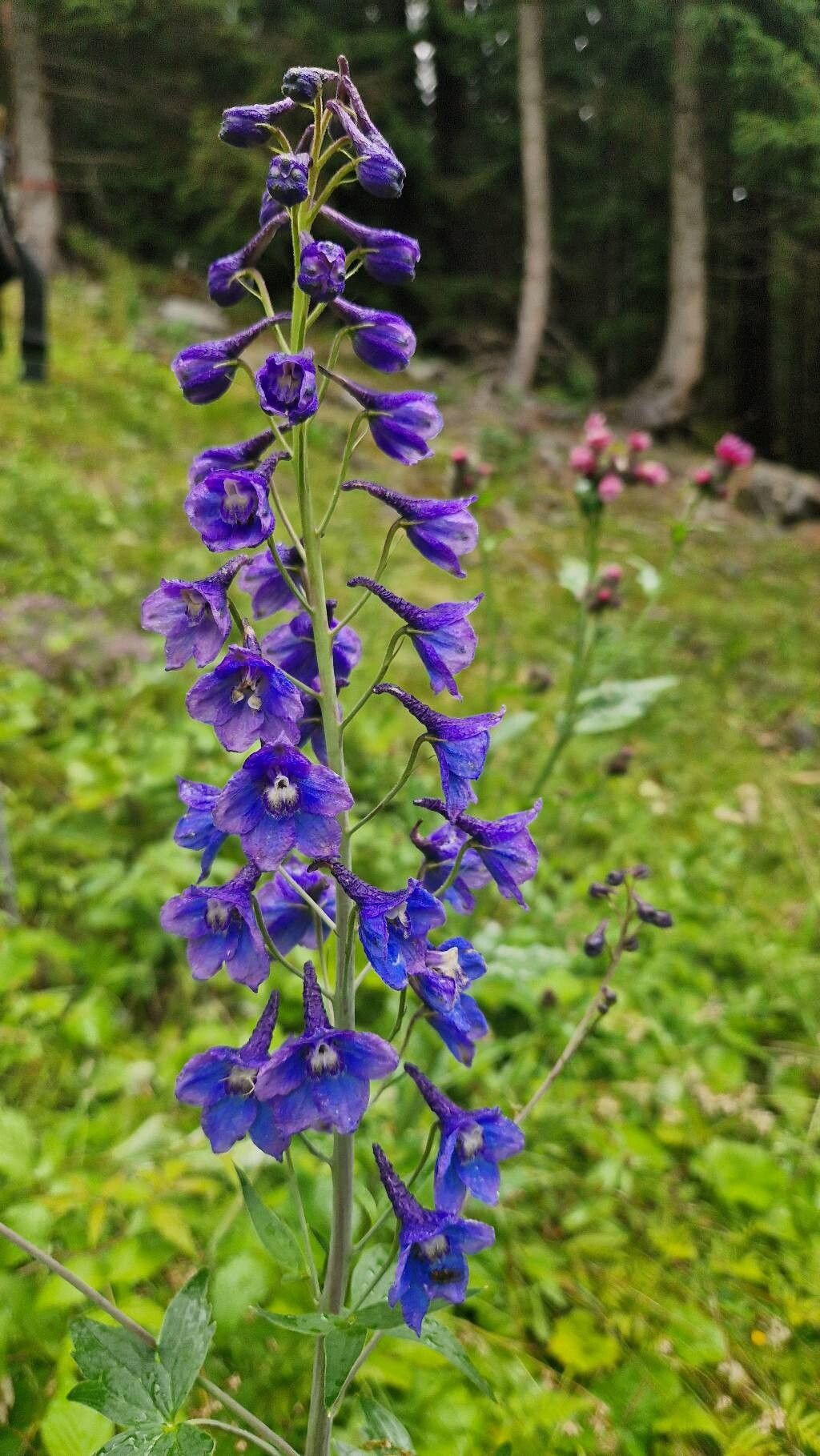
Delphinium nudicaule, known by the common names canyon larkspur, red larkspur, orange larkspur, and canyon delphinium, is a flowering perennial herb in the buttercup family, Ranunculaceae. It is native to low-elevation canyons and slopes, foothills, and mountain ranges of California from the Sierra Nevada to the California Coast Ranges, and of Oregon. It grows below 6,500 feet (2,000 m). The plant sends up thin and long 1–2 feet (0.30–0.61 m) stems with finely dissected leaves. It bears attractive larkspur flowers in shades of red and orange. The flowers are generally pollinated by hummingbirds.
Red larkspur is fairly resistant to disease and typically does not easily develop illnesses. However, it can be susceptible to pests and diseases present in its surroundings. These infections are usually mild. For care, this plant requires moderate maintenance. It should be pruned regularly to maintain a tidy appearance and support healthy growth. Fertilizing can also help encourage flowering. Red larkspur is suitable for anyone with outdoor space, such as a garden or patio, and does not demand extensive care experience. It may need more attention when grown indoors.
How to keep Delphinium Nudicaule.
Light
Red larkspur thrives when given steady, plentiful light throughout the day. It can tolerate conditions with partial shading and still maintain healthy growth. However, insufficient light can restrict its development. Its native habitats, where sunlight is abundant, reflect these preferences.
Water
Red larkspur, originally from moist woodlands, thrives with regular watering, though it is also moderately drought-tolerant. To maintain its health, water it weekly. As an herbaceous perennial, it needs well-draining soil to avoid root rot, particularly during its active growing season when taking up water is crucial.
Temperature
Red larkspur is a plant native to temperate regions and prefers temperatures of 68 to 95 °F (20 to 35 ℃). In colder months, bringing it indoors for protection can help keep it within its preferred temperature range.
Fertilizer
The best time to fertilize a Red larkspur is in early spring, as it comes out of dormancy and begins active growth. Fertilizing supplies essential nutrients for healthy development. While Red larkspur has fairly low fertilizer requirements, giving it fertilizer once a year can improve its survival and encourage better, longer-lasting blooms.
Pruning
Red larkspur showcases vibrant red flowers and benefits greatly from pruning between early and late spring. Pruning helps to stimulate both growth and blooming. Be sure to remove any dead stems and thin out crowded areas to improve air circulation. Additionally, clean your tools to prevent infection, which will promote a healthy appearance and robust development throughout the growing season.
Botanical profile.
- Plant Type
- Herb
- Life Cycle
- Perennial, Annual
- Genus
- Delphinium
- Family
- Ranunculaceae
- Hardiness Zone
- 3-7
- Mature Height
- 0.3 m to 1.22 m
- Mature Spread
- 30 cm
- Leaf Color
- Green
- Leaf Type
- Semi-evergreen
- Flower Color
- Red
- Flower Size
- 2.03 cm to 5.08 cm
- Bloom Time
- Mid spring, Late spring, Early summer
- Planting Time
- Spring, Summer
- Harvest Time
- Summer
Other names.