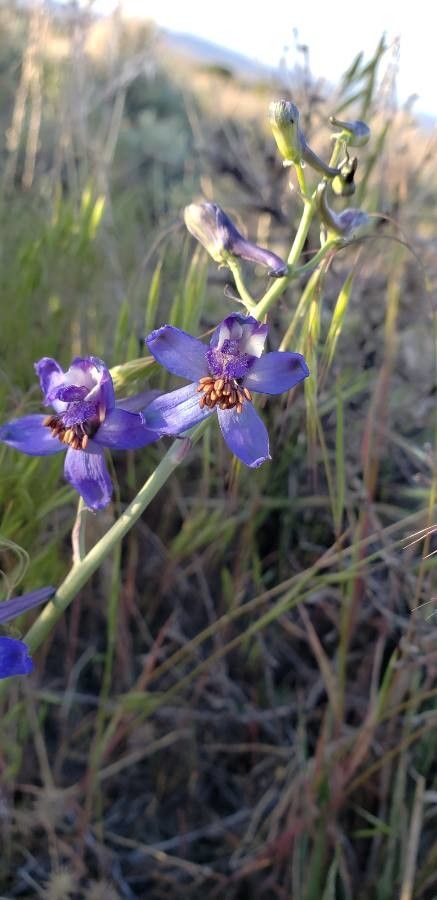
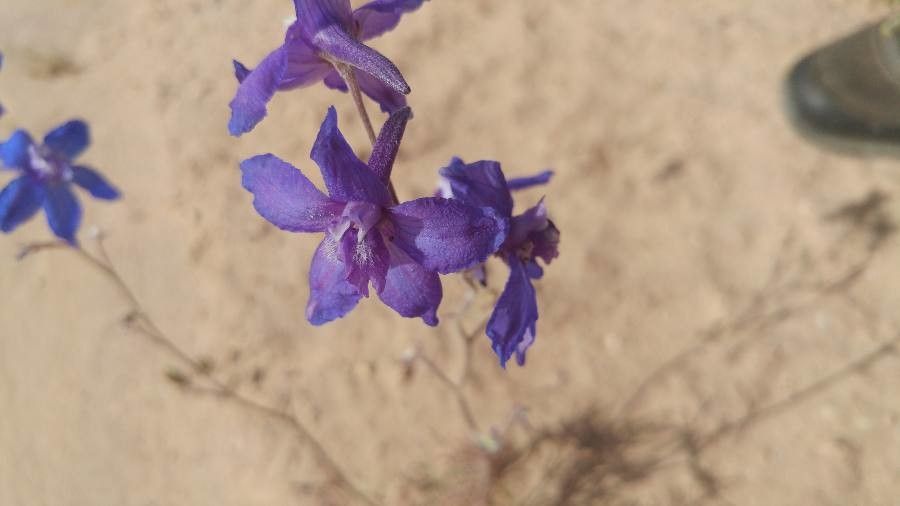
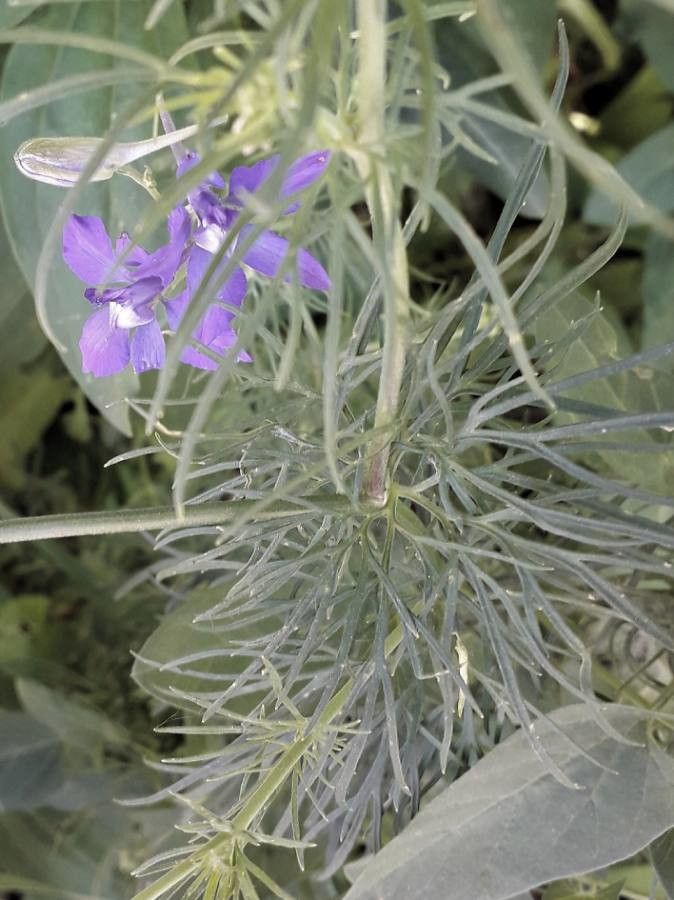
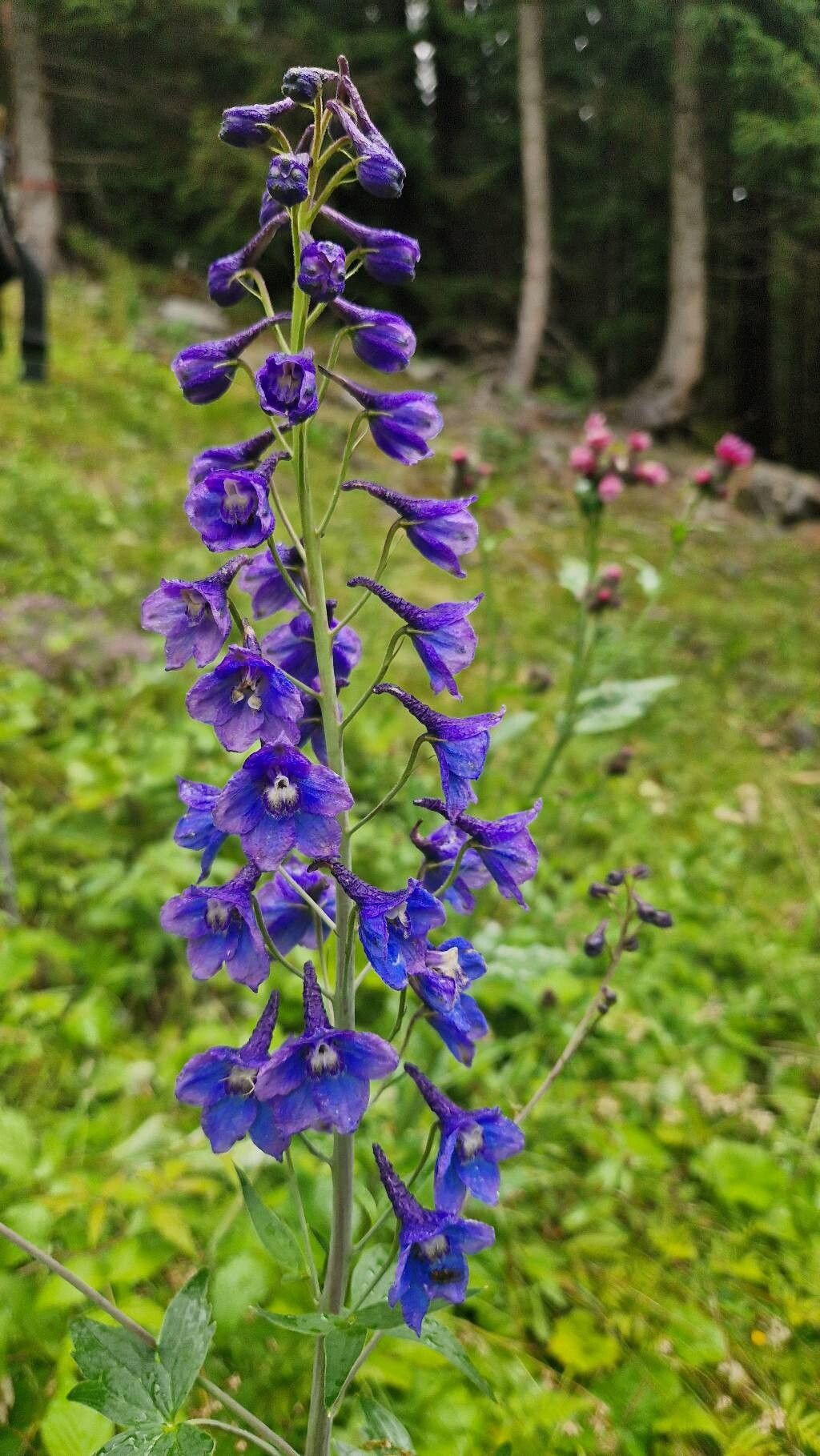
Delphinium scaposum, the tall mountain larkspur or bare‑stem larkspur, is a species of flowering plant in the family Ranunculaceae. It is native to the desert southwest of the United States, and to Sonora in northwestern Mexico. A perennial reaching 60 cm (24 in), it prefers dry, gravelly soils, and is "avidly" pollinated by bumblebees and hummingbirds. Its chromosome count is 2n=16.
Tall mountain larkspur has good disease resistance and is typically not prone to illnesses. However, it can be vulnerable to pests and diseases present in its environment. These infections are generally mild. Regarding care, this plant needs moderate maintenance. It should be pruned regularly to preserve an attractive appearance and healthy growth. Fertilizing can also encourage flowering. Tall mountain larkspur is suitable for anyone with outdoor space, such as a garden or patio, and does not demand extensive care experience. It may require more attention when cultivated indoors.
How to keep Delphinium Scaposum.
Light
Tall mountain larkspur is a sun-loving, perennial herbaceous plant that comes from open habitats and is frequently found in meadows and grasslands. It prefers full sun but can also tolerate partial sun.
Water
Tall mountain larkspur requires consistently moist soil for healthy flowering. During dry periods, make sure the water soaks at least 2.5 cm (1 inch) below the surface. Be careful not to overwater, as this can lead to root and crown rot.
Fertilizer
The best time to fertilize a Tall mountain larkspur is in early spring, when it is coming out of dormancy and starting active growth. Fertilization supplies essential nutrients needed for healthy development. Although Tall mountain larkspur has fairly low fertilizer requirements, applying fertilizer annually can improve its survival and encourage better, longer-lasting blooms.
Pruning
Tall mountain larkspur is characterized by its towering floral spikes. To promote growth and blooming, it's important to prune these plants in early spring. During pruning, remove any dead or diseased stems, as well as faded spikes. Thinning the plant can improve air circulation and help reduce disease. Regular pruning not only maintains the plant's health and shape but also prevents it from becoming leggy. For additional gardening tips, consult more detailed guides.
Botanical profile.
- Plant Type
- Herb
- Life Cycle
- Perennial
- Genus
- Delphinium
- Family
- Ranunculaceae
- Hardiness Zone
- 4-8
- Mature Height
- 30 cm to 91 cm
- Mature Spread
- 20 cm to 30 cm
- Leaf Color
- Dark Green
- Leaf Type
- Deciduous
- Flower Size
- 2.03 cm to 3.05 cm
- Bloom Time
- Early spring, Mid spring
- Planting Time
- Spring, Summer
- Harvest Time
- Late spring, Early summer
- Native Area
- Mexico
Other names.