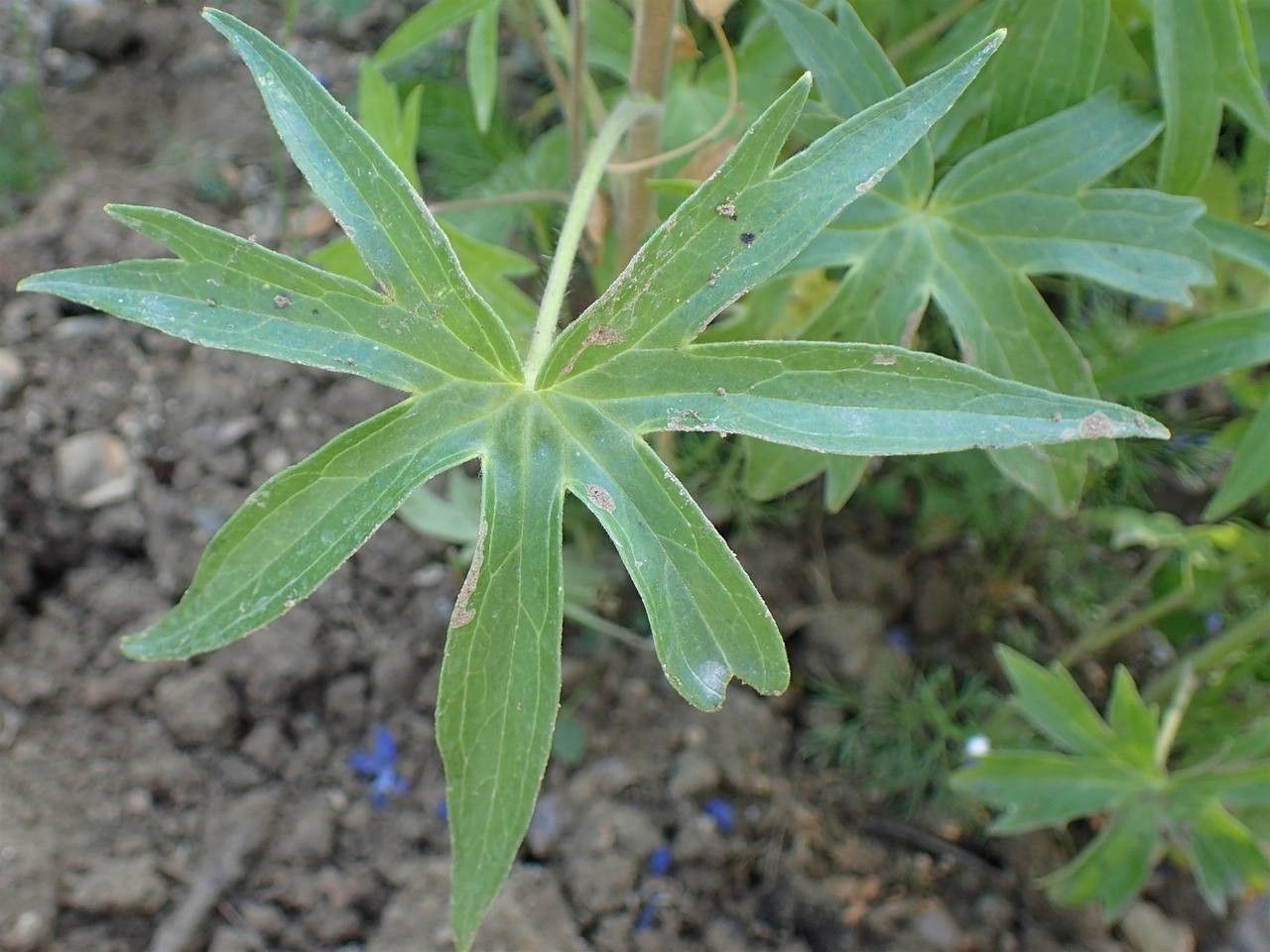
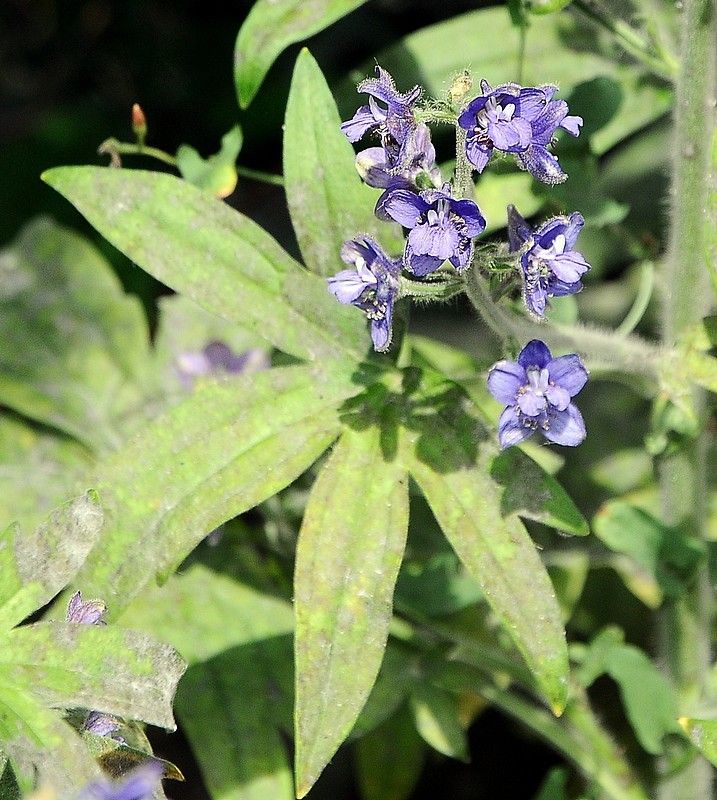
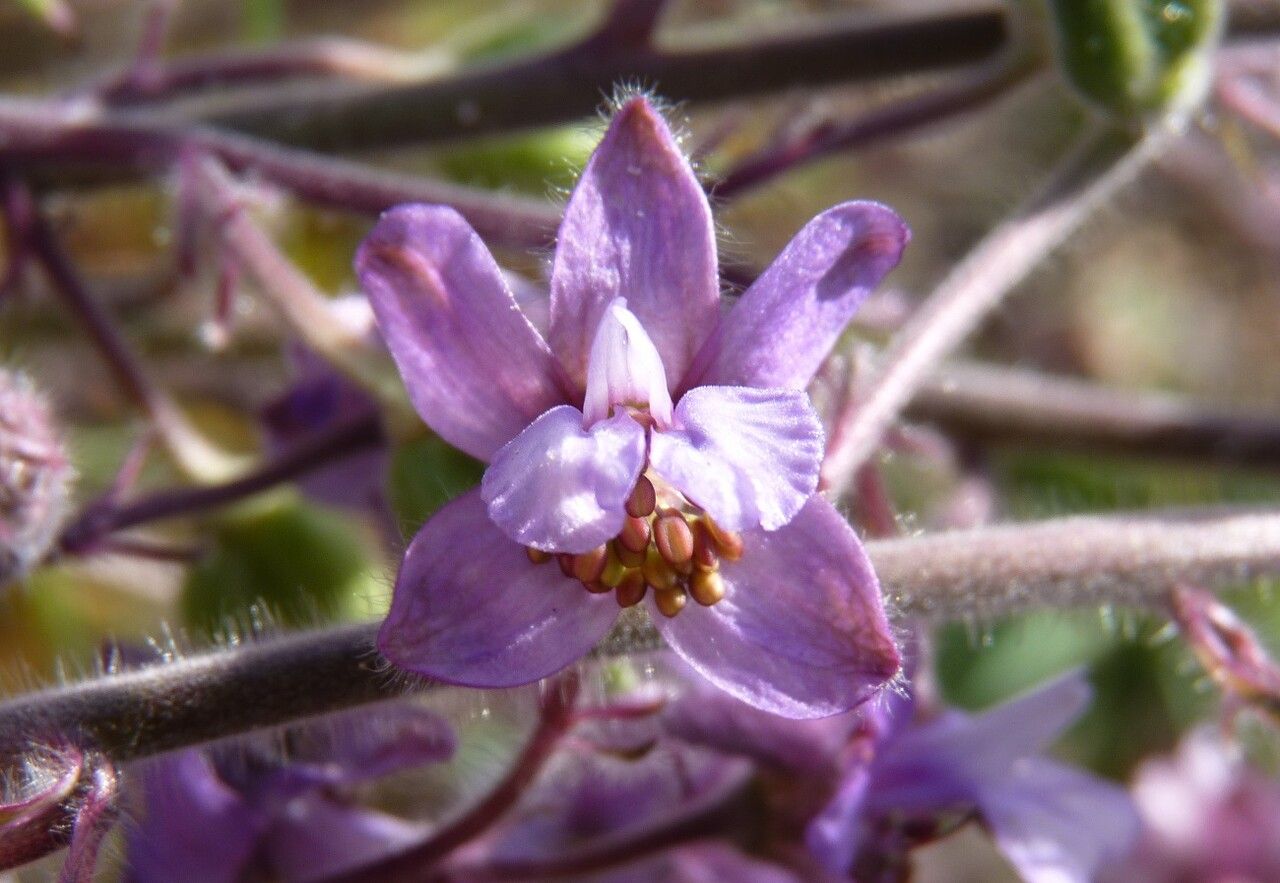
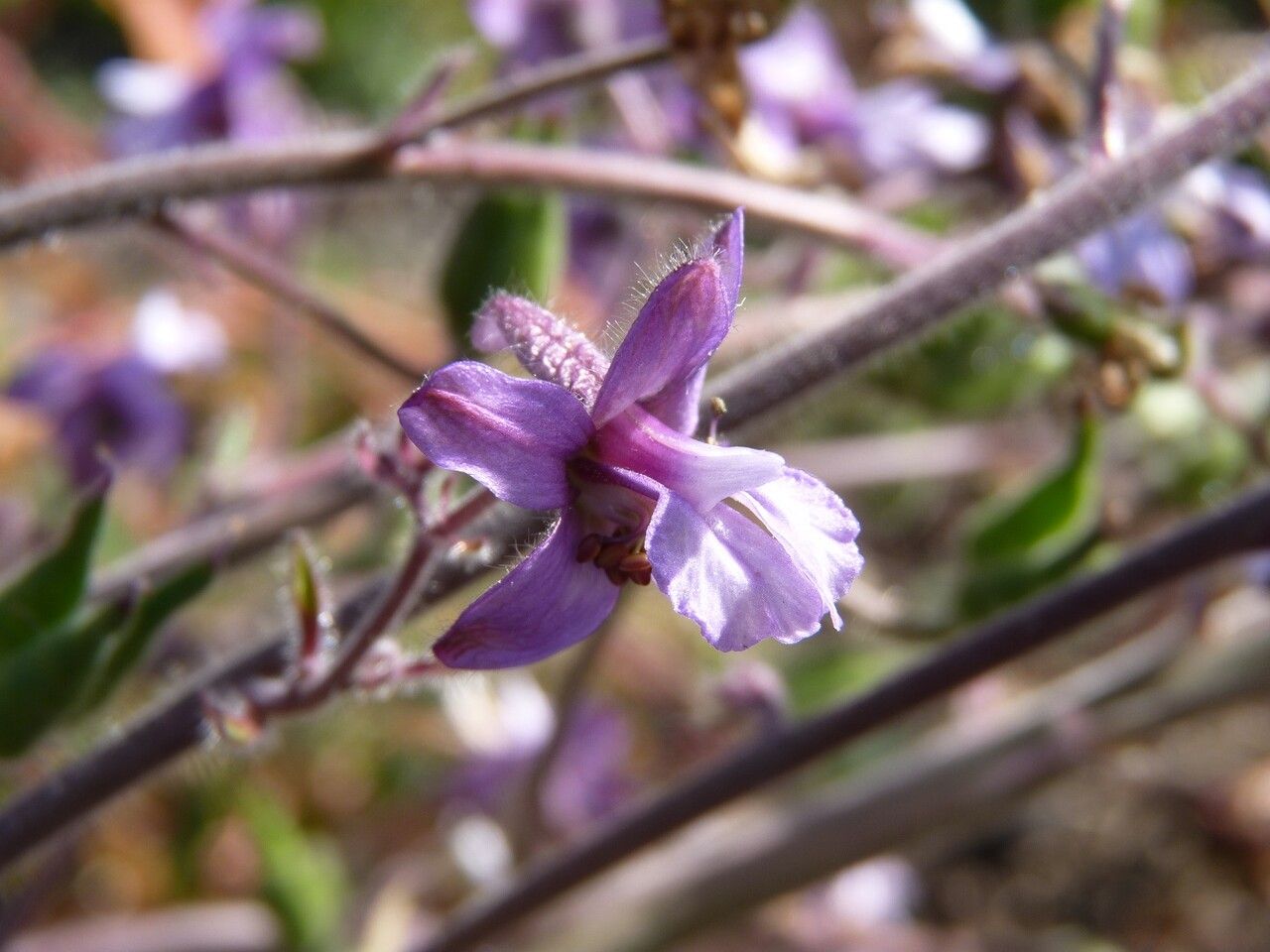
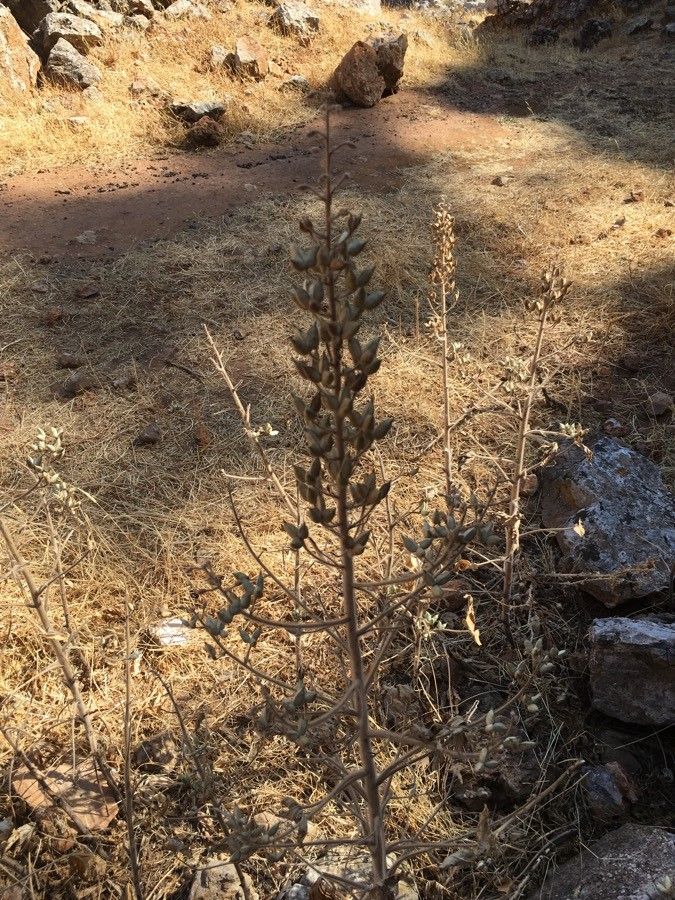
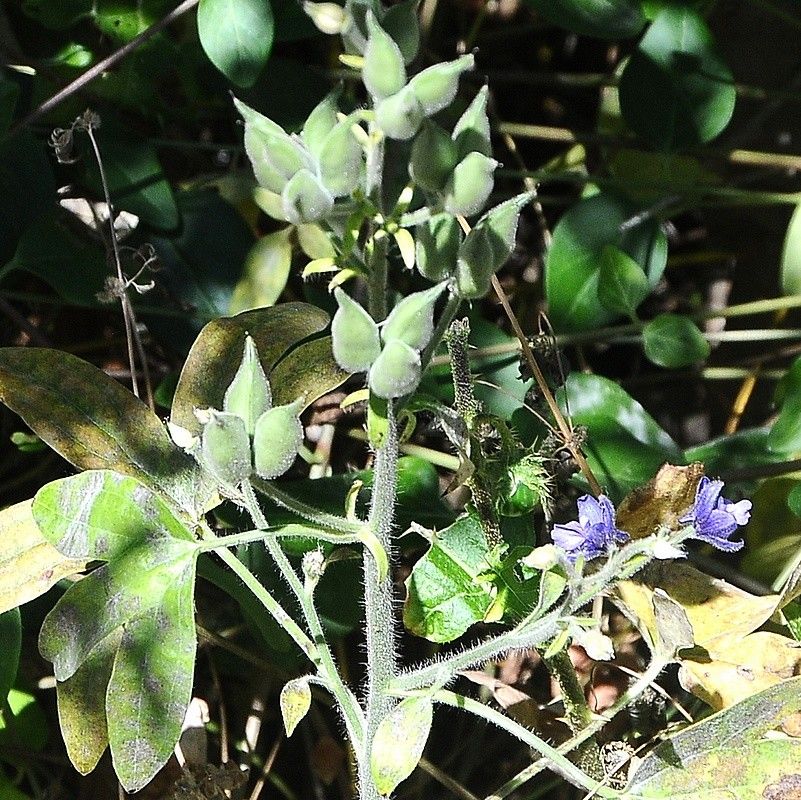
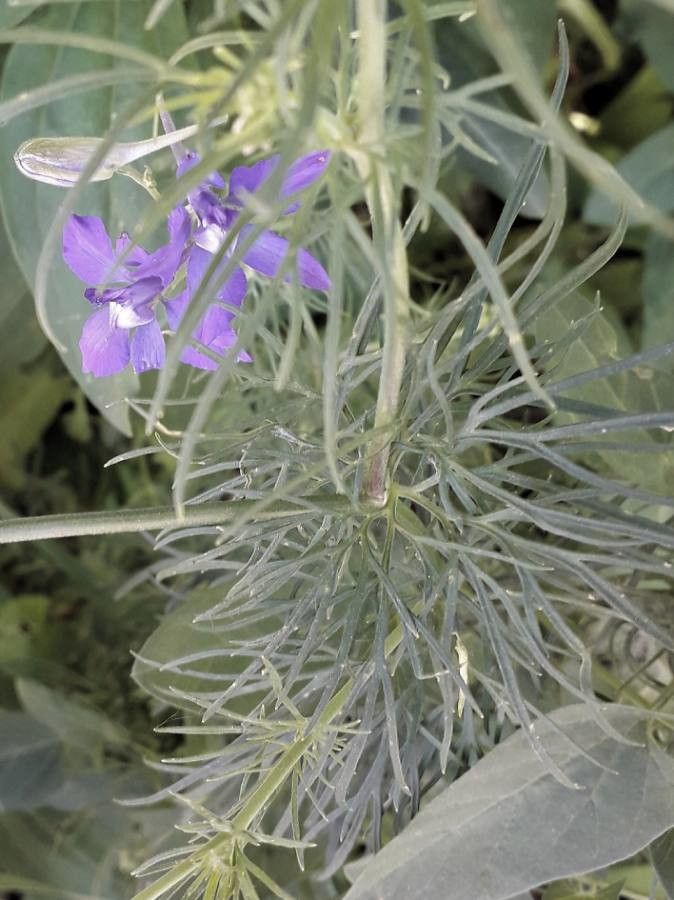
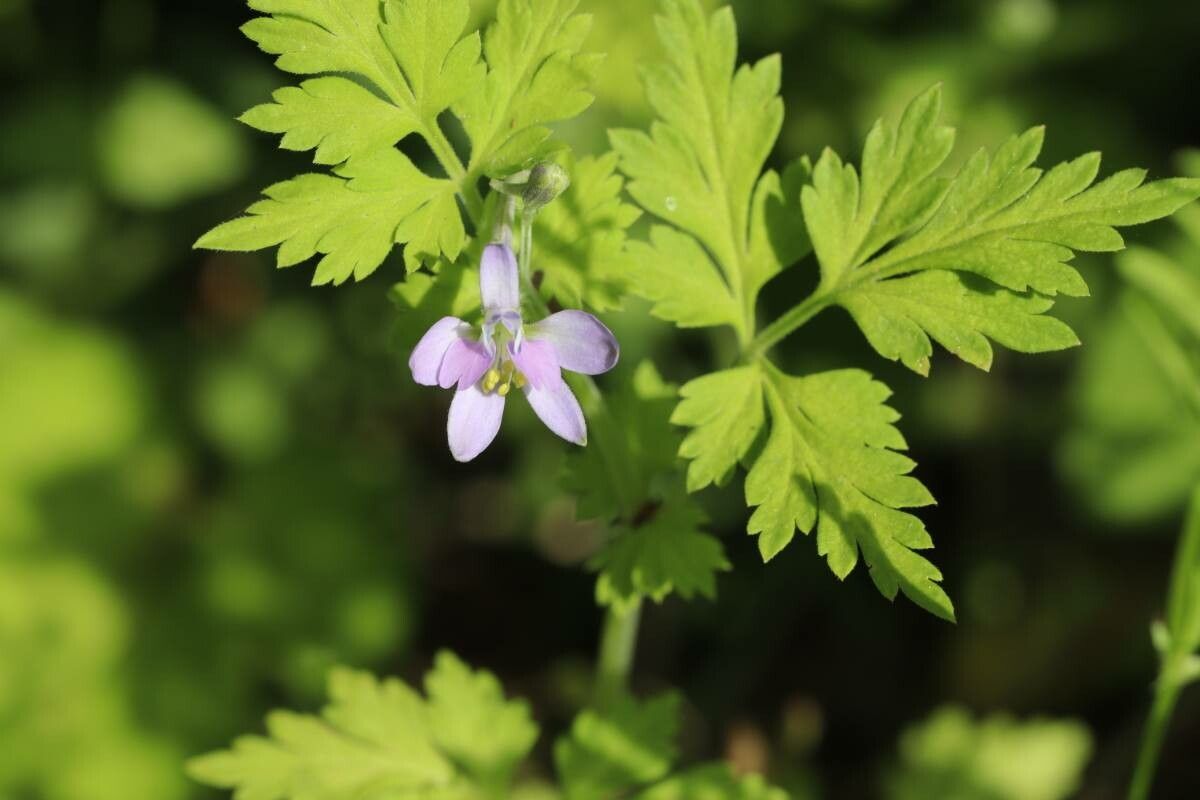
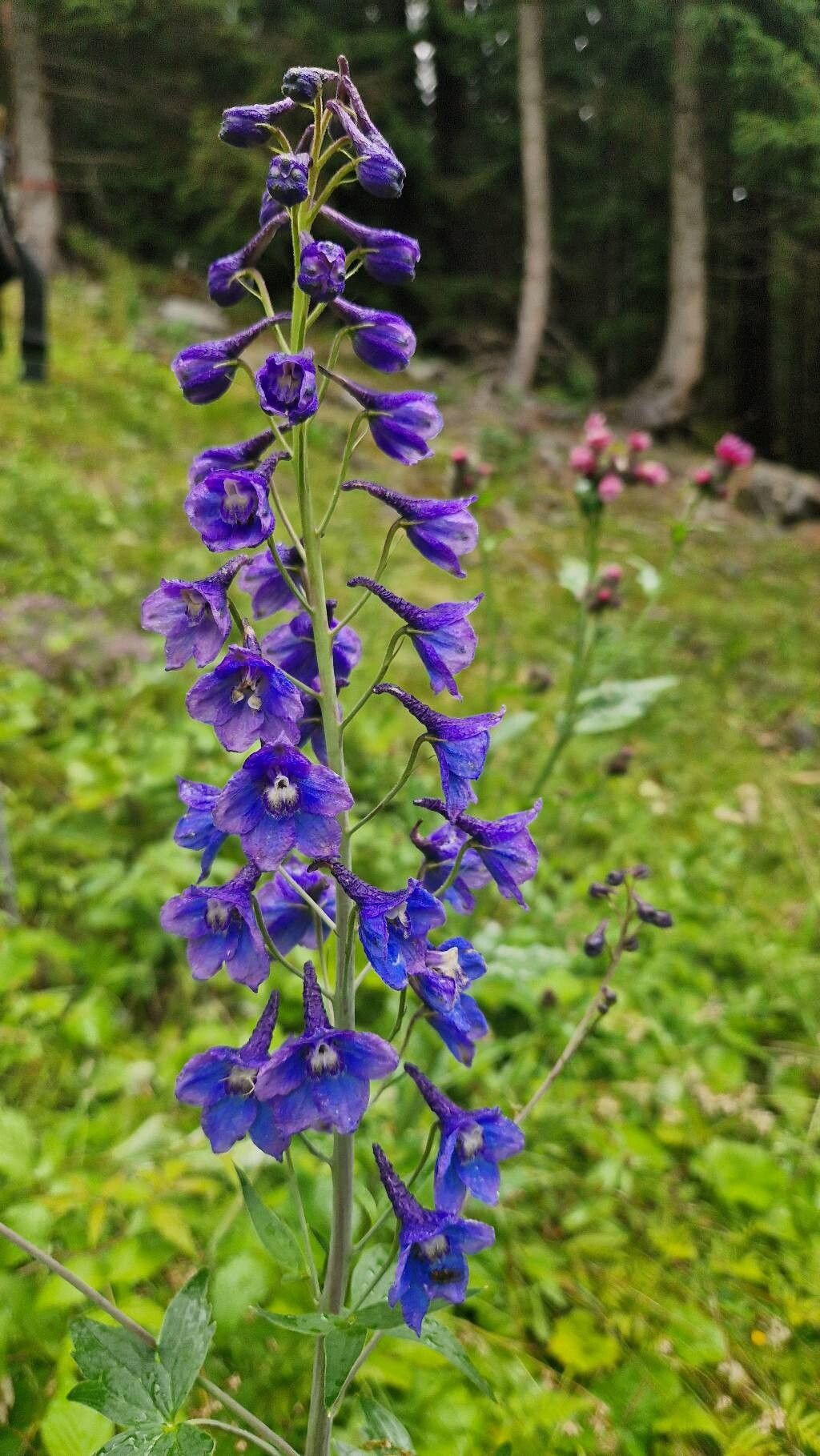
Staphisagria macrosperma, formerly known as Delphinium staphisagria, is a species of Staphisagria of the family Ranunculaceae. It used to belong to the subgenus or section Staphisagria of the genus Delphinium, but molecular evidence suggests Staphisagria should be a genus which is a sister group to the Aconitum-Delphinium clade. It is described botanically as a stoutly-stemmed, hairy biennial with large palmate leaves up to 6 inches (15 cm) across. The flowers are mauve-blue to blue, short-spurred, and up to 1 inch (2.5 cm) across, occurring in racemes. The plant grows to a height of 4–5 feet. It grows throughout the Mediterranean. All parts of this plant are highly toxic and should not be ingested in any quantity.
Stavesacre exhibits strong disease resistance and is generally not susceptible to illnesses. However, it can be affected by pests and diseases present in its environment. Such infections are usually mild. In terms of care, this plant requires moderate maintenance. It should be pruned regularly to maintain a good appearance and support healthy growth. Fertilizing can also help encourage flowering. Stavesacre is suitable for anyone with outdoor space, like a garden or patio, and does not demand extensive care experience. It may need more attention if grown indoors.
How to keep Delphinium Staphisagria.
Light
Stavesacre grows vigorously in sites that receive uninterrupted, plentiful sunlight throughout the day. However, it is not highly adaptable to varying light conditions. It comes from an environment with maximal sun exposure. Insufficient or excessively reduced light can harm its healthy growth.
Water
Stavesacre thrives in Mediterranean climates and is moderately drought-tolerant. It requires well-drained soil and should be watered weekly to avoid waterlogging. The plant prefers full sun and good air circulation. During the growing season, careful watering is essential to promote robust flowering.
Temperature
Stavesacre thrives in its native habitat where temperatures fall between 68 and 95 °F (20 to 35 ℃). It favors warm climates. Seasonal adjustments might be necessary to keep this temperature range.
Fertilizer
Stavesacre requires regular fertilizing to encourage flowering but is sensitive to excess. It should get light, frequent applications of fertilizer throughout its life, especially during peak growth and while it is flowering. Continue feeding your Stavesacre until it stops blooming.
Pruning
Prune stavesacre from early to late spring to remove dead stems and spent flowers. This encourages healthy foliage and prolonged blooms. Regular pruning is important as it aligns with the plant's growth cycle, helps prevent disease, and improves its overall structure. For more detailed pruning techniques, consult horticultural guides.
Botanical profile.
- Plant Type
- Herb
- Life Cycle
- Biennial, Perennial
- Genus
- Delphinium
- Family
- Ranunculaceae
- Hardiness Zone
- 7-10
- Mature Height
- 1.22 m
- Mature Spread
- 61 cm
- Leaf Color
- Green, Blue
- Leaf Type
- Deciduous
- Flower Color
- Purple, Lavender
- Flower Size
- 2.03 cm to 3.05 cm
- Bloom Time
- Late spring, Early summer, Mid summer
- Planting Time
- Spring, Summer
- Harvest Time
- Late summer, Early fall, Mid fall
Other names.
Reader questions.
What is the most effective way to water my Stavesacre plant?
To properly water the Stavesacre plant, it is recommended to use filtered water at room temperature. This is because tap water may contain harmful particles for the plant's health. Additionally, it is important to use water at room temperature or slightly warmer since the Stavesacre is native to warm environments and cold water can be damaging. Avoid watering from above as it can lead to issues with the foliage. Instead, apply the filtered room temperature water directly to the soil until it is completely soaked. This method benefits the Stavesacre by keeping the roots moisturized and allowing them to spread and gather the necessary nutrients from the soil.
What are the sunlight requirements for Stavesacre?
Stavesacre requires full sun exposure to thrive robustly, benefiting most from places where it can bathe unimpededly in abundant sunlight throughout the day. This includes above 6 hours of sunlight for optimal growth. However, it does have some adaptability to partial sun, about 3-6 hours of sunlight, but its origin from an environment with maximal sunlight exposure means that inadequate or significantly reduced light can detrimentally affect its healthy growth. It is important to watch how sunlight moves through your garden and choose spots providing the perfect balance of light for your plants, ensuring their happiness.
What is Stavesacre?
Stavesacre, known botanically as Delphinium staphisagria, is a plant that thrives in warm climates. It is best suited to temperatures between 68 to 95 °F (20 to 35 ℃) and has strong cold resistance. It prefers its native environment where it can flourish without the need for special frost protection measures, although some preparations may be necessary for extremely cold winters.
What should I do if I give my Stavesacre plant too much or too little water?
Overwatering is a more common issue that can harm the health of your Stavesacre plant. It causes wilting, yellowing leaves, and can lead to diseases like root rot, mold, and mildew, which can be fatal. Underwatering is less common for this plant, but it can still happen. Signs of underwatering include brittle, brown leaves. It is important to notice signs of overwatering early, as some diseases may not be reversible if ignored for too long. Reduce watering if you see signs of overwatering and consider improving the soil drainage. If your Stavesacre shows signs of needing more water, simply increase your watering frequency until the signs disappear.
How can artificial lighting support the growth of indoor Stavesacre plants?
Indoor Stavesacre plants require adequate lighting for optimal growth, especially when natural sunlight is insufficient, like during winter or in less sunny spaces. Artificial lighting offers a crucial solution. It’s suggested to use LED lights for indoor plant lighting as they can be customized to provide the specific wavelengths needed by your plants. For full sun plants like Stavesacre, 30-50W per square foot of artificial light is recommended. Placement should be 12-36 inches above the plant to mimic natural sunlight, and the lighting should be on for 8-12 hours per day to imitate the natural daylight hours specific to the plant species.
How does Stavesacre react to seasonal temperature changes?
Stavesacre requires seasonal adjustments to maintain its preferred temperature range of 68 to 95 °F (20 to 35 ℃). During winter, it has strong cold resistance and usually does not need special frost protection. However, if temperatures are expected to drop below -15°C, it is crucial to protect the plant by covering it with soil or straw and watering it abundantly before the first freeze of autumn. This ensures the soil remains moist and prevents drought and water scarcity during the colder months.
How often do I need to water my Stavesacre plant?
If your Stavesacre plant is in a pot, the most precise way to determine if it needs watering is by checking the moisture level of the soil. Simply stick your finger into the soil and if you find that the top two to three inches are dry, it's time to add water. If you have your Stavesacre planted outdoors directly in the ground, you can use a similar method to test the soil. Again, check if the top few inches have dried out before watering. Generally, during the spring and early fall, you'll need to water this plant about once a week using this method. However, when the weather gets extremely hot, you may have to increase your watering frequency to two or more times per week. It's worth noting that mature, well-established Stavesacre plants have a remarkable ability to survive in drought conditions.
What are the symptoms of light deficiency in Stavesacre?
When Stavesacre is grown indoors with inadequate light, it may show several symptoms of light deficiency such as new leaves growing smaller than mature ones, leggy or sparse growth leading to a thin and stretched-out appearance, early dropping of older leaves, delayed growth or complete growth cessation, irregular color patterns or pale leaves indicating a lack of chlorophyll, and conditions like chlorosis, sunscald, leaf curling, wilting, and leaf scorching. These symptoms are crucial indicators that your Stavesacre requires more sunlight to maintain its health and vitality.
What should be done if a Stavesacre plant is exposed to low temperatures?
Stavesacre can tolerate cold conditions and fares best when temperatures remain above 20°C. If winter temperatures fall below 0°C but stay above -15°C, the plant generally manages well without any noticeable change. However, if temperatures drop below -15°C, the plant may experience a decrease in sprouting or fail to sprout in spring. In such cases, it is recommended to remove any parts of the plant that have failed to sprout once spring arrives.
How much water does my Stavesacre plant need?
To properly water your Stavesacre plant, be generous with the amount of water you provide. Make sure the top two to three inches of soil are dry before watering, and give it a thorough soak. The water should completely saturate the soil and flow out of the drainage holes at the bottom of the pot. If you don't see water draining from the pot, you may have not given enough water. However, be careful not to let water collect inside the soil, as this can harm the plant. On the other hand, if water doesn't drain properly through the pot, it could be a sign of poorly draining soil, which is not good for the plant's health. If the plant is outside, one inch of rain per week should be enough.
How can I manage and improve light conditions for my Stavesacre plant?
To optimize growth and health for your Stavesacre, gradually increase its sunlight exposure. For indoor plants, move them to a sunnier location each week until they receive at least 6 hours of sunlight daily, using a south-facing window for maximum light. If the plant is large or not easily movable, supplement with artificial light, keeping a lamp on for at least 8 hours daily or invest in profession grow lights. For outdoor plants, similarly move them progressively to sunnier spots to avoid sunburn. Reducing obstructions like pruning trees or relocating plants can also improve light access. It's important to note that parts of the plant affected by previous insufficient sunlight may not recover, but new growth will be healthy with improved light conditions.
How does Stavesacre handle high temperatures?
During summer, it is crucial to keep Stavesacre below 35°C. Exposure to temperatures above 41°C can cause the leaves to lighten in color, curl, and become prone to sunburn, potentially resulting in the plant wilting and drying up. To mitigate these effects, trim away the sunburned and dried parts, relocate the plant to a shaded area during the midday and afternoon, or use a shade cloth for protection. Additionally, water the plant in the morning and evening to maintain soil moisture.