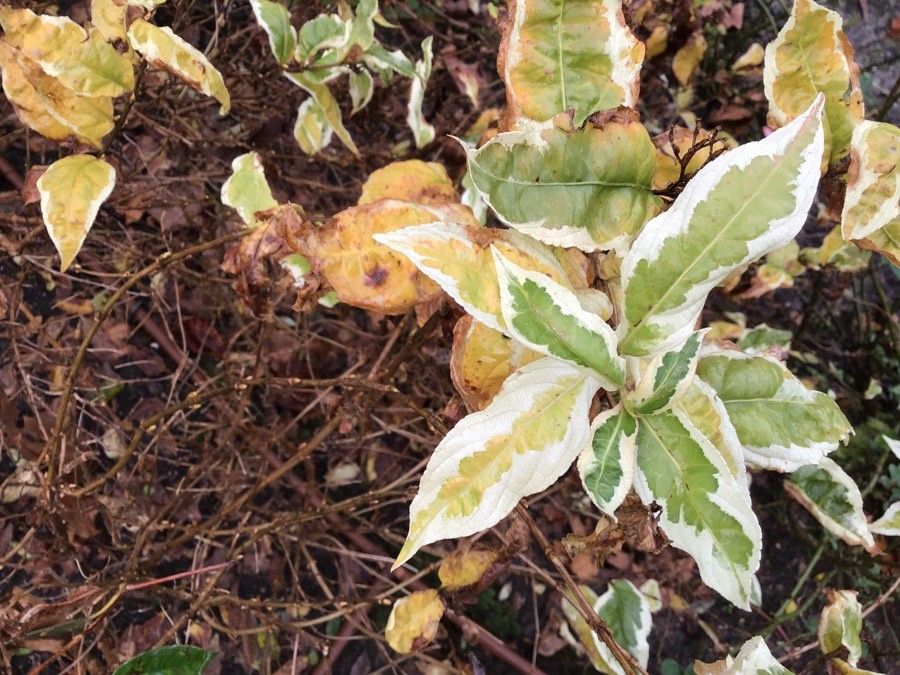
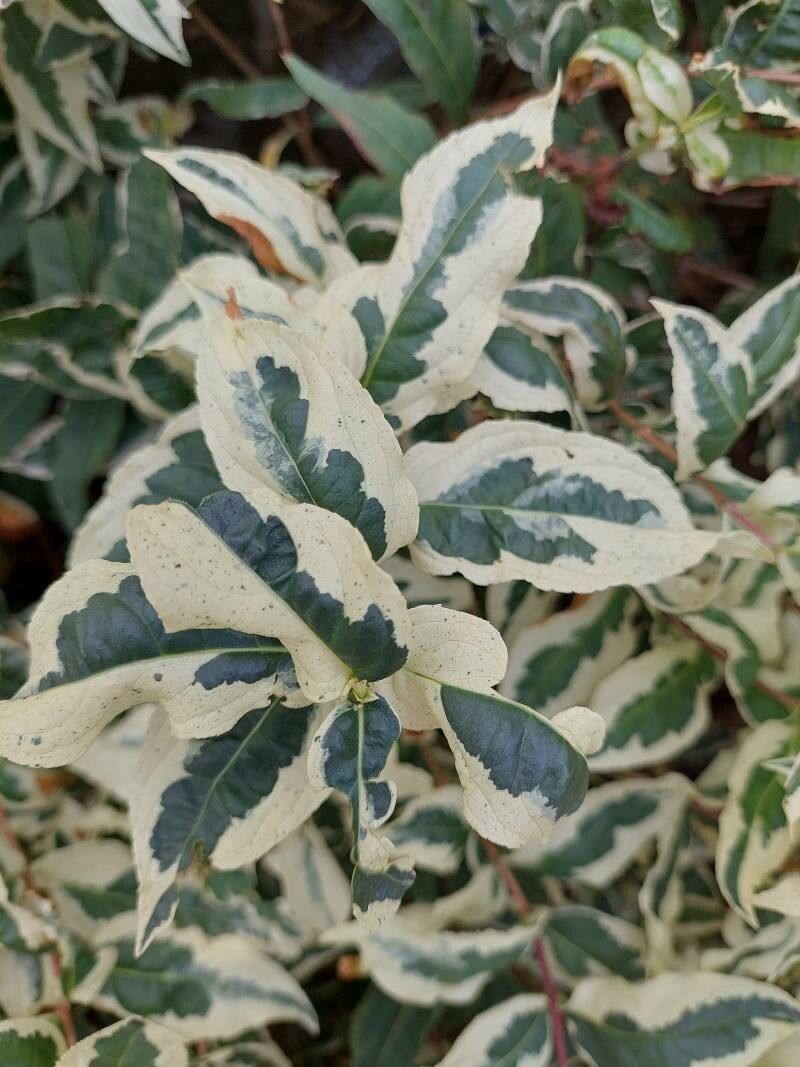
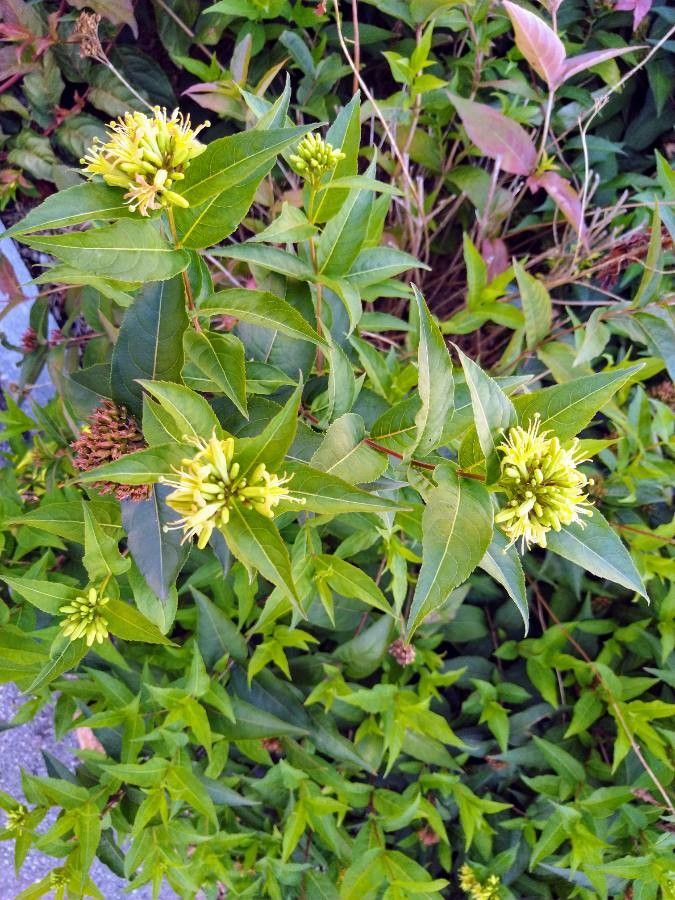
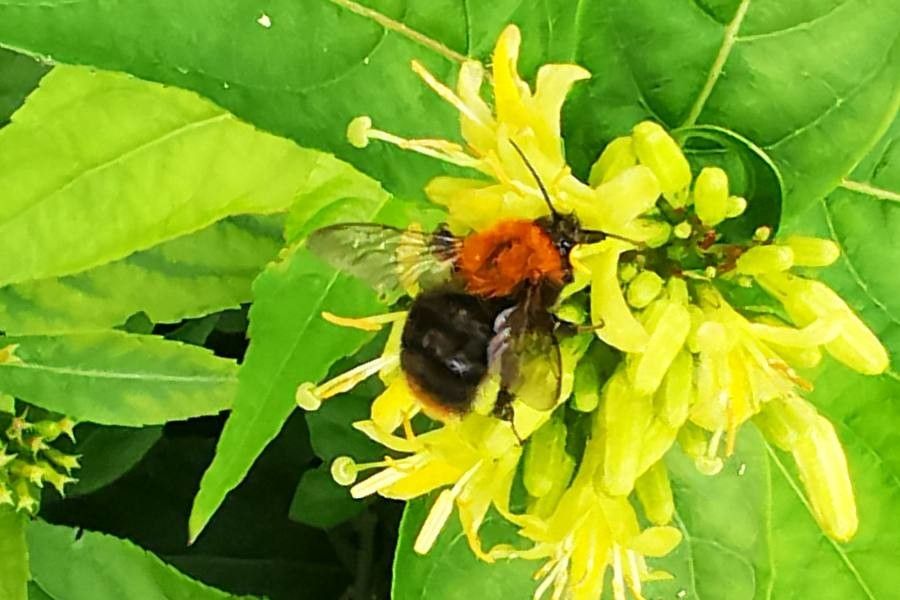
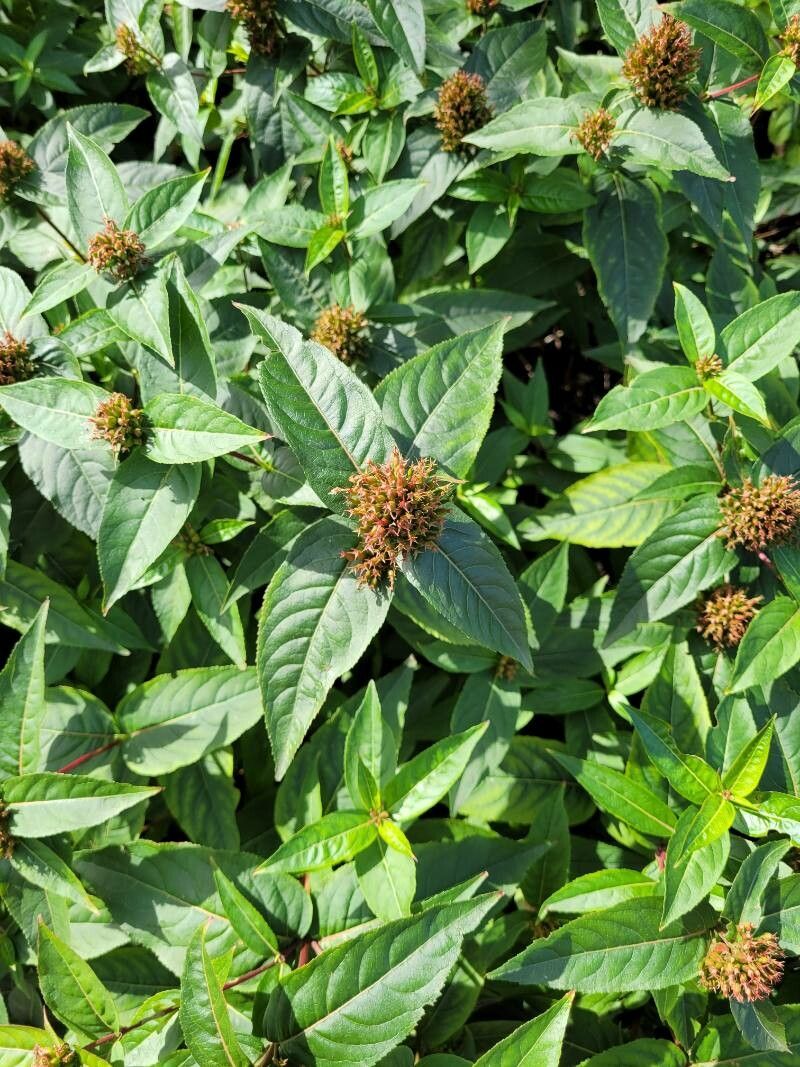
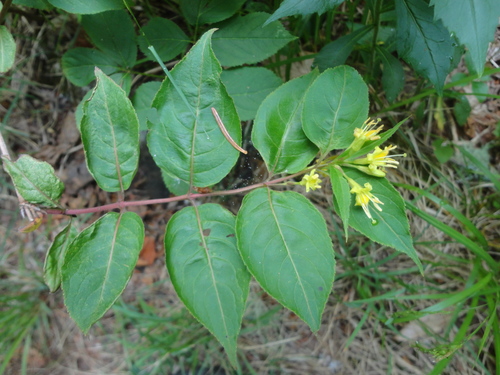
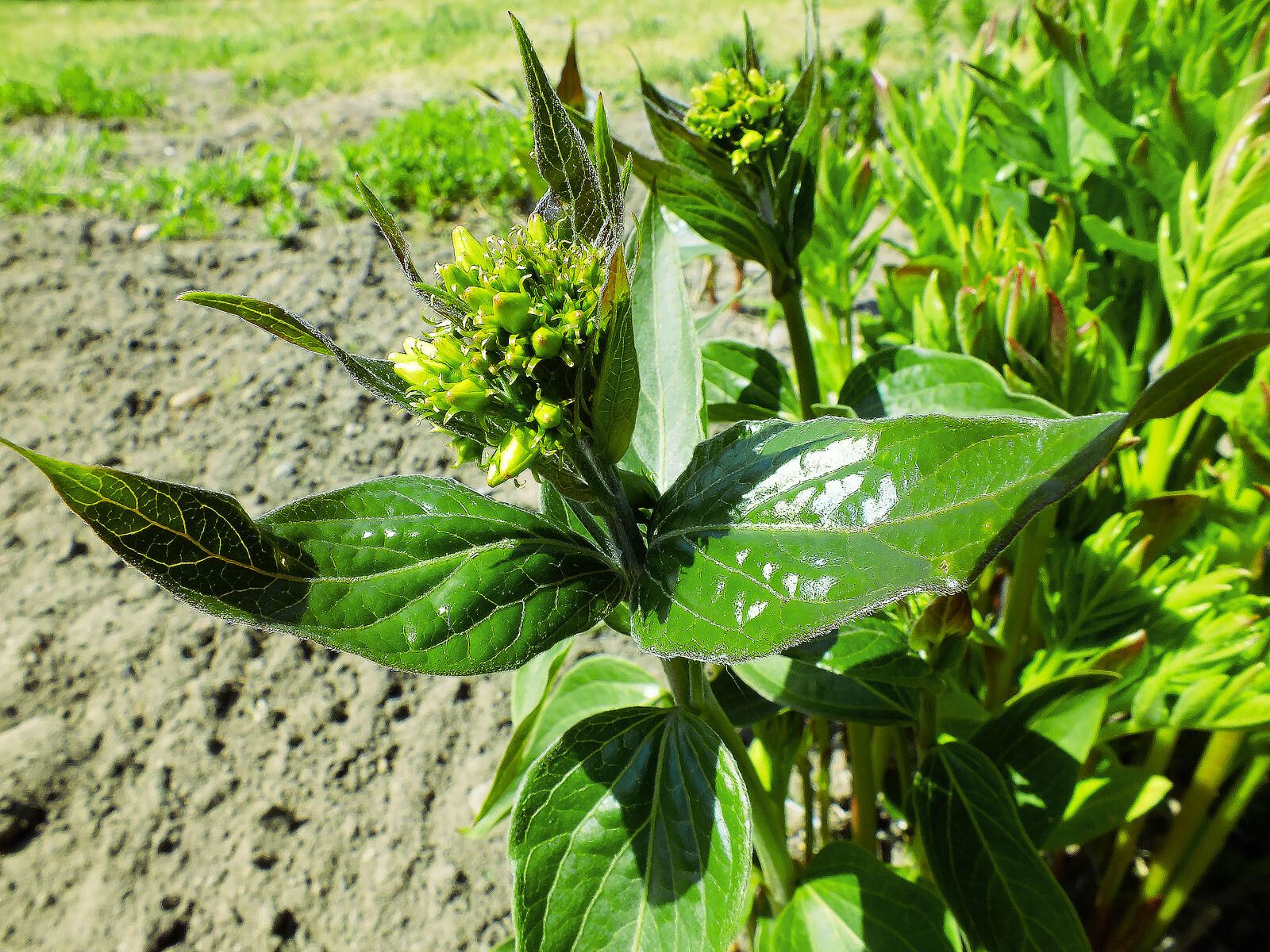
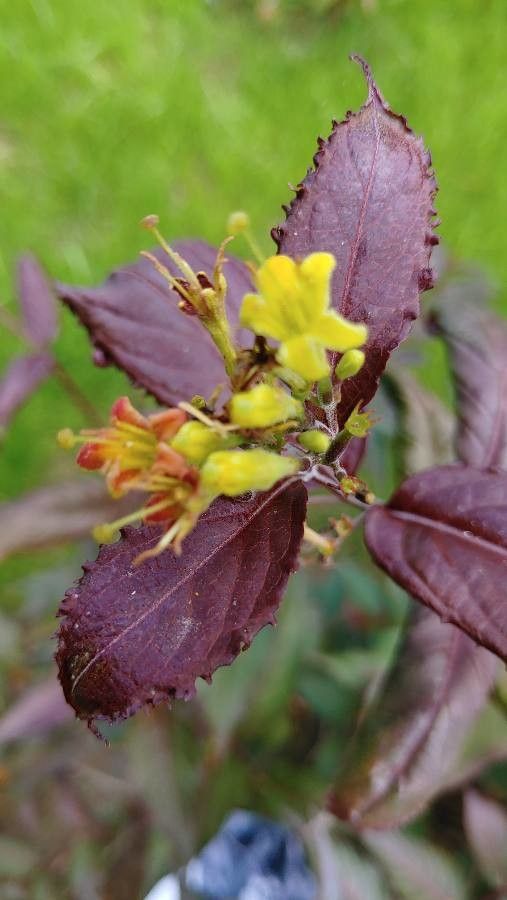
Diervilla sessilifolia, the southern bush honeysuckle, a member of the honeysuckle family Caprifoliaceae which blooms in summer, is a perennial shrub found in the Great Smoky Mountains and the southern Appalachian Mountains. Southern bush honeysuckle can be found growing on bluffs, along slopes and stream banks, and bordering woodlands. It is a threatened species in Tennessee.This compact, deciduous shrub, typically growing three to five feet tall, spreads by suckering in zones 4 to 8. It is drought tolerant, grows in full sun as well as partial shade, and works best in a woodland garden. D. sessilifolia has been marked as a pollinator plant, supporting and attracting bumblebees and hummingbirds.
Southern bush honeysuckle shows strong resistance to disease and is typically not susceptible to illnesses. Regarding maintenance, this plant is fairly low-maintenance. When grown outdoors it needs only light watering, and larger specimens usually do not require pruning. Smaller specimens, however, should be pruned after flowering. Southern bush honeysuckle is appropriate for anyone with an outdoor area, such as a garden or deck, and does not demand extensive gardening experience.
How to keep Diervilla Sessilifolia.
Light
Southern bush honeysuckle is native to habitats such as forest understories and rocky areas, where it grows in natural shade. It prefers partial sun but can tolerate full sun or full shade, showing its hardy, versatile nature.
Water
Southern bush honeysuckle thrives with moderate moisture, requiring watering every 1-2 weeks. However, it can tolerate drier conditions as well. As an evergreen plant, it adapts well to various climates, maintaining its lush appearance even with reduced rainfall.
Temperature
Southern bush honeysuckle is highly adaptable to a range of climates, from blazing summers to cold winters. It does, however, have a preferred temperature band for growth. Very high temperatures can cause heat and humidity stress that may kill the plant. In areas where temperatures near the lower edge of its cold tolerance, providing insulation is necessary to protect it.
Fertilizer
Proper timing is essential for fertilizing Southern bush honeysuckle. Begin in early spring and continue with monthly applications through early summer. Fertilizer encourages attractive blooms and supplies energy both during dormancy and throughout active growth.
Pruning
The Southern bush honeysuckle displays tubular yellow flowers and thrives when pruned in early spring, before new growth begins. To encourage bushier growth, better air circulation, and more abundant flowering, remove any dead, damaged, or crossing branches and thin out older stems. Regular maintenance is essential for the plant's health and appearance.
Botanical profile.
- Plant Type
- Shrub
- Life Cycle
- Perennial
- Genus
- Diervilla
- Family
- Caprifoliaceae
- Hardiness Zone
- 4-8
- Mature Height
- 0.91 m to 1.52 m
- Mature Spread
- 0.91 m to 1.52 m
- Leaf Color
- Green, Bronze
- Leaf Type
- Deciduous
- Flower Color
- Yellow
- Flower Size
- 2.54 cm
- Bloom Time
- Summer
- Planting Time
- Spring, Summer
- Harvest Time
- Late summer, Early fall, Mid fall
Other names.