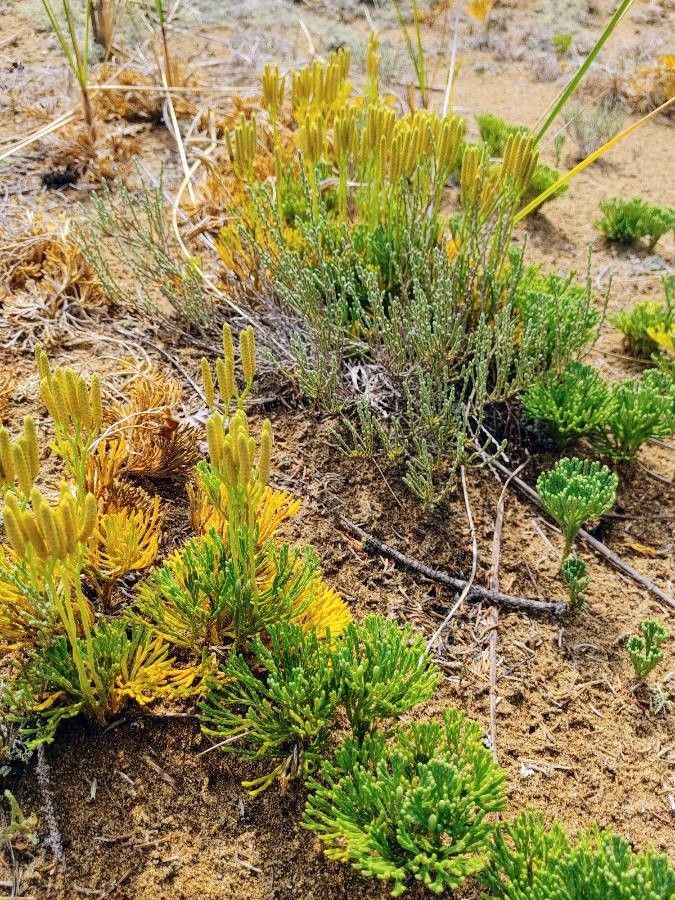
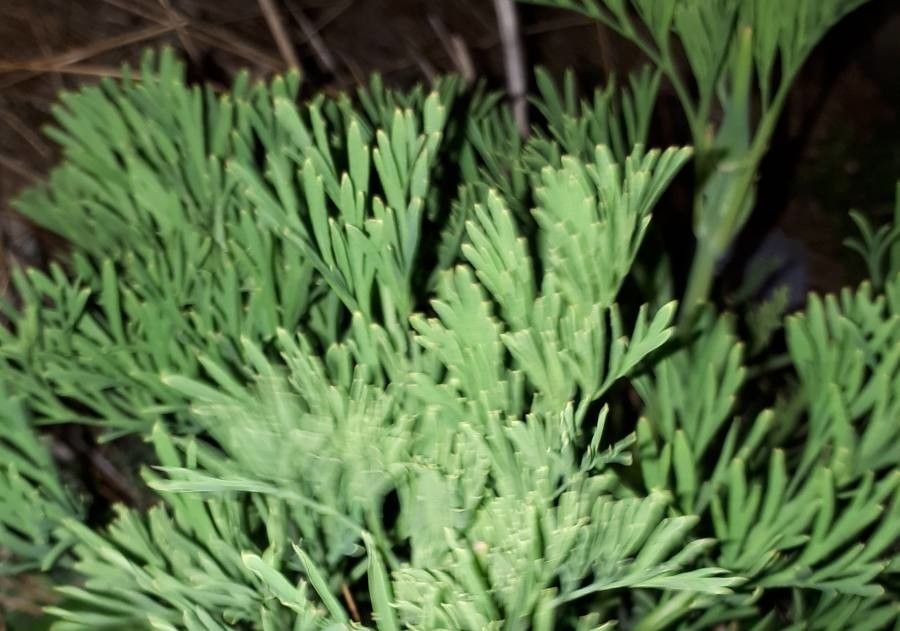
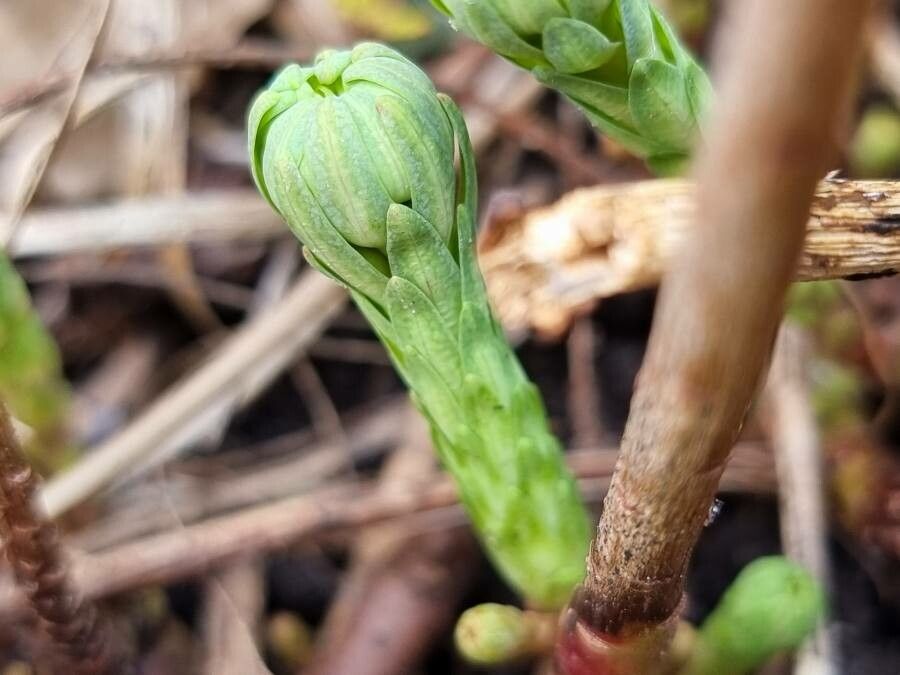
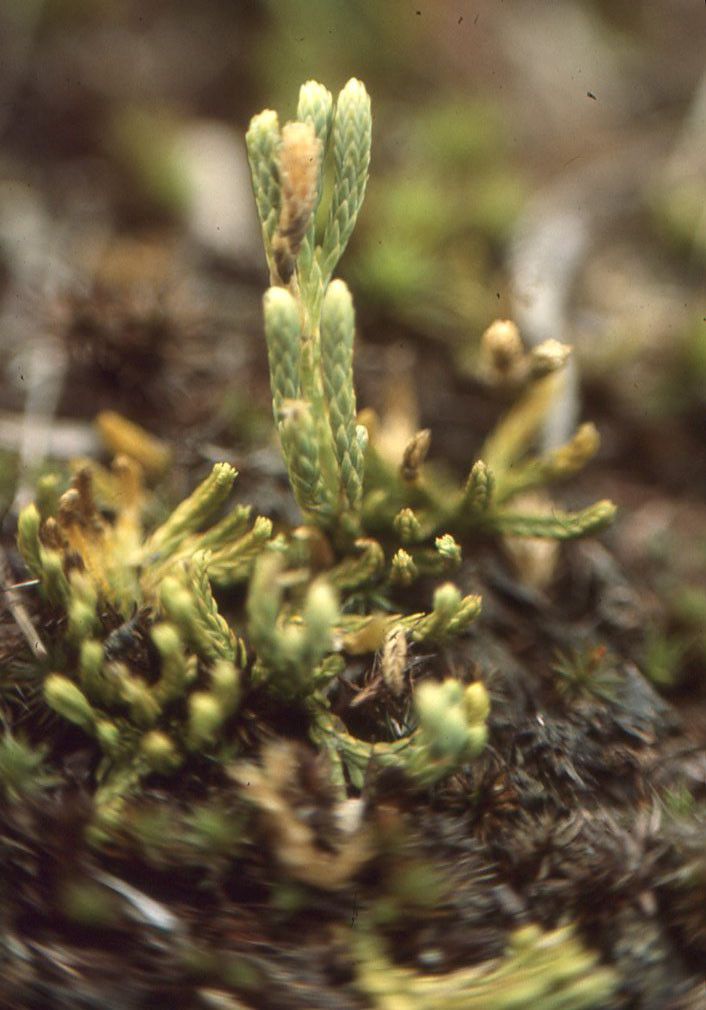
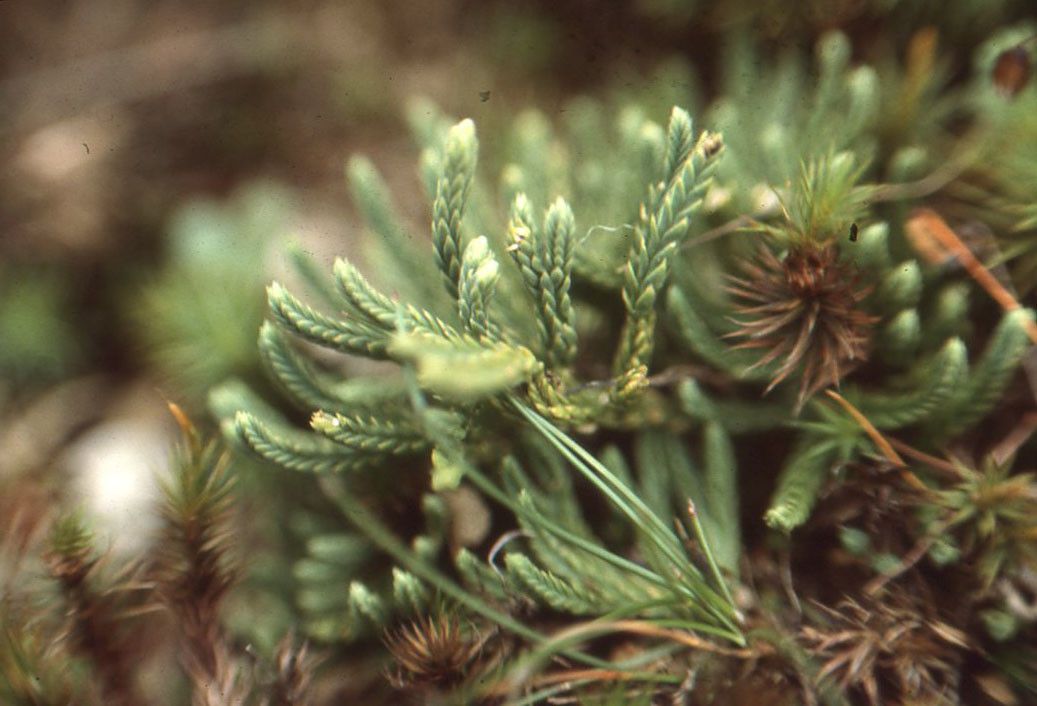
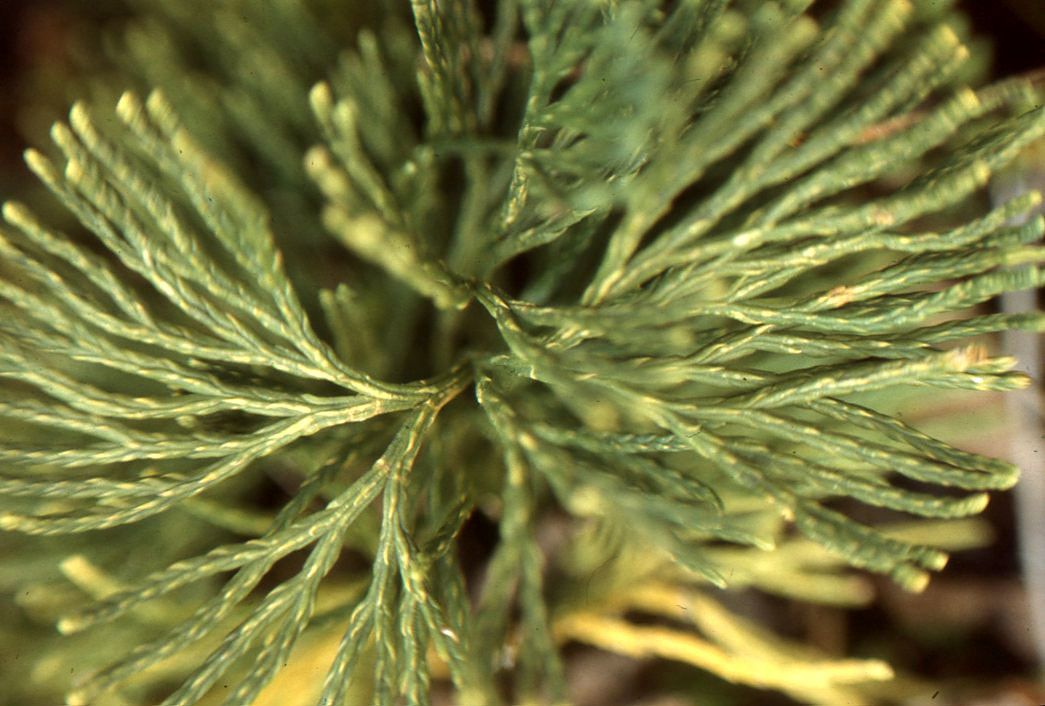
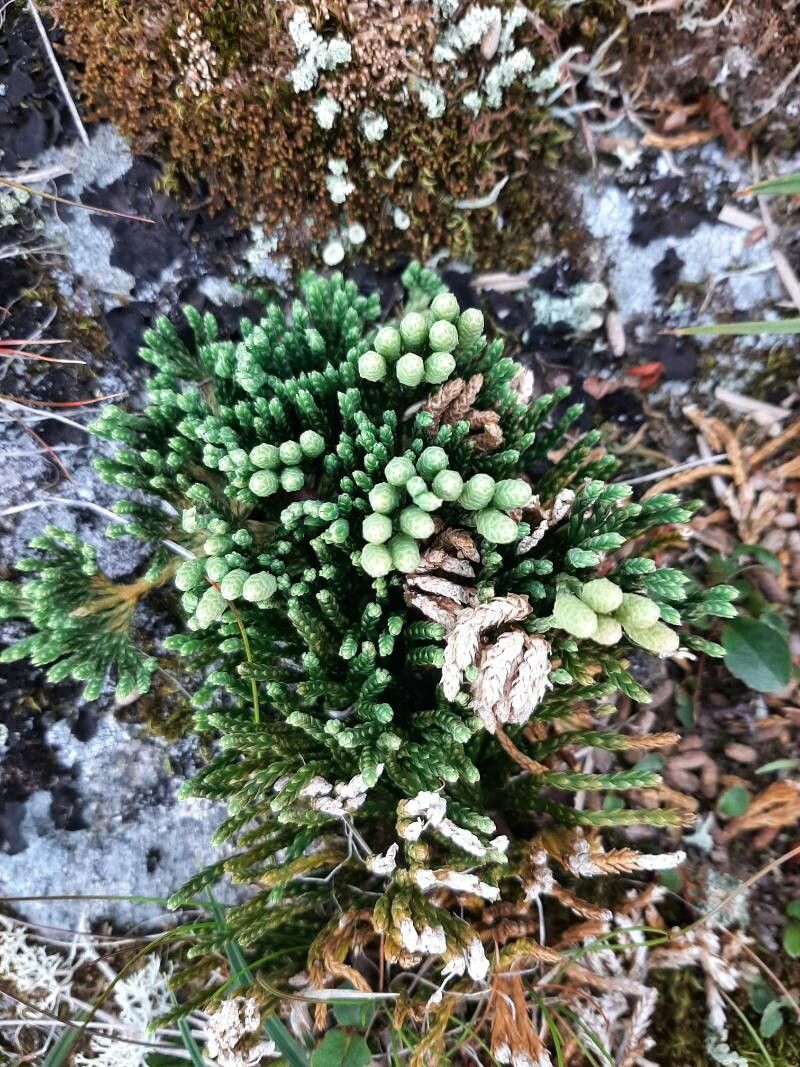
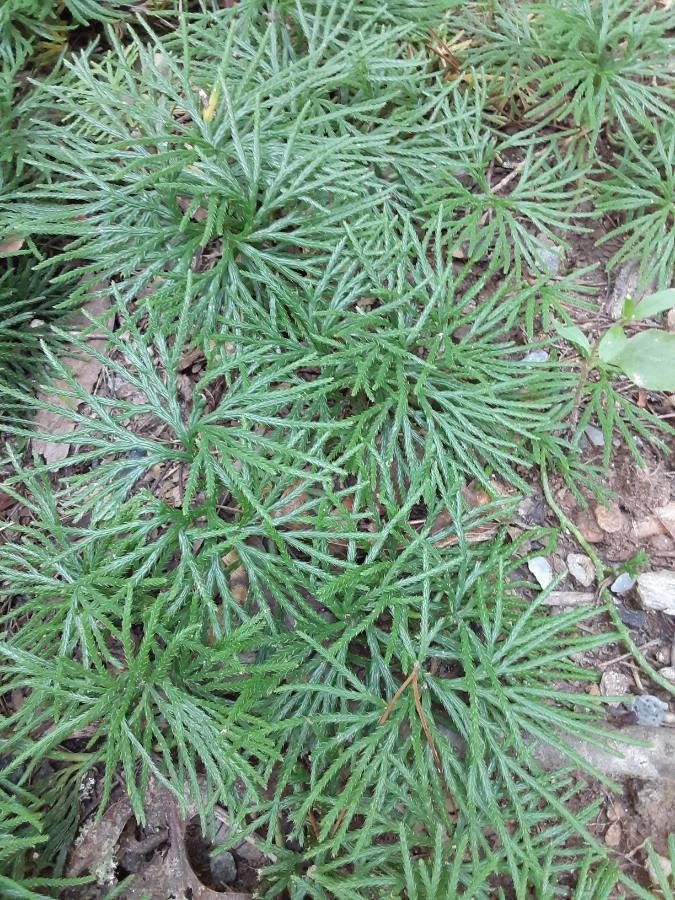
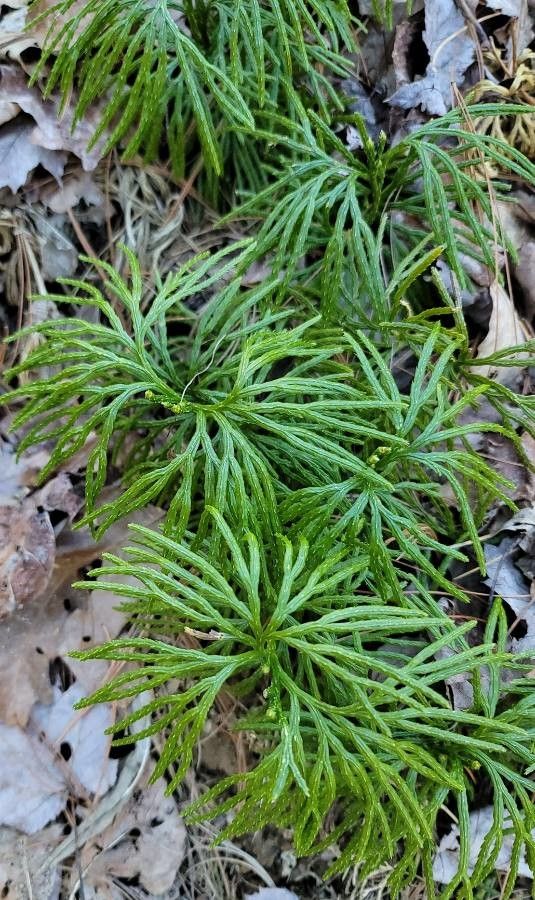
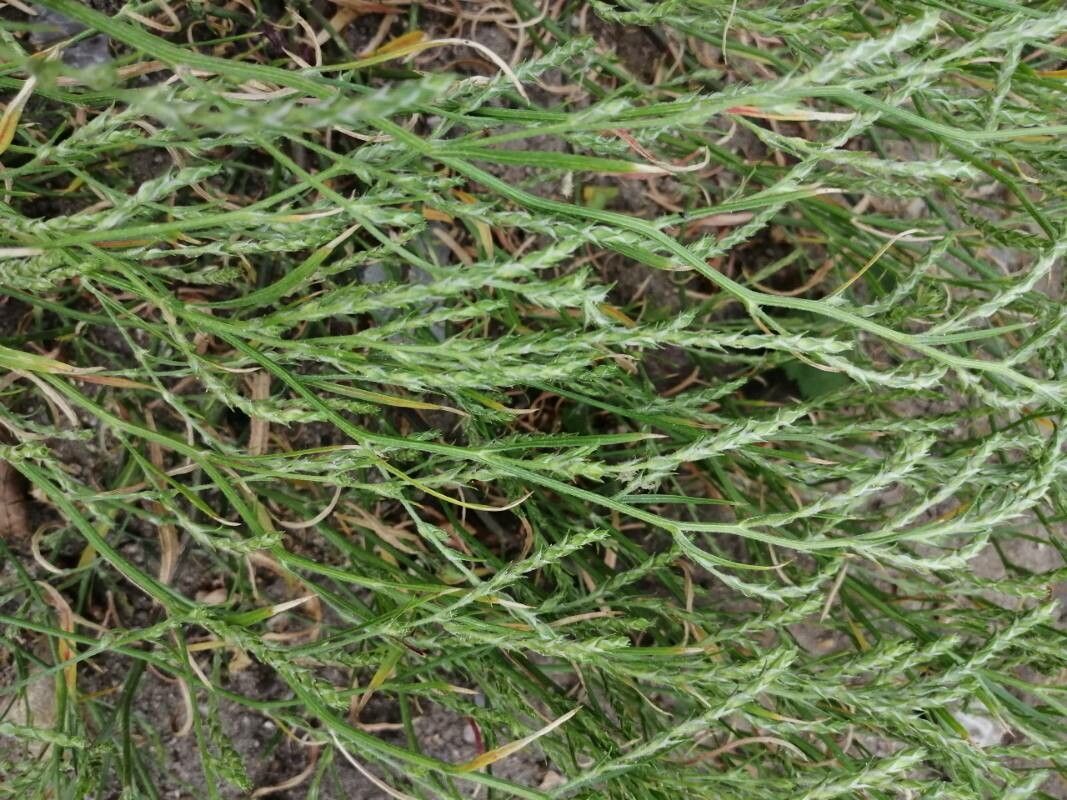
Diphasiastrum tristachyum, commonly known as blue clubmoss, blue ground-cedar, ground pine, deep-rooted running-pine or ground cedar, is a North American and Eurasian species of clubmoss. In North America, it has been found from Newfoundland west to Manitoba, and south as far as Georgia and Alabama. In Eurasia, it ranges from southern Norway and Sweden south to France and Italy and it also occurs in the Caucasus.The name tristachyum means three branched.
Deeproot clubmoss shows strong resistance to diseases and is typically not susceptible to them. Still, it can be affected by pests and illnesses present in its environment. Such infections are generally mild. Regarding care, this plant is moderately demanding. It should be pruned on a regular basis to preserve a neat appearance and encourage healthy growth. Applying fertilizer can also aid in stimulating flowering. Deeproot clubmoss is appropriate for anyone who has outdoor areas like a garden or patio and does not need extensive plant-care experience. It may need extra attention if kept indoors.
How to keep Diphasiastrum Tristachyum.
Light
Deeproot clubmoss occurs naturally in habitats like forest understories and rocky sites, where it is exposed to natural shade. It favors partial sun but can tolerate full sun or full shade, showing a versatile and hardy nature.
Water
Deeproot clubmoss thrives best with consistent moisture and benefits from weekly watering. It's important to avoid waterlogging, though it does have moderate drought tolerance. As an evergreen plant, it requires a stable watering routine to support year-round growth, particularly in well-draining soils that mimic its native humid woodland environment.
Temperature
Being accustomed to milder climates, deeproot clubmoss favors temperatures from 32 to 90°F (0 to 32°C). When temperatures fall in winter, taking measures to protect it from frost is recommended.
Fertilizer
One fertilizer application in spring is typically enough for Deeproot clubmoss, though additional feedings can increase growth. Feed every month to six weeks. Fertilization improves leaf appearance and function, helping maintain uniform color and a healthy texture. It also encourages root development and nutrient uptake for the plant's long-term health.
Pruning
The Deeproot clubmoss has evergreen foliage and grows by spreading along the ground. To maintain its health, prune it lightly from early to late spring to remove dead sections. This will improve airflow and allow more light to reach the plant. Make sure to make clean cuts to prevent infections and promote healthy growth. For the best care, refer to trusted horticultural resources.
Botanical profile.
- Plant Type
- Herb, Shrub
- Life Cycle
- Perennial
- Genus
- Diphasiastrum
- Family
- Lycopodiaceae
- Hardiness Zone
- 3-7
- Mature Height
- 10 cm to 30 cm
- Mature Spread
- 20 cm to 49 cm
- Leaf Color
- Green
- Leaf Type
- Evergreen
- Flower Color
- Yellow, Green
- Planting Time
- Spring, Summer, Autumn
- Native Area
- Turkey, Sweden, Austria, Czech Republic, Poland, Slovenia, Belarus, Russia, Lithuania, Norway, Hungary, Germany, Italy, Switzerland, Denmark, Netherlands, Estonia, Finland, Romania, Latvia, Belgium, France
Other names.
Reader questions.
What are the ideal temperature conditions for Deeproot Clubmoss?
Deeproot clubmoss thrives in milder climates, preferring temperatures that range between 32 and 90°F (0 to 32°C). Although it is highly cold-tolerant, it is recommended to provide the plant with generous watering before the first freeze in autumn to ensure the soil remains moist and enters a frozen state, aiding in preventing drought and water scarcity during winter and early spring.
Does Deeproot Clubmoss require frost protection measures?
Deeproot clubmoss does not generally require additional frost protection measures during winter thanks to its high cold tolerance. However, ensuring that the plant is well-watered before the onset of freezing temperatures can help maintain moisture in the soil, which is beneficial for the plant’s survival through colder months.
How does Deeproot Clubmoss react to temperatures below -35°C?
While Deeproot clubmoss is extremely cold-tolerant, if winter temperatures drop below -35°C, the plant might not show noticeable changes during the colder months but could experience a decrease in sprouting or fail to sprout at all come springtime. In such cases, it is advised to remove any parts of the plant that have failed to sprout in spring.
What should be done if Deeproot Clubmoss is exposed to high temperatures?
Deeproot Clubmoss does not tolerate high temperatures well. Exposure to temperatures above 32°C halts its growth and increases susceptibility to rot. It’s recommended to trim away sunburned and dried-up parts of the plant, move it to a shaded location, or use a shade cloth to protect it from the midday and afternoon sun. Additionally, watering in the morning and evening can help keep the soil moist and reduce temperature stress.