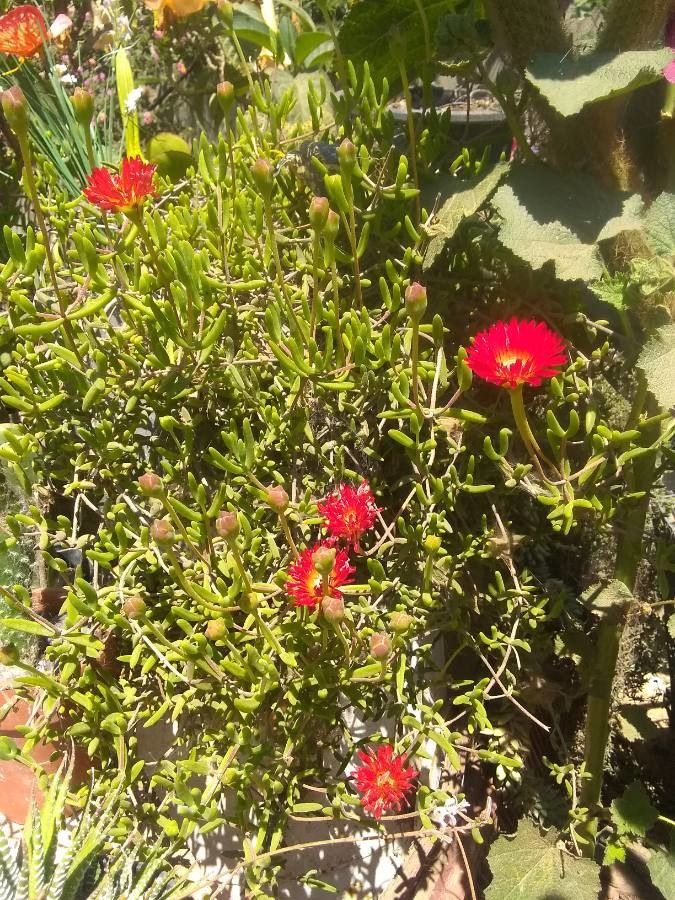
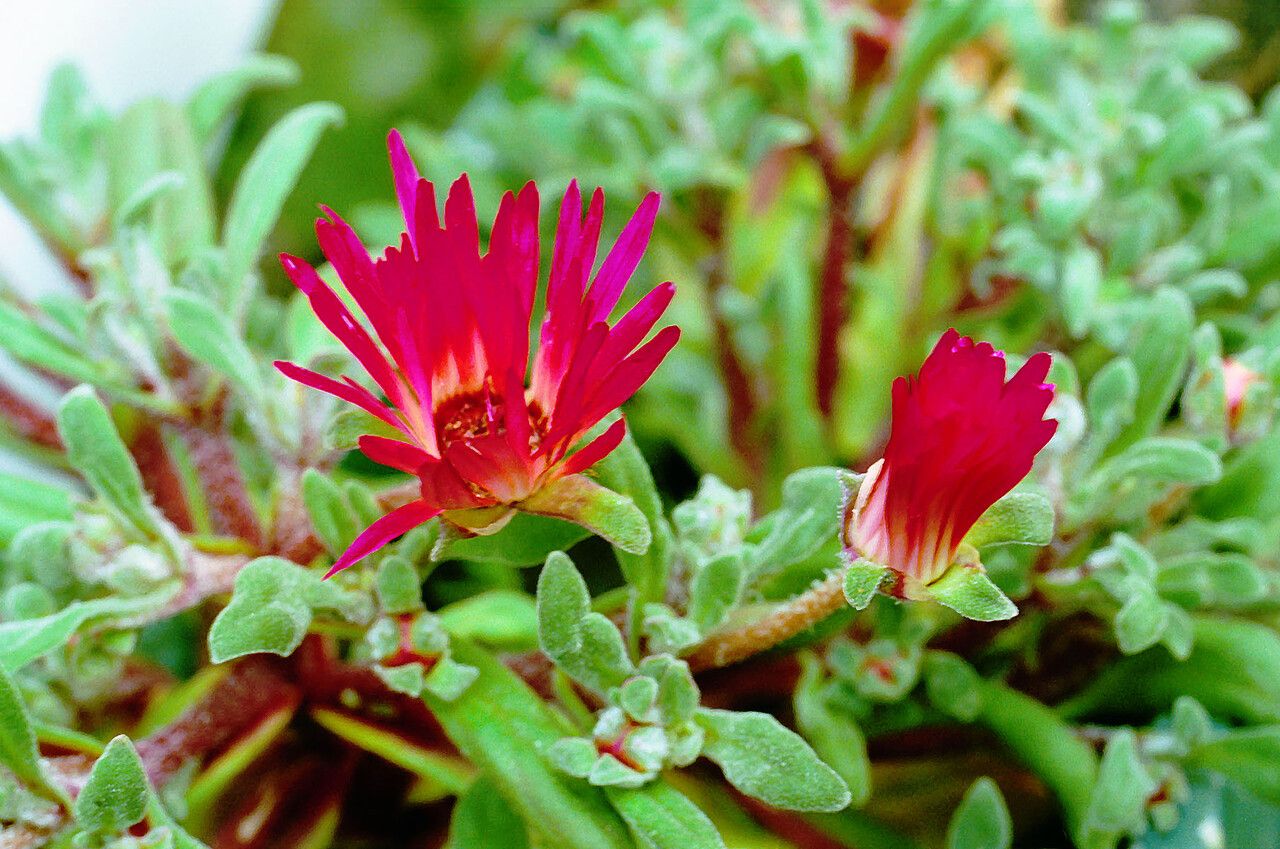
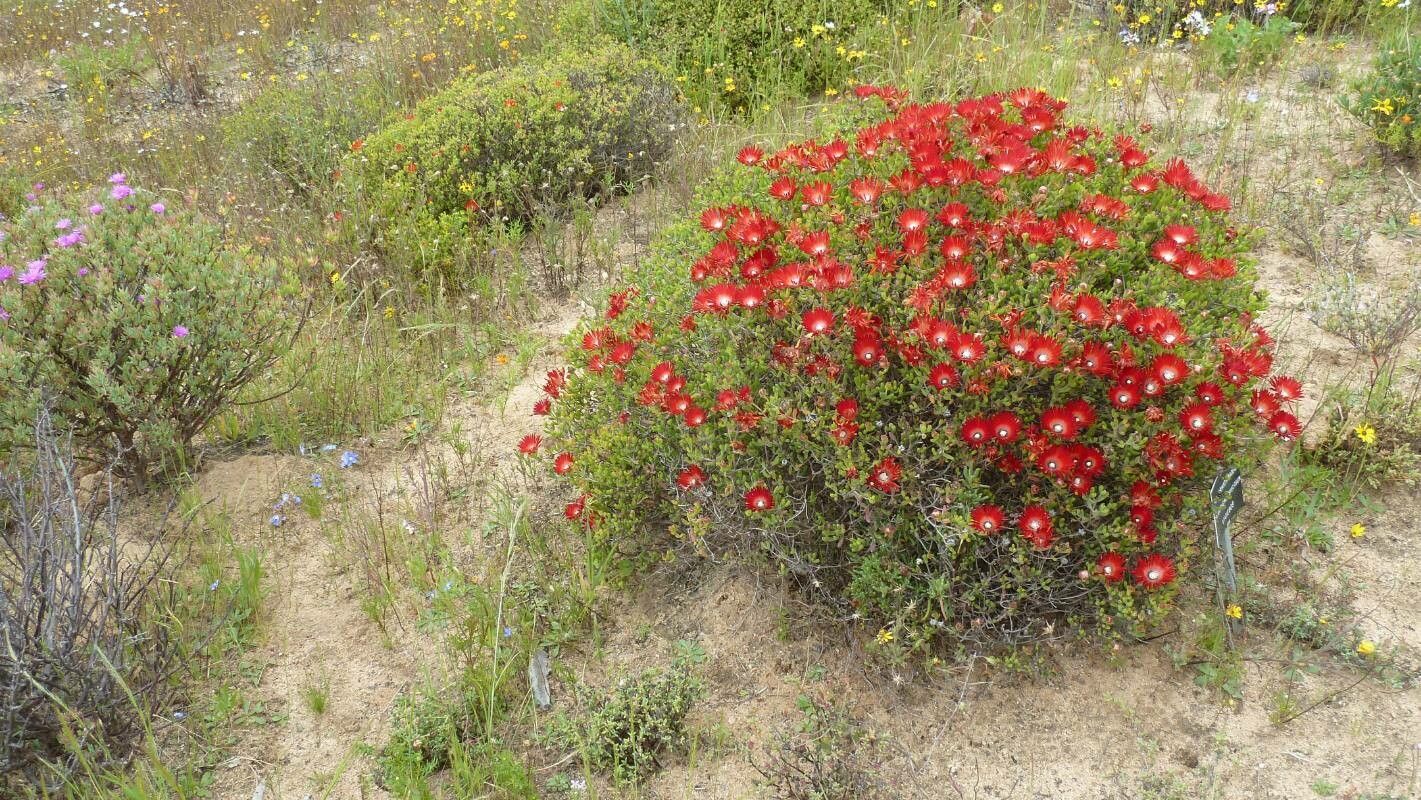
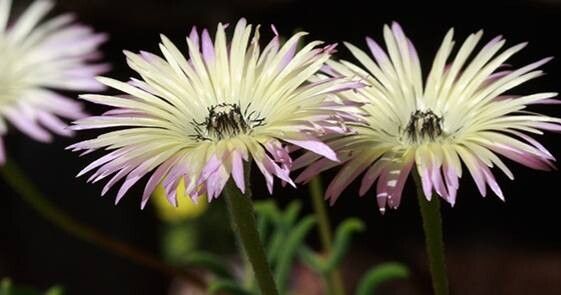
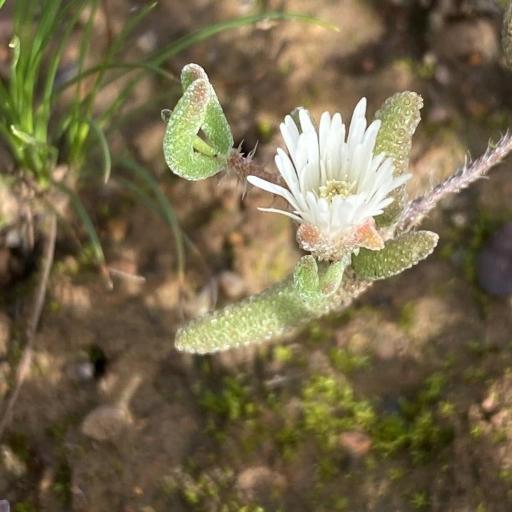
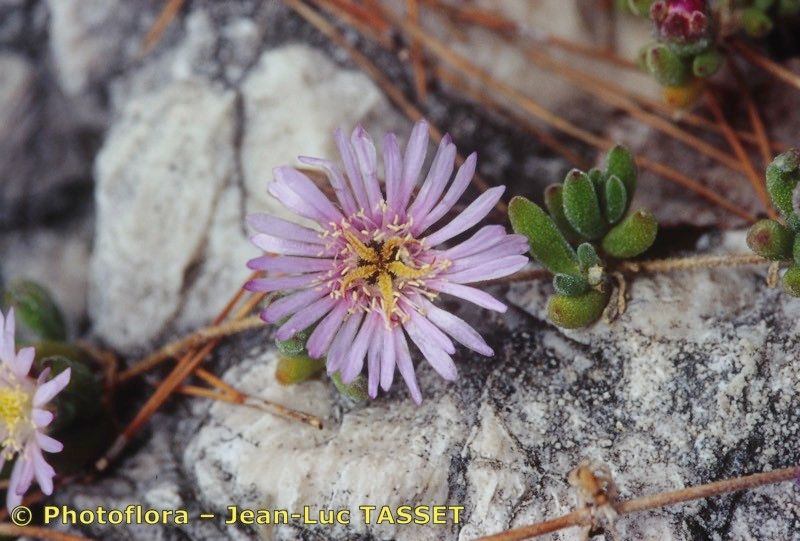
Drosanthemum speciosum or royal dewflower is a succulent plant in the Ice plant Family (Aizoaceae) and native to the Montague District in the south of the Cape Province of South Africa. The flowers have two whorls of staminodes: The inner whorl of about thirty are very short and almost black. The outer whorl of about sixty are long and bright orange.
Royal dewflower has moderate disease resistance and is more vulnerable to humidity and excess watering. It is also likelier to develop problems when it receives little light and is overwatered. In terms of care, the Royal dewflower is drought-tolerant and can go long periods without water. It needs little fertilizer and only occasional pruning. That makes it suitable for people at any experience level, particularly those who want to spend less time on plant care and who may sometimes be away from home for extended periods. It’s a good option for anyone who doesn’t want to devote much time to maintenance but still wants an easy-to-care-for plant.
How to keep Drosanthemum Speciosum.
Light
Native to dry regions, the Royal dewflower flourishes in full sun; its native habitat features intense sunlight and little shade. It will also tolerate partial sun, giving it some flexibility in growth.
Water
The royal dewflower flourishes in arid landscapes by adapting to conserve water. It features succulent leaves that effectively store moisture. To care for this plant, water it once a week, being careful not to oversaturate. While it is primarily grown outdoors, it is important to plant it in well-draining soil to prevent root rot and to replicate its natural dry habitat.
Temperature
Royal dewflower prefers warm conditions and needs higher temperatures during the growing season to support growth and metabolism. It thrives with plenty of sunlight, suitable moisture, and good ventilation. However, it can be harmed by very low temperatures and by overwatering. Maintaining a balance is important, and excessively high temperatures and overly dry conditions should be avoided as well.
Fertilizer
Royal dewflower only needs light fertilizing once or twice a year during its growing season. Do not fertilize in winter or in summer when the plant is dormant. Use less fertilizer after repotting and wait a couple of months following repotting before you fertilize. Fertilizing helps maintain healthy growth and encourages flowering.
Pruning
To enhance the vibrant blooms of the royal dewflower, regular pruning is essential. Begin pruning from early to late spring by removing dead stems and shaping the plant. Thinning out dense areas will improve air circulation, encourage robust flowering, and prevent legginess, resulting in a healthy and attractive appearance.
Pot & Repot
Repot the royal dewflower every 2 to 3 years during its growth phase. Use a shallow, wide pot with proper drainage. The best time to repot is in the spring, as this supports vibrant blooms in the summer. After repotting, make sure the plant gets plenty of sunlight and water it sparingly. This will help prevent root rot and keep its stunning flowers and succulent foliage in great condition.
Botanical profile.
- Plant Type
- Herb, Shrub
- Life Cycle
- Perennial
- Genus
- Drosanthemum
- Family
- Aizoaceae
- Hardiness Zone
- 9-11
- Mature Height
- 40 cm
- Mature Spread
- 30 cm
- Leaf Color
- Green
- Leaf Type
- Evergreen
- Flower Color
- Pink
- Flower Size
- 2.03 cm to 3.05 cm
- Bloom Time
- Mid spring, Late spring, Early summer
- Planting Time
- Spring, Summer, Autumn
- Harvest Time
- Summer
- Native Area
- South Africa
Other names.