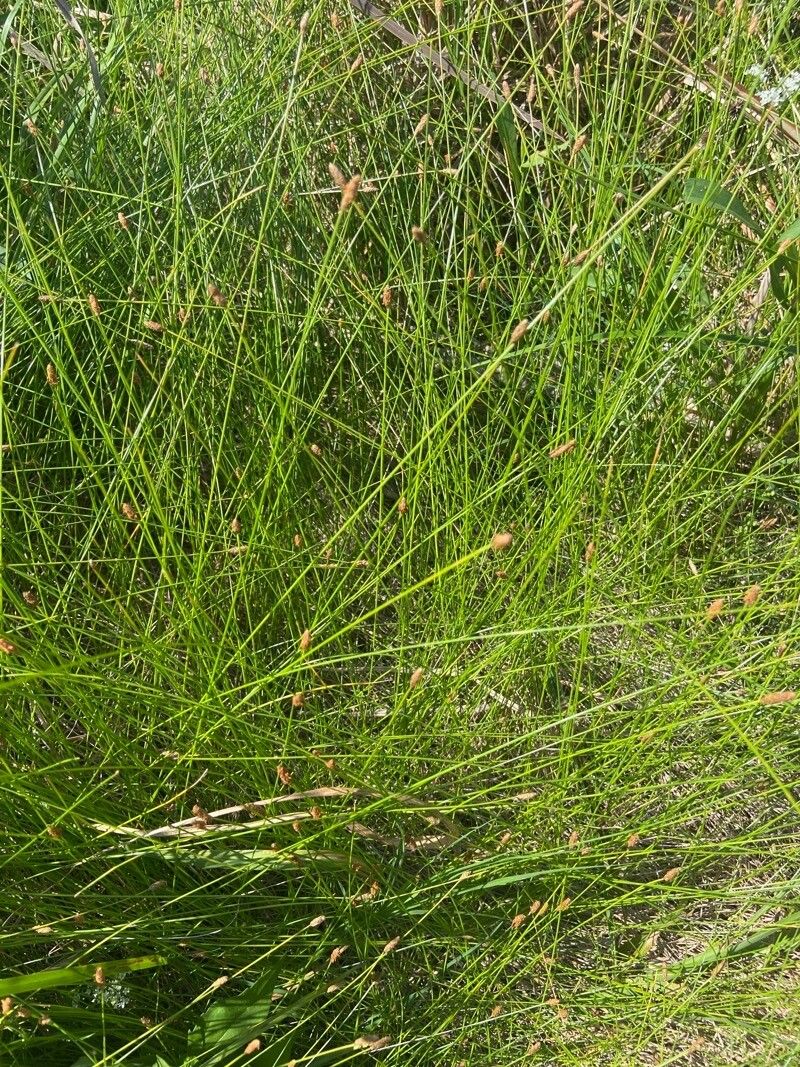
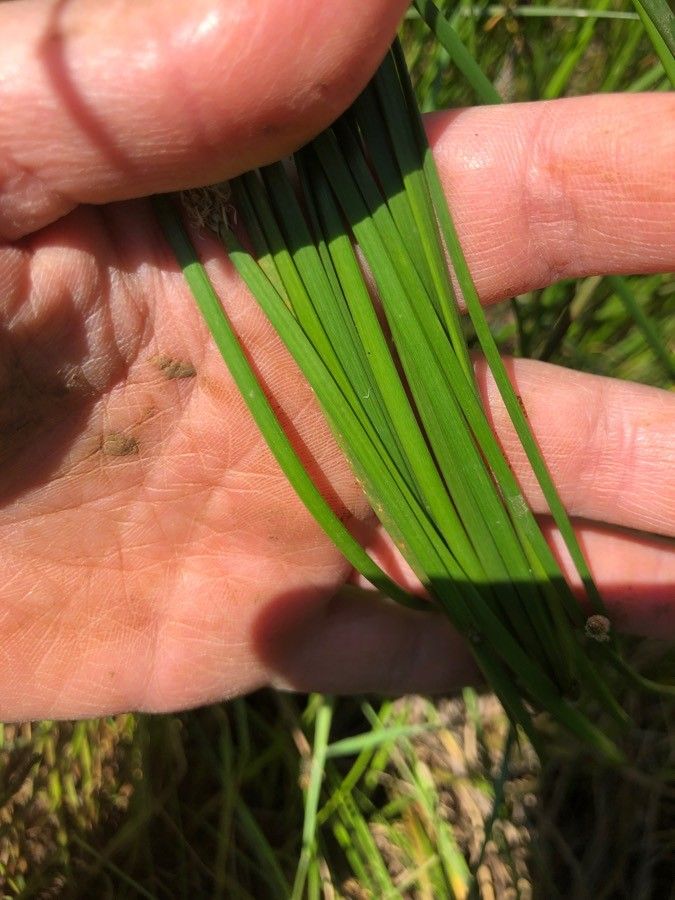
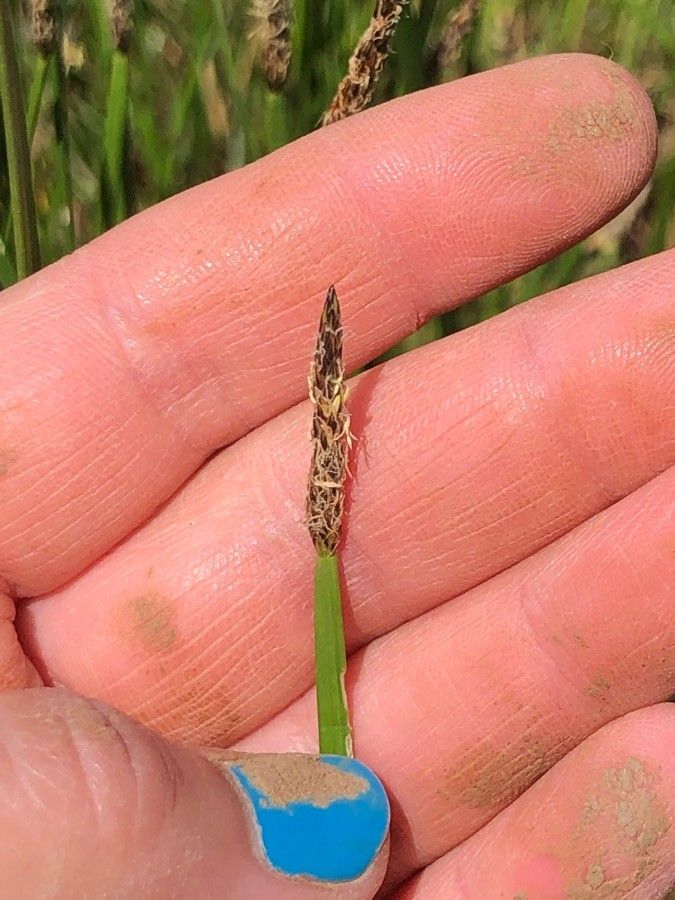
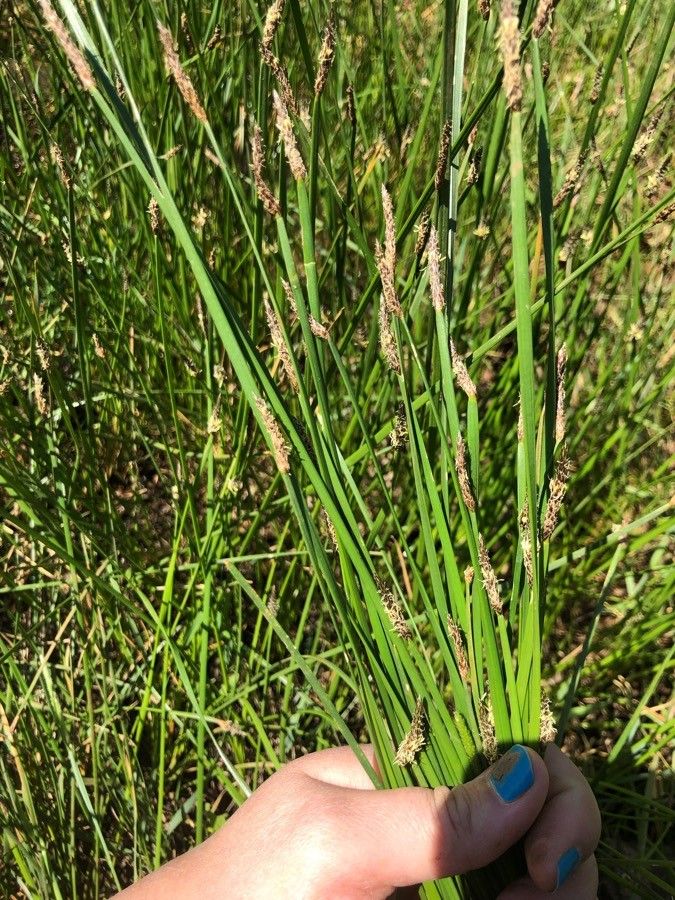
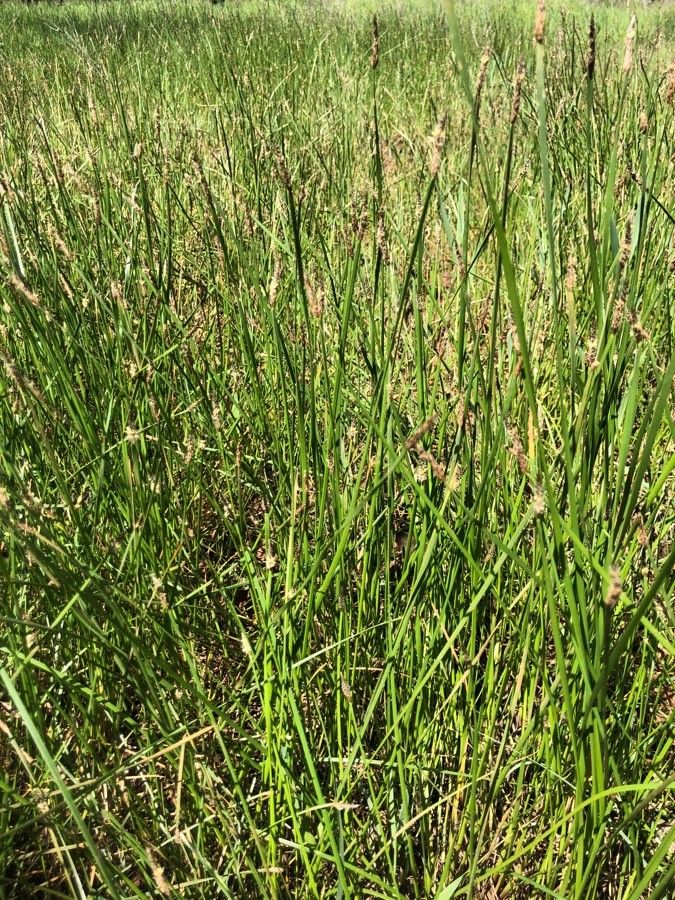
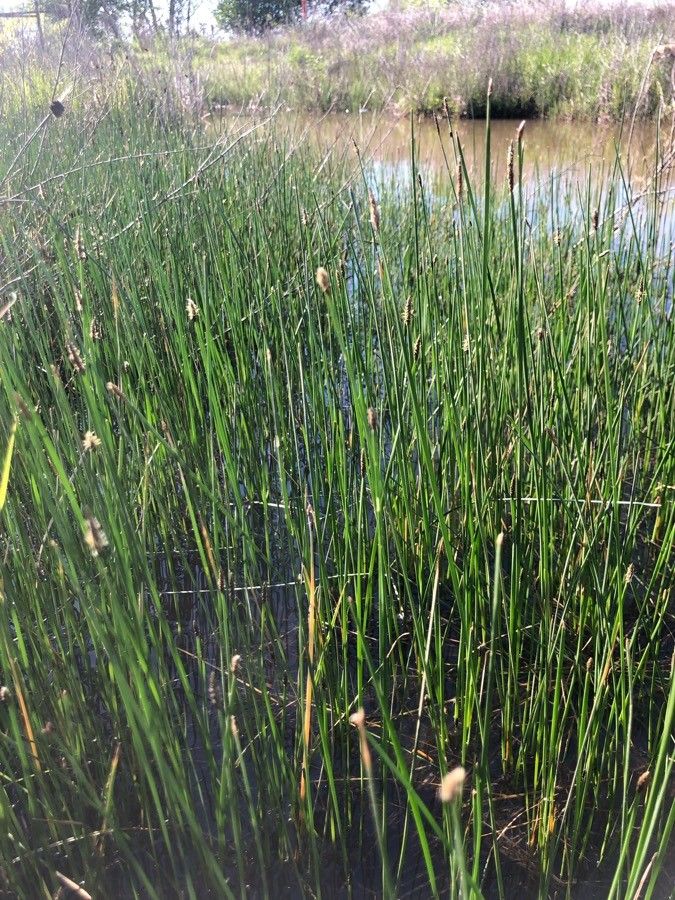
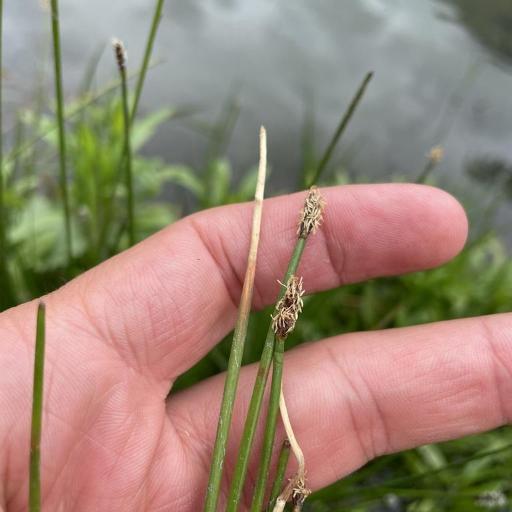
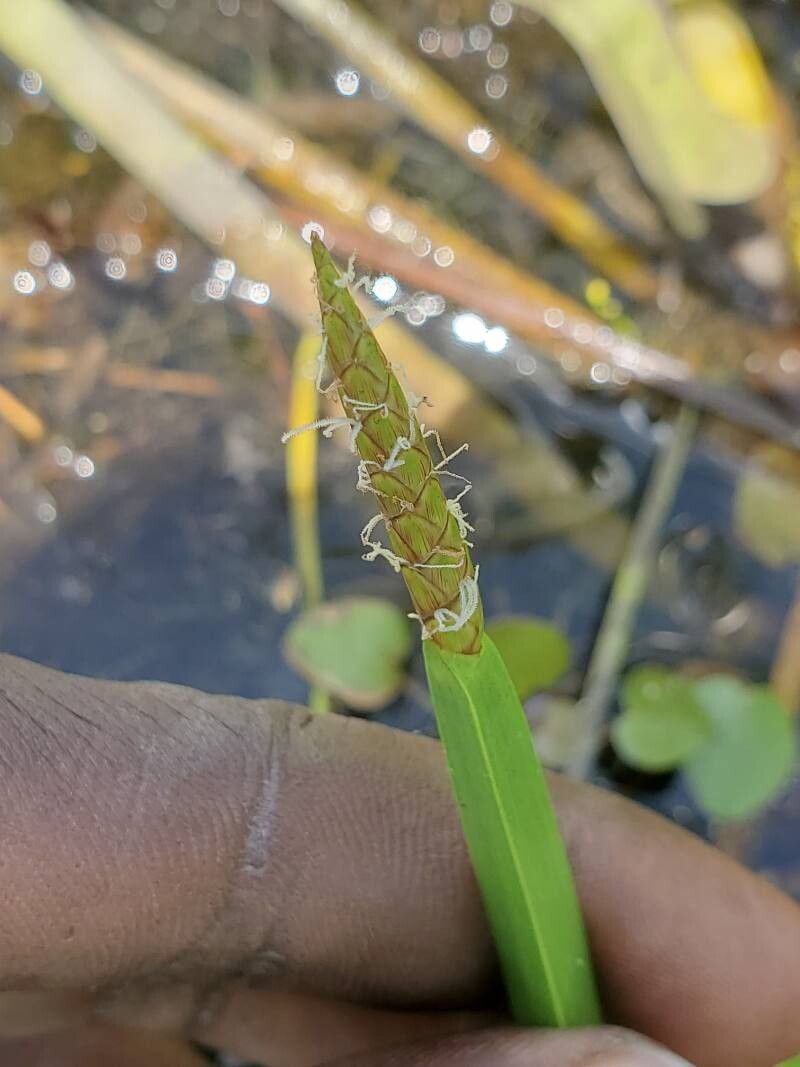
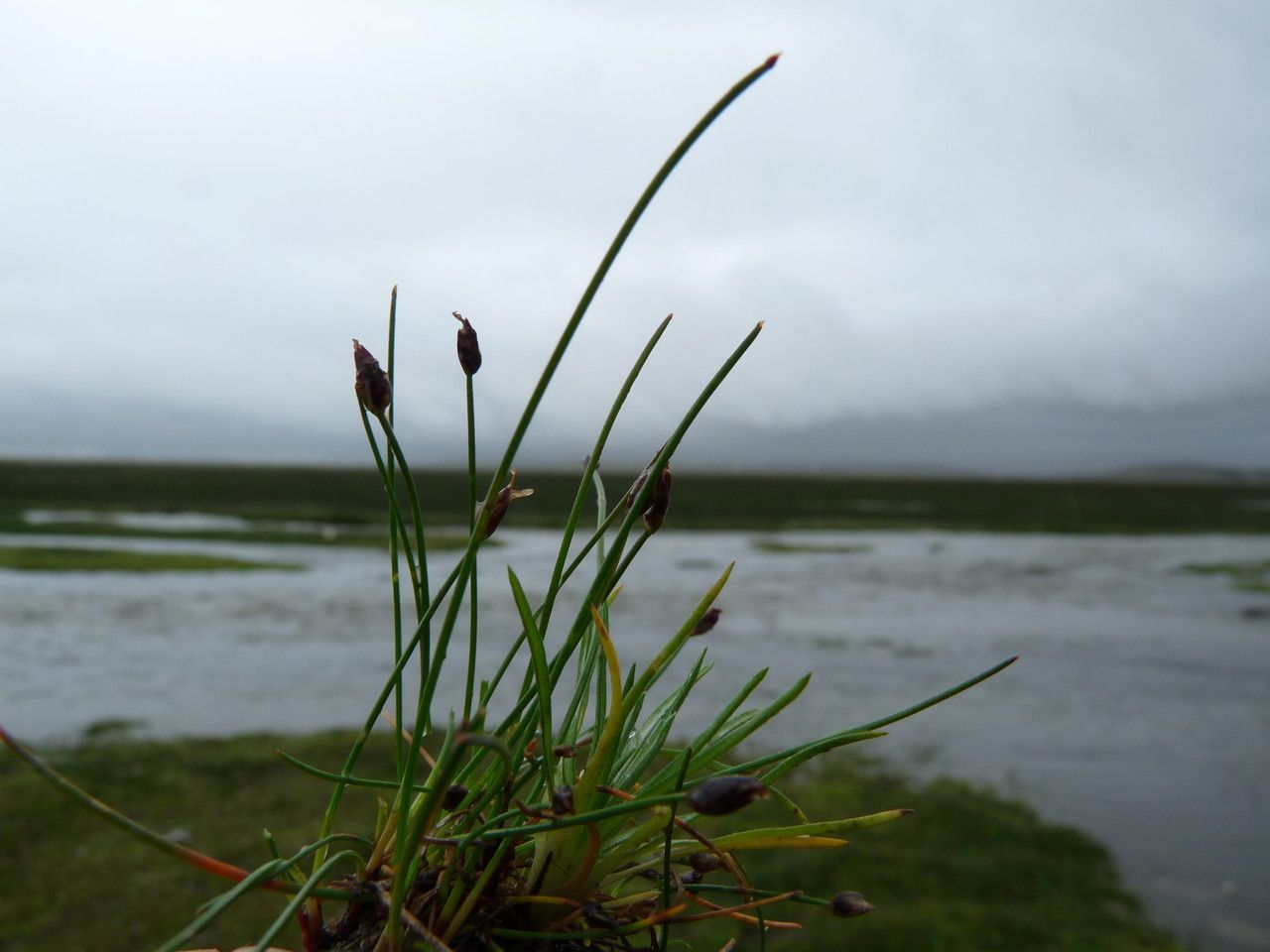
Eleocharis compressa, commonly known as flattened spike-rush, is a perennial aquatic plant that belongs to the Cyperaceae family. Native to North America, it thrives in wetlands, marshes, and shallow water bodies. The plant features a distinctive flattened stem that can grow up to 60 cm in height and forms dense clumps. Its leaves are narrow, grass-like, and green in color. Flattened spike-rush produces small flowers in clusters at the ends of its stems. These flowers are brownish-green and equipped with three stamens and three stigmas. They typically bloom from June to August. This plant is a vital component of wetland ecosystems, providing habitat for various aquatic animals such as fish, insects, amphibians, and birds. Additionally, it helps stabilize soil erosion along water bodies. Eleocharis compressa can be grown in aquariums or ponds for its aesthetic value and can also be used for phytoremediation purposes, due to its ability to absorb excess nutrients like nitrogen and phosphorus from water bodies. Overall, Eleocharis compressa is a fascinating aquatic plant with unique features that make it an essential part of wetland ecosystems, while also offering potential uses in aquariums and for phytoremediation.
Flat-stem spike-rush is resistant to disease and is generally not susceptible to illnesses. Regarding care, this plant is fairly low maintenance. When grown outdoors it needs only light watering, and larger specimens usually do not require pruning. Smaller plants, however, should be trimmed after flowering. Flat-stem spike-rush is appropriate for anyone who has an outdoor area, like a garden or deck, and does not demand extensive plant-care experience.
How to keep Eleocharis Compressa.
Fertilizer
Flat-stem spike-rush requires additional nutrients to encourage healthy new growth. In spring, placing compost around the base of the plant can effectively supply the necessary nutrition. Fertilizing supports vigorous growth and helps the plant resist diseases and pests.
Pruning
Flat-stem spike-rush is a tufted perennial known for its flat, narrow stems. To promote healthy growth, it's important to prune the plant in early spring. Start by removing any dead stems, being careful to cut back to the base without damaging any new shoots. Regular pruning not only enhances air circulation but also helps reduce pests and maintain the plant's shape. Make sure to use clean, sharp tools for the best results.
Botanical profile.
- Plant Type
- Grass
- Life Cycle
- Perennial
- Genus
- Eleocharis
- Family
- Cyperaceae
- Hardiness Zone
- 5-9
- Mature Height
- 8 cm to 40 cm
- Leaf Type
- Deciduous
Other names.