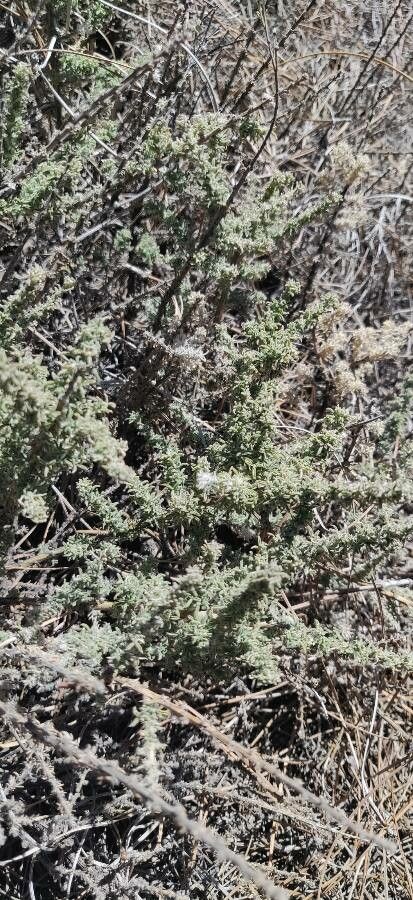
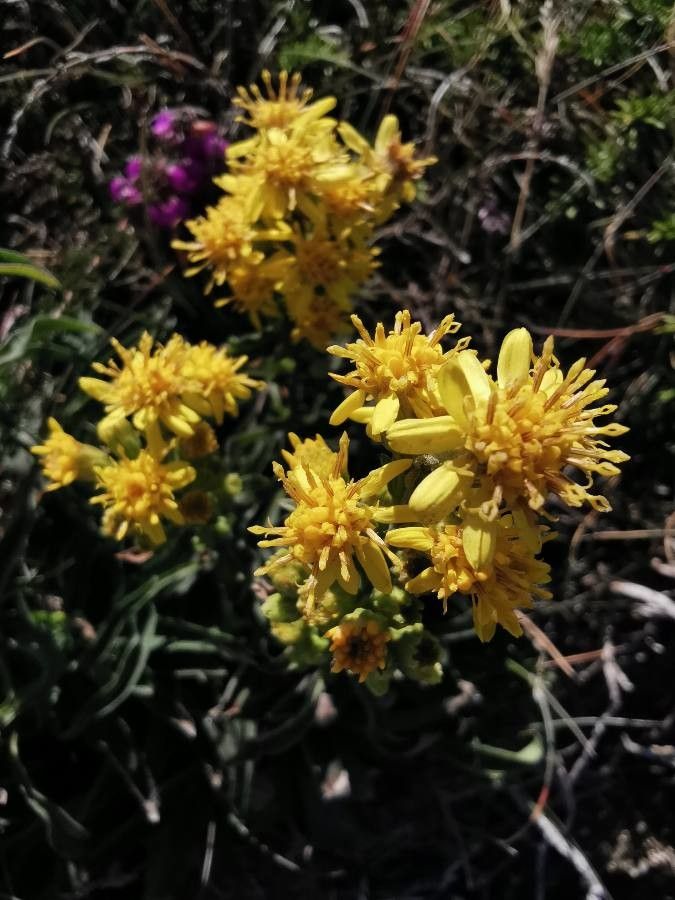
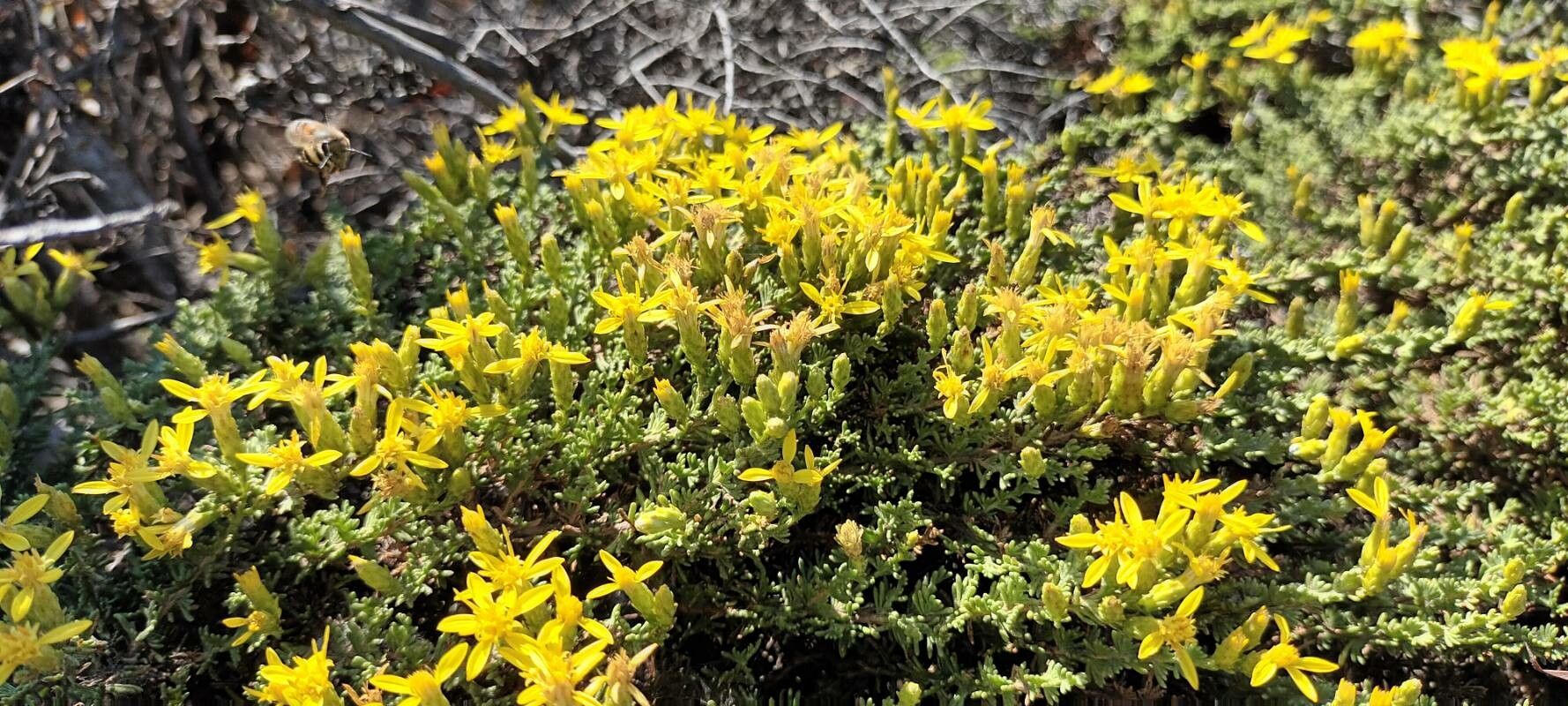
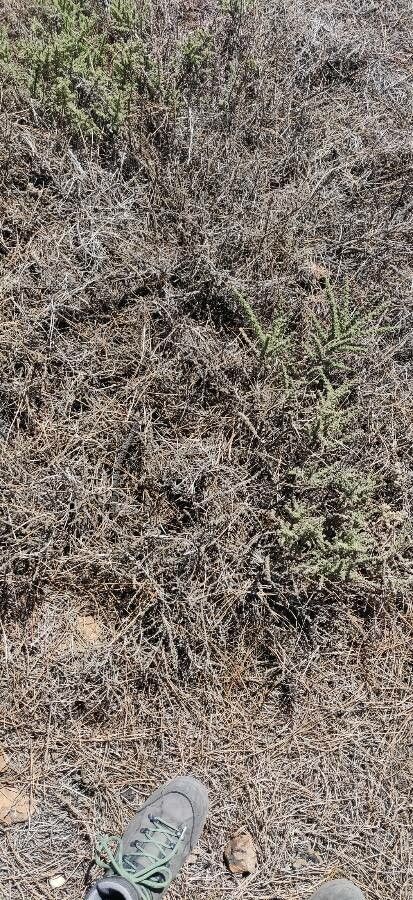
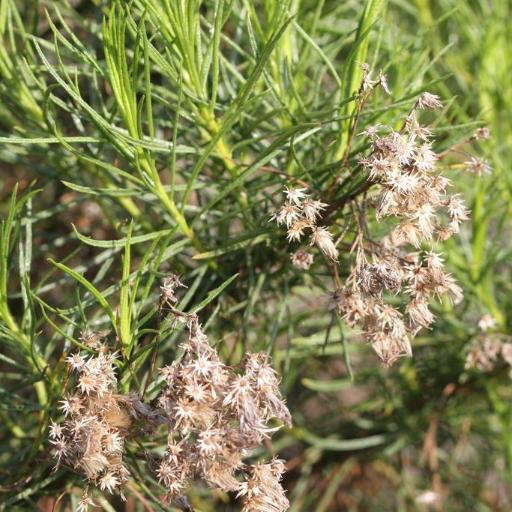
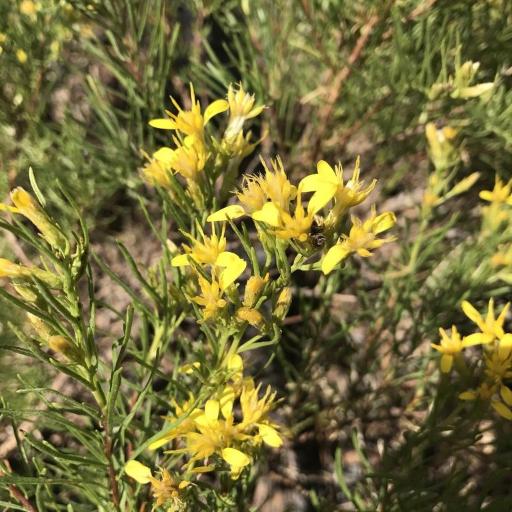
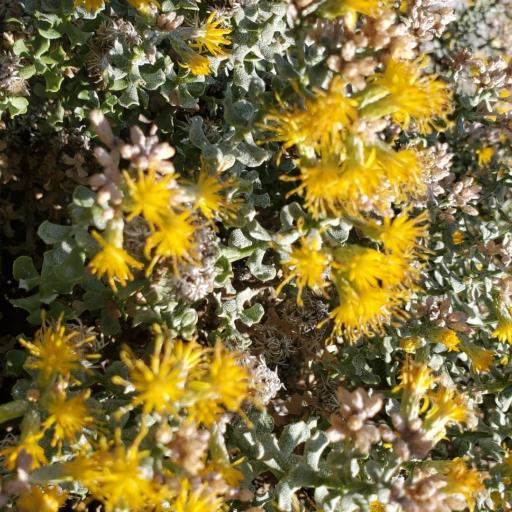
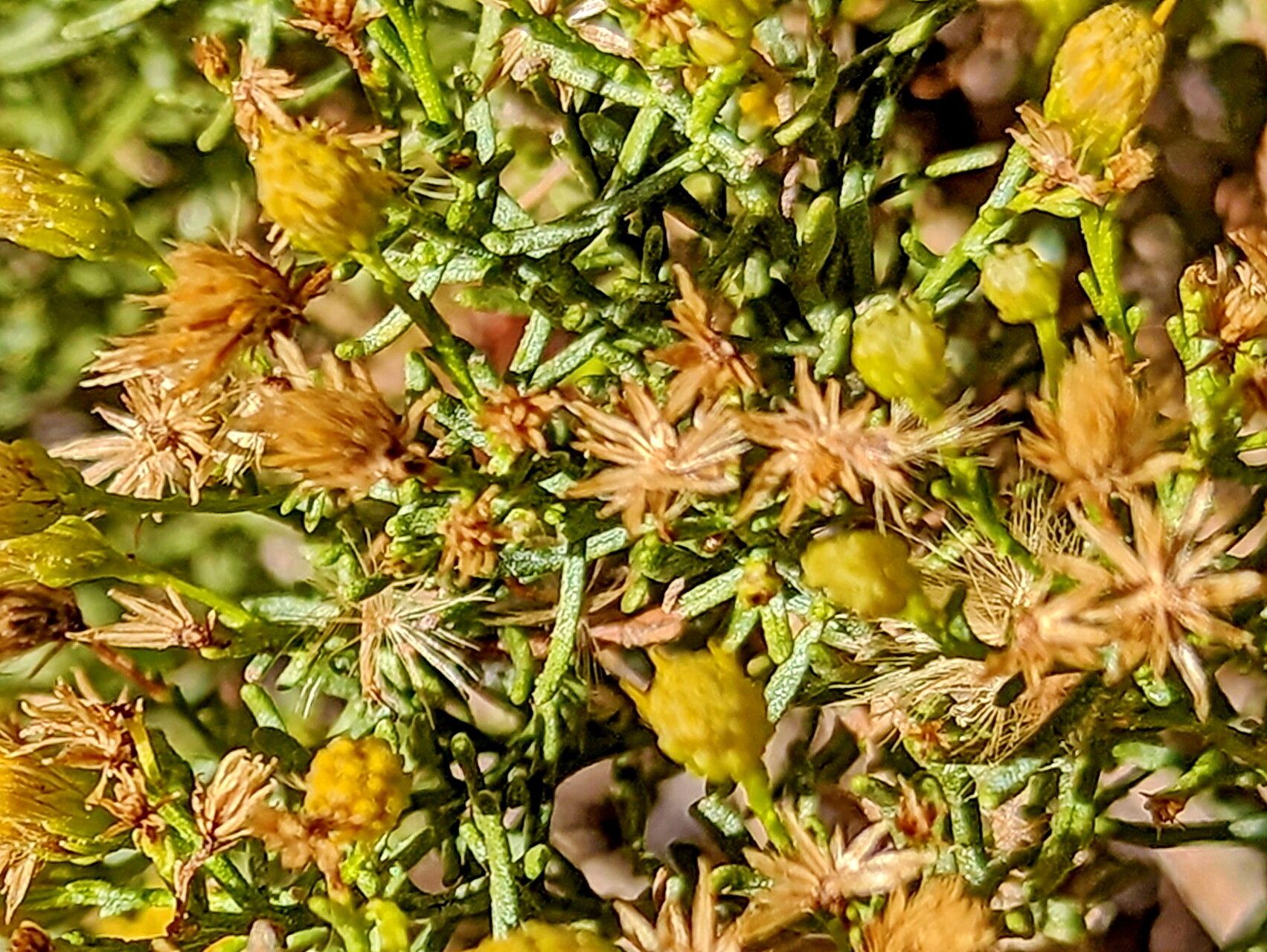
Ericameria ericoides, commonly known as Mock Heather or White Heath Aster, is a perennial shrub in the Asteraceae family. Native to North America, it thrives in various habitats including prairies, meadows, and open woodlands. This plant typically reaches up to 3 feet in height and 2 feet in width, featuring small, green, needle-like leaves. Its small white flowers with yellow centers bloom from late summer through fall.
Ericameria ericoides is a hardy plant that can tolerate drought conditions, although it prefers well-drained soils in full sun or partial shade. This shrub attracts pollinators such as bees and butterflies, making it a valuable addition to any garden or landscape design. Historically, Native Americans have used it for medicinal purposes to treat ailments like respiratory issues and skin irritations, owing to its anti-inflammatory properties.
California goldenbush shows strong resistance to disease and is generally not susceptible to illnesses. As for care, this plant is fairly low-maintenance. When grown outdoors it needs little watering, and larger plants usually do not require pruning. Smaller plants, however, should be pruned after they finish blooming. California goldenbusht is appropriate for anyone with outdoor space, such as a garden or a deck, and does not demand much gardening experience.
How to keep Ericameria Ericoides.
Light
Originating in bright, sun-drenched habitats, California goldenbush is a tropical woody plant that prospers in full sun but can also tolerate partial sun. It commonly grows in open, well-lit locations with little shade.
Water
California goldenbush flourishes in arid conditions, requiring minimal water and thriving in drier climates. It can withstand prolonged droughts and typically benefits from watering every 2 to 3 weeks. When growing it outdoors, it's important to adjust the watering schedule during rainy periods to avoid overwatering.
Temperature
California goldenbush is native to areas where temperatures commonly range from 68 to 100 °F (20 to 38 ℃). It does best in these warmer conditions and requires adjustments when grown in cooler climates. In colder seasons, additional warming measures may be required.
Fertilizer
The best time to fertilize a California goldenbush is in early spring when it breaks dormancy. This supports overall growth and encourages flower development. Applying fertilizer improves the foliage, stems, and branches, and promotes flowers that are larger, more vibrant, and longer-lasting. It also helps transport nutrients from the roots to the blooms and enhances the plant’s health and resistance to disease.
Pruning
California goldenbush showcases bright yellow flowers and should be pruned in early spring before new growth begins. To improve air circulation, remove dead branches and thin out dense areas. Lightly cutting back older stems enhances both vigor and blooming, but be careful not to over-prune in order to preserve its natural shape.
Botanical profile.
- Plant Type
- Shrub
- Life Cycle
- Perennial
- Genus
- Ericameria
- Family
- Asteraceae
- Hardiness Zone
- 9-11
- Mature Height
- 91 cm
- Mature Spread
- 1.22 m
- Leaf Color
- Green
- Leaf Type
- Deciduous
- Flower Color
- Yellow
- Flower Size
- 0.76 cm
- Bloom Time
- Late summer, Early fall, Mid fall
- Planting Time
- Spring
- Harvest Time
- Mid fall, Late fall, Early winter
Other names.
Reader questions.
What are the sunlight requirements for California goldenbush?
California goldenbush requires full sun, which means it thrives best with more than 6 hours of sunlight per day. However, it can also tolerate partial sun conditions, with about 3-6 hours of sunlight daily. Observing how sunlight moves through your garden can help you choose the perfect spots that provide the right balance of light and shade, ensuring your plants' happiness.
What is the native environment of the California goldenbush?
California goldenbush, scientifically known as Ericameria ericoides, is native to environments where the temperature typically ranges from 68 to 100°F (20 to 38°C). It thrives in warmer temperatures and requires adjustments to cooler climates. During colder seasons, additional warming measures might be necessary to maintain its health.
How does the California goldenbush adapt to its environment?
The California goldenbush is native to bright, sun-drenched environments and is a tropical woody plant. It thrives in full sun but can also tolerate partial sun. This plant often grows in open, well-lit areas with minimal shade. For indoor plants that require more light, especially in less sunny spaces or during winter, artificial lighting can offer a viable solution. Using the right type of artificial light, such as LED lights, and adjusting the duration and distance of the light source can help mimic natural sunlight conditions, ensuring optimal growth.
How should California goldenbush be cared for in cooler temperatures?
In cooler temperatures, especially in autumn and winter, it is recommended to bring the California goldenbush indoors and place it near a bright window, while ensuring it is not too close to heaters to avoid harm. Maintaining indoor temperatures above 20°C is beneficial for its growth. Exposure to temperatures approaching 0°C can be detrimental to the plant, necessitating precautions during cold weather.
What are the common symptoms of light deficiency in California goldenbush?
Common symptoms of light deficiency in California goldenbush include smaller new leaves, leggy or sparse growth, faster leaf drop, slower or no new growth, lighter-colored new leaves, chlorosis, sunscald, leaf curling, wilting, and leaf scorching. These symptoms indicate that the plant is not receiving adequate light, which affects its growth and overall health. Adjusting the plant's exposure to light, either by moving it to a sunnier spot or using artificial lighting, can help mitigate these issues.
What are the symptoms of cold damage in California goldenbush?
When exposed to low temperatures, particularly below -5°C, California goldenbush may exhibit symptoms such as leaves lightening in color. Following frost damage, the affected areas may turn brown or black, and the plant may show signs of wilting and drooping. These symptoms indicate that the plant is not tolerant of cold and requires immediate attention to prevent further damage.
How can I ensure my California goldenbush receives adequate light?
To ensure your California goldenbush receives adequate light, gradually move it to a location where it can get at least 6 hours of direct sunlight daily. For indoor plants, using a south-facing window or artificial lighting for at least 8 hours daily can help. Outdoors, move your plants to sunnier spots gradually to avoid sunburn. Additionally, reducing obstructions like pruning tree branches can enhance sunlight exposure. For ground plants, transplanting them during their dormant period to a location with more sunlight and good drainage may also be beneficial. Remember, parts of the plant affected by insufficient sunlight may not recover, but new growth should be healthy with improved lighting conditions.
How can cold damage in California goldenbush be treated?
To treat cold damage in California goldenbush, one should trim off the frost-damaged parts and immediately move the plant indoors to a warmer environment for protection. Placing the plant near a south-facing window ensures ample sunlight while avoiding spots near heaters or air conditioning vents to prevent air dryness. These steps help in the recovery and health maintenance of the plant.
What are the symptoms of heat stress in California goldenbush?
During the summer, when temperatures exceed 43°C, California goldenbush may exhibit symptoms of heat stress, such as leaves lightening in color and increased susceptibility to sunburn. High temperatures above the preferred range can cause significant stress to the plant, indicating the need for protective measures against intense heat.
How can heat stress in California goldenbush be managed?
To manage heat stress in California goldenbush, trim away the sunburned and dried-up parts and relocate the plant to a shaded location, especially from the midday and afternoon sun. It's also beneficial to water the plant in the morning and evening to keep the soil moist and help the plant cope with high temperatures. These actions are crucial for the plant's survival and health during hot periods.