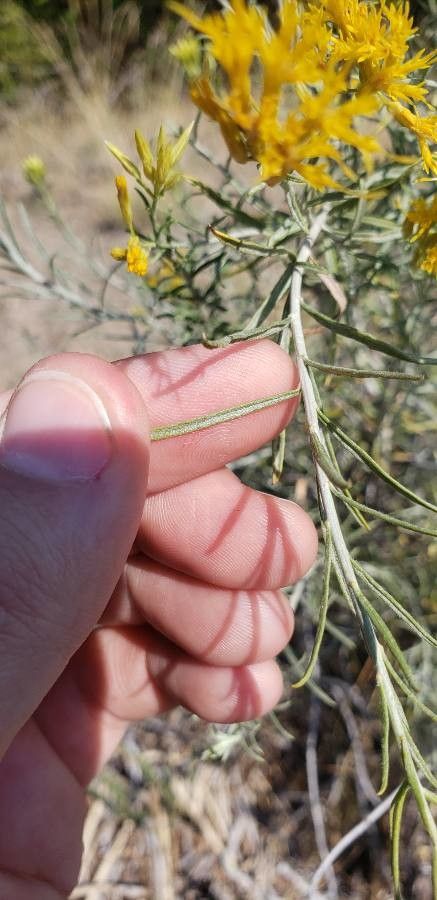
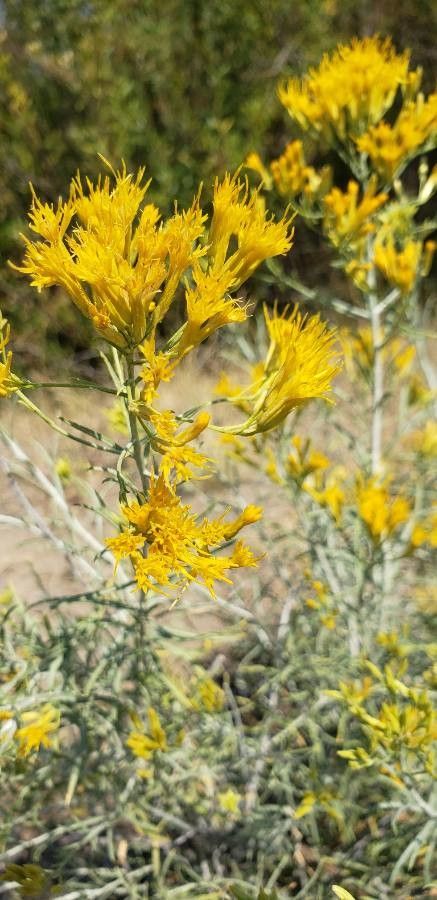
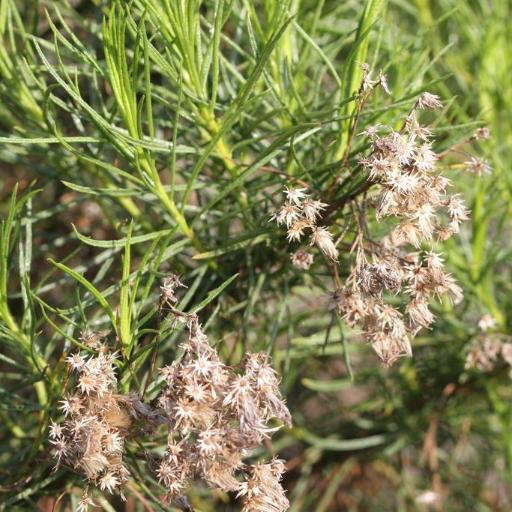
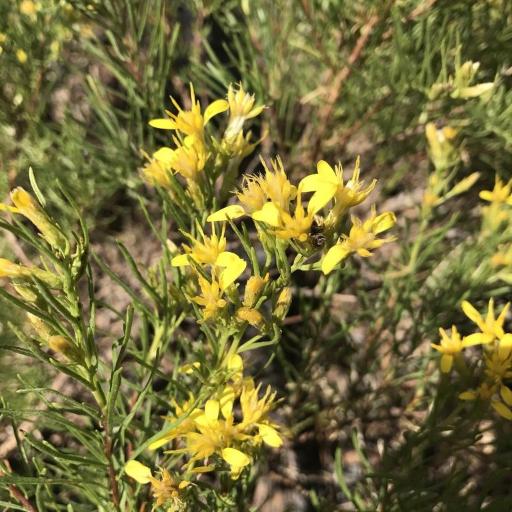
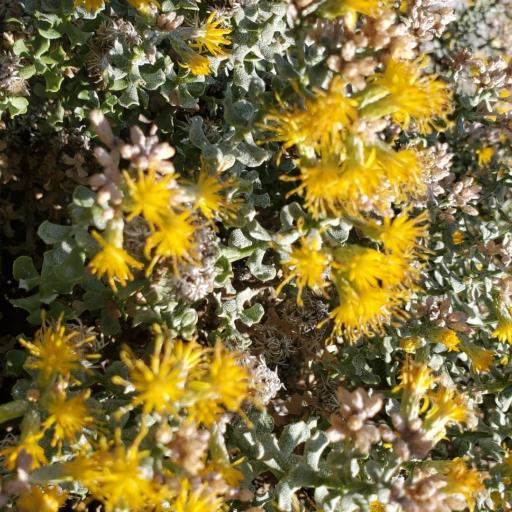
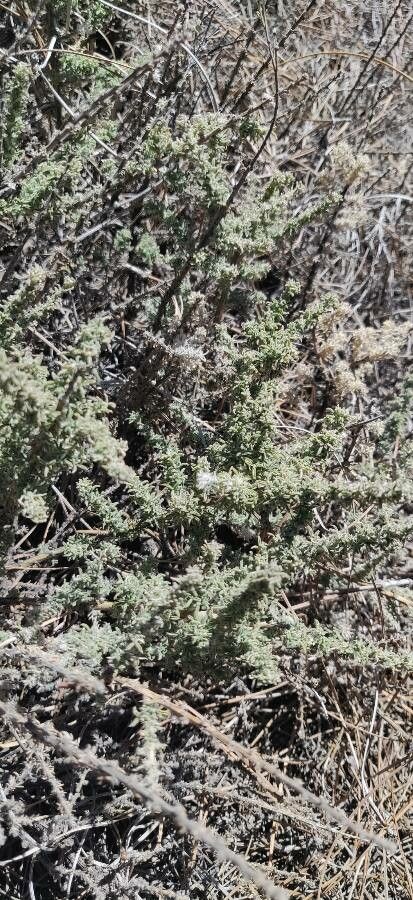
Ericameria paniculata, commonly known as blackbrush, is a shrub species belonging to the Asteraceae family. Native to western North America, it thrives in various habitats, including deserts, sagebrush plains, and mountain slopes. The plant can grow up to 3 meters tall, featuring a woody stem and small, green-gray leaves. Its yellow flowers bloom from August to October.
Blackbrush is a crucial plant for wildlife, offering food for deer, rabbits, birds, and insects. Additionally, it has medicinal properties that have been utilized by Native Americans for centuries.
The plant is well-adapted to harsh environments, having developed deep roots that allow it to access water from subterranean sources. This characteristic makes it vital for preventing soil erosion in arid regions.
However, despite its ecological significance, blackbrush faces threats from human activities such as livestock grazing and habitat destruction due to urbanization. To protect this valuable species, conservation efforts are underway, including habitat restoration programs aimed at minimizing human impact on its natural environment.
In conclusion, Ericameria paniculata, or blackbrush, is a valuable shrub with significant ecological importance. Its adaptability to harsh environments helps prevent soil erosion and supports wildlife. Additionally, it possesses medicinal properties that have been used by Native Americans for centuries. Conservation efforts are essential to preserve this important species.
Desert rabbitbrush resists disease well and is usually not susceptible to illnesses. When it comes to care, the plant is fairly low-maintenance. Planted outdoors it needs little water, and larger specimens generally do not require pruning. Smaller plants, however, should be trimmed after they have finished blooming. Desert rabbitbrusht is suitable for anyone with outdoor space, such as a garden or deck, and does not need much prior care experience.
How to keep Ericameria Paniculata.
Light
Desert rabbitbrush comes from open habitats, such as sunlit meadows and forest edges, that provide plenty of light. It thrives in full sun but can also tolerate partial sun, adapting well to various sunlight conditions.
Water
Desert rabbitbrush thrives in arid environments due to its high drought tolerance. It requires watering only every 2-3 weeks, effectively conserving water. Commonly found in dry climates, desert rabbitbrush efficiently manages water use, making it an excellent choice for xeriscaping.
Temperature
Desert rabbitbrush shows good temperature adaptability, able to endure higher temperatures and wide temperature fluctuations. In hot conditions, attention should be paid to watering and providing suitable shade to avoid sunburn. However, Desert rabbitbrush is relatively intolerant of low temperatures. Although it can handle some cold, excessively cold conditions can cause frost damage.
Fertilizer
Fertilize your Desert rabbitbrush in early spring to encourage healthy growth. Regular feeding improves overall health, producing vigorous growth, increased tolerance of harsh conditions, and enhanced resistance to pests and diseases. Follow a consistent fertilization schedule for your Desert rabbitbrush to preserve foliage that is vivid in color and luxuriant in appearance.
Pruning
Desert rabbitbrush is a hardy shrub renowned for its vibrant yellow flowers and ability to withstand drought. To keep it healthy and attractive, it's best to prune it in early spring. This helps shape the plant, removes dead branches, and improves air circulation, which in turn stimulates growth and encourages future blooms. Regular pruning extends the plant's life and enhances both its beauty and vitality.
Botanical profile.
- Plant Type
- Shrub
- Life Cycle
- Perennial
- Genus
- Ericameria
- Family
- Compositae
- Hardiness Zone
- 7-10
- Mature Height
- 2.13 m
- Mature Spread
- 0.61 m to 1.22 m
- Leaf Color
- Dark Green, Olive Drab
- Leaf Type
- Semi-evergreen
- Flower Color
- Yellow
- Flower Size
- 0.51 cm to 1.02 cm
- Bloom Time
- Late summer, Early fall, Mid fall
- Planting Time
- Spring, Summer
- Harvest Time
- Mid fall, Late fall, Early winter
- Native Area
- Mexico
Other names.
Reader questions.
What are the sunlight requirements for Desert Rabbitbrush?
Desert Rabbitbrush, known botanically as Ericameria paniculata, thrives best in full sun, requiring more than 6 hours of sunlight daily. It can also tolerate partial sun, with about 3-6 hours of sunlight. When selecting a location for your Desert Rabbitbrush, it's essential to watch how sunlight moves through your garden, choosing spots that ensure a balance of light and shade for optimal plant health.
How does Desert Rabbitbrush adapt to indoor and outdoor environments?
Originating from sunny meadows and forest edges, Desert Rabbitbrush is well-adapted to various sunlight conditions. It flourishes in full sun but can also prosper under partial sun. For indoor environments, especially during winter or in less sunny spaces, artificial lighting can be a vital solution. LED lights, being customizable, can mimic specific wavelengths of light needed by the plant, with full sun plants requiring 30-50W/sq ft, partial sun plants needing 20-30W/sq ft, and full shade plants 10-20W/sq ft. Placement of the light source should be 12-36 inches above the plant, mimicking natural sunlight for about 8-12 hours per day to promote healthier growth.
What are signs of insufficient or excessive sunlight in Desert Rabbitbrush?
Desert Rabbitbrush shows several symptoms when exposed to suboptimal lighting. Insufficient light can lead to smaller new leaves, leggy or sparse growth, faster leaf drop, slower or no new growth, and lighter-colored or chlorotic leaves. Excessive sunlight may cause issues such as sunscald, leaf curling, wilting, leaf scorching, and overall health deterioration. Each symptom signals the plant's struggle with its environment, either seeking more light or suffering from too much direct exposure.
What are the solutions for Desert Rabbitbrush facing insufficient sunlight?
To combat insufficient sunlight, gradually moving your Desert Rabbitbrush to sunnier locations is key. For indoor plants, this might mean positioning them by south-facing windows or supplementing with artificial light, keeping a desk or ceiling lamp on for at least 8 hours daily, or using professional plant grow lights. Outdoors, adapting your plants to increased sunlight gradually prevents sunburn. Reducing obstructions by pruning or relocating the plant can also ensure it receives ample sunlight. However, it's important to remember that parts of the plant affected by previous insufficient light may not recover, but new growth should be healthy with improved light conditions.