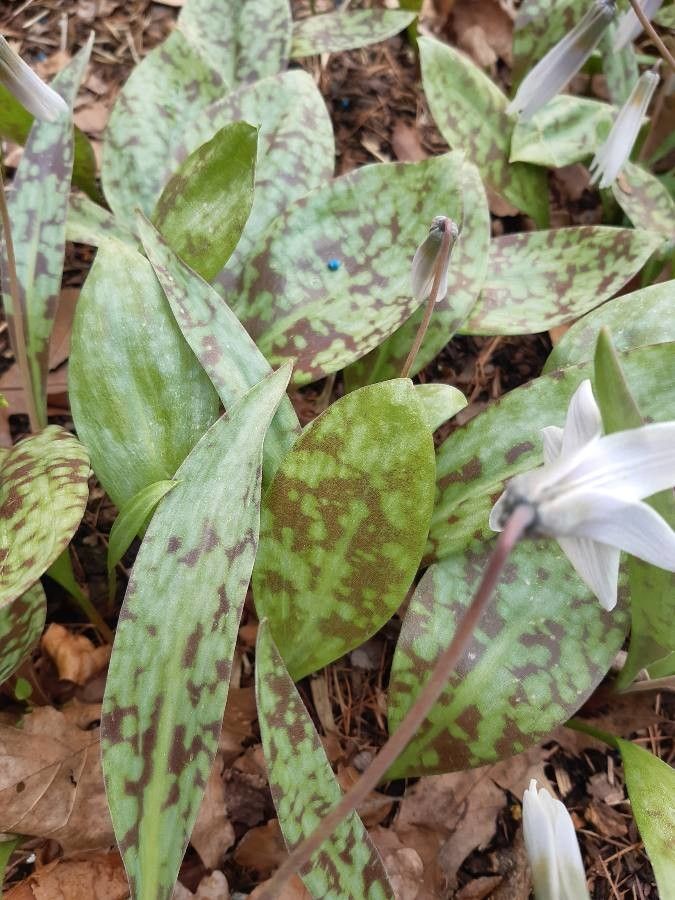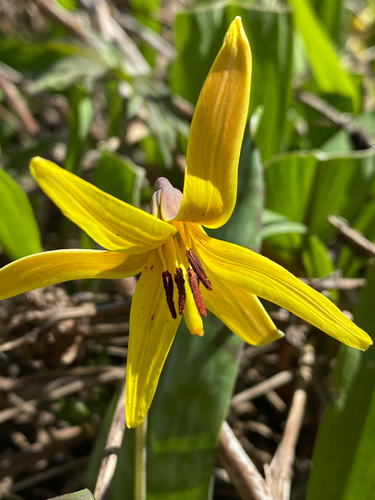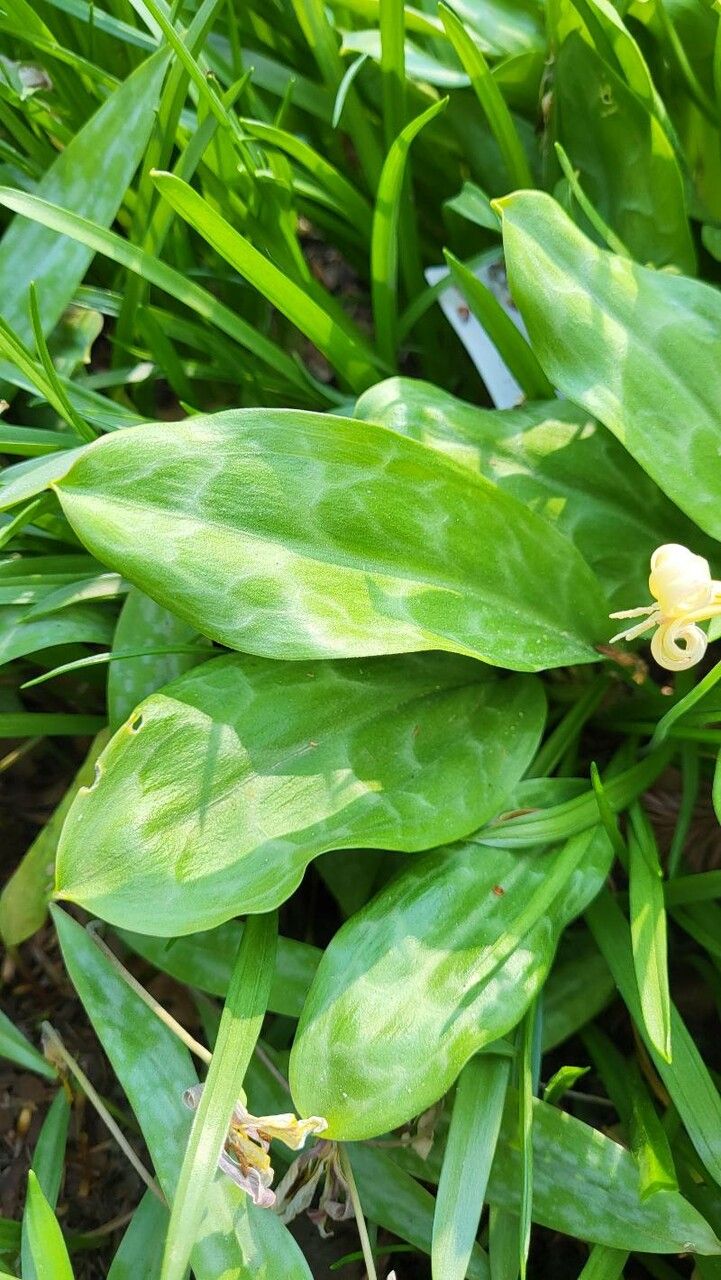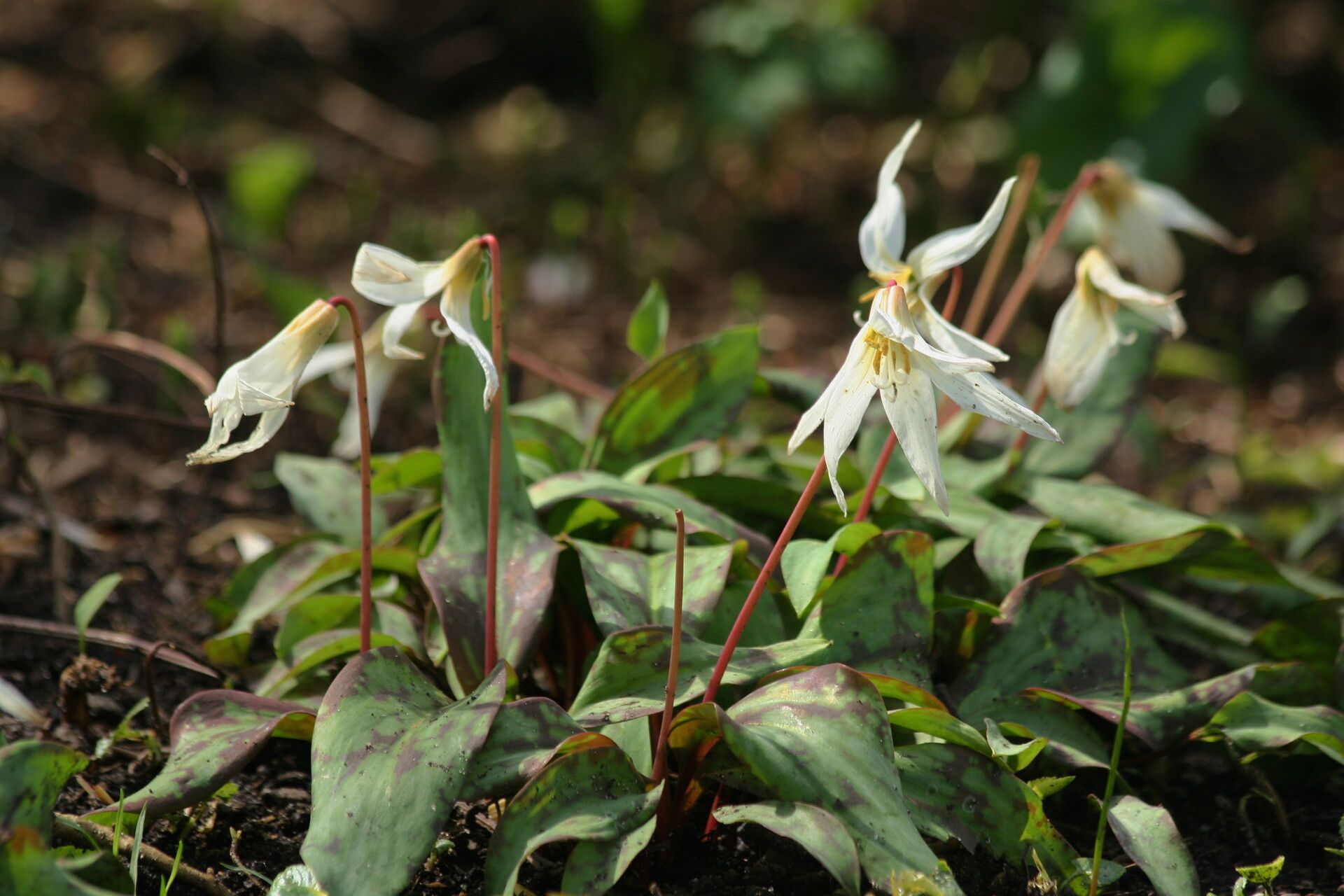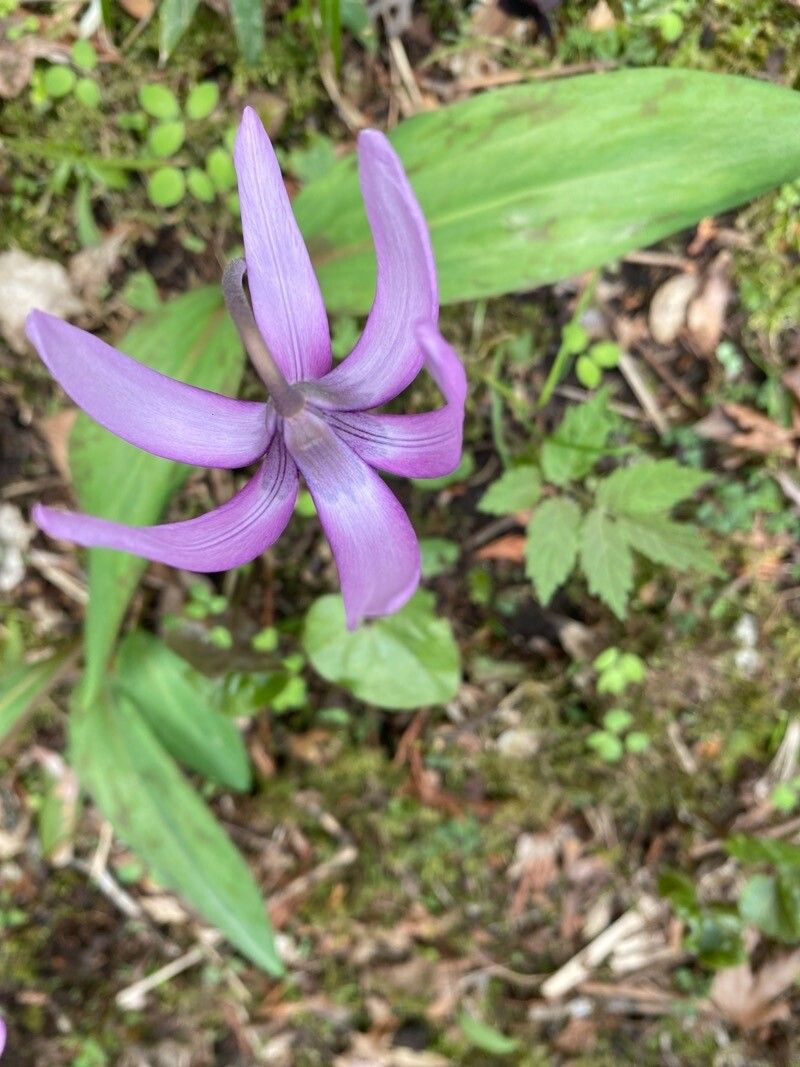
Erythronium japonicum, known as Asian fawn lily, Oriental fawn lily, Japanese fawn lily is a pink-flowered species trout lily, belonging to the Lily family and native to Japan, Korea, the Russian Far East and northeastern China. It is a spring ephemeral, blooming April–June in woodlands. It is known as zhūyáhuā (猪牙花) in Chinese, eolleji (얼레지) in Korean, and katakuri in Japanese.
Asian fawnlily has moderate resistance to disease and can be susceptible to problems such as leaf spot. Its sensitivity to insect pests varies with the cultivar, but most varieties are relatively less resistant to pests. Regarding care, Asian fawnlily requires regular watering and fertilization, together with frequent pruning of yellow leaves. It is important to control pests and diseases when they appear and to harvest the plant in a timely fashion. Asian fawnlily is best suited to people who can spend some time and effort on routine care.
How to keep Erythronium Japonicum.
Light
Asian fawnlily grows in habitats such as forest understories or rocky spots that have natural shade. It prefers partial sunlight but can withstand full sun when necessary. This flexibility lets it prosper under a range of sunlight conditions.
Water
The Asian fawnlily flourishes in moist environments, often found near streams and in woodlands. It prefers consistent humidity but can withstand brief dry periods. Water it every 1-2 weeks, and decrease watering during its dormant phase in the colder months.
Temperature
The Asian fawnlily does well in its native habitat, where temperatures typically range from 32 to 95°F (0 to 35℃). To reproduce these conditions, keep the temperature within that range year-round. Adjustments may be necessary according to seasonal changes.
Fertilizer
Asian fawnlily species respond well to one or two applications of organic, natural fertilizers that supply potassium and phosphorus. Apply the fertilizer before planting, work it into the soil and water thoroughly. Usually a single application is enough, but a second can be applied after seedlings are established. Avoid over-applying fertilizer to prevent damage to the plants.
Pruning
The Asian fawnlily is known for its nodding flowers and mottled leaves and requires minimal pruning. The best time to remove dead foliage and spent flowers is from early to late spring, as this promotes the plant’s health. Light trimming helps improve air circulation and reduces the risk of disease. Additionally, promptly removing any diseased parts supports robust growth and vibrant displays.
Botanical profile.
- Plant Type
- Herb
- Life Cycle
- Perennial
- Genus
- Erythronium
- Family
- Liliaceae
- Hardiness Zone
- 3-9
- Mature Height
- 30 cm to 46 cm
- Mature Spread
- 8 cm to 10 cm
- Leaf Color
- Green, Dark Green
- Leaf Type
- Deciduous
- Flower Color
- Pink
- Flower Size
- 5.08 cm to 7.62 cm
- Bloom Time
- Early spring, Mid spring
- Planting Time
- Spring, Summer
- Harvest Time
- Late spring, Early summer
- Native Area
- Russia, Japan, Koppen, South Korea, China
Other names.
Reader questions.
What are the sunlight requirements for an Asian fawnlily?
Asian fawnlily flourishes best in environments that provide partial sun, meaning it requires about 3-6 hours of sunlight daily. Although it naturally thrives in forest understories or rocky areas with natural shade, it can also tolerate full sun conditions. It's crucial to observe how sunlight moves through your garden to ensure that the selected spots offer a perfect balance of light and shade, catering to the plant's needs for optimal growth. Additionally, when sunlight is insufficient, especially for indoor plants, artificial lighting can be a vital solution. LED lights, which can be customized to offer specific wavelengths needed by plants, are a popular choice. The amount of artificial light needed ranges based on the type of plant, with full sun plants requiring 30-50W/sq ft, partial sun plants needing 20-30W/sq ft, and full shade plants requiring 10-20W/sq ft.
What temperature range is ideal for Asian fawnlily?
The ideal temperature range for Asian fawnlily, or Erythronium japonicum, is between 32°F (0°C) and 95°F (35°C). This range should be maintained throughout the year to replicate the plant's native environment. During winter, it's essential to keep the temperature above 0°C to prevent the plant from freezing. If the outdoor temperature drops to -5°C (25°F) or below, it's advisable to bring the Asian fawnlily indoors or use a temporary greenhouse or protective materials such as plastic film or fabric to ensure the plant's survival.
What are the symptoms of inadequate sunlight for Asian fawnlily and how can they be addressed?
When exposed to less than ideal light conditions, the Asian fawnlily may exhibit several symptoms, such as smaller new leaves, leggy or sparse growth, faster leaf drop, halted or no new growth, lighter-colored new leaves, chlorosis, sunscald, leaf curling, wilting, and leaf scorching. These symptoms indicate either too much or too little light, highlighting the importance of ensuring that the plant receives an appropriate amount of sunlight. To address these issues, gradually adapt your plants to changing light conditions by moving them to sunnier spots each week or employing artificial lighting if the plant is large or not easily movable. Outdoor plants should also be gradually moved to sunnier locations to avoid sunburn. Reducing obstructions by pruning nearby trees or relocating smaller plants to more sun-lit areas can also help maximize light exposure. Note that parts of the plant affected by insufficient sunlight may not recover, but new growth post-adjustment will be healthy.
How does Asian fawnlily respond to low temperatures?
Asian fawnlily has a moderate tolerance to low temperatures, performing best within 0°C to 35°C. In winter, temperatures should not fall below -30°C. If the temperature drops below -35°C, the plant's leaves may darken and exhibit signs of water-soaked necrosis, wilting, and drooping, eventually turning brown. To protect the plant from frost damage, trim the frost-damaged parts and relocate it to a warmer indoor setting or a makeshift greenhouse. Ensure it's placed near a south-facing window for adequate sunlight, or use supplemental lighting if necessary.
What should I do if the Asian fawnlily is exposed to high temperatures?
During summer, ensure the Asian fawnlily's environment remains below 35°C. Exposure to temperatures over 38°C can inhibit growth, lighten the leaf color, and increase susceptibility to sunburn. To mitigate high temperature damage, trim back the sunburned and dried parts of the plant. Relocating the plant to a shaded area, particularly to avoid the afternoon sun, and watering it in the morning and evening will help keep the soil moist and protect the plant from excessive heat.