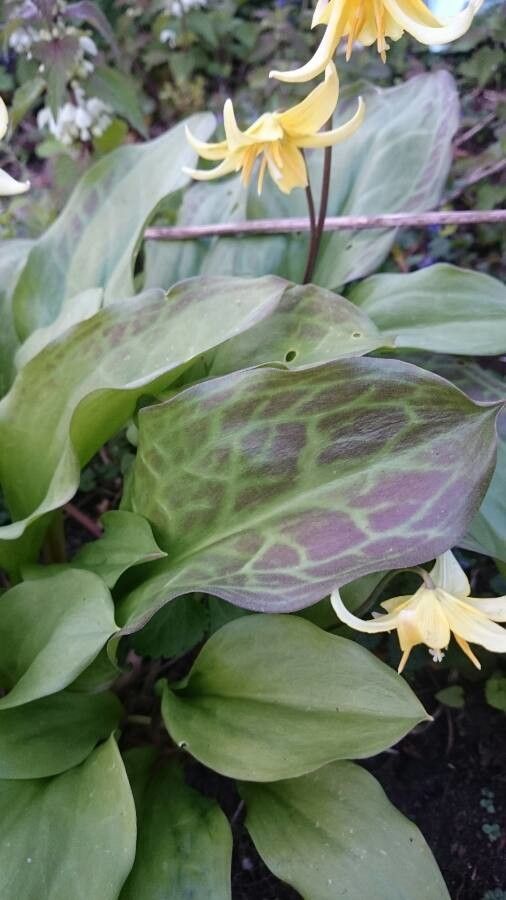
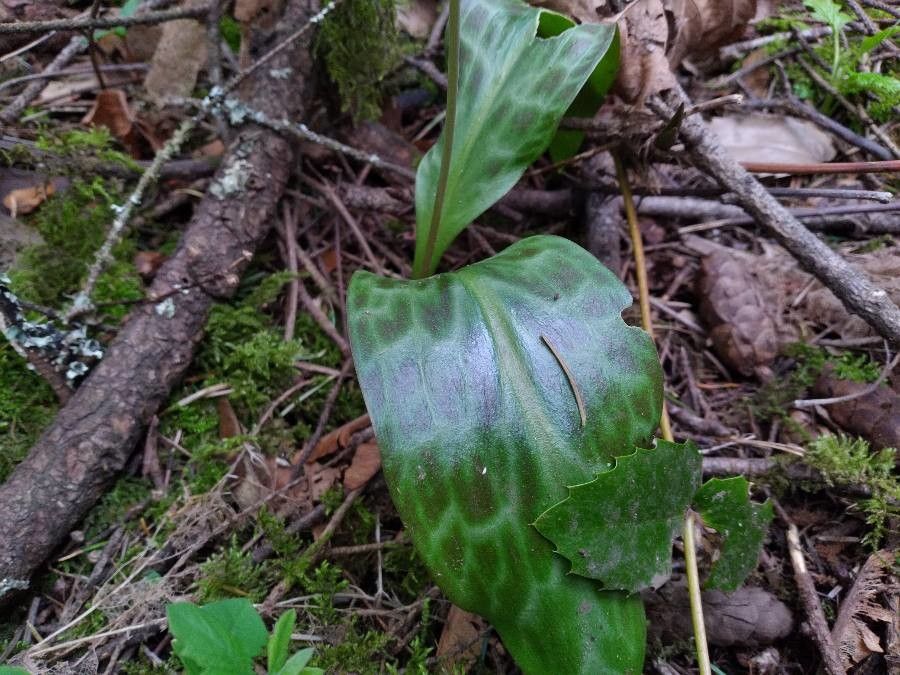
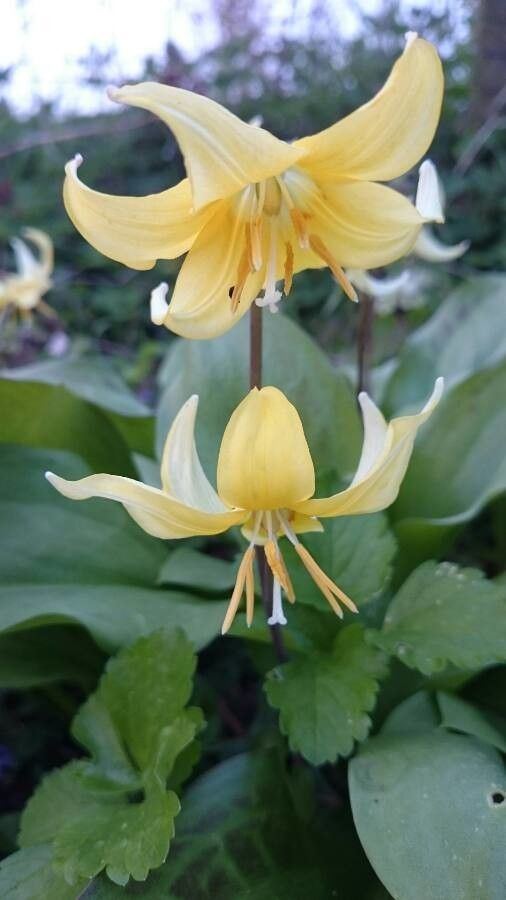
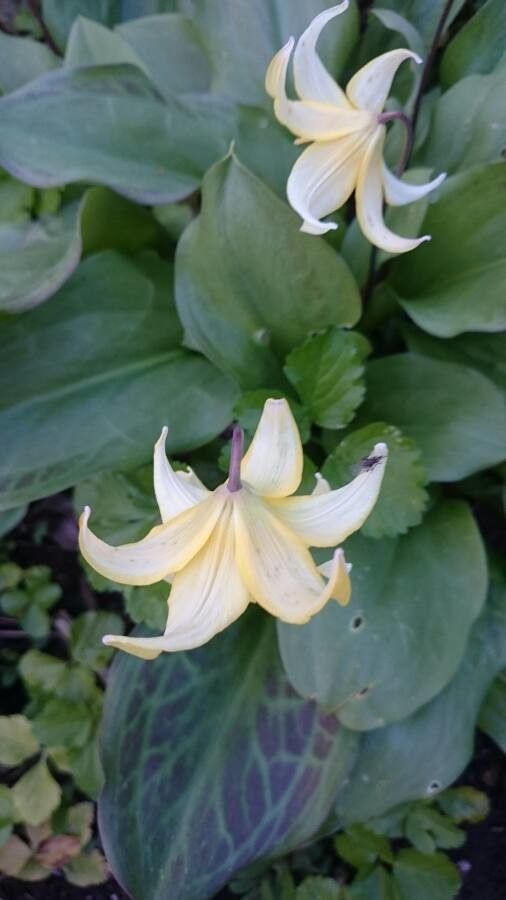
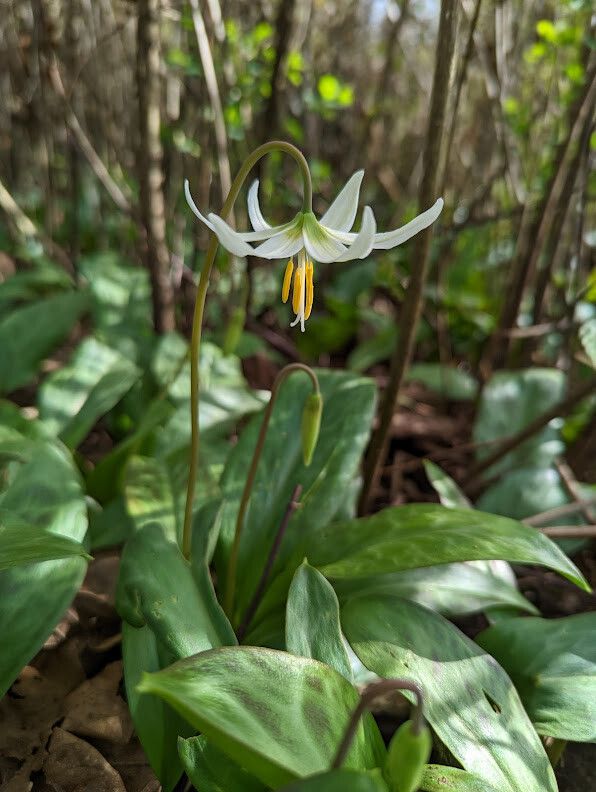
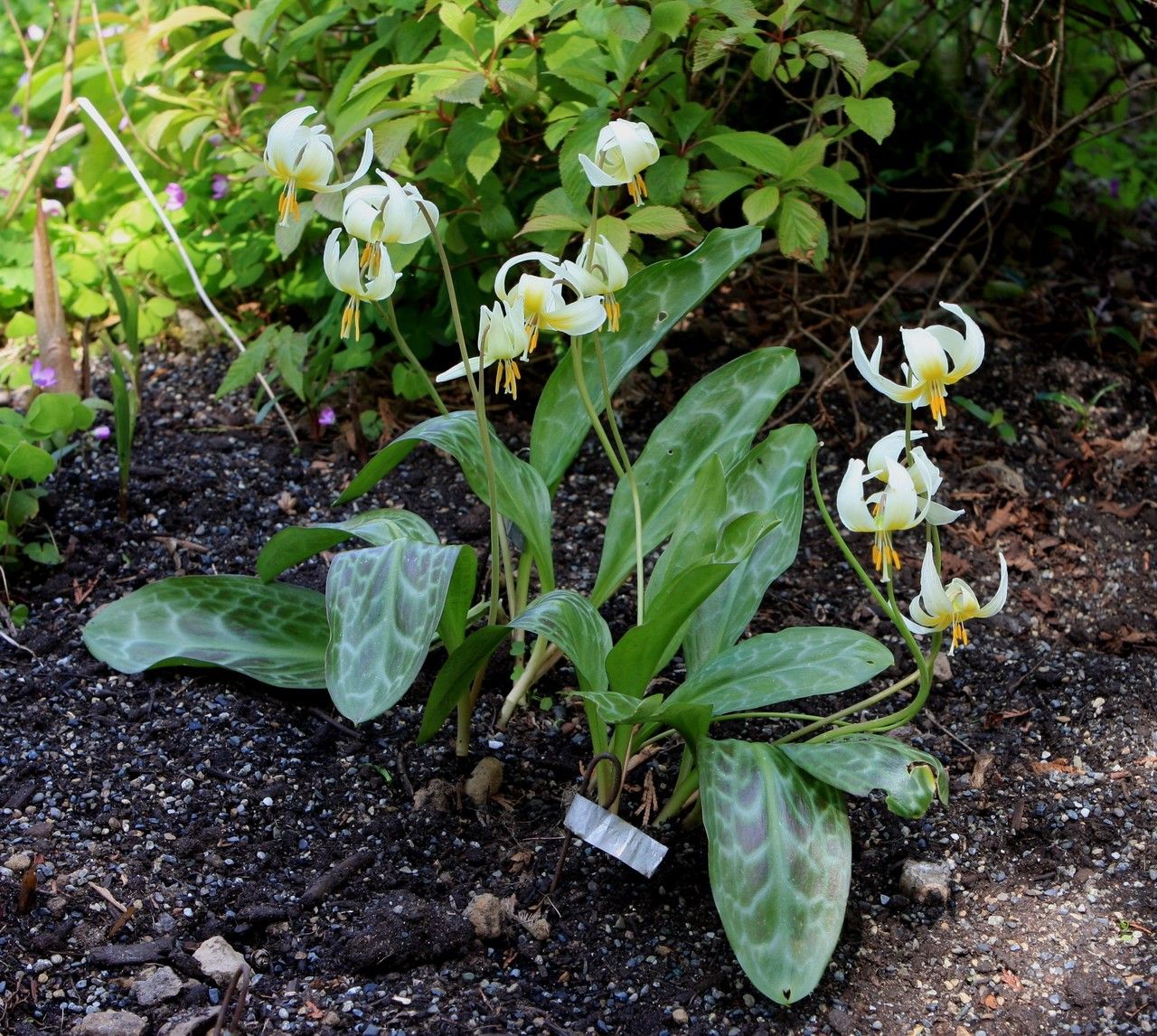
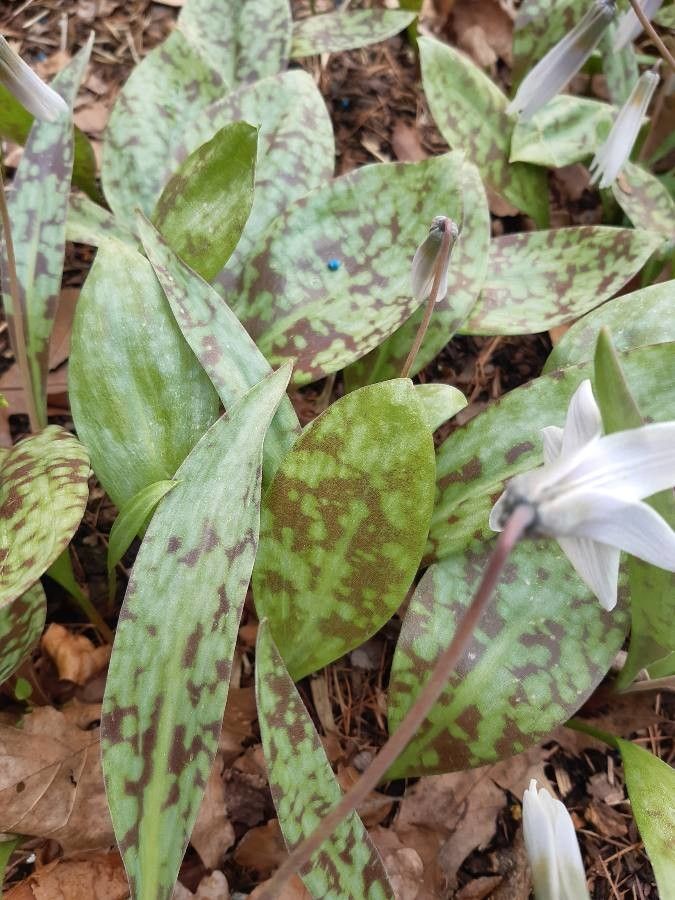
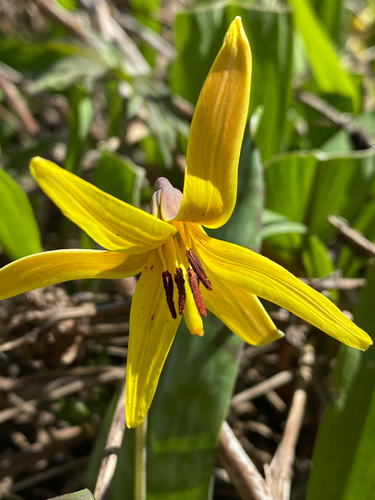
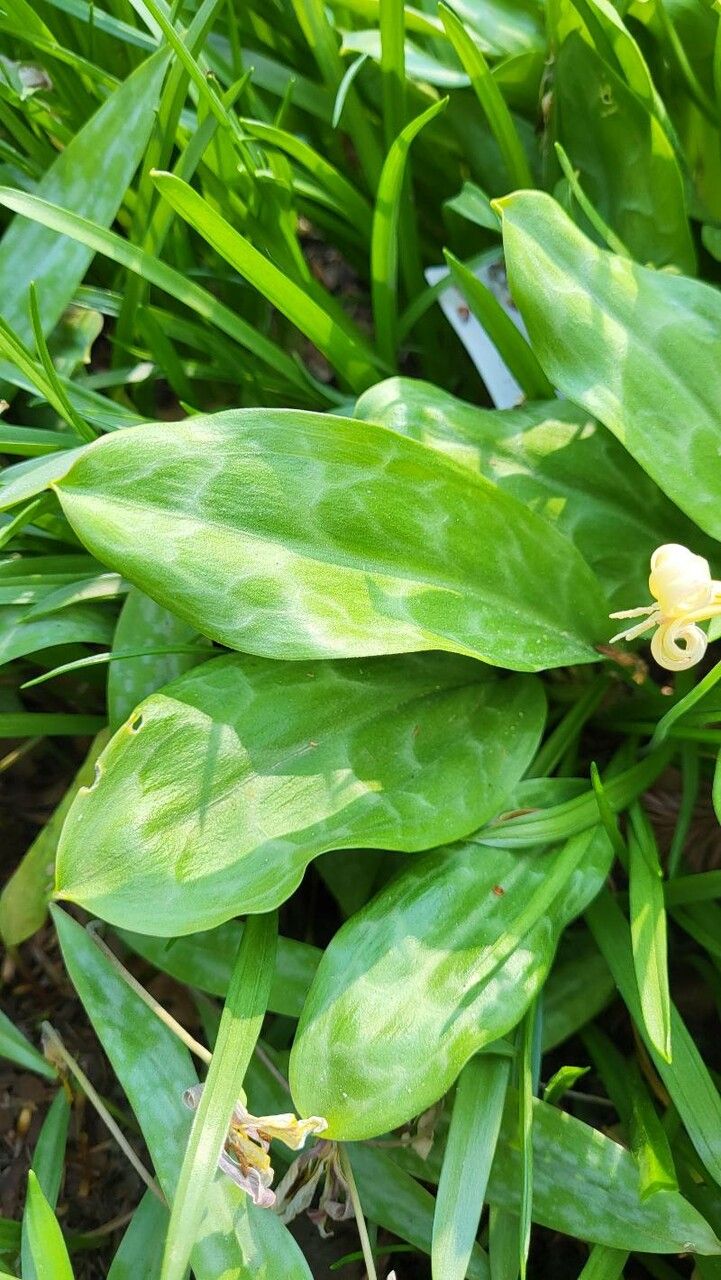
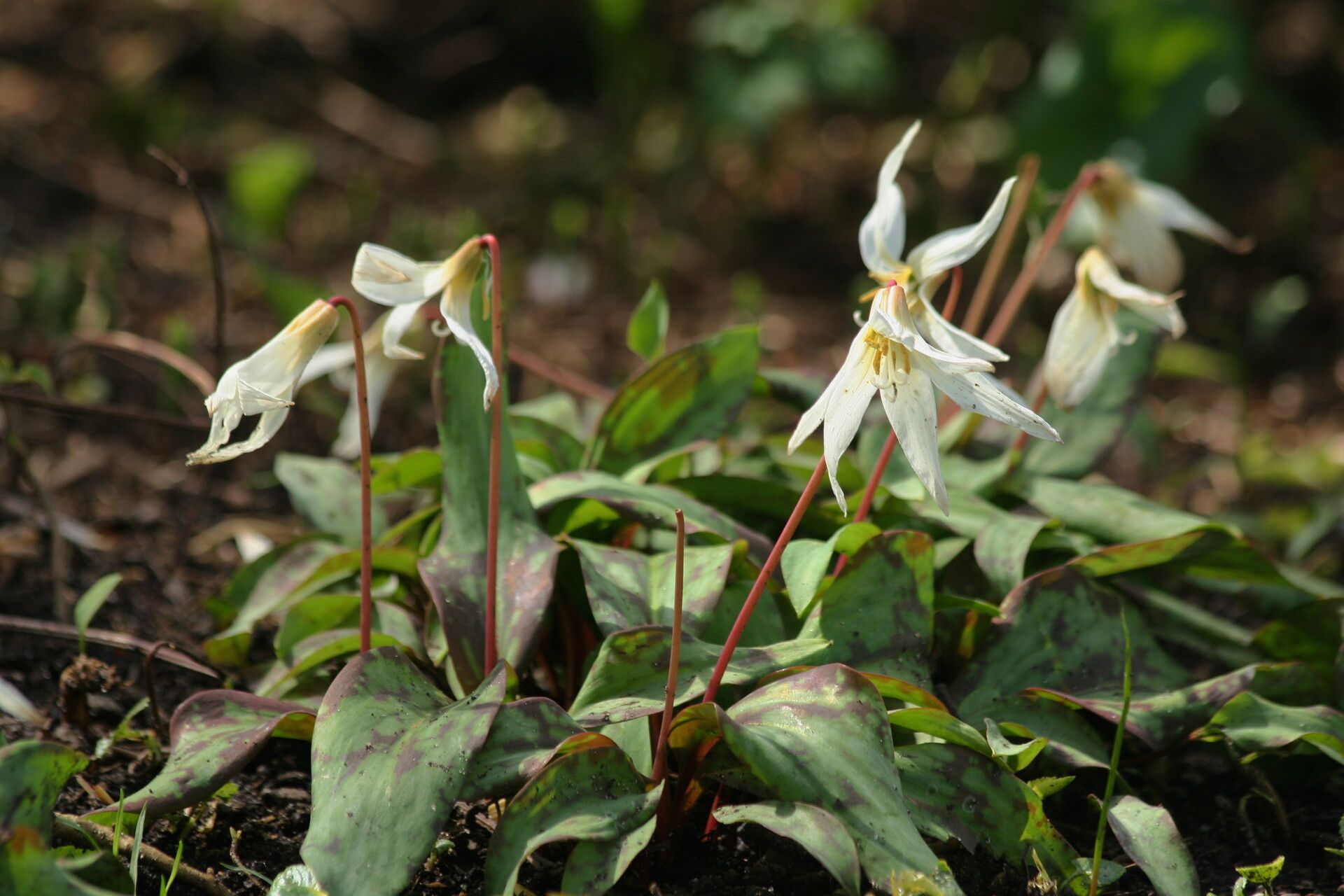
Erythronium oregonum, commonly known as the Oregon fawn lily, is a perennial plant species native to western North America. This member of the lily family typically thrives in moist, shaded environments such as forests and meadows. The plant features one or two basal leaves that are oval-shaped with prominent veins, growing up to 20 cm in length. Its bell-shaped flowers, which have six petals, range in color from white to pink or yellow and display reddish-brown markings at the base of each petal. These flowers bloom in early spring and can reach heights of up to 25 cm on slender stems.
The Oregon fawn lily is an essential food source for pollinators, including bees, butterflies, and hummingbirds. Additionally, Native American tribes have historically used the plant in traditional medicine to treat ailments such as coughs, colds, headaches, wounds, and infections.
The plant prefers well-drained soil rich in organic matter but can tolerate a variety of soil types, including clay soils, as long as they are not waterlogged. It requires partial shade or dappled sunlight and does not tolerate full sun exposure.
Erythronium oregonum has been listed as an endangered species due to habitat loss caused by urbanization and agricultural development, as well as competition from invasive species that threaten its survival in its natural habitat.
Overall, Erythronium oregonum is a striking native wildflower that plays a vital ecological role by providing food for pollinators. Its significance extends beyond its ecological benefits, as it also holds medicinal value and cultural importance for Native American tribes.
Giant White Fawn lily has moderate resistance to disease and can be prone to problems like leaf spot. Its vulnerability to insect pests varies by variety, but most varieties are less resistant to pests. In terms of care, Giant White Fawn lily requires regular watering and fertilizing, along with frequent removal of yellow leaves. It is important to manage pests and diseases when they appear and to harvest the plant promptly. Giant White Fawn lily is suitable for people who can dedicate some time and energy to regular care.
How to keep Erythronium Oregonum.
Light
Giant White Fawn lily does best in locations that get moderate sunlight rather than strong, direct light. This preference comes from its native habitats where a canopy softened the sun’s rays. Too little sun can hinder growth, while full, unshielded exposure may scorch the leaves.
Water
The giant White Fawn lily originates from moist forest floors and thrives in consistently damp soil. While it can tolerate occasional wetness, it does not do well in overly saturated conditions. For optimal growth, watering once a week is ideal. When cultivated outdoors, the giant White Fawn lily can take advantage of natural rainfall, which helps it grow in harmony with seasonal climate changes.
Temperature
The Giant White Fawn lily is a plant indigenous to temperate ecosystems and does best in temperatures from 41 to 89.6 °F (5 to 32 ℃). During colder seasons, maintain a warmer environment close to the upper temperature limit for optimal growth.
Fertilizer
Giant White Fawn lily species do well with one or two applications of organic natural fertilizers that include potassium and phosphorus. Apply the fertilizer before planting, working it into the soil and watering thoroughly. Usually a single application is enough, but a second can be applied after seedlings have become established. Avoid overusing fertilizer to prevent damage to the plants.
Pruning
The Giant White Fawn Lily is known for its stunning white flowers and mottled leaves. To keep the plant healthy, perform careful pruning. In the spring, trim away any dead foliage and remove spent flowers to encourage better root growth. Be cautious not to over-prune, as this helps preserve the plant's shape and blooms, which contributes to its longevity and resistance to disease. Pruning at the right time enhances the plant's vitality and ornamental appeal.
Botanical profile.
- Plant Type
- Herb
- Life Cycle
- Perennial
- Genus
- Erythronium
- Family
- Liliaceae
- Hardiness Zone
- 4-8
- Mature Height
- 15 cm to 40 cm
- Mature Spread
- 10 cm
- Leaf Color
- Green, Brown
- Leaf Type
- Deciduous
- Flower Color
- White
- Flower Size
- 2.54 cm
- Bloom Time
- Early spring, Mid spring
- Planting Time
- Spring
- Harvest Time
- Late spring, Early summer
Other names.
Reader questions.
How should I water my Giant White Fawn lily?
The Giant White Fawn lily has preferences for the amount and method of watering. Using the wrong technique can harm your tomatoes. To water the Giant White Fawn lily correctly, apply water directly to the soil in a slow and gentle manner. Avoid pouring all the water at once or overhead watering. While watering slowly, make sure to water deeply to ensure the soil is sufficiently moist for the plant to thrive.
Why do I have to put plant food on my Giant White Fawn lily?
The Giant White Fawn lily is known for its rapid growth and energy-intensive production of root vegetables. In addition to sunlight, oxygen, and water, these lilies rely on nutrients to thrive and develop roots. While garden soil often contains these nutrients due to organic matter decomposition, there are instances where the soil may lack sufficient nutrients for optimal Giant White Fawn lily growth. In such cases, fertilizer can be used to provide the necessary boost for these lilies.
What are the sunlight requirements for Giant White Fawn Lily?
Giant White Fawn Lily thrives in areas with moderate sunlight, ideally receiving about 3-6 hours of sunlight daily. It's important to watch how sunlight moves through your garden to choose spots that offer a balance of light and shade, ensuring the plant's happiness. While it can tolerate partial shade, insufficient sunlight may stunt its growth, and too much direct exposure can lead to leaf burn. Its preference for moderate sunlight stems from its natural habitat under canopy coverage.
What is the ideal temperature range for the Giant White Fawn lily?
The Giant White Fawn lily, botanically known as Erythronium oregonum, flourishes in temperatures between 41°F (5°C) and 89.6°F (32°C), thriving best within temperate ecosystems. During the colder seasons, it is advantageous to maintain an environment near the upper temperature limit to promote optimal growth. Specifically, during winter cultivation, keeping the temperature above 5°C and ensuring it does not fall below the freezing point are crucial to prevent freezing damage. Should outdoor temperatures approach -5°C (25°F), taking protective measures such as moving the plant indoors or using temporary greenhouses or wrapping materials is advisable to shield the plant.
What do I do if I give too much or too little water to my Giant White Fawn lily?
If you have overwatered your Giant White Fawn lily and are worried about disease, take immediate action. The best approach is to remove the plant from its current spot and let the roots dry a bit before replanting it in a location with good drainage. If you pot your plant, consider using a pot with better drainage. On the other hand, if you are underwatering the plant, simply increase the frequency of watering.
What is the ideal time to fertilize my Giant White Fawn lily?
Before planting, it is recommended to use natural fertilizer on your soil. The timing is flexible, but make sure you allow enough time to mix the fertilizer into the soil and water it thoroughly before planting seeds or seedlings. Typically, one fertilizer application will suffice to keep Giant White Fawn lilies healthy all season. However, if you want to enhance their yield further, you may do an additional application once the seedlings have established themselves. Be cautious not to overuse fertilizer, as excessive amounts can harm the plants.
How can artificial lighting be used for Giant White Fawn Lily?
Indoor Giant White Fawn Lily plants require adequate lighting for optimal growth, especially when natural sunlight is insufficient, such as during winter or in less sunny spaces. Artificial lights, particularly LED lights, can be customized to provide specific wavelengths needed by plants. For full sun plants, 30-50W/sq ft of artificial light is needed; for partial sun plants, 20-30W/sq ft; and for full shade plants, 10-20W/sq ft. The light source should be placed 12-36 inches above the plant to mimic natural sunlight, and most plants benefit from 8-12 hours of artificial light per day.
How does the Giant White Fawn lily respond to low temperatures, and what are the recommended solutions?
The Giant White Fawn lily exhibits moderate tolerance to low temperatures but thrives optimally when the mercury is between 5°C and 32°C. Exposure to temperatures lower than -25°C can lead to darkening of the leaves, and falling below -30°C may result in severe symptoms like water-soaked necrosis, wilting, and drooping, eventually turning the leaves brown. In such instances, the recommended course of action involves trimming away frost-damaged parts of the plant and relocating it to a warmer environment indoors or setting up a makeshift greenhouse. Ensuring the plant is placed near a south-facing window for ample sunlight or using supplemental lighting if necessary is beneficial for its recovery from cold damage.
How many times should I water my Giant White Fawn lily?
Giant White Fawn lilies need a lot of water during the growing season. To meet this need, you will need to water them regularly from spring to summer. In the beginning of the season, water them once or twice a week. As the season goes on, increase the frequency of your watering. In the summer, you may need to water them twice a day or more, depending on the weather. After the lilies have finished their main growth phases, you can decrease the frequency to about once a week until the end of the growing season.
When is it not a good time to add fertilizer to my Giant White Fawn lily?
To ensure effective fertilization, remember to avoid applying fertilizer when the soil is dry. After fertilizing, make sure to water your plants thoroughly as this helps deliver the nutrients properly. If you prioritize the growth of foliage over the root crops, then high-nitrogen fertilizers might be suitable for you. However, take care not to let fertilizer come into contact with the base of the plant, leaves, or stems as it can potentially damage them.
What are the common symptoms of improper lighting for Giant White Fawn Lily?
Giant White Fawn Lily may exhibit several symptoms if exposed to improper lighting conditions, including smaller new leaves, leggy or sparse growth, faster leaf drop, slower or halted new growth, and lighter-colored new leaves. Excessive sunlight can cause chlorosis, where leaves turn yellow due to chlorophyll breakdown, sunscald, leaf curling as a defense mechanism, wilting from increased water loss, and leaf scorching, characterized by brown, dry edges on leaves.
How does the Giant White Fawn lily react to high temperatures, and what steps should be taken?
During the summer months, it's crucial to ensure that the Giant White Fawn lily's surrounding temperature does not exceed 32°C to avoid stunted growth and susceptibility to sunburn, as indicated by a lighter leaf color and slowed growth rate when temperatures surpass 35°C. To mitigate these effects, affected parts of the plant should be trimmed, and relocation to an area with afternoon shade is advisable. Additionally, watering the plant during the cooler hours of the morning and evening can help maintain soil moisture, thus providing some relief from high temperature stress.