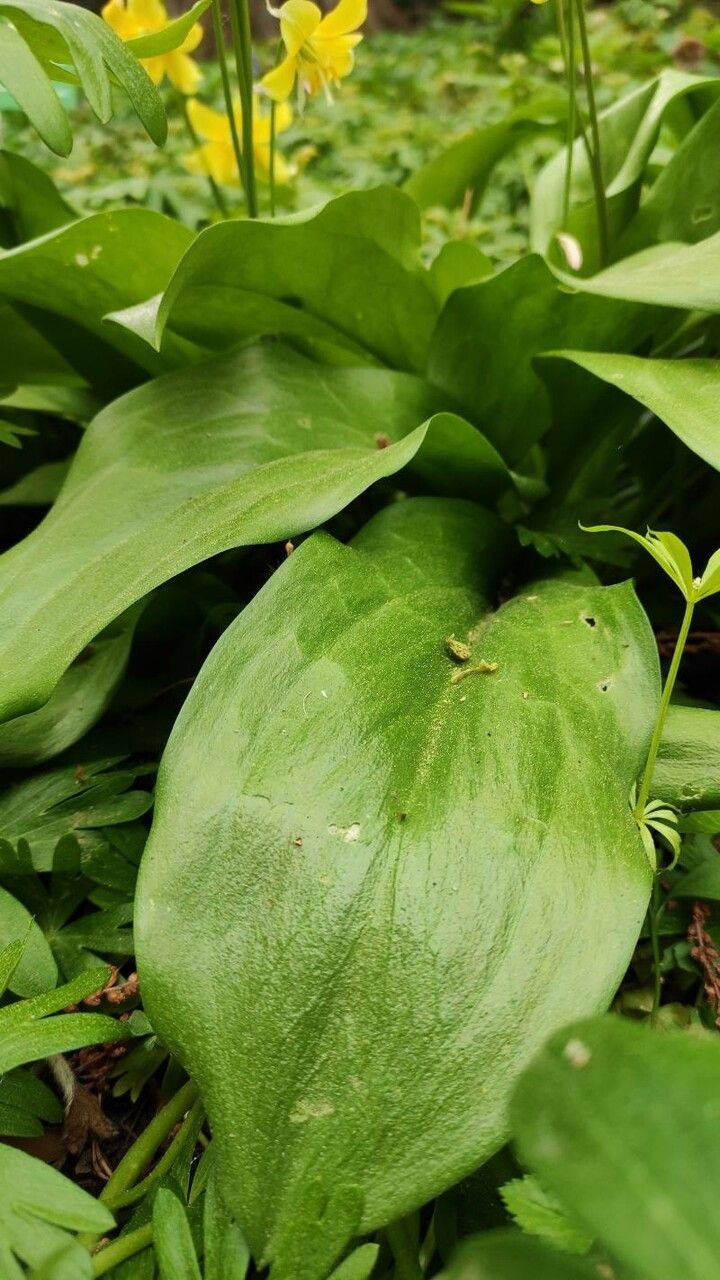
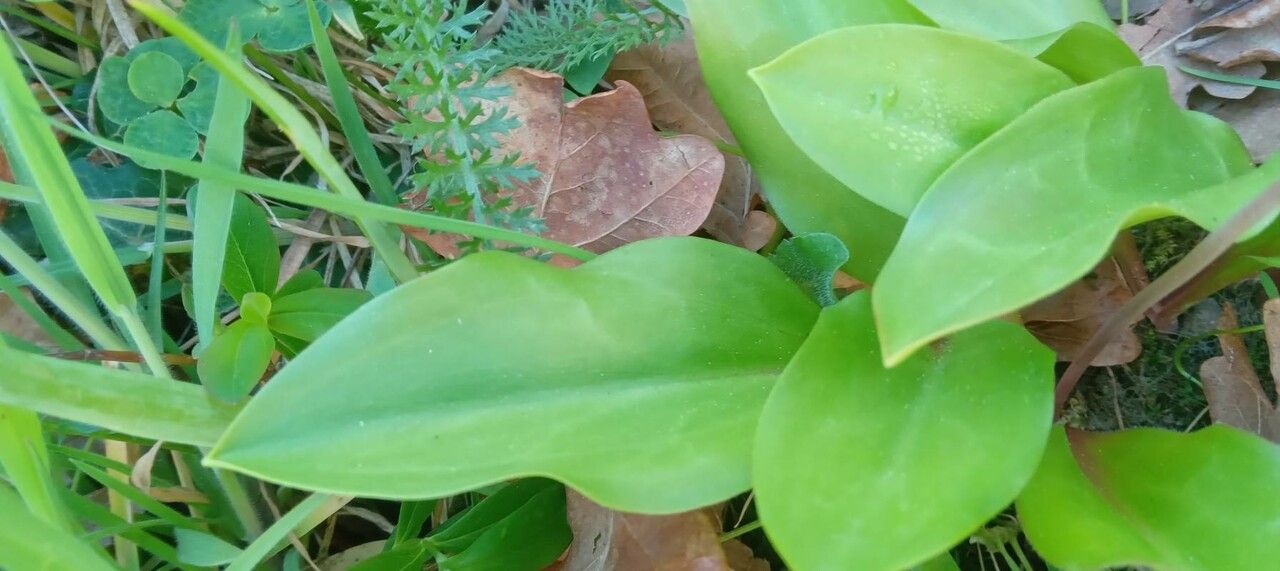
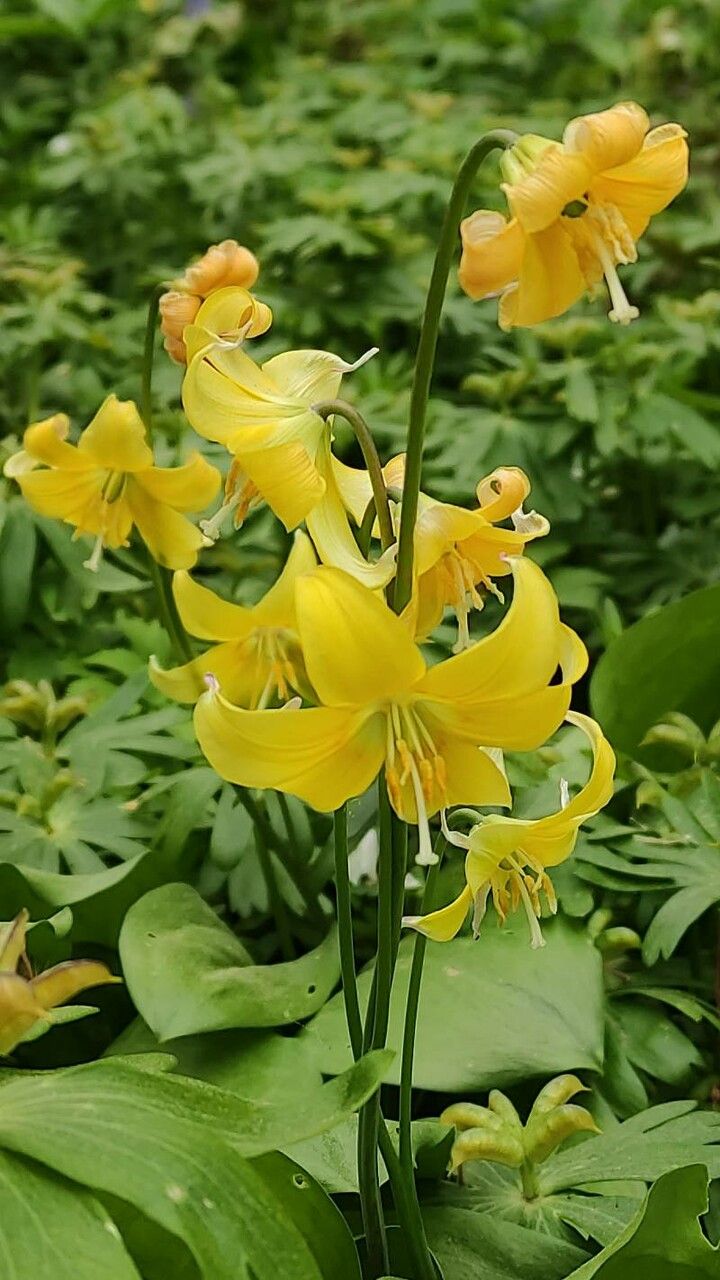
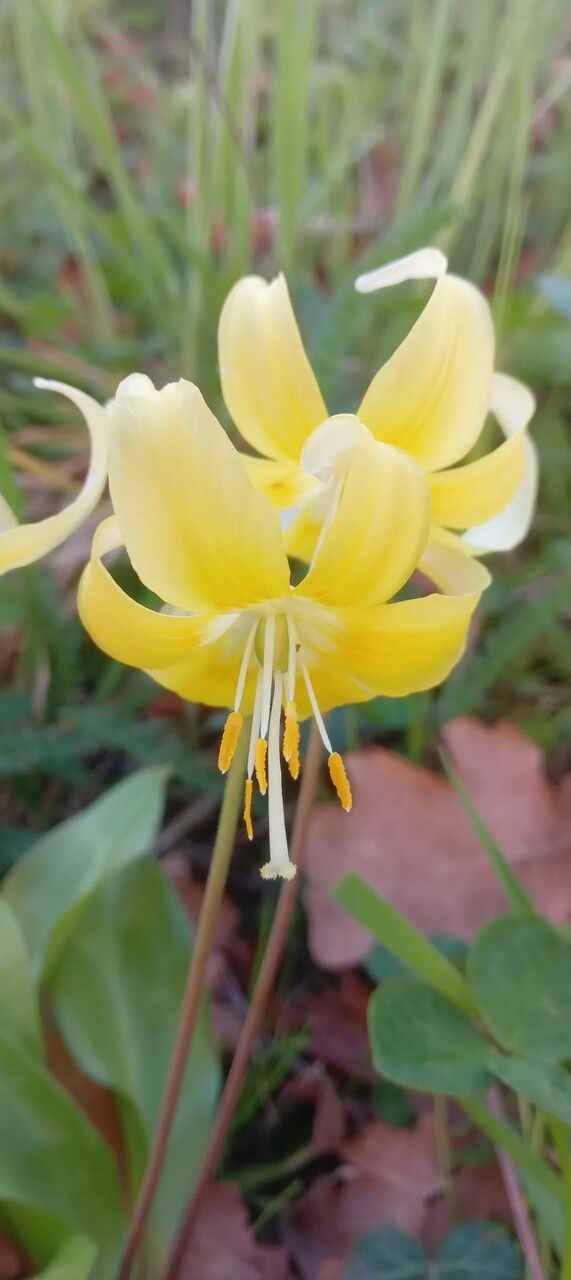
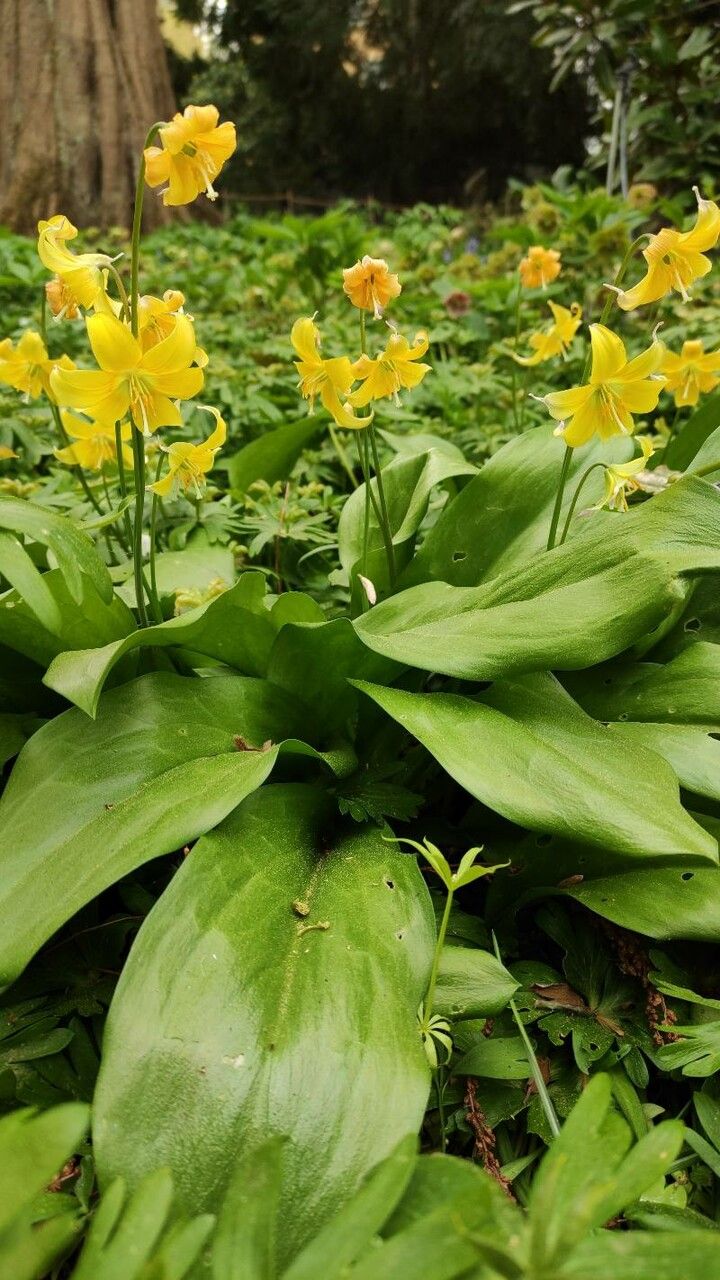
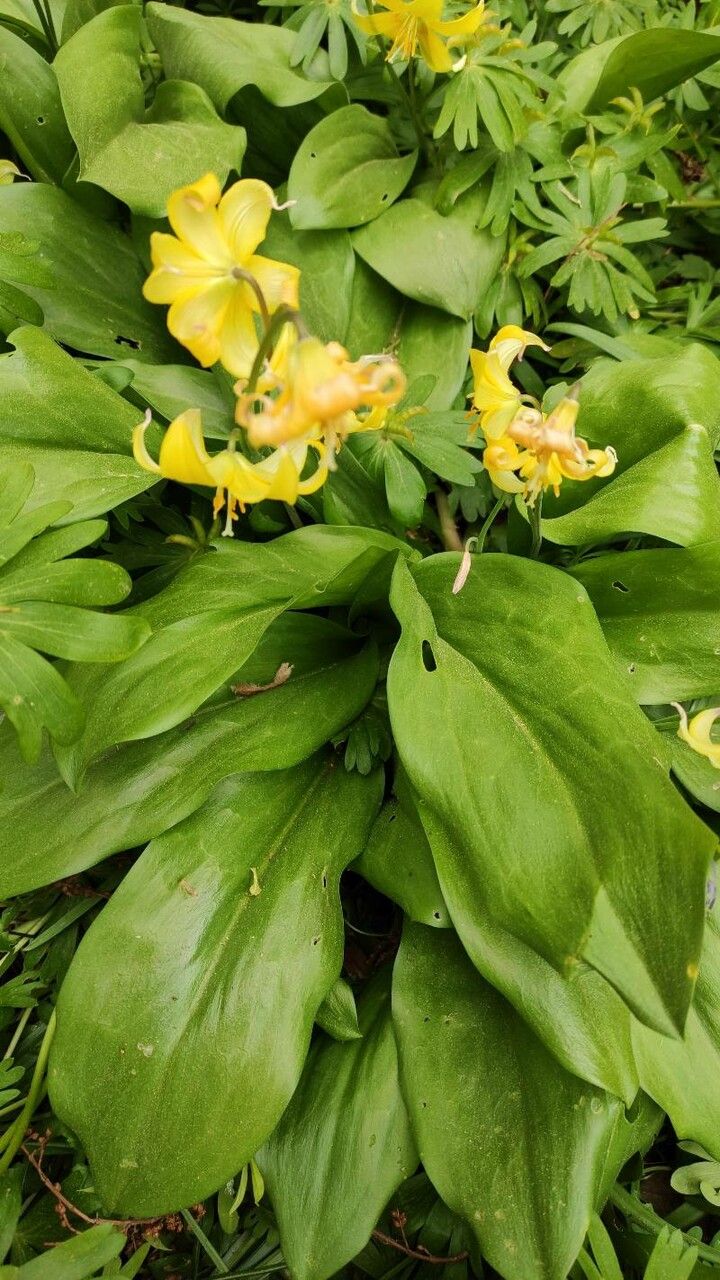
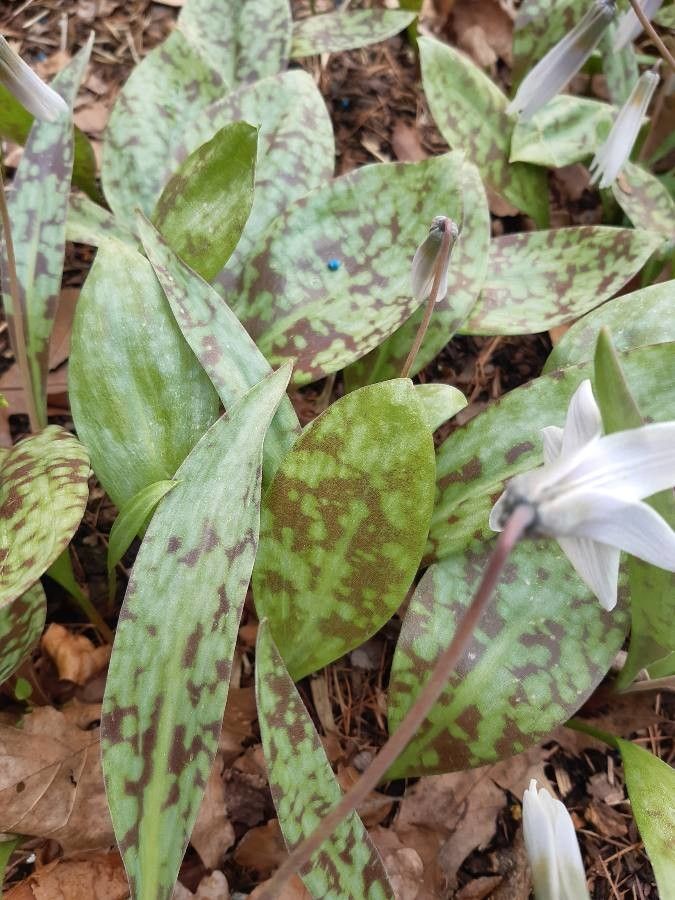
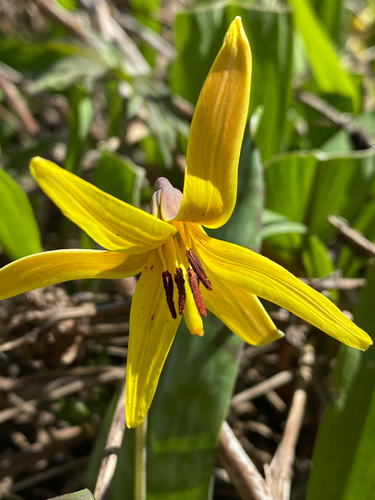
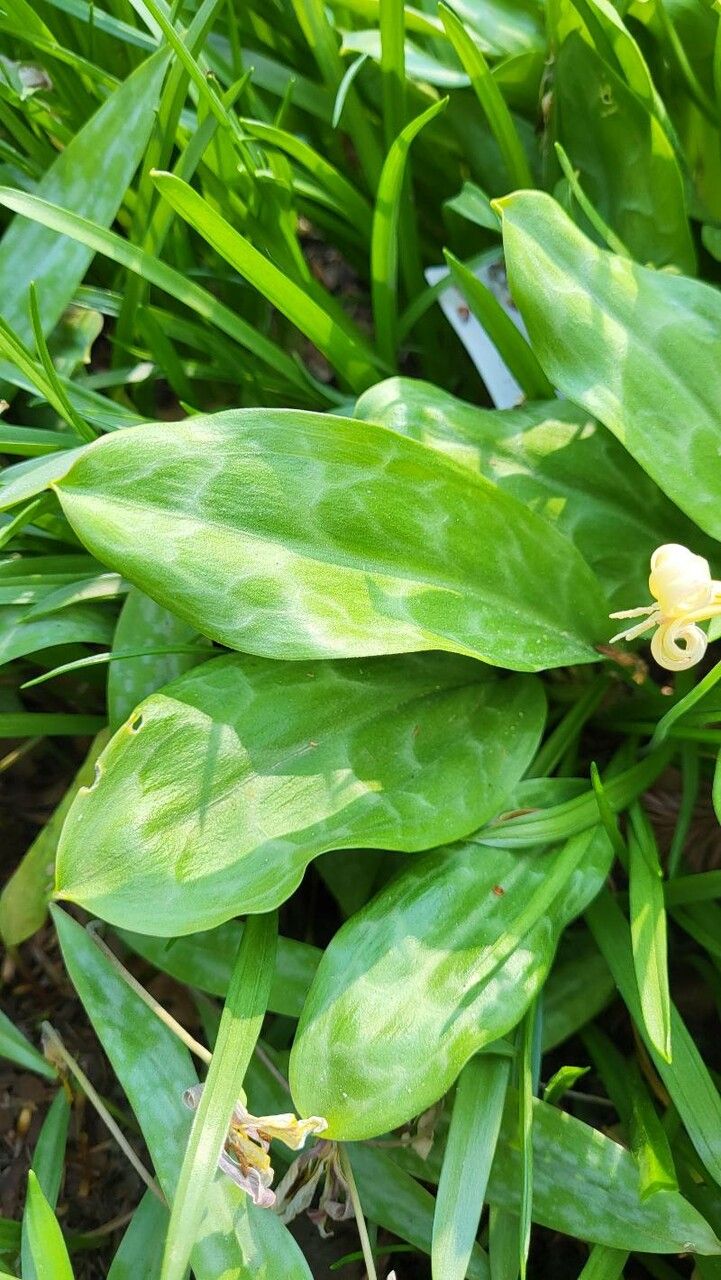
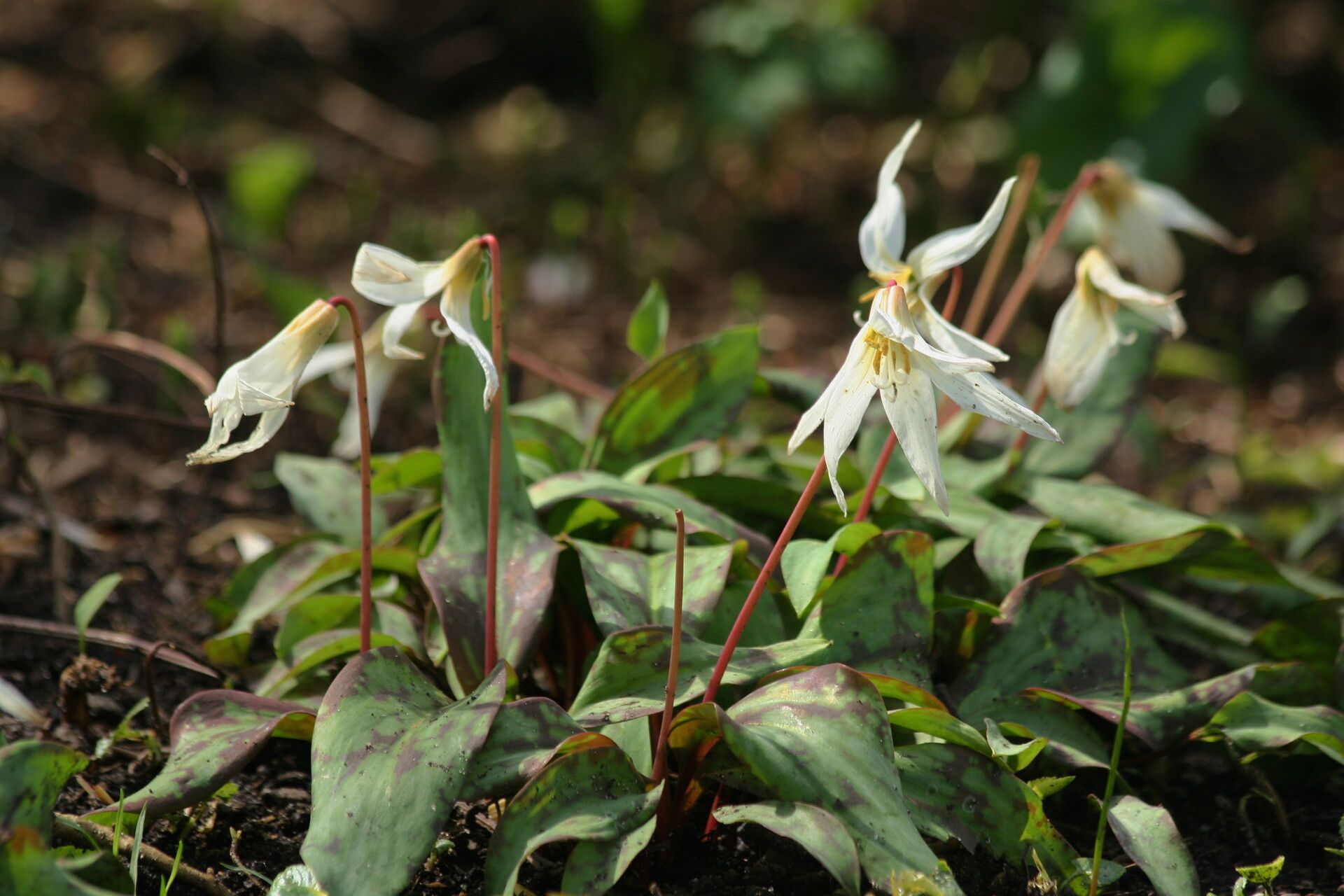
Erythronium tuolumnense is a species of flowering plant in the family Liliaceae, known by the common name Tuolumne fawn lily or Tuolumne dog's tooth violet. However, it is neither a true lily nor a violet. It is endemic to the Sierra Nevada of Tuolumne County, California; from 600 m (1,969 ft) along Italian Bar Road up to 1,000 m (3,281 ft) altitude at the headwaters of Deer Creek.This hardy perennial wildflower grows from a bulb 5–10 cm (2–4 in) wide, sometimes with associated bulblets. The bulb resembles a dog's tooth in shape and colour, hence the name "dog's tooth" (which also applies to other erythronium species such as E. dens-canis). It produces two small leaves and a reddish stalk up to 35 cm (14 in) tall bearing one to five flowers. The flower has bright yellow recurved tepals, a white style and white stamens tipped with large yellow anthers.This rare plant is threatened by human activity such as logging in its small native range. Inhabiting moist, light deciduous woodland, this plant is also found in cultivation. The species and the hybrid cultivar 'Pagoda' have gained the Royal Horticultural Society's Award of Garden Merit.
Tuolumne fawn lily has moderate resistance to disease but can be prone to ailments such as leaf spot. Its susceptibility to insect pests varies by variety, though most varieties have lower pest resistance. Regarding care, Tuolumne fawn lily requires regular watering and fertilizing, along with frequent removal of yellow leaves. It is important to control pests and diseases when they appear and to harvest the plant in a timely way. Tuolumne fawn lily is suited to people who can invest some time and energy in routine care.
How to keep Erythronium Tuolumnense.
Temperature
Tuolumne fawn lily does best in moderate temperatures, about the same range people usually find comfortable. It prefers conditions that are not excessively hot or cold. Excessive heat mainly poses a risk of sunburn, so providing some shade in summer is recommended to keep temperatures down. When it gets colder, the Tuolumne fawn lily goes dormant. To keep it growing continuously, warmer conditions must be maintained through the winter. Frost can harm the plant and should be avoided.
Fertilizer
Tuolumne fawn lily species benefit from one or two applications of organic fertilizers that contain potassium and phosphorus. Apply the fertilizer before planting, ensuring it is worked into the soil and the area is watered thoroughly. Usually a single application is enough, but a second can be applied once seedlings are established. Avoid overusing fertilizer to prevent damage to the plants.
Pruning
The Tuolumne fawn lily is characterized by its nodding yellow flowers and lance-shaped leaves. To maintain its health and beauty, prune the plant from early to late spring by removing spent blooms and damaged foliage. Be careful not to prune too heavily, as this can stress the plant. With proper care, you can encourage vigorous growth and a vibrant display in the following season.
Botanical profile.
- Plant Type
- Herb
- Life Cycle
- Perennial
- Genus
- Erythronium
- Family
- Liliaceae
- Hardiness Zone
- 3-7
- Mature Height
- 30 cm
- Mature Spread
- 20 cm
- Leaf Color
- Green
- Leaf Type
- Deciduous
- Flower Color
- Yellow
Other names.