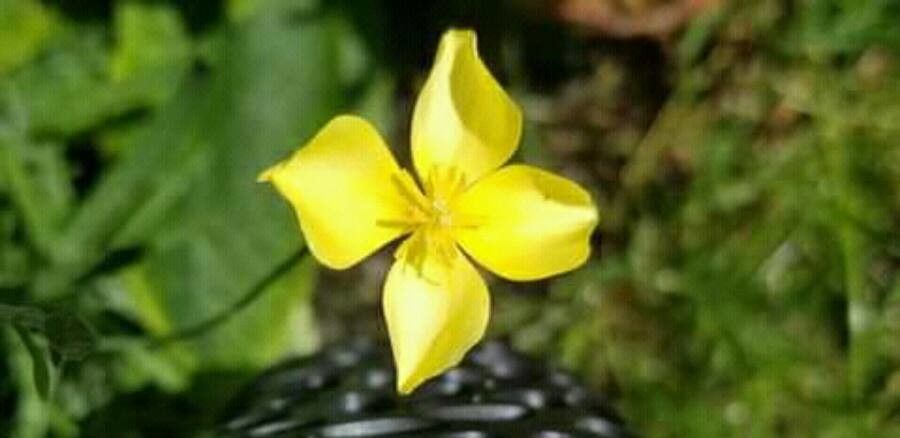
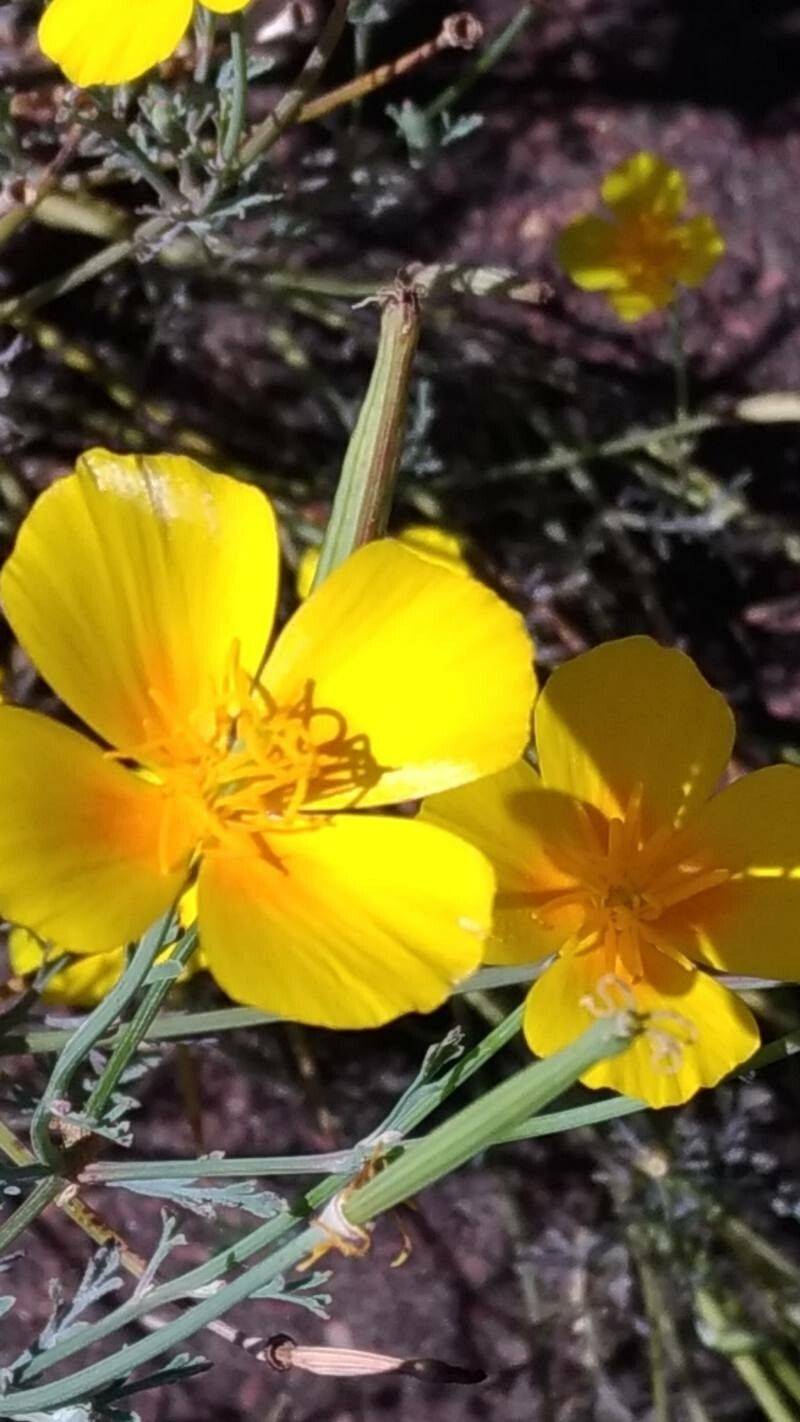
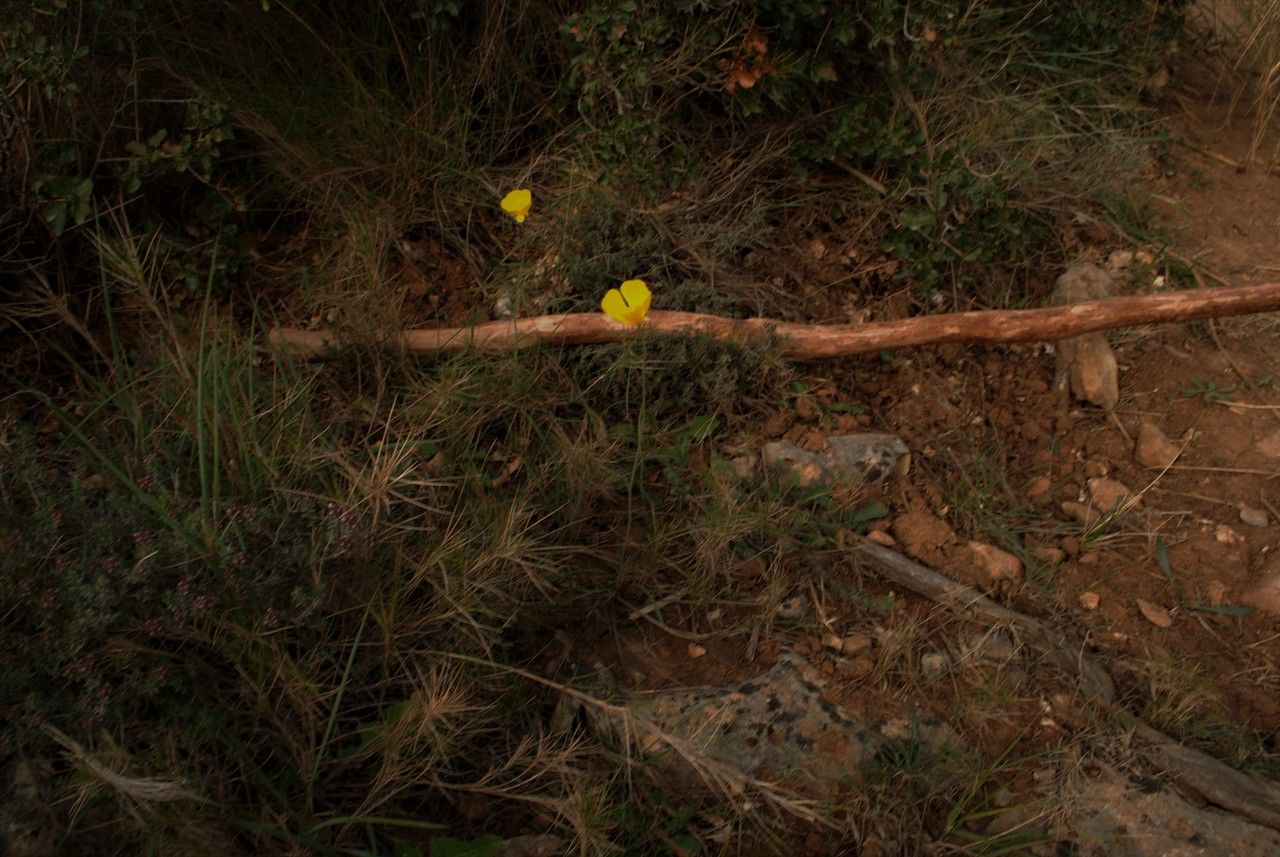
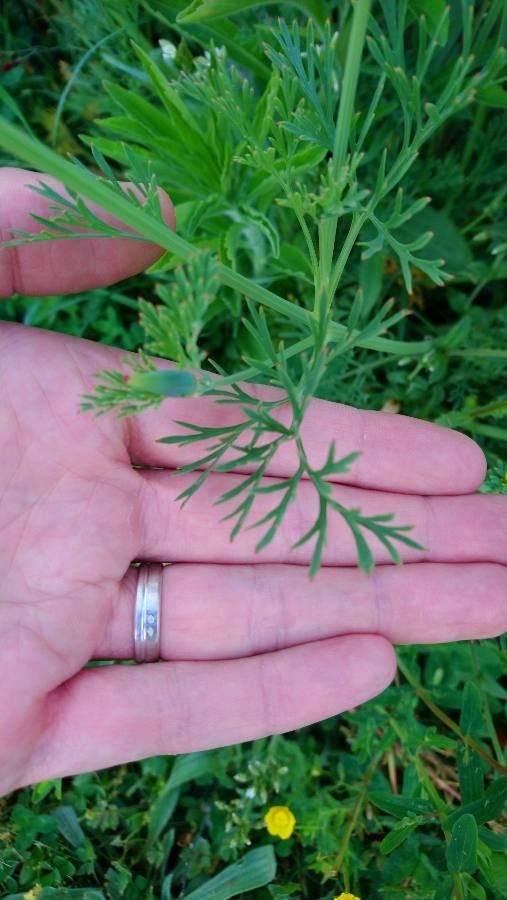
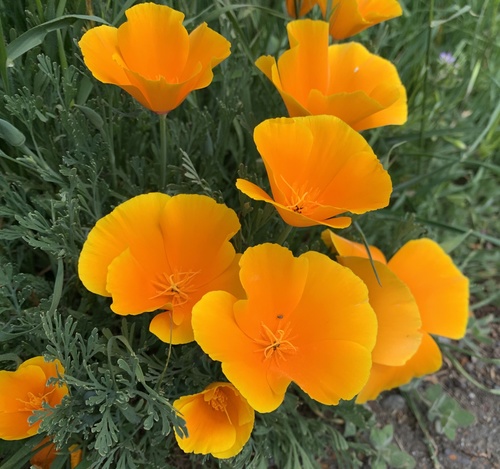
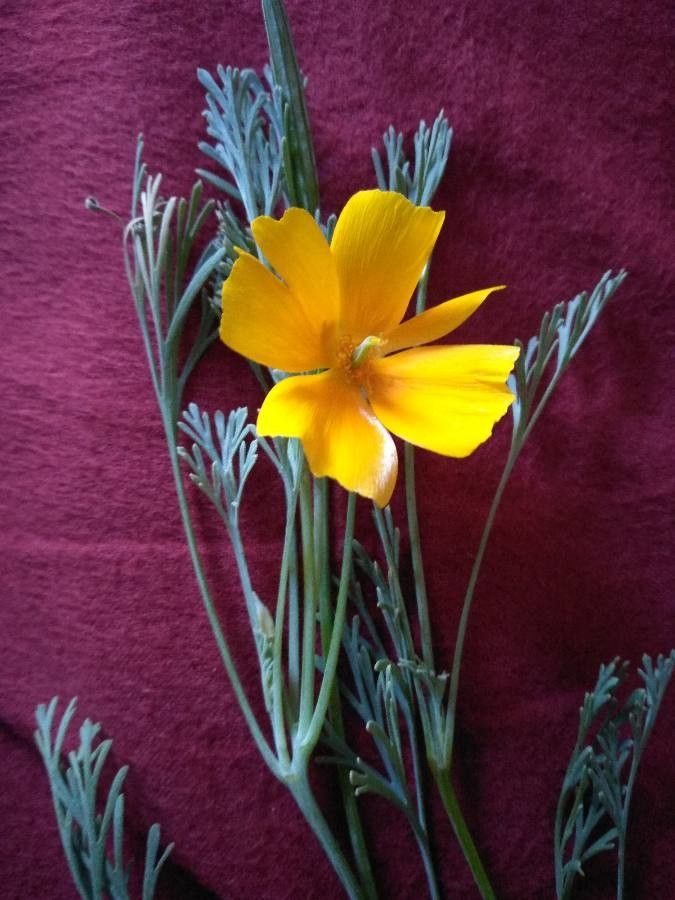
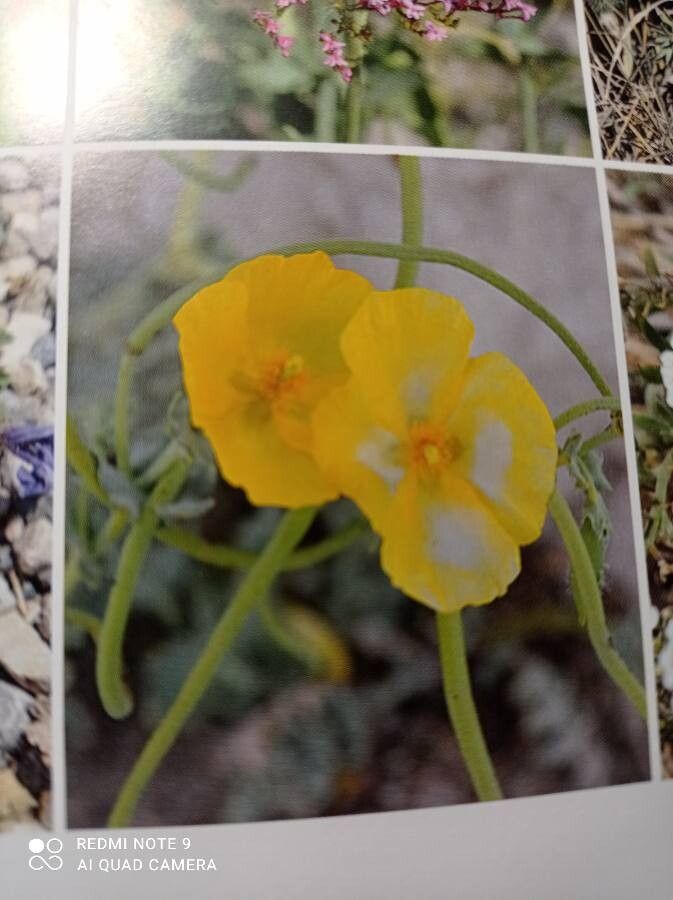
Eschscholzia lobbii is a species of poppy known by the common name frying pans. It is endemic to California, where it grows in the Central Valley and adjacent Sierra Nevada foothills. The frying pans is a small annual herb growing from a patch of segmented leaves with pointed leaflets. It produces erect stalks up to 15 centimeters in height each bearing a single poppy flower. The petals are about a centimeter long and bright yellow to somewhat orange. The fruit is a capsule 3 to 7 centimeters long containing tiny brown seeds.They are common near vernal pools. The plant is named after William Lobb (1809–1864), the English plant collector.
Frying pans has good disease resistance and generally does not suffer from illnesses. Still, it can be affected by pests and diseases present in its surroundings. Such infections are typically mild. Care-wise, this plant needs moderate maintenance. It should be pruned regularly to keep a tidy appearance and support healthy growth. Fertilizing can also help encourage flowering. Frying pans is appropriate for anyone with outdoor space, like a garden or patio, and does not require extensive care experience. It may need more attention when grown indoors.
How to keep Eschscholzia Lobbii.
Light
Frying pans prefers abundant sunlight, which is crucial for its thriving. Its native environment is characterized by broad sun exposure. However, frying pans cannot tolerate low-light conditions. Both excessive and insufficient light can hinder the plant's healthy growth.
Water
Frying pans thrive in environments with consistent, moderate watering, reflecting their natural adaptation to regions with moderate moisture levels. To prevent soil oversaturation, it is best to water them weekly. They prefer well-draining soil and are well-suited for outdoor cultivation and xeriscaping due to their drought tolerance, despite their need for regular hydration.
Temperature
Frying pans is a plant that prospers in warm climates, ideally at temperatures between 68 to 100.4°F (20 to 38℃). Native to areas that have higher temperatures, this plant may require monitored heat control during cooler seasons to keep a consistent, optimal temperature range for robust growth.
Fertilizer
When most of Frying pans' blooms have opened to full size, resume fertilizing. At the time the blooms are at their peak, fertilize again every three to four weeks, weather permitting. Then, once Frying pans begins producing fewer new blooms, stop fertilizing; there's no need to feed the plant when it can no longer set additional blooms.
Pruning
Frying pans is a low-growing annual wildflower known for its bright yellow, cup-shaped flowers. To encourage denser growth, prune it from early to late spring. Deadhead the flowers to extend the blooming period and remove any damaged leaves to maintain healthy growth. Minimal pruning enhances vigor and prolongs the blooming season.
Botanical profile.
- Plant Type
- Herb
- Life Cycle
- Annual
- Genus
- Eschscholzia
- Family
- Papaveraceae
- Hardiness Zone
- 1-11
- Mature Height
- 25 cm
- Mature Spread
- 15 cm
- Leaf Color
- Green, Blue
- Leaf Type
- Deciduous
- Flower Color
- Yellow, Orange
- Flower Size
- 2.54 cm to 5.08 cm
- Bloom Time
- Spring
- Planting Time
- Spring, Summer, Autumn
- Harvest Time
- Late spring, Early summer, Mid summer
Other names.
Reader questions.
How should I water my frying pans?
You have various options for watering Frying pans. You can use a garden hose with a spray nozzle, a watering can, or any other common watering tool. Frying pans are not particular about the type of water they receive, so rainwater, tap water, or filtered water all work fine. However, it's best to avoid watering this plant from above as it can harm the leaves and flowers and potentially cause disease. Drip irrigation systems work well for watering Frying pans because they provide even and direct watering to the soil. If you have a container-grown Frying pans, you can use a cup, watering can, or your tap to water it directly into the soil.
What are the sunlight requirements for Frying Pans?
Frying Pans (Eschscholzia lobbii) thrives best in full sun conditions, requiring above 6 hours of sunlight daily. It can also grow in partial sun, with about 3-6 hours of sunlight. It's important to monitor the sunlight in your garden carefully, ensuring that the plants receive the right balance of light and shade for optimal growth. Insufficient or excessive sunlight can hamper the plant’s health.
What is the ideal temperature range for growing Frying pans plants?
The Frying pans plant, botanically known as Eschscholzia lobbii, thrives best in warm climates with an ideal temperature range between 68 to 100.4\u00b0F (20 to 38\u00b0C). Native to regions that experience warmer temperatures, this plant may require additional heat control during cooler seasons to maintain its robust growth. Since it has strong cold resistance, special frost protection measures are not typically necessary. However, in environments where winter temperatures are expected to drop below -45\u00b0C, it's important to provide proper cold protection, such as covering the plant with soil or straw and ensuring the soil is moist before the first freeze, to prevent drought and water scarcity during winter and early spring.
What do I need to do if I use too much or too little water on my frying pans?
To prevent underwatering, simply water your Frying pans plant more regularly when you notice it lacks moisture. On the other hand, overwatering can be a bigger problem as it can lead to diseases and the plant's decline or death. To avoid this, choose a growing location with sufficient sunlight to dry the soil and good drainage to prevent water from pooling. If your Frying pans plant is in a pot, consider changing it to one with better drainage. When repotting an overwatered plant, use loose soil and a pot that drains efficiently.
How does Frying Pans respond to artificial lighting?
For Frying Pans grown indoors where natural sunlight is limited, artificial lighting can provide an effective solution. LED lights are recommended as they can be customized to offer specific wavelengths needed by the plant. The recommended wattage varies by the plant's sunlight needs: 30-50W/sq ft for full sun plants, 20-30W/sq ft for partial sun plants, and 10-20W/sq ft for full shade plants. The artificial light source should be placed 12-36 inches above the plant, mimicking natural sunlight conditions for 8-12 hours per day.
How does the Frying pans plant react to low temperatures, and what are the solutions?
The Frying pans plant is cold-tolerant and prefers temperatures above 20\u00b0C. During winter, it's crucial to keep the plant above 0\u00b0C. If temperatures fall below -45\u00b0C, there might not be noticeable changes during the winter, but there could be a decrease in sprouting or even no sprouting in spring. To address this issue, it's recommended to remove any parts of the plant that failed to sprout in spring, as a part of the plant's care routine.
How frequently do I need to water my Frying pans?
To keep your Frying pans plant healthy, it's important to water it properly. In the spring, water it once a week. As the weather gets warmer, increase watering to two or three times a week. Be careful not to overwater, as this can harm the plant. Make sure the soil is moist but not soaked. If your Frying pans is in a pot, it may need more frequent watering since pots tend to dry out faster than ground soil. Water container-grown Frying pans a few times a week, compared to once a week for plants in the ground.
What symptoms indicate insufficient or excessive light exposure in Frying Pans?
Signs of light issues in Frying Pans can vary from small, pale new leaves indicating insufficient light to symptoms of excessive sunlight such as chlorosis, where leaves lose their green color and turn yellow, alongside wilting, leaf curling, sunscald, and leaf scorching. Leggy growth, faster leaf drop, and delayed or stopped growth are also common symptoms related to inadequate light.
What are the effects of high temperatures on the Frying pans plant, and how can they be mitigated?
When exposed to high temperatures, specifically above 38\u00b0C during the summer, the Frying pans plant may show signs of stress, such as leaves becoming lighter in color, prone to curling, susceptible to sunburn, and in severe cases, the entire plant may wilt and become dry. To mitigate these effects, sunburned and dried-up parts should be trimmed away. Moving the plant to a shadier location or using a shade cloth to protect it from the midday and afternoon sun is advisable. Additionally, watering the plant in the morning and evening to keep the soil moist can help manage the stress caused by high temperatures.
How much water should I use for my frying pans?
When determining how much water to give your Frying pans, there are a few different approaches you can take. Some gardeners prefer to check the soil's moisture by feeling it with their hands. According to this method, you should water until the top six inches of soil feel moist. Alternatively, you can use a specific measurement to guide your watering. In general, it is recommended to give your Frying pans about two gallons of water per week, but this can vary depending on factors like temperature and drying speed of the soil. However, strictly following this guideline might cause overwatering if your plant needs less water for some reason. When growing Frying pans in a container, a different method should be used to determine the amount of water required. Typically, you should water enough to moisten all the dry layers of soil. You can test this by sticking your finger in the soil to feel for moisture or by waiting for a slight trickle of excess water to come out of the drainage holes in the pot.
What are some solutions to correct light exposure for Frying Pans?
To address light exposure issues with Frying Pans, it's crucial to gradually adjust the plant to the appropriate sunlight levels. For indoor plants, gradually move them to sunnier spots or employ artificial lighting, ensuring at least 6 hours of direct sunlight or equivalent daily. Outdoors, selecting locations with optimal sunlight and removing obstructions can improve light access. Transplanting may be necessary for truly sunlight-deprived plants, ensuring new growth has the chance to prosper in better-lit conditions.
How can I know if I'm putting enough water in my frying pans?
Avoiding overwatering your Frying pans can be a bit tricky. On one hand, these plants have deep roots that need moist soil on a weekly basis. However, Frying pans are highly prone to root rot and can develop browning if overwatered. On the other hand, underwatering is less of a concern as these plants can survive without supplemental watering for some time. But if you wait too long to water them, they will probably start wilting and you may see dry leaves.