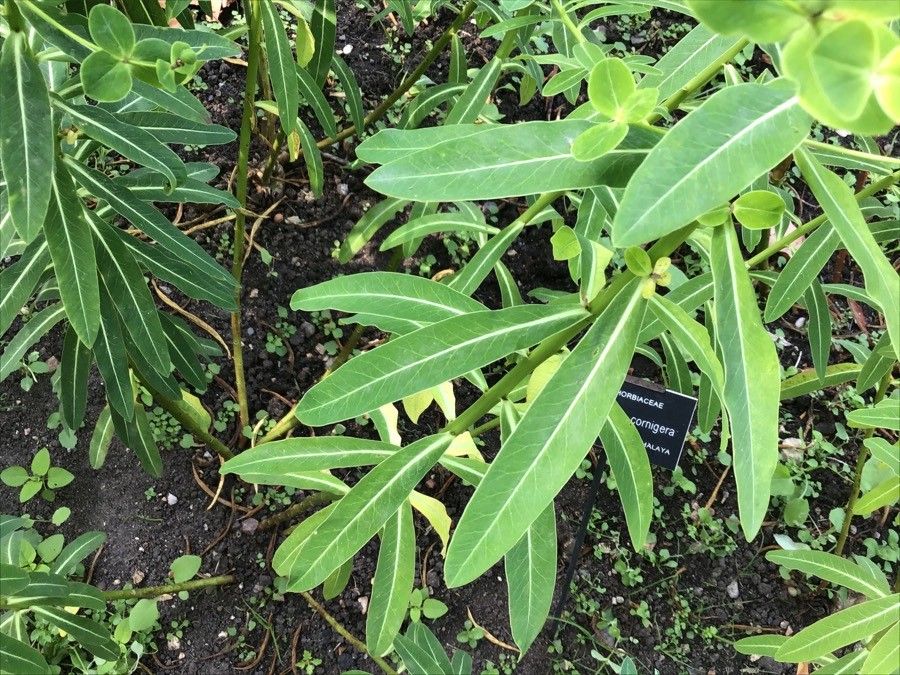
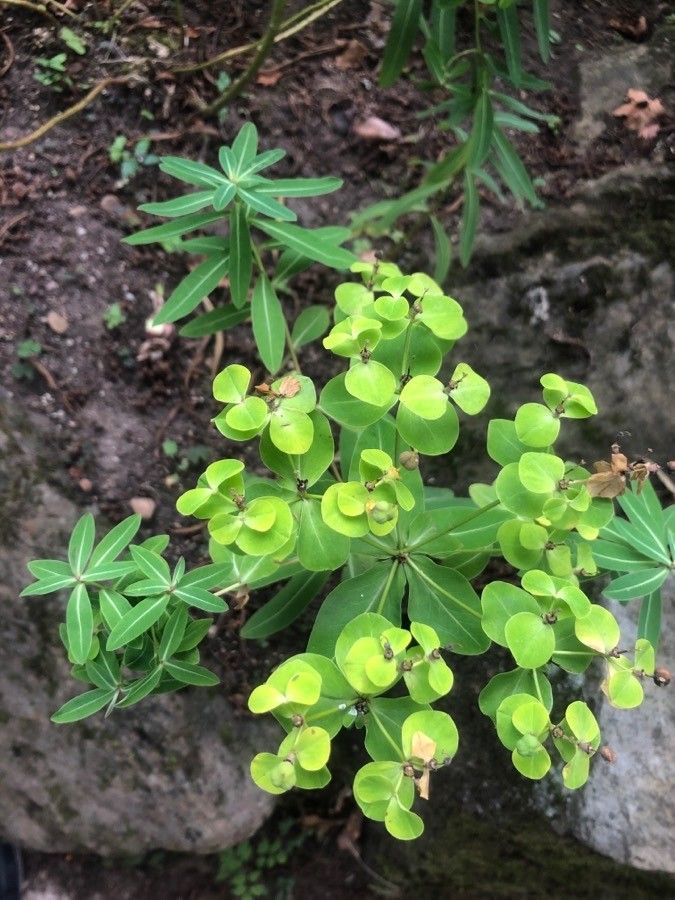
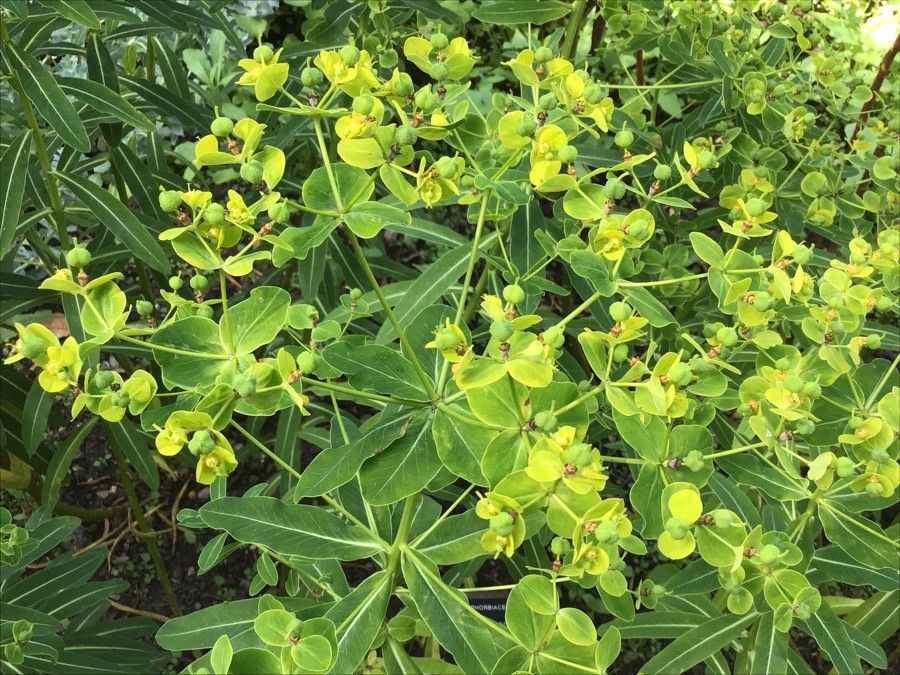
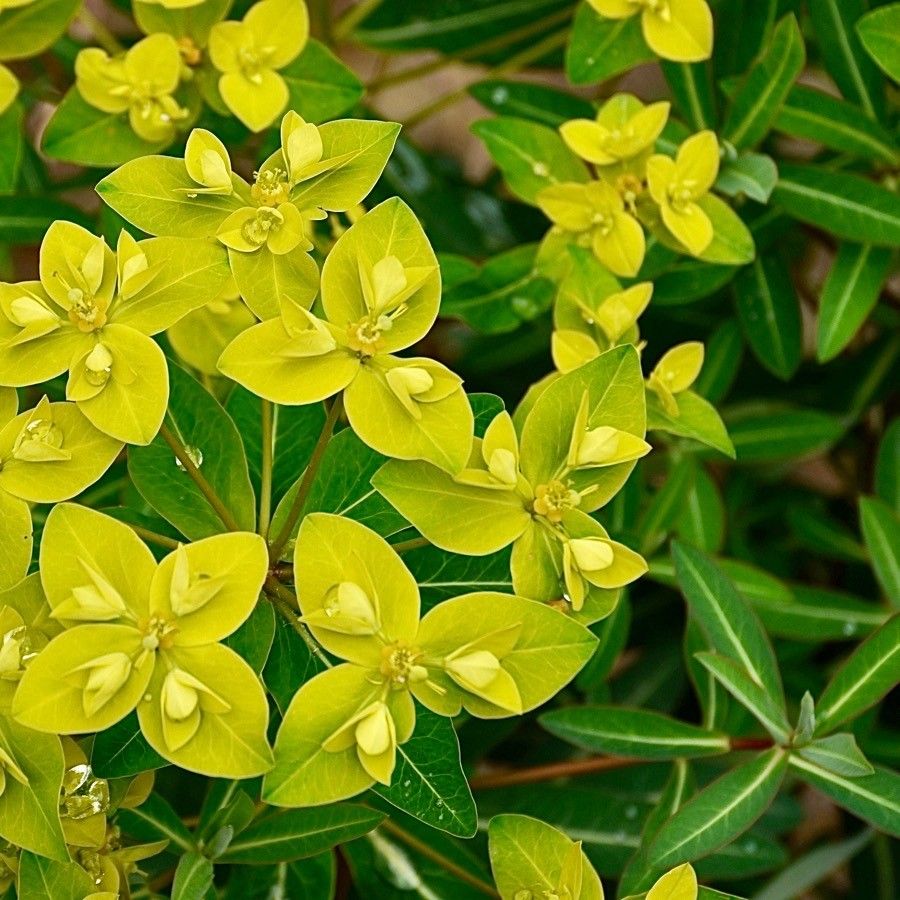
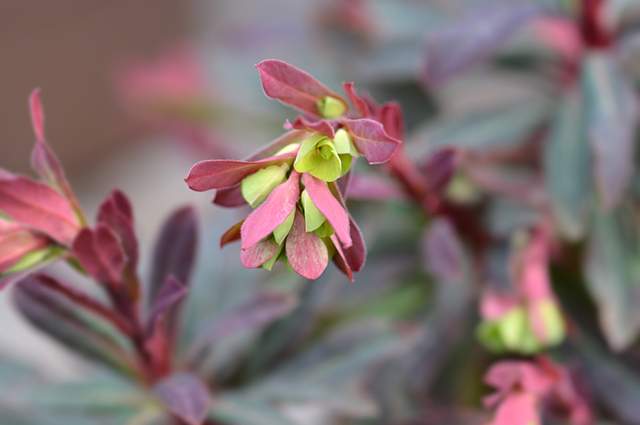
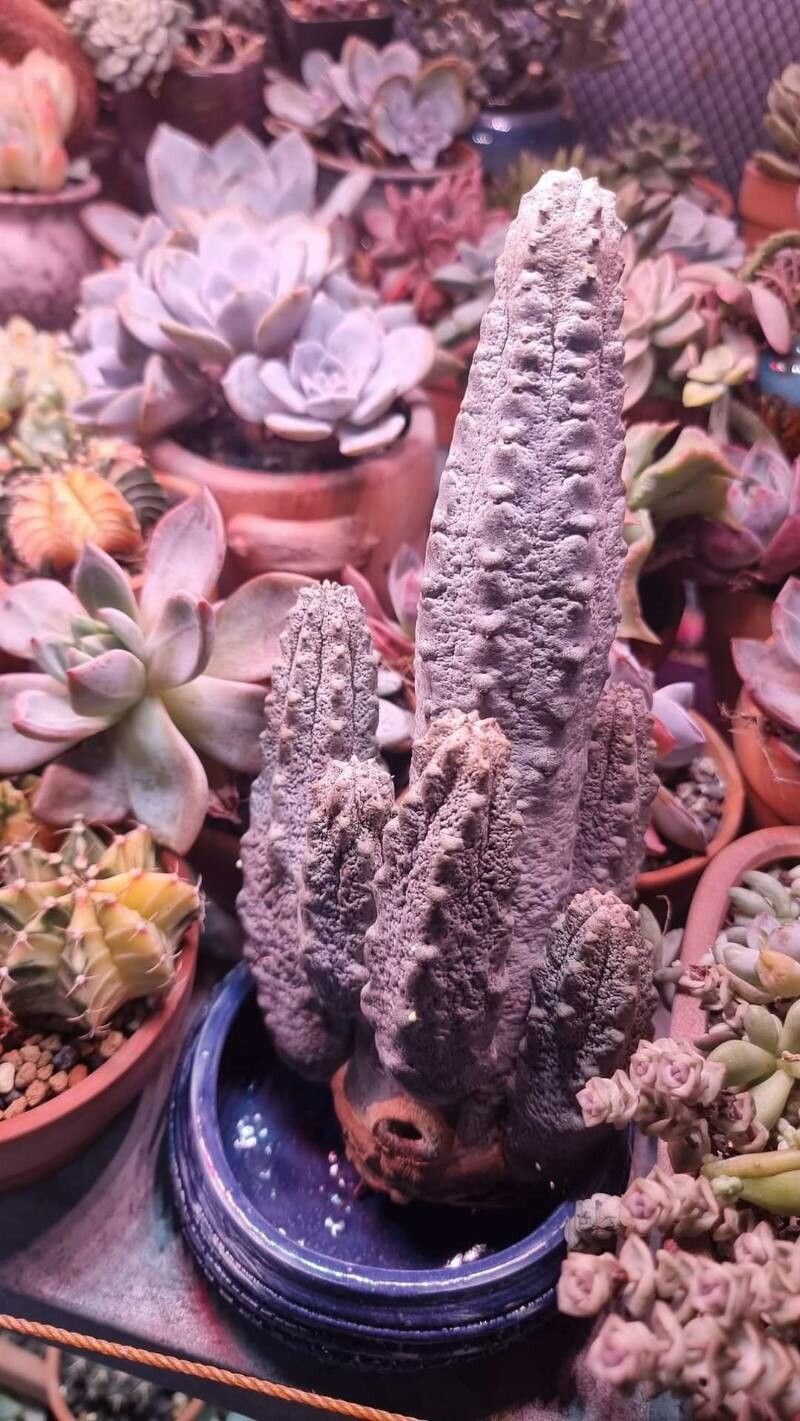
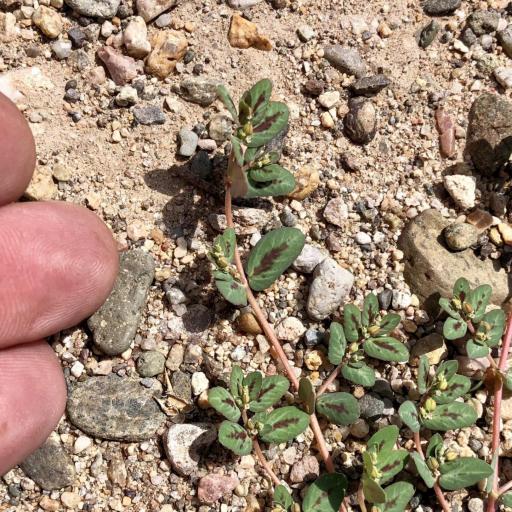
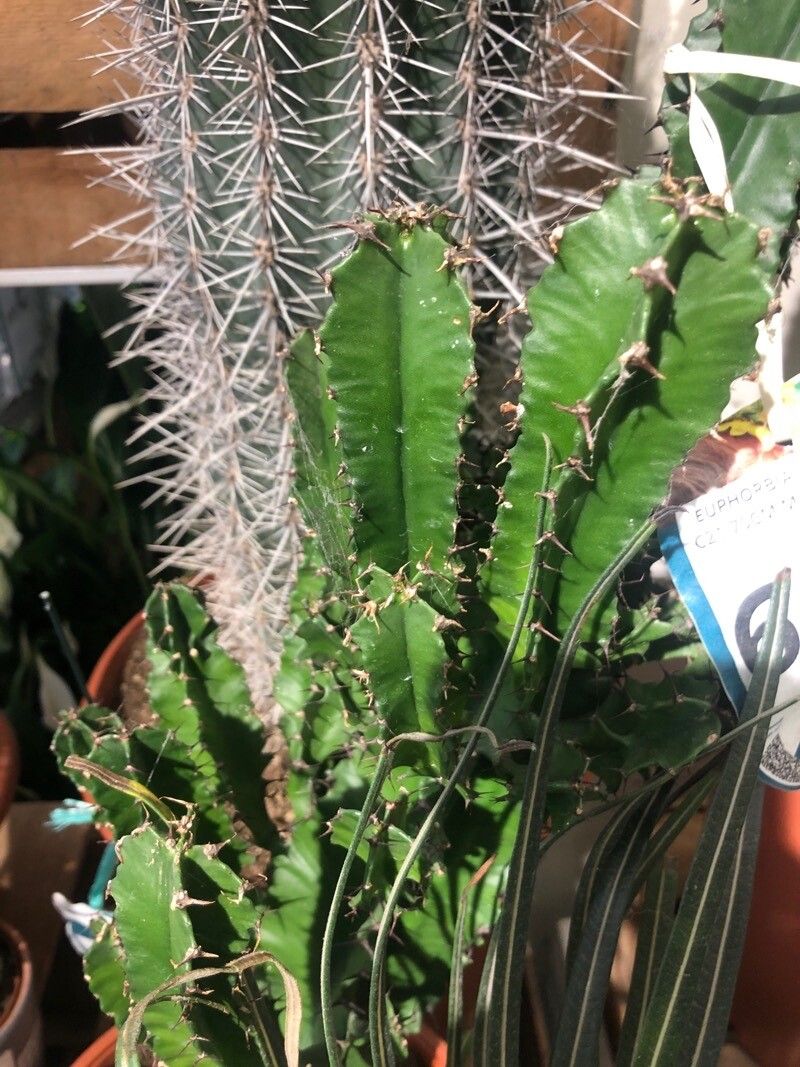
Euphorbia cornigera is a species of flowering plant in the Euphorbiaceae family. It is referred to by the common name horned spurge and is native to Bhutan. It is a rhizomatous herbaceous perennial growing to 75 cm (30 in) tall, rarely 1 m (3 ft 3 in), with narrow green leaves with a pale green spine. Acid yellow flowerheads (cyathia) are borne in summer.The Latin specific epithet cornigera means "with horns".It has gained the Royal Horticultural Society's Award of Garden Merit.All parts of the plant are highly toxic if ingested, and the sap may cause skin irritation.
Euphorbia cornigera has moderate disease resistance but is relatively more affected by high humidity and overwatering. It is also more likely to develop disease when it lacks light and is overwatered. In terms of care, Euphorbia cornigera is drought tolerant and can endure long intervals without watering. It needs little fertilizer and only occasional pruning. These traits make it appropriate for people of all experience levels, especially those who prefer to spend less time on plant care or who may be away from home for extended periods. It is a good option for anyone who does not want to devote a lot of time to caring for plants but still wants an easy-to-maintain one.
How to keep Euphorbia Cornigera.
Light
Originating from dry regions, Euphorbia cornigera performs best in full sun, since its native habitat features intense sunlight and scant shade. It will also tolerate partial sun, offering some flexibility in its growth.
Water
Euphorbia cornigera, native to dry habitats, requires minimal watering to thrive. It does well with weekly watering, provided it is not over-saturated. This drought-tolerant plant prefers conditions similar to its arid native environment. Well-draining soil is essential to prevent root rot and maintain the plant's health.
Temperature
Euphorbia cornigera performs best in warm settings and requires elevated temperatures during the growing season to support growth and metabolic processes. It favors abundant sunlight, suitable moisture levels, and good air circulation. However, it is vulnerable to harm from very low temperatures and from overwatering. It is also important to maintain balance and avoid excessively high heat and overly dry conditions.
Fertilizer
For Euphorbia cornigera, light applications of fertilizer once or twice a year during the growing season are enough. Do not fertilize in winter or in summer when the plant is dormant. Cut back on fertilizer for plants that have been repotted and wait a couple of months after repotting before feeding. Fertilizing helps maintain healthy growth and promotes flowering.
Pruning
To ensure the health of Euphorbia cornigera, it is important to prune the plant in early spring. Start by removing any dead or overcrowded stems to enhance air circulation and minimize the risk of disease. Be sure to use clean, sharp tools to make clean cuts just above the leaf nodes. This will encourage vigorous growth and help the plant to flower optimally in accordance with its growth cycle.
Botanical profile.
- Plant Type
- Succulent, Shrub
- Life Cycle
- Perennial
- Genus
- Euphorbia
- Family
- Euphorbiaceae
- Hardiness Zone
- 5-9
- Mature Height
- 76 cm
- Mature Spread
- 76 cm
- Leaf Color
- Green
- Leaf Type
- Deciduous
- Flower Color
- Yellow, Green
- Flower Size
- 1.02 cm to 2.03 cm
- Bloom Time
- Early summer, Mid summer
- Planting Time
- Spring, Autumn
- Harvest Time
- Late summer, Early fall
- Native Area
- Pakistan, India