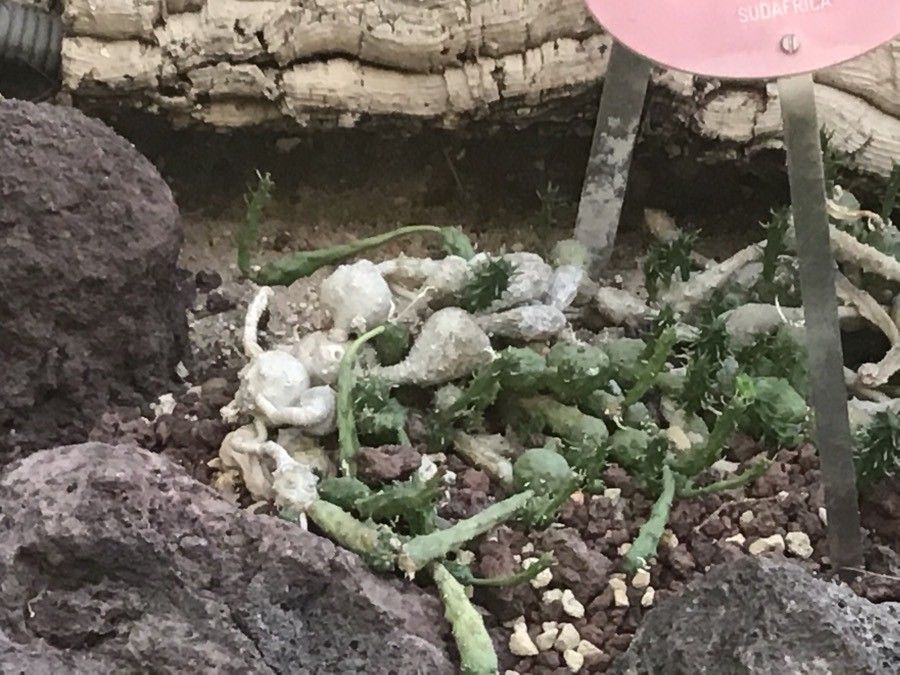
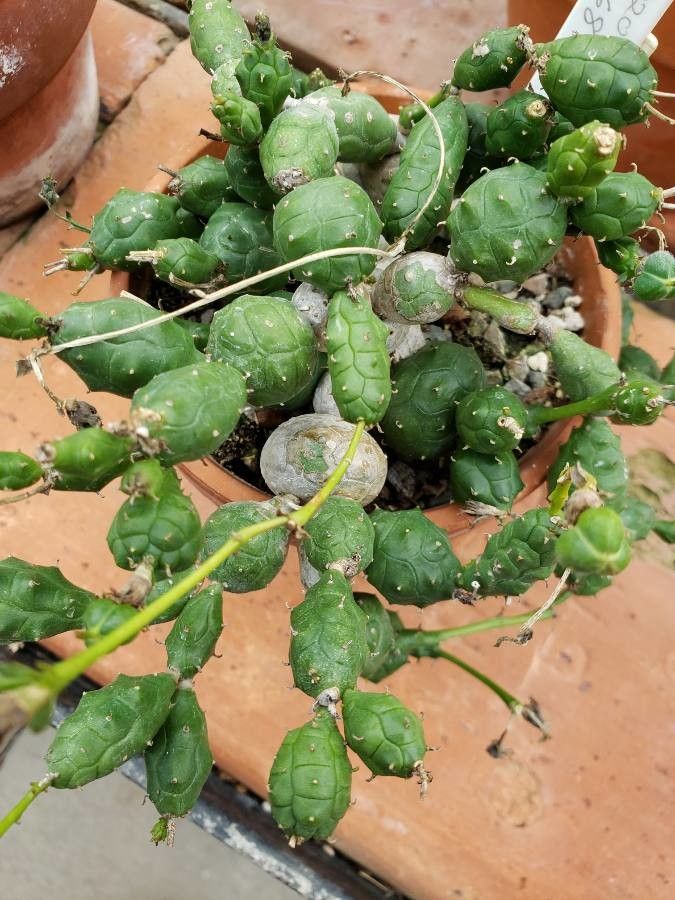
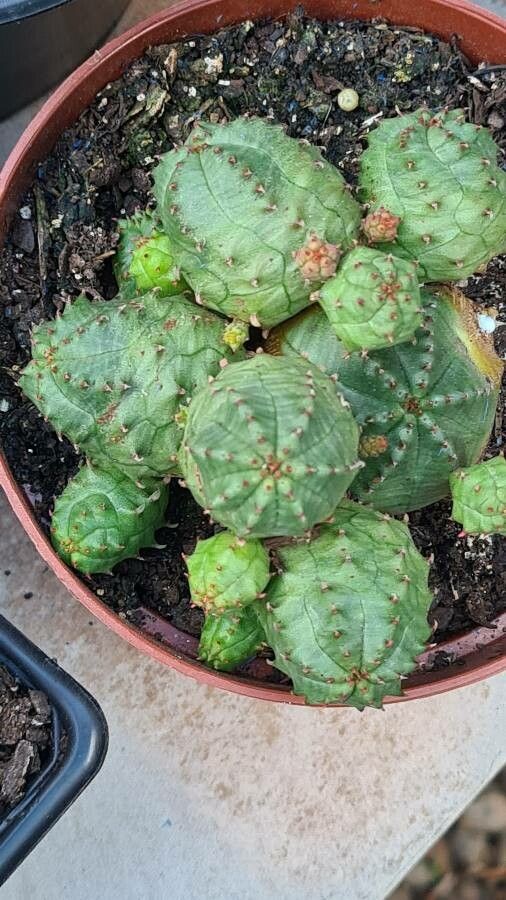
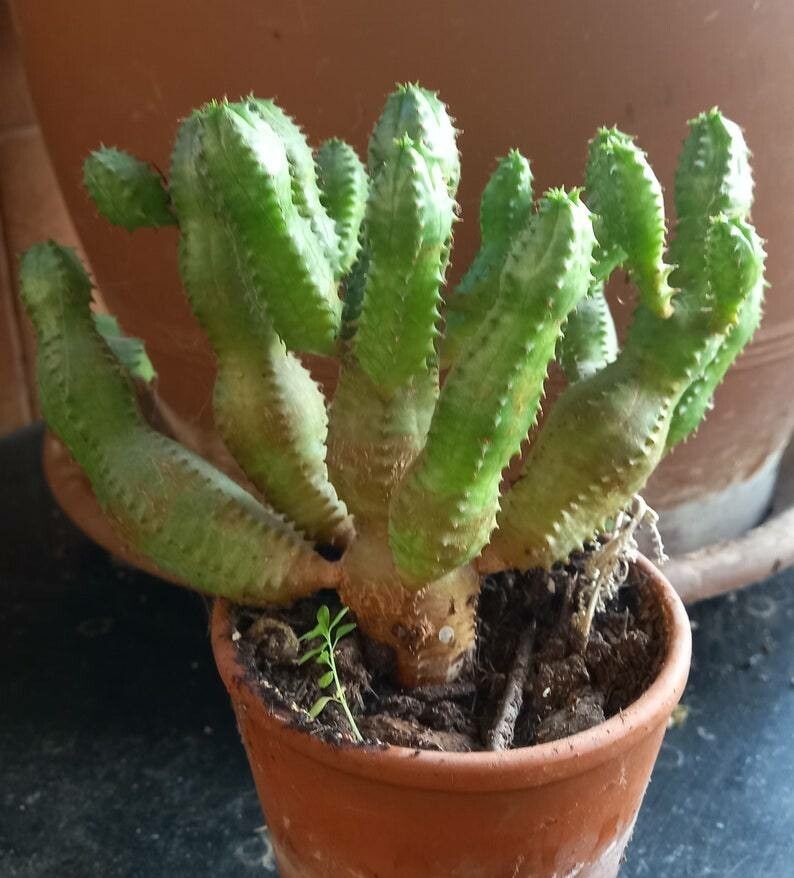
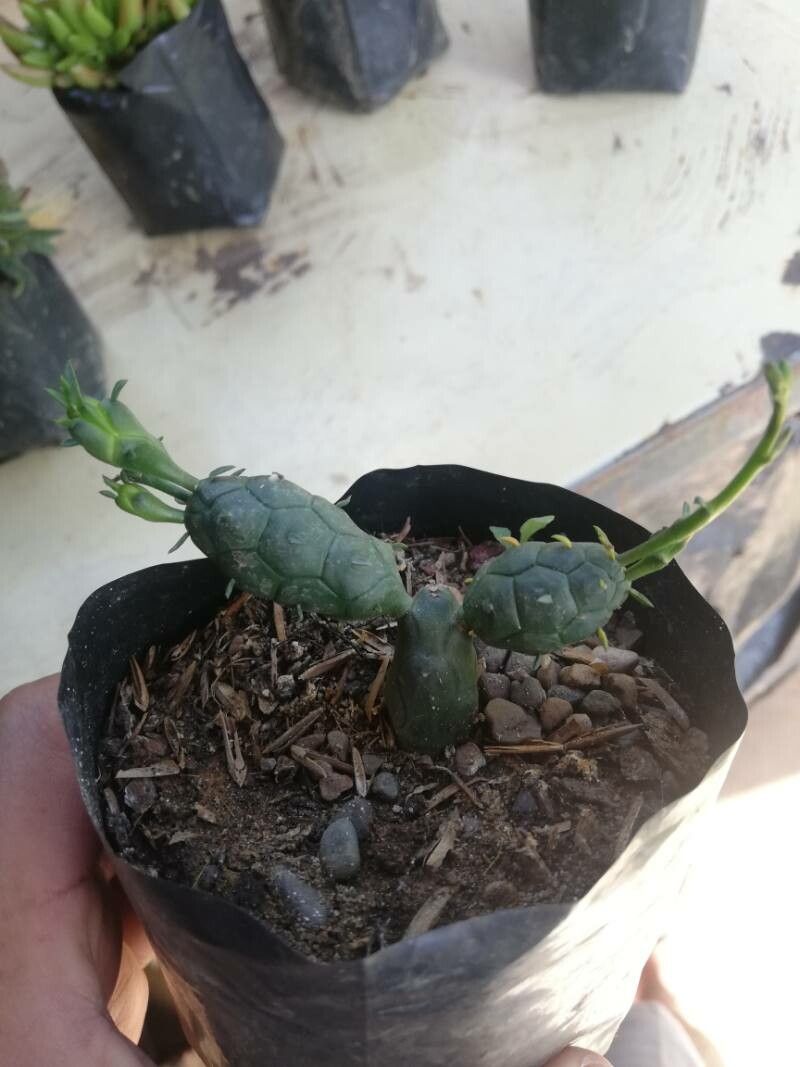
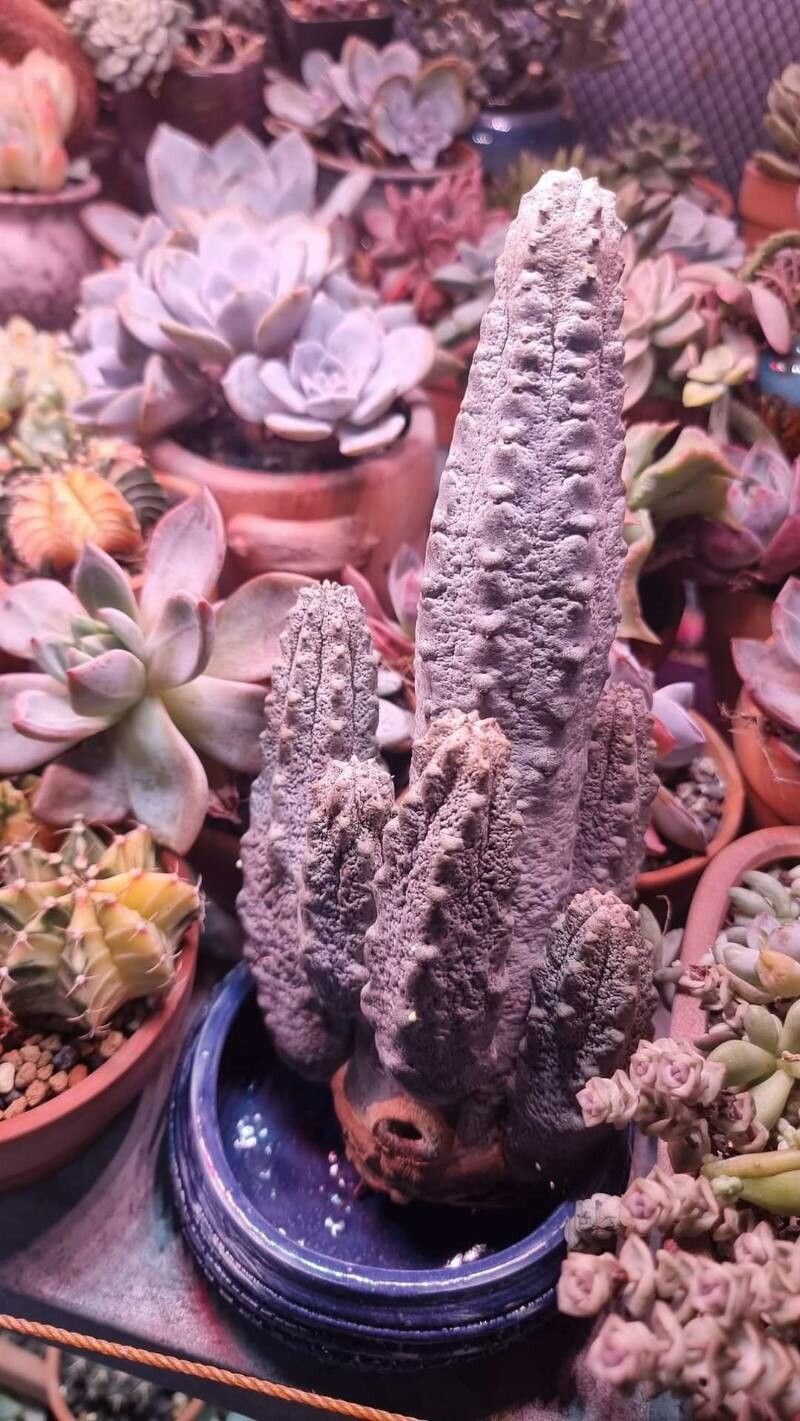
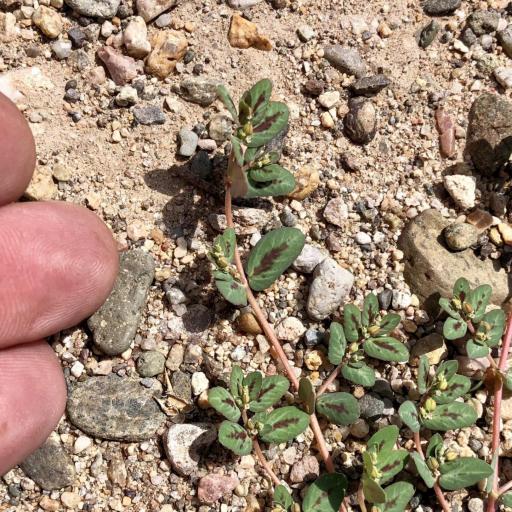
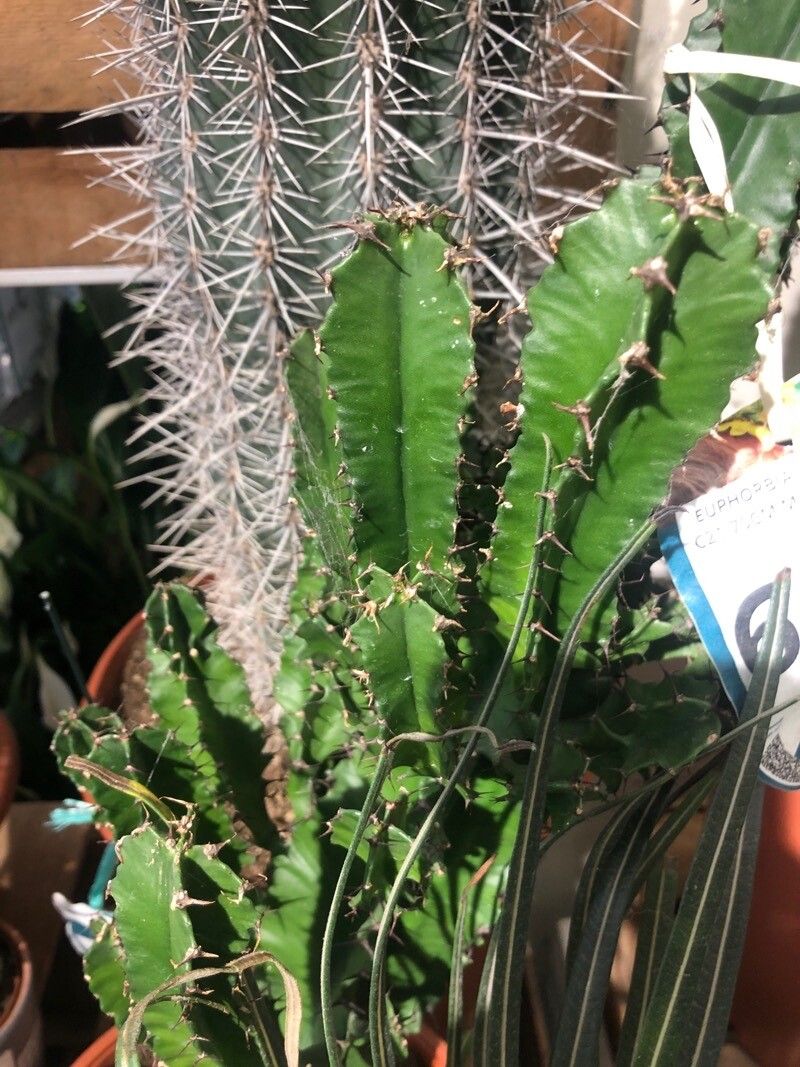
Euphorbia globosa is a succulent plant belonging to the Euphorbia family. Native to Madagascar, it can grow up to 30 cm in height. The plant features a unique spherical shape and small green leaves that cluster around its thick, fleshy stem, which is adorned with small spines.
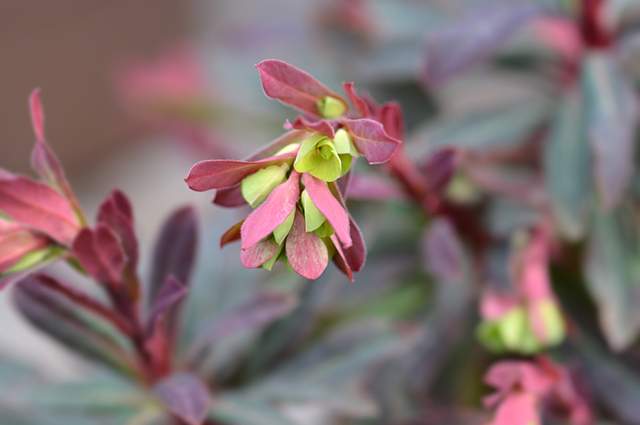
During the spring and summer months, Euphorbia globosa produces small yellow flowers that bloom in clusters at the top of the stem. These are followed by seed pods containing several seeds.
The plant thrives in well-draining soil and requires moderate watering during its growing season, with the soil allowed to dry out between waterings. It can be propagated through cuttings or by seed.
Although generally easy to care for, Euphorbia globosa should be handled with caution. It produces a milky sap that can cause skin irritation or allergic reactions if ingested or touched without protection.
Overall, Euphorbia globosa is an intriguing addition to any succulent collection due to its distinct shape and striking yellow flowers when in bloom.
Globose spurge has moderate disease resistance and is relatively sensitive to humidity and overwatering. It is also more prone to disease when it receives insufficient light and is overwatered. In terms of care, Globose spurge is drought-tolerant and can withstand extended periods without watering. It needs little fertilizer and only occasional pruning. This makes it appropriate for people of all experience levels, especially those who prefer to spend less time on plant care and who may occasionally be away from home for long periods. It’s a good option for anyone who doesn't want to invest a lot of time in maintenance but still wants an easy-to-care-for plant.
How to keep Euphorbia Globosa.
Light
Originating from dry areas, Globose spurge does best in full sun, its native habitat having intense sunlight and scant shade. It will also tolerate partial sun, giving it some flexibility in growth.
Temperature
Globose spurge prefers warm conditions and requires relatively high temperatures during the growing season to support growth and metabolic activity. It favors plenty of sunlight, proper moisture, and good air circulation. However, it can be harmed by very low temperatures and by overwatering. It's also important to maintain balance and avoid excessively high heat and overly dry conditions.
Fertilizer
For Globose spurge, light fertilizer applications once or twice a year during the growing season are adequate. Do not fertilize in winter or summer when the plant is dormant. Use less fertilizer for plants that have been repotted and wait a couple of months after repotting before applying fertilizer. Fertilizing helps maintain healthy growth and promotes flowering.
Pot & Repot
Repot Globose spurge in the warmer months, selecting a container only slightly larger than the current one with good drainage. Use a well-draining cactus or succulent potting mix. Handle the roots and caudex gently during repotting. After repotting, wait about a week before watering to avoid root rot. Place the plant in a sunny location for optimal growth.
Botanical profile.
- Plant Type
- Succulent
- Life Cycle
- Perennial
- Genus
- Euphorbia
- Family
- Euphorbiaceae
- Hardiness Zone
- 9-11
- Mature Height
- 10 cm
- Mature Spread
- 30 cm
- Leaf Color
- Light Green
- Leaf Type
- Evergreen
- Flower Color
- Yellow, Green
- Flower Size
- 0.51 cm to 0.76 cm
- Bloom Time
- Mid spring, Late spring, Early summer
- Planting Time
- Spring, Autumn
- Harvest Time
- Summer
- Native Area
- South Africa
Other names.