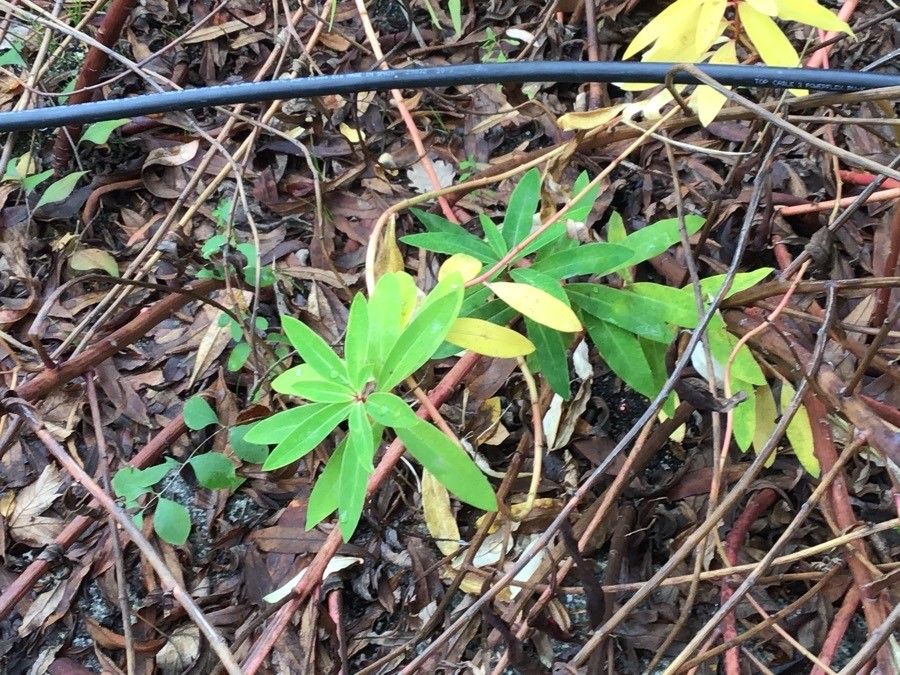
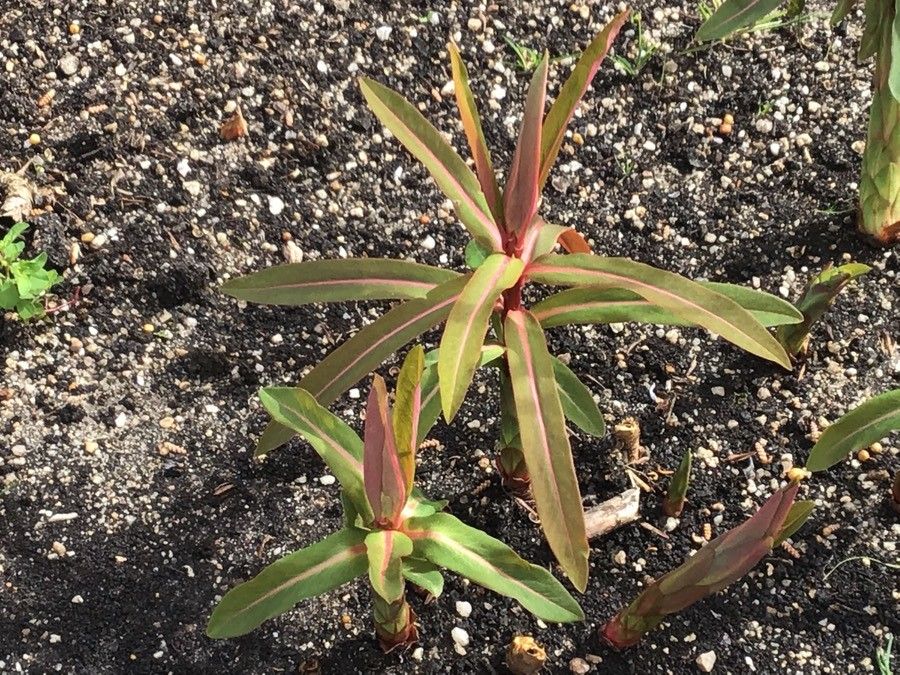
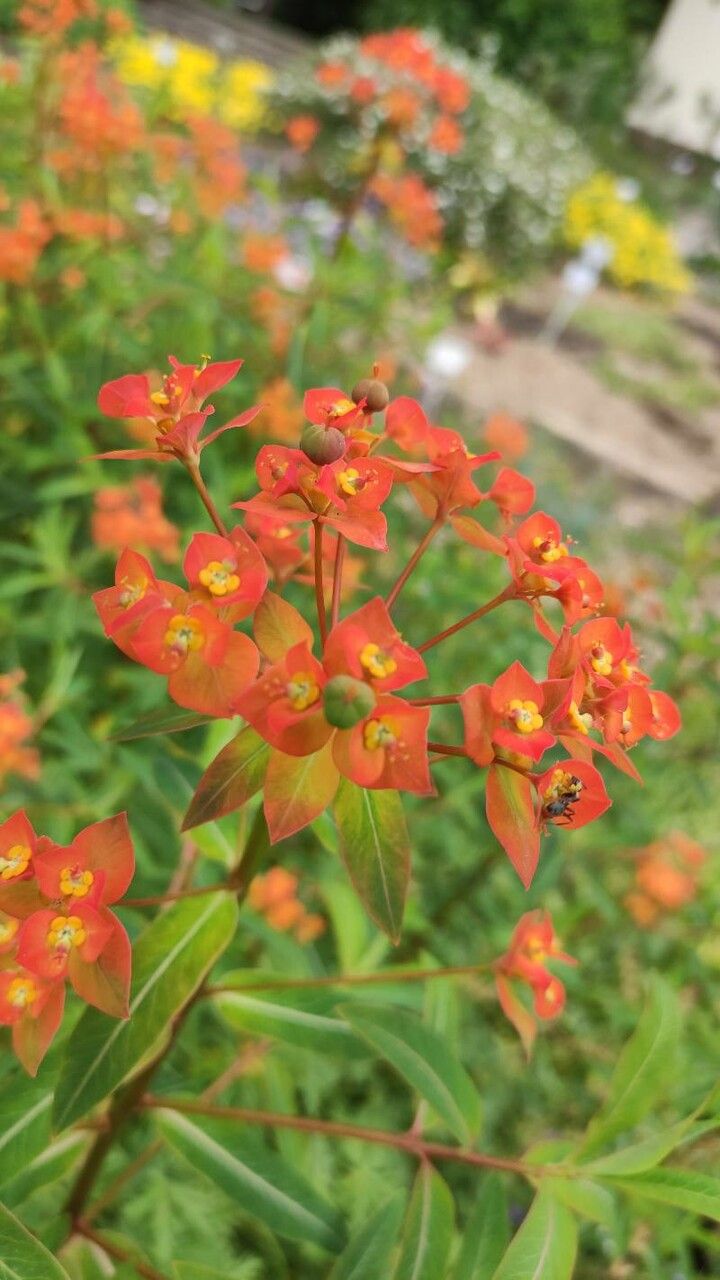
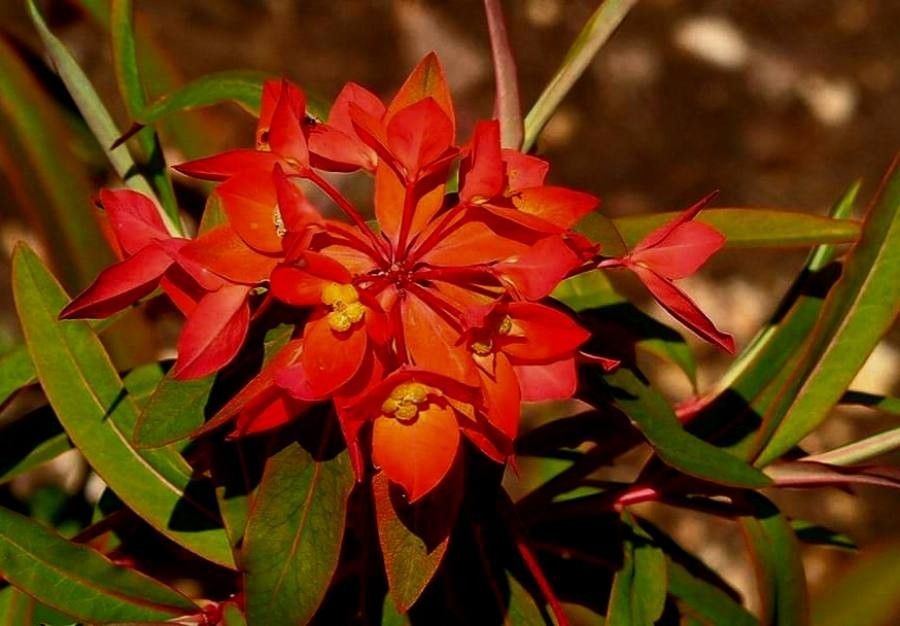
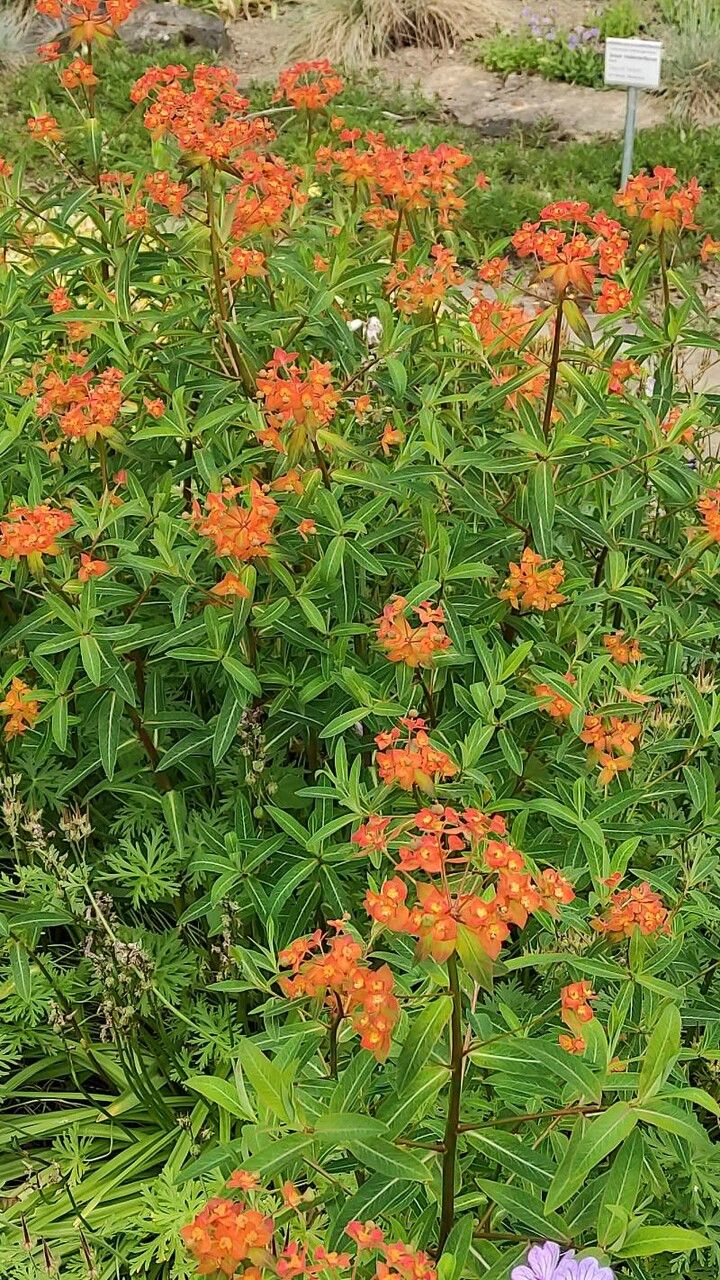
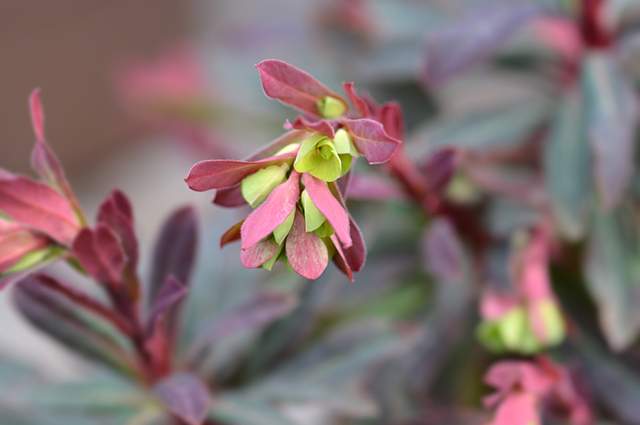
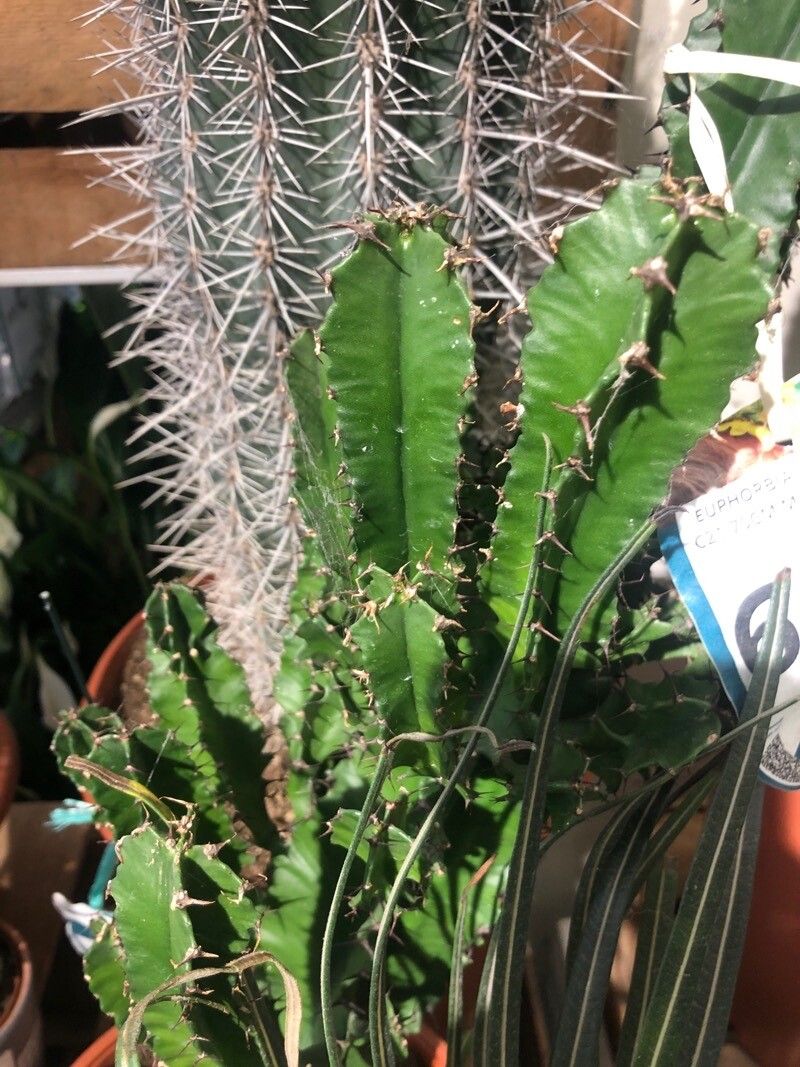
Euphorbia griffithii, the Griffith's spurge, is a species of flowering plant in the spurge family Euphorbiaceae, native to Bhutan, Tibet and south west China. It is a spreading, rhizomatous herbaceous perennial growing to 90 cm (35 in), with many erect reddish stems and narrow dark green leaves with red central veins, turning red and yellow in autumn. In summer it produces flowerheads (cyathia) of brilliant red and yellow.It is a vigorous plant, and can be invasive. Numerous cultivars have been selected for garden use, including 'Dixter' and ‘Fireglow”.The Latin specific epithet griffithii refers to William Griffith (1810-1845), a British naturalist and botanist.
Fireglow spurge is fairly resistant to disease and typically does not develop many illnesses. Still, it can be affected by pests and diseases present in its environment. Such problems are generally mild. Care-wise, the plant needs a moderate level of upkeep. It should be pruned on a regular basis to preserve a neat appearance and encourage healthy growth. Applying fertilizer can also help stimulate flowering. Fireglow spurge is a good choice for anyone with an outdoor area, like a garden or patio, and does not demand extensive gardening experience. It may need extra attention if cultivated indoors.
How to keep Euphorbia Griffithii.
Light
Fireglow spurge naturally occurs in habitats like forest understories and rocky sites, where it grows in natural shade. It prefers partial sun but can tolerate full sun or full shade, showing its adaptable and hardy character.
Water
Fireglow spurge thrives in moderate moisture conditions and requires weekly watering. It prefers well-drained soil that retains some moisture without becoming waterlogged. Typically grown outdoors, fireglow spurge is not tolerant of drought or high humidity, reflecting the balanced rainfall of its native habitat.
Temperature
Fireglow spurge can tolerate a wide range of temperatures, but its distribution can still be limited by different combinations of moisture and heat. It performs best in warm summer climates with sufficient rainfall or watering. Extended periods of cloudy, rainy weather or prolonged high temperatures can increase the risk of the plant dying. In winter, adequate protection from cold improves its chances of survival.
Fertilizer
The best time to fertilize a Fireglow spurge is in early spring, when it is coming out of dormancy and starting active growth. Fertilization supplies essential nutrients for healthy development. Although Fireglow spurge has relatively low fertilizer requirements, applying fertilizer annually can improve its survival and encourage better, longer-lasting blooms.
Pruning
Regular pruning of fireglow spurge is crucial for maintaining its shape and health. In early spring, remove any dead stems. Later, thin out crowded areas to improve airflow. Consistent pruning not only enhances flowering but also helps prevent disease. Be sure to use clean, sharp tools to achieve the best results during periods of active growth.
Botanical profile.
- Plant Type
- Herb
- Life Cycle
- Perennial
- Genus
- Euphorbia
- Family
- Euphorbiaceae
- Hardiness Zone
- 5-9
- Mature Height
- 91 cm
- Mature Spread
- 61 cm
- Leaf Color
- Yellow, Red, Green, Bronze
- Leaf Type
- Deciduous
- Flower Color
- Red
- Flower Size
- 1.02 cm to 2.03 cm
- Bloom Time
- Late spring, Early summer, Mid summer
- Planting Time
- Spring, Summer, Autumn
- Harvest Time
- Mid summer, Late summer, Early fall
- Native Area
- Nepal, Bhutan, Myanmar, China
Other names.
Reader questions.
What are the sunlight requirements for Fireglow spurge (Euphorbia griffithii)?
Fireglow spurge (Euphorbia griffithii) thrives in a variety of sunlight conditions. For full sun, it requires above 6 hours of sunlight daily. If you are aiming for partial sun, about 3-6 hours of sunlight daily is adequate. It's essential to observe how sunlight moves through your garden, selecting locations that ensure a harmonious mix of light and shade. This careful placement is crucial for the optimal growth and happiness of your Fireglow spurge plants.