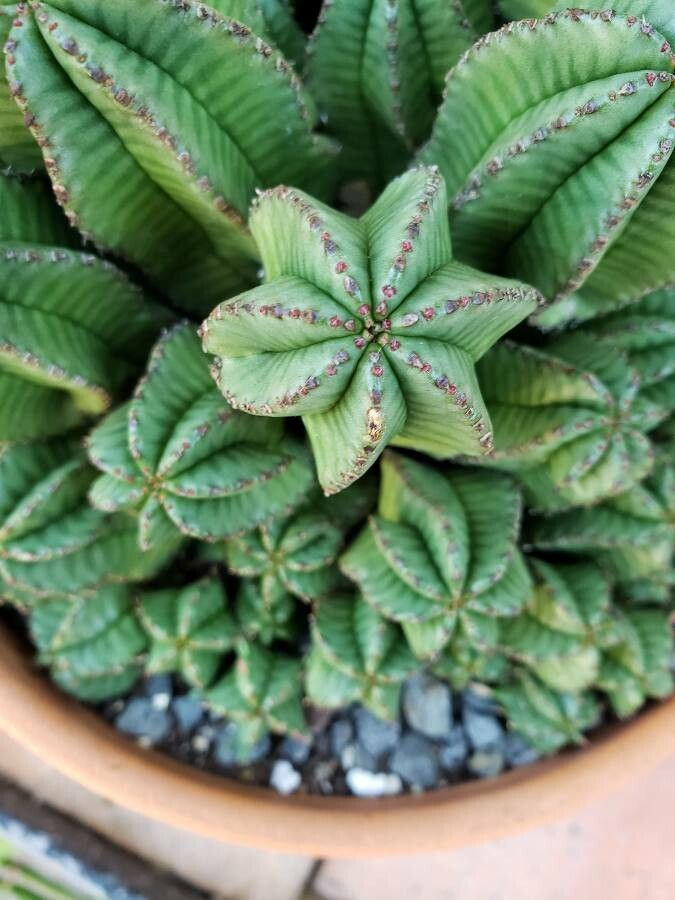
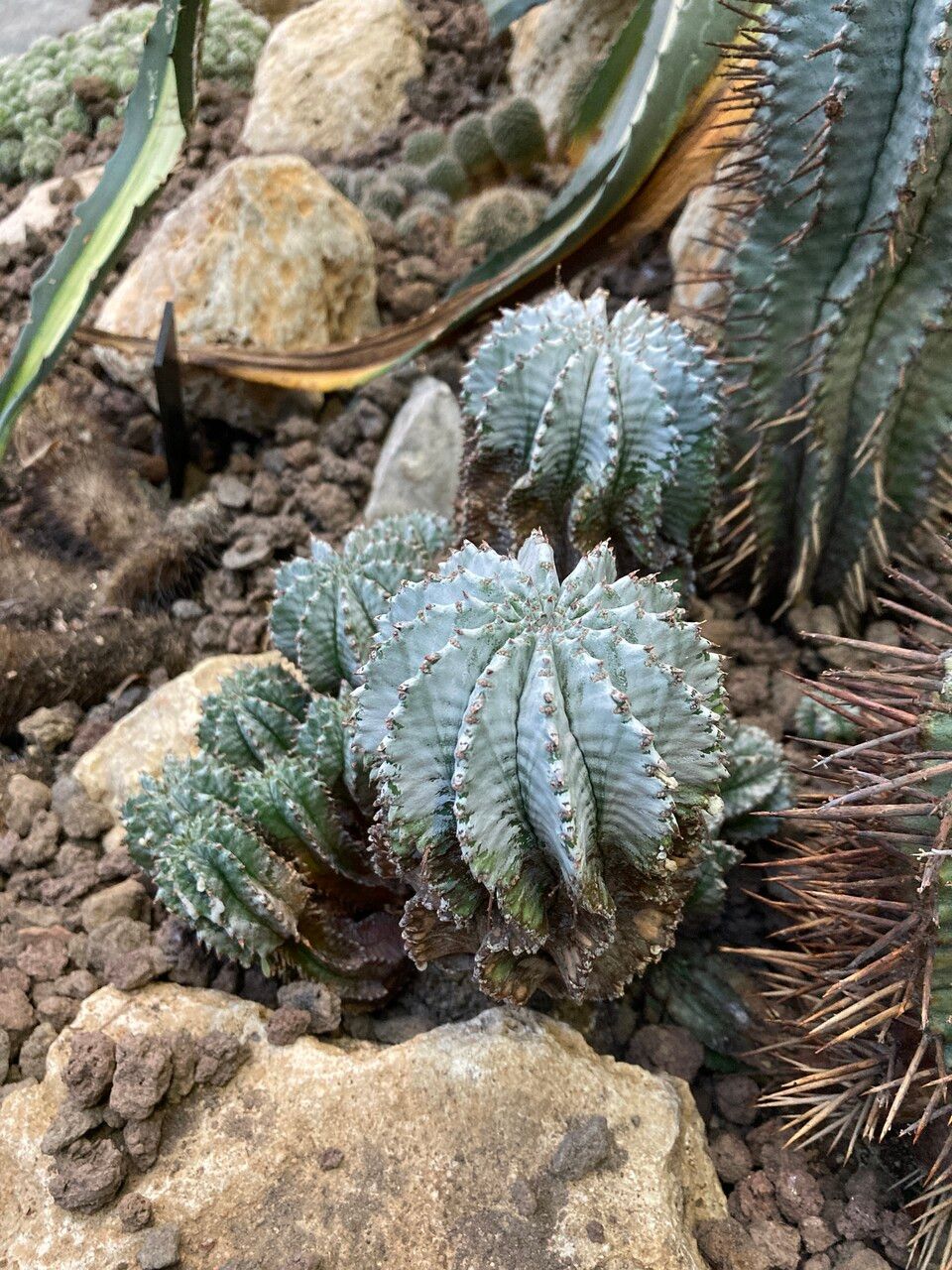
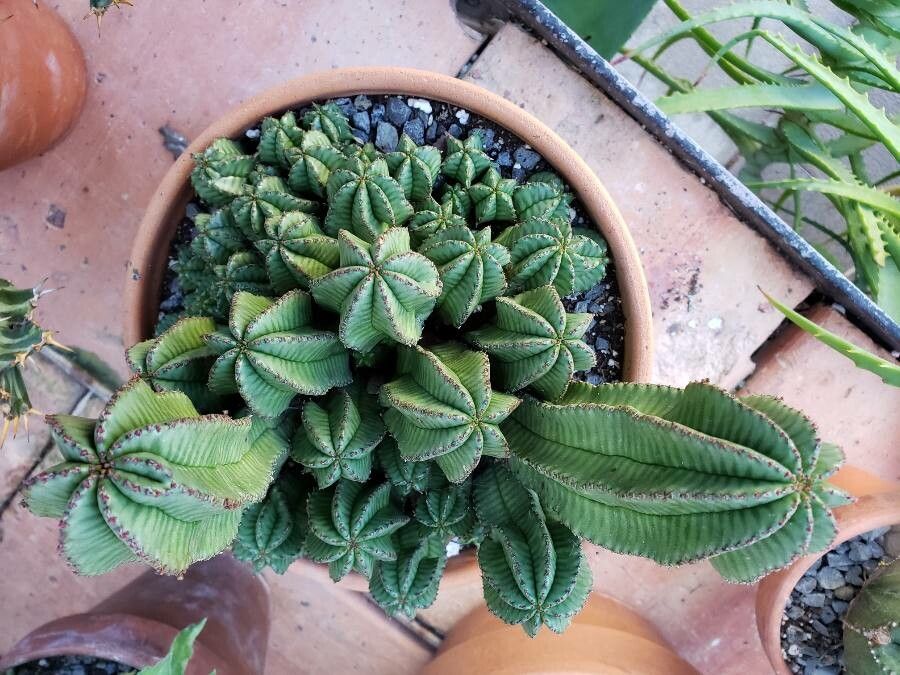
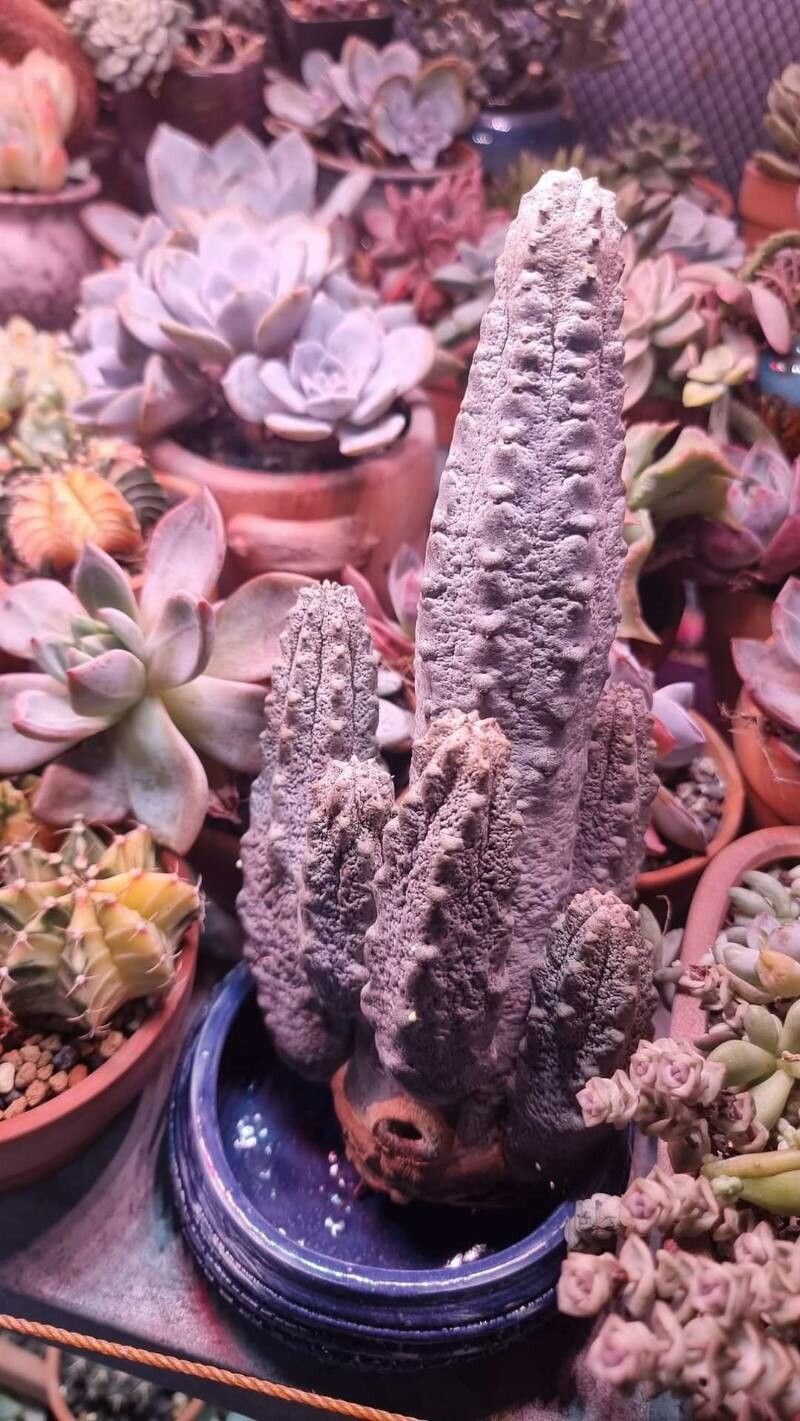
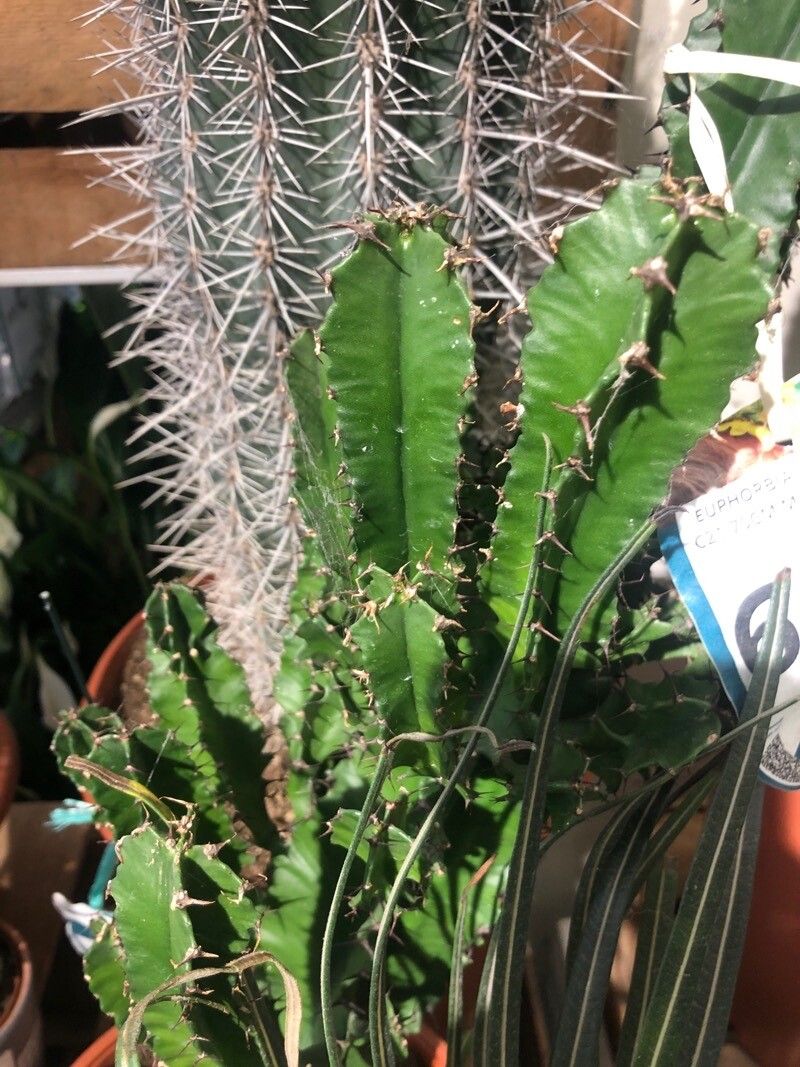
African milk barrel has moderate resistance to disease but is more sensitive to humidity and overwatering. It also becomes more prone to illness when it lacks light and is overwatered. In terms of care, African milk barrel is drought tolerant and can endure long periods without watering. It needs little fertilizer and only occasional pruning. This makes it suitable for people of all levels of experience, especially those who want to spend less time tending their plants and who may sometimes be away from home for long periods. It is a good option for people who do not want to devote a lot of time to plant care but still want an easy-to-maintain plant.
How to keep Euphorbia Polygona.
Light
Originating from arid areas, the African milk barrel performs best in full sun, as its native habitat is marked by intense sunlight and scant shade. It can also tolerate partial sun, providing some flexibility in its growth.
Water
The African milk barrel, which originates from arid regions, is highly drought-tolerant and thrives in dry conditions. It requires infrequent watering, about once every three weeks. When kept as an indoor plant, it benefits from stable home temperatures. This stability helps maintain consistent soil moisture levels while minimizing the risk of overwatering.
Temperature
The African milk barrel does best in warm settings and needs relatively high temperatures during the growing season to foster development and metabolic processes. It prefers abundant sunlight, suitable moisture levels, and good air circulation. Yet it is vulnerable to harm from very low temperatures and from overwatering. It's also important to keep conditions balanced and to avoid excessively high heat or overly dry conditions.
Fertilizer
For African milk barrel, light applications of fertilizer 1-2 times a year during the growing season are enough. Do not fertilize in winter or summer when the plant is dormant. Use less fertilizer on repotted plants and wait a couple of months after repotting before you apply fertilizer. Fertilizing helps maintain healthy growth and promotes blooming.
Pot & Repot
Repot an African milk barrel in the warmer months, selecting a container only slightly bigger than the existing one that has good drainage. Use a fast-draining cactus or succulent potting mix. Handle the roots and caudex carefully during the repotting process. After repotting, wait roughly a week before watering to avoid root rot. Put the plant in a sunny location for best growth.
Botanical profile.
- Plant Type
- Succulent
- Life Cycle
- Perennial
- Genus
- Euphorbia
- Family
- Euphorbiaceae
- Hardiness Zone
- 9-11
- Mature Height
- 1.52 m
- Mature Spread
- 10 cm
- Leaf Color
- Dark Green
- Leaf Type
- Evergreen
- Flower Size
- 0.51 cm to 1.02 cm
- Bloom Time
- Summer
- Planting Time
- Spring, Summer
- Harvest Time
- Late summer, Early fall, Mid fall
- Native Area
- South Africa
Other names.
Reader questions.
What should I do if I give too much or too little water to my African milk barrel?
African milk barrel and other succulents are able to withstand long periods without water. However, if you forget to water your African milk barrel for a month or more, it may become thirsty and show signs of damage. Symptoms of underwatering include a lackluster and wrinkled appearance, dried up leaves, browning or crisping, and dry soil. To remedy this, thoroughly water the plant by submerging the pot in water for 5-10 minutes until moisture is felt on the soil surface. On the other hand, overwatering is dangerous for African milk barrel plants and can lead to root rot. Root rot occurs when the excessive moisture promotes the growth of fungi and bacteria that attack the roots. Signs of overwatering include yellow and swollen organs that may burst, browning or blackening, and easily falling off the plant. It is important to check the soil to confirm if overwatering is the cause. To address overwatering, provide better air ventilation, adjust watering frequency, and change the growing conditions. Saving an overwatered African milk barrel plant is possible if caught early. First, remove the plant from its pot and examine the roots and soil. Rinse the roots in room-temperature water to remove any fungus and assess their health. Dark brown or black, soft, mushy, or slimy roots indicate root rot. If most of the roots are affected, it may not be possible to save the plant. However, if only some roots are affected, use sterilized cutting tools to remove unhealthy roots. Dip the remaining healthy roots in a fungicide and repot the plant in fresh, well-draining soil. While not guaranteed, this process often allows the plant to recover and generate new growth in the next growing season.
What are the sunlight requirements for an African milk barrel?
The African milk barrel, native to arid regions, thrives best in full sun, which means it requires above 6 hours of sunlight daily. It can also grow in partial sun, approximately 3-6 hours of sunlight, adapting well to its environment characterized by strong sunlight with minimal shade. Ensuring the right balance of light and shade is crucial for the plant's health, so monitor the sunlight patterns in your garden to find the ideal spot for your African milk barrel.
What are the essential care tips for an African milk barrel?
The African milk barrel, botanically known as Euphorbia polygona, thrives in warm environments. It requires higher temperatures during its growing season to facilitate growth and metabolism. Ample sunlight, appropriate moisture levels, and good ventilation are crucial for its well-being. However, the plant is vulnerable to damage from excessively low temperatures and overwatering, necessitating a balance to avoid extremely high temperatures and overly dry conditions. During winter, the African milk barrel tends to stop growing and enters a dormant state. It is imperative to move the plant indoors for cultivation when outdoor temperatures drop below -35°C, preferably near a south-facing window to ensure maximum sunlight. If natural light is insufficient, supplemental lighting is recommended. Watering should be reduced or stopped when temperatures fall below 0°C to prevent root rot, especially for plants grown outdoors.
How frequently should I give water to my African milk barrel?
Determining how often to water African milk barrel plants does not have a strict guideline. To determine the watering schedule, it is best to check the moisture level in the soil. This can be done by either inserting a finger or using a moisture meter to check the soil beneath the surface. When using a deep pot, a stick or chopstick can be used for this purpose. If the soil feels even slightly moist, it is advisable to wait a few days and recheck. In general, most people water African milk barrel plants about every two weeks during summer and once a month during winter. However, various factors can influence the frequency of watering. The following considerations can assist in determining how often to water.
How does artificial lighting support the growth of African milk barrel indoors?
When natural sunlight is insufficient, especially during winter or in less sunny spaces, artificial lighting becomes essential for the growth of indoor plants like the African milk barrel. LED lights are recommended as they can be tailored to provide specific wavelengths needed by the plants. For optimal growth under artificial light, full sun plants require 30-50W/sq ft, partial sun plants need 20-30W/sq ft, and full shade plants require 10-20W/sq ft. The light source should be placed 12-36 inches above the plant to mimic natural sunlight, and most plants will need 8-12 hours of light per day.
How does low temperature affect the African milk barrel and what are the solutions?
African milk barrels thrive in high temperatures and have a low tolerance for cold. They grow best when the temperature remains above 0°C. During winter, it is crucial to keep the temperature above -35°C to prevent damage. Exposure to temperatures below -40°C may lead to weakness, wilting, and a higher risk of root rot. Mild frost damage might not show immediate symptoms, but affected plants can gradually wither within a week. In such cases, it's advisable to trim off the frostbitten areas and check for root rot. If the roots are rotted, they should be removed, and the plant can then be propagated through cuttings. Moving the plant indoors to a warmer environment near a south-facing window will ensure it receives enough sunlight. Supplemental lighting can be used if natural light is inadequate.
What things should I think about when watering my African milk barrel?
To properly water your African milk barrel, you need to consider various environmental factors such as container size, soil type, temperature, and humidity. The size of the container and the type of soil will determine how often and how much water you should use. It's important to use a container with good drainage to prevent excess water from accumulating. A smaller container will hold less moisture and require more frequent watering, while a larger pot will stay moist for longer periods and need less frequent watering. Avoid using an oversized pot as it can result in overwatering. When repotting, choose a container that is only one size larger than the current one, and opt for a shallow container since the African milk barrel has shallow roots. In terms of seasons, the African milk barrel requires less watering in winter when growth slows down and there is less evaporation. Conversely, in spring and autumn, when the plant is actively growing, it will need more frequent watering. The general climate of your location also affects watering needs. If you live in a humid and rainy area, you will need to water less frequently compared to those in dry and arid climates. Keep in mind that even within the same geographic location, seasonal changes and the use of indoor heating and air conditioning can greatly affect watering requirements. When planted outdoors, the African milk barrel usually doesn't require additional watering beyond natural rainfall and dew. However, during prolonged dry periods, occasional watering may be necessary. In areas where the plant can only be grown in a container, it can be moved outside during the warmer seasons and brought back indoors when temperatures drop. Keep in mind that a potted African milk barrel kept outdoors will generally require more water due to increased sun exposure, even if it's placed in a shaded area.
What are the symptoms of light deficiency in African milk barrel?
When African milk barrels are placed in areas with suboptimal lighting, they may exhibit various symptoms indicating light deficiency. These include smaller new leaves, leggy or sparse growth, faster leaf drop, delayed or halted growth, lighter-colored new leaves, and symptoms resulting from excessive sunlight like chlorosis, sunscald, leaf curling, wilting, and leaf scorching. These symptoms highlight the plant's struggle with inadequate light conditions.
What should I do if my African milk barrel experiences high temperatures?
During the summer, it's essential to keep the African milk barrel's environment below 41°C. Temperatures exceeding 45°C can halt the plant's growth, leading to water loss, wilting, and increased susceptibility to sunburn. If your plant suffers from sunburn or root rot, remove the affected parts. Protect the plant from the harsh afternoon sunlight until it recovers and begins to grow again. If the plant has root rot, cease watering until new roots emerge, indicating the plant is on the path to recovery.
How should I water the African milk barrel?
To water your African milk barrel effectively, it's best to thoroughly soak it and then let it dry out before watering again. This plant can tolerate drought to some extent, so it's okay to let it become quite dry before watering. It's important to ensure that the entire potting soil is soaked when you water, rather than pouring water in just one spot. Try to distribute the water evenly along the rim of the planter to ensure that all sides of the plant get wet. The amount of water needed depends on the size of your container and how well the soil absorbs water. When watering, allow the water to drain out through the drainage holes and leave it in the saucer for about 20-30 minutes so that any dry pockets of soil can absorb it. Then, discard any excess water to prevent waterlogging. Another effective method is bottom-watering, where you place the pot in a saucer of water and allow the soil to absorb moisture through the drainage holes. You'll know the soil has enough water when the top layer is moist. While the original habitat of the African milk barrel is relatively dry with little rain, mimicking this through bottom-watering when the soil is completely dry is beneficial. It's also better to deeply soak the soil than to water lightly and frequently.
What solutions can address light deficiency symptoms in African milk barrel?
To counteract light deficiency symptoms in African milk barrels and ensure their optimal growth, gradually moving them to a sunnier location that receives at least 6 hours of direct sunlight daily is recommended. For indoor plants, consider using artificial light if they're large or not easily movable, keeping a desk or ceiling lamp on for at least 8 hours a day, or investing in professional plant grow lights. For outdoor plants, adjust their location gradually to a sunnier spot to avoid sudden shifts in light intensity. Additionally, reducing obstructive elements like tree branches can improve sunlight exposure. Note that parts of the plant that have suffered due to insufficient light might not recover, but new growth should be healthy once proper light conditions are restored.