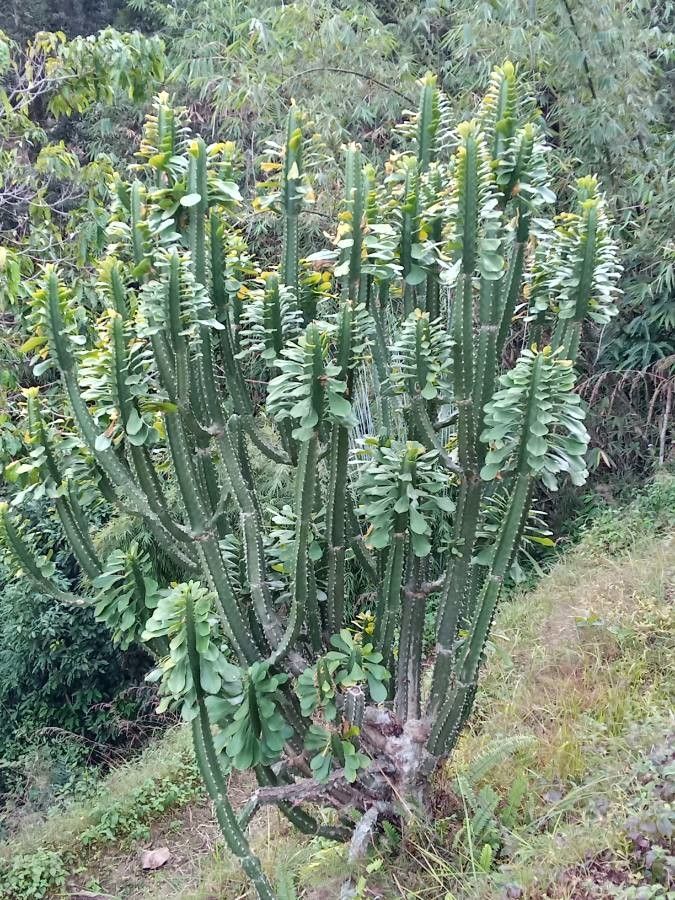
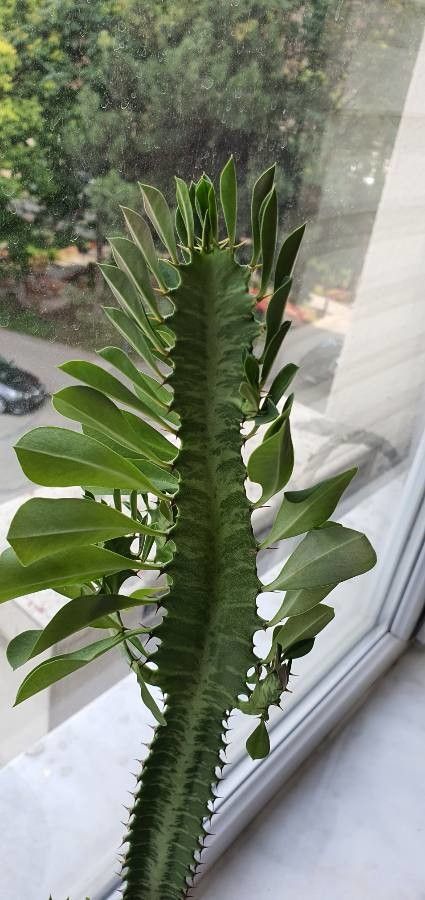
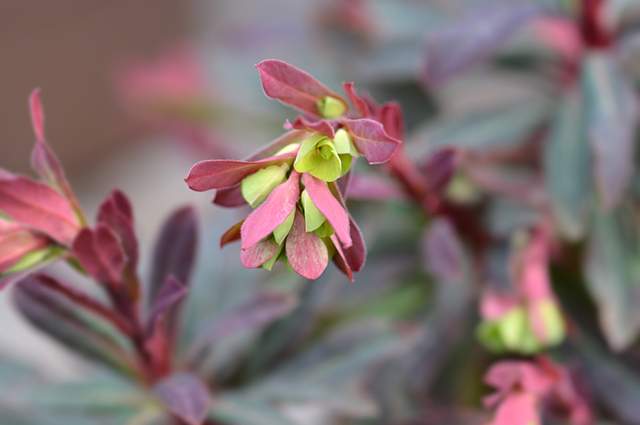
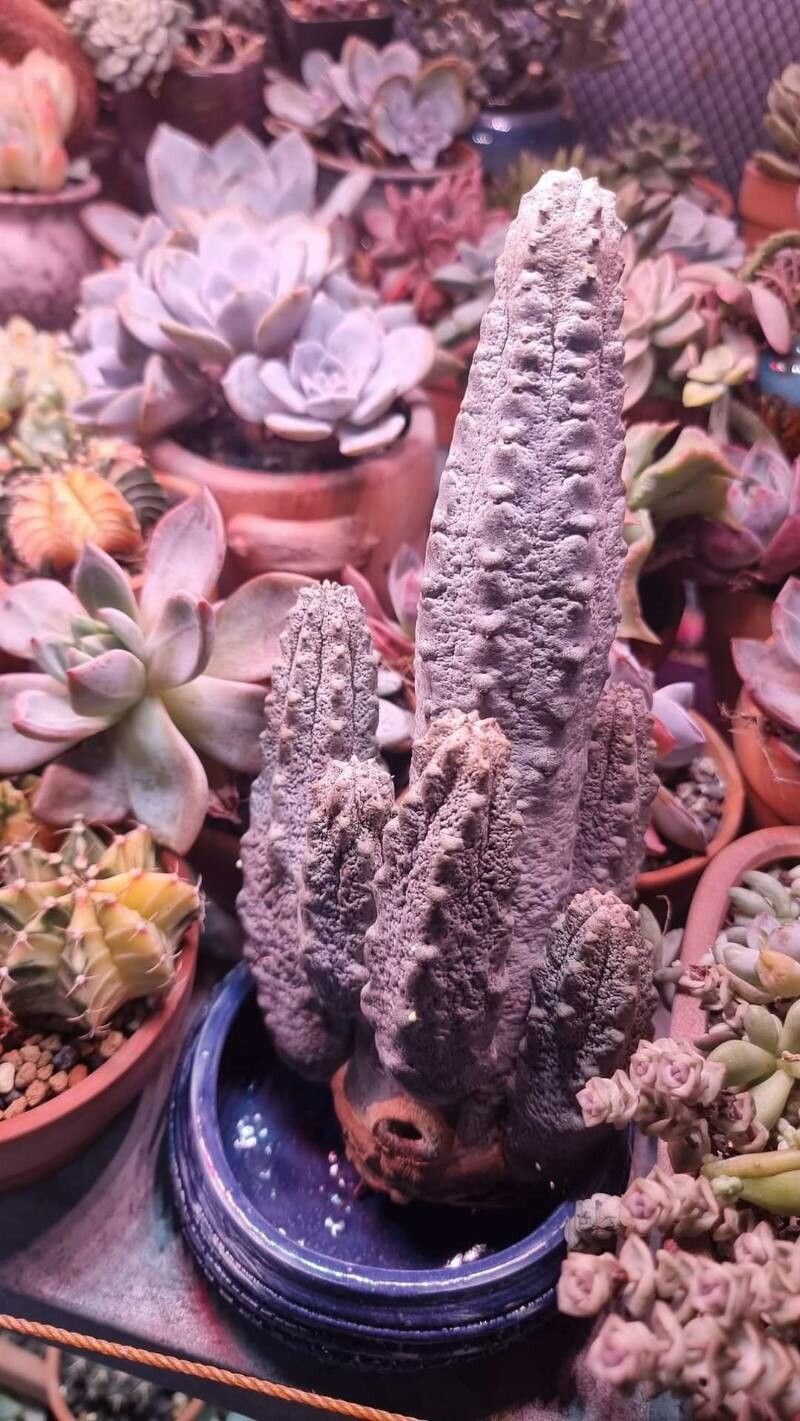
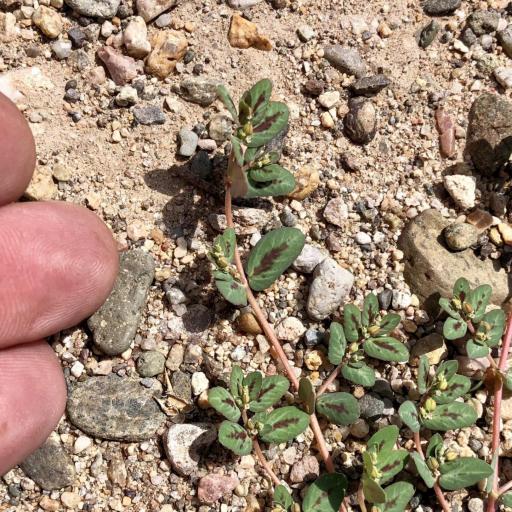
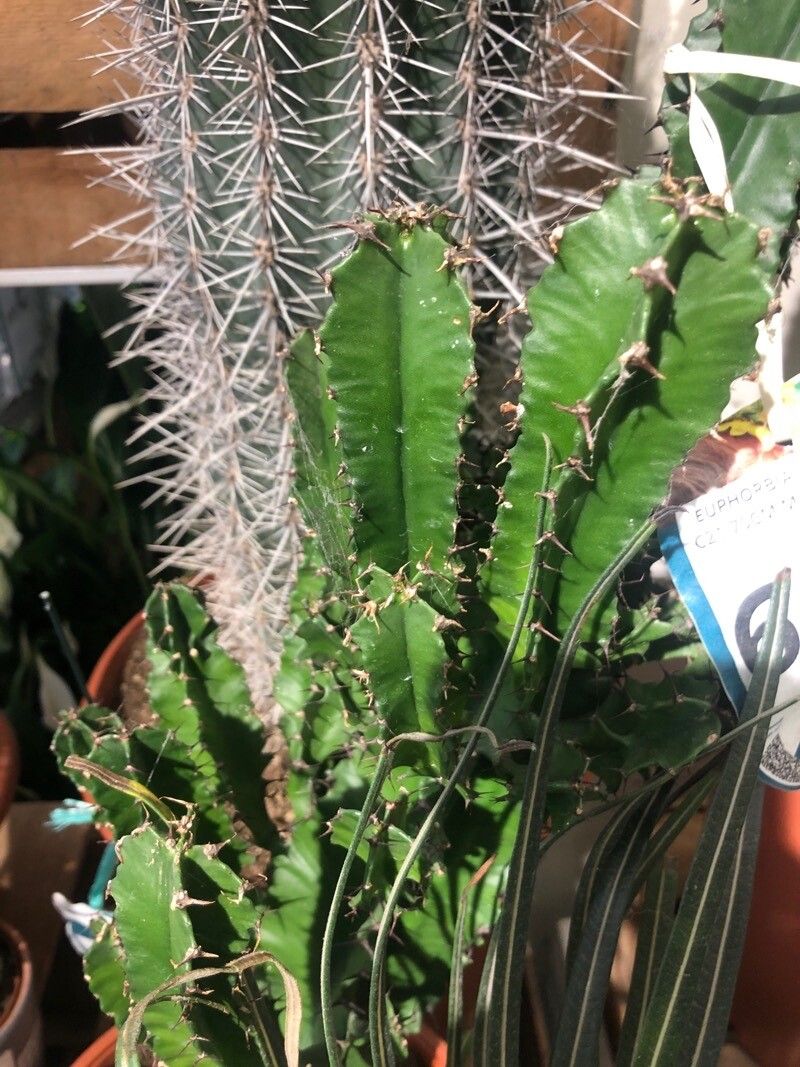
Euphorbia royleana is a species of flowering plant in the family Euphorbiaceae. It is also known as Sullu spurge, and Royle's spurge. It is a succulent and almost cactus like in appearance although unrelated. It grows right across the Himalaya mountains from Pakistan, India, Bhutan, Myanmar, Nepal to western China, It prefers dry and rocky slopes between 1000 and 1500 meters, but has been found up to 2000 meters. Flowering and fruiting is in spring to early summer (March–July) and seeding is in June–October. It is used as a hedging plant in northern India and has medicinal uses.
Sullu spurge has moderate resistance to disease but is more sensitive to humidity and excessive watering. It is also more prone to illness if it receives insufficient light and is overwatered. Regarding care, Sullu spurge is drought-tolerant and can withstand extended periods without water. It requires little fertilizer and only occasional pruning. Because of this, it is suitable for growers of all experience levels, particularly for those who prefer to spend less time on plant care and who may sometimes be away from home for long stretches. It is a good option for people who do not want to devote a lot of time to upkeep yet still want an easy-to-maintain plant.
How to keep Euphorbia Royleana.
Light
Sullu spurge does best with plentiful sunshine and requires a large amount of daily light for optimal growth. Its native environment indicates a natural preference for these lighting conditions. Too little or too much light can both impair its health and vigorous growth.
Water
Sullu spurge is a plant native to arid regions and thrives with very little moisture. It only needs to be watered once every three weeks. To support its growth, it should be planted in well-draining soil that mimics its dry, natural habitat. This prevents water from accumulating around its roots, which is essential for its drought tolerance in dry landscapes.
Temperature
Sullu spurge is native to habitats with temperatures between 68 and 100°F (20 to 38℃). This temperate variety prefers a moderate to warm climate. Adjust conditions as needed, especially during cooler seasons, to maintain optimal growth.
Fertilizer
For Sullu spurge, applying light amounts of fertilizer once or twice a year during the growing season is enough. Avoid fertilizing in winter and in summer when the plant is dormant. Cut back on fertilizer for plants that have been repotted, and wait a couple of months after repotting before you start feeding them. Fertilizing supports healthy growth and helps produce blooms.
Pot & Repot
Repot Sullu Spurge every 2 to 3 years, or when it outgrows its container. Select larger pots to accommodate the plant's taproot. The best time to repot is during the warm growing season. After repotting, limit watering until you see new growth to minimize stress on the plant.
Botanical profile.
- Plant Type
- Tree, Shrub
- Life Cycle
- Perennial
- Genus
- Euphorbia
- Family
- Euphorbiaceae
- Hardiness Zone
- 9-11
- Mature Height
- 4.88 m to 7.01 m
- Mature Spread
- 4 cm to 6 cm
- Leaf Color
- Green, Blue
- Leaf Type
- Deciduous
- Flower Color
- Yellow
- Flower Size
- 2.54 cm
- Bloom Time
- Mid spring, Late spring
- Planting Time
- Summer, Autumn
- Harvest Time
- Early summer, Mid summer
- Native Area
- Nepal, India, Myanmar, Bhutan, Pakistan, China
Other names.
Reader questions.
What are the sunlight requirements for Sullu spurge?
Sullu spurge thrives under full sun, requiring more than 6 hours of sunlight daily for optimal growth. It can also grow in partial sun, which means about 3-6 hours of sunlight. The plant's health and development are closely linked to receiving sufficient light, mirroring its natural habitat's conditions. An environment that either lacks or provides excessive light can hinder its health and growth. When planning where to place your Sullu spurge, either outdoors or indoors, observe your garden's sunlight over time to find spots that offer the best balance of light and shade to ensure your plant's happiness.
What is the native climate for Sullu spurge?
Sullu spurge, botanically known as Euphorbia royleana, thrives in environments with temperatures ranging from 68 to 100°F (20 to 38°C). This temperate variety is heat-loving and prefers a moderate to warm climate, adjusting its growth according to seasonal temperature changes. In cooler seasons, it's crucial to maintain these optimal growth conditions to ensure the plant's health.
How can artificial lighting be used for Sullu spurge?
In situations where natural sunlight is insufficient, such as during winter or in spaces that do not receive enough day light, artificial lighting can be a vital substitute to ensure optimal growth of Sullu spurge. Choosing the right type of light is crucial; LED lights are recommended because they can be tailored to provide specific wavelengths needed by plants. For plants requiring full sun, 30-50W/sq ft of artificial light is needed. Plants that grow in partial sun require 20-30W/sq ft, and those in full shade need 10-20W/sq ft. The artificial light source should be placed 12-36 inches above the plant, simulating natural sunlight as closely as possible and should be on for 8-12 hours a day to mimic the plant’s natural light cycle.
How should Sullu spurge be cared for during winter?
During winter, when temperatures fall below the Sullu spurge's tolerable growing minimum, it's essential to move the plant indoors to protect it from the cold. Placing it near a south-facing window will provide it with as much sunlight as needed. If natural light is insufficient, supplemental lighting can be used to encourage growth. Watering should be reduced or stopped to prevent root rot, especially when the temperature drops significantly. For outdoor plants, halting watering completely during low temperatures is advised. If needed, a temporary greenhouse or insulation with materials like plastic film or fabric can help protect the plant.
What are the symptoms of insufficient light for Sullu spurge?
Sullu spurge may show various signs when it's not receiving enough light, including smaller new leaves, leggy or sparse growth, faster leaf drop, slower or no new growth, and development of lighter-colored or chlorotic leaves. On the flip side, excessive sunlight can lead to symptoms like chlorosis, sunscald, leaf curling, wilting, and leaf scorching. These symptoms indicate the plant's struggle with its lighting environment, either by not getting enough light to produce sufficient chlorophyll and essential nutrients or by suffering damage from too much direct sunlight.
What are the consequences of low temperatures on Sullu spurge?
Low temperatures significantly impact the health of Sullu spurge, which thrives best above its suitable growth minimum temperature. When exposed to temperatures below its growth limits, the plant may become weak, wilt, and is prone to root rot. After mild frost damage, the plant may initially show no symptoms but will gradually wither after a week. It's critical to address these issues promptly by trimming frostbitten areas, checking for and addressing root rot, moving the plant to a warmer indoor location, and ensuring sufficient sunlight or supplemental lighting.
What solutions are available for Sullu spurge suffering from light deficiency?
Managing light for Sullu spurge involves several strategies. Indoors, gradually moving your plant to sunnier spots weekly until it gets at least 6 hours of direct sunlight is key, using south-facing windows for maximum exposure. Artificial lighting, such as desk lamps or professional grow lights, can supplement light for large or stationary plants for at least 8 hours daily. Outdoors, similarly, plants should be slowly adapted to brighter conditions to prevent sunburn. If sunlight is blocked by obstacles like trees, consider pruning or moving smaller plants to sunnier locations. Remember, parts of the plant that have been damaged due to insufficient light may not recover, but ensuring new growth receives enough light will result in healthy development.
How to manage high temperature conditions for Sullu spurge?
In high temperature conditions, particularly during the summer when temperatures exceed the Sullu spurge's tolerable growing maximum, the plant may stop growing, lose water, wilt, and become susceptible to sunburn. To mitigate these effects, remove sunburned and rotten parts of the plant and protect it from afternoon sunlight until it recovers. If the plant experiences root rot, it is advisable to stop watering until new roots have started to form, facilitating recovery and resumption of growth.