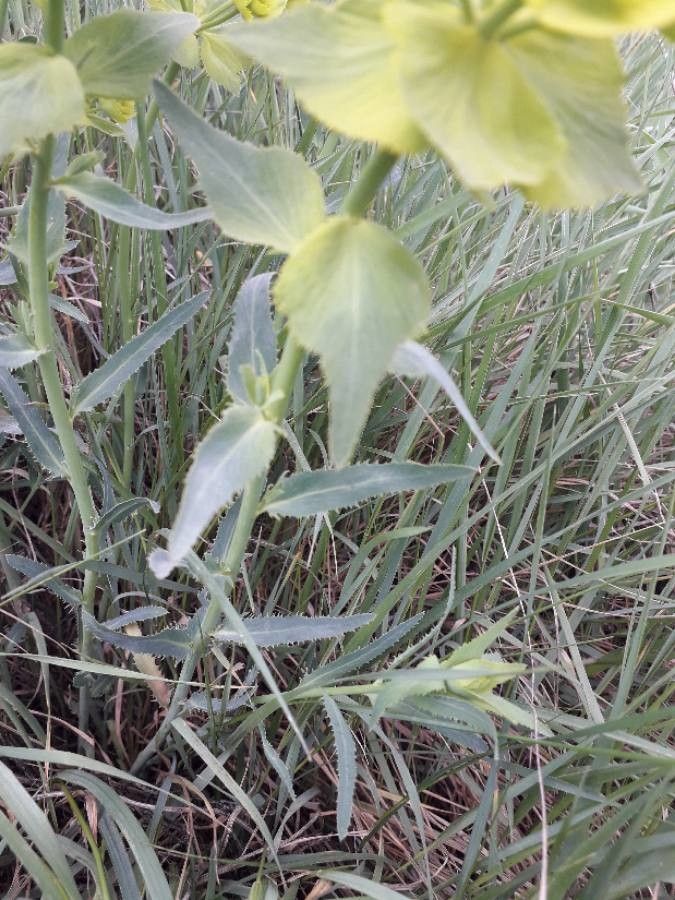
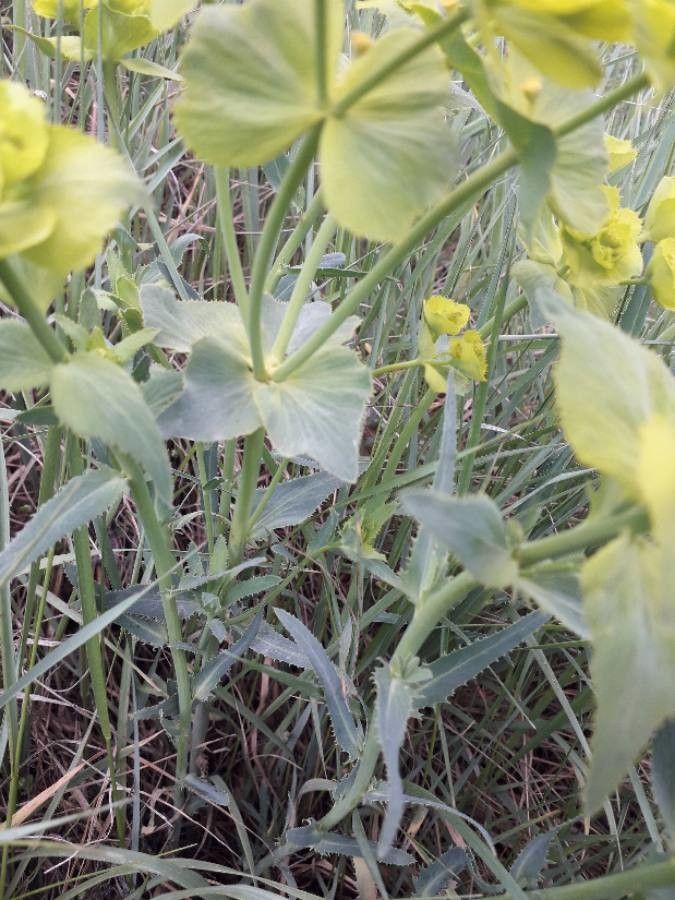
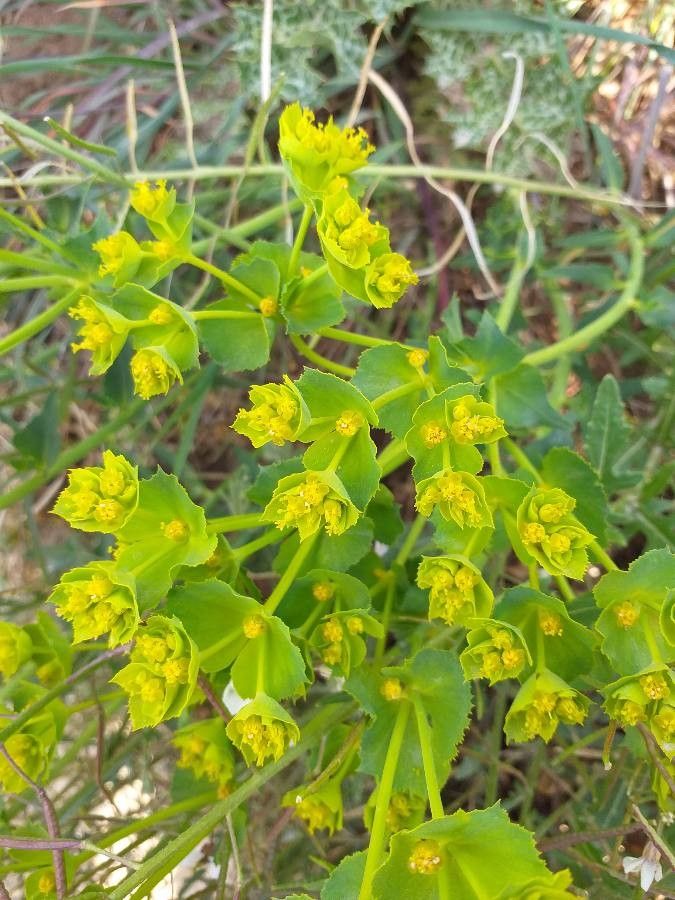
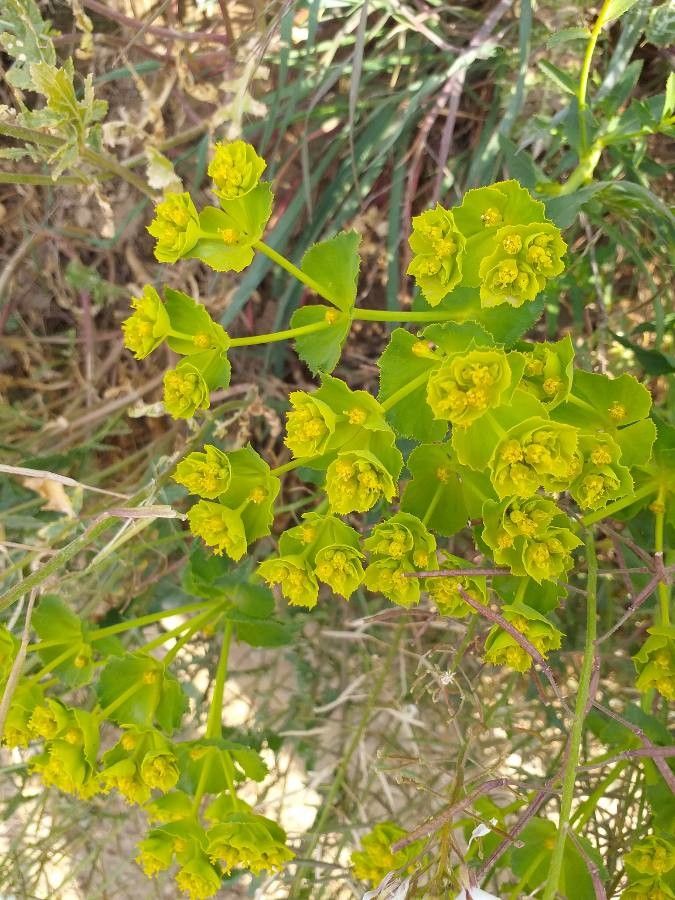
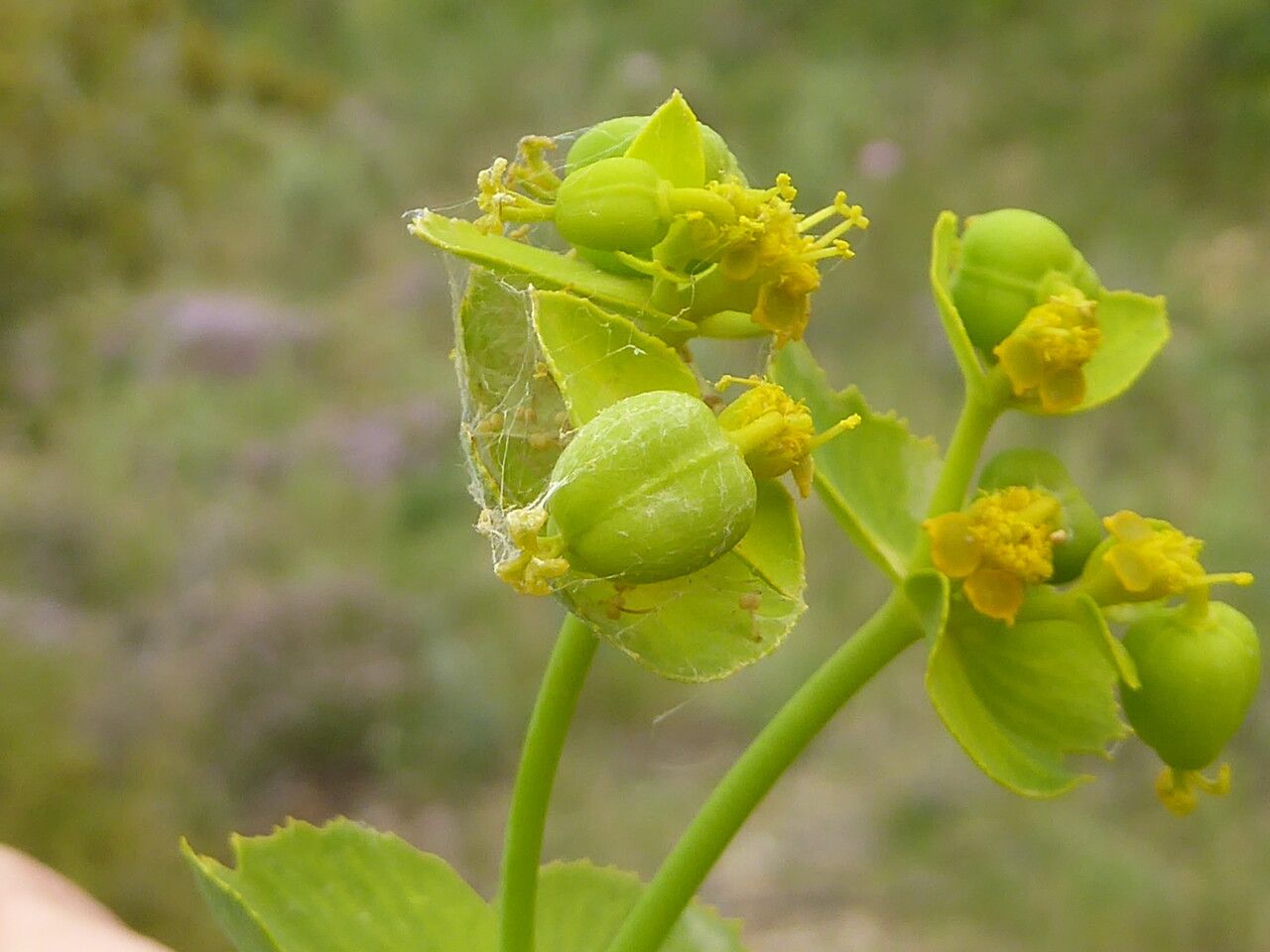
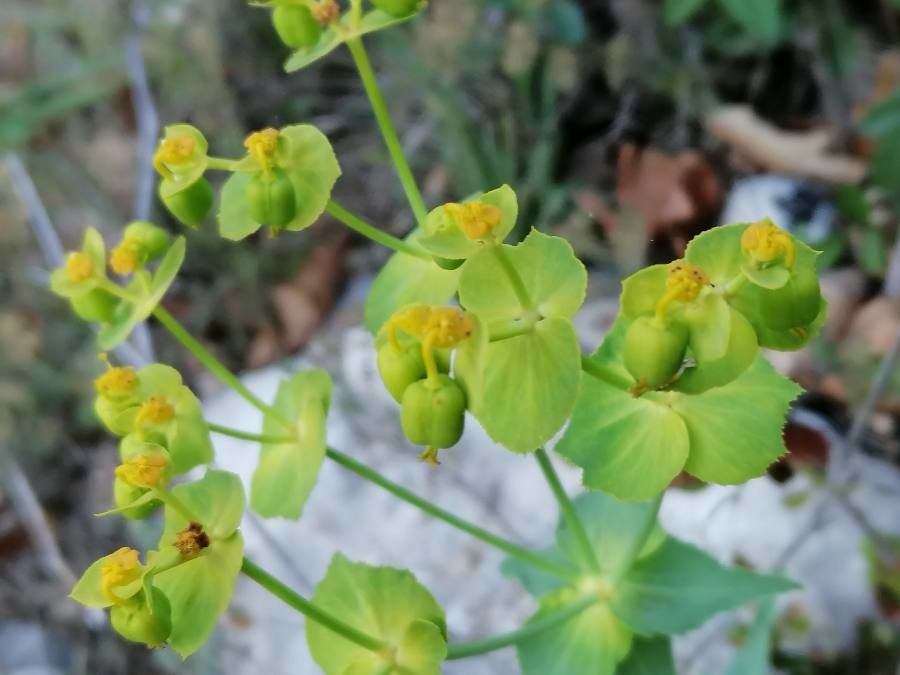
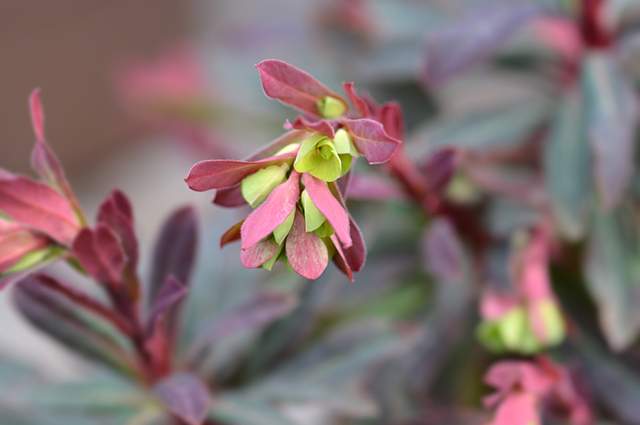
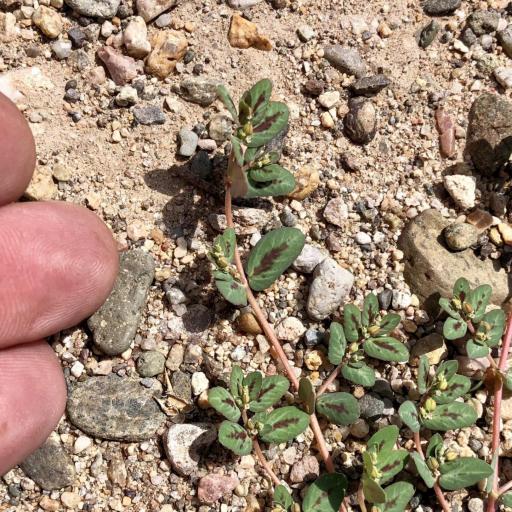
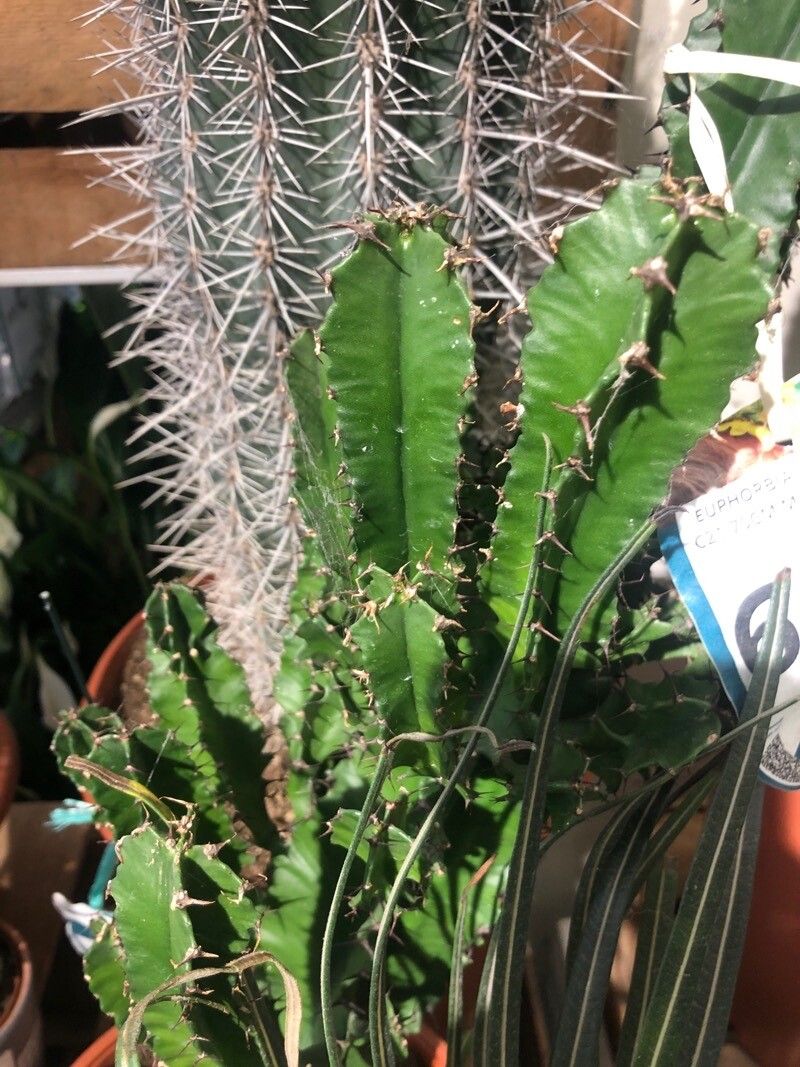
Euphorbia serrata is a species of spurge known by the common names serrated spurge and sawtooth spurge. It is native to Europe but it is present elsewhere as a weedy introduced species. This is a perennial herb growing anywhere from 20 centimetres to about half a metre in height. The leaves are long and very narrow on most of the plant, with more oval-shaped leaves toward the tips of the stems. They are finely toothed. At the ends of the branches are inflorescences of tiny flowers. The fruit is a spherical capsule about half a centimetre wide containing tiny gray seeds.
Serrate spurge is fairly disease-resistant and is generally not prone to illnesses. However, it can be affected by pests and diseases present in its surroundings. Such infections are typically not severe. In terms of care, this plant requires moderate maintenance. Regular pruning is needed to preserve a tidy appearance and support healthy growth. Fertilizing can also help encourage flowering. Serrate spurge is suitable for anyone with outdoor space, such as a garden or patio, and does not demand extensive plant-care experience. It may need more attention when grown indoors.
How to keep Euphorbia Serrata.
Light
Serrate spurge prefers spots with plenty of sun, but it also tolerates places with less intense sunlight. The plant originates from an environment rich in light, which encourages its overall development. In contrast, excessive exposure can turn the leaves yellow, while insufficient light can limit its growth.
Water
Serrate spurge, which is native to temperate regions, thrives in environments with moderate moisture and can tolerate short periods of dryness. To keep it healthy, weekly watering is essential, and using rainwater can enhance its growth during its active season. The plant's water requirements are similar to the rainfall patterns of its natural habitat.
Temperature
Serrate spurge is well adapted to temperate climates, doing best at temperatures from 50 to 95 °F (10 to 35 ℃). In colder months it may need supplemental heat or a warmer indoor location.
Fertilizer
One fertilization in spring is generally enough for Serrate spurge, though repeated feedings can maximize growth. Feed it once every month to a month and a half. Fertilizing improves the leaves’ appearance and function, encouraging even color and a healthy texture. It also promotes root development and nutrient uptake for long-term plant health.
Pruning
Serrate spurge has serrated leaves and requires pruning primarily from early to late spring. To encourage better air circulation, remove any dead stems and thin out overcrowded branches. Be sure to use clean, sharp tools to prevent the spread of disease. This process promotes flowering and enhances the plant's structure during its active growth phase.
Botanical profile.
- Plant Type
- Herb
- Life Cycle
- Perennial
- Genus
- Euphorbia
- Family
- Euphorbiaceae
- Hardiness Zone
- 6-10
- Mature Height
- 10 cm to 61 cm
- Mature Spread
- 30 cm to 49 cm
- Leaf Color
- Light Green, Pale Green
- Leaf Type
- Semi-evergreen
- Flower Color
- Yellow
- Flower Size
- 0.51 cm to 1.02 cm
- Bloom Time
- Mid spring, Late spring, Early summer
- Planting Time
- Spring, Summer
- Harvest Time
- Summer
- Native Area
- Libya, Tunisia, Portugal, Italy, Spain, Algeria, Morocco, France
Other names.
Reader questions.
How should I water my Serrate spurge plant?
To properly water the Serrate spurge, it is important to use filtered water at room temperature. Tap water should be avoided as it may contain harmful particles. This plant is accustomed to a warm environment, so using cold water can be shocking. Additionally, overhead watering should be avoided to prevent foliage issues. Instead, the filtered room temperature water should be applied to the soil until it is completely soaked. This helps to moisten the roots and support their spread through the soil to collect nutrients.
What are the sunlight requirements for Serrate spurge?
Serrate spurge thrives in full sunlight, requiring more than 6 hours of sunlight daily for optimal growth. However, it can also adapt to partial sun conditions, which provide about 3-6 hours of sunlight. Regardless of the variety, monitoring your garden's sunlight patterns is crucial to ensure that your plants get the appropriate balance of light and shade, contributing to their health and productivity.
What is the ideal climate for Serrate spurge?
Serrate spurge, or Euphorbia serrata, thrives in a temperate climate, with ideal temperatures ranging from 50 to 95 °F (10 to 35 °C). It possesses strong cold resistance and usually does not require special frost protection measures. However, in climates where winter temperatures are expected to drop below -25°C, it's crucial to provide cold protection by covering the plant with materials such as soil or straw. Before the onset of winter, it's recommended to water the plant abundantly to ensure the soil remains moist, aiding the plant through colder months.
What should I do if I give too much or too little water to my Serrate spurge?
When caring for your Serrate spurge, it is important to be cautious about both overwatering and underwatering. Overwatering is a more common issue and can cause wilting and yellowing of the stems and leaves. It can also lead to diseases like root rot, mold, and mildew, which can be fatal for the plant. Underwatering is less common because the Serrate spurge has good drought tolerance, but it can still happen and result in brittle and brown leaves. It is crucial to recognize the signs of overwatering early on as some diseases might be irreversible if not addressed promptly. If you notice these signs, reduce your watering schedule and check if the soil drains well. If it doesn't, replace it with a loose and well-draining potting mix. On the other hand, if you observe signs of underwatering, simply water your Serrate spurge more regularly until the signs disappear.
How does artificial lighting support the growth of indoor Serrate spurge plants?
Indoor Serrate spurge plants benefit significantly from artificial lighting, especially when natural sunlight is limited, such as in winter or less sunny spaces. Artificial light sources such as LED lights are recommended because they can be tailored to provide specific wavelengths needed by plants. For full sun plants, 30-50W/sq ft of artificial light is needed, for partial sun plants, 20-30W/sq ft, and for full shade plants, 10-20W/sq ft. The light source should be placed 12-36 inches above the plant, and the lighting duration should mimic natural daylight hours, typically 8-12 hours per day.
How does low temperature affect Serrate spurge, and what are the solutions?
Serrate spurge is highly cold-tolerant, optimally thriving when temperatures are above 10°C. Despite its resilience, during winter, it's advised to keep the plant above -15°C. If temperatures fall below -25°C, the plant may not show immediate distress, but there can be a noticeable decrease in sprouting, or it may not sprout at all come spring. To counteract this, it's recommended to remove any parts of the plant that have failed to sprout in spring, fostering healthier regrowth.
How frequently do I need to water my Serrate spurge plant?
If your Serrate spurge plant is in a pot, the most precise way to determine if it needs water is by checking the soil. Simply stick your finger into the soil and if the top two to three inches are dry, it's time to water. If your Serrate spurge is grown outdoors in the ground, you can use the same method to test the soil. Again, if the top few inches are dry, it's time to water. Usually, during the spring and early fall, watering once a week will suffice. However, during extremely hot weather, you may need to water twice a week or more. It's worth noting that mature, well-established Serrate spurge plants can endure drought well.
What are the symptoms of inappropriate lighting conditions for Serrate spurge?
Serrate spurge reveals several symptoms when exposed to inadequate lighting conditions. Small and lighter-colored new leaves indicate insufficient sunlight, while leggy growth or faster leaf drop signals too little light. Conversely, symptoms like chlorosis, sunscald, leaf curling, wilting, and leaf scorching occur due to excessive sunlight exposure. These signs indicate the plant's struggle with the lighting conditions, affecting its growth and overall health.
How does high temperature affect Serrate spurge, and what are the solutions?
During the summer months, it's crucial to ensure that Serrate spurge is kept in temperatures below 35°C. Exceeding 41°C can lead to symptoms such as leaves becoming lighter, prone to curling, sunburn, and in severe cases, the plant may wilt and become dry. To alleviate these issues, the sunburned and dried parts should be trimmed away. Additionally, moving the plant to a location that provides shade during the midday and afternoon sun, or using a shade cloth, can offer protection. It's also beneficial to water the plant in the morning and evening to maintain soil moisture.
How much water does my Serrate spurge require?
When watering your Serrate spurge, don't be afraid to give it a good amount of water. Make sure that the first two to three inches of soil are dry before watering, and then give it a thorough watering so the soil is completely soaked. Add enough water so that it flows out of the drainage holes at the bottom of the pot. If you don't see any excess water draining, it means you haven't given enough water. However, be careful not to let water build up in the soil, as this can harm the plant. Also, if water isn't draining properly from the pot, it could be a sign of poor soil drainage, which is bad for the plant's health. If the plant is outdoors, it should receive about 1 inch of rain per week.
What solutions can help improve the growth of Serrate spurge in inadequate lighting conditions?
To support Serrate spurge growth in inadequate lighting conditions, gradually introduce the plant to more sunlight or employ artificial lighting. For outdoor plants, shifting them to sunnier spots over several weeks helps avoid sunburn while adapting to increased light. Indoors, using desk lamps or professional grow lights for at least 8 hours a day can substitute for natural sunlight. If the plant is too large to move, pruning surrounding obstructions or considering transplantation during dormant periods could enhance sunlight exposure. Remember, while adjusting lighting, new growth will be healthy, but parts of the plant already damaged by previous conditions may not recover.
How do I water my Serrate spurge as it grows?
The water needs of the Serrate spurge can vary depending on its growth stages. When the spurge is young or has just been transplanted, it requires more water than usual. During these stages, the spurge focuses on developing new roots, which require extra moisture. As the spurge matures, it will need less water. Another stage that may require more water is during the bloom period when the flower development utilizes a significant amount of moisture.