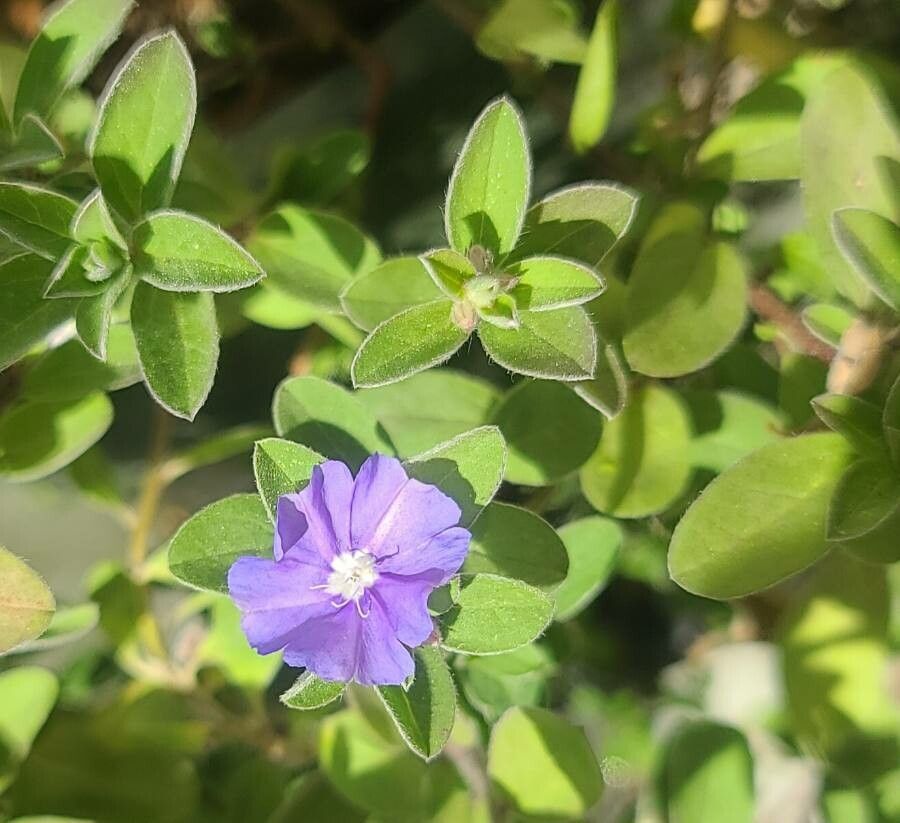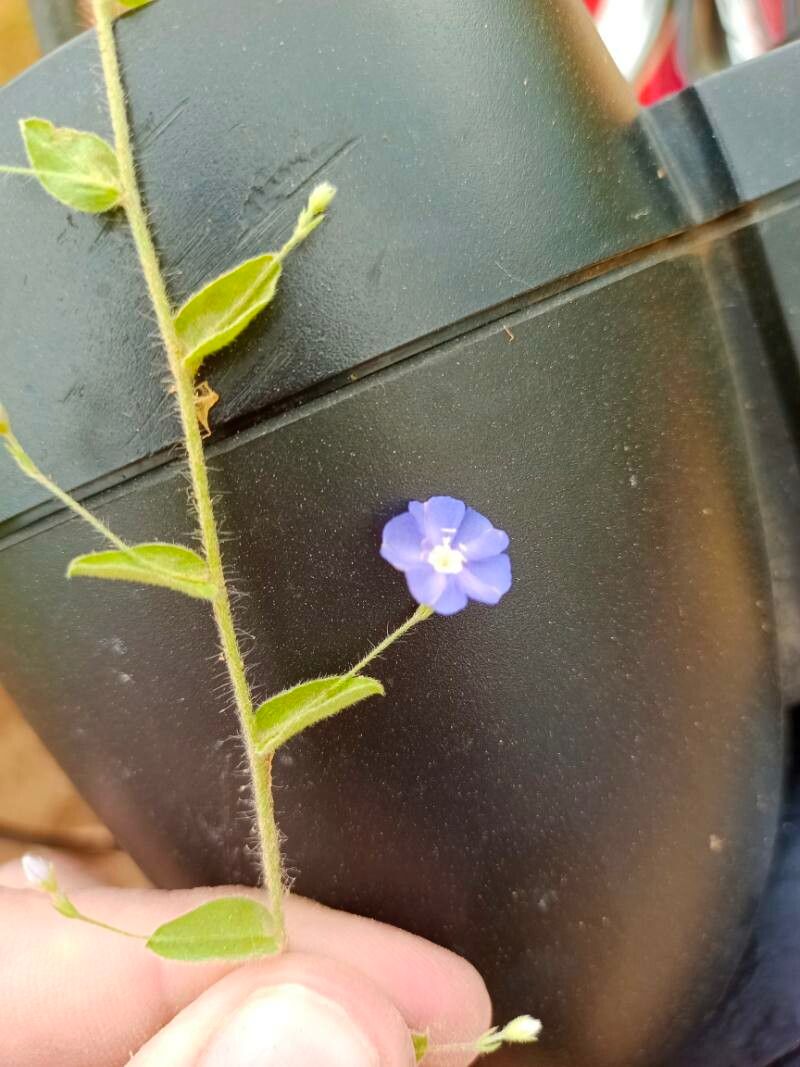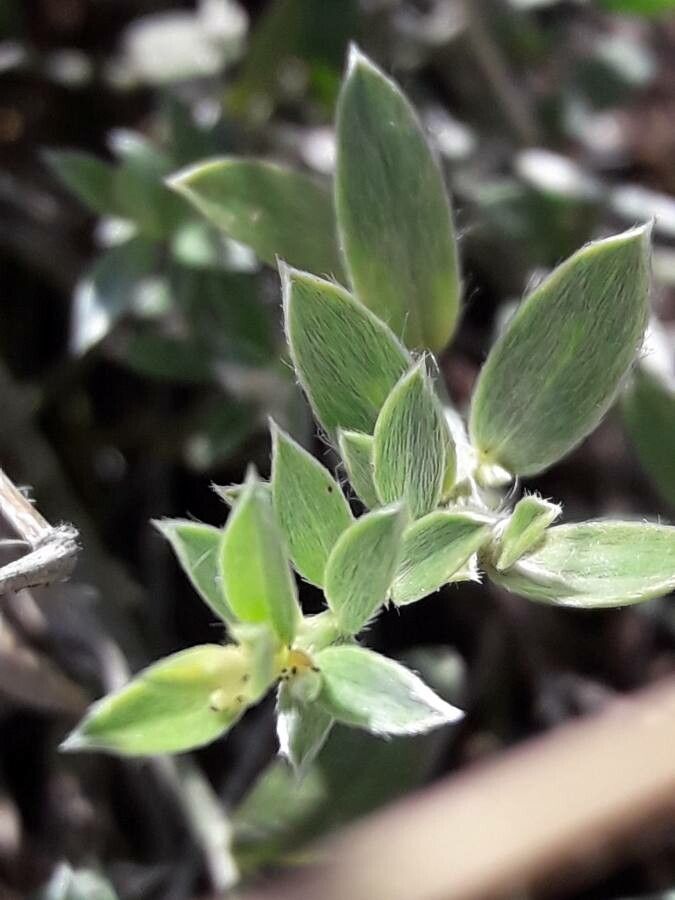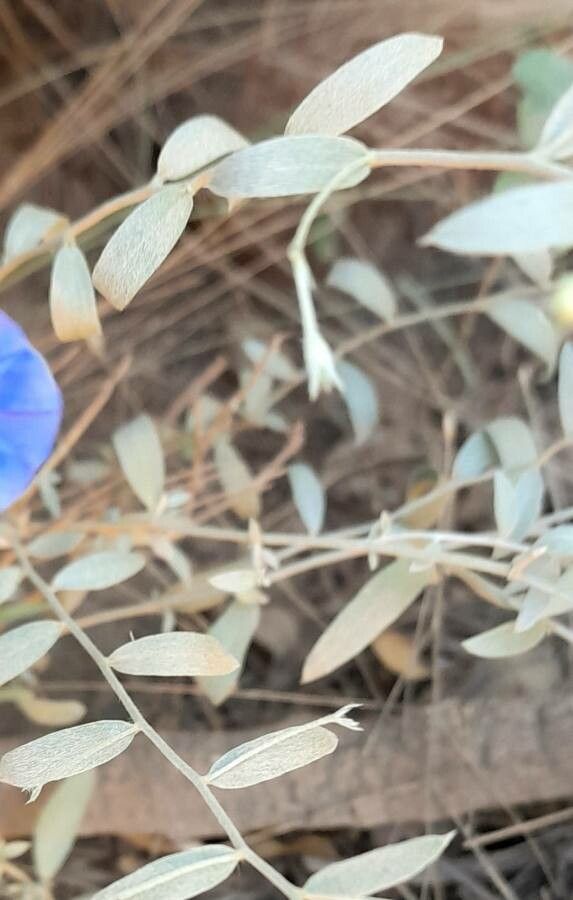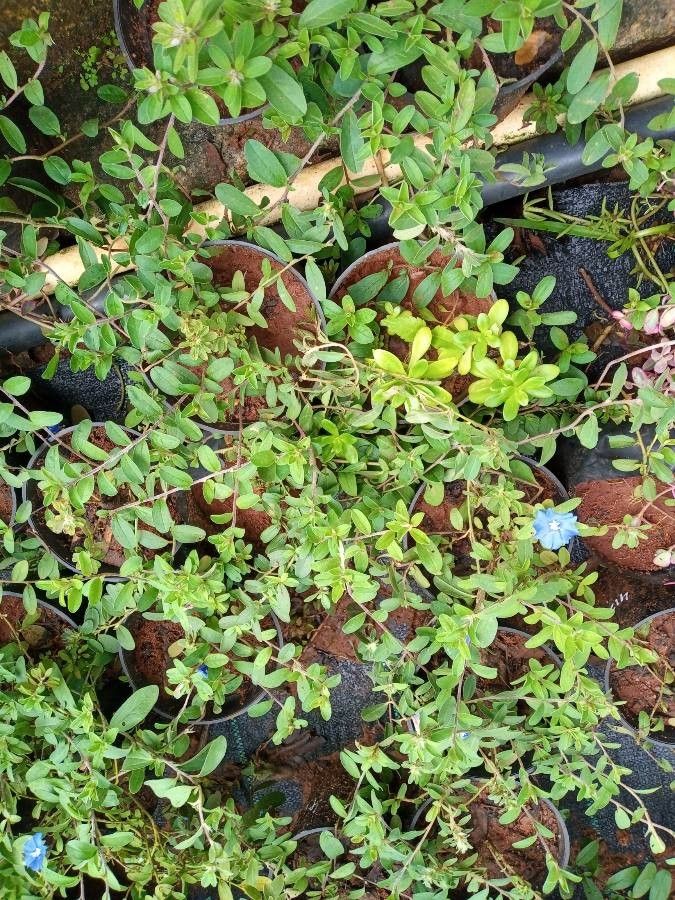
Evolvulus nuttallianus, commonly known as Nuttall's Evolvulus, is a perennial plant species belonging to the Convolvulaceae family. Native to the southern United States and Mexico, it thrives in various habitats, including sandy beaches, dunes, and disturbed areas.
This plant exhibits a prostrate growth habit, with stems reaching up to 1 meter in length. Its small, linear leaves, arranged alternately, measure about 1-2 cm long. The flowers are either blue or purple, featuring five petals fused at the base to form a funnel-shaped corolla.
Nuttall's Evolvulus is favored as an ornamental plant due to its striking blue flowers, which bloom from spring through fall. It requires full sun exposure and well-drained soil for optimal growth, although it can tolerate some drought conditions once established.
Traditionally, indigenous people of Mexico have used this plant for medicinal purposes, such as treating fever, headaches, and stomachaches.
Overall, Nuttall’s Evolvulus is an easy-to-grow perennial that adds beauty to any garden or landscape while also offering medicinal benefits as recognized by traditional healers within its native range.
Shaggy dwarf morning-glory has strong disease resistance and is generally not prone to illnesses. Still, it can be affected by pests and diseases present in its environment. Such infections are typically mild. Regarding care, this plant requires moderate maintenance. It should be pruned regularly to keep a good appearance and healthy growth. Fertilizing can also help encourage flowering. Shaggy dwarf morning-glory is suitable for anyone with an outdoor area, such as a garden or patio, and does not demand extensive care experience. It may need more attention if grown indoors.
How to keep Evolvulus Nuttallianus.
Light
Shaggy dwarf morning-glory prefers full sun but also does well with a mix of sun and shade. It comes from habitats with abundant sunlight, which is why it thrives under those conditions. If light is unbalanced, its vigor can decline, causing stunted growth or yellowing leaves.
Water
The shaggy dwarf morning-glory flourishes in dry regions, showcasing impressive drought tolerance and efficient water retention strategies. It needs minimal watering, approximately once a week, and thrives best in full sunlight. Its growth cycle is influenced by the availability of water, which affects its dormant periods and blooming phases.
Temperature
Shaggy dwarf morning-glory does well in its native growing environment, which has particular temperature needs. It favors temperatures between 5 and 35 °C (41 and 95 °F). Being a temperate woody plant, it adjusts well to a variety of climates. Seasonal temperature changes may call for adjustments. In colder times, it should be protected from frost and given moderate warmth. During hotter seasons, providing adequate shade and proper watering supports its overall health and vitality.
Fertilizer
One fertilizer application in spring is generally enough for Shaggy dwarf morning-glory, though repeated feedings can help it reach its fullest growth. Apply fertilizer roughly every month to six weeks. Fertilizing improves the leaves’ look and function, helping them maintain even color and a healthy texture. It also encourages root development and better nutrient uptake, supporting the plant’s long-term health.
Pruning
The Shaggy Dwarf Morning-Glory is known for its vibrant blue flowers and trailing growth habit, and it requires minimal pruning. The best time to prune this plant is from early to late spring. Focus on removing dead or damaged stems and doing some light shaping. Regular pruning encourages bushier growth and helps the plant maintain its compact form. Be sure to use clean tools to prevent the spread of disease.
Pot & Repot
When repotting Shaggy dwarf morning-glory, choose a pot 1–2 inches (2.5–5.1 cm) larger with ample drainage. Use a well-draining potting mix. Repot in spring or fall, ensuring that the root ball is slightly lower than the rim of the flower pot. Water thoroughly after repotting and place in a warm spot with indirect sunlight.
Botanical profile.
- Plant Type
- Herb
- Life Cycle
- Perennial
- Genus
- Evolvulus
- Family
- Convolvulaceae
- Hardiness Zone
- 4-10
- Mature Height
- 30 cm to 46 cm
- Mature Spread
- 30 cm to 46 cm
- Leaf Color
- Green, Blue, Bronze, Brown
- Leaf Type
- Deciduous
- Flower Color
- Purple, Blue, Lavender
- Flower Size
- 2.54 cm
- Bloom Time
- Late spring, Early summer, Mid summer
- Planting Time
- Spring
- Harvest Time
- Summer
- Native Area
- Mexico
Other names.
Reader questions.
What are the sunlight requirements for Shaggy dwarf morning-glory?
Shaggy dwarf morning-glory requires full sun, which means it needs above 6 hours of sunlight daily, but it can also thrive in partial sun with about 3-6 hours of sunlight. It is essential to watch how sunlight moves through your garden to choose spots that offer the perfect balance of light and shade, ensuring the plants' happiness. This species flourishes in environments with abundant sunlight, benefitting from a blend of sunlight and shade. An imbalance in light exposure can affect its health, potentially stunting growth or causing leaves to yellow.
What are the ideal temperature conditions for Shaggy dwarf morning-glory?
Shaggy dwarf morning-glory, or Evolvulus nuttallianus, thrives in temperatures ranging from 5 to 35°C (41 to 95°F). This temperate woody plant adapts well to various climates, though temperature adjustments are necessary across different seasons. In the cold, it's crucial to protect the plant from frost while providing moderate warmth. Conversely, during hot periods, it's essential to ensure the plant has adequate shade and watering. Notably, this plant possesses strong cold resistance, and special frost protection measures are generally not needed, except in extremely cold conditions where temperatures are expected to drop below -30°C. To prepare for winter, watering the plant abundantly before the first freeze is recommended to keep the soil moist.
How can artificial lighting be used for Shaggy dwarf morning-glory?
Indoor Shaggy dwarf morning-glory plants require adequate lighting for optimal growth, especially when natural sunlight is insufficient. Artificial lights, like LED lights, which can be customized to provide specific wavelengths needed by the plants, are a vital solution. Full sun plants need 30-50W/sq ft, partial sun plants need 20-30W/sq ft, and full shade plants need 10-20W/sq ft of artificial light. The light source should be placed 12-36 inches above the plant to mimic natural sunlight, and most plants need 8-12 hours of light per day.
How does Shaggy dwarf morning-glory respond to low temperature conditions?
Shaggy dwarf morning-glory shows remarkable cold tolerance, ideally thriving when temperatures are above 5°C and should be kept above -25°C during winter. While it may not exhibit noticeable changes when temperatures fall below -30°C, these conditions can lead to a decrease in sprouting or an absence of sprouting in spring. As a solution, removing any parts that have failed to sprout in spring is advised.
What are the symptoms of insufficient light in Shaggy dwarf morning-glory?
When Shaggy dwarf morning-glory receives inadequate lighting, symptoms might include small leaves, leggy or sparse growth, faster leaf drop, slower or no new growth, lighter-colored new leaves, chlorosis, sunscald, leaf curling, wilting, and leaf scorching. These symptoms indicate a lack of chlorophyll and essential nutrients, damage from intense sunlight exposure, defense mechanisms against overexposure, or difficulties in maintaining hydration due to excessive sunlight.
What should be done if Shaggy dwarf morning-glory experiences high temperatures?
In the summer, when temperatures soar above its tolerance level of 35°C, Shaggy dwarf morning-glory can exhibit signs of distress such as lighter leaf color, curled leaves, susceptibility to sunburn, and, in extreme cases, wilting and drying. To mitigate these issues, it's recommended to trim away sunburned and dried parts of the plant, relocate it to a shaded area away from direct midday and afternoon sun, or install a shade cloth. Additionally, watering the plant in the morning and evening to maintain soil moisture is beneficial.
What solutions can improve sunlight exposure for Shaggy dwarf morning-glory?
To optimize sunlight exposure for Shaggy dwarf morning-glory, you can gradually move plants to a sunnier location each week, aiming for at least 6 hours of direct sunlight daily. Utilize south-facing windows and keep curtains open for indoor plants. Consider using artificial light for larger or non-movable plants, keeping a desk or ceiling lamp on for at least 8 hours daily, or invest in professional plant grow lights. Outdoor and grounded plants should be gradually moved to sunnier spots to avoid sunburn, and it's crucial to reduce sunlight obstructions or consider transplanting smaller plants during their dormant period for better sunlight exposure.