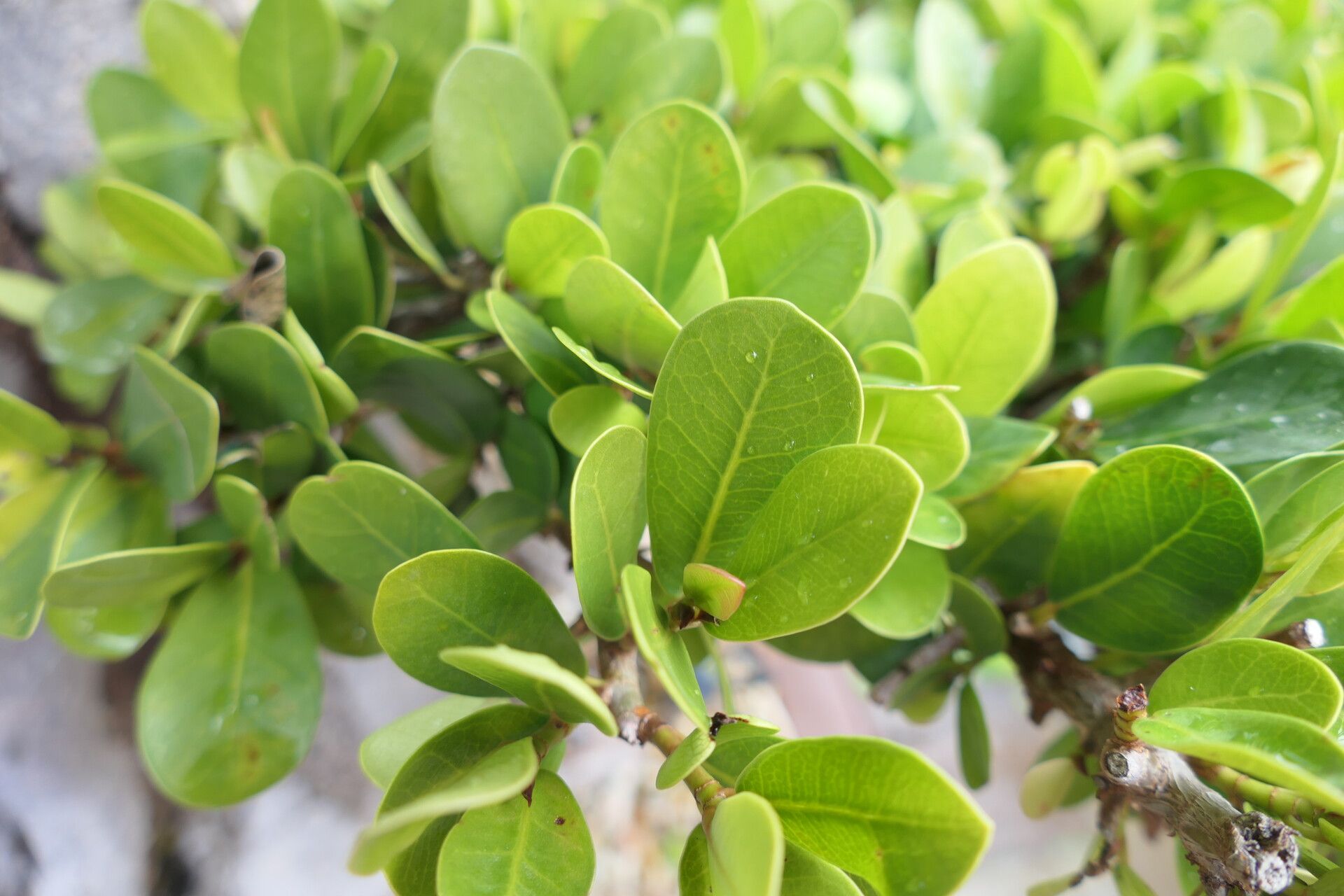
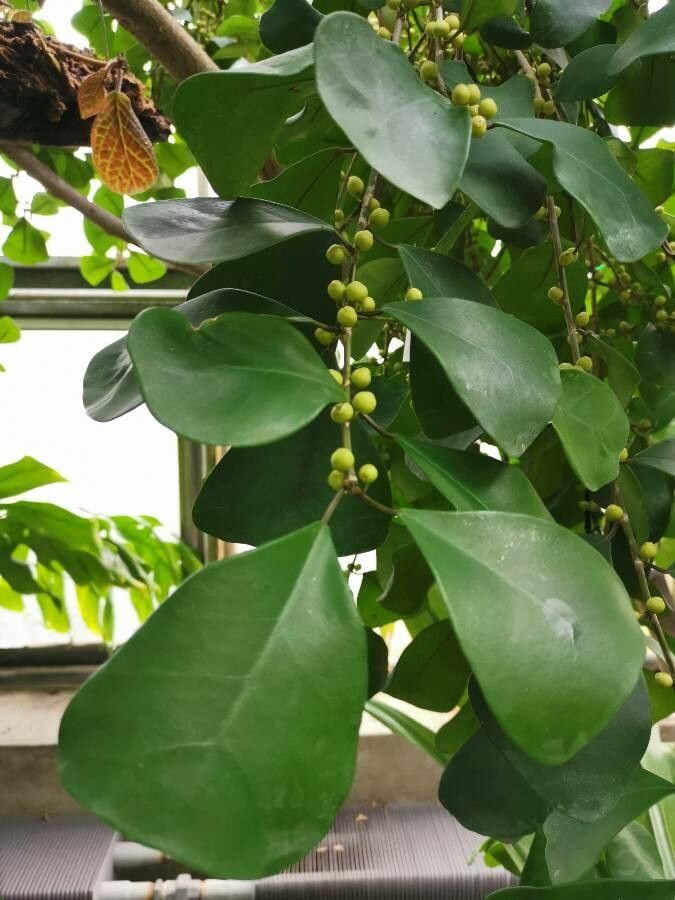
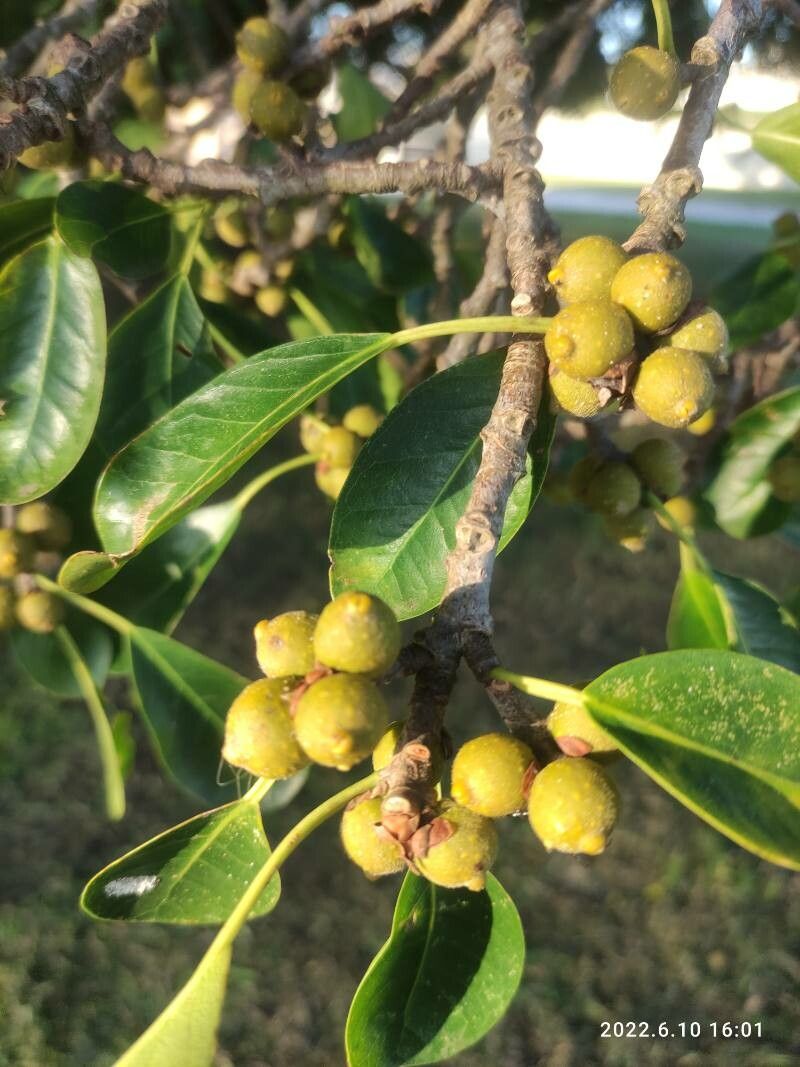
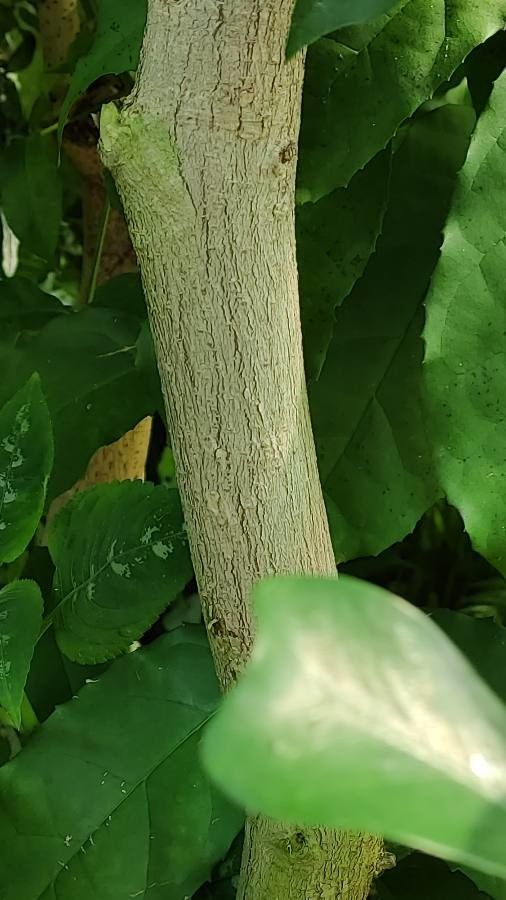
Ficus natalensis, known as the Natal fig or the Lebombo fig, is a tree species native to southern Africa. It belongs to the Moraceae family and can reach a height of up to 20 meters. The tree features a dense canopy of glossy, oval-shaped green leaves, which can grow up to 15 centimeters long.
The Ficus natalensis produces small, greenish-yellow flowers that are pollinated by wasps. The fruit is a small, fig-like structure called a syconium, containing many tiny flowers inside.
For centuries, indigenous people in southern Africa have utilized this plant for various purposes. The bark and leaves have been used in traditional medicine as antiseptic and anti-inflammatory agents, while the fruit has been consumed as food.
Ficus natalensis is also popular as an ornamental plant due to its attractive foliage and adaptability to different environments. It requires moderate watering but can tolerate drought conditions once established.
In summary, Ficus natalensis holds cultural significance in southern Africa and serves practical purposes such as medicinal use and ornamental decoration.
Botanical profile.
Other names.