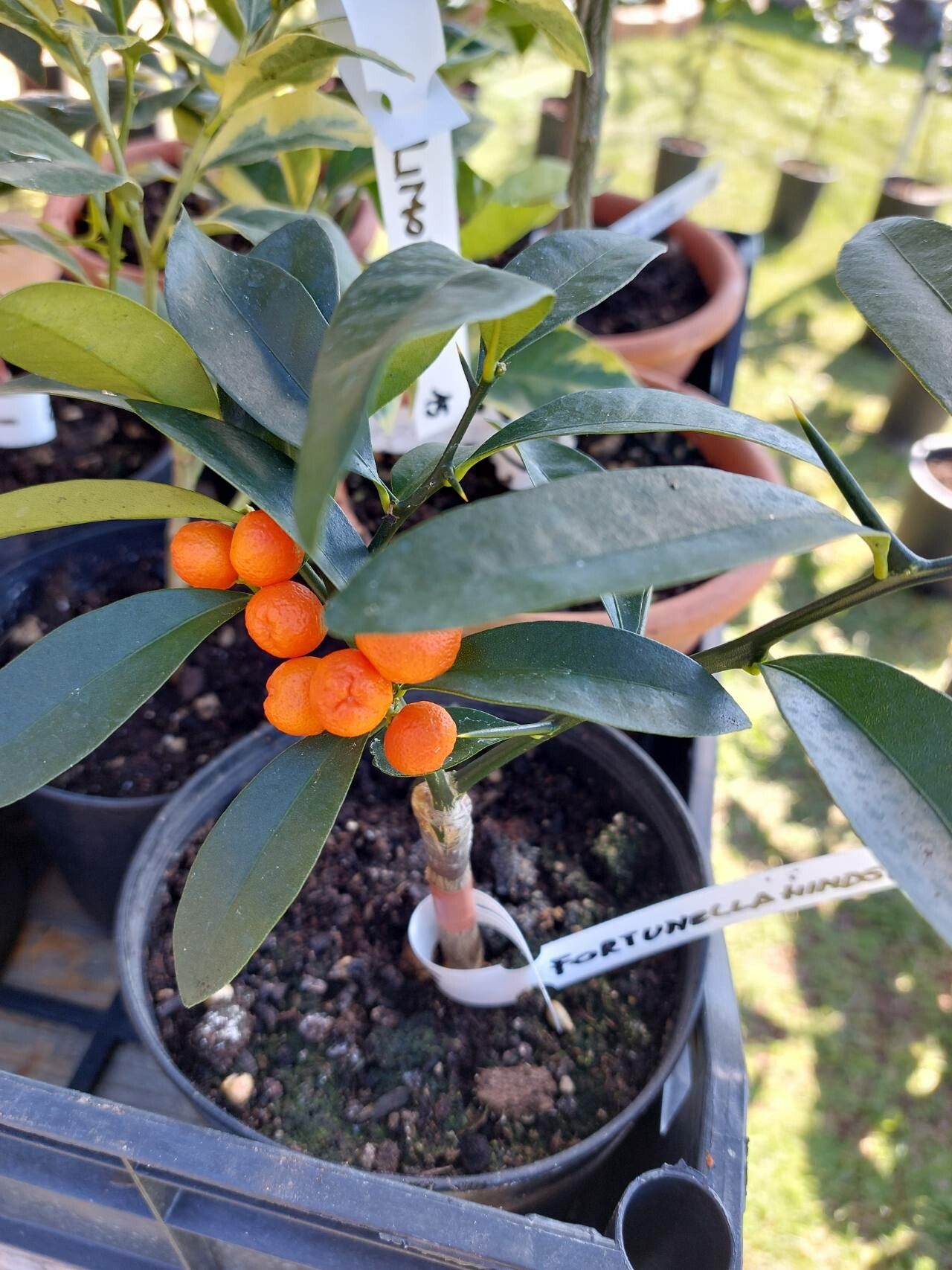
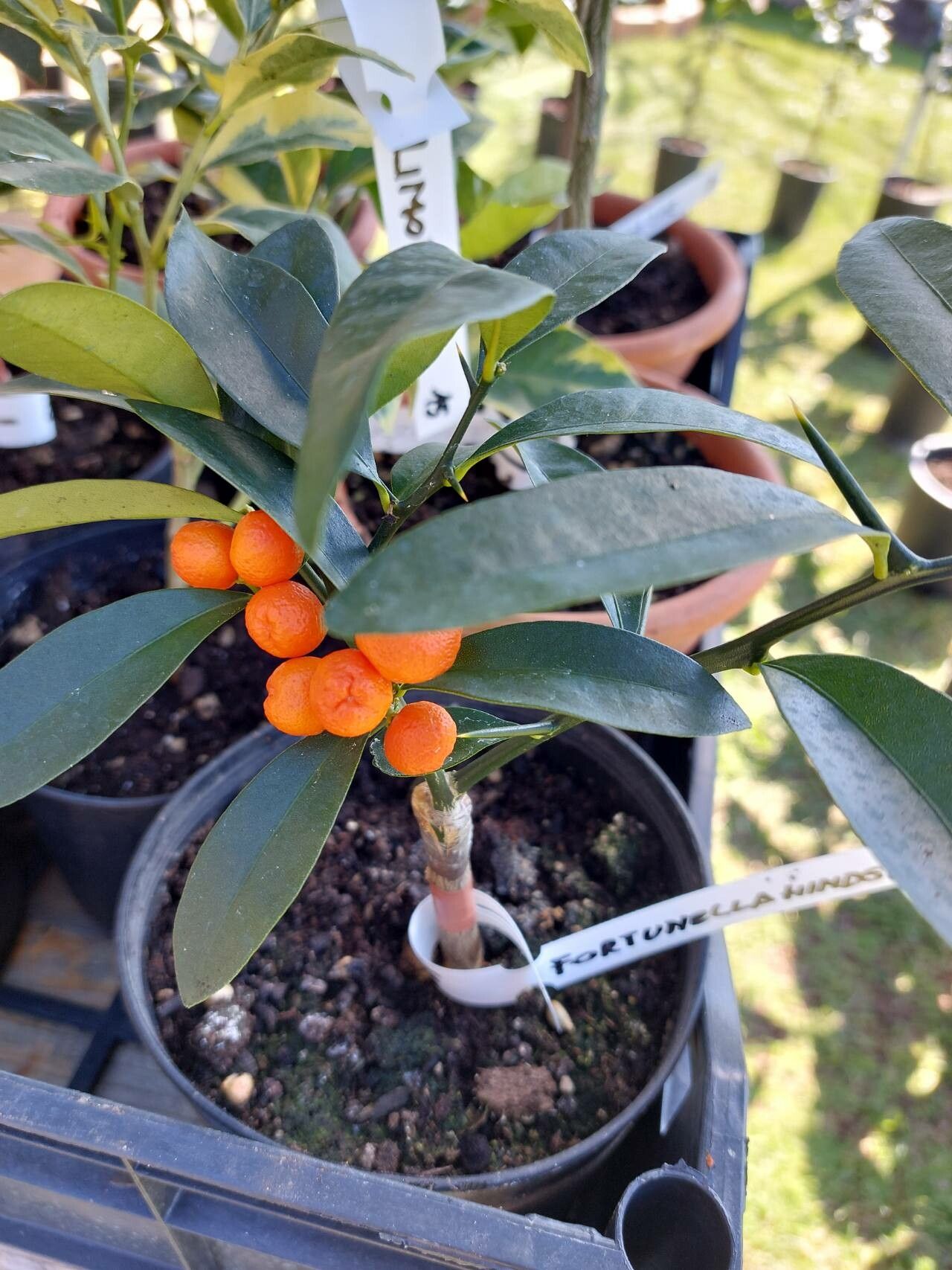
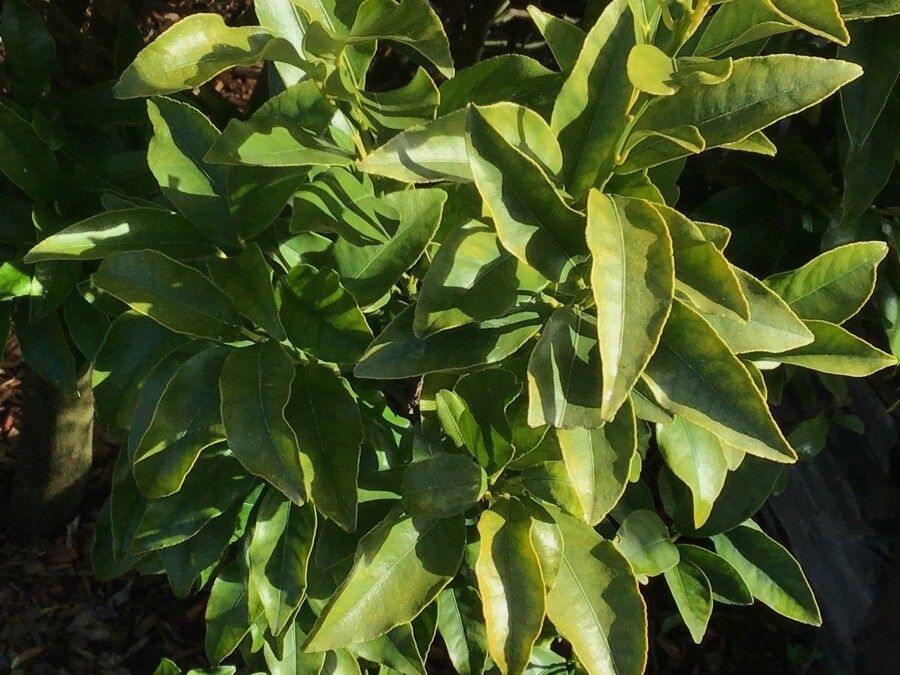
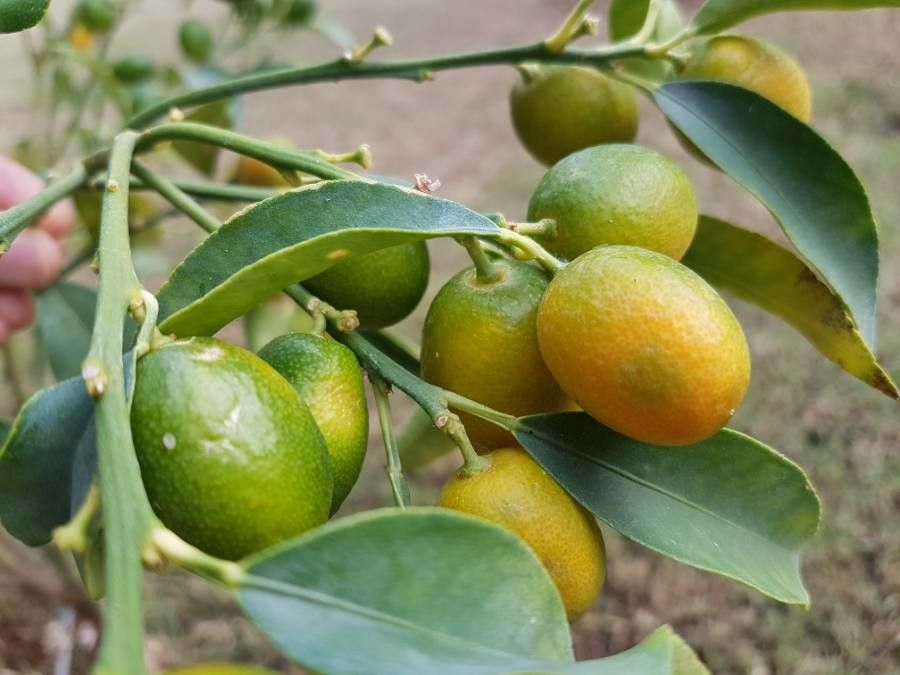
Citrus hindsii, the Hong Kong kumquat, is a species of kumquat; a type of citrus fruit in the genus Citrus, family Rutaceae. This specific name is first published in World Checklist of Seed Plants 3(1): 15 (1999). Recent phylogenetic analysis suggested that C. hindsii is a single 'true' species.
Kumquat has a high degree of disease resistance and is generally not likely to get sick. Still, it can become more vulnerable if grown in a poor environment. The plant also faces relatively few insect pests. Carewise, it has moderate needs. Adequate sunlight is essential, because inadequate light can make it more prone to disease and produce spindly growth. Since it is often grown indoors, it may need to be relocated regularly to a bright spot. It does not need to be watered frequently. All in all, Kumquat is appropriate for most people, though it is best for those who can provide strong light conditions.
How to keep Fortunella Hindsii.
Light
Kumquat prefers direct, unobstructed sunlight and does well even under a partly cloudy sky. Native to sun-rich environments, the plant has an inherent need for strong light. Insufficient sunlight can slow its growth, while excess light may cause the leaf edges to become yellowish.
Temperature
The kumquat requires warm, sunny conditions to thrive. Its native temperature-related habitat is in tropical to subtropical zones, with average temperatures of 20 to 38 ℃ (68 to 100.4 ℉). In winter, temperatures should not drop below 5 ℃ (41 ℉) to avoid cold damage. It is advisable to keep the plant in a warm, sheltered spot during the colder months.
Fertilizer
Choose organic fertilizers (e.g., fish emulsion or compost) instead of chemical fertilizers for Kumquat. Supply higher nitrogen and phosphorus to young plants during spring. Incorporate compost or fertilizer before or after planting. For mature plants, supplement in spring with a balanced fertilizer or one targeted to specific deficiencies. Nutrient deficiency causes small leaves, short branches, yellow or bronze leaves, acidic fruits, premature fruit fall, and splitting.
Pot & Repot
When repotting Kumquat, choose a pot 1-2 inches (2.5–5.1 cm) larger with ample drainage. Use a well-draining potting mix. Repot in spring or fall, ensuring that the root ball is slightly lower than the rim of the flower pot. Water thoroughly after repotting and place in a warm spot with indirect sunlight.
Botanical profile.
- Plant Type
- Shrub
- Life Cycle
- Perennial
- Genus
- Fortunella
- Family
- Rutaceae
- Hardiness Zone
- 9-11
- Mature Height
- 2.13 m to 4.88 m
- Mature Spread
- 1.83 m
- Leaf Color
- Green
- Leaf Type
- Evergreen
- Flower Color
- White
- Flower Size
- 0.51 cm to 0.76 cm
- Bloom Time
- Mid spring, Late spring, Early summer
- Planting Time
- Spring, Autumn
- Harvest Time
- Early spring, Mid summer, Late summer, Fall, Winter
- Native Area
- Vietnam, Laos, China
Other names.