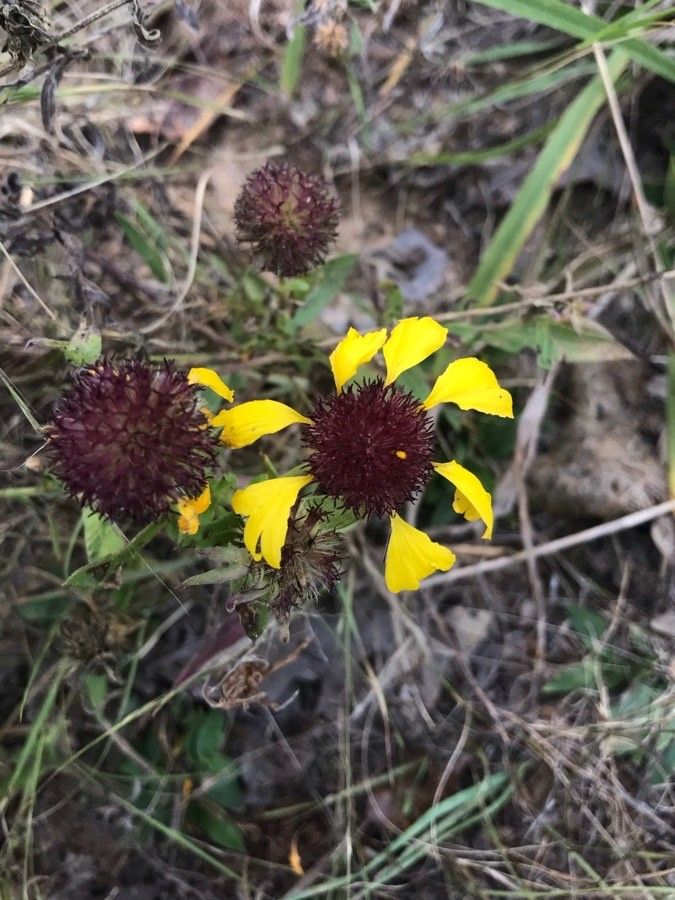
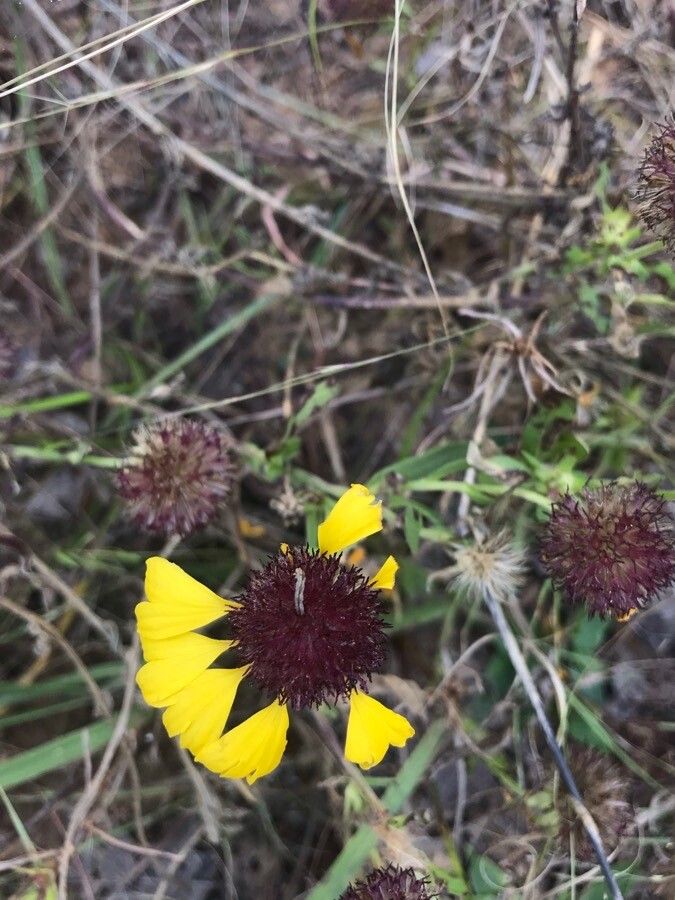
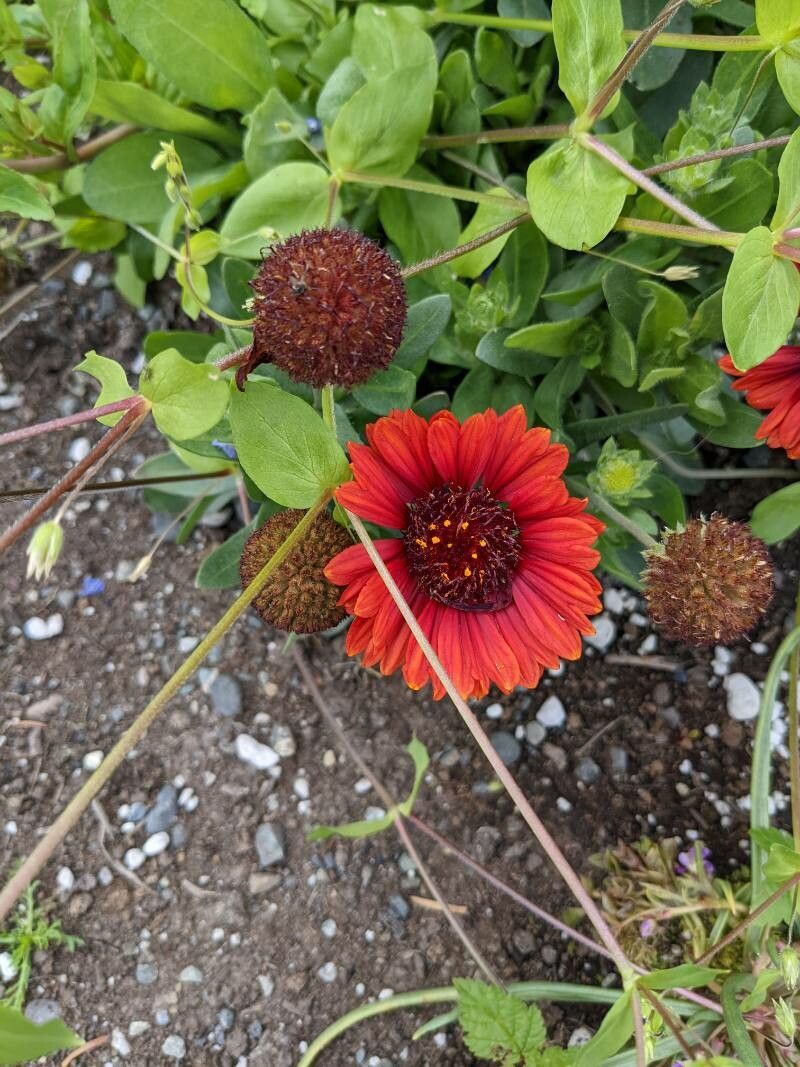
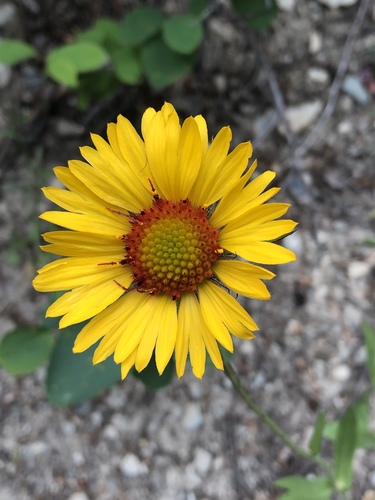
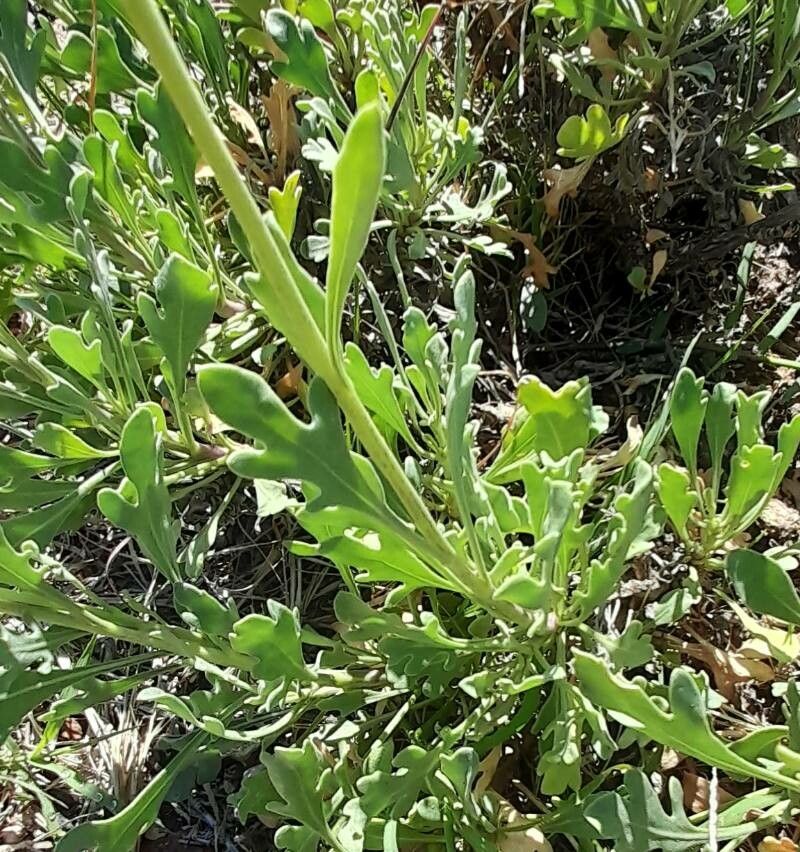
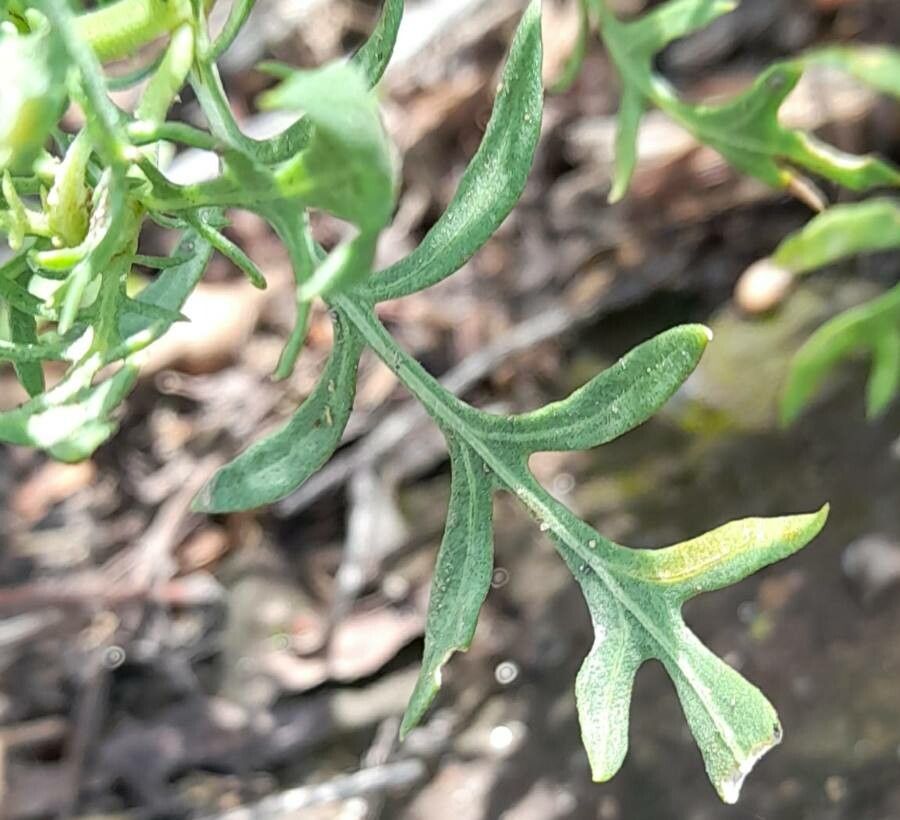
Gaillardia aestivalis is a species of flowering plant in the aster family known by the common name lanceleaf blanketflower. It is native to the south-central and southern United States from Texas east to Florida and north to the Carolinas, Arkansas, and Kansas. There are also reports of historical (now extirpated) populations in Missouri and introduced populations in Nebraska. It is also cultivated as an ornamental plant.Gaillardia aestivalis is a perennial herb, sometimes growing from a rhizome, reaching maximum heights around 60 centimeters (2 feet) or more. The leaves are borne alternately along the stem. They are variable in shape and up to 6 centimeters (2.4 inches) long. The ones toward the top may clasp the stem at their bases. The flower heads are lined with several phyllaries. There are usually 6 to 12 ray florets, sometimes up to 15, but sometimes none. These are variable in color, being purplish, yellowish, or whitish. There are many disc florets at the center, also variable in color, especially across the varieties. The fruit is an achene which may be up to a centimeter (0.4 inches) long, including its pappus of scales.There are three varieties of this plant. The rare var. winkleri (Winkler's blanketflower or white fire-wheel) is endemic to the Pineywoods of Texas.
Lanceleaf blanketflower displays strong resistance to disease and typically does not suffer from illnesses. Still, it can be vulnerable to pests and diseases present in its environment. When infections do occur, they are generally mild. Regarding upkeep, this plant needs a moderate level of care. Regular pruning is necessary to preserve an attractive appearance and encourage healthy growth. Applying fertilizer can also aid in increasing bloom production. Lanceleaf blanketflower is well suited for anyone with outdoor areas like a garden or patio and does not demand extensive gardening experience. If grown indoors, it may need a higher level of attention.
How to keep Gaillardia Aestivalis.
Light
Lanceleaf blanketflower does best with constant exposure to the sun, which improves its growth and vigor. Its native habitat, where it thrives, typically receives continuous sunlight. While it can tolerate shaded conditions, insufficient light can negatively affect its growth and flowering period.
Water
Adapted to intermittent moisture, the lanceleaf blanketflower is moderately drought-tolerant and typically requires watering every 1-2 weeks for optimal growth. Thriving in outdoor environments, it flourishes best when soil moisture mimics its native precipitation patterns, which is crucial during its active growing season.
Temperature
Lanceleaf blanketflower is native to temperate regions and performs best at temperatures from 68 to 95 °F (20 to 35 ℃). In extreme climates, seasonal adjustments may be required to keep temperatures within its preferred range.
Fertilizer
The best time to fertilize a Lanceleaf blanketflower is in early spring, as it comes out of dormancy and begins active growth. Applying fertilizer supplies essential nutrients for healthy development. While Lanceleaf blanketflower has fairly low fertilizer requirements, an annual feeding can improve its survival and encourage stronger, longer-lasting blooms.
Pruning
The Lanceleaf blanketflower is known for its vibrant blooms and strong resistance to diseases. To promote optimal growth and flowering, it's best to prune the plant from early to late spring. Be sure to trim away spent blooms and dead stems, and always use clean tools to enhance air circulation and maintain the plant's overall health.
Botanical profile.
- Plant Type
- Herb
- Life Cycle
- Perennial, Annual
- Genus
- Gaillardia
- Family
- Asteraceae
- Hardiness Zone
- 4-8
- Mature Height
- 30 cm to 46 cm
- Mature Spread
- 20 cm to 30 cm
- Leaf Color
- Green, Gray, Silver
- Leaf Type
- Semi-evergreen
- Flower Color
- Red, Yellow
- Flower Size
- 2.54 cm to 7.62 cm
- Bloom Time
- Summer, Fall
- Planting Time
- Spring, Summer
- Harvest Time
- Late summer, Fall, Early winter
Other names.
Reader questions.
What are the sunlight requirements for Lanceleaf blanketflower?
The Lanceleaf blanketflower requires full sun, which means it needs above 6 hours of sunlight daily, to thrive best. It can also tolerate partial sun, about 3-6 hours of sunlight. It's important to observe how sunlight moves through your garden to ensure that your plants are planted in spots that offer the perfect balance of light and shade, ensuring their happiness and growth.
What essentials should I be aware of for growing Lanceleaf blanketflower?
Lanceleaf blanketflower thrives under constant exposure to the sun, which is crucial for its growth and vitality. Originating from habitats that experience continual sunlight, it can endure some shade but might show reduced growth and fewer blooms if the light is insufficient. For indoor plants lacking natural light, especially during winter or in less sunny spaces, artificial lighting can be a significant aid. Choose the right kind of artificial light, such as LED lights, and ensure you provide 30-50W/sq ft for full sun plants, 20-30W/sq ft for partial sun, and 10-20W/sq ft for shade-loving plants. The light source should be placed 12-36 inches above the plant for optimal mimicry of natural sunlight, and most plants will need 8-12 hours of light per day.
What are the important symptoms of light deficiency in Lanceleaf blanketflower?
When Lanceleaf blanketflower experiences inadequate lighting, you may observe symptoms such as smaller new leaves compared to mature ones, leggy or sparse growth, and a faster drop of older leaves. The plant may halt in growth or show no new growth as it enters survival mode. Leaves might develop lighter colors or irregular patterns, indicating a lack of chlorophyll and essential nutrients. Conditions like chlorosis, sunscald, leaf curling, wilting, and leaf scorching can also occur, affecting the plant's overall health.
How can I address light deficiency problems in Lanceleaf blanketflower?
To combat light deficiency in Lanceleaf blanketflower, gradually move the plants to a sunnier spot each week until they receive at least 6 hours of daily sunlight. Use south-facing windows and keep curtains open during the day for indoor plants. If the plant is large or not easily movable, consider using artificial lighting for at least 8 hours daily. For outdoor plants, avoid sudden changes in light intensity to prevent sunburn. Observe and reduce obstructions like trees by pruning if necessary. For smaller plants considering transplanting, do so during their dormant period with careful handling of roots and ensuring the new location has ample sunlight and good drainage.