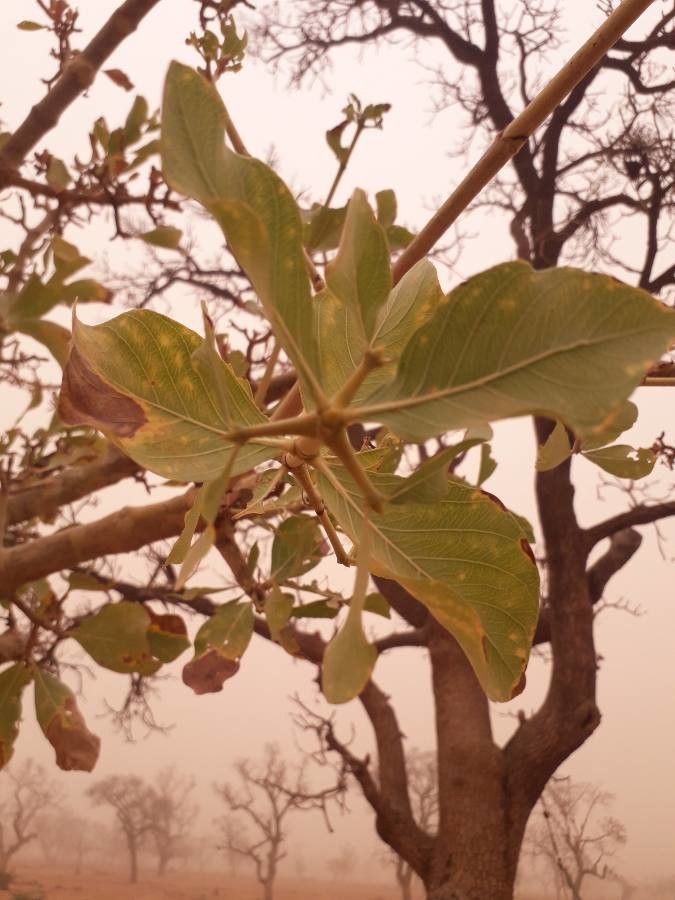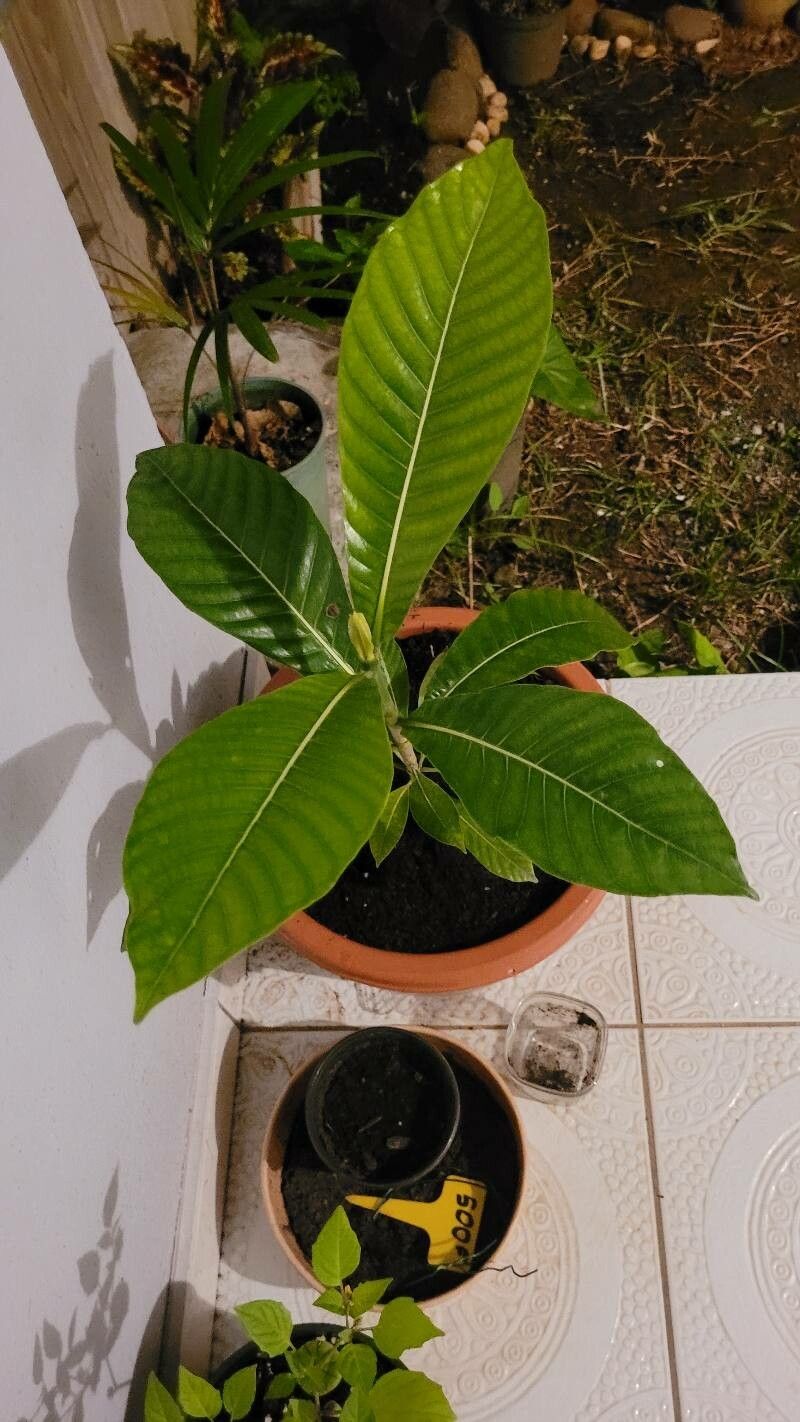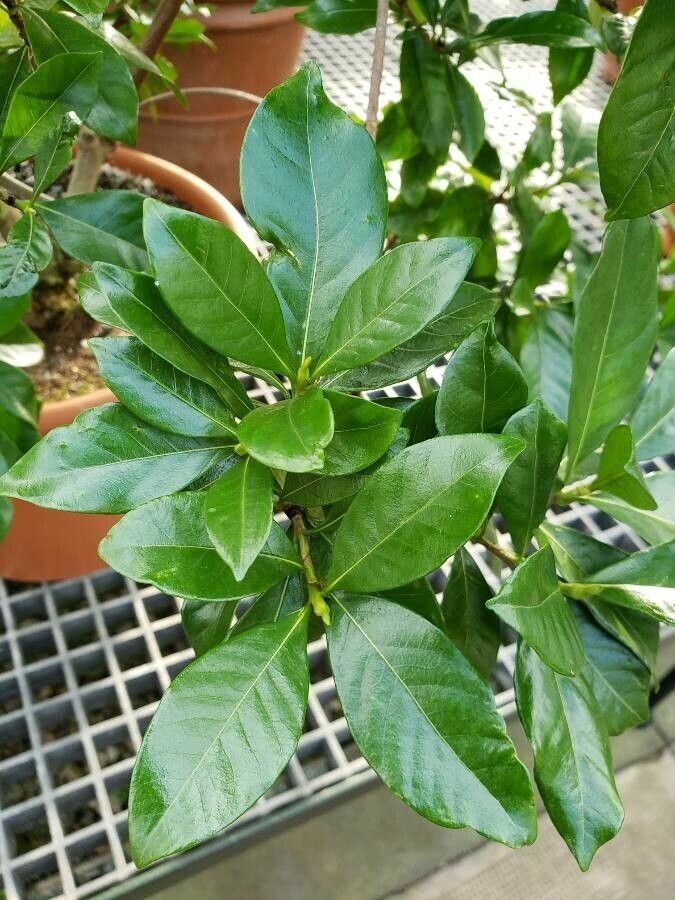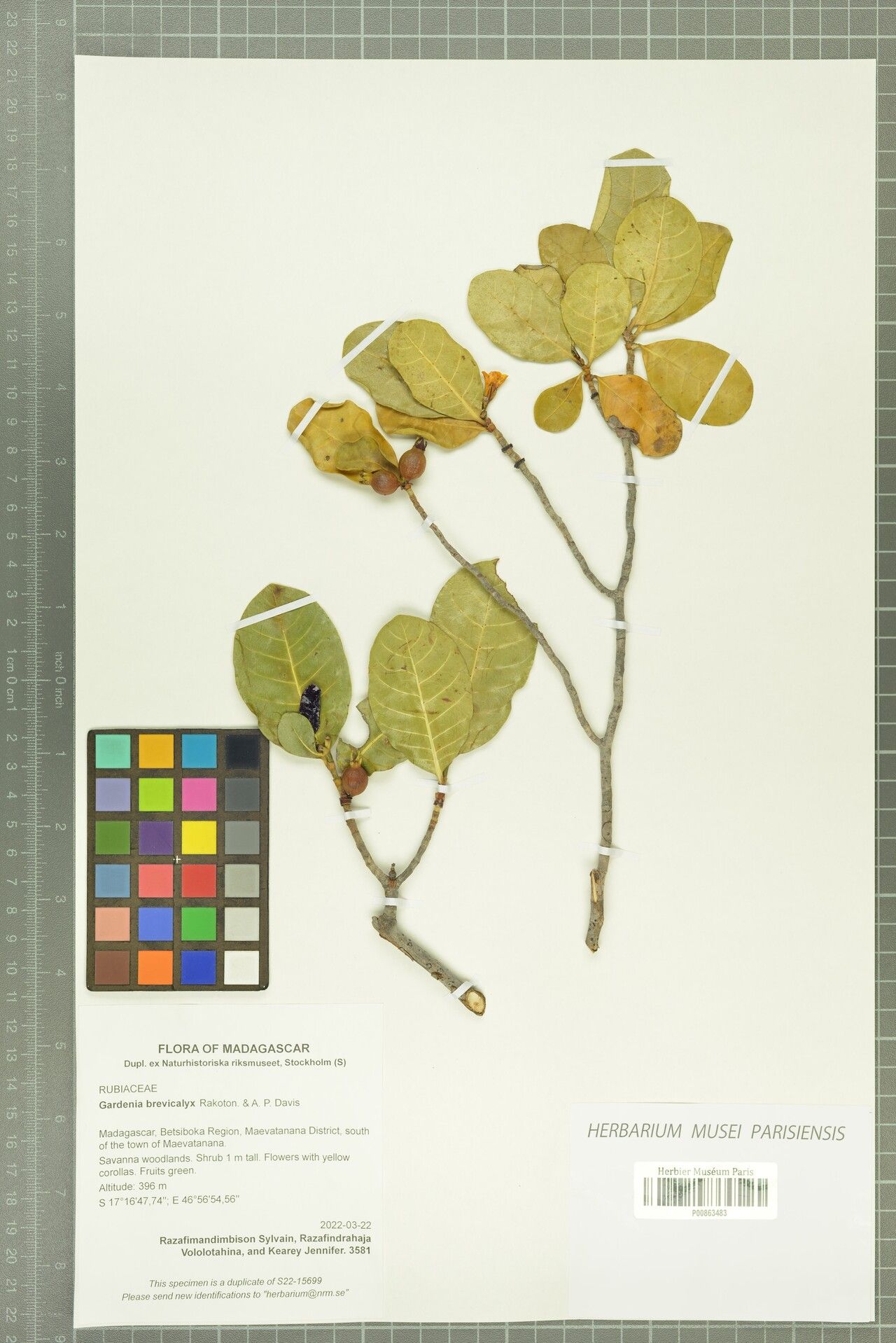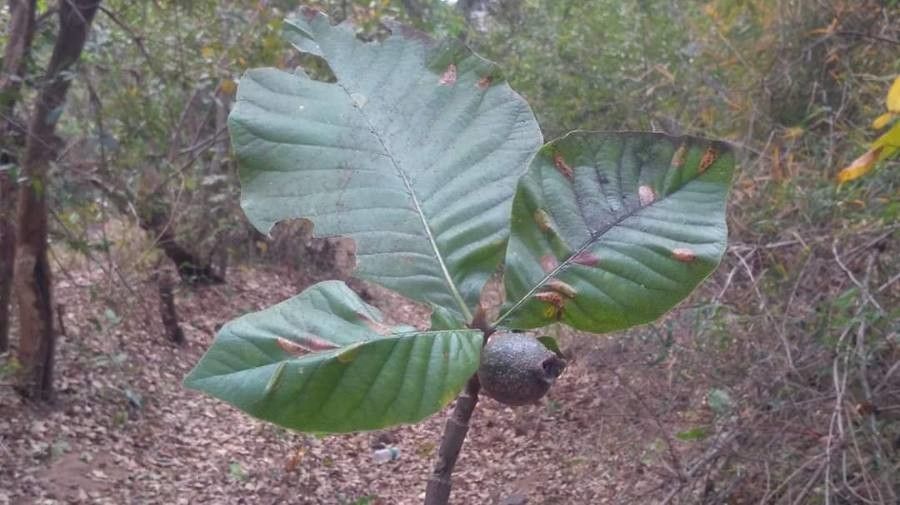
Gardenia latifolia, also called papra or Hindi:पापडा, Bengali: যোজনগন্ধা, Tamizh: Kattu marikalam or Kumbai is medium-sized to large, long-lived tree of family Rubiaceae. Its English common name is Indian Boxwood or Ceylon Boxwood. It is found in the forests of Madhya Pradesh in India, and has been widely cultivated elsewhere, to the point of naturalization, especially in Nigeria, West Africa where the tree is highly valued for both its fruit and shade. Indian boxwood is a small deciduous tree or large shrub, which often grows on other small plants, which it eventually kills, the way Figs do. Bark is greenish-grey, peeling and leaving smooth, concave, rounded depressions. Oppositely arranged, or whorled leaves have very short stalks, and are oval to obovate, smooth, with a small hairy gland in the axils of the veins on the underside, 6–8 in long, by about 3 in broad. Flowers appear singly at the end of branches. Sepal cup is bell-shaped, segments or teeth very irregular. Flowers have salver-form, meaning starting from a narrow tube and suddenly flaring into a flat arrangement of petals. Flowers are white or pale lemon-yellow, orange when fading. Flower tube is about 2 inches long, with 5-9 obliquely obovate petals, about 1/2 as long as the tube. Stigma is club-shaped, thick, and fleshy, bipartite, segments bifid. Berry is even, nearly spherical, crowned with the whole limbs of the sepal. Flowering: April–July.
Thorny bone-apple shows strong resistance to disease and is generally not susceptible to illnesses. In terms of maintenance, this plant is fairly low-maintenance. When grown outdoors it needs only minimal watering, and larger specimens typically do not require pruning. Smaller plants, however, should be pruned after they finish blooming. Thorny bone-applet is well suited for anyone who has an outdoor area, such as a garden or deck, and it does not demand much care experience.
How to keep Gardenia Latifolia.
Light
The Thorny bone-apple, a tropical wood-based plant natively found in luminous and sunny habitats, flourishes in full sun yet can also bear partial sun. This plant typically grows in open areas that are well-lit and offer little shade.
Temperature
The Thorny bone-apple naturally thrives in climates with mild temperatures, specifically ranging from 68 to 100.4°F (20 to 38℃). To emulate these conditions and promote the plant's best growth, seasonal modifications might be required.
Fertilizer
The optimal period to fertilize a Thorny bone-apple is at the onset of spring, when it awakens from its dormant state. This process stimulates the plant's overall growth and encourages the development of flowers. Fertilization improves the plant's leaves, stems, and branches, while encouraging the production of larger, more colorful, and longer-lasting flowers. Furthermore, it facilitates the transportation of nutrients from the roots to the flowers and enhances the plant's wellness and immunity to diseases.
Botanical profile.
- Plant Type
- Tree, Shrub
- Life Cycle
- Perennial
- Genus
- Gardenia
- Family
- Rubiaceae
- Hardiness Zone
- 10-11
- Mature Height
- 10.06 m
- Mature Spread
- 2.13 m to 3.05 m
- Leaf Color
- Dark Green
- Leaf Type
- Evergreen
- Flower Color
- White, Yellow
- Flower Size
- 2.03 cm to 2.54 cm
- Bloom Time
- Late spring, Early summer, Mid summer
- Planting Time
- Spring, Summer
- Harvest Time
- Late summer, Early fall, Mid fall
- Native Area
- Nepal, Sri Lanka, India, Malaysia, Indonesia, Cambodia, Vietnam, Myanmar, Bhutan, Bangladesh, Pakistan, Laos, Thailand, China