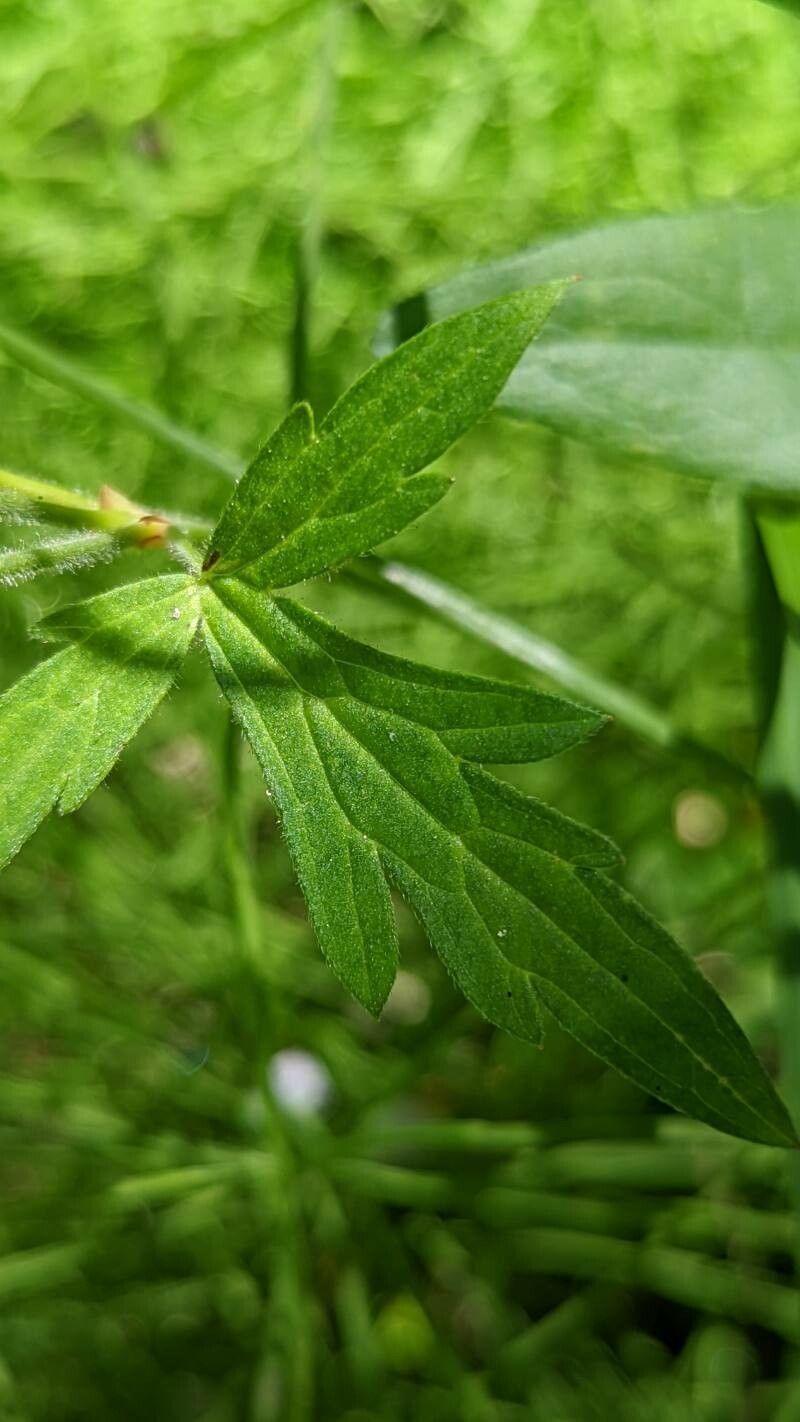
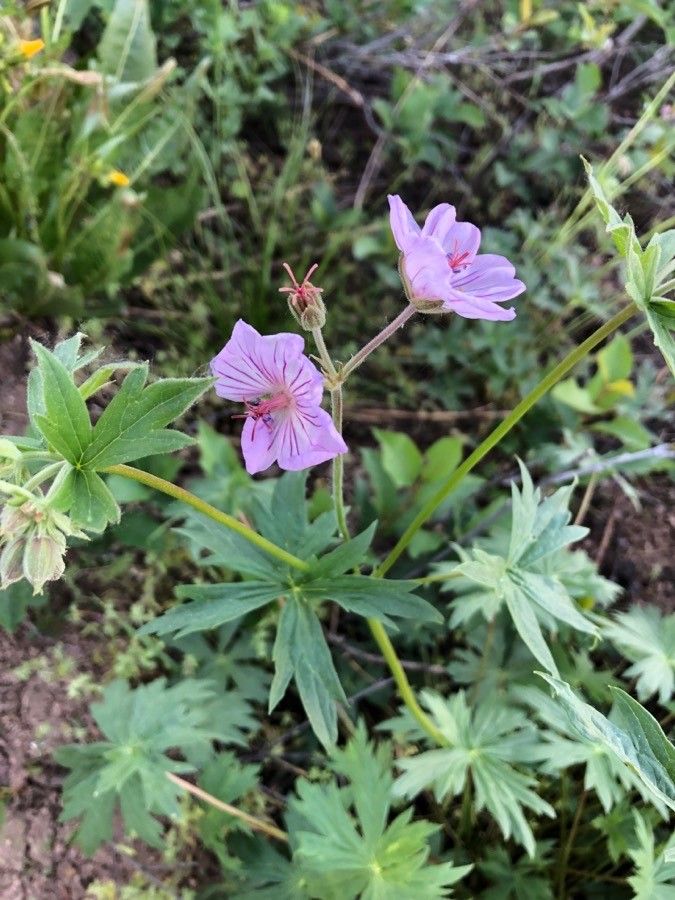
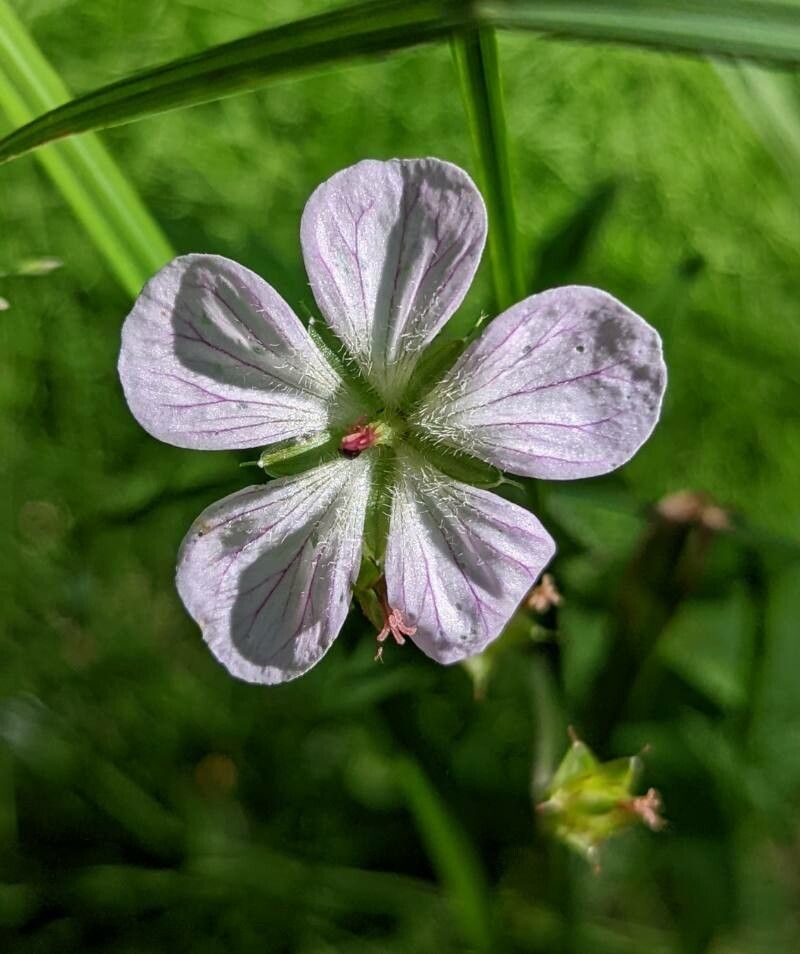
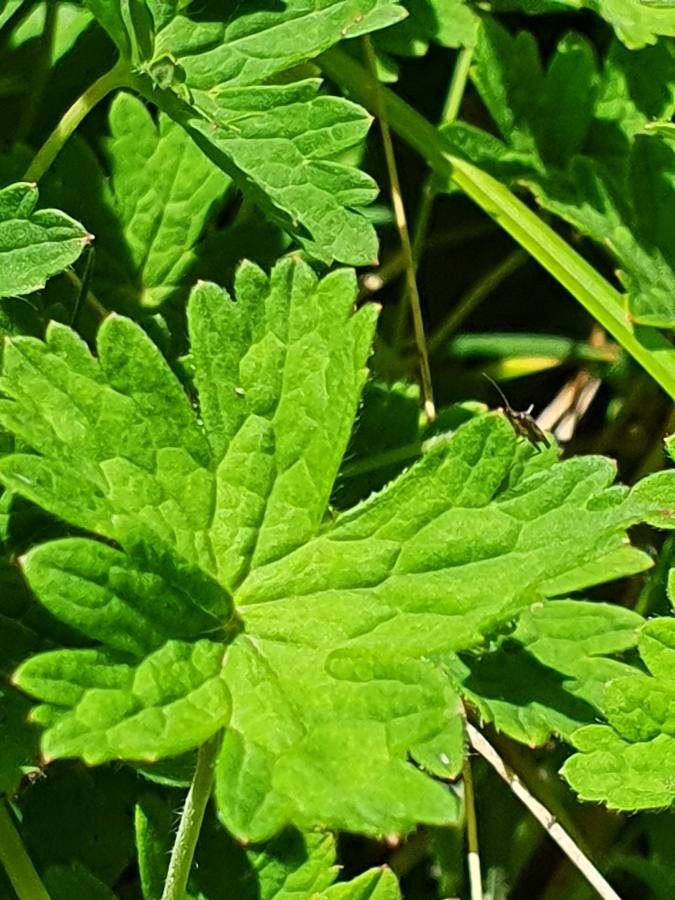
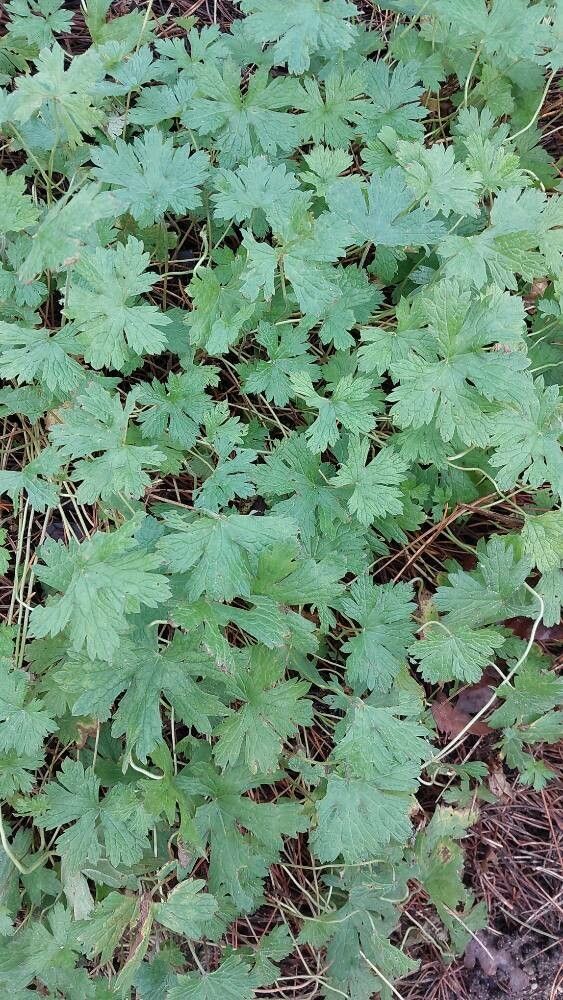
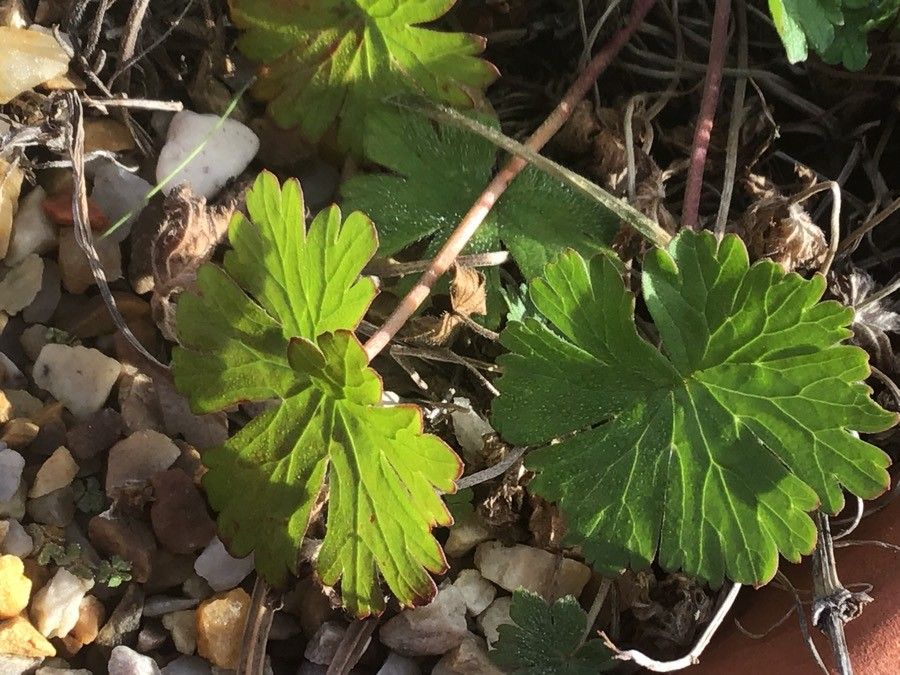
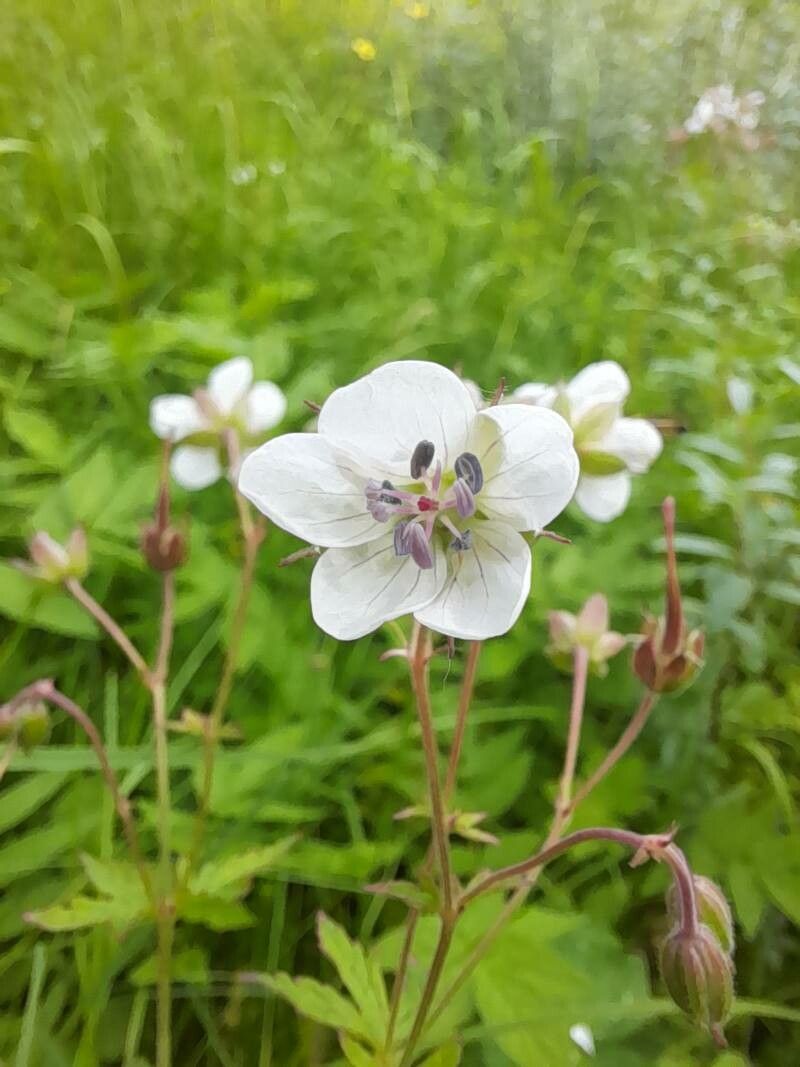
Geranium richardsonii is a species of geranium known by the common name Richardson's geranium. It is native to western North America from Alaska to New Mexico, where it can be found in a number of habitats, especially mountains and forests. This is a perennial herb varying in maximum height from 20 to 80 centimeters. The plant grows from a tough, woody taproot and older plants develop rhizomes. The leaves are up to 15 centimeters wide and are divided into generally five segments, each segment subdivided into small rounded or pointed lobes. The flower has five pointed sepals beneath five rounded petals, each one to two centimeters long. The petals are white to purple with darker purple veining. The fruit has a small body with a straight style up to 2.5 centimeters long (see image at left).
Richardson's Geranium has strong disease resistance and is usually not prone to illnesses. However, it can be affected by pests and diseases present in its environment. These issues are typically mild. As for care, the plant needs moderate maintenance. It requires regular pruning to keep a tidy appearance and encourage healthy growth. Fertilizing can also help stimulate flowering. Richardson's Geranium is suitable for anyone with outdoor space, such as a garden or patio, and does not demand extensive care experience. It may need more attention when grown indoors.
How to keep Geranium Richardsonii.
Light
Richardson's Geranium thrives in ample sunlight, so it's suited to places that experience significant daylight hours. It should be noted, however, that this plant can accommodate scenarios with partial sunlight. A significant shift in sunlight, whether it’s a reduction or an increase, could potentially affect its well-being, suggesting it has a limited tolerance for fluctuating light conditions.
Water
Richardson's Geranium, which originates from moist environments, thrives best with consistent hydration. To maintain a healthy balance, it is ideal to water the plant once a week, particularly during its active growing season. This helps support healthy foliage and encourages optimal flowering. While this geranium can tolerate moderate drought conditions, it truly flourishes when moisture levels are sustained.
Temperature
The Richardson's Geranium originates from regions where temperatures fluctuate between 32 and 90 °F (0 to 32 ℃), and it tends to favor the cooler end of this spectrum. It requires very few seasonal modifications due to its high resistance to frost.
Fertilizer
The optimal period to administer fertilizer to a Richardson's Geranium is in the early phase of spring, as it transitions from a dormant state to active growth. Nutrients supplied by fertilization are essential for its healthy development. While the Richardson's Geranium doesn't require large amounts of fertilizer, its survival and the quality and longevity of its flowers may be improved through yearly fertilization.
Pruning
Richardson's Geranium features lobed leaves and clusters of white flowers. To promote airflow, remove damaged stems, and encourage blooming, prune the plant from early to late spring. Regular pruning helps control its size and shape, ensuring it remains a vibrant and healthy addition to your garden.
Botanical profile.
- Plant Type
- Herb
- Life Cycle
- Perennial
- Genus
- Geranium
- Family
- Geraniaceae
- Hardiness Zone
- 2-8
- Mature Height
- 20 cm to 76 cm
- Mature Spread
- 30 cm
- Leaf Color
- Green
- Leaf Type
- Deciduous
- Flower Color
- White
- Flower Size
- 2.03 cm to 3.05 cm
- Bloom Time
- Late spring, Early summer, Mid summer
- Planting Time
- Spring, Summer, Autumn
- Harvest Time
- Mid summer, Late summer, Early fall
- Native Area
- Mexico
Other names.
Reader questions.
What are the sunlight requirements for Richardson's Geranium?
Richardson's Geranium needs substantial sunlight to flourish, ideally in locations that receive a significant amount of daylight. It has the capacity to adapt to partial sun conditions as well. Full sun refers to over 6 hours of sunlight, while partial sun is about 3-6 hours of sunlight per day. It's crucial to observe how sunlight moves through your garden to pick spots that offer a perfect balance for your plants, contributing to their growth and well-being.
What is the native temperature range for Richardson's Geranium?
Richardson's Geranium (Geranium richardsonii) thrives in zones with temperature ranges from 32 to 90 °F (0 to 32 °C), preferring the cooler spectrum within this range. It has a good tolerance for frost, making seasonal adjustments minimal for maintaining its health.
How important is sunlight for the health of Richardson's Geranium?
Sunlight plays a critical role in the health and growth of Richardson's Geranium. This plant thrives under substantial sunlight, and inadequate sunlight can lead to various symptoms indicating stress or poor health. An increase or decrease in the amount of sunlight beyond its tolerance can adversely affect its health. Thus, ensuring the right balance of sunlight is essential for the optimal growth of Richardson's Geranium.
How should Richardson's Geranium be protected during extreme winters?
Despite its strong resistance to cold, Richardson's Geranium should be protected if winter temperatures are expected to drop below -40°C. Cold protection can be achieved by covering the plant with soil or straw. To aid in winter and early spring moisture retention, it's recommended to water the plant abundantly before the first freeze of autumn, ensuring the soil is moist and enters a frozen state.
What artificial lighting requirements do indoor Richardson's Geranium plants have?
For indoor Richardson's Geranium plants, adequate lighting is essential, especially when natural sunlight is insufficient. Artificial lights, such as LED lights, are beneficial in providing the necessary wavelengths of light for growth. Full sun plants require 30-50W/sq ft, partial sun plants need 20-30W/sq ft, and full shade plants need 10-20W/sq ft of artificial light. The light source should be placed 12-36 inches above the plant to mimic natural sunlight, and most plants need 8-12 hours of light per day.
What are the symptoms and solutions for Richardson's Geranium in low temperature conditions?
Richardson's Geranium is cold-tolerant, achieving its best growth at temperatures above 0°C and should be maintained above -35°C during winter. When temperatures fall below -40°C, the plant might not show immediate changes, but sprouting may be reduced or absent in spring. The solution in spring is to remove any parts of the plant that failed to sprout.
What are the symptoms of light deficiency in Richardson's Geranium?
Symptoms of light deficiency in Richardson's Geranium include smaller new leaves, leggy or sparse growth, faster leaf drop, slowed or halted growth, lighter-colored new leaves, and chlorosis. Light deficiency can also lead to sunscald, leaf curling, wilting, and leaf scorching, indicating the plant is not receiving the optimal amount of sunlight for its health.
What are the symptoms and solutions for Richardson's Geranium in high temperature conditions?
During summer, it's crucial to keep Richardson's Geranium below 32°C as exposure to temperatures above 35°C may result in lighter leaf color, curling, susceptibility to sunburn, and, in severe cases, wilting and drying of the entire plant. Remedies include trimming sunburned and dried parts, relocating the plant to a shaded area during midday and afternoon sun, or using a shade cloth. Additionally, watering the plant in the morning and evening helps keep the soil moist.
What solutions are available for light deficiency issues in Richardson's Geranium?
To address light deficiency in Richardson's Geranium, gradually move indoor plants to sunnier locations to receive at least 6 hours of direct sunlight daily, using a south-facing window for maximum exposure. Artificial lighting like plant grow lights can also supplement light needs. Outdoors, adjust plant positioning gradually to avoid sunburn. Reducing obstructions and transplanting during dormant periods can also improve sunlight access. Note that parts of the plant affected by sunlight deficiency may not recover, but new growth will be healthy with adjusted light exposure.