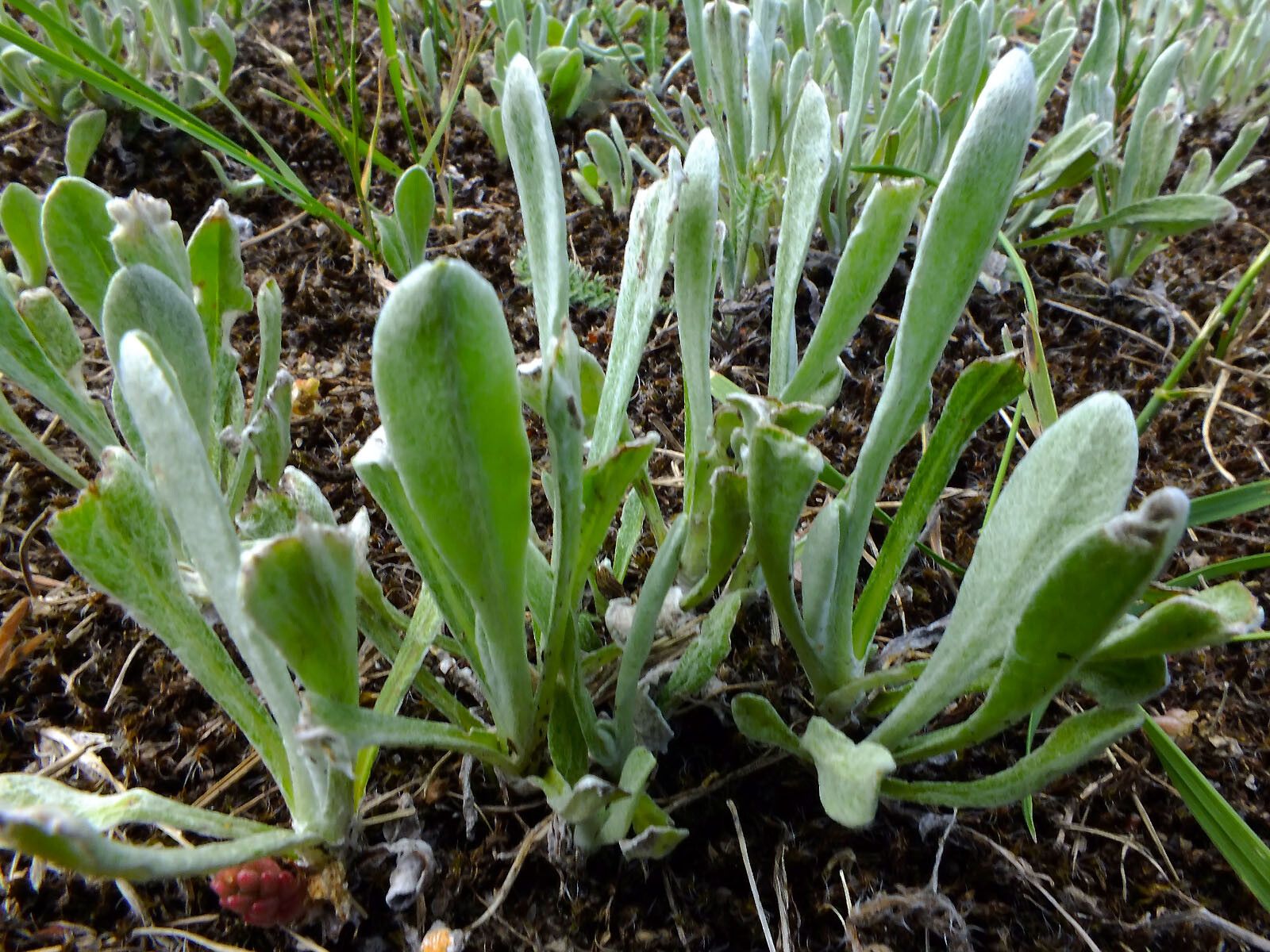
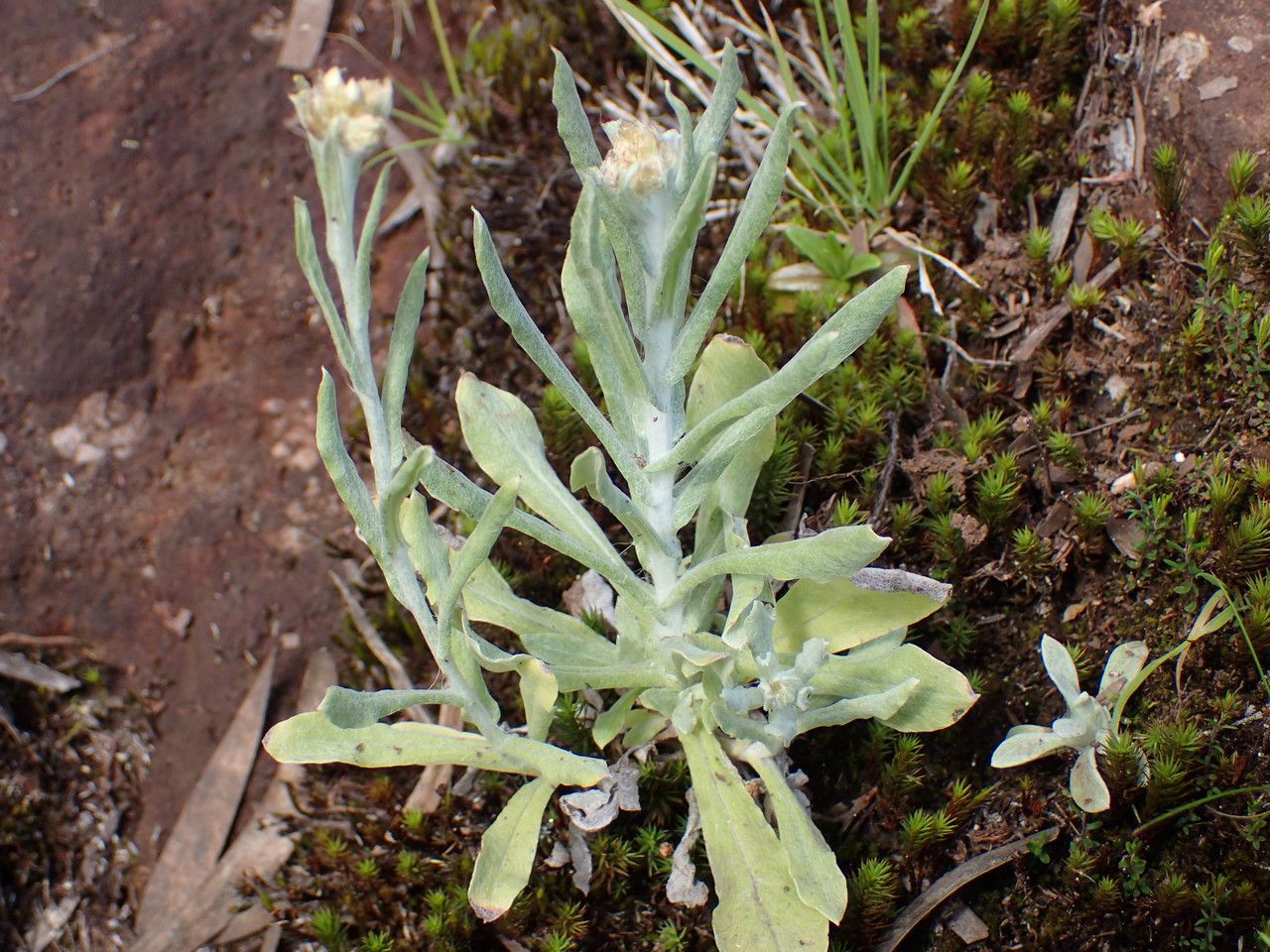
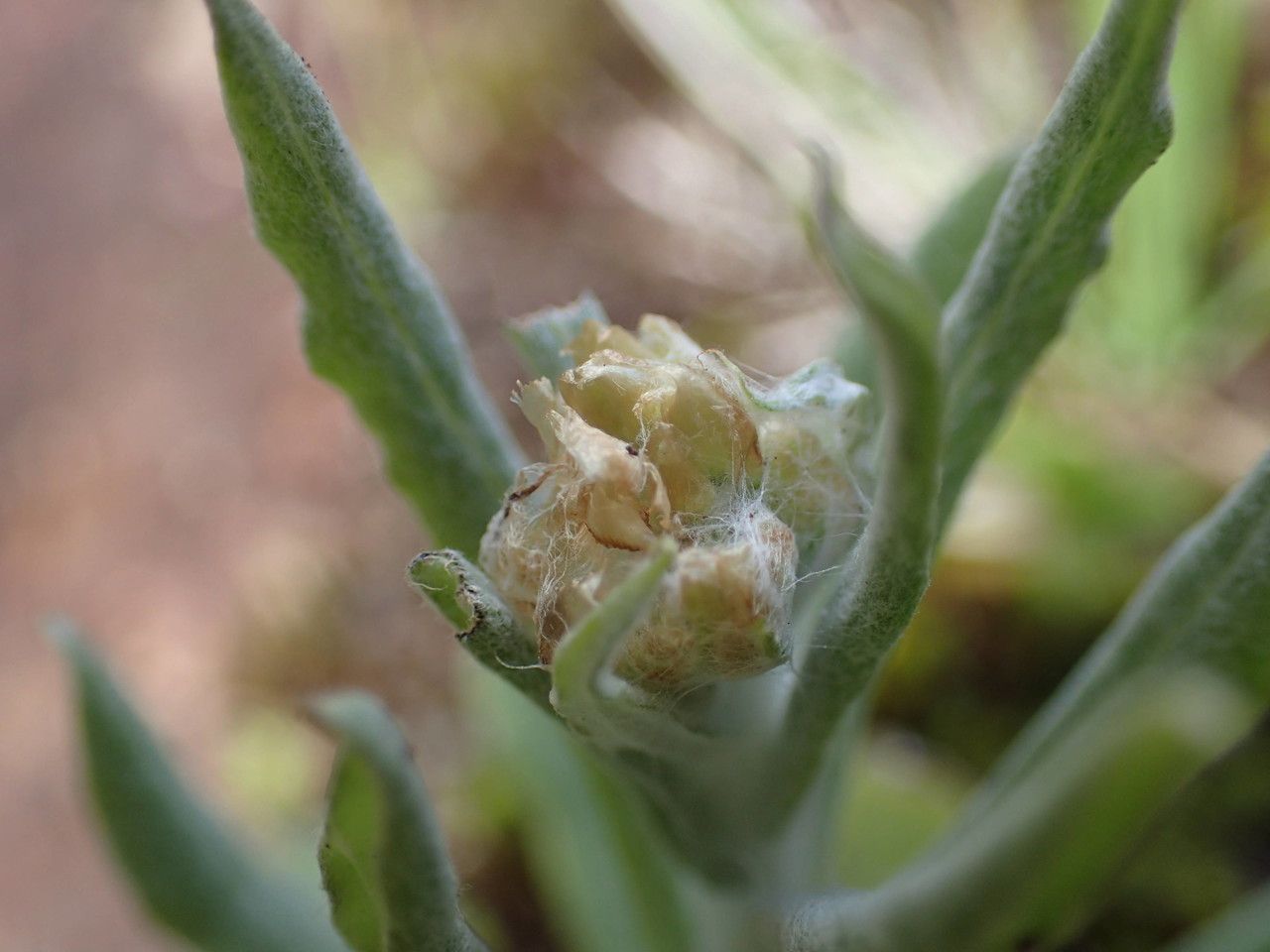
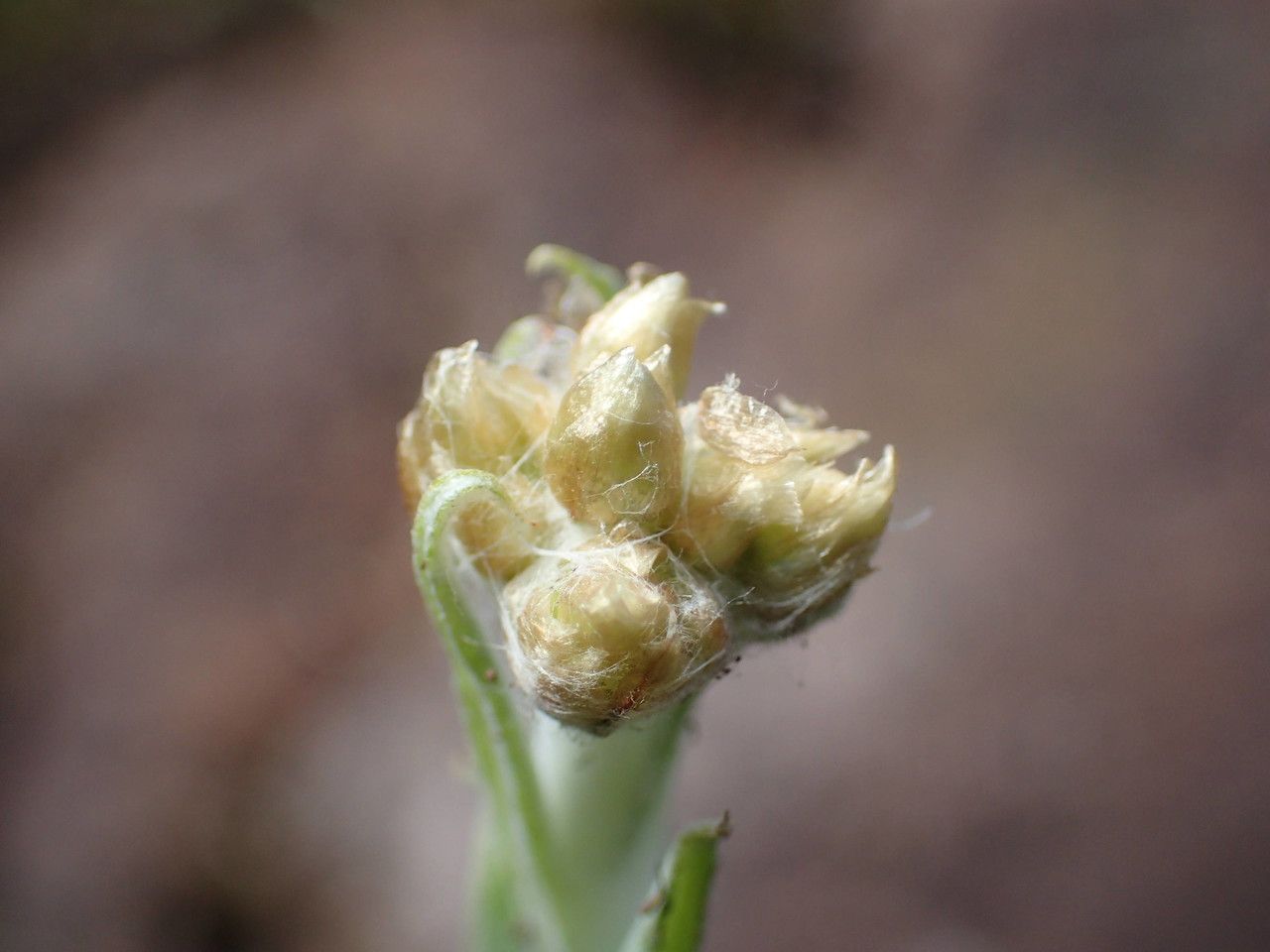
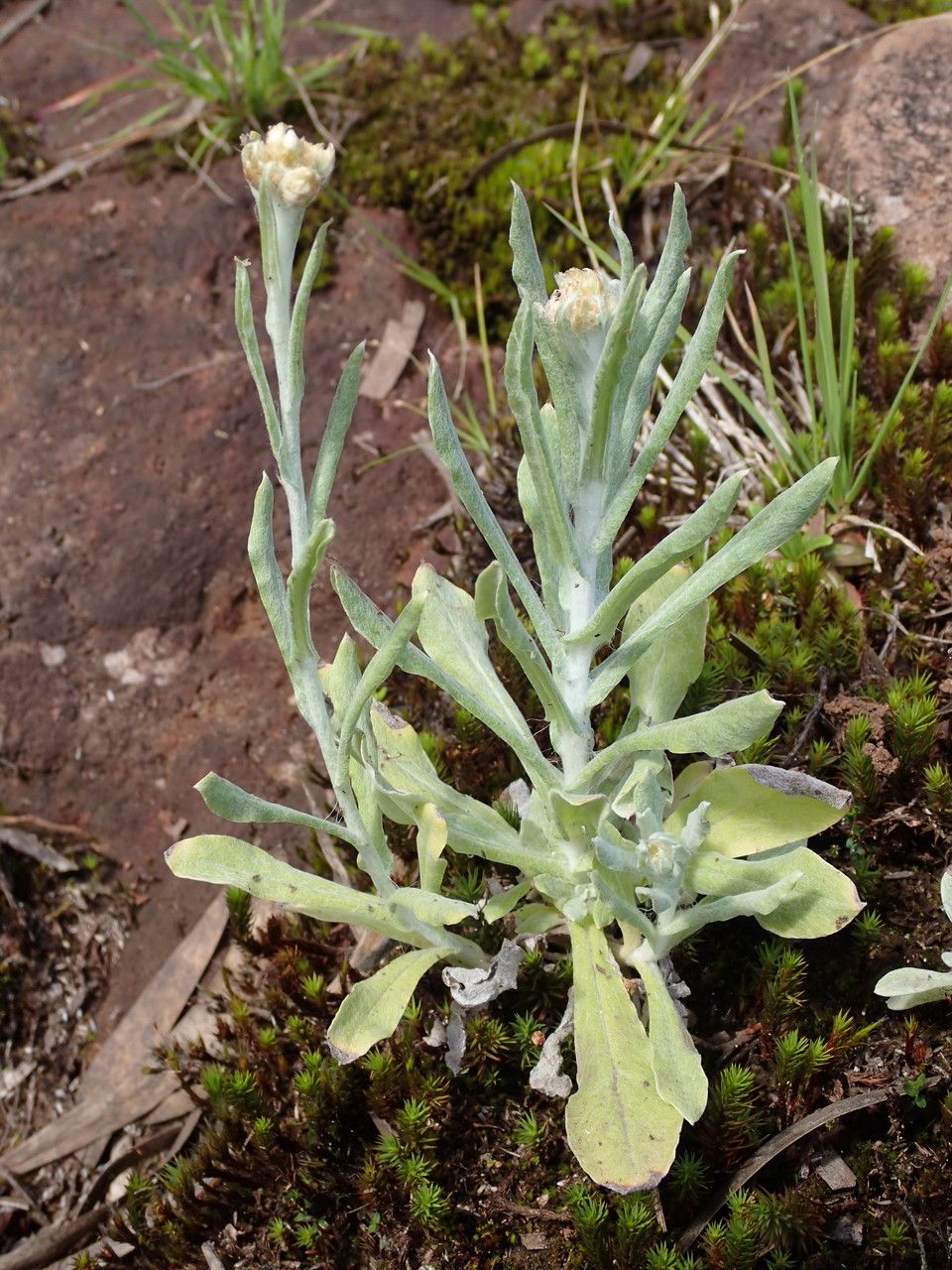
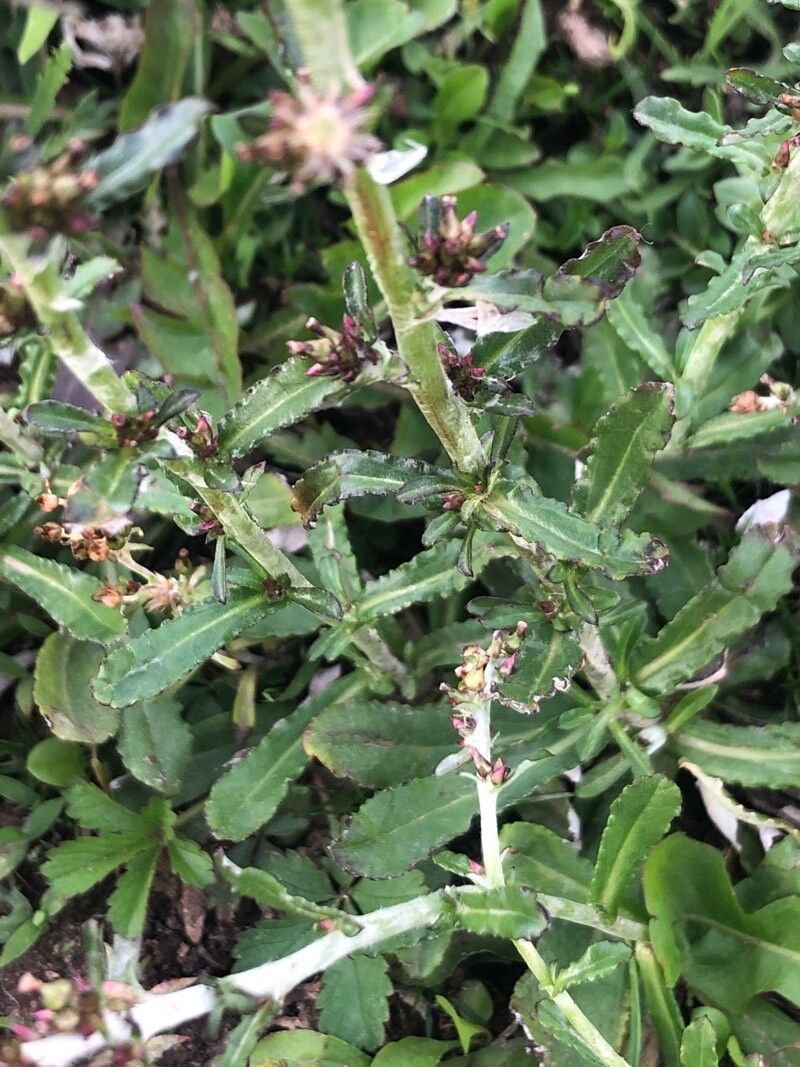
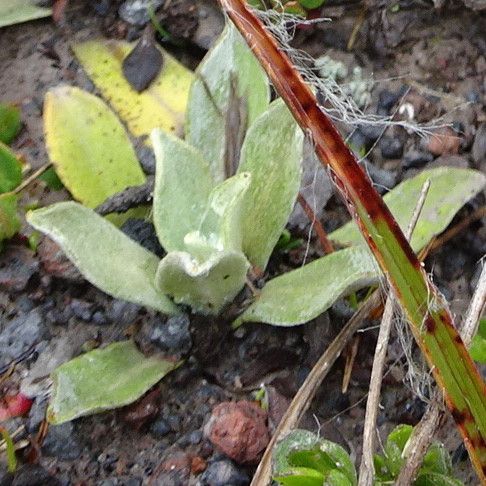
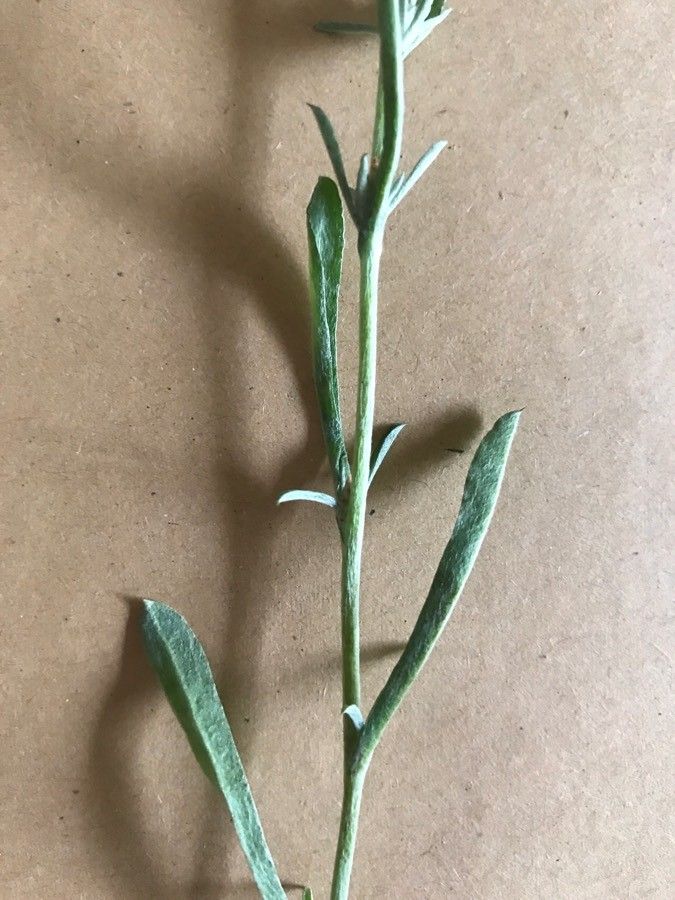
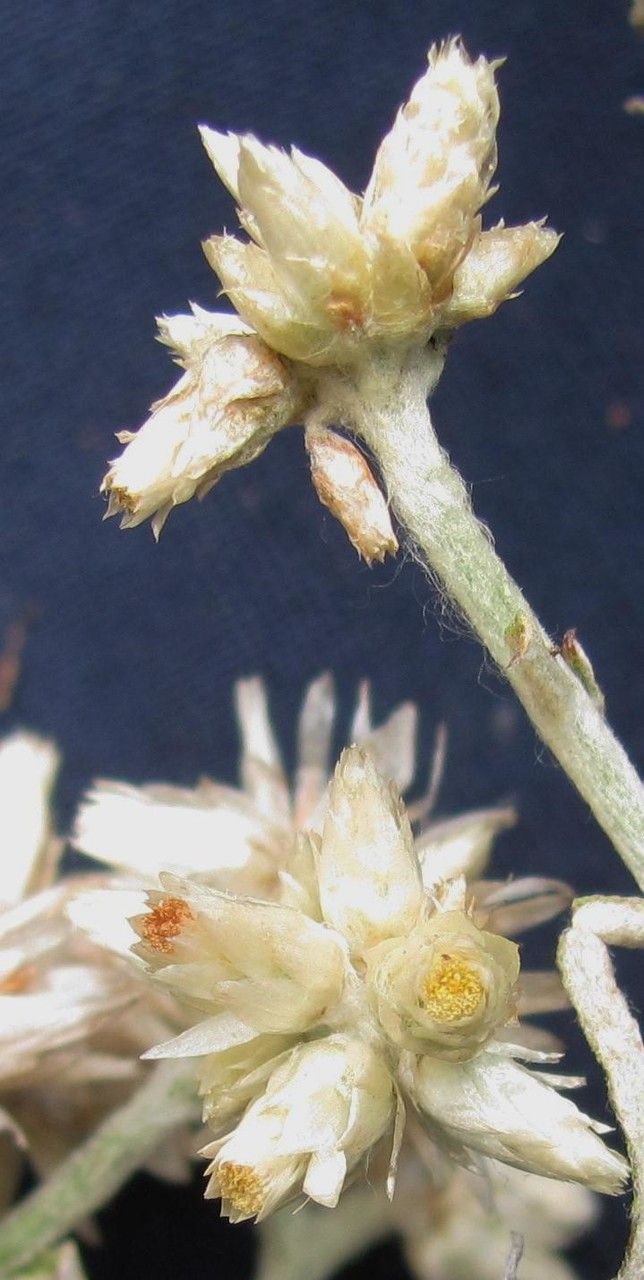
Gnaphalium polycaulon, the many stem cudweed, is a plant species in the family Asteraceae. It is widespread across much of Mesoamerica, South America, and the West Indies, and naturalized in parts of Asia and Africa.Gnaphalium polycaulon is a small annual herb up to 25 cm (9.8 in) tall, with several erect to ascending branches. Stems, leaves and phyllaries are covered with a dense coat of woolly hairs, giving the plant a whitish appearance. Leaves are narrowly linear, up to 4.5 cm (1.8 in) long. Flower heads are born in tight, elongated array. Each head contains numerous florets, mostly yellowish but sometimes with purple tips
Many-stemmed cudweed is fairly disease-resistant and generally not prone to illness. However, it can be affected by pests and diseases present in its surroundings. These problems are typically not serious. Regarding care, the plant requires moderate maintenance. It should be pruned regularly to preserve a neat appearance and healthy growth. Fertilizing can also help encourage flowering. Many-stemmed cudweed is well suited for people with outdoor spaces like a garden or patio and does not need extensive care experience. It may demand more attention if grown indoors.
How to keep Gnaphalium Polycaulon.
Light
Many-stemmed cudweed comes from bright, open habitats and does best in full sun. It will tolerate partial sun, but prefers direct sunlight for optimal growth. This plant, which can be annual or biennial, is known for its sun-loving character.
Water
Many-stemmed cudweed thrives in dry environments and is highly drought-tolerant, requiring minimal moisture. Ideally, it should be watered once a week. This plant is well-adapted to rocky terrains, with a root system that efficiently absorbs water during sporadic rainfall. This makes it an excellent choice for xeriscaping and rock gardens where water conservation is a priority.
Temperature
Many-stemmed cudweed can adjust to a broad range of temperatures, but its distribution may still be limited by various combinations of water and heat conditions. It grows best in warm summer climates with sufficient rainfall or watering. Extended periods of cloudy, rainy weather, as well as prolonged high temperatures, can increase the chance of Many-stemmed cudweed dying. In winter, adequate protection from cold can boost the plant's survival rate.
Fertilizer
Many-stemmed cudweed benefits from small, frequent fertilizer applications to encourage healthy leaf growth. Fertilize many-stemmed cudweed roughly once a month during the summer. Nitrogen is important for the foliage, so providing nitrogen-rich fertilizer helps many-stemmed cudweed do well.
Pruning
Many-stemmed cudweed is a resilient perennial plant known for its silvery leaves. To promote healthy growth, prune it between early and late spring. Remove any damaged stems to encourage new growth. Pruning properly improves air circulation, reduces the risk of disease, and encourages denser foliage, ensuring a vibrant display throughout the season.
Botanical profile.
- Plant Type
- Herb
- Life Cycle
- Annual
- Genus
- Gnaphalium
- Family
- Asteraceae
- Hardiness Zone
- 9-11
- Mature Height
- 25 cm
- Mature Spread
- 15 cm to 25 cm
- Leaf Color
- Gray, Light Gray
- Leaf Type
- Deciduous
- Flower Color
- White
- Flower Size
- 0.25 cm to 0.25 cm
- Bloom Time
- Summer, Early fall, Mid fall
- Planting Time
- Spring, Summer, Autumn
- Harvest Time
- Late summer, Fall, Early winter
- Native Area
- Nepal, Egypt, India, Angola, Namibia, South Africa, Zambia, Sudan, Pakistan, Mauritania, Laos, Bangladesh, Thailand, Yemen, Zimbabwe, Chad, China, Indonesia, Vietnam, Myanmar, Japan, Botswana
Other names.
Reader questions.
What are the sunlight requirements for many-stemmed cudweed?
Many-stemmed cudweed thrives best in full sun, requiring above 6 hours of sunlight per day, but it can also tolerate partial sun, with about 3-6 hours of sunlight. It's important to watch how sunlight moves through your garden and to choose spots that provide a perfect balance of light and shade for your plants, to ensure they stay happy and healthy.
What are the essentials for growing many-stemmed cudweed effectively?
Originally from bright, open environments, many-stemmed cudweed performs optimally in full sun and can tolerate partial sun. As an annual and biennial plant known for its sun-loving nature, it requires significant sunlight to grow effectively. In cases where natural sunlight is insufficient, especially during winter or in less sunny areas, indoor plants can benefit from artificial lighting. Artificial lighting should mimic natural sunlight conditions, with full sun plants needing 30-50W/sq ft, partial sun plants needing 20-30W/sq ft, and full shade plants needing 10-20W/sq ft of artificial light. The light source should be placed 12-36 inches above the plant to mimic natural sunlight as closely as possible, ensuring the plant receives 8-12 hours of light per day.
What symptoms indicate inadequate sunlight for many-stemmed cudweed?
When many-stemmed cudweed does not receive sufficient sunlight, several symptoms may appear. These include smaller new leaves compared to mature ones, leggy or sparse growth, faster leaf drop, slower or halted growth, lighter-colored new leaves, chlorosis, sunscald, leaf curling, wilting, and leaf scorching. These symptoms indicate various stresses due to inadequate sunlight, including insufficient chlorophyll and essential nutrients, excessive sunlight exposure damaging tissues, and increased water loss.
What solutions can help improve sunlight exposure for many-stemmed cudweed?
To enhance sunlight exposure for many-stemmed cudweed, consider several strategies based on the plant's location. Indoor solutions include gradually moving plants to sunnier spots until they receive at least 6 hours of direct sunlight daily or using artificial light for plants that cannot be moved easily. Outdoors, gradually acclimate plants to sunnier spots to avoid sunburn, without sudden and drastic changes in light intensity. For plants in the ground, reduce obstructions by pruning trees or moving smaller plants during their dormant period to areas with more sunlight and good drainage. While parts of the plant affected by insufficient sunlight may not recover, new growth should be healthy once light exposure increases.