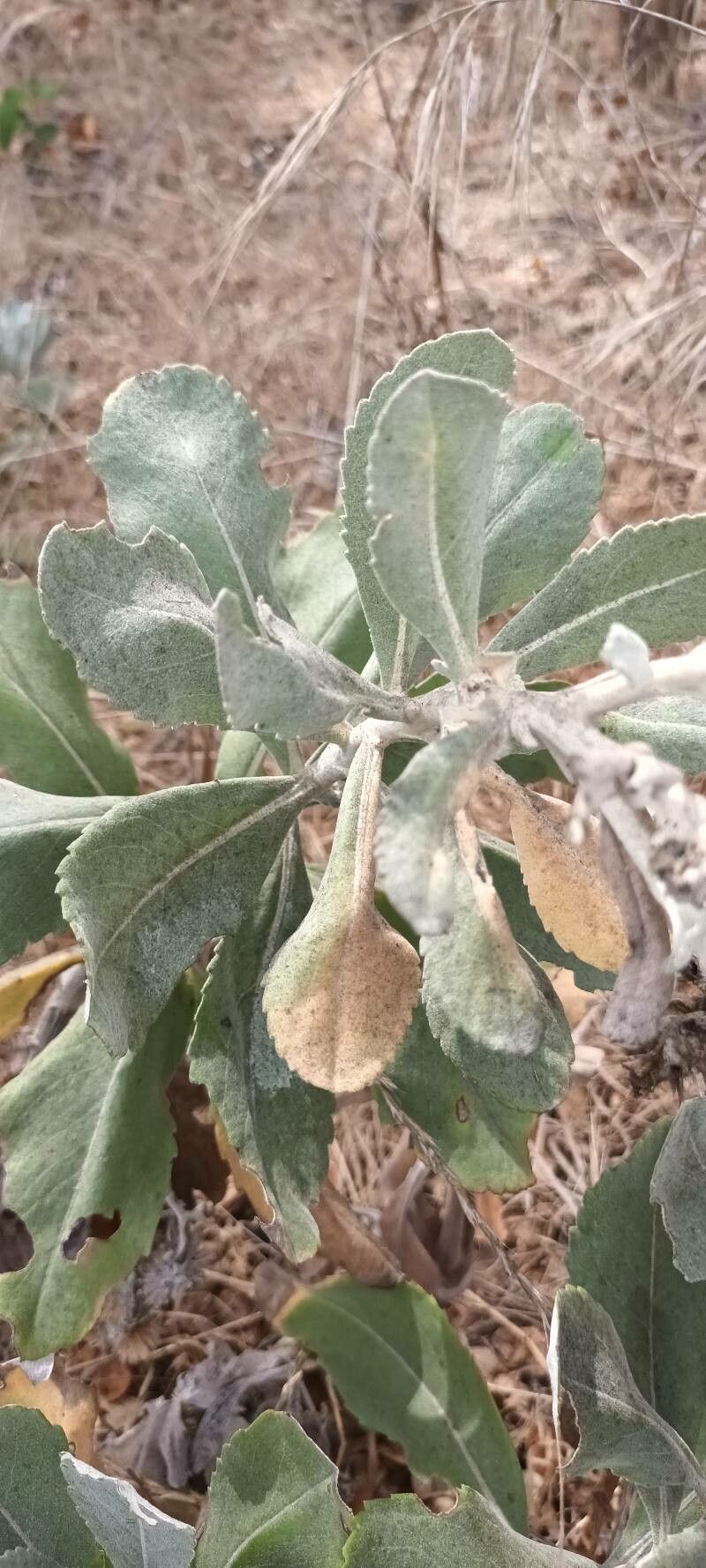
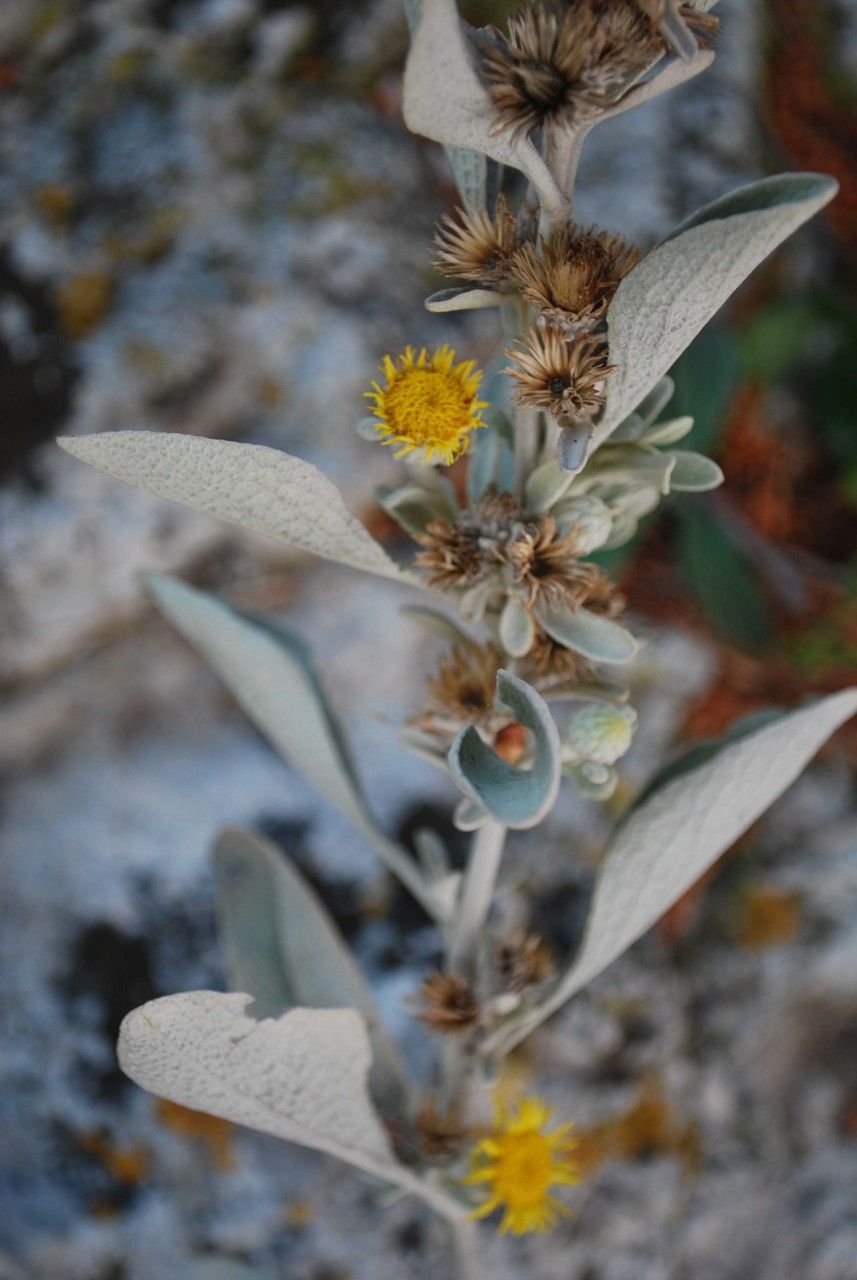
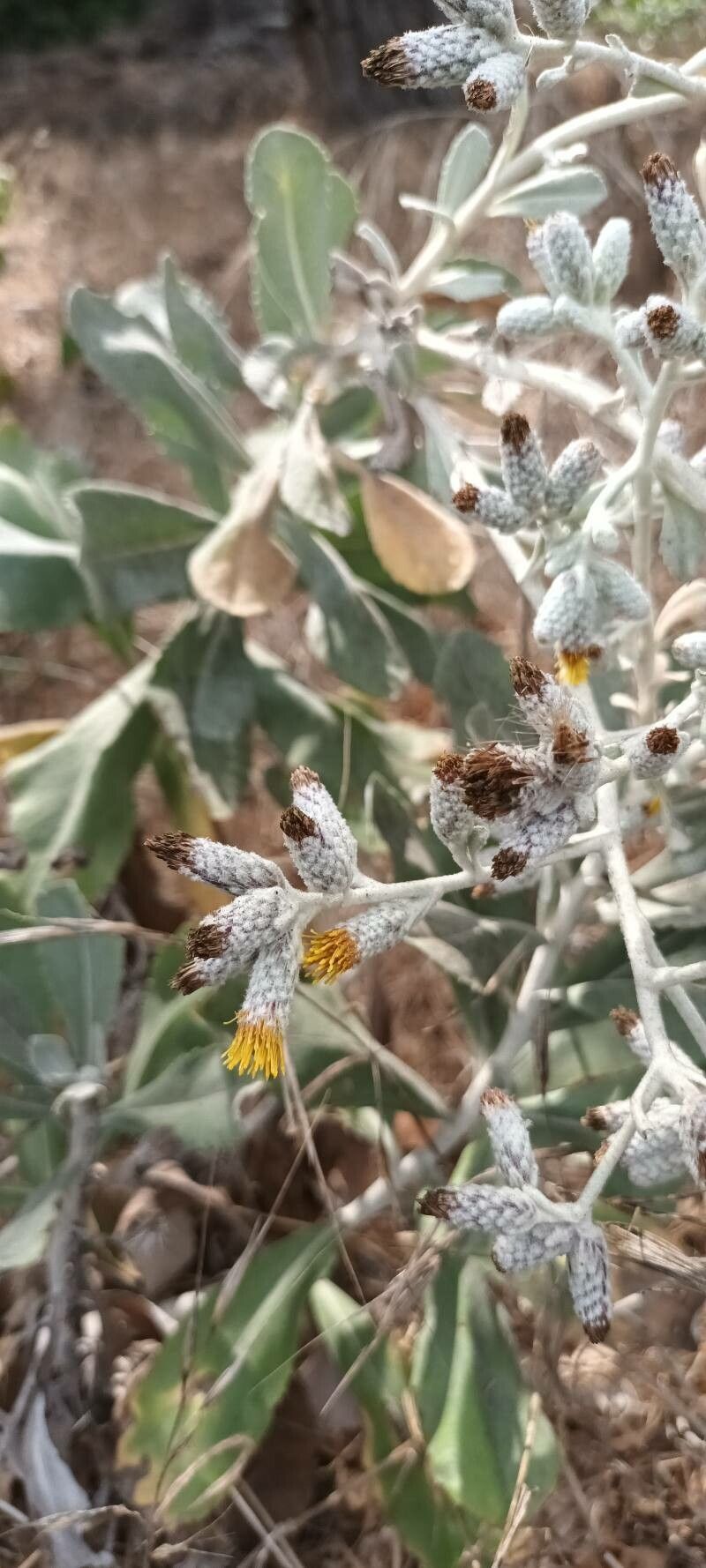
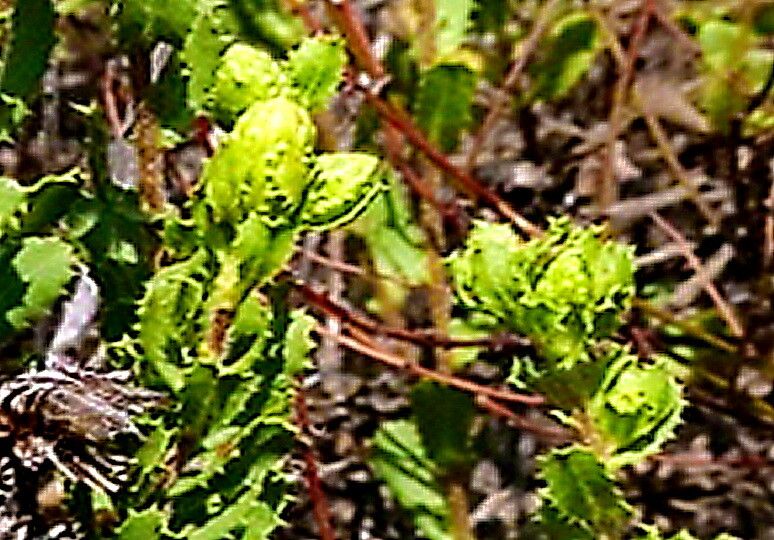
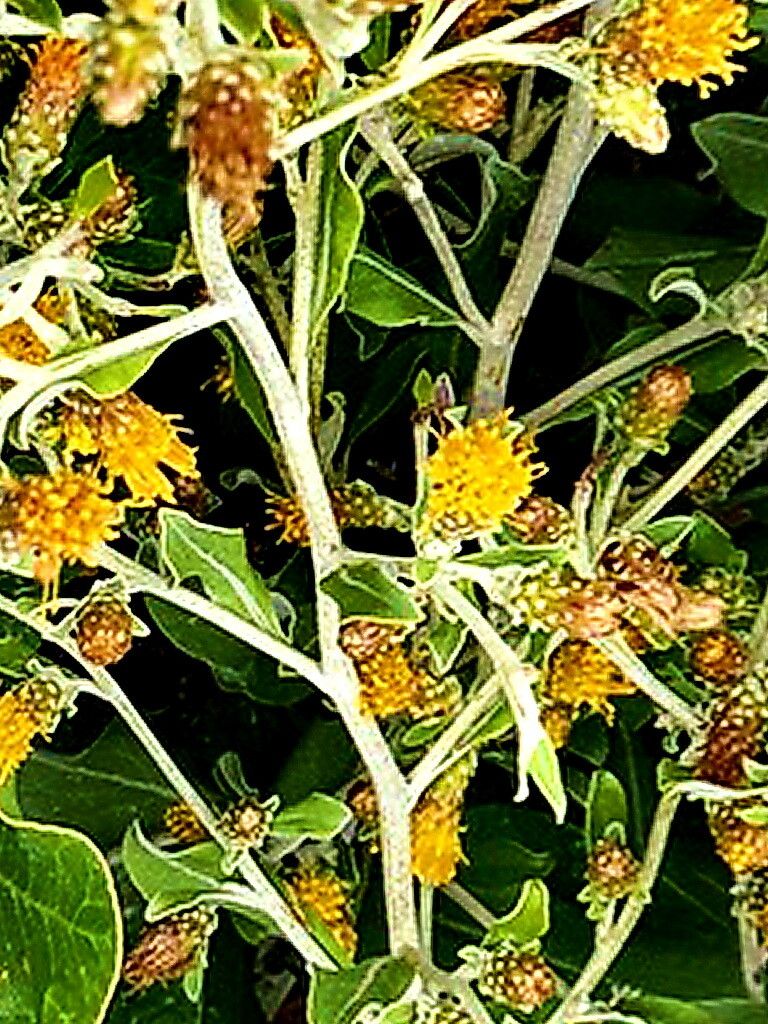
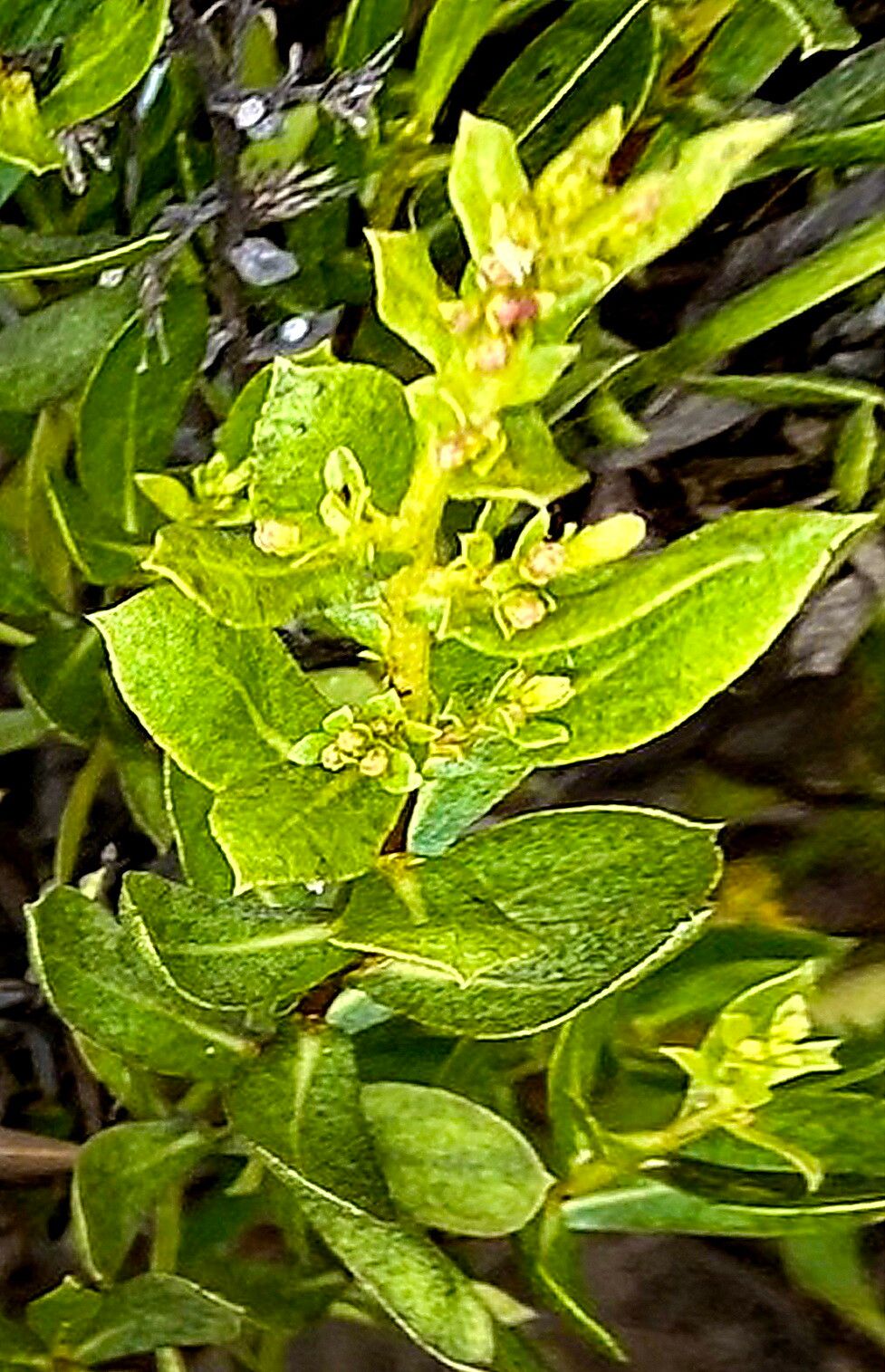
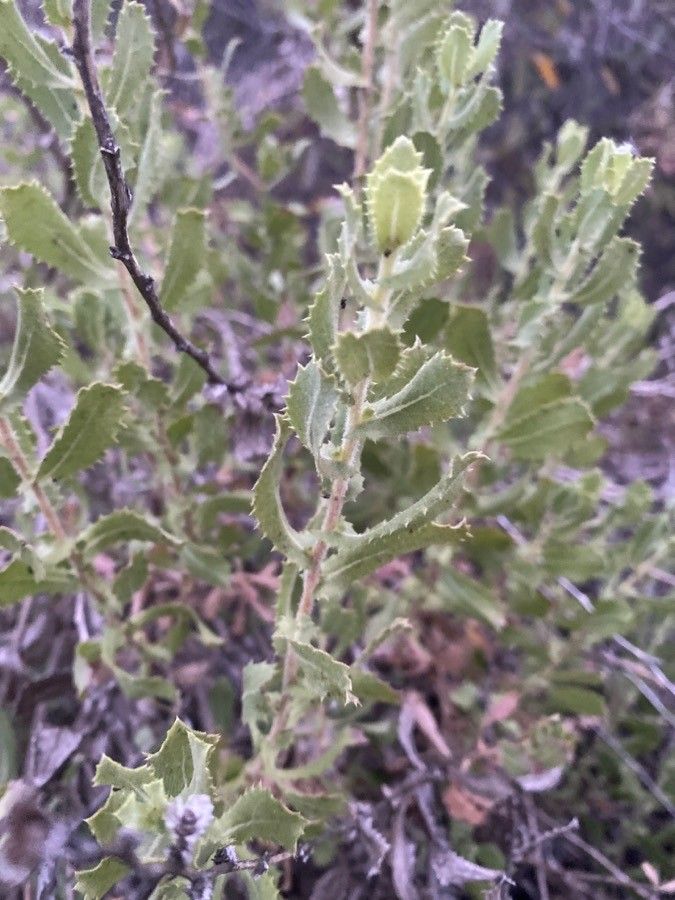
Hazardia detonsa is a rare species of shrub in the family Asteraceae known by the common name island bristleweed. It is endemic to the Channel Islands of California, having been found on 4 islands (Santa Rosa, Santa Cruz, West Anacapa, and Middle Anacapa).Hazardia detonsa is a bushy shrub reaching 60 centimetres (24 in) to 2.5 metres (8 ft 2 in) in height. It has densely woolly, glandular herbage of thick, serrated, oval-shaped leaves up to 14 centimetres (5.5 in) long. At the ends of its whitish stems it produces bell-shaped flower heads each about a centimeter long. Each flower head has several rows of white woolly phyllaries and an open end revealing disc florets and longer protruding ray florets. The florets are yellow and may age to red or purple. The main threat to this species on Santa Cruz Island was the presence of feral Santa Cruz sheep. The sheep have been removed, allowing the plant to begin its recovery there.
Island bristleweed is highly resistant to disease and is generally not susceptible to illnesses. In terms of care, this species is fairly low-maintenance. Planted outdoors, it needs only sporadic watering, and larger specimens typically do not require pruning. Smaller plants, however, should be pruned after they finish blooming. Island bristleweed is suitable for anyone with an outdoor area, such as a garden or deck, and does not demand extensive gardening experience.
How to keep Hazardia Detonsa.
Light
Island bristleweed is native to open habitats, such as sunny meadows and forest margins, where light is plentiful. It performs best in Full Sun but can also tolerate Partial Sun, adapting well to a range of sunlight conditions.
Temperature
Island bristleweed is highly adaptable to a wide range of climates, from very hot summers to very cold winters. That said, it has a preferred temperature range for healthy growth. If temperatures get too high, the plant can suffer from heat and humidity stress, which may kill it. In places where temperatures approach the lower limit of its cold tolerance, providing insulation to protect the plant is important.
Fertilizer
Fertilize your Island bristleweed in early spring to encourage healthy growth. Regular fertilization improves overall health, producing vigorous growth, greater tolerance of challenging conditions, and enhanced resistance to diseases and pests. Keep a consistent fertilization schedule for your Island bristleweed to achieve vibrant, deeply colored foliage and a lush appearance.
Pruning
Prune island bristleweed in early spring to encourage healthier growth and an attractive shape. Remove dead branches to improve air circulation and light penetration, which helps control its size and prevents overgrowth. Make sure to use sharp, clean tools to prevent the spread of disease, keeping your island bristleweed vibrant and thriving.
Botanical profile.
- Plant Type
- Shrub
- Life Cycle
- Perennial
- Genus
- Hazardia
- Family
- Asteraceae
- Hardiness Zone
- 8-10
- Mature Height
- 61 cm to 91 cm
- Mature Spread
- 61 cm to 91 cm
- Leaf Color
- Green, Dark Green
- Leaf Type
- Evergreen
- Flower Size
- 1.02 cm to 2.03 cm
- Bloom Time
- Late summer, Early fall, Mid fall
- Planting Time
- Spring, Summer
- Harvest Time
- Mid fall, Late fall, Early winter
Other names.