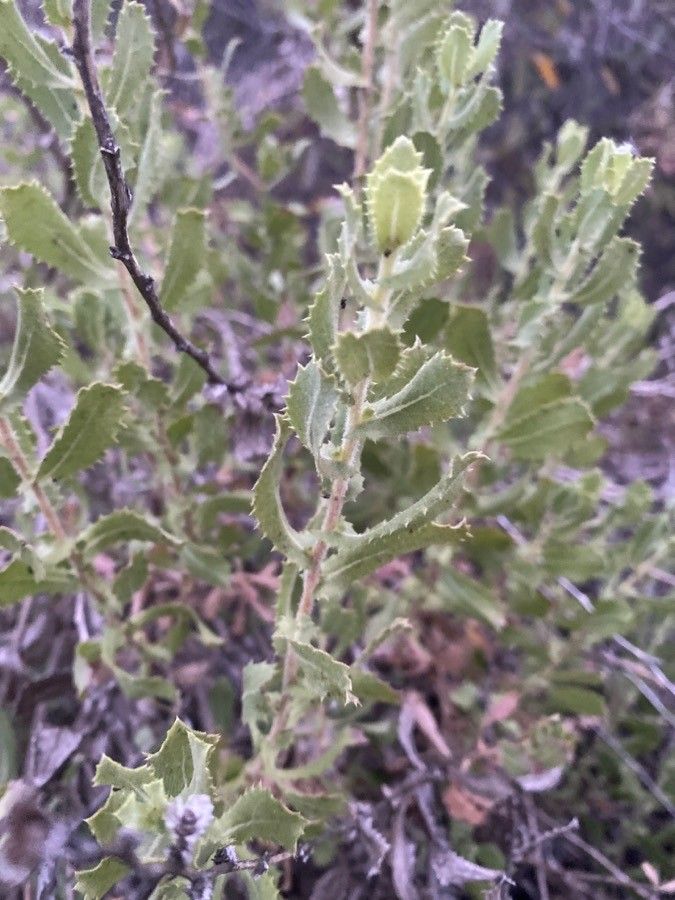
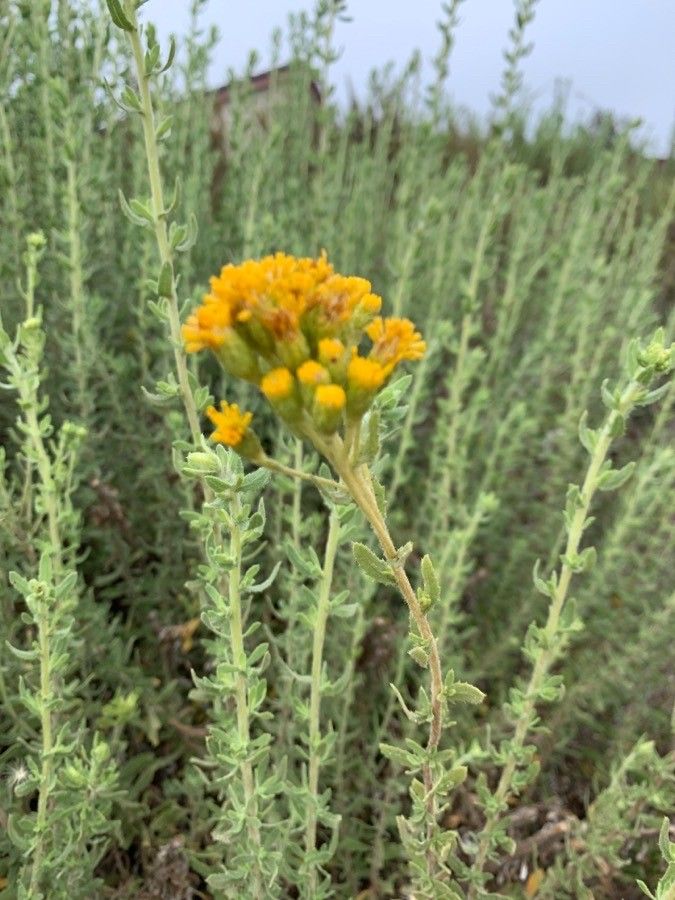
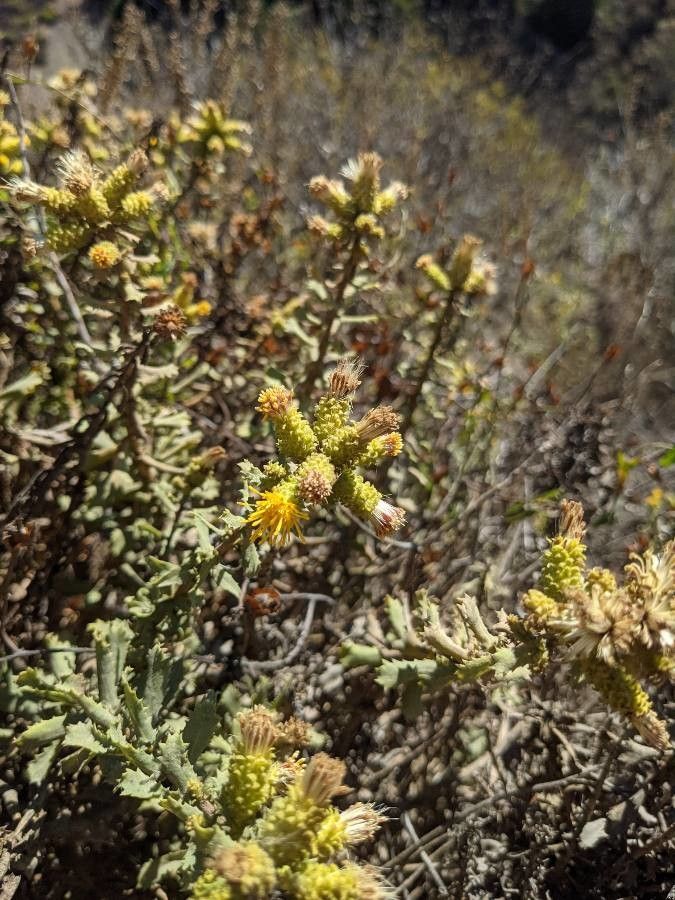
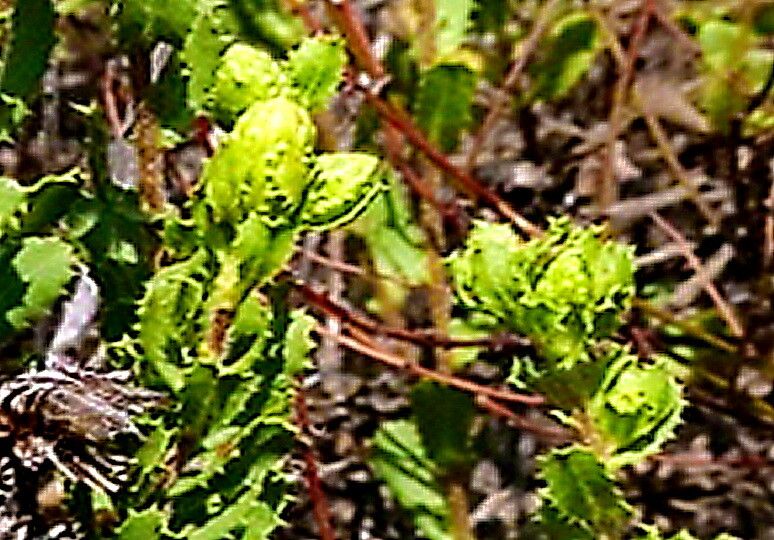
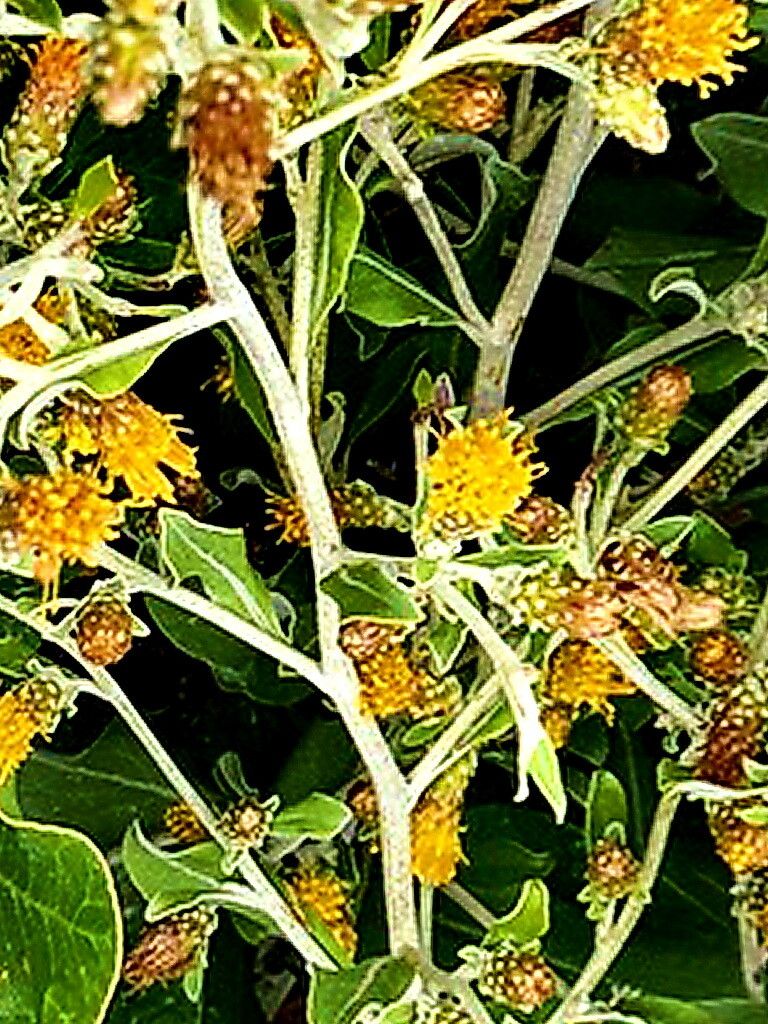
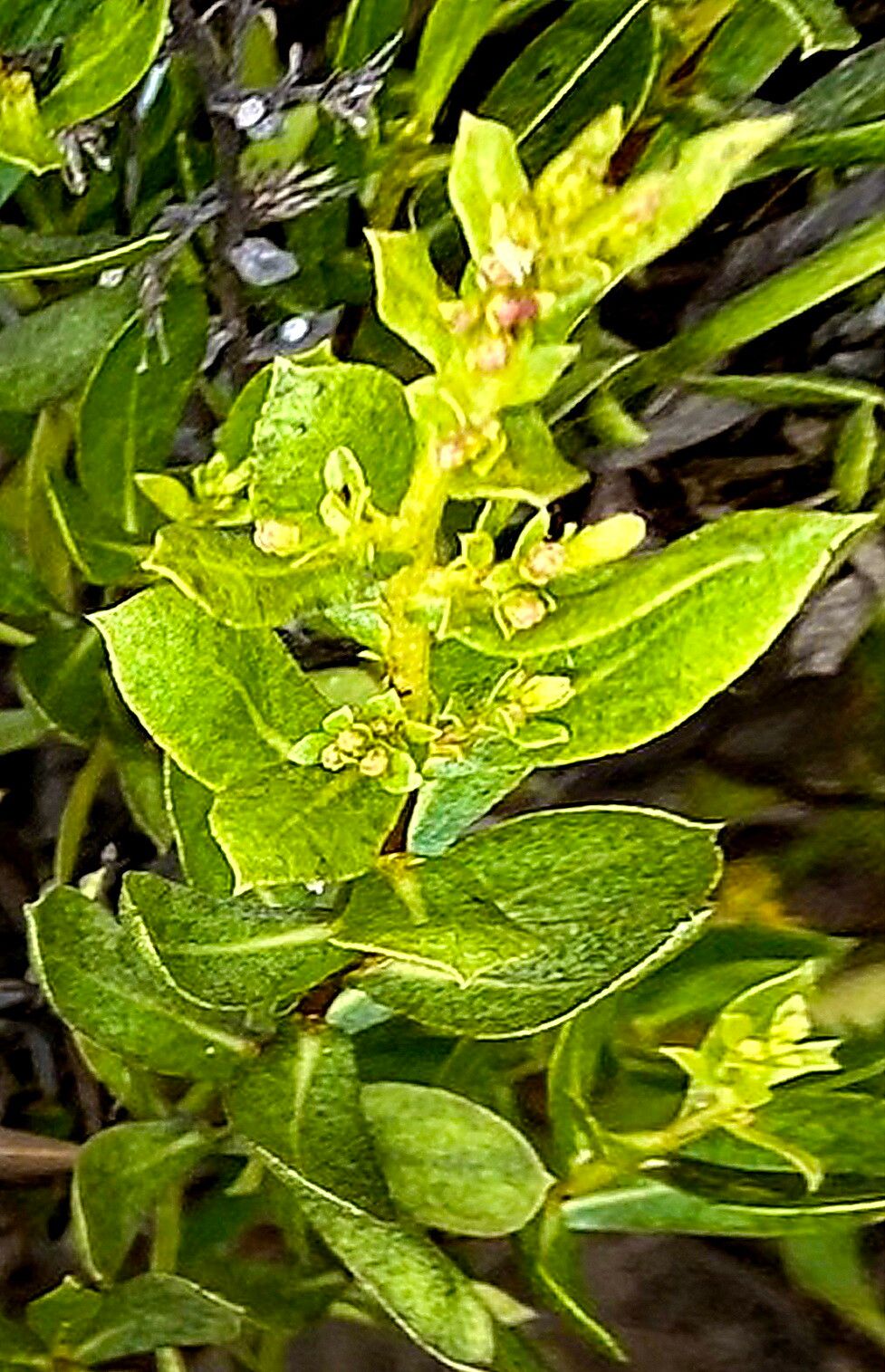
Hazardia squarrosa is a North American species of shrub in the family Asteraceae known by the common name sawtooth goldenbush. It is native to California in the United States and Baja California in Mexico.Hazardia squarrosa grows in coastal and inland scrub and chaparral habitats. It a shrub of variable size, from low and clumpy to sprawling over 2 metres (6 ft 7 in) tall. It is covered in thick, sharply toothed leaves a few centimeters long and is generally not very hairy or woolly. It bears numerous flower heads covered in greenish, pointed phyllaries and opening into an array of long yellow to slightly reddish disc florets but no ray florets. VarietiesHazardia squarrosa var. grindelioides (DC.) W.D.Clark - from Monterey County to Baja California Hazardia squarrosa var. obtusa (Greene) Jeps. - Counties of Santa Barbara, Ventura, Los Angeles, Kern Hazardia squarrosa var. squarrosa - from San Benito County to San Diego County
Sawtooth goldenbush shows strong resistance to disease and is typically not susceptible to illnesses. Regarding care, this species is fairly low-maintenance. When grown outdoors it needs only light watering, and larger specimens usually do not require pruning. Smaller specimens, however, should be trimmed after they finish blooming. Sawtooth goldenbush is appropriate for anyone with an outdoor area, such as a garden or a deck, and does not demand extensive gardening experience.
How to keep Hazardia Squarrosa.
Light
Sawtooth goldenbush does best with prolonged exposure to sunlight, which greatly supports its health and growth. In its native range it is used to receiving abundant sun. It can tolerate conditions with less light, but heavy shading will impede its development and overall vigor.
Water
The Sawtooth Goldenbush is well-suited for dry environments, exhibiting excellent drought tolerance and requiring minimal moisture. Watering it every 2 to 3 weeks is adequate. It thrives in full sun and well-drained soil, efficiently using limited water resources, which helps prevent root rot caused by overwatering.
Temperature
Native to areas where temperatures range from 68 to 100 °F (20 to 38 ℃), sawtooth goldenbush strongly favors that climate. Seasonal variations may require adjustments to satisfy its optimal temperature requirements.
Fertilizer
Fertilize a Sawtooth goldenbush in early spring as it breaks dormancy. This encourages overall growth and flower development. Feeding the plant improves foliage, stems, and branches and promotes larger, more vibrant, and longer-lasting flowers. It also helps move nutrients from the roots to the flowers and enhances the plant’s health and disease resistance.
Pruning
The Sawtooth goldenbush is a hardy shrub that thrives in sunlight, featuring serrated leaves and vibrant yellow flowers. To encourage dense growth and extend the flowering period, it is beneficial to perform light pruning from early to late winter. Additionally, removing dead branches helps reduce pest issues and promotes robust growth in the spring, thereby enhancing the plant's overall health and appearance.
Botanical profile.
- Plant Type
- Shrub
- Life Cycle
- Perennial
- Genus
- Hazardia
- Family
- Asteraceae
- Hardiness Zone
- 9-11
- Mature Height
- 1.22 m to 2.44 m
- Mature Spread
- 2.44 m
- Leaf Color
- Dark Green, Olive Drab
- Leaf Type
- Evergreen
- Flower Color
- Yellow
- Flower Size
- 1.02 cm
- Bloom Time
- Mid summer, Late summer, Early fall
- Planting Time
- Spring, Summer, Autumn
- Harvest Time
- Early fall, Mid fall
Other names.
Reader questions.
What are the sunlight requirements for Sawtooth goldenbush?
Sawtooth goldenbush thrives best under extensive exposure to sunlight, significantly contributing to its health and growth. It requires full sun, defined as above 6 hours of direct sunlight daily, but can also manage in partial sun, with about 3-6 hours of sunlight. However, it's vital to provide the right balance of light and shade for the plant's optimal development, as too much shade can inhibit its growth. Observing the movement of sunlight through your garden and adjusting the plant's location accordingly ensures it receives sufficient light.
What is the ideal climate for Sawtooth goldenbush?
Sawtooth goldenbush thrives in climates with temperatures ranging from 68 to 100 °F (20 to 38 °C). It is a plant that loves heat and is native to regions that experience such temperature ranges. To ensure the plant's optimal growth, it's important to adjust its environment accordingly with the changing seasons. Particularly during colder months, it's recommended to move outdoor Sawtooth goldenbush plants indoors, placing them near a bright window but away from direct heat sources to maintain a temperature above 20°C. It's crucial to protect the plant from temperatures that near or drop below 0°C, as these can be harmful.
How does artificial lighting support Sawtooth goldenbush's growth indoors?
When natural sunlight is inadequate, particularly during winter or in less sunny spaces, artificial lighting becomes essential for the growth of Sawtooth goldenbush indoors. Adequate lighting is crucial for indoor plants to promote faster, healthier growth. LED lights are recommended as they can be adjusted to provide specific wavelengths needed by plants. Full sun plants require 30-50W/sq ft, partial sun plants need 20-30W/sq ft, and full shade plants require 10-20W/sq ft of artificial light. Positioning the light source 12-36 inches above the plant and ensuring it receives 8-12 hours of light daily mimics natural sunlight conditions, supporting optimal growth.
How does low temperature affect Sawtooth goldenbush and what should be done?
Sawtooth goldenbush prefers warm climates and does not tolerate low temperatures well. It thrives best when the temperature remains above 20°C. Exposure to temperatures below 0°C, and especially below -5°C, can lead to leaf discoloration, starting with leaves lightening in color and, after frost damage, turning brown or black. Symptoms of damage due to cold temperatures include wilting and drooping. To salvage the plant, trim off the frost-damaged parts and immediately move it to a warm indoor environment. Placing the plant near a south-facing window will ensure it receives ample sunlight while avoiding placement near heaters or air conditioning vents, which can lead to dry air conditions.
What are the symptoms of insufficient light in Sawtooth goldenbush?
Sawtooth goldenbush exhibits several symptoms when it doesn't receive enough light, including smaller new leaves, leggy or sparse growth, faster leaf drop, slower or halted growth, and paler new leaves. Additionally, excessive sunlight can cause chlorosis, where leaves turn yellow due to chlorophyll breakdown, sunscald leading to damaged plant tissues, leaf curling as a defense mechanism to minimize water loss, wilting from increased transpiration, and leaf scorching characterized by brown, dry, and crispy leaf edges.
What should be done when Sawtooth goldenbush is exposed to high temperatures?
During the summer, it's important to ensure that Sawtooth goldenbush is not exposed to temperatures exceeding 38°C. Temperatures above 43°C can cause the leaves to lighten in color, making the plant more susceptible to sunburn. To mitigate the effects of high temperatures, trim away any sunburned or dried-up parts of the plant. Relocating the plant to a shaded area during the midday and afternoon sun can help protect it. Additionally, watering the plant during the cooler parts of the day, specifically in the morning and evening, helps keep the soil moist and aids in cooling the plant.
What strategies can be used to improve Sawtooth goldenbush's light exposure?
To improve Sawtooth goldenbush's light exposure, a gradual adjustment to a sunnier location is recommended for both indoor and outdoor plants, ensuring at least 6 hours of direct sunlight daily. Indoors, if moving the plant isn't feasible, consider using artificial light, such as a desk lamp or professional grow lights, for at least 8 hours daily. Outdoors, avoid sudden changes in light intensity to prevent sunburn. For plants grounded in yards or gardens, reducing obstructions such as pruning trees or transplanting to sunnier spots during the plant's dormant season can significantly enhance light exposure. Remember, while parts of the plant that suffered from low light may not recover, new growth after improving light conditions will be healthy.