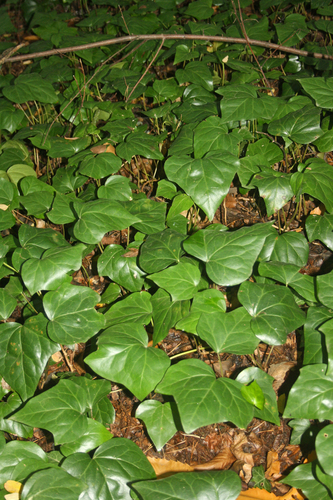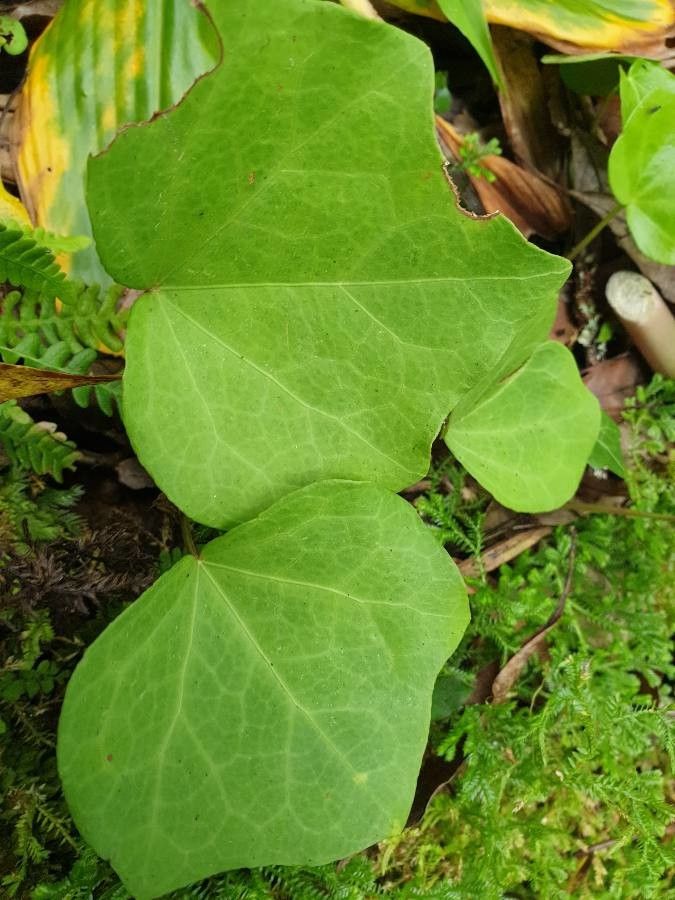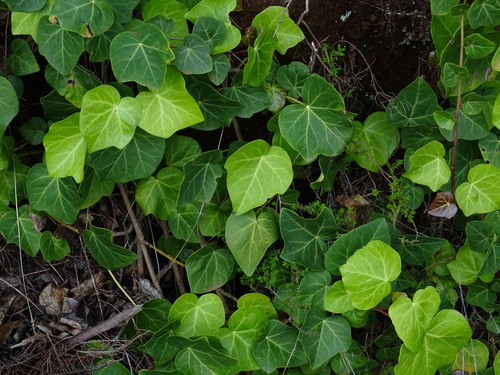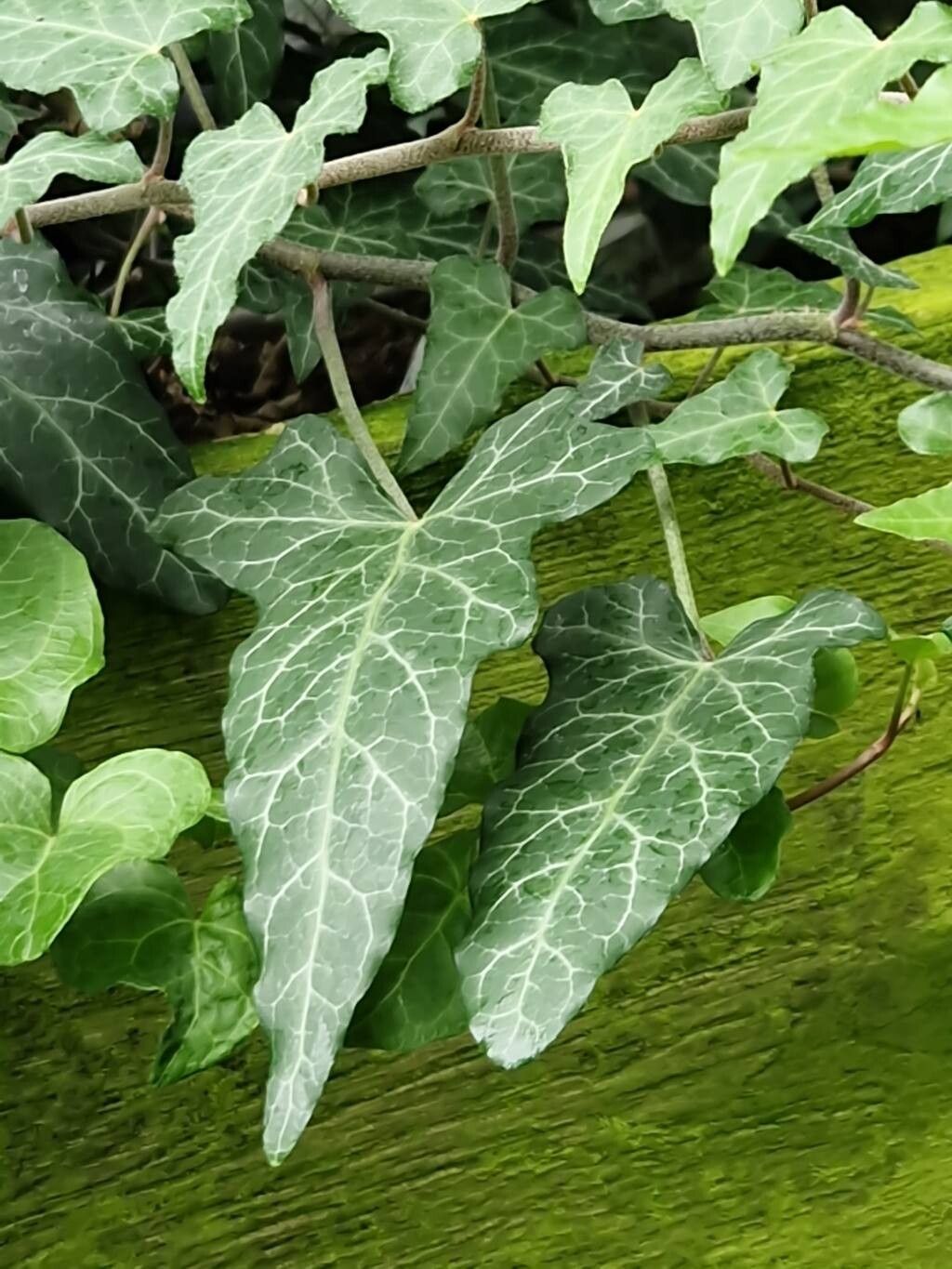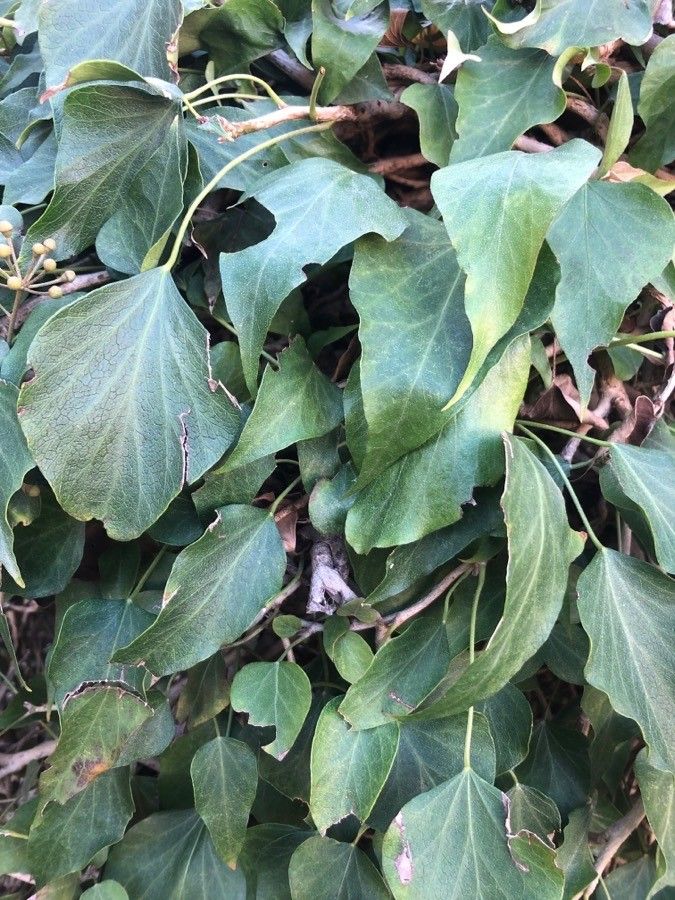
Hedera rhombea, the Japanese ivy or songak, is a species of ivy in the Araliaceae family native to East Asia. Formerly named Hedera pedunculata, some subspecies could be subsequently classified as a distinct species. It is common on rocky slopes and growing up the trunks of trees, especially in laurel forest, a type of cloud forest. Hedera rhombea is found in Japan, the Korean Peninsula, islands between Korea and Japan, the coast of mainland China and Taiwan. It is an evergreen climbing plant, growing to 10 m high where suitable surfaces (trees, cliffs, walls) are available, and also growing as ground cover where there are no vertical surfaces. It climbs by means of aerial rootlets which cling to the substrate. Stems are green, poisonous if eaten and have an irritating sap. It is cultivated in gardens and used in floral arrangements. The leaves are medium green and have a rhombic diamond shape that give it its species name, rhombea. Leaves have a glossy, dark green petiole. The bisexual flowers are 4–5 mm in diameter and yellow-green, in erect umbels. The round fruits are black when ripe.
Japanese ivy has strong resistance to disease and is generally not susceptible to illnesses. In terms of care, this plant is fairly low-maintenance. Planted outdoors it requires only light watering, and larger specimens typically do not need pruning. Smaller plants, however, should be pruned after they have finished blooming. Japanese ivy is suitable for anyone with an outdoor area, such as a garden or deck, and does not require extensive plant-care experience.
How to keep Hedera Rhombea.
Light
Japanese ivy does best in places where it gets bright sunlight all day long. It can still tolerate spots with less sun, though. Since it originates from sunny habitats, the plant may grow slowly and show reduced vigor if it lacks sunlight for long periods. Conversely, too much sun can scorch its leaves.
Water
Japanese ivy flourishes in consistently moist woodland environments, favoring soil that remains evenly moist and environments with high humidity. To maintain its hydration, water the plant weekly, ensuring the soil is moist but not saturated. Indoors, it's helpful to mist the plant regularly. Its requirement for steady watering continues throughout the year, even during the cooler months when its growth rate decreases.
Humidity
This plant will thrive in moderate humidity, which is probably the level in your home. However, misting it a few times a week can be very beneficial. Make sure the room has good ventilation.
Temperature
Japanese ivy does well in temperatures between 41 and 100 °F (5 and 38 °C). Its native habitat has a broad temperature range, permitting it to adapt from cool to warm conditions. During extreme seasons, altering the ambient temperature may be important for its survival.
Fertilizer
Fertilize your Japanese ivy in early spring to encourage healthy growth. Regular feeding boosts overall health, leading to vigorous growth, greater resilience under harsh conditions, and enhanced resistance to pests and diseases. Follow a consistent fertilization schedule for your Japanese ivy to keep the foliage vibrant, richly colored, and lush in appearance.
Pruning
Japanese ivy is a climbing vine known for its glossy, lobed leaves. To maintain its health and appearance, it is best to prune the plant in early spring. This helps remove dead stems and control its growth, encouraging denser foliage and managing its invasiveness. Regular pruning also enhances the plant's climbing ability, making Japanese ivy an attractive addition to any garden.
Pot & Repot
Japanese ivy needs pots with excellent drainage to thrive. Good drainage prevents waterlogging and promotes healthy root growth.
Botanical profile.
- Plant Type
- Vine
- Life Cycle
- Perennial
- Genus
- Hedera
- Family
- Araliaceae
- Hardiness Zone
- 5-12
- Mature Height
- 10.06 m
- Mature Spread
- 4.88 m to 10.06 m
- Leaf Color
- Dark Green, Forest Green
- Leaf Type
- Evergreen
- Flower Color
- Yellow, Green
- Flower Size
- 0.51 cm to 0.51 cm
- Bloom Time
- Early fall, Mid fall
- Planting Time
- Spring, Summer, Autumn, Winter
- Harvest Time
- Winter
- Native Area
- South Korea, Japan, China
Other names.
Reader questions.
How should I water my Japanese ivy in the best way?
To promote excellent root development, consider placing a garden hose at the base of each plant. Avoid spraying water directly on the leaves, especially if they are outdoors and exposed to direct sunlight. Instead, focus on watering the roots. You can use bubblers or soaker hoses to ensure the roots get adequately moistened. When adding or removing plants, use soaker hoses that cover the entire garden or bed to help the roots grow deep. Remember to drain any excess water and allow the soil to dry before watering again. To prevent diseases, water the plants at ground level. On sunny days, it might be beneficial to spray the entire bush with water. Whether your Japanese ivy is potted or planted in the ground, keep in mind that it prefers deep watering rather than light sprinkling.
How much time should Japanese ivy spend in sunlight each day to grow well?
To ensure healthy growth, it is important for Japanese ivy to get 3-6 hours of sunlight per day. This is the minimum requirement for most plants that can tolerate part sun, and they can also do well in full sun. However, since they need less light for photosynthesis, they are more adaptable compared to plants that need either full sun or part shade.
What is the best temperature for Japanese ivy?
The ideal temperature for Japanese ivy to thrive is between 65 to 80℉ (18 to 27℃). During the main growing phase, it can tolerate temperatures as high as 95℉ (35℃) and as low as 15℉ (-10℃). This plant is capable of surviving freezing winters because it can tolerate low temperatures. To summarize the preferred, highest, and lowest temperature range: The perfect temperature range is 65 to 80℉ (18 to 27℃), the highest is 85 to 95℉ (30 to 35℃), and the lowest falls between -5 to 15℉ (-20 to -10℃) or even lower.
What do I do if I give Japanese ivy too much or too little water?
An overwatered Japanese ivy will show signs such as yellowing, dropping leaves, and wilting. The plant may also look dull and unhealthy, with mushy stems. If you notice these signs, it's best to adjust your watering schedule. On the other hand, wilting can also indicate under watering, causing crispy and dry leaves. In this case, check the soil and give the plant a thorough watering if needed. However, even with enough water, the damaged root system may cause the plant to still appear dry with yellow leaves for a few days. Once it recovers, the yellowing will stop. When you have Japanese ivy indoors, always check the moisture levels and avoid overwatering. Look for signs of black spots and let the soil dry by withholding water for a few days if necessary. Overwatering can lead to root rot, so if you spot discolored and slimy roots, consider transferring the plant to a different pot. Remember to prevent root rot by avoiding overly soggy soil. Planting Japanese ivy outdoors requires paying attention to the soil moisture. If the soil feels too dry, this may indicate underwatering, and proper watering is necessary for the plant's recovery.
What kind of sunlight does Japanese ivy need?
Japanese ivy thrives in full or part sun. For optimal performance, it is recommended to provide direct morning light. However, during summer, it is crucial to shield the plants from the intense afternoon sun to prevent leaf burn and maintain their overall appearance and health, especially in temperate environments.
Do I need to change the temperature for Japanese ivy during different stages of growth?
According to research, Japanese ivy may experience stunted growth when exposed to extended periods of higher temperatures, particularly during the development of axillary buds and main shoots. To promote strong growth after germination or transplanting, it is recommended to maintain consistent and cooler temperatures, ideally around 65℉ (18℃).
How often should I give water to my Japanese ivy?
The Japanese ivy prefers deep watering and doesn't need to be watered frequently. If they are planted in pots, it's important to soak them in a gallon of water each time because the pots have limited water storage and the soil dries out faster. In colder regions, watering every 3 to 5 days is necessary. It's best to water in the morning when the soil is dry, whether the plant is indoors or outdoors. You can also check the soil by feeling the top 2-3 inches - if it's dry, it's time to water. In hot weather, you may need to check the soil moisture daily as heat quickly dries out the soil in pots. For garden irrigation in hot climates, watering once a week is sufficient. Only water when about 2-3 inches of soil becomes too dry. Avoid adding water if there has been enough rainfall to prevent root rot. Mulch can be added outdoors to help conserve water. Sandy soil requires more frequent watering, while clay soil requires less frequent watering to avoid root rot. Marking the watering dates on a calendar can help ensure regular watering. Drooping leaves indicate that watering may be needed soon.
Can the sun harm Japanese ivy? How can I shield Japanese ivy from the sun and heat?
Indoor Japanese ivy can get damaged by direct sunlight when taken outdoors. To prevent sunburn, it's best to move the pots gradually from shade to a brighter spot. However, even well-acclimated plants can be harmed by extreme heat. During a heatwave, it's important to keep the soil consistently moist to help the plants handle the excessive heat. To protect sensitive Japanese ivy during extreme weather, you can move container plants to shaded areas in the afternoon or use a shade cloth.
How can I make sure Japanese ivy stays warm during cold weather?
Japanese ivy can tolerate freezing temperatures in the ground, as long as the winter doesn't drop below an extreme temperature of 15℉ (-10℃). However, if you plant it in pots or containers, you need to protect the roots from the cold. You can do this by wrapping the container in a blanket or by bringing it indoors where it will be completely shielded from the elements.
How much water should I give my Japanese ivy plant?
For the Japanese ivy, it is generally recommended to give it about a gallon of water on a regular schedule. If you have potted plants, it's a good idea to water them deeply until you see water dripping at the bottom of the pot. Then, wait for the soil to dry before watering again. To determine how much water you've given the plant in a week, you can use a water calculator or a moisture meter. During the flowering period, it's important to provide plenty of water, but allow the moisture to evaporate afterwards to avoid root rot. If the Japanese ivy is planted outdoors and there is adequate rainfall, additional watering may not be necessary. However, when the ivy is young or newly planted, make sure it receives 1-2 inches of rain per week. As it continues to grow, it can rely solely on rainfall. Only in very hot weather or when there is no rainfall for 2-3 weeks should you consider giving the Japanese ivy a thorough watering during the cooler part of the day to prevent heat damage. Additional watering will be needed during prolonged droughts.
Should Japanese ivy be kept out of the sun? / Do I need to shield Japanese ivy from sunlight?
Japanese ivy benefits from bright morning sun and some full sun exposure, but it can struggle with the intense midday sun of summer. If it's planted in the ground, it can slowly adapt to the increasing intensity of the summer sun. However, potted plants that have been indoors or in a protected area are more likely to be damaged if exposed suddenly to the direct summer sun during the hottest part of the day. To protect Japanese ivy from the harsh afternoon sun, it's best to plant or place it in an area that is shaded by taller trees, plants, buildings, or landscape features during midday.
If the temperature is too high or too low, how will Japanese ivy be harmed?
Japanese ivy will experience greater harm if the temperature consistently rises too high, compared to when it drops too low. High temperatures can lead to reduced seed germination and photosynthesis efficiency due to hormonal disruptions caused by heat stress. The plant will display symptoms such as wilting, leaf browning, and even potential death. On the other hand, if the temperature drops too low, the plant's essential functions like nutrient uptake and photosynthesis will halt, potentially resulting in its death. Even a single freezing event during the growing season can trigger a membrane phase transition, which can also cease plant functions and lead to plant death.