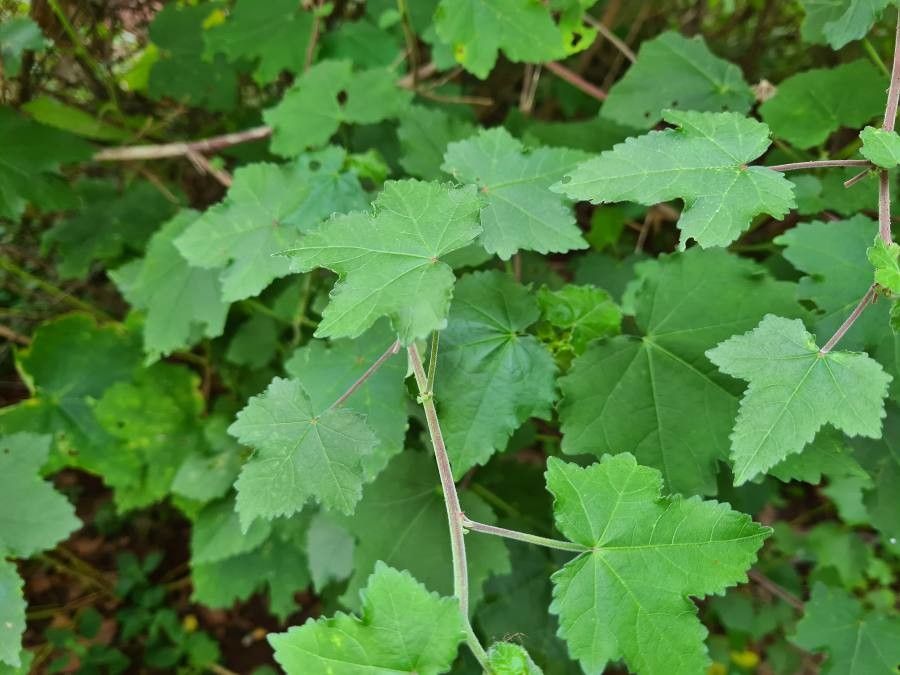
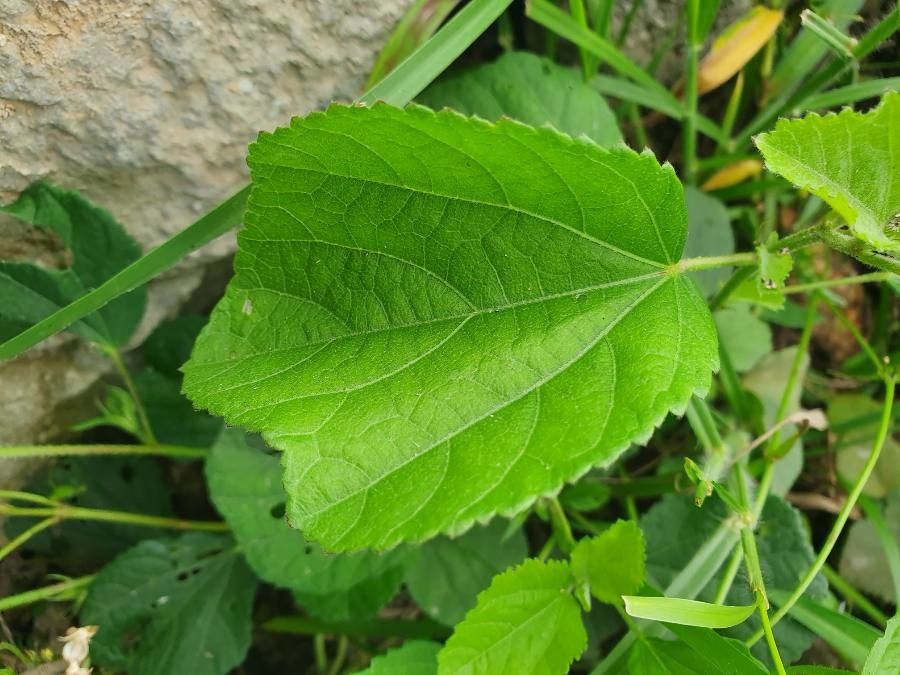
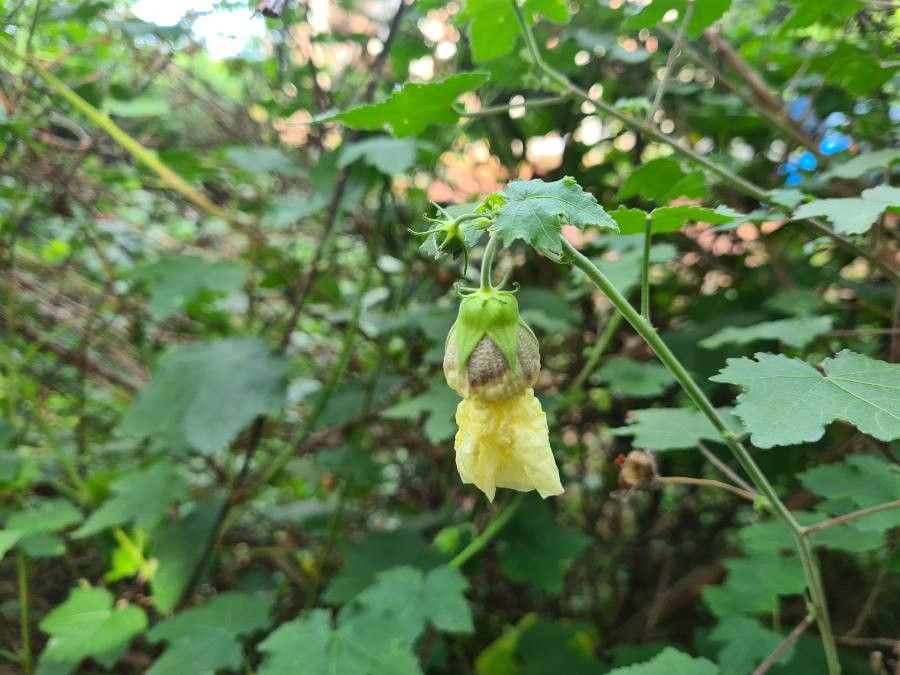
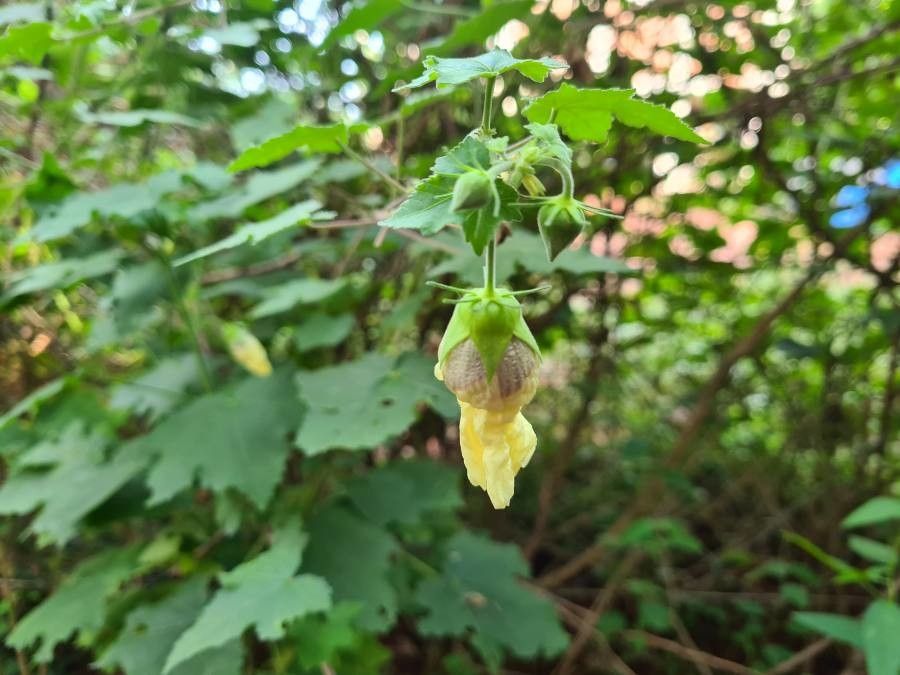
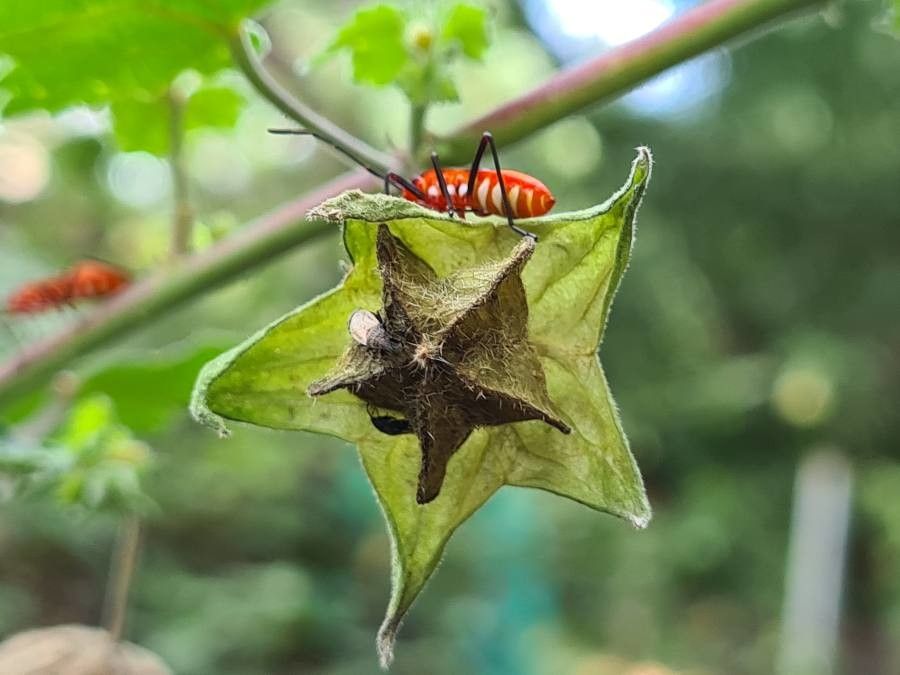
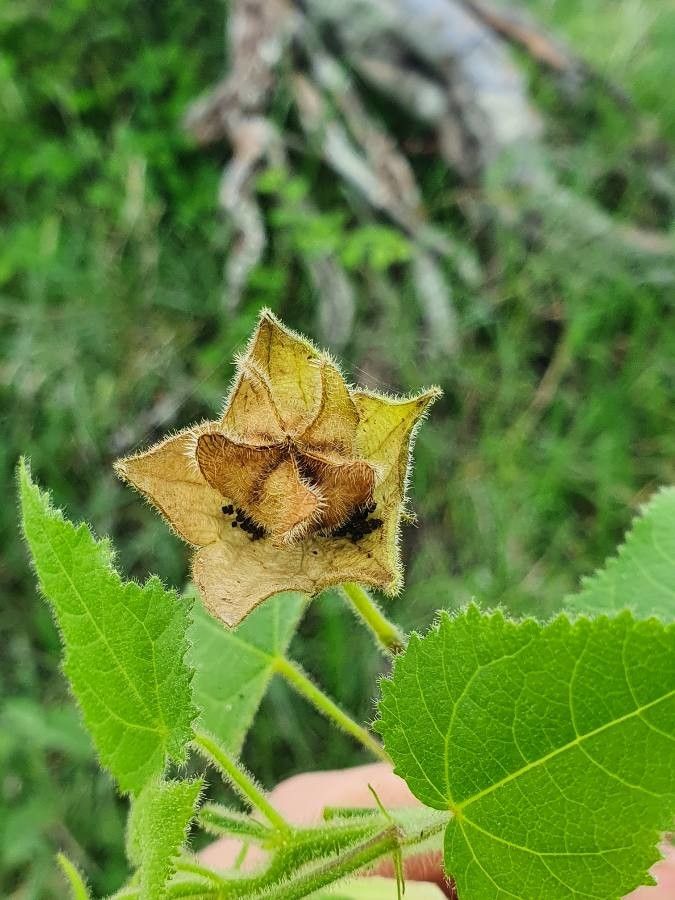
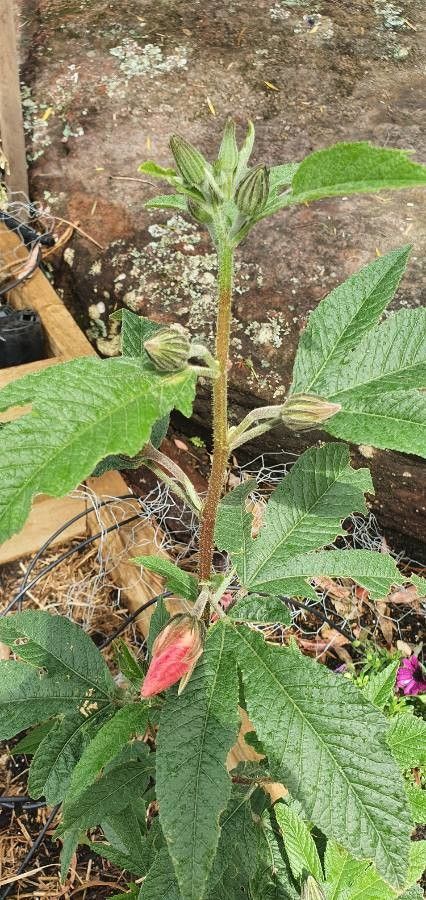
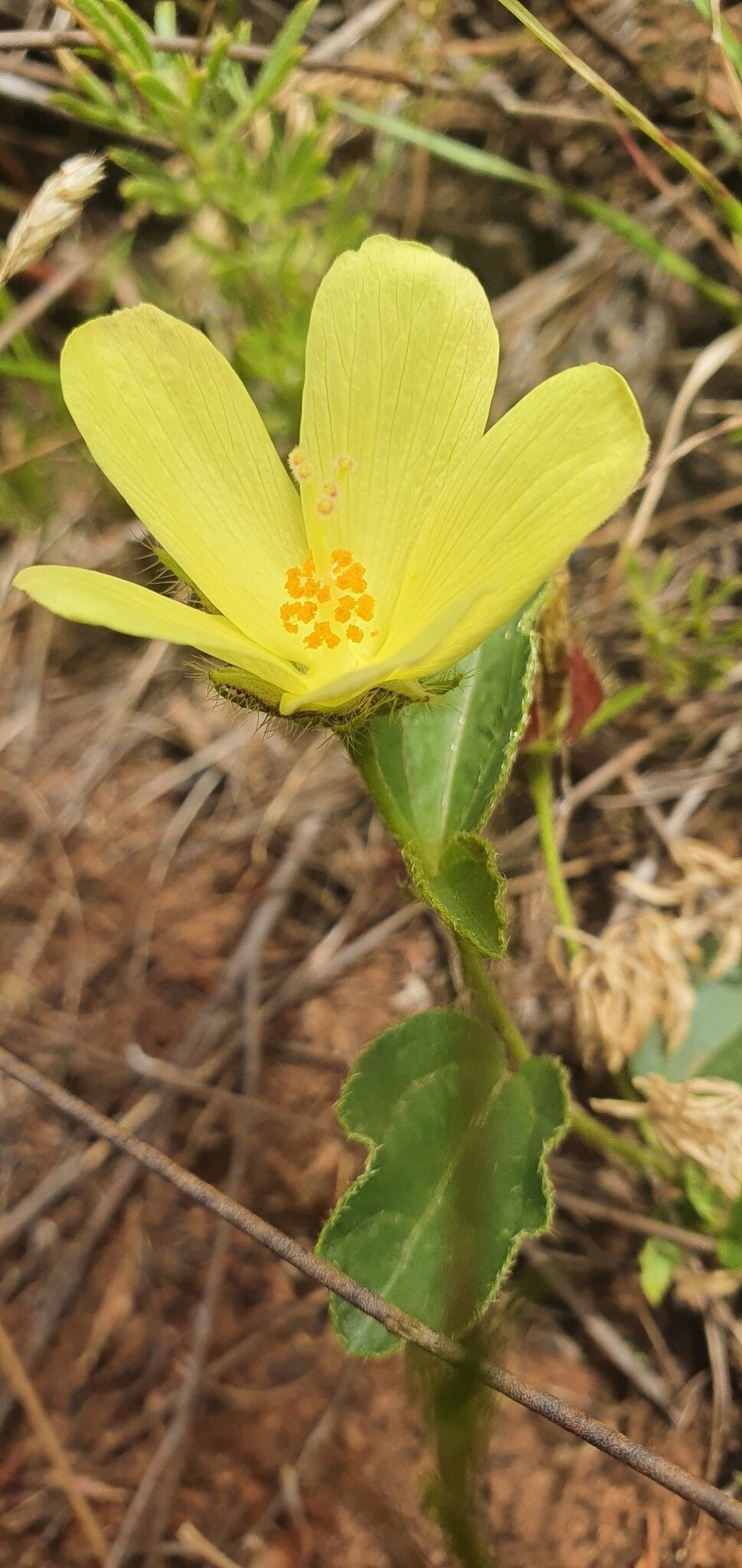
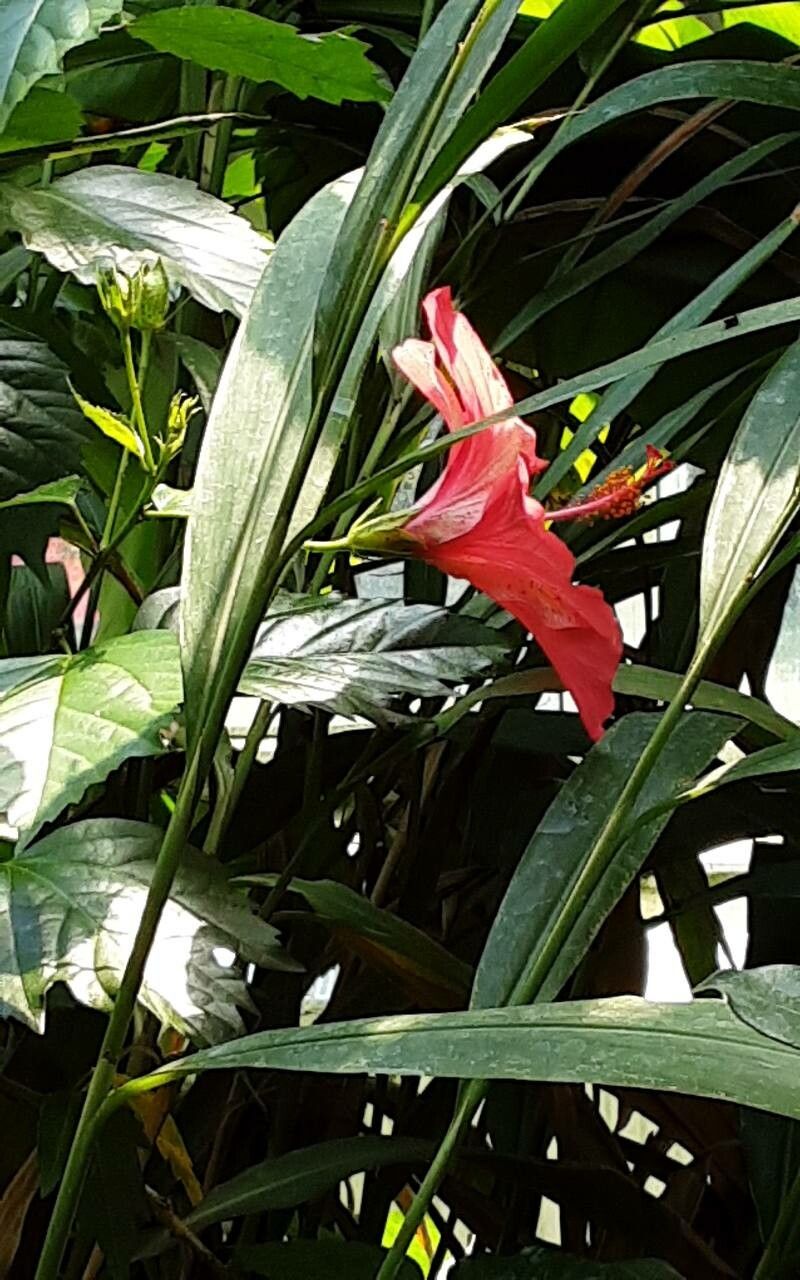
Hibiscus vitifolius, commonly known as the Grape-leaved Hibiscus, is a flowering plant belonging to the Malvaceae family. It is native to tropical and subtropical regions of Asia and Africa. The plant can grow up to 2 meters tall and has a woody stem with green leaves that resemble grape leaves.
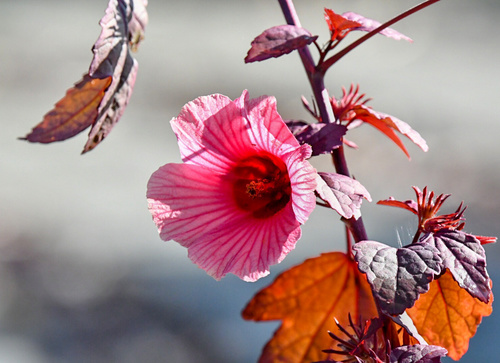
The flowers of Hibiscus vitifolius are large, showy, and available in shades of pink or white with a deep red center. They bloom from summer through fall, attracting bees, butterflies, and hummingbirds.
This plant prefers well-drained soil and thrives in full sun or partial shade. While it can tolerate drought conditions, regular watering during hot weather is essential for optimal growth.
Hibiscus vitifolius has been used for medicinal purposes in traditional medicine due to its anti-inflammatory properties. The leaves are employed as an herbal remedy for fever, while the flowers are used to treat skin conditions such as eczema.
Overall, Hibiscus vitifolius is an attractive ornamental plant that adds color to any garden while also offering medicinal benefits.
Kenaf is fairly disease-resistant and typically does not suffer from many illnesses. Still, it can be affected by pests and diseases present in its environment. Such infections tend to be mild. Regarding maintenance, this plant needs a moderate level of care. It should be pruned on a regular basis to preserve a neat appearance and encourage healthy growth. Applying fertilizer can also assist in enhancing flowering. Kenaf is appropriate for anyone who has an outdoor area, like a garden or patio, and does not demand extensive plant-care experience. When cultivated indoors, it may need more attention.
How to keep Hibiscus Vitifolius.
Light
Kenaf grows best in locations with full sun, which promotes healthy development; however, it can also tolerate areas receiving only partial sun during the day. Its native growing conditions indicate a preference for plentiful sunlight. Too little light can restrict its growth, while excessive exposure may harm the plant.
Temperature
Kenaf comes from tropical areas where the climate is generally warm and humid. As a result, it is well suited to high temperatures and humidity. It is sensitive to sudden temperature changes and prefers a stable temperature, so indoor temperature fluctuations should be avoided. It usually does not tolerate cold and requires higher temperatures to grow. If the environmental temperature falls too low, the plant may stop growing or even die.
Fertilizer
When most of Kenaf's blooms have fully opened, resume fertilizing. During the peak bloom period, apply fertilizer every three to four weeks, weather permitting. After Kenaf begins to produce fewer new blooms, stop fertilizing; there's no need to feed the plant when it can no longer produce more blooms.
Botanical profile.
- Plant Type
- Herb
- Life Cycle
- Annual
- Genus
- Hibiscus
- Family
- Malvaceae
- Hardiness Zone
- 6-12
- Mature Height
- 1.52 m to 3.35 m
- Mature Spread
- 7.32 m to 14.33 m
- Leaf Color
- Green
- Leaf Type
- Evergreen
- Flower Color
- White, Yellow, Pink
- Flower Size
- 7.62 cm to 15.24 cm
- Bloom Time
- Mid summer, Late summer, Early fall, Mid fall
- Planting Time
- Spring, Summer, Autumn
- Harvest Time
- Fall
- Native Area
- Burkina Faso, Somalia, Angola, Namibia, Madagascar, Rwanda, Eritrea, Nigeria, Yemen, Kenya, Niger, Uganda, Tanzania, Zimbabwe, Mali, Guinea-Bissau, Benin, Sierra Leone, Cameroon, Burundi, Mozambique, Ghana, Ethiopia, Botswana, Congo, Central African Republic, Malawi, South Africa, Zambia, Sudan, Mauritania, Guinea, Chad, Togo, Senegal, Eswatini, Côte d'Ivoire, Gambia, Congo (DRC)
Other names.