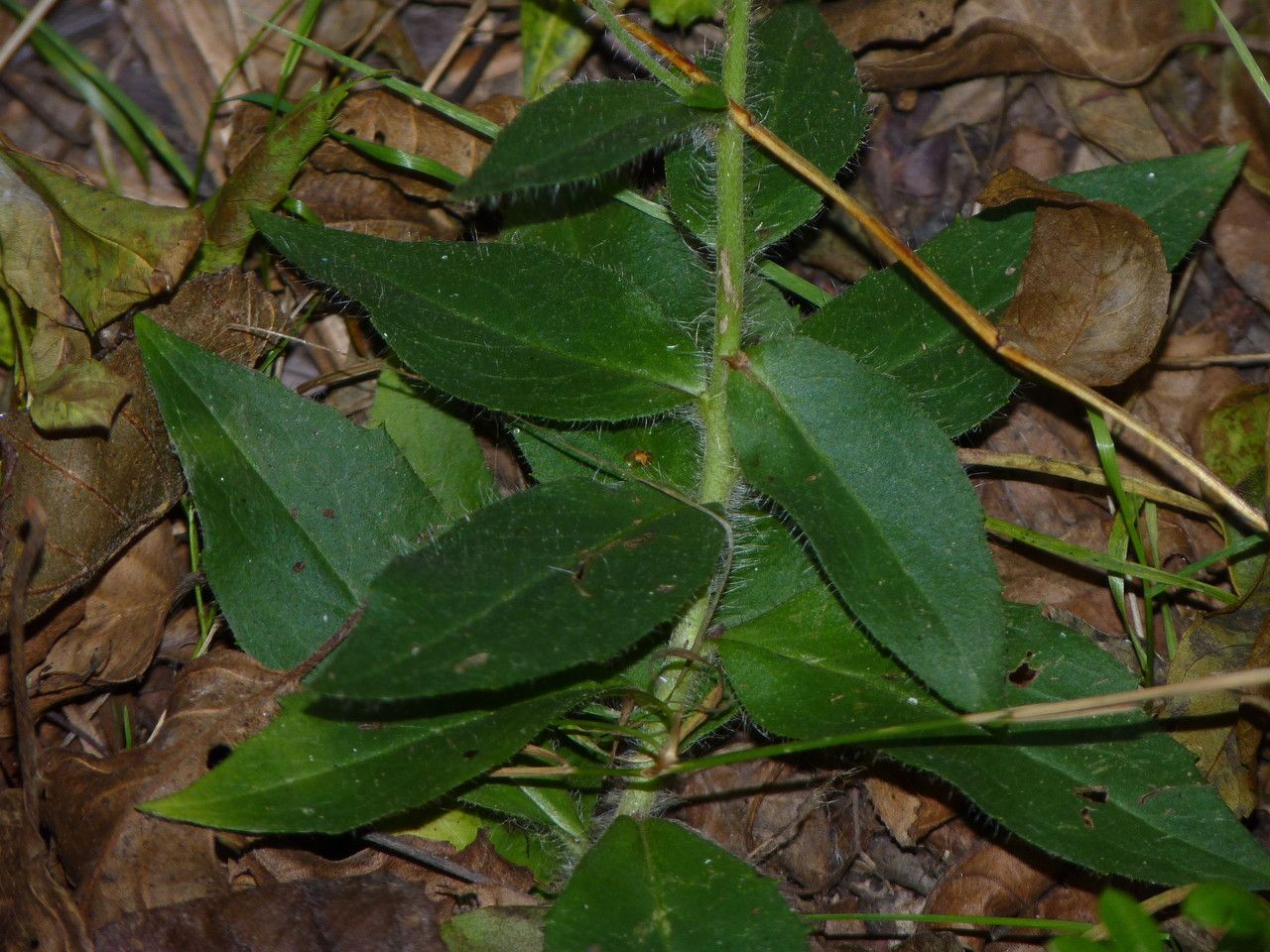
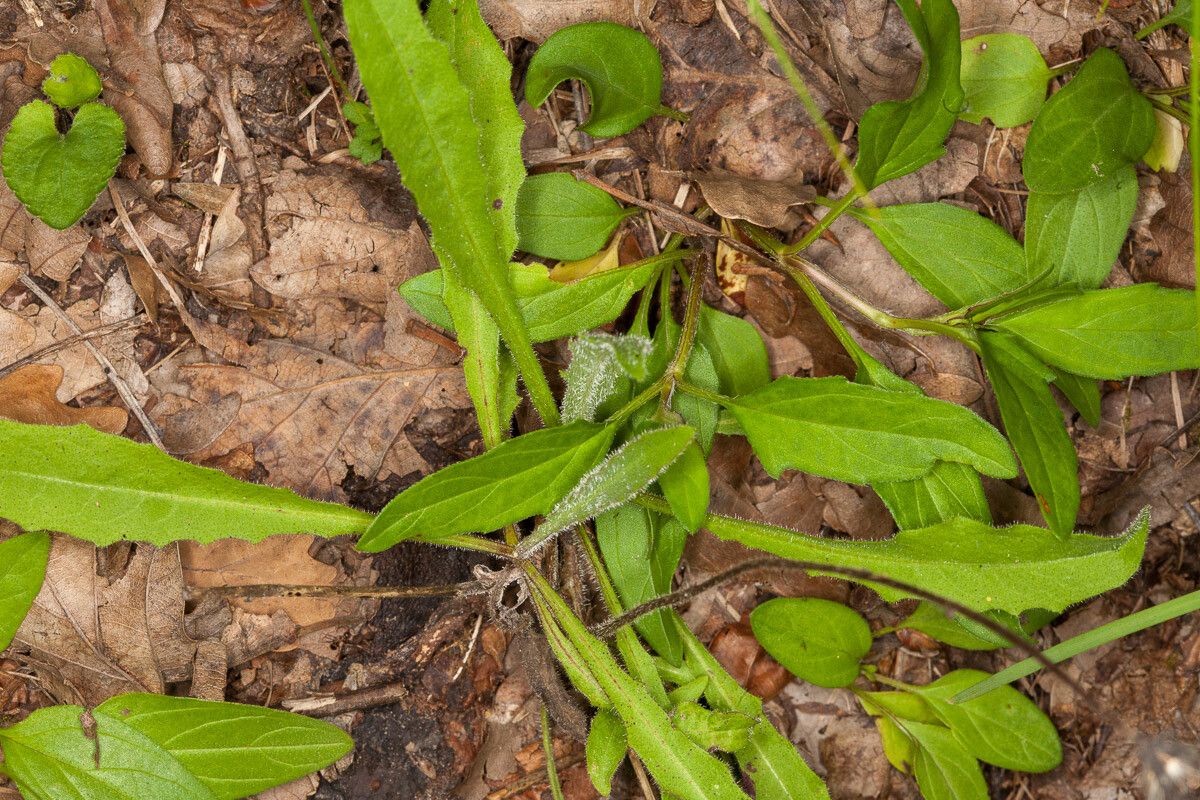
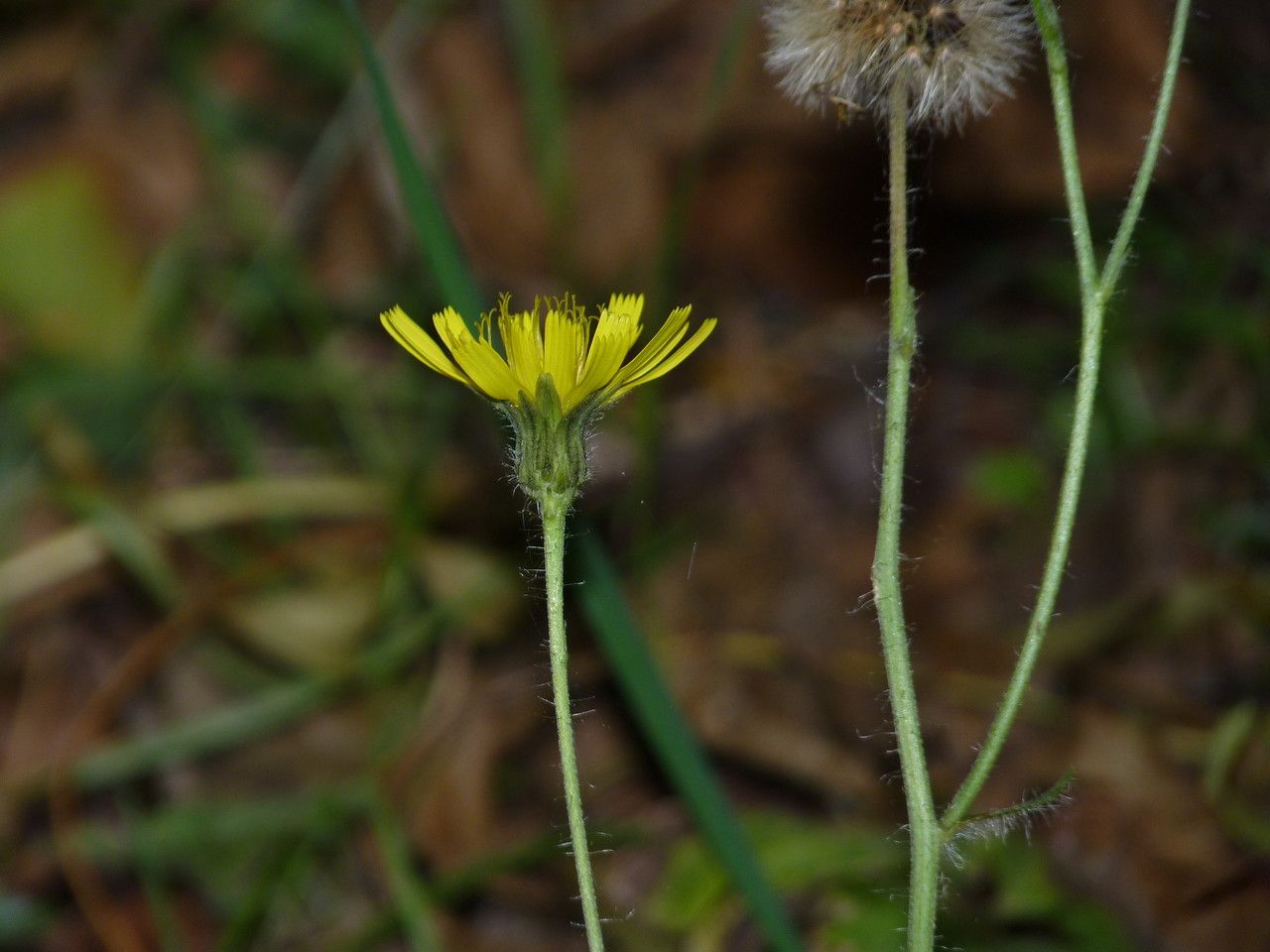
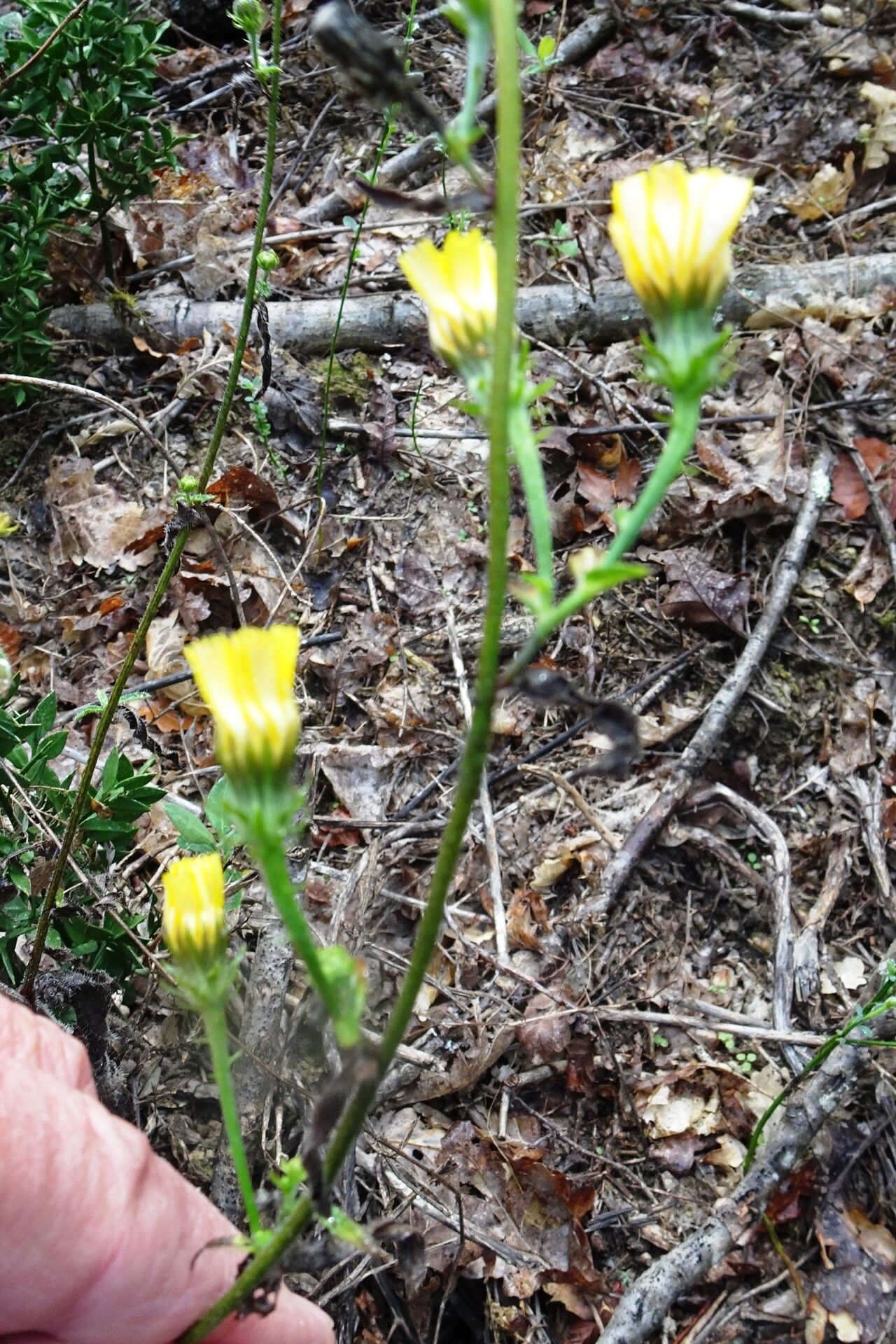
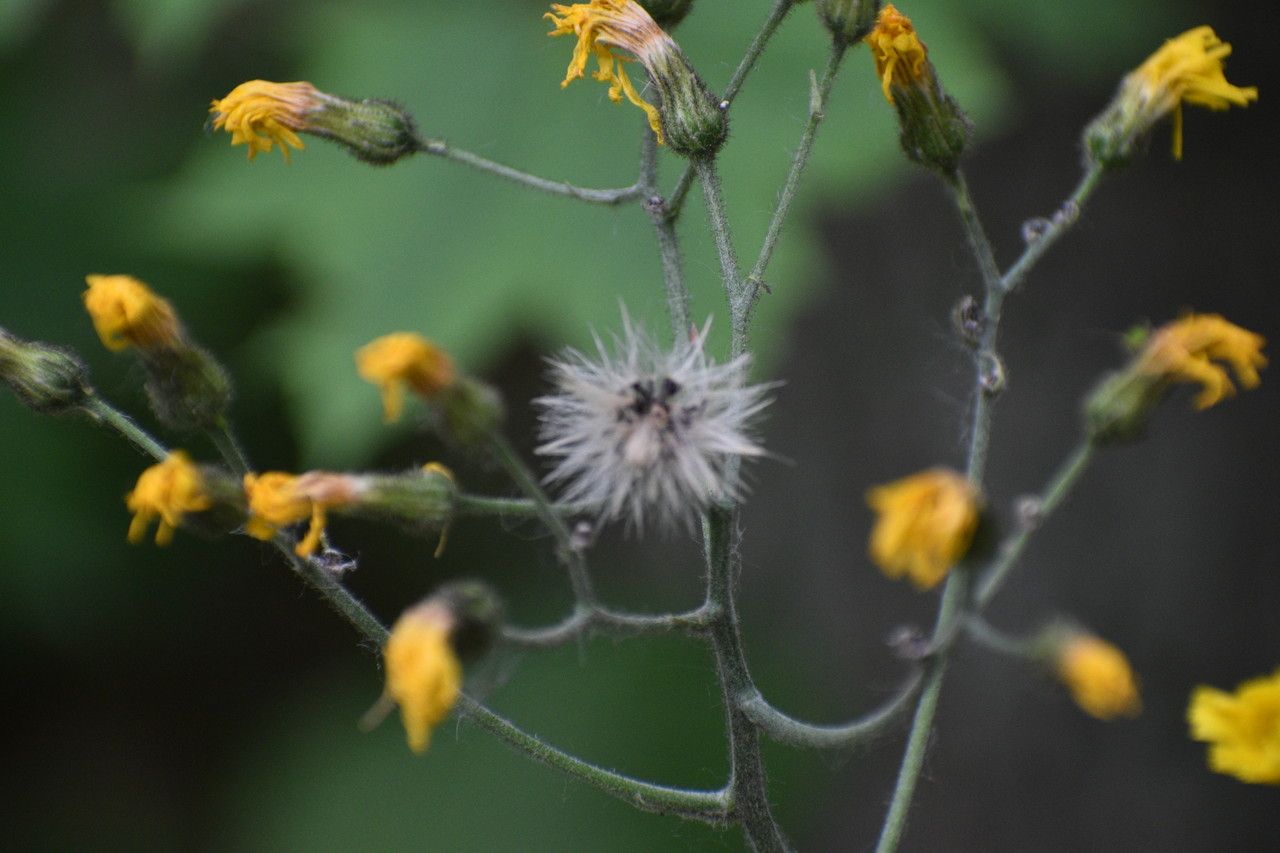
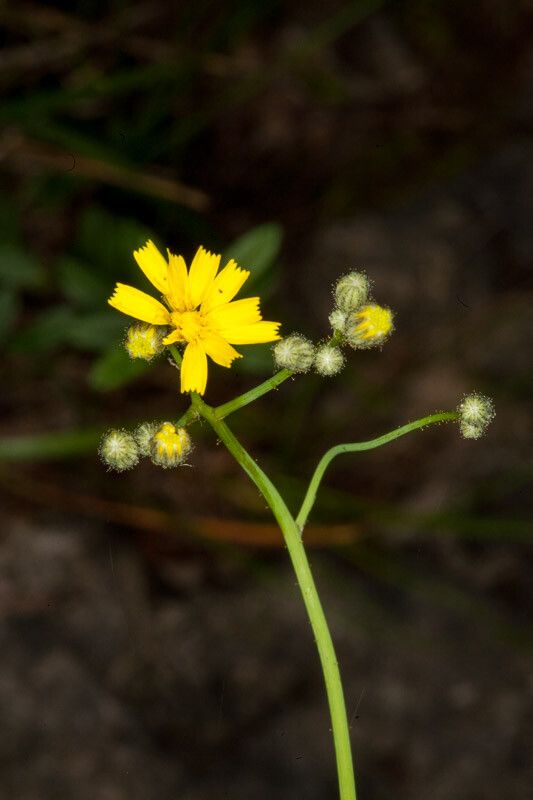
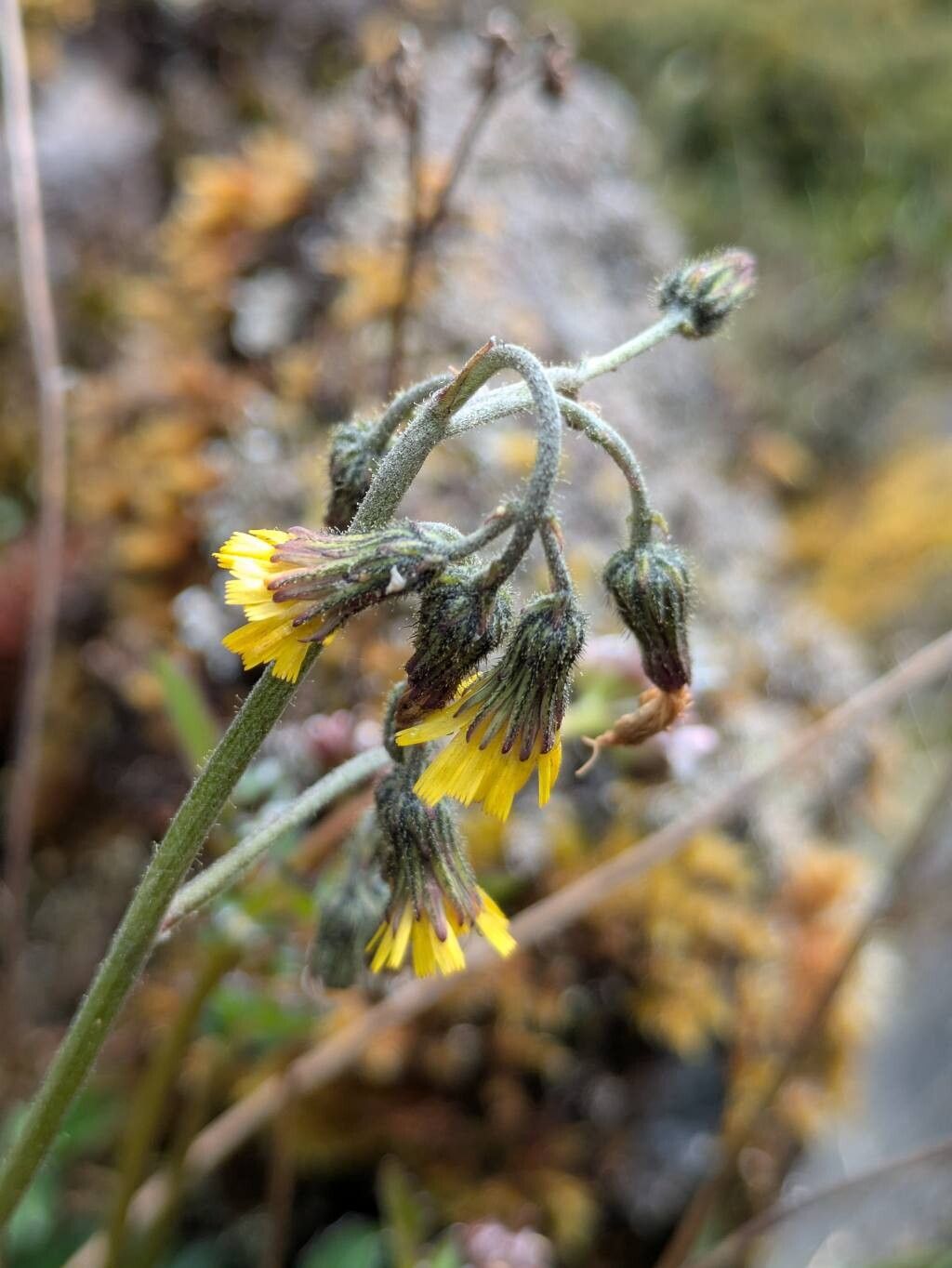
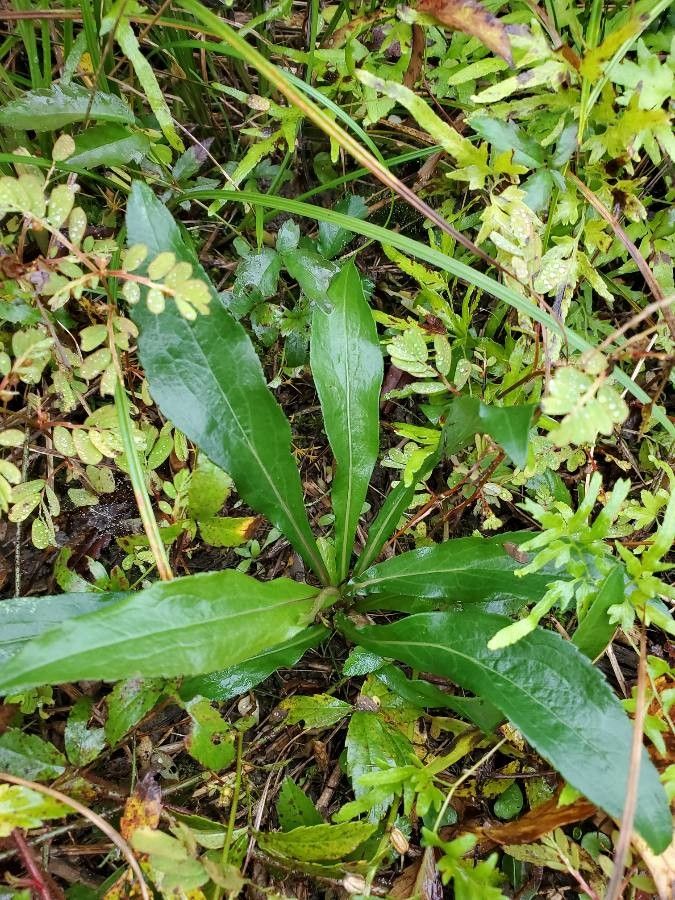
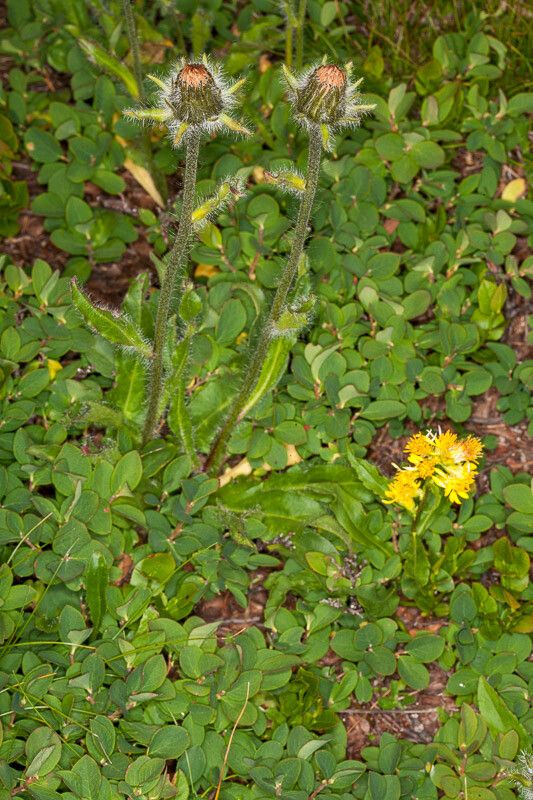
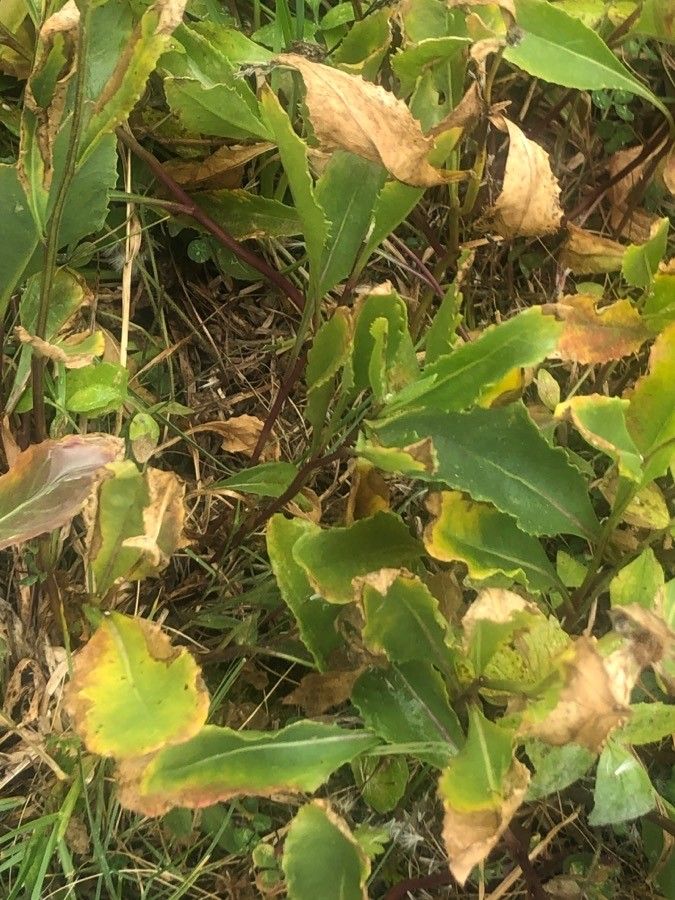
Hieracium laevigatum, or smooth hawkweed, is a Eurasian plant species in the tribe Cichorieae within the family Asteraceae. It is widespread across much of Europe and western Asia. It is very similar to Hieracium sabaudum and can be found on dry, more or less nutrient rich soil in light woods, grassy embankments and fields, or on walls.Hieracium laevigatum is an herb up to 60 cm (2 feet) tall, with leaves on the stem rather than in a rosette at the bottom. Leaves are lance-shaped, up to 10 cm (4 inches) long, with large teeth along the edge. One stalk branches toward the top, producing numerous flower heads. Each head has several ray flowers but no disc flowers. SubspeciesHieracium laevigatum subsp. achalzichiense (Üksip) Greuter Hieracium laevigatum subsp. acrifolium (Dahlst.) Zahn Hieracium laevigatum subsp. analogum (Boreau) Zahn Hieracium laevigatum subsp. auriglandulum (Wiinst.) Zahn Hieracium laevigatum subsp. boreanum (Boreau) Zahn Hieracium laevigatum subsp. calothyrsum (Murr) Dalla Torre & Sarnth. Hieracium laevigatum subsp. chaubardianum (Arv.-Touv.) Zahn Hieracium laevigatum subsp. coronopifolioides Zahn Hieracium laevigatum subsp. dechyi Koslovsky & Zahn Hieracium laevigatum subsp. deltophylloides Zahn Hieracium laevigatum subsp. deseglisei (Boreau) Zahn Hieracium laevigatum subsp. dryadeum (Boreau) Zahn Hieracium laevigatum subsp. echinodermum Zahn Hieracium laevigatum subsp. fagineum (Arv.-Touv.) Zahn Hieracium laevigatum subsp. ficifolium (Arv.-Touv.) Zahn Hieracium laevigatum subsp. flocciparum Schelk. & Zahn Hieracium laevigatum subsp. glareosum (Lönnr.) Greuter Hieracium laevigatum subsp. goriense Koslovsky & Zahn Hieracium laevigatum subsp. gothiciforme (Dahlst.) Zahn Hieracium laevigatum subsp. gothicum (Fr.) Čelak. Hieracium laevigatum subsp. grandidens Zahn Hieracium laevigatum subsp. hypopityforme (Üksip) Greuter Hieracium laevigatum subsp. knafii (Čelak.) Zahn Hieracium laevigatum subsp. laevigans Zahn Hieracium laevigatum subsp. leucothyrsum (Litv. & Zahn) Greuter Hieracium laevigatum subsp. lineatum (Dahlst.) Zahn Hieracium laevigatum subsp. macrolygodes Zahn Hieracium laevigatum subsp. magistri (Godr.) Zahn Hieracium laevigatum subsp. nivale (Froel.) Zahn Hieracium laevigatum subsp. perangustum (Dahlst.) Zahn Hieracium laevigatum subsp. pesianum (Arv.-Touv. & Belli) Zahn Hieracium laevigatum subsp. pictaviense (Sauzé & Maillard) Zahn Hieracium laevigatum subsp. pseudogothicum (Arv.-Touv.) Zahn Hieracium laevigatum subsp. retardatum Zahn Hieracium laevigatum subsp. revolii (Sudre) Zahn Hieracium laevigatum subsp. rigidum (Hartm.) Čelak. Hieracium laevigatum subsp. sagotii (Boreau) Zahn Hieracium laevigatum subsp. semiglobosum (Dahlst.) Zahn Hieracium laevigatum subsp. stricticaule (Boreau) Zahn Hieracium laevigatum subsp. subgracilipes Zahn Hieracium laevigatum subsp. tridentaticeps (Zahn) Zahn Hieracium laevigatum subsp. tridentatum (Fr.) Čelak. Hieracium laevigatum subsp. vendeanum (Boreau) Zahn Hieracium laevigatum subsp. vogesicola Zahn
Smooth hawkweed has strong resistance to disease and usually is not prone to illness. However, it can be affected by pests and diseases present in its surroundings. These infections are generally not severe. As for care, this plant needs a moderate level of maintenance. It should be pruned regularly to keep a neat appearance and encourage healthy growth. Fertilizing can also help stimulate flowering. Smooth hawkweed is suitable for anyone with outdoor space, such as a garden or patio, and does not require much gardening experience. It may need extra care when grown indoors.
How to keep Hieracium Laevigatum.
Light
Smooth hawkweed is a perennial herbaceous plant that favors sunny, open habitats and is commonly found in meadows and grasslands. It prefers full sun but can also tolerate partial sun.
Water
Smooth hawkweed, which hails from temperate regions, thrives best under conditions of moderate moisture. It enjoys consistent hydration but can suffer if waterlogged. This plant strikes a balance between drought tolerance and the need for regular watering, making it well-suited for habitats with similar conditions. To keep it healthy, smooth hawkweed benefits from weekly watering, which complements the seasonal rains crucial for its growth cycle and flowering.
Temperature
Smooth hawkweed is native to temperate regions and does best in temperatures of 32 to 70 °F (0 to 21 °C). Due to seasonal changes, monitoring and adjusting ambient temperatures to replicate its natural habitat are recommended.
Fertilizer
The best time to fertilize a Smooth hawkweed is in early spring, as it comes out of dormancy and starts active growth. Fertilizing supplies essential nutrients for healthy development. While Smooth hawkweed has relatively low fertilizer requirements, an annual application can improve its survival and encourage better, longer-lasting flowers.
Pruning
Smooth hawkweed has smooth leaves and yellow flowers. To promote healthy growth and prevent overgrowth, it's best to prune this plant in early to late spring. This includes deadheading and selective thinning. Make sure your tools are clean to avoid spreading disease, and adjust your pruning techniques to maintain the plant's ideal shape and health.
Botanical profile.
- Plant Type
- Herb
- Life Cycle
- Perennial
- Genus
- Hieracium
- Family
- Asteraceae
- Hardiness Zone
- 2
- Mature Height
- 61 cm
- Mature Spread
- 20 cm to 40 cm
- Leaf Color
- Green, Dark Green
- Leaf Type
- Semi-evergreen
- Flower Color
- Yellow
- Flower Size
- 2.03 cm to 3.30 cm
- Bloom Time
- Summer
- Planting Time
- Spring, Summer, Autumn
- Harvest Time
- Late summer, Early fall, Mid fall
Other names.
Reader questions.
How should I water my Smooth hawkweed?
To ensure the wellness of the Smooth hawkweed, it is recommended to water it with filtered water at room temperature. Tap water may have harmful particles, so filtered water is a better choice. The plant is accustomed to warm conditions, so using cold water can be a shock to its system. It is best to avoid overhead watering to prevent foliage issues. Instead, water the plant by applying filtered room temperature water to the soil until it is fully soaked. This helps to keep the roots moisturized and aids in their spread through the soil to gather essential nutrients.
What are the sunlight requirements for Smooth Hawkweed?
Smooth Hawkweed thrives in full sun conditions, requiring more than 6 hours of sunlight daily. However, it can also tolerate partial sun situations, where it receives about 3-6 hours of sunlight. Observing how sunlight moves through your garden helps in choosing spots that provide the ideal balance of light and shade, ensuring your plants remain healthy and happy.
What is the native climate for Smooth Hawkweed?
Smooth Hawkweed, known botanically as Hieracium laevigatum, is indigenous to temperate climates. It thrives best in temperature ranges between 32 to 70 °F (0 to 21 °C). To ensure it grows healthy, it's recommended to monitor ambient temperatures closely and make necessary adjustments to mimic its native environment, accommodating for seasonal variations.
What do I do if I give my Smooth Hawkweed too much or too little water?
Overwatering is a more common problem than underwatering for Smooth hawkweed. Too much water can cause wilting, yellowing, and the development of diseases like root rot, mold, and mildew, which can be fatal. Smooth hawkweed is drought-tolerant, so underwatering is less likely, but it can still occur, causing brittle and brown leaves. It's important to detect and address overwatering early to prevent irreversible damage. Reduce watering and check the soil's drainage if overwatering is suspected. In cases of underwatering, increase watering until signs improve.
How important is artificial lighting for indoor Smooth Hawkweed plants?
Artificial lighting becomes crucial for indoor Smooth Hawkweed plants, especially when natural sunlight is insufficient. Artificial lights promote faster and healthier growth by supplying adequate lighting. LED lights are recommended due to their ability to be customized for the specific wavelengths of light that plants need. Full sun plants require 30-50W/sq ft, while partial sun plants need 20-30W/sq ft and full shade plants entail 10-20W/sq ft. The light source should be placed 12-36 inches above the plant to mimic natural sunlight, and most plants benefit from 8-12 hours of artificial light per day.
Does Smooth Hawkweed require any special care during winter?
Despite its high cold tolerance, Smooth Hawkweed does not demand additional frost protection measures during winter months. However, to prepare for the first freeze of autumn, it's advised to water the plant generously. This practice ensures that the soil remains moist when it enters a frozen state, preventing drought and water scarcity for the plant during the winter and early spring periods.
How frequently should I water my Smooth hawkweed plant?
If your Smooth hawkweed plant is in a pot, the most precise way to determine if it needs water is to stick your finger into the soil. If the top two to three inches of soil feel dry, it's time to water it. If you're growing it outdoors in the ground, you can use the same method. When the first few inches of soil have dried out, it's a sign to water it. In the spring and early fall, you'll usually need to water this plant about once a week. However, during extremely hot weather, you may need to water it twice a week or more. It's worth noting that mature and well-established Smooth hawkweed plants can handle drought quite well.
What are the symptoms of light deficiency in Smooth Hawkweed?
Symptoms of light deficiency in Smooth Hawkweed include smaller new leaves, leggy or sparse growth, faster leaf drop, slower or no new growth, lighter-colored new leaves, chlorosis (yellowing leaves), sunscald, leaf curling, wilting, and leaf scorching. These symptoms indicate the plant is not receiving adequate light, leading to issues such as a lack of chlorophyll and essential nutrients, as well as physical damage from excessive sunlight.
How does Smooth Hawkweed react to extremely low temperatures?
Smooth Hawkweed is extremely cold-tolerant, capable of withstanding winter temperatures down to -40°C without requiring special care. However, should temperatures fall below this extreme threshold, while no immediate changes may be observable in winter, there could be a noticeable decrease in sprouting or a complete lack of sprouting come springtime. The recommended solution for affected plants is to remove any parts that have failed to sprout in spring.
How much water does my Smooth hawkweed require?
When watering your Smooth hawkweed, don't be afraid to give it plenty of water. Make sure the top two to three inches of soil are dry before watering, and then water thoroughly until the soil is soaked. Add enough water so that it drains through the holes at the bottom of the pot. If you don't see excess water draining, you may have not given enough water. However, avoid allowing water to accumulate in the soil, as this can harm the plant. If water is not draining properly, it could be a sign of poorly draining soil, which is bad for the plant's health. For outdoor plants, one inch of rain per week should be sufficient.
How can I address sunlight deficiencies for my Smooth Hawkweed?
Addressing sunlight deficiencies involves both short-term and long-term solutions. Indoors, move plants gradually to sunnier spots each week until they get at least 6 hours of direct sunlight daily, use a south-facing window, and consider artificial lighting for large or immobile plants. Outdoors, also move plants gradually to prevent sunburn. Reducing obstructions is crucial; prune trees that block sunlight and consider transplanting smaller plants to more suitable locations during their dormant period for better exposure and health.
What should be done if Smooth Hawkweed is exposed to high temperatures?
Smooth Hawkweed has a low tolerance for high temperatures, with its growth ceasing and becoming more susceptible to rot if temperatures exceed 21°C. In such cases, it’s crucial to trim away the sunburned and dried-up parts of the plant. Additionally, moving the plant to a shaded location or using a shade cloth to protect it from the midday and afternoon sun can help. Ensuring the soil stays moist through watering in the morning and evening is also beneficial.