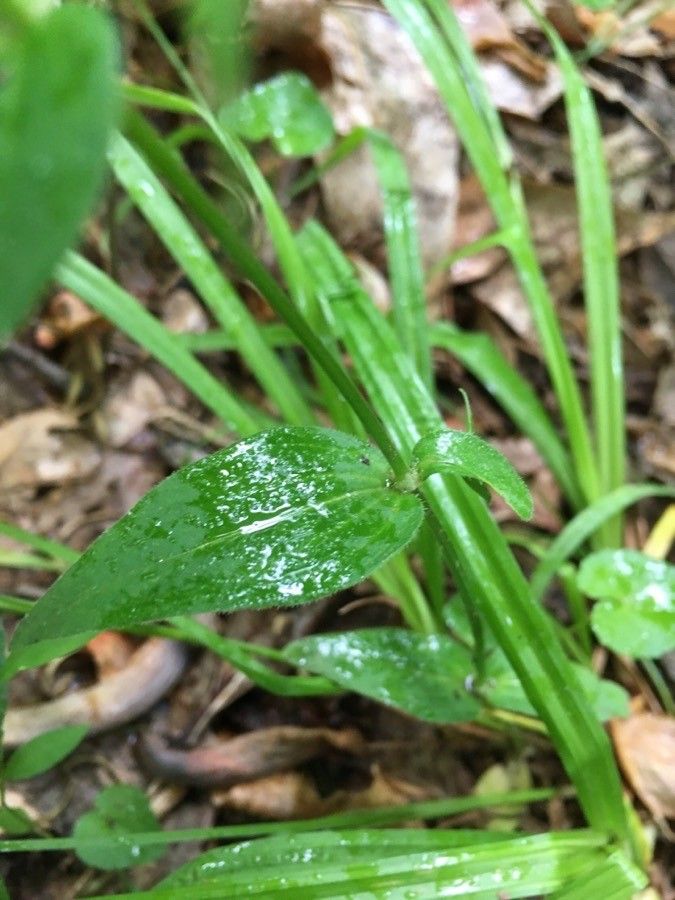
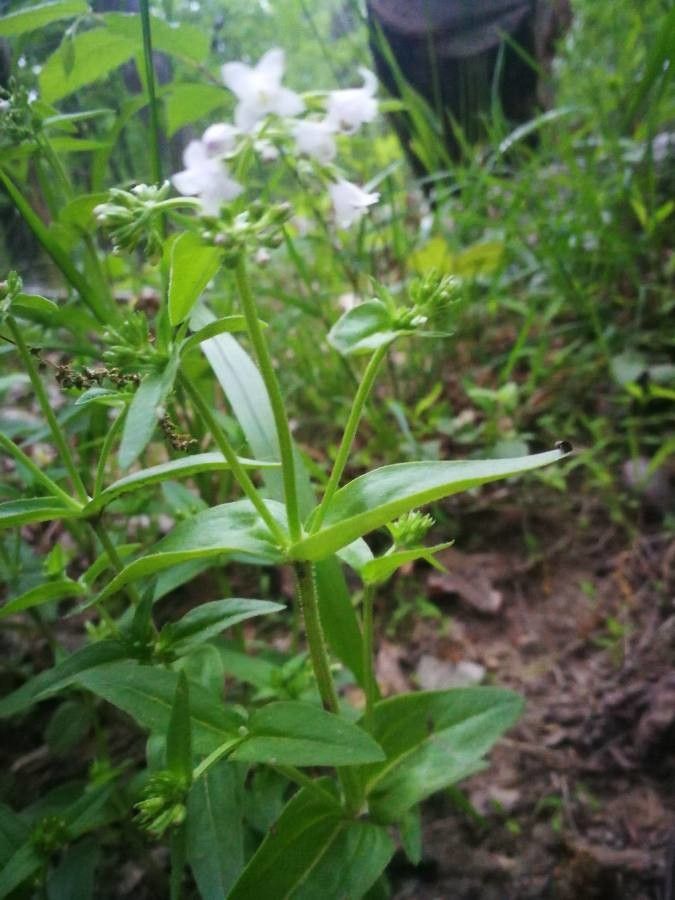
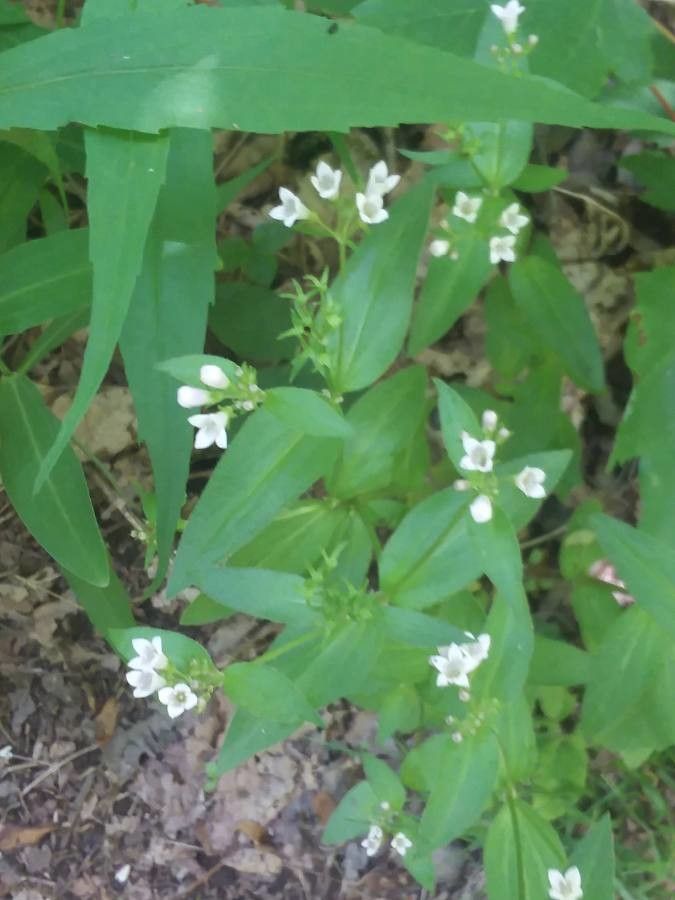
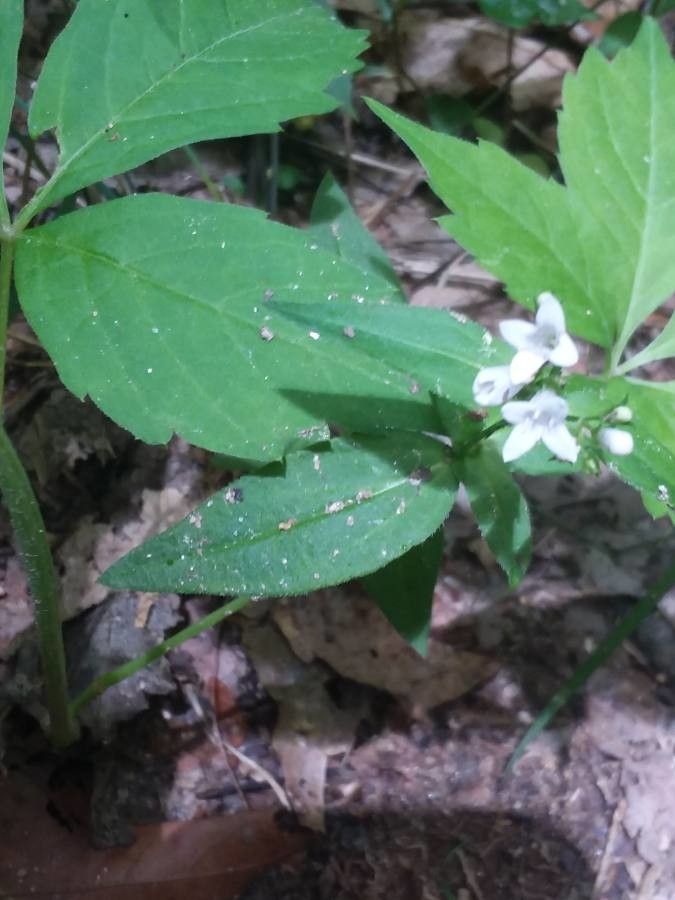
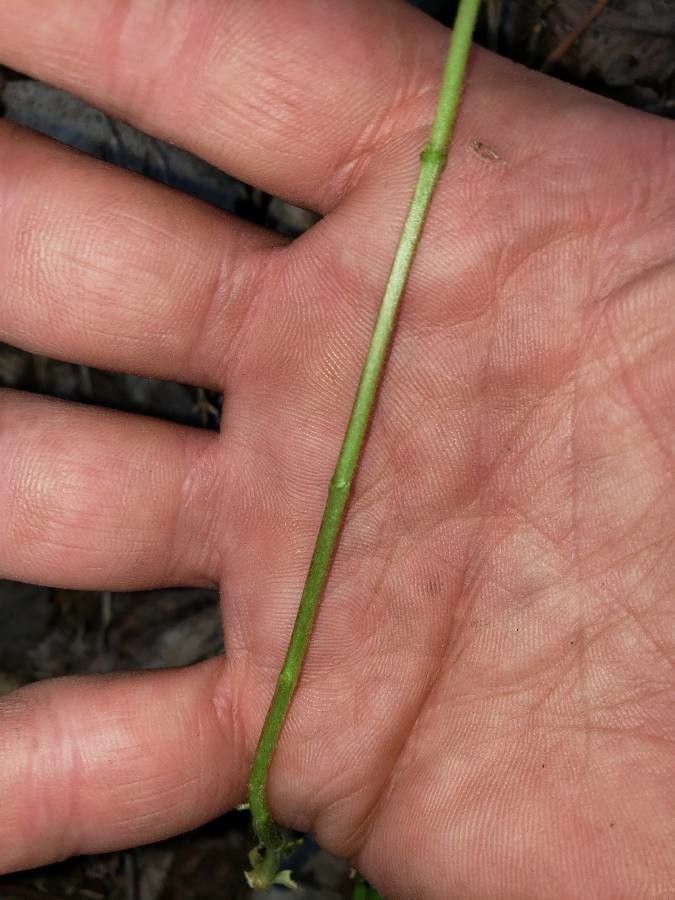
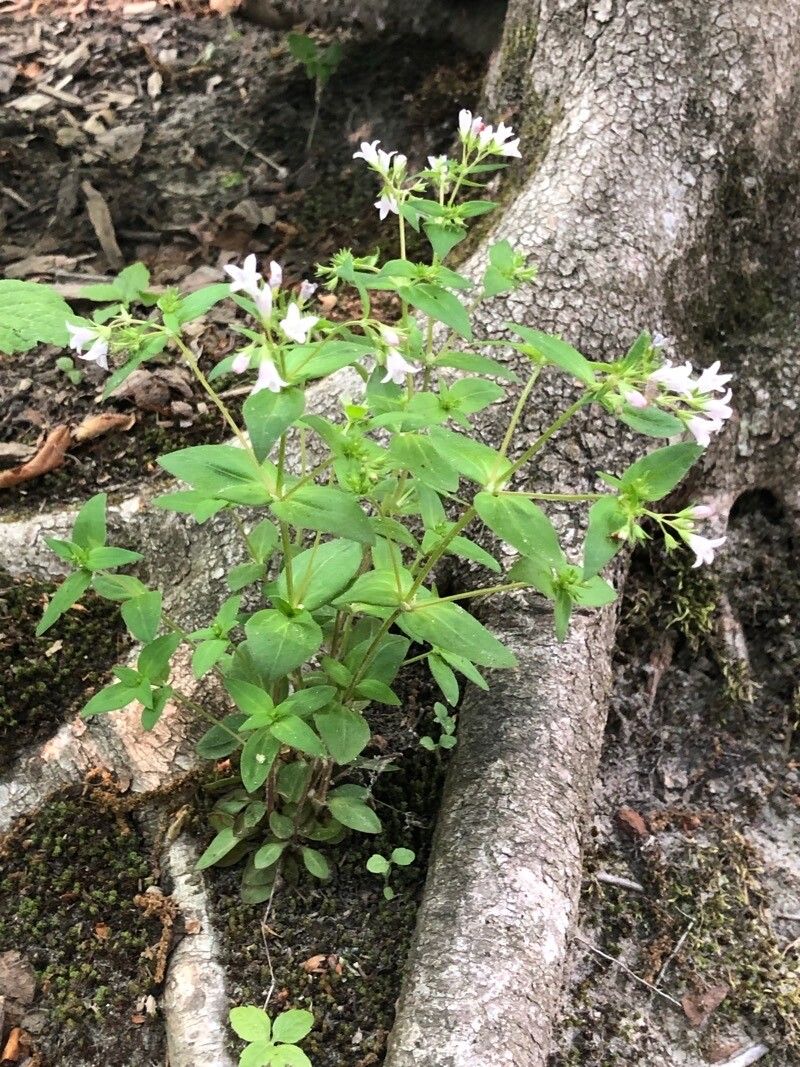
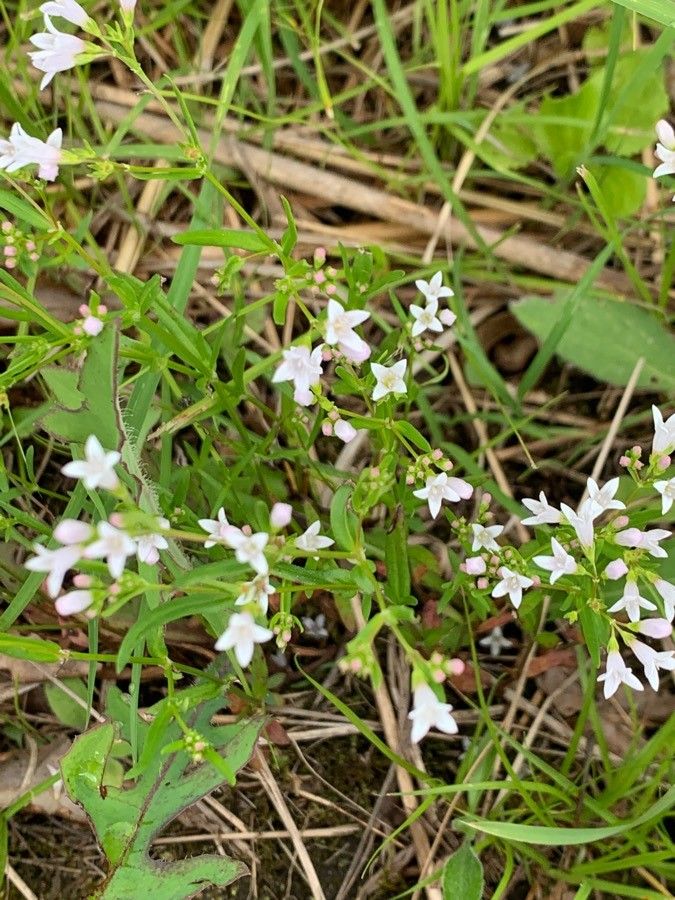
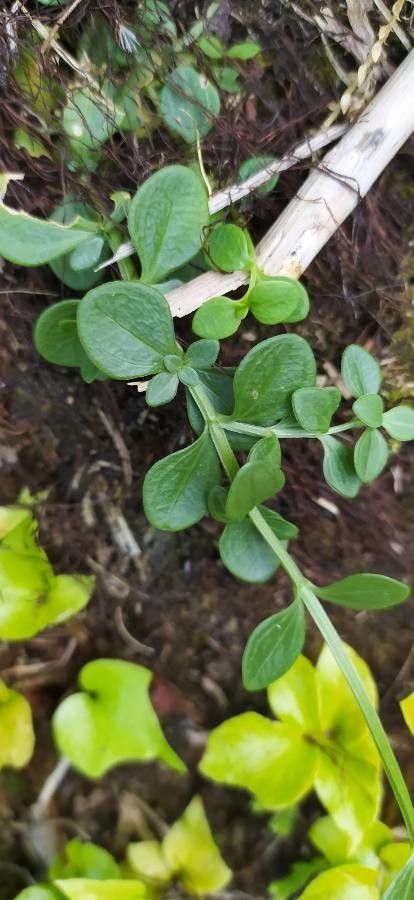
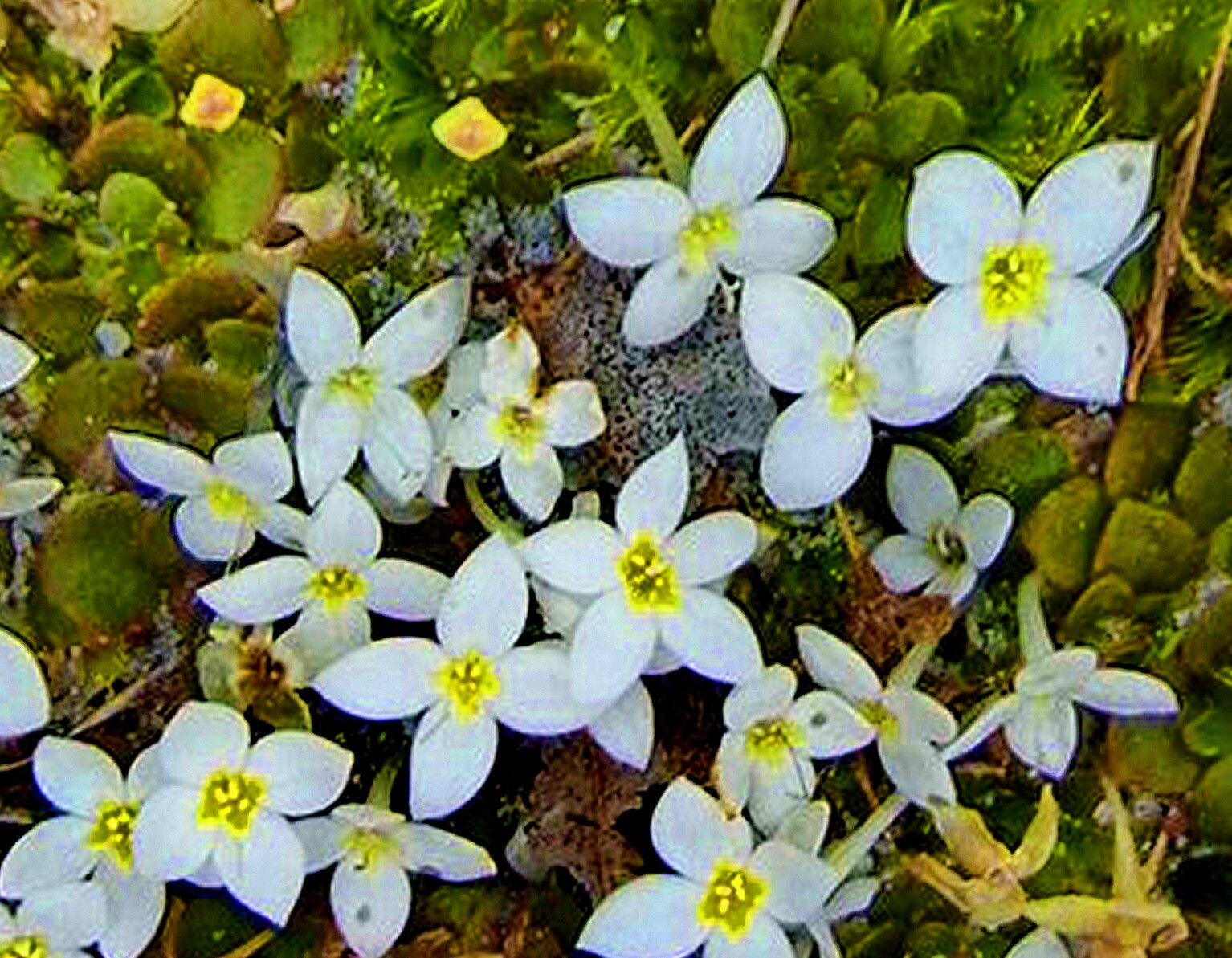
Houstonia purpurea, commonly known as the purple bluet or woodland bluet, is a small herbaceous plant in the Rubiaceae family. Native to eastern North America, it thrives in diverse habitats, including woodlands, meadows, and rocky slopes. This plant typically reaches a height of up to 15 cm and features small, oval-shaped leaves arranged oppositely along the stem. The star-shaped flowers of Houstonia purpurea, with four petals ranging in color from pale blue to purple, bloom from late spring through early summer. These blossoms attract pollinators such as bees and butterflies. Native American tribes have historically used Houstonia purpurea for medicinal purposes, treating various ailments such as fever, coughs, colds, and sore throats. In gardens, this plant is easy to grow, thriving in well-drained soil under partial shade or full sun exposure. It can be propagated by seeds or dividing clumps in early spring or fall. Overall, Houstonia purpurea is an attractive wildflower with beautiful blooms that add color to natural landscapes. When used appropriately under medical supervision, it also offers medicinal benefits for humans.
Venus' pride has strong disease resistance and is generally not susceptible to illnesses. However, it can be affected by pests and diseases present in its environment. These issues are typically not serious. Regarding care, the plant requires moderate maintenance. It should be pruned regularly to keep a neat appearance and to support healthy growth. Fertilizing can also help encourage flowering. Venus' pride is appropriate for anyone with outdoor space, such as a garden or patio, and does not demand extensive care experience. It may need more attention if cultivated indoors.
How to keep Houstonia Purpurea.
Light
Venus' pride grows exceptionally well when bathed in abundant, golden sunlight, though it can cope with dimmer conditions as well. Its vigor is greatest in direct, unfiltered sun. Extended periods in reduced light, however, can lead to weaker growth. In its native environment it is accustomed to plentiful sunlight.
Water
Venus' pride flourishes in moist conditions and requires weekly watering to maintain its lush growth. While it can tolerate brief dry spells, it shows resilience across various climate zones by efficiently adjusting its water intake during the growing season for optimal health and vitality.
Temperature
Venus' pride is a species native to temperate regions and does best in temperatures ranging from 32 to 90 °F (0 to 32 ℃). It typically does not require seasonal adjustments unless extreme heat or freezing conditions are expected.
Fertilizer
The best time to fertilize a Venus' pride is in early spring, as it is coming out of dormancy and entering a period of active growth. Fertilizing supplies essential nutrients needed for healthy growth. Although Venus' pride has relatively low fertilizer requirements, applying fertilizer once a year can improve its survival and encourage better, longer-lasting flowers.
Pruning
To help Venus thrive, it's important to strategically prune it from early to late spring. Start by removing any dead stems to boost growth and encourage flowering. Gently trim back spent blooms to promote continuous blooming. Proper pruning not only helps the plant maintain its shape but also improves air circulation, reducing the risk of disease. Be sure to use clean, sharp tools, and take care not to over-prune.
Botanical profile.
Other names.
Reader questions.
How should I water my Venus' pride plant?
To properly water the Venus' pride plant, it is recommended to use filtered water at room temperature. Tap water may contain harmful particles that can negatively affect the plant's health. The water should not be cold, as the Venus' pride plant originates from a warm environment and is sensitive to temperature changes. It is advisable to avoid watering the plant from above, as it can lead to issues with the foliage. Instead, carefully pour the filtered room temperature water onto the soil until it becomes completely saturated. This helps to keep the roots moist and enable them to absorb the necessary nutrients from the soil.
What are the sunlight requirements for Venus' pride (Houstonia purpurea)?
Venus' pride (Houstonia purpurea) thrives best in full sun, requiring more than 6 hours of sunlight daily. It can also manage in partial sun, with about 3-6 hours of sunlight. Observing how sunlight moves through your garden is crucial for choosing spots that offer the right balance of light and shade, ensuring the plants' well-being. For optimal growth, Venus' pride thrives under abundant, golden rays of the sun, but it can survive in less bright conditions. Its health flourishes primarily in unfiltered sunlight, although it is capable of handling lower light environments, which might lead to less vigorous growth.
What is the ideal temperature range for Venus' pride?
Venus' pride, also known as Houstonia purpurea, thrives best in temperate climates with a temperature range of 32 to 90 °F (0 to 32 °C). This plant is indigenous to regions where such conditions are met throughout the year, minimizing the need for seasonal adjustment except in cases of extreme heat or freezes.
What should I do if I give too much or too little water to my Venus' pride plant?
Overwatering and underwatering can harm your Venus' pride plant, but overwatering is a common issue. If this species receives too much water, its stems and leaves may wilt and turn yellow. Overwatering for a long time can cause diseases like root rot, mold, and mildew, which are deadly for your plant. While underwatering is less common for Venus' pride due to its drought tolerance, it is still a possibility. When underwatering occurs, the leaves may become brittle and brown. To care for your Venus' pride, it's crucial to notice signs of overwatering early. Some diseases caused by overwatering, like root rot, can't be fixed if you wait too long. If you notice early signs, reduce your watering immediately and check the quality of the soil. If the soil drains poorly, replace it with well-draining potting mix. If your Venus' pride shows signs of not getting enough water, increase your watering frequency until the signs disappear.
Can artificial lighting be used for Venus' pride? If so, how?
Yes, artificial lighting can be a vital solution for Venus' pride, especially when natural sunlight is insufficient, such as during winter or in spaces that receive less sun. For optimal growth, indoor plants like Venus' pride require adequate lighting. LED lights are popular for providing specific wavelengths needed by plants. Full sun plants need 30-50W/sq ft of artificial light, partial sun plants need 20-30W/sq ft, and full shade plants need 10-20W/sq ft. The light source should be placed 12-36 inches above the plant, mimicking natural sunlight as much as possible. Most plants require 8-12 hours of light per day.
Does Venus' pride require special care during winter?
Venus' pride has a strong resistance to cold, so it generally does not require special frost protection measures during winter. However, if temperatures are anticipated to drop below -35°C, it is crucial to provide cold protection by covering the plant with soil or straw. It is also recommended to water the plant abundantly before the first freeze in autumn to ensure the soil remains moist and enters winter in a frozen state, helping prevent drought and water scarcity.
How often do I need to water my Venus' pride plant?
If your Venus' pride plant is in a pot, the best way to determine if it needs water is to check the moisture level of the soil. Simply stick your finger into the soil and if the first two to three inches feel dry, it's time to water the plant. If you have your Venus' pride plant planted outdoors in the ground, you can use the same method to test the soil moisture. Once again, if the top few inches of soil feel dry, it's time to give it some water. In general, during the spring and early fall, you'll probably need to water this plant about once a week using this method. However, in hot weather, you may need to increase the watering frequency to about twice a week or even more. It's worth noting that mature and well-established Venus' pride plants have a commendable ability to withstand dry conditions.
What symptoms indicate Venus' pride is not getting enough light?
Symptoms of inadequate lighting for Venus' pride include smaller new leaves, leggy or sparse growth, faster leaf drop, slower or no new growth, lighter-colored new leaves, and symptoms of excessive sunlight exposure like chlorosis, sunscald, leaf curling, wilting, and leaf scorching. These signs point to insufficient sunlight for optimal growth, showing the plant's struggle in inadequate light conditions.
How does Venus' pride react to temperatures below its ideal range, and what are the solutions?
Venus' pride is cold-tolerant and can survive winter temperatures above -30°C. If temperatures fall below -35°C, the plant may not show immediate damage, but there could be a decrease in sprouting or no sprouting at all during springtime. The solution in spring is to remove any parts of the plant that have failed to sprout, facilitating new growth.
How much water does my Venus' pride plant need?
When watering your Venus' pride, make sure to give it plenty of water. Check if the top two to three inches of soil are dry, and if so, water the plant thoroughly. The goal is to saturate the soil completely. You should add enough water so that it drains out of the holes at the bottom of the pot. If you don't see excess water coming out, you might not have given enough water. However, be careful not to let the water accumulate in the soil, as this can harm the plant. On the other hand, if water doesn't drain well from the pot, it could be a sign of poorly draining soil, which is bad for the plant's health. If the plant is outside, it typically only needs about 1 inch of rain per week.
How can I address light-related issues in Venus' pride?
To address light-related issues in Venus' pride, gradually move the plants to a location where they can receive at least 6 hours of direct sunlight daily, especially for indoor plants. Consider using open, south-facing windows or artificial light sources like desk or ceiling lamps, or invest in professional grow lights for sufficient light exposure. For outdoor plants, it's crucial to adapt them gradually to sunnier spots to avoid sunburn. Reducing obstructions, such as pruning trees that block sunlight, and transplanting smaller plants during their dormant period to more sunlit areas with good drainage can significantly improve their light intake. Unfortunately, parts of the plant affected by previous insufficient sunlight may not recover, but new growth will be healthy with improved light exposure.
What happens if Venus' pride is exposed to temperatures above its comfortable range, and how can it be cared for?
During summer, if Venus' pride is exposed to temperatures above its ideal range of 32°C, and especially if it exceeds 35°C, it may exhibit signs of stress such as lighter leaf color, leaf curling, susceptibility to sunburn, and in severe cases, wilting and drying out. To care for the plant under such conditions, it is advisable to trim away the sunburned and dried parts, move the plant to a shaded area or use shade cloth to protect it from midday and afternoon sun. Watering the plant in the morning and evening will help keep the soil moist and support the plant’s health.