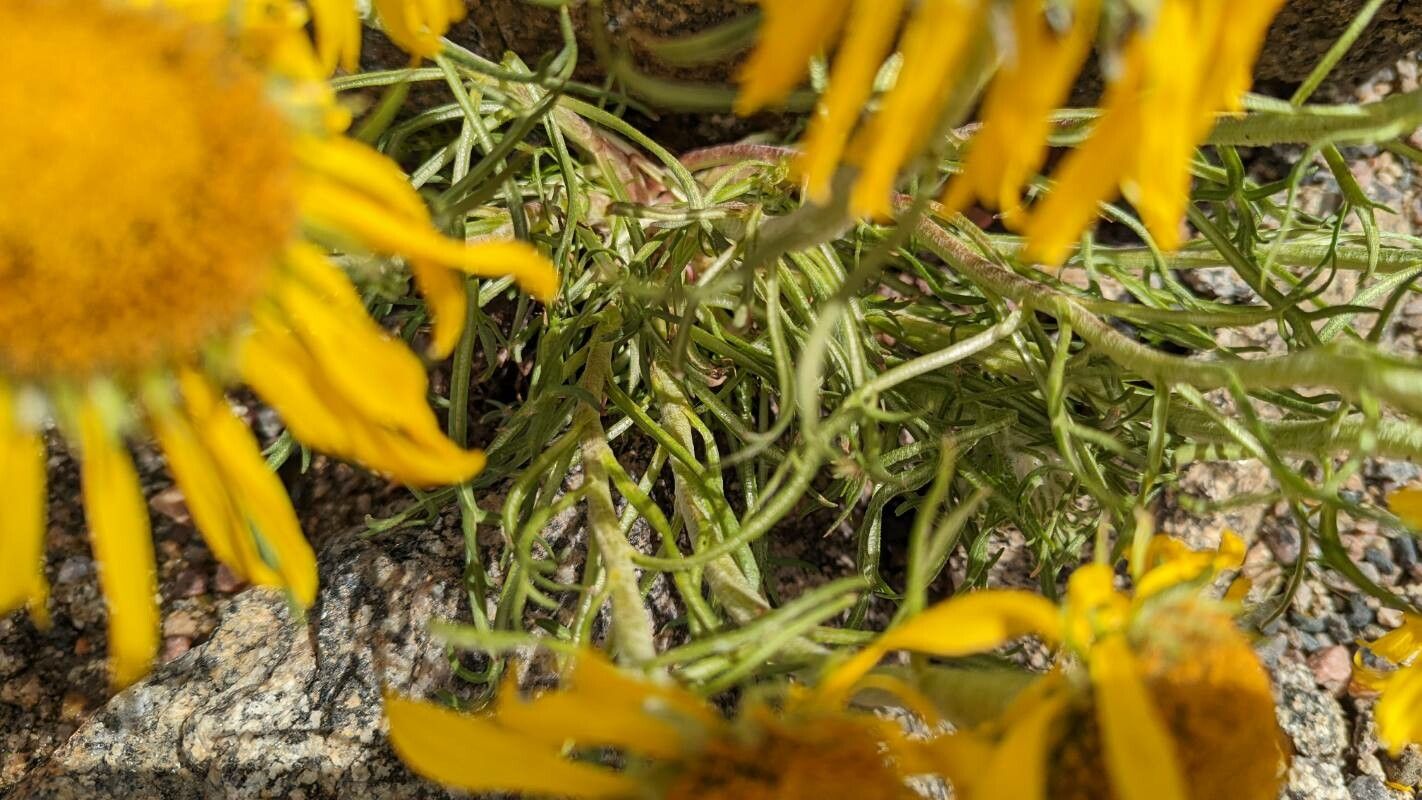
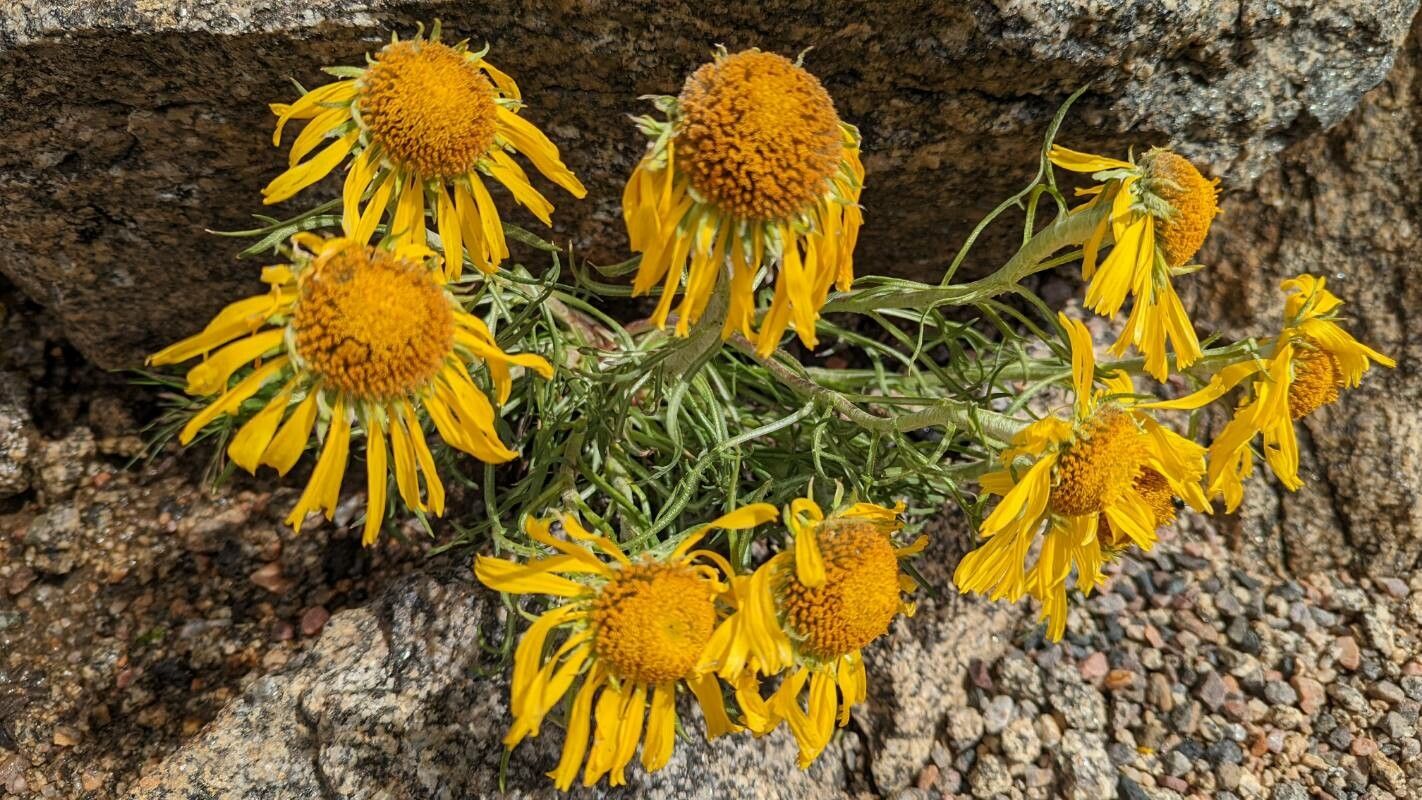
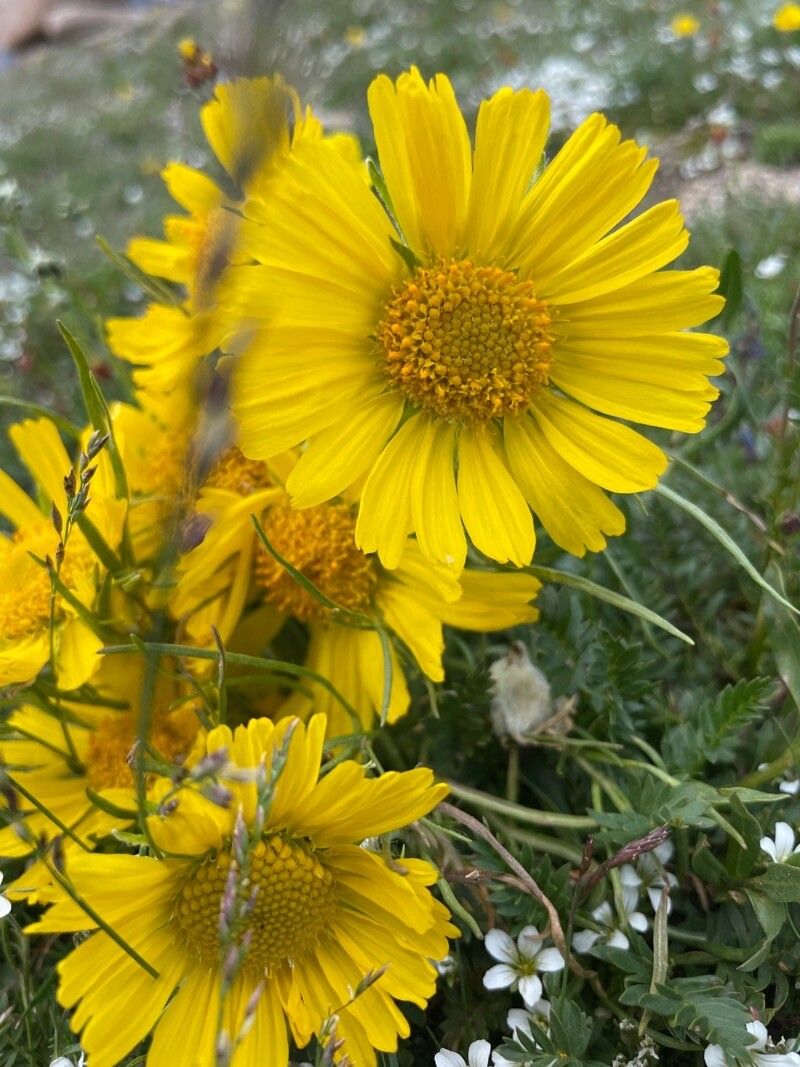
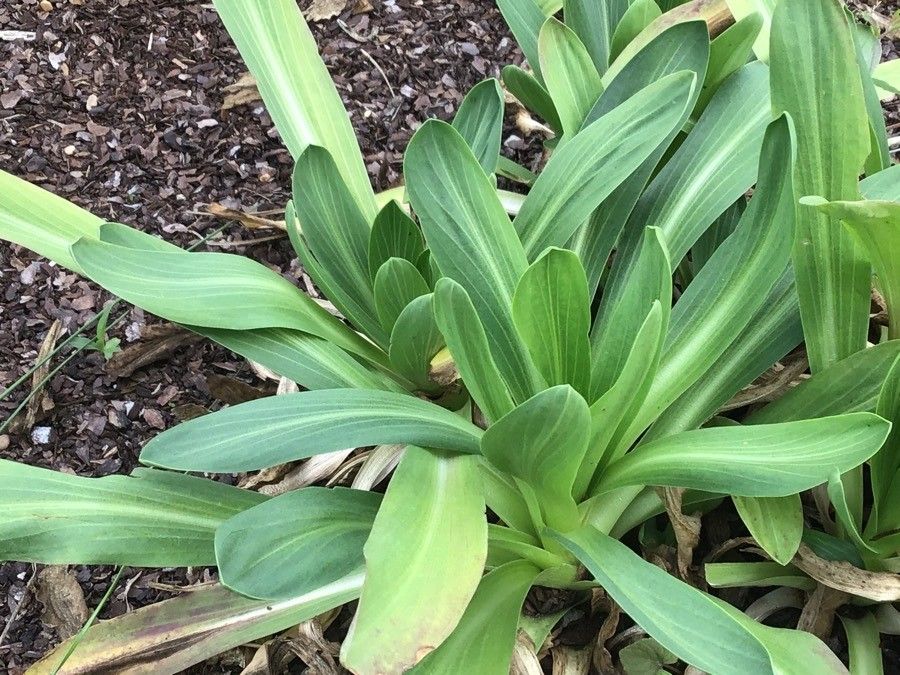
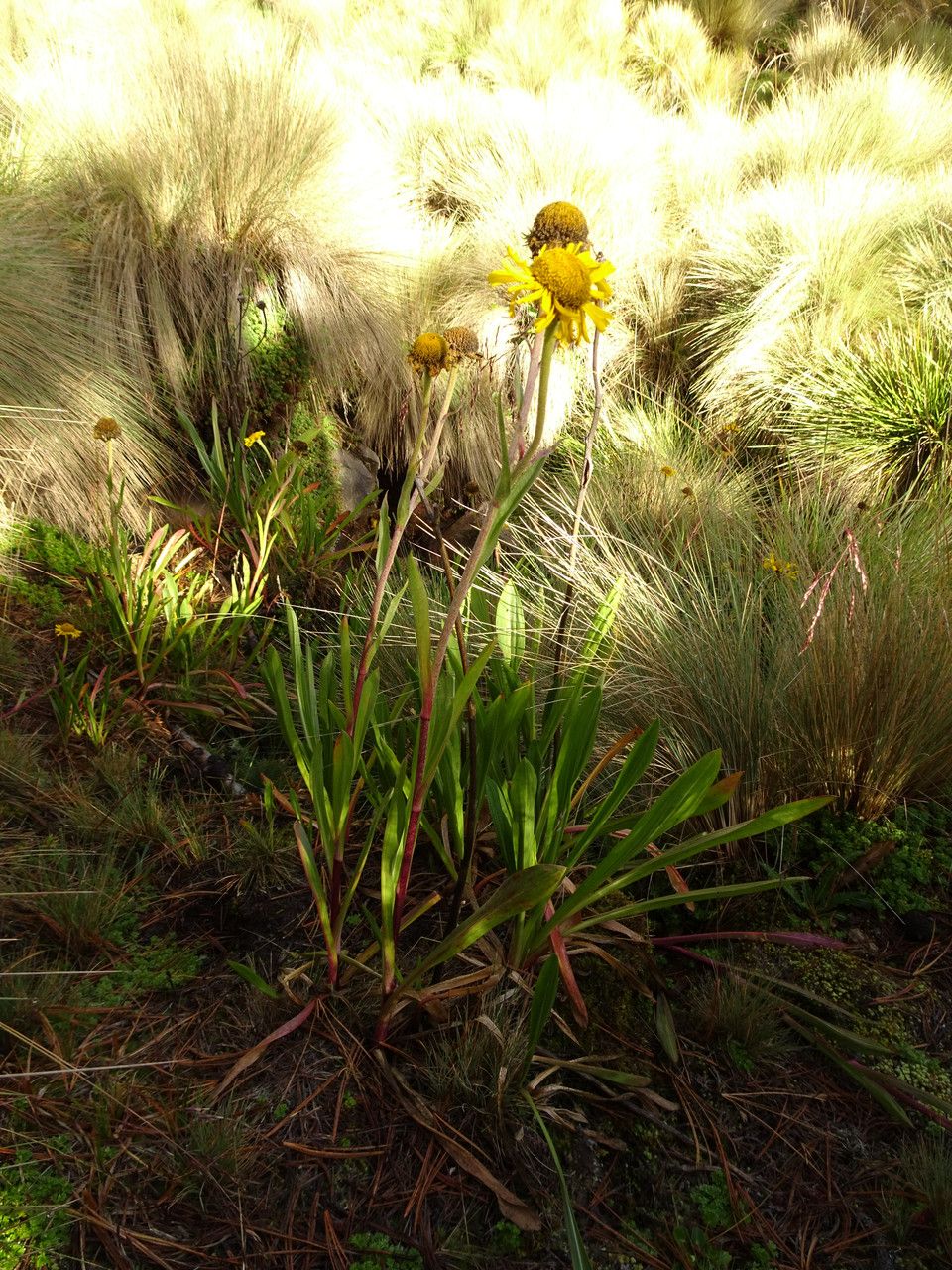
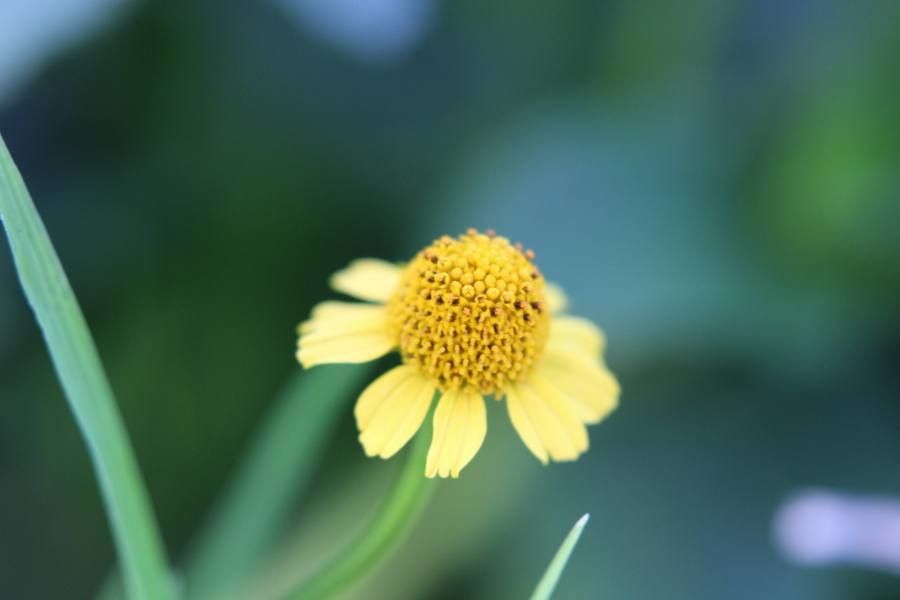
Hymenoxys cooperi is a species of flowering plant in the daisy family known by the common name Cooper's rubberweed. It is native to the southwestern United States and Great Basin, where it grows in rocky soils in arid regions from southern California to New Mexico, north as far as Idaho and Oregon.Hymenoxys cooperi is a biennial or perennial herb with a branching stem growing erect to heights between 15 and 90 centimeters (6-36 inches or 0.5-3.0 feet). It produces narrow, pointed leaves with two lateral lobes that form a trident shape. The foliage and stem are glandular and waxy, usually with a thin coat of light-colored hairs. The daisy-like flower head is a cup of fused phyllaries with 30–150 tiny yellow-orange disc florets surrounded by 9–14 bright yellow ray florets, each ray about a centimeter (0.4 inches) long.
Cooper's rubberweed has strong disease resistance and is typically not vulnerable to illnesses. Nonetheless, it can be affected by pests and diseases present in its environment. Such infections are generally mild. Regarding care, this plant needs a moderate amount of maintenance. It should be pruned regularly to preserve its appearance and encourage healthy growth. Applying fertilizer can also support better flowering. Cooper's rubberweed is well suited for anyone who has outdoor space, like a garden or patio, and does not demand extensive plant-care experience. It can need more attention if kept indoors.
How to keep Hymenoxys Cooperi.
Fertilizer
Generally, a single fertilizer application in spring is adequate for Cooper's rubberweed, although repeated feedings can boost growth. Fertilize every month to month and a half. Fertilization improves leaf appearance and function, encouraging even color and healthy texture. It also promotes root growth and nutrient uptake, supporting the plant's long-term health.
Pruning
Cooper's rubberweed, with its bright yellow flowers, should be pruned in early spring. To do this, remove any dead or damaged stems. Pruning encourages healthy growth, prevents legginess, and promotes blooming. Be sure to use clean, sharp tools to make precise cuts just above the leaf nodes. This technique enhances the plant's vigor, improves airflow, and boosts disease resistance.
Botanical profile.
- Plant Type
- Herb
- Life Cycle
- Perennial
- Genus
- Hymenoxys
- Family
- Asteraceae
- Hardiness Zone
- 4-8
- Mature Height
- 30 cm to 91 cm
Other names.