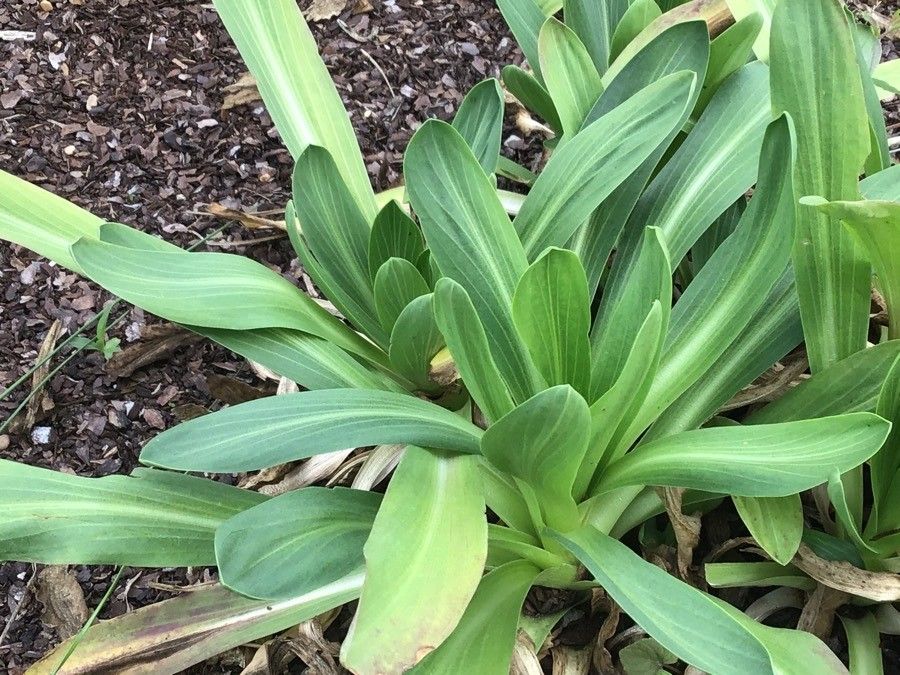
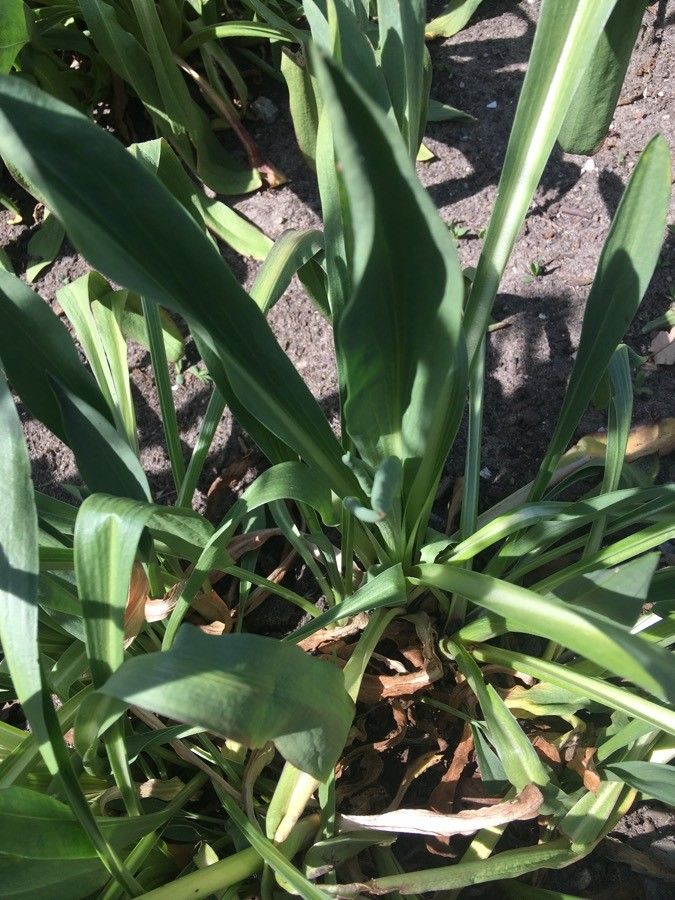
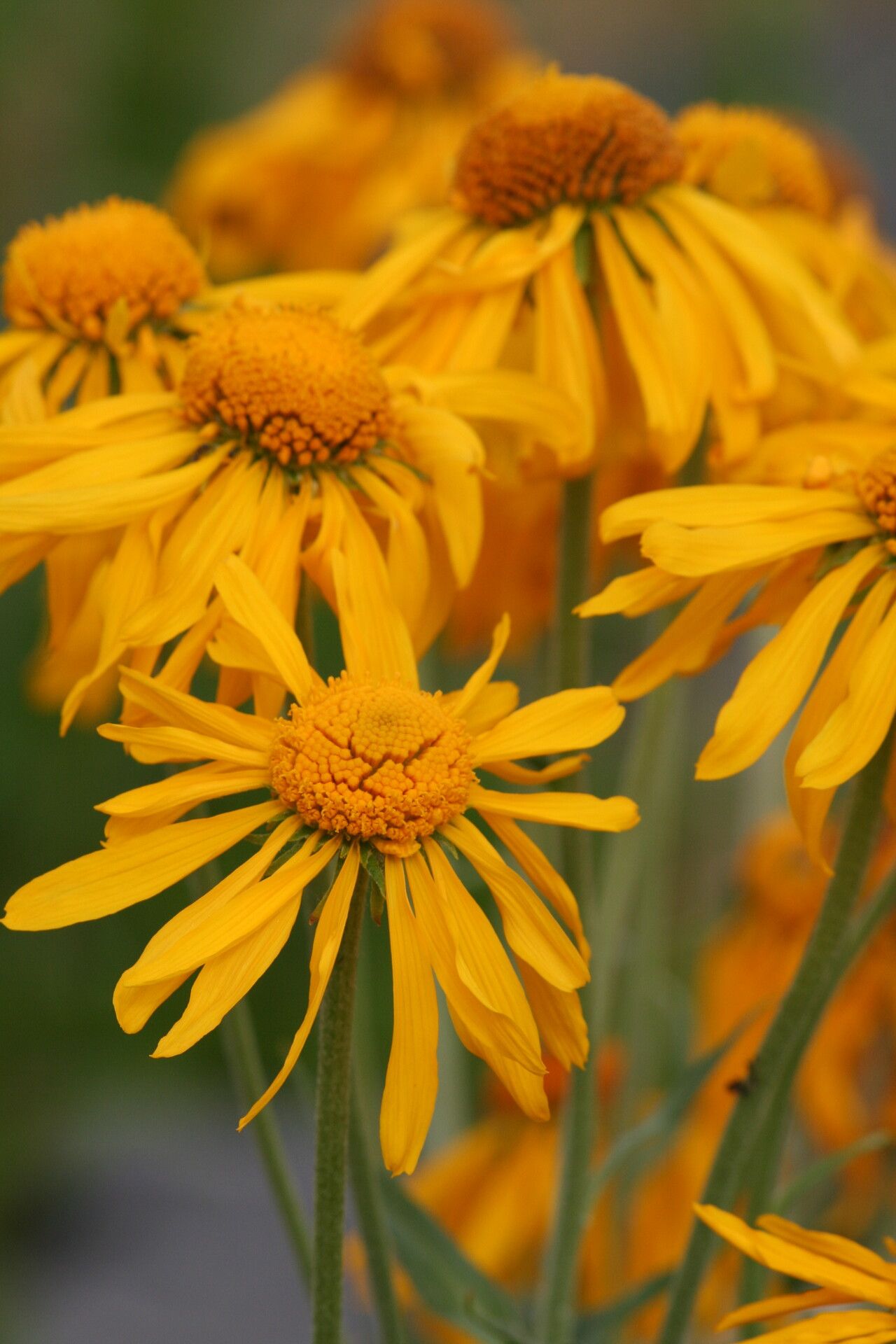
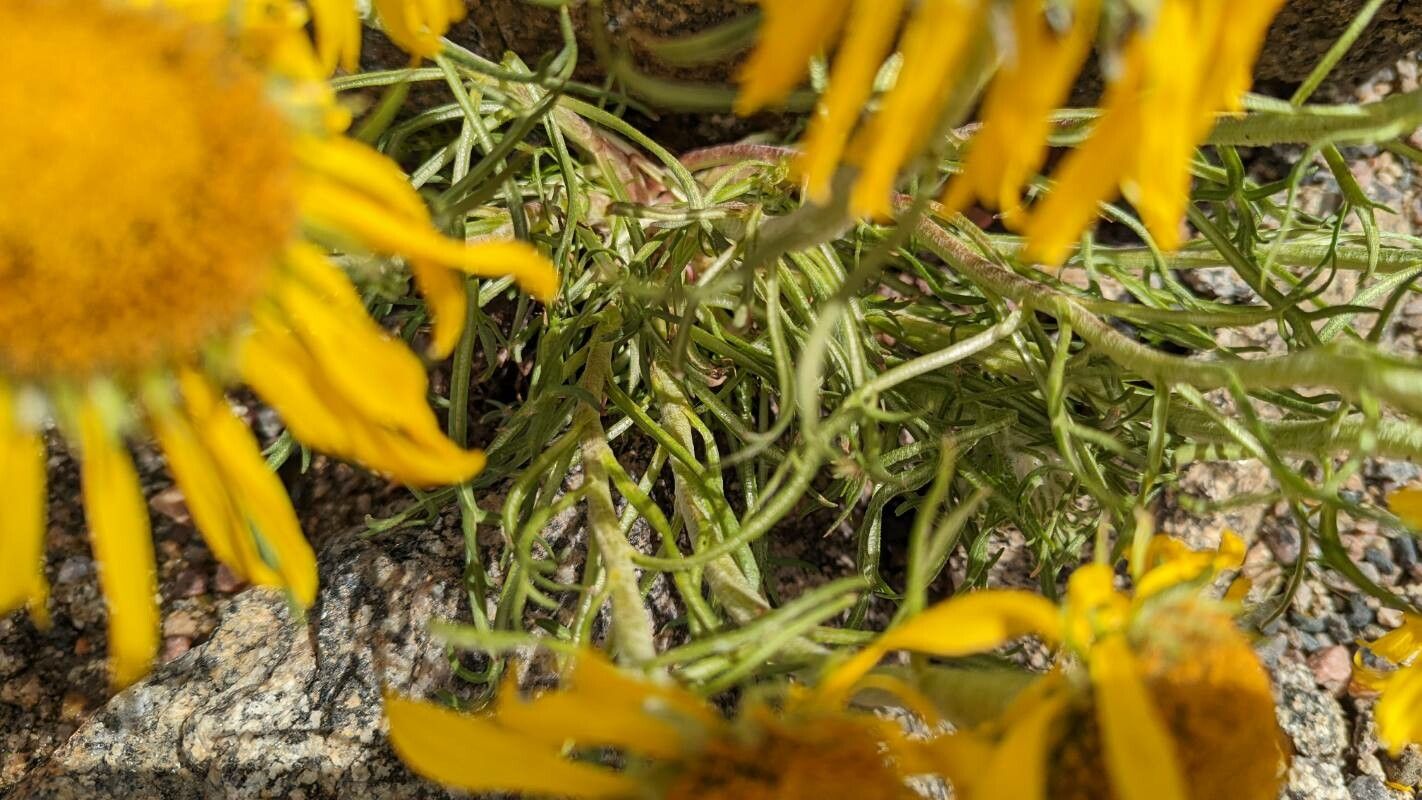
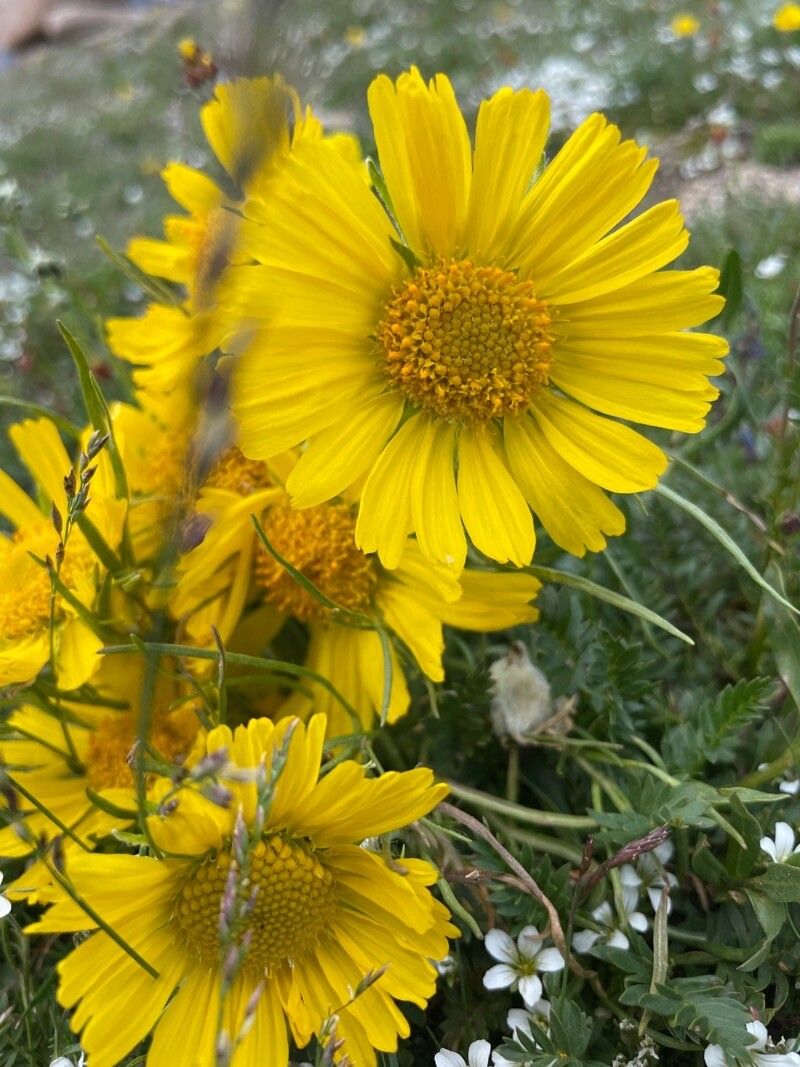
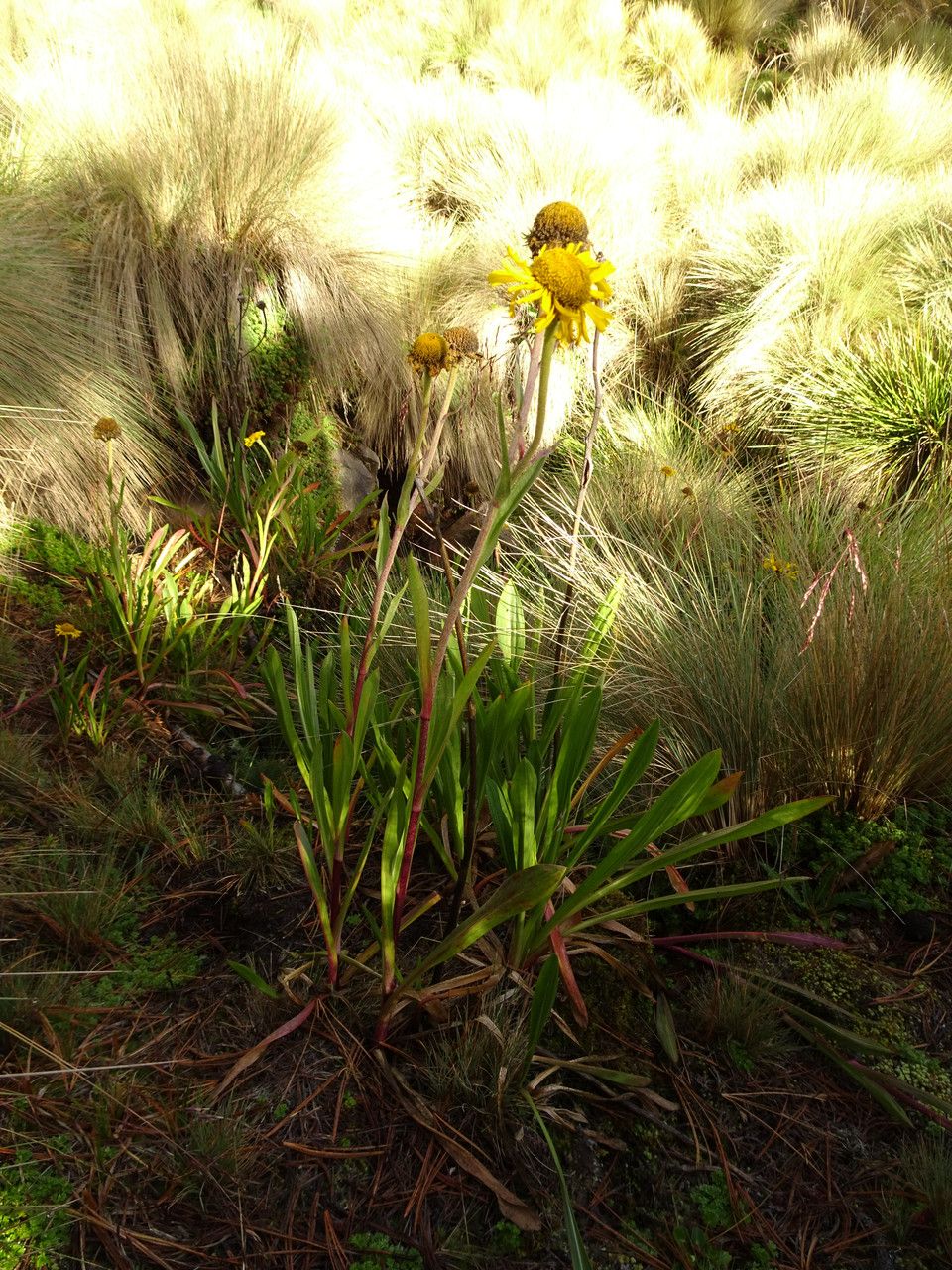
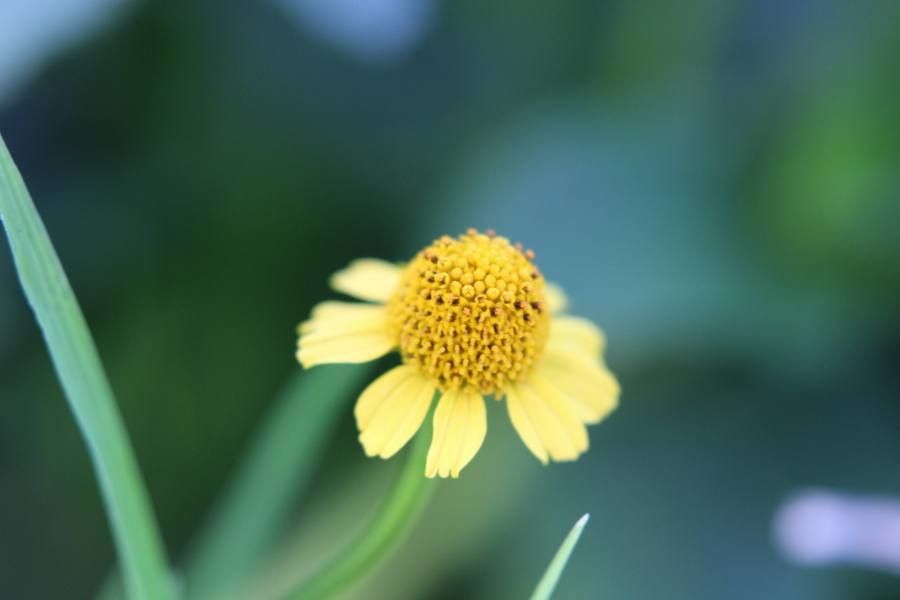
Hymenoxys hoopesii (formerly Dugaldia hoopesii) is a species of flowering plant in the daisy family known by the common names owl's claws, orange sneezeweed, and yerba del lobo. It is native to the western United States, where it grows in habitats of moderate elevation, such as mountain meadows in the Rocky Mountains, Sierra Nevada, southern Cascades, and other ranges. It has been found from Arizona, New Mexico, and central California north as far as Montana and Oregon.H. hoopesii is an erect perennial herb growing up to about 1 meter (40 inches) in height, with smooth-edged leaves up to 30 centimetres (12 inches) long, oval on the lower stem and lance-shaped toward the top. Blooming from July to September, the inflorescence bears several flower heads on erect peduncles, each lined with a base of hairy, pointed phyllaries. The flower head is up to 7.5 cm (3 in) wide and has a center of 100–325 tiny disc florets fringed with 14–26 orange or yellow ray florets, each ray up to 2.5 cm (1 in) long. The fruit is an achene with a pappus of scales.The species is toxic to livestock, especially sheep. The pollen also causes an allergenic reaction, hence the common name 'sneezeweed'.The root has been used medicinally to treat rheumatism, upset stomachs, and indigestion in infants.
Owl's claws displays good resistance to disease and is typically not susceptible to illnesses. Nevertheless, it can be affected by pests and diseases present in its environment. These problems are generally mild. Regarding care, this plant requires moderate maintenance. Regular pruning is necessary to preserve an attractive appearance and support healthy growth. Fertilizing can also help encourage flowering. Owl's claws is appropriate for anyone with an outdoor area, such as a garden or patio, and does not demand extensive gardening experience. It may need additional attention when grown indoors.
How to keep Hymenoxys Hoopesii.
Light
Owl's claws flourishes with ample sunlight, but not the sun at its strongest. It naturally grows in dappled light where it gets just enough illumination. Because it is adaptable, the plant can tolerate low-light conditions, although too much light can hinder its healthy growth.
Water
Owl's claws thrive in arid conditions due to their high drought tolerance and ability to maintain balanced humidity. They require minimal watering—once a week is usually sufficient. As an evergreen plant commonly grown outdoors, owl's claws effectively use rainfall during their growth cycle.
Temperature
Owl's claws is naturally adapted to moderate climates, doing best at temperatures between 41 and 90 °F (5 and 32 ℃). Seasonal temperature adjustments may be necessary, particularly during extreme winters or hot summers.
Fertilizer
The best time to fertilize an Owl's claws is in early spring, when it is coming out of dormancy and starting active growth. Fertilizing supplies essential nutrients for healthy development. While Owl's claws has relatively low fertilizer requirements, applying fertilizer once a year can boost its survival and encourage better, longer-lasting blooms.
Pruning
Owl's Claws boasts bright yellow flowers and distinctive foliage. To encourage healthy growth and improve airflow, which helps reduce the risk of disease, prune the plant in early spring or late winter. Remove any dead stems and spent flower stalks during this time. Ensure your tools are clean to prevent infection and promote vigorous blooms.
Botanical profile.
- Plant Type
- Herb
- Life Cycle
- Perennial
- Genus
- Hymenoxys
- Family
- Asteraceae
- Hardiness Zone
- 4-8
- Mature Height
- 30 cm to 91 cm
- Mature Spread
- 34 cm
- Leaf Color
- Green, Blue
- Leaf Type
- Evergreen
- Flower Color
- Yellow, Gold
- Flower Size
- 5.08 cm to 11.43 cm
- Bloom Time
- Summer
- Planting Time
- Spring, Autumn
- Harvest Time
- Late summer, Early fall, Mid fall
Other names.
Reader questions.
How should I properly water my Owl's claws?
To properly care for the Owl's claws plant, it is important to follow a few guidelines. Firstly, use filtered water that is at room temperature or slightly warm to water the plant. Tap water should be avoided because it may contain particles that can harm the plant. The reason for using room temperature or slightly warmer water is that the Owl's claws is accustomed to a warm environment, and cold water could shock its system. Furthermore, it is best to avoid overhead watering, as this can lead to problems with the foliage. Instead, focus on watering the soil directly. Use filtered room temperature water and apply it to the soil until it is completely soaked. This method of watering has numerous benefits for the plant. It helps to moisturize the roots and facilitates their spread through the soil, ensuring they can collect the necessary nutrients for the plant's health.
Why do I have to put fertilizer on my Owl's claws?
Fertilization plays a crucial role in the growth of Owl's claws and other plants. It provides essential nutrients that support both the above-ground and below-ground growth of the plant. While Owl's claws typically have low fertilization requirements and can sometimes survive without it, annual fertilization can greatly benefit the plant. It not only helps keep the plant alive but also promotes the production of more durable flowers. Therefore, those looking to enhance the appearance of their Owl's claws should consider regular fertilization.
How long does Owl's claws need sunlight to grow?
Owl's claws thrive with 3-6 hours of direct sunlight daily but also need shade during the hottest parts of the day to avoid sun damage. The best time for Owl's claws is morning sunlight, but it can handle some afternoon sun if it's not too hot. For the perfect sunlight balance, consider planting Owl's claws where it can get partial sun, like under a tree or on the east side of a building.
What temperature is best for Owl's claws?
The ideal temperature for Owl's claws depends on the time of year. Let's focus on the growing season and dormancy season. During the growing season, when Owl's claws is sprouting, the temperature should be between 65-80℉ (18-27℃). If it gets colder than 15℉ (-10℃), the plant may suffer and its leaves may brown and wilt. However, if it's just a short cold snap, Owl's claws may survive with some help. In the warmer parts of the year, Owl's claws should be protected from temperatures above 95-105℉ (35-40℃). Higher temperatures can cause wilting, drooping, and even sunburn on the leaves, which may be difficult for Owl's claws to recover from. Luckily, there are easy ways to combat this issue!
What do I need to do if I put too much or too little water on my Owl's claws?
Overwatering is a common problem for Owl's claws plants and can cause wilting, yellowing leaves, and diseases like root rot. Underwatering is less common but can result in brittle, brown leaves. It's important to detect signs of overwatering early and adjust your watering schedule accordingly. If the soil drains poorly, replace it with a well-draining mix. If your plant is not getting enough water, water it more often until the signs improve.
When should I put fertilizer on my Owl's claws?
The best time to fertilize a Owl's claws is from late winter to early spring when they transition from their dormant phase to active growth. Fertilizing during this period promotes healthy growth and a strong start to the season. While it's generally recommended to fertilize in early spring, it is also okay to fertilize in the fall. However, it's not advisable to feed Owl's claws during summer and winter seasons.
What will happen if the Owl's claws don't get enough sunlight?
Owl's Claws is sensitive to excessive sunlight, which can cause its leaves to yellow, dry out, or even burn. If the plant is exposed to too much sun, you may also observe wilting or stunted growth. To protect Owl's Claws from sun damage, it is important to provide shade during the hottest times of the day. This can be achieved by using a shade cloth or placing the plant near taller plants that can naturally provide some shade.
What temperature do baby owl's claws need?
If you have recently planted an Owl's claws outside for the first time, it may need some extra care during the coldest months. Frost can cause significant damage and prevent it from growing back healthily in the spring. To protect it, make sure to keep the temperature above 40℉(5℃) until it establishes itself. You can achieve this by either bringing the plant indoors for a month or two or using mulch or fabric barriers to prevent frost damage. During the first year or two, it's recommended to plant the Owl's claws in a shadier spot. This is because smaller and weaker plants have a harder time regulating their own temperature in the heat. To control summer heat, limit the plant's exposure to direct sunlight to no more than five hours per day, especially if the temperature reaches above 80℉(27℃). Using shadecloth and watering or misting the plant regularly are essential for heat management.
How often should I give my owl's claws some water?
If you have an Owl's claws plant in a pot, the best way to determine if it needs water is to check the soil. Stick your finger into the soil and if the top two to three inches feel dry, it's time to water it. If your Owl's claws plant is grown outdoors in the ground, you can use the same method to check the soil. When the top few inches of soil are dry, it's time to water it. Usually, you'll need to water this plant once a week during spring and early fall. In very hot weather, you may need to increase watering to twice a week or more. However, mature Owl's claws plants are quite resilient and can handle drought conditions well.
When is it not a good idea to put fertilizer on my Owl's claws?
To avoid overfertilizing your Owl's claws, it is recommended to only fertilize during late winter and early spring. This plant has low fertilization needs and a single annual feeding is sufficient. Fertilizing during spring, summer, and fall can easily lead to overfertilization and its complications, unless you skipped fertilizing in spring, in which case it is acceptable to feed the plant in the fall. Additionally, there is no need to fertilize the plant during winter, as it will be in a dormant growth phase and won't produce new growth. Thus, fertilization during most of the winter is not advisable.
What will happen if Owl's claws get too much sunlight?
Owl's claws may become tall and sparse if they don't receive enough sunlight. This can be seen when the leaves turn yellow or pale green due to insufficient chlorophyll production caused by the lack of sunlight. To fix this issue, consider relocating Owl's claws to a sunnier area or trimming surrounding foliage to allow more light to reach the plant.
How can I keep Owl's claws safe from very hot or very cold temperatures?
If the growing season experiences cold temperatures below 15℉(-10℃), there are steps you can take to protect Owl's claws from frost or cold damage. If you have them in a container, simply bring the container inside with bright, indirect light until temperatures rise above the lower threshold. For ground-planted Owl's claws, you can use mulch or horticultural fabric to create a barrier around the plant for insulation against frost and cold wind. On the other hand, if the temperatures go above 80℉(27℃) in the shade during the day, it is important to limit the amount of sunlight Owl's claws receive to six hours or less per day, preferably in the morning. To achieve this, you can put up shade cloth or fine plastic mesh to reduce direct sunlight during the hottest parts of the day. Additionally, installing a misting system can release cooling mist around the plant's base to lower ground temperatures throughout the day.