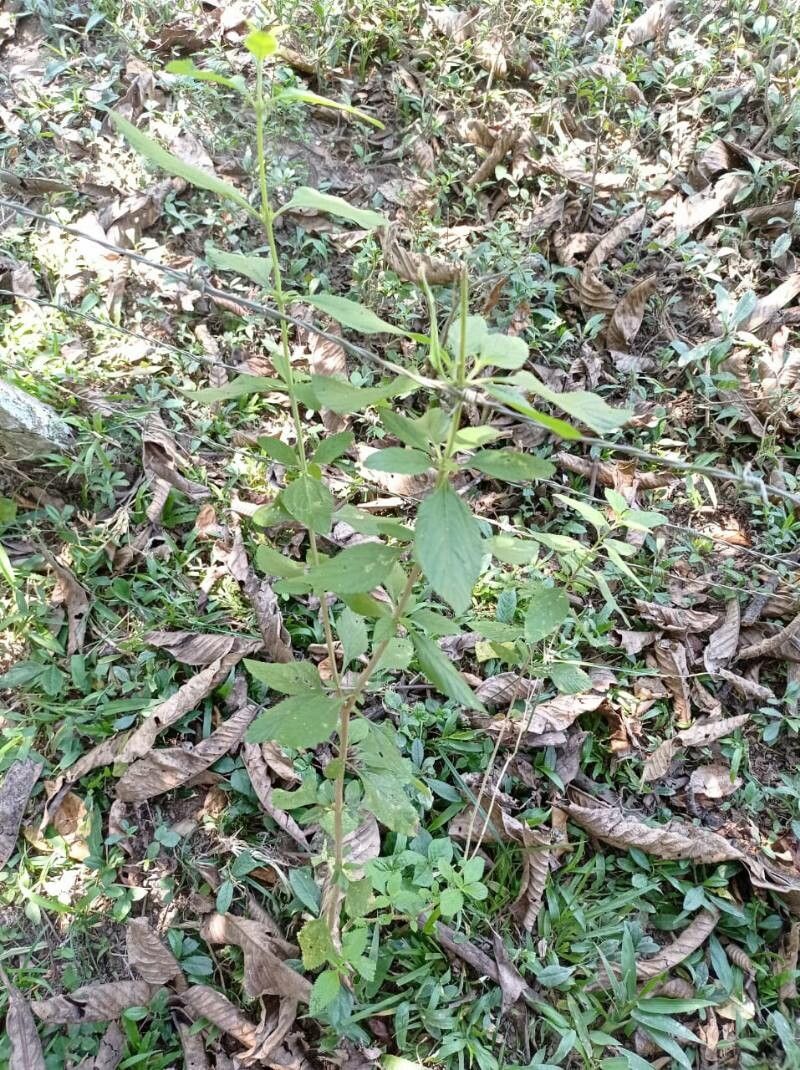
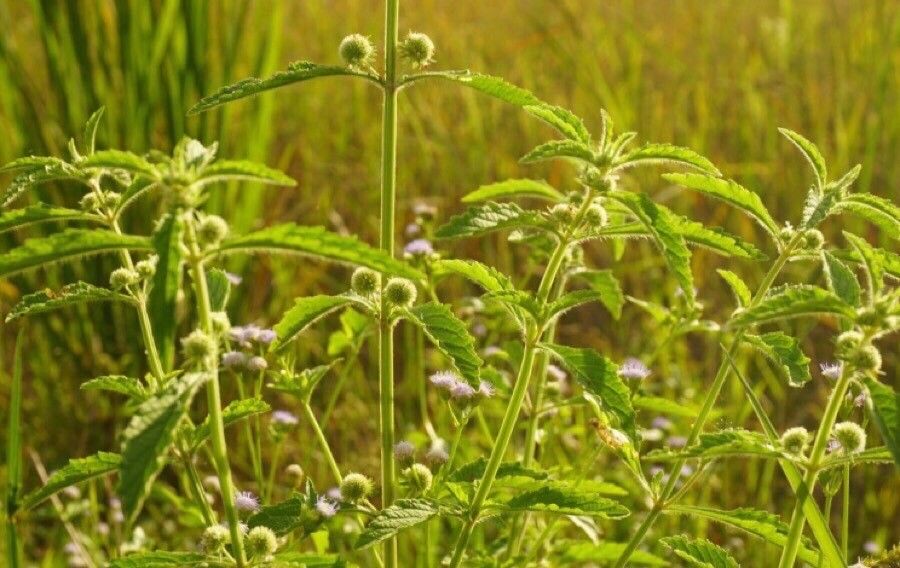
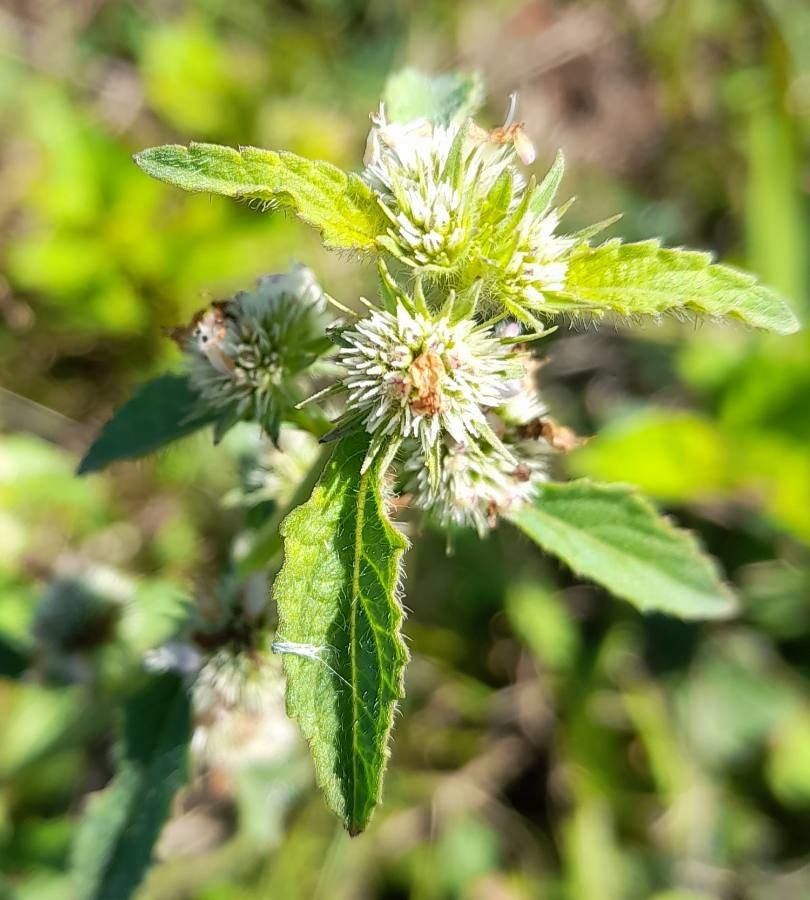
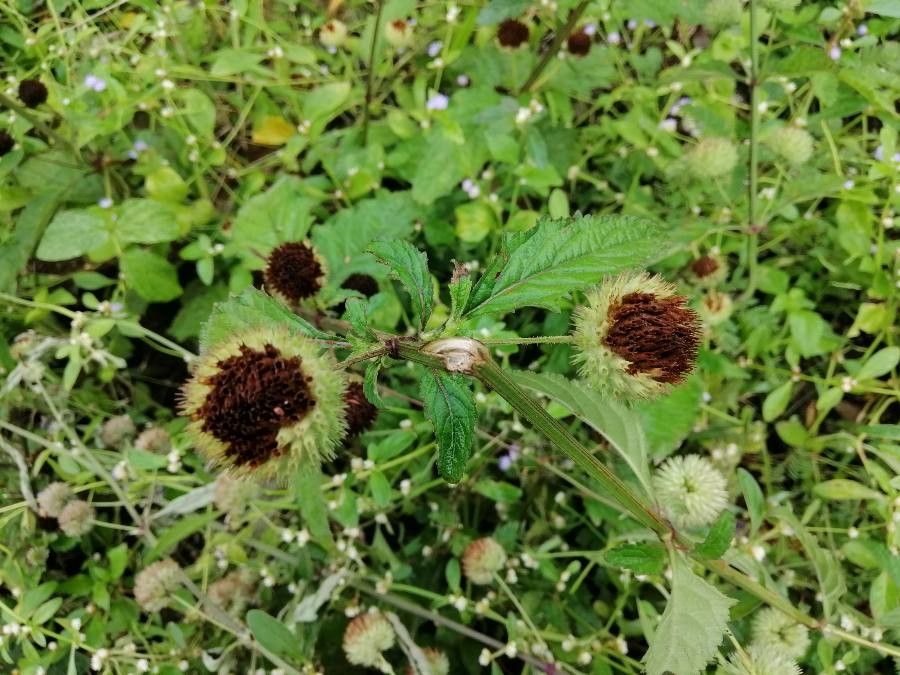
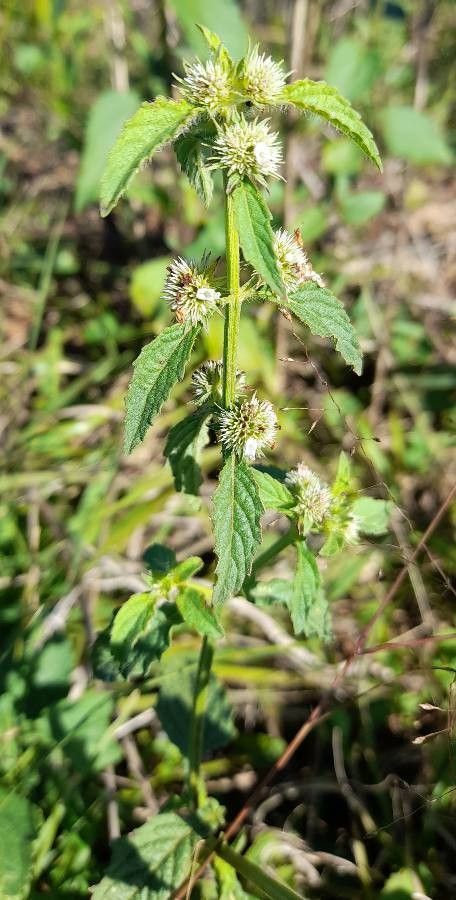
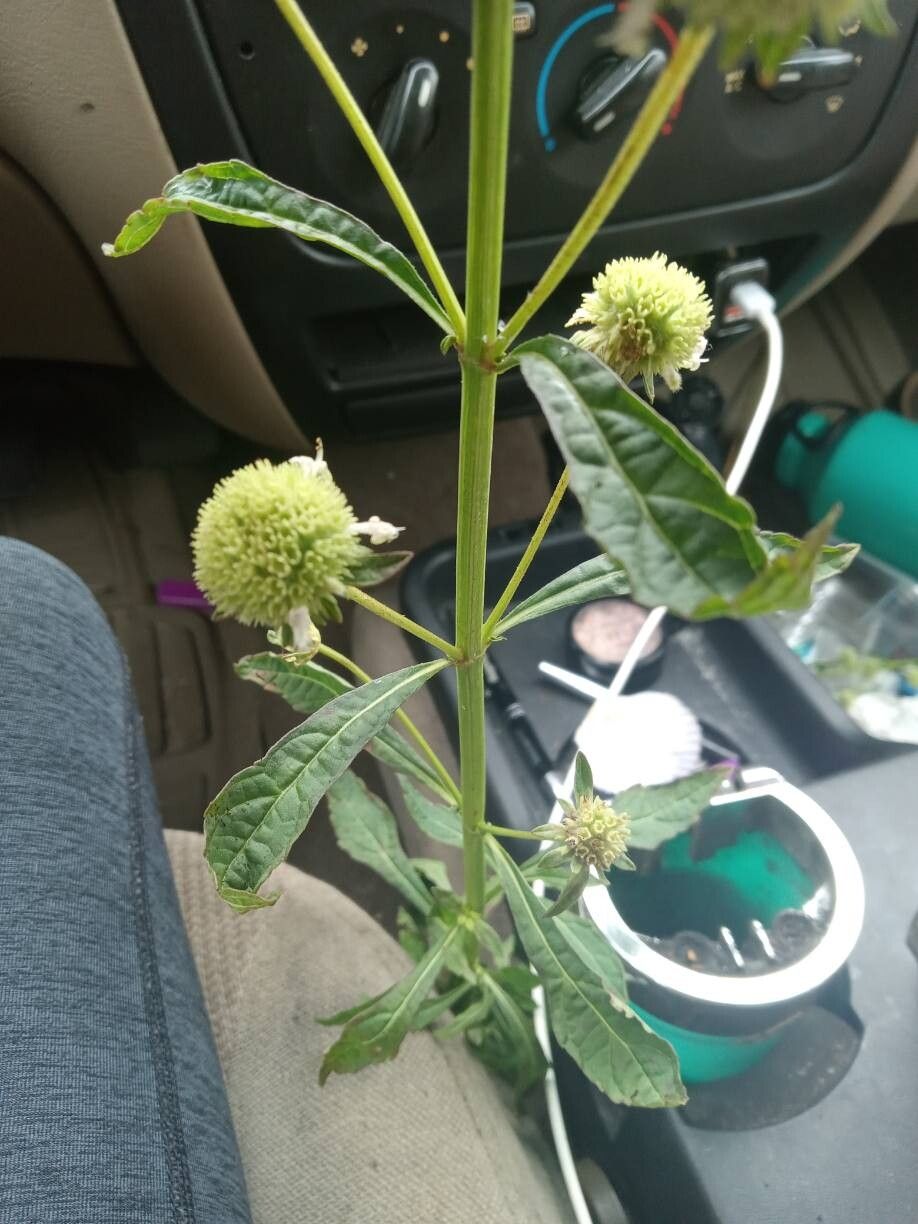
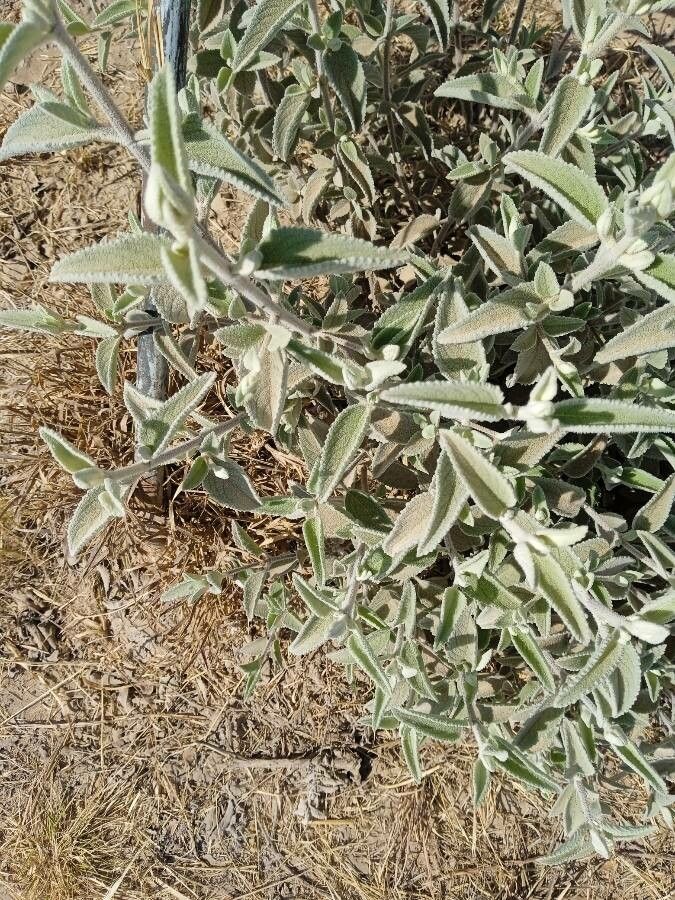
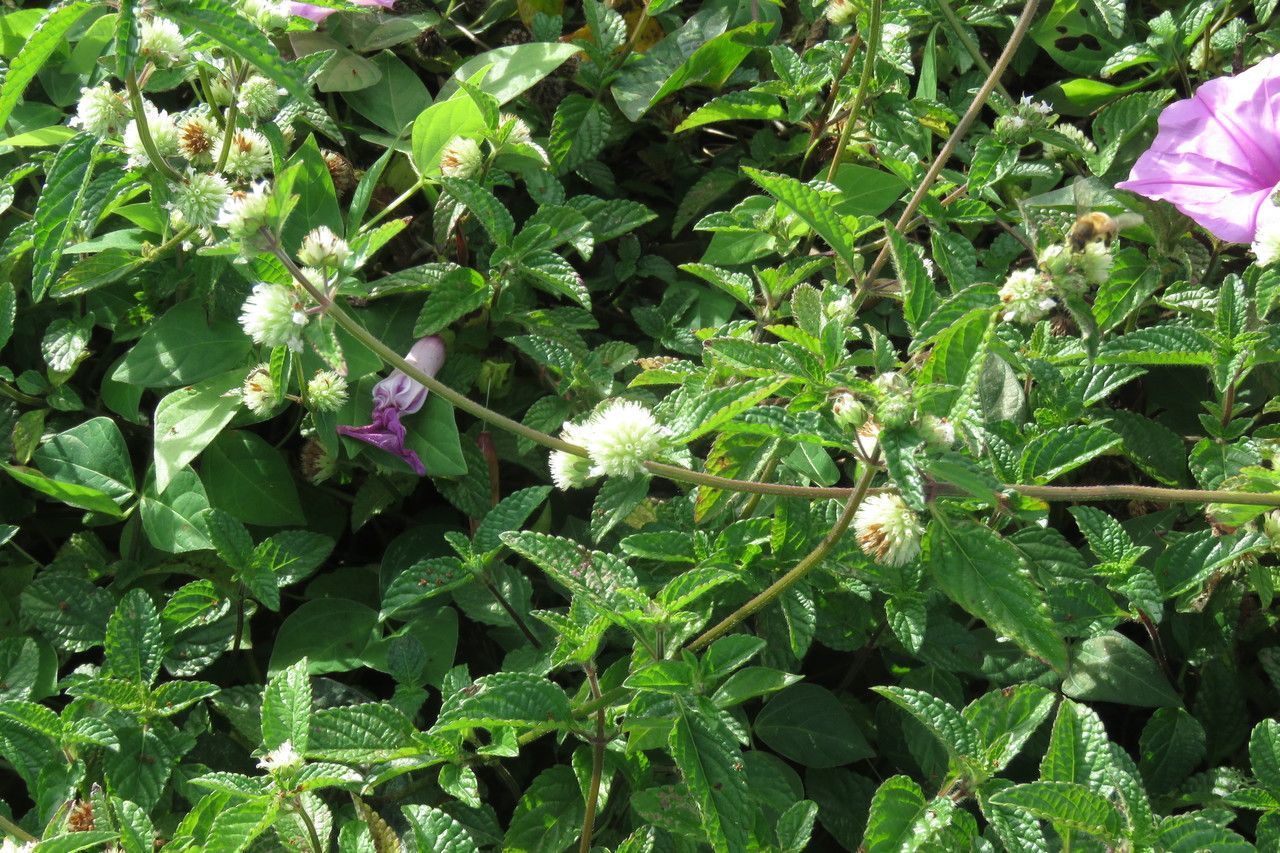
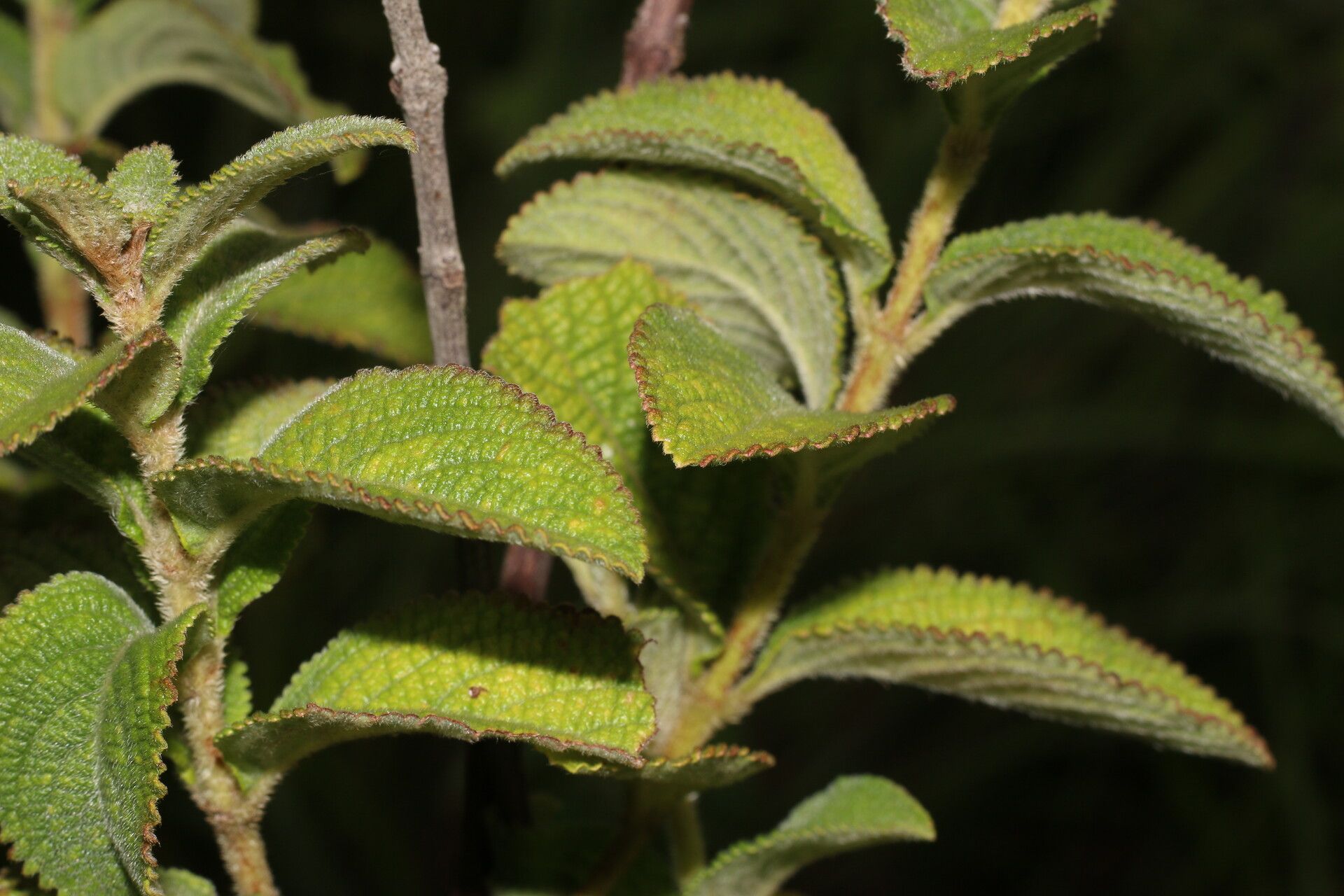
Hyptis brevipes is a species of flowering plant in the genus Hyptis. These plants known commonly as lesser roundweed, nanto-iganigakusa (Taiwan), genggeyan and kaneja (Indonesia), sawi hutan (Malaysia), ortela-brava and fazendeiro (Brazil). Hyptis brevipes is an erect annual plant up to 1 m high with the typical square stem of a labiate, often densely hairy but sometimes less so. Leaves are also normally coarsely hairy on both surfaces, opposite, narrowly ovate or lanceolate, 5–7 cm long, up to 2 cm wide, cuneate at the base, the margins irregularly serrate. The inflorescence is a dense raceme, almost globose, up to 14 mm diameter, on a peduncle about 1 cm long in the axils of most upper leaves. Corolla or petals are white, irregularly five-lobed, and about 5 mm long. The calyx, 4 mm long, also has five narrow, finely barbed lobes. Seeds are ovoid, up to 1 mm long, dark brown to black, obscurely striate, with a conspicuous scar.
Lesser roundweed has strong disease resistance and is generally not prone to illnesses. Still, it can be vulnerable to pests and diseases present in its environment. Such infections are generally not serious. Regarding care, this plant needs moderate maintenance. It should be pruned regularly to keep a neat appearance and support healthy growth. Applying fertilizer can also encourage flowering. Lesser roundweed is appropriate for anyone with outdoor space, like a garden or patio, and does not require extensive care experience. It may demand more attention if cultivated indoors.
How to keep Hyptis Brevipes.
Light
Lesser roundweed comes from bright, open habitats where it flourishes in full sun. It can tolerate partial sun but prefers direct sunlight for optimal growth. This annual and biennial plant is known for its sun-loving nature.
Water
Lesser roundweed thrives in humid, tropical environments and prefers consistent moisture, although it can tolerate moderate drought conditions. To keep it healthy, it should be watered weekly. It also benefits from natural rainfall during the growing season, making it well-suited for outdoor cultivation as an herbaceous plant.
Temperature
Lesser roundweed comes from tropical areas, where the climate is generally warm and humid. Consequently, it is well suited to high temperatures and humidity. It is sensitive to sudden temperature changes and prefers a steady thermal environment, so avoiding temperature fluctuations indoors is important. It typically cannot tolerate cold and needs higher temperatures to grow. If the surrounding temperature falls too low, the plant may stop growing or even die.
Fertilizer
Lesser roundweed does well with regular, light fertilizer applications to encourage healthy foliage. Fertilize Lesser roundweed about once a month during the summer. Nitrogen is important for the leaves, and adding nitrogen-rich sources helps Lesser roundweed thrive.
Pruning
To keep lesser roundweed healthy and vibrant, it's best to prune the plant from early to late spring. Aim to remove about one-third of the plant, which helps encourage new growth and a fuller shape. Pruning each year not only makes the plant more compact and vigorous but also aids in preventing disease.
Botanical profile.
- Plant Type
- Herb
- Life Cycle
- Annual
- Genus
- Hyptis
- Family
- Lamiaceae
- Hardiness Zone
- 9-11
- Mature Height
- 91 cm
- Mature Spread
- 20 cm to 40 cm
- Leaf Color
- Green, Dark Green
- Leaf Type
- Evergreen
- Flower Color
- White, Lavender
- Flower Size
- 1.52 cm
- Bloom Time
- Summer, Early fall, Mid fall
- Planting Time
- Spring, Summer, Autumn
- Harvest Time
- Late summer, Fall, Early winter
- Native Area
- Belize, Honduras, Mexico, Guatemala, Peru, Trinidad and Tobago, Panama, Uruguay, Colombia, Cuba, Paraguay, Argentina, Bolivia, Venezuela, Brazil, Guyana, El Salvador, Nicaragua, Ecuador, Suriname, Costa Rica
Other names.