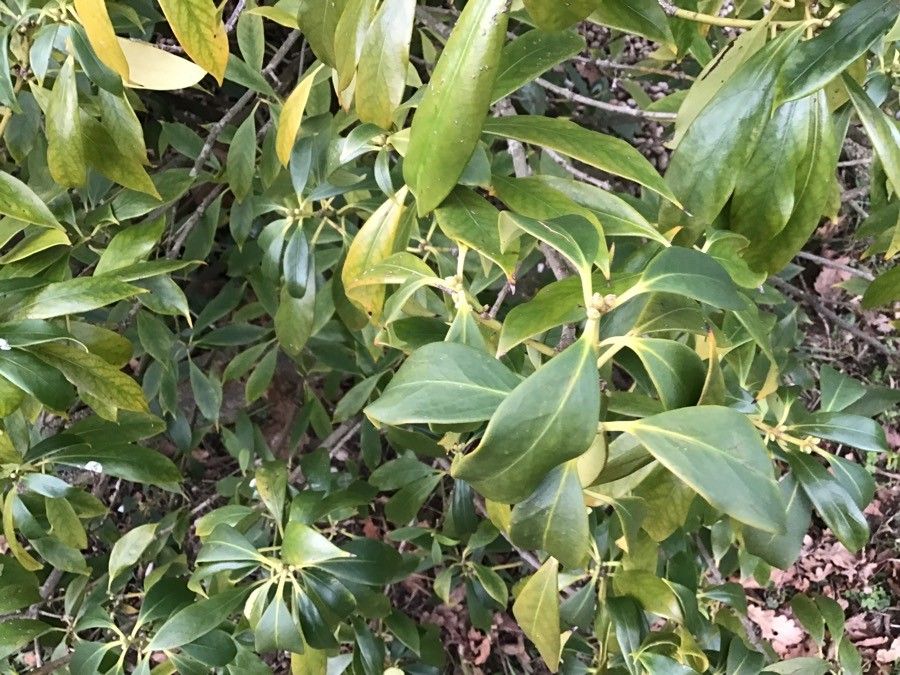
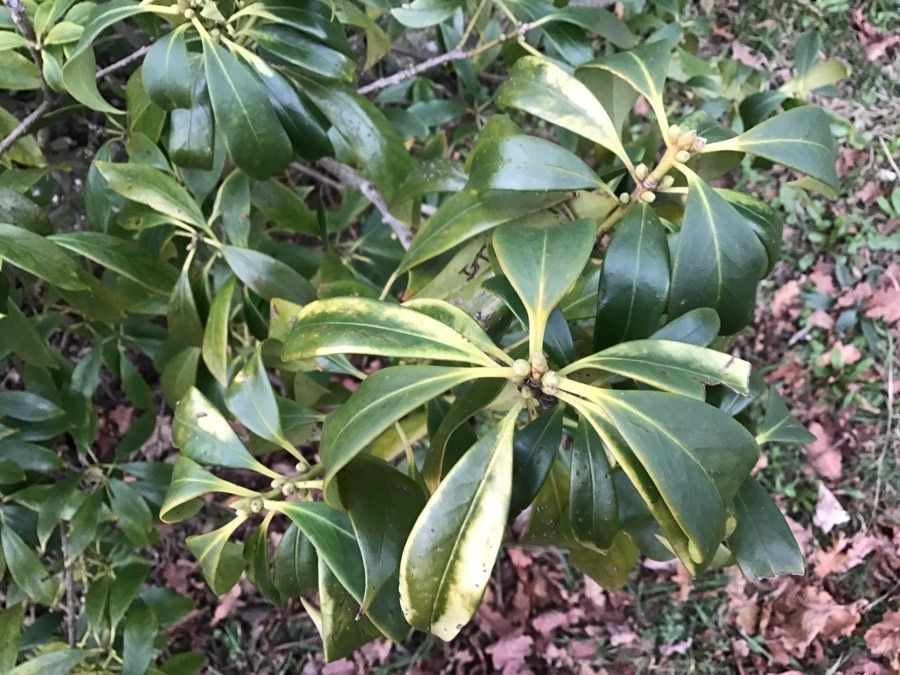
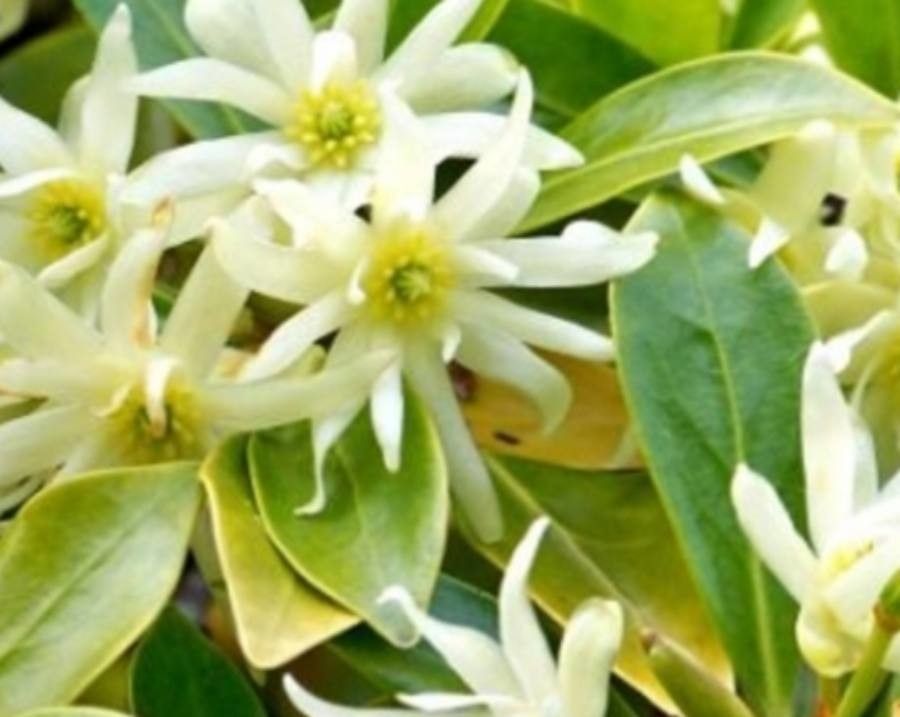
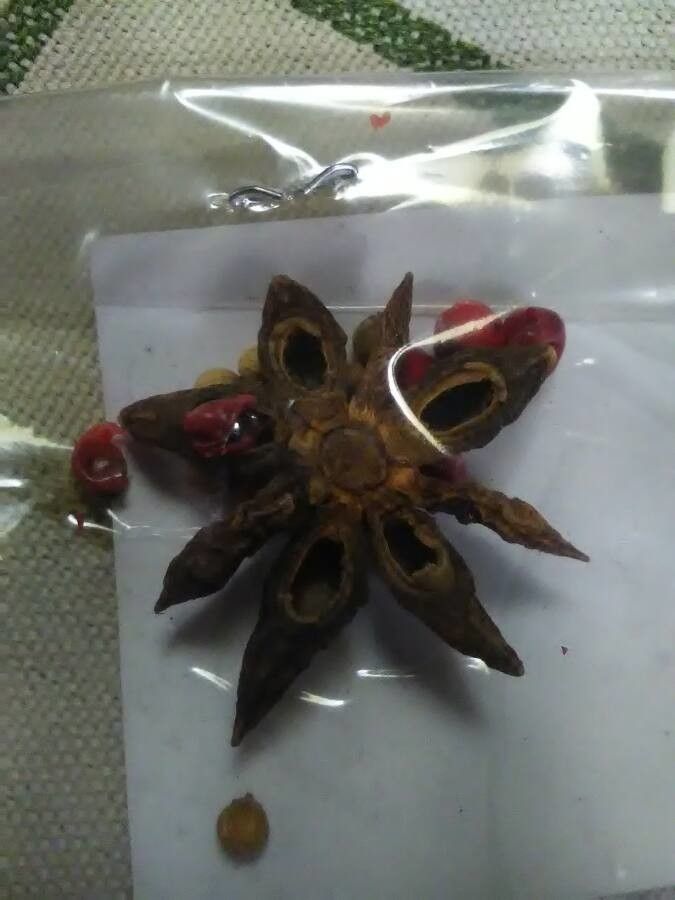
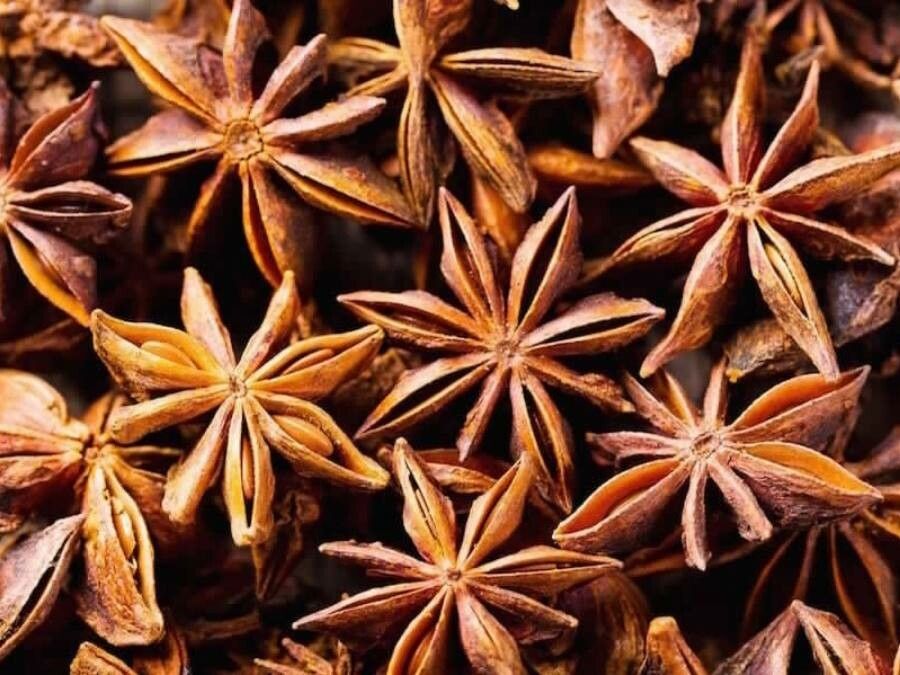
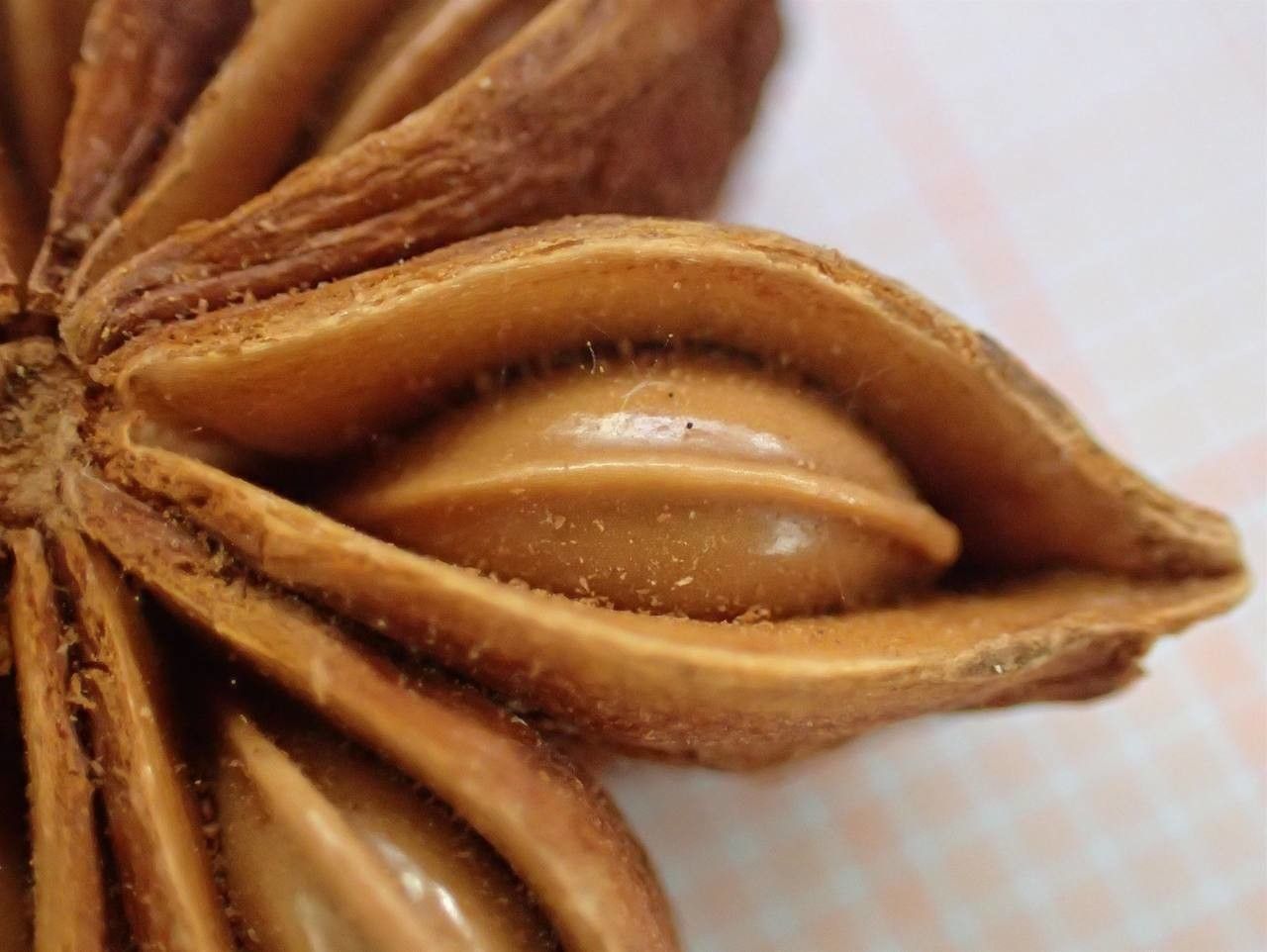
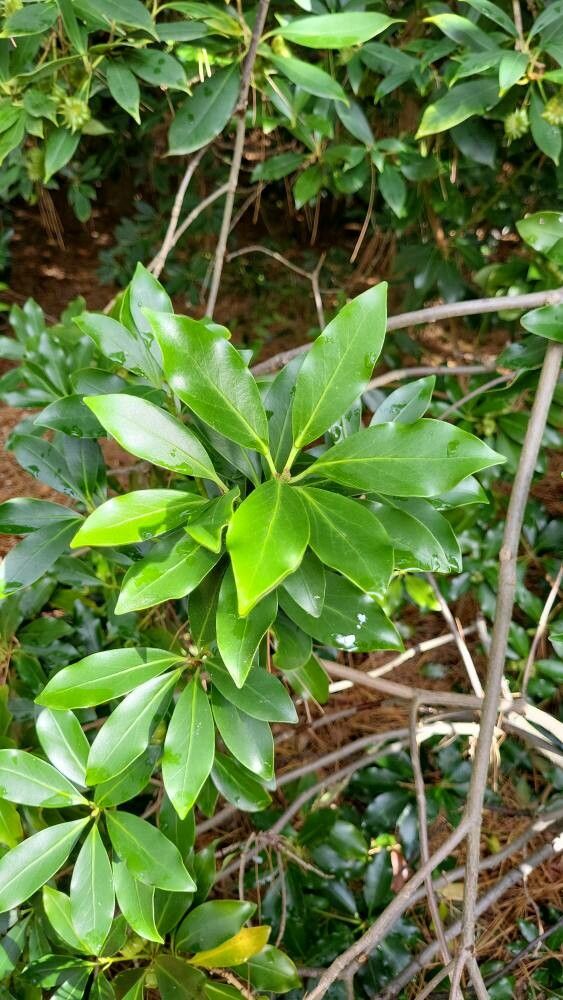
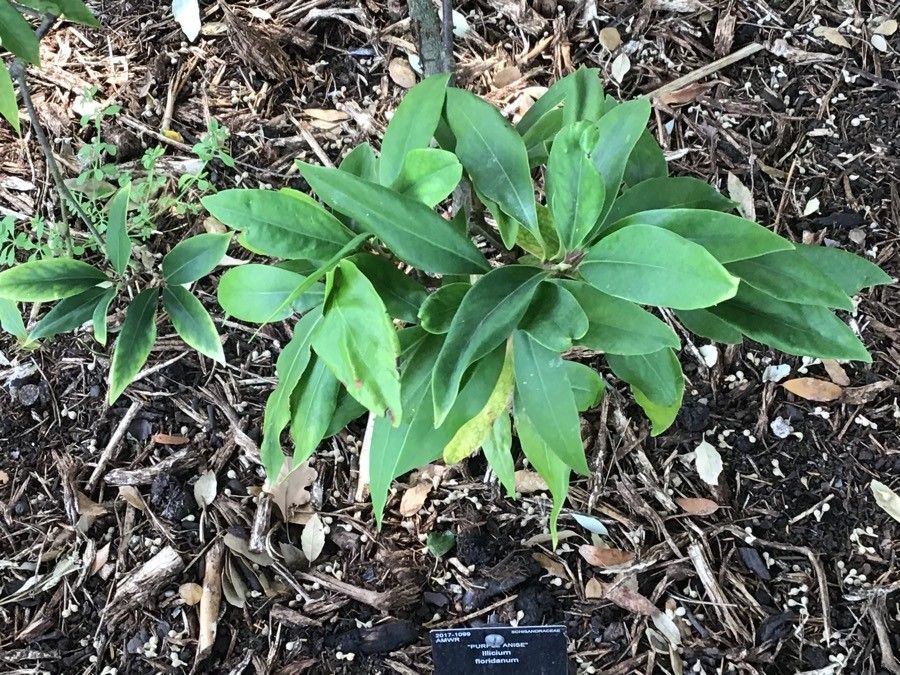
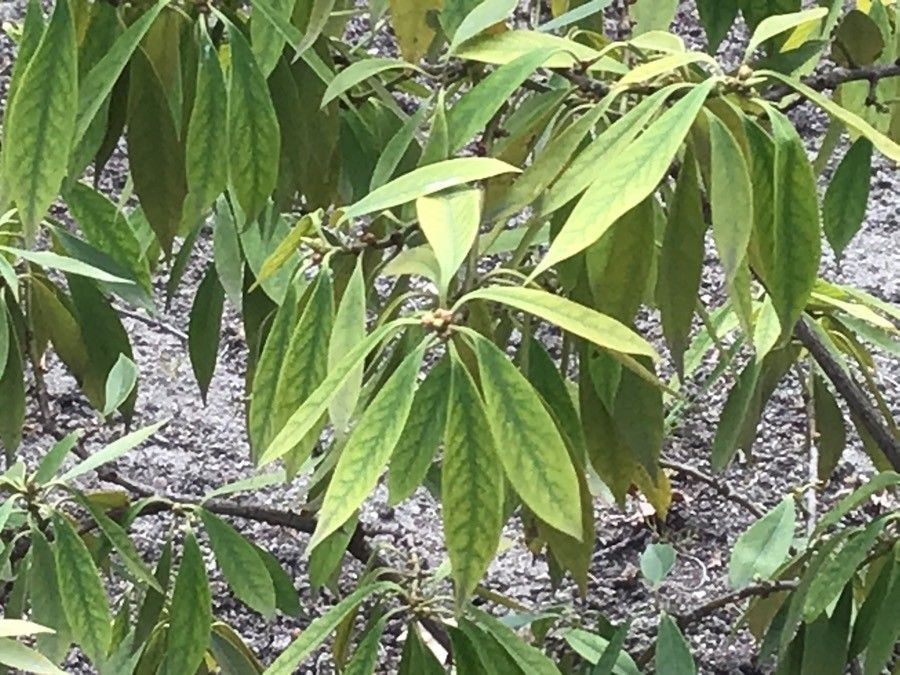
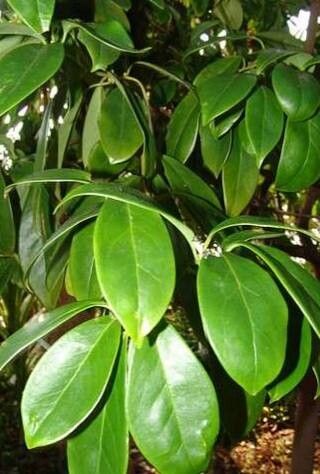
Illicium verum is a medium-sized evergreen tree native to northeast Vietnam and southwest China. A spice commonly called star anise, staranise, star anise seed, star aniseed, star of anise, Chinese star anise, or badian that closely resembles anise in flavor is obtained from the star-shaped pericarps of the fruit of I. verum which are harvested just before ripening. Star anise oil is a highly fragrant oil used in cooking, perfumery, soaps, toothpastes, mouthwashes, and skin creams. Until 2012, when they switched to using a bacterial source, Roche Pharmaceuticals used up to 90% of the world's annual star anise crop to produce shikimic acid, a chemical intermediate used in the synthesis of oseltamivir (Tamiflu).
Star anise has moderate resistance to disease and can be prone to issues like leaf spot. Its vulnerability to insect pests can differ by variety, though most varieties are relatively less resistant to pests. For care, Star anise requires consistent watering and fertilizing, along with regular removal of yellow leaves. It’s important to manage pests and diseases when they arise and to harvest the plant promptly. Star anise is well suited to people who can dedicate some time and effort to routine care.
How to keep Illicium Verum.
Light
Star anise grows best with ample sunlight, though it can tolerate spots with reduced light. Coming from a sunny habitat, it uses sunlight efficiently to develop vigorously. Both too much and too little sun can hinder its growth or cause it to become unhealthy.
Water
Star anise flourishes in consistently moist soil and prefers stable humidity. It requires watering every two weeks to maintain optimal growth. As an evergreen, it keeps its foliage throughout the year, so it needs steady hydration even during the cooler months when indoor humidity levels drop. While star anise can tolerate some drought, it thrives in a humid environment.
Temperature
Star anise originates from cool climates and is adapted to temperatures between 59 and 95 °F (15 to 35 ℃). It favors steady warmth and can tolerate fluctuations, as long as conditions remain within that range. Seasonal adjustments may be required to maintain optimal growth.
Fertilizer
For Star anise, choose natural organic options such as compost, grass clippings, or manure. Use a slow-release granular fertilizer or a commercial fertilizer sparingly. Work the organic fertilizer into the soil before planting. Usually, one to two fertilizer applications per growing season are enough for a bountiful harvest.
Pruning
Star anise is an evergreen shrub known for its star-shaped fruit and aromatic qualities. To improve growth, air circulation, and light penetration, prune the plant from early to late winter after harvesting. Be sure to remove any dead branches and use clean tools to prevent infection. This will help maintain the plant's shape and promote productivity.
Pot & Repot
When repotting Star anise, pick a pot 1-2 inches (2.5–5.1 cm) larger with good drainage. Use a well-draining potting mix. Repot in spring or fall, making sure the root ball sits slightly below the rim of the flower pot. Water thoroughly after repotting and place it in a warm spot with indirect sunlight.
Botanical profile.
- Plant Type
- Tree
- Life Cycle
- Perennial
- Genus
- Illicium
- Family
- Schisandraceae
- Hardiness Zone
- 7-10
- Mature Height
- 4.88 m
- Mature Spread
- 3.05 m
- Leaf Color
- Green
- Leaf Type
- Evergreen
- Flower Color
- Yellow, Pink, White, Green, Purple, Red
- Flower Size
- 2.54 cm
- Bloom Time
- Mid spring, Late spring
- Planting Time
- Spring, Summer
- Harvest Time
- Late summer, Early fall, Mid fall
- Native Area
- China
Other names.
Reader questions.
How should I water my Star anise plant?
Your Star anise is not particular about how you water it, so you can use any common watering tool. Watering cans, hoses, or even cups will all work fine. Regardless of the tool you choose, make sure to water the soil directly. Be sure to evenly moisten all areas of the soil to ensure all parts of the root system receive enough water. It's recommended to use filtered water to avoid harmful particles that tap water may contain. Using water that is at or slightly above room temperature is also beneficial, as cold or hot water can be shocking to the Star anise. However, the Star anise generally responds well to any type of water.
How much sunlight does Star anise need for it to grow?
For Star anise to grow and produce fruit, it is generally recommended to provide a minimum of 6 to 8 hours of sunlight per day. However, the specific requirements may vary slightly.
What is the best temperature for Star anise?
Star anise has a preferred temperature range of 70-85℉(21-30℃). As long as the temperature stays within this range, the foliage should be safe from cold or hot damage. However, if the leaves start changing color, it could be a sign that the Star anise is not happy. While it's best to keep the temperature within the preferred range, don't worry if it exceeds 85℉(30℃) during the day or drops to 70℉(21℃) at night.
What should I do if I give my Star anise too much or too little water?
When planting outdoor plants, especially new ones or seedlings, it is important to ensure they are properly watered. This is crucial for a few months until the tree is well-established and able to rely on rainwater. On the other hand, when Star anise plants are in pots, overwatering can be a common issue. If you accidentally overwater your Star anise, there are steps you can take to fix the situation. First, stop watering the plant immediately to minimize the effects. Then, inspect the roots by removing the plant from its pot. If there is no root rot, you can return the plant to its container. However, if root rot is present, trim affected roots and consider applying a fungicide. Lastly, make sure to repot the Star anise in well-draining soil. In the case of underwatering, simply water the plant more frequently. This is an easy fix, as the plant's leaves will droop and dry out, but will recover quickly when given sufficient hydration. It is important to adjust your watering frequency if you notice underwatering occurring.
What kind of sunlight does Star anise require?
When growing star anise, it is important to find a sunny spot without any obstacles, like trees, fences, or buildings, that block direct sunlight. Typically, the more quickly the plant grows, the more sunlight it requires. Morning sun is ideal for optimal photosynthesis.
How can I keep Star anise safe from very hot or very cold temperatures outside?
If your Star anise is planted outside, moving it indoors may not be possible. However, you can still protect it from extreme temperatures. To shield it from intense sunlight, create a shade tent using stakes and cloth. Similarly, insulate the plant from cold and strong winds by constructing a small greenhouse with garden stakes and clear or translucent plastic. If you have greenhouse plastic like polycarbonate, that would work well. Remember to remove the greenhouse when temperatures rise above 40℉(10℃) at night.
How often do I need to water my Star anise plant?
Most plants in outdoor environments can rely on rainfall for their water needs. However, if you live in an area with insufficient rainfall, it is important to provide regular watering for your plants. During the spring and fall, watering every two weeks should be sufficient. In the summer, when plants require more water due to increased growth, watering should be more frequent. In the winter, when plants experience slower growth and require less water, watering should be reduced. In fact, during the winter, additional watering may not be necessary at all. If you have a young or newly planted Star anise, it is recommended to water more frequently to aid in its establishment and promote healthy growth. It will also help your plants become more adaptable and drought tolerant as they mature. For potted plants, there are two methods to determine watering frequency for your Star anise. The first option is to establish a predetermined watering schedule, such as once every week or every other week. However, this approach may not consider the specific conditions of your plant's environment. The second option is to assess soil moisture when deciding when to water. Ideally, wait until the top 2 to 4 inches of soil, about one-third to one-half the depth of the pots, have completely dried out before watering again. This approach takes into account the actual moisture needs of your Star anise and can be adjusted based on the season, such as increasing watering during the summer when water needs are greater.
Do I need to keep Star anise away from the sun?
In most climates, star anise typically doesn't require protection from the sun. However, if you live in a desert or near the equator, you may need to be cautious as the sun can be too harsh for certain types of plants. But this is not the case for the majority of locations.
Does Star anise require varied temperatures in different seasons?
Star anise requires a consistent temperature range throughout the year, but its care needs can vary. In warmer months, it benefits from extra shade and airflow to handle the heat. In cooler months, it may need to be kept away from cold windows and doors, especially if temperatures drop below 40℉(10℃) at any time.
How much water does my Star anise plant need?
Watering your Star anise can be done effectively without needing a lot of water. If only a few inches of soil have dried since your last watering, providing about five to ten ounces of water each time is enough to support healthy growth. Monitoring the soil moisture is important. Keep track of how many inches of soil have dried out between waterings. To ensure your Star anise receives the right amount of moisture, water enough to moisten all the dry soil layers since the last watering. If more than half of the soil has become dry, consider giving more water than usual until you see excess water draining from the pot's drainage holes. In outdoor areas with sufficient rainfall, additional watering may not be necessary. When the Star anise is young or establishing, aim for 1-2 inches of rain per week. As it grows and becomes established, it can rely solely on rainwater. Only in very hot weather with no rainfall for 2-3 weeks should you give a full watering to prevent stress.
What happens if Star anise doesn't get enough sunlight?
Plants require sunlight for energy, and those with shorter growing seasons need even more light. Star anise, for example, shows signs of insufficient sunlight through pale and yellow leaves that cannot produce enough chlorophyll to maintain their healthy green color. These leaves may eventually fall off, and new growth is stunted. Additionally, the plant may become stretched and sparse as it tries to reach available light. Ultimately, without adequate sunlight, star anise cannot produce large, high-quality leaves or fruit. Since this plant needs a significant amount of energy to grow and bear fruit, a lack of light significantly affects its harvest.
How can I keep my Star anise at the right temperature?
Keeping your Star anise at the right temperature can be simple. If you are growing it indoors, you can easily move the plant to different locations that suit its temperature needs. Just avoid placing it near air conditioning vents, heaters, frequently opened doors, or drafty windows. However, controlling the temperature of your Star anise when grown outside is a bit more challenging. You can bring it indoors if it's in a pot and the outside temperatures are too hot or cold. Otherwise, you'll need to take measures to protect it from extreme heat or cold. Placing it under cover can shield it from both intense sunlight and freezing winds that could harm the plant.