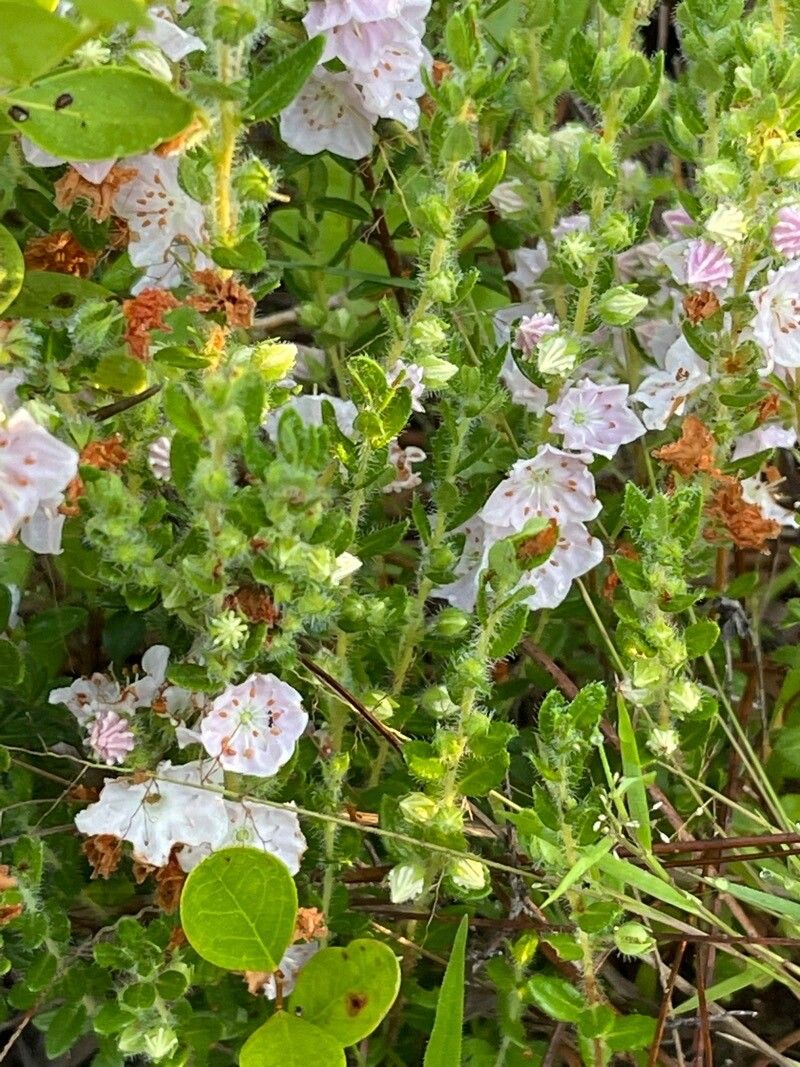
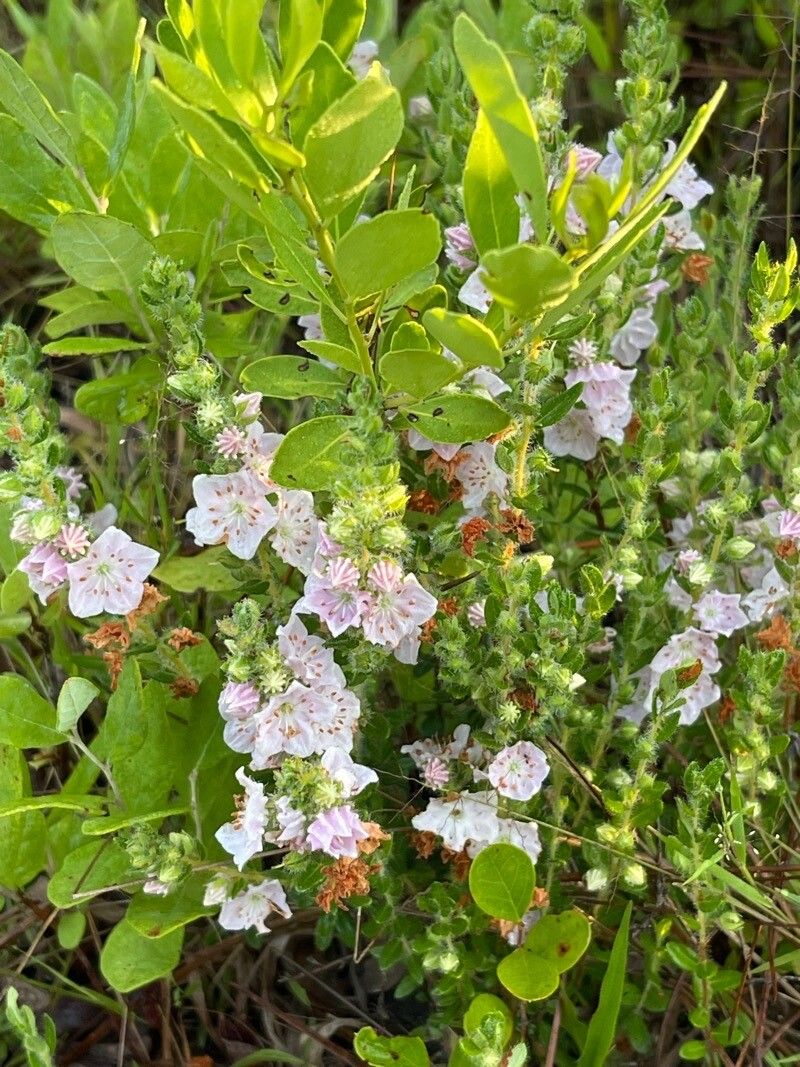
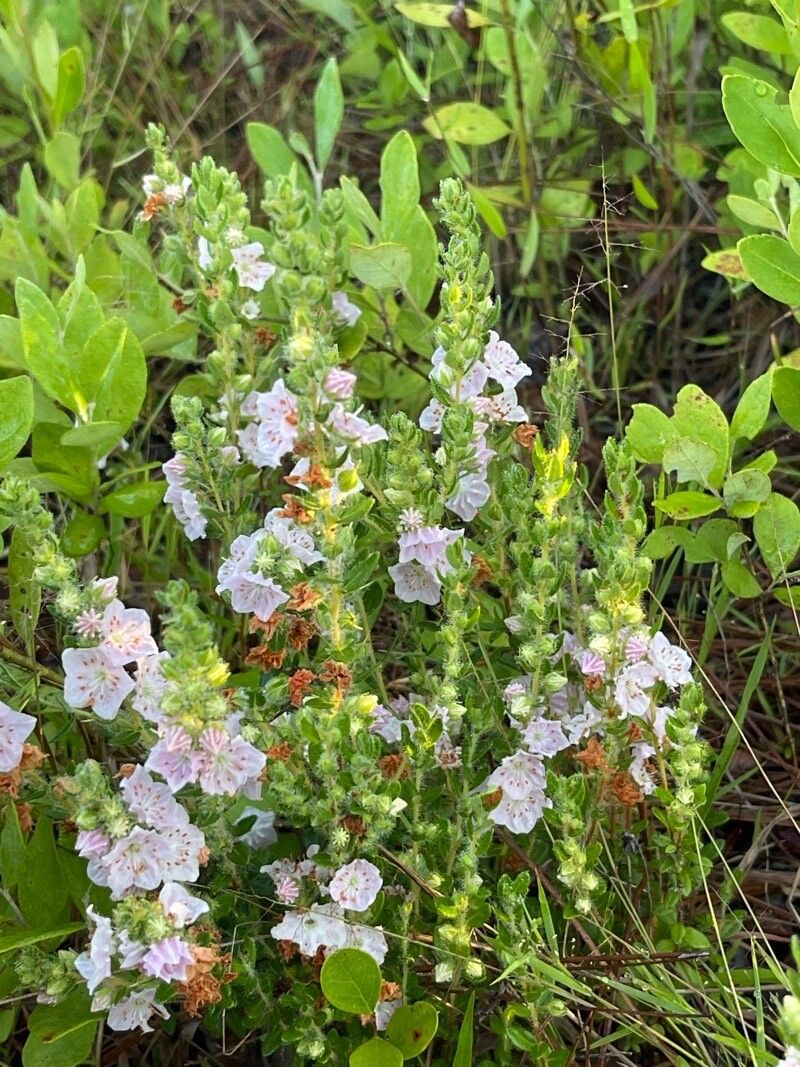
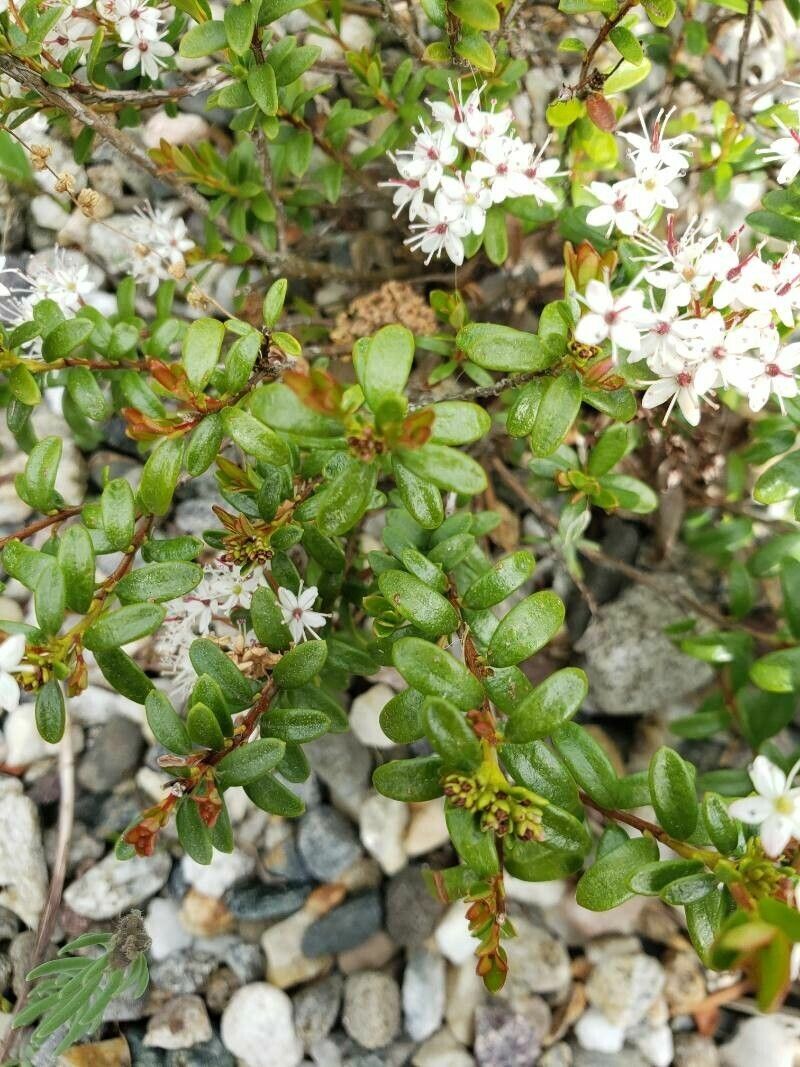
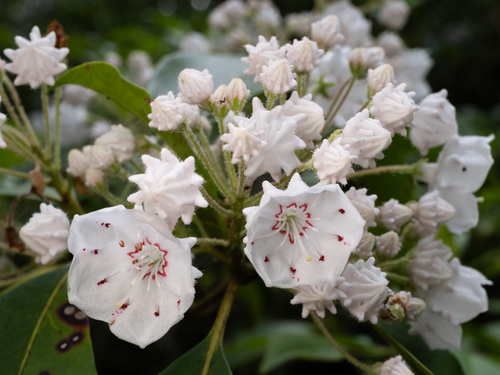
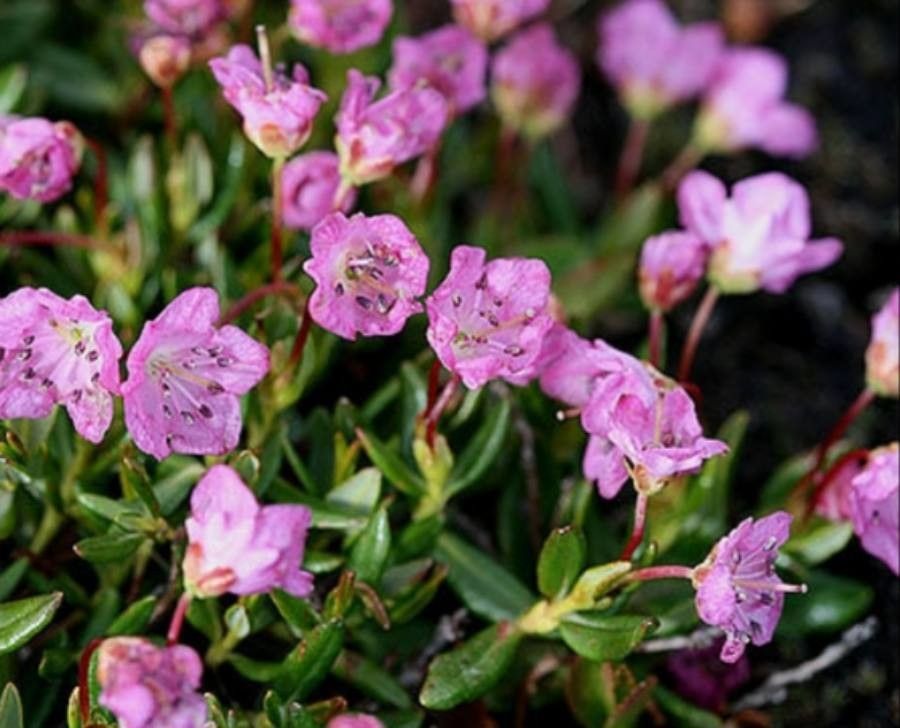
Kalmia hirsuta, the hairy mountain-laurel, is a plant species native to the southeastern United States. It is reported from Florida, Georgia, Alabama and South Carolina. It grows in open, sandy locations such as savannahs, sand hills and pine barrens at elevations of less than 100 m (330 feet).The epithet "hirsuta" means "covered with coarse stiff hairs," appropriate as the hairiness of the leaves is one major character in distinguishing this species from its relatives. Kalmia hirsuta is a shrub up to 1.2 m (4 feet) tall. Leaves are elliptic to ovate, up to 14 mm (0.6 inches) long. Inflorescences form in the axils of the leaves, with 1-5 flowers. Flowers are pink with red spots.
Hairy laurel is resistant to disease and generally not susceptible to illnesses. In terms of care, this plant is fairly low-maintenance. When planted outside it needs only minimal watering, and larger specimens typically do not require pruning. Smaller plants, however, should be pruned after they finish blooming. Hairy laurel is suitable for anyone with an outdoor area, such as a garden or deck, and does not demand much gardening experience.
How to keep Kalmia Hirsuta.
Light
Hairy laurel is native to open habitats, such as sunny meadows and forest edges, which supply abundant light. It prefers full sun but can also tolerate partial sun, adapting well to different sunlight conditions.
Water
Hairy laurel thrives in humid environments but can also adapt to areas with low water availability. It prefers moderate moisture levels and is tolerant of drought conditions. When watering, aim to do so every 2-3 weeks. When grown outdoors, hairy laurel is effective at managing soil moisture during the growing season and can remain healthy even with limited rainfall.
Temperature
Hairy laurel is fairly adaptable to temperature, able to endure higher heat and larger temperature fluctuations. In hot weather, you should monitor watering and provide appropriate shading to prevent sunburn. Conversely, hairy laurel has relatively poor cold tolerance; while it can tolerate some chill, overly low temperatures can cause frost damage.
Fertilizer
Proper timing is important when fertilizing Hairy laurel. Apply fertilizer in early spring and continue monthly until early summer. Fertilizer promotes attractive blooms and provides energy during both dormant and active growth periods.
Pruning
Hairy laurel is known for its unique hairy leaves and pink flowers. To maintain its shape and encourage growth in the spring, it is best to prune from early to late winter. When pruning, concentrate on removing dead or overcrowded branches to improve air circulation. Proper pruning not only encourages vibrant blooms but also helps reduce pests and keeps the plant manageable.
Botanical profile.
- Plant Type
- Shrub
- Life Cycle
- Perennial
- Genus
- Kalmia
- Family
- Ericaceae
- Hardiness Zone
- 6-9
- Mature Height
- 0.91 m to 1.83 m
- Mature Spread
- 30 cm to 61 cm
- Leaf Color
- Green
- Leaf Type
- Evergreen
- Flower Color
- Pink
- Flower Size
- 1.02 cm to 2.03 cm
- Bloom Time
- Early summer, Mid summer
- Planting Time
- Spring, Summer, Autumn
- Harvest Time
- Late summer, Early fall, Mid fall
Other names.
Reader questions.
How should I water my Hairy laurel?
Your Hairy laurel isn't too particular about how you water it. You can use any common watering tool, like watering cans, hoses, or even cups. Just make sure to water the soil directly and evenly to give all parts of the root system the proper amount of water. Using filtered water can be helpful to avoid harmful particles in tap water. It's also a good idea to use water that is at or slightly above room temperature, as very cold or hot water can shock the plant. However, the Hairy laurel usually does well with any type of water.
How many hours of sunlight per day does Hairy laurel need to grow healthy?
To ensure healthy growth, Hairy laurel needs a minimum of 3-6 hours of sun daily. In fact, this is the least amount of sunlight it requires. Most plants that can tolerate some shade can also flourish in full sun, but they are more adaptable as they need less light for photosynthesis when compared to plants that prefer full sun or partial shade.
What should I do if I give too much water or too little water to my Hairy laurel?
For outdoor plants, particularly newly planted ones or seedlings, they can be susceptible to not getting enough water. Remember to water them adequately for several months when they are small or recently planted. Once the roots are established, Hairy laurel plants can rely on rain for most of their water needs. When Hairy laurel plants are in pots, overwatering is more common. If you accidentally overwater your Hairy laurel, you should take immediate action to remedy the situation. First, stop watering the plant right away to minimize the impact of overwatering. Then, remove the Hairy laurel from its pot to inspect the roots. If there are no signs of root rot, you can return the plant to its container. However, if you notice any roots affected by rot, trim them away and consider applying a fungicide to prevent further damage. Finally, repot the Hairy laurel using well-draining soil. In the case of underwatering, simply increase the frequency of watering for your Hairy laurel. This is typically an easy fix, as the plant's leaves will droop, dry out, and fall off when underwatered. Once sufficient watering is provided, the leaves will quickly regain their fullness. Make sure to adjust your watering schedule promptly when underwatering occurs.
What kind of sunlight does Hairy laurel require?
Hairy laurel thrives in full or partial sun. It prefers direct morning light, but during summer it should be shielded from the intense afternoon sun. In temperate climates, excessive hot afternoon sun can scorch the leaves and harm the plant's overall health and appearance.
How frequently should I water my Hairy laurel?
Most plants can grow naturally with rainfall, but if your area doesn't get much rain, you'll need to water them every 2 weeks in the spring and fall and more often in the summer. In the winter, you can water less because plants grow slower and need less water. You may not need to water at all during the winter. If your Hairy laurel is young or newly planted, water it more frequently to help it establish and grow. For potted plants, you can either follow a set watering schedule or determine when to water based on the moisture in the soil. During the summer, the plant will need more water than what the schedule suggests. To determine if the plant needs water, wait for the top 2 to 4 inches of soil to dry out before watering again.
Can the sun harm Hairy laurel plants? How can we keep Hairy laurel safe from the sun and heat?
Indoor hairy laurel plants can get sunburned when they are placed outside in direct sunlight. To avoid this, it is best to slowly move the pots from a shaded area to a brighter spot. However, even plants that are used to the sun in the summer can be harmed by extreme heat. To help them handle excessive heat, it is important to keep the soil consistently moist. During a heatwave, you can protect sensitive hairy laurel plants by moving them to shaded areas in the afternoon or by covering them with a shade cloth.
How much water does my Hairy laurel plant require?
To properly water your Hairy laurel, remember that it doesn't always need a lot of water. If only a few inches of soil have dried since your last watering, giving it about five to ten ounces of water will support healthy growth. You can also gauge your water volume by checking the soil moisture. Keep track of how many inches of soil have dried out between waterings. To ensure adequate moisture, water until all dry layers of soil have been moistened. If more than half of the soil is dry, consider giving more water until excess water drains from the pot's holes. If your Hairy laurel is planted in a rainy outdoor area, it might not need additional watering. However, when it's young or establishing, ensure it receives 1-2 inches of rain per week. As it grows, it can survive on rainwater, but during hot weather and extended periods without rainfall, give it a full watering to prevent stress.
Should I keep Hairy laurel away from the sun?
Hairy laurel benefits from bright morning sun and some full sun exposure, but it cannot handle the harsh, hot midday sun of summer. If it is planted in the ground, it can gradually adapt to the increasing intensity of the sun throughout the season. However, if it is in a pot and has been indoors or in a protected location, it may get damaged if suddenly exposed to direct summer sun in the hottest part of the day. To protect the plant from the strong afternoon summer sun, it is advisable to plant or place it in a shaded area at midday, such as under taller trees, plants, a building, or a landscape feature.
How can I know if I am giving my Hairy Laurel enough water?
The Hairy laurel is often overwatered, and there are clear signs to look out for. When overwatered, the leaves turn yellow and may fall off. Additionally, the plant can shrink and develop root rot. Conversely, an underwatered Hairy laurel will also start wilting and have brown or brittle leaves. Whether you see signs of overwatering or underwatering, it's important to take action and revive your Hairy laurel's health.
What happens if Hairy laurel doesn't get enough sunlight?
If Hairy laurel doesn't get enough sun, it can turn pale green or have drooping, yellow leaves. While it's normal for leaves to fall off, if new leaves aren't growing back, it means something is wrong. When Hairy laurel receives too little light, any new growth it manages to have will be weak, pale, and likely to attract bugs. By noticing and adjusting the lighting conditions, you can make a big improvement.
How should I water my Hairy laurel at different times while it's growing?
When the Hairy laurel is young, especially when it is in a seedling stage, it needs more water compared to when it is older. It is crucial to keep the soil consistently moist during the early stages of the plant's life to promote root development. This rule also applies if you have transplanted a Hairy laurel to a new location. Additionally, providing the correct care can result in the development of beautiful flowers and fruits. If your Hairy laurel is currently flowering or fruiting, it will likely require slightly more water than usual to support these structures.
Does the Hairy laurel plant require specific attention when it comes to sunlight at various stages of growth?
Tender, new leaves can easily get sunburned. It is important to note that young Hairy laurel plants, particularly when they are growing vigorously in late spring and early summer, are more prone to sun damage from intense sunlight and heat compared to mature plants or those in a less active growth stage during the fall. Additionally, Hairy laurel plants that have just been purchased from a nursery are typically not accustomed to direct sunlight and should be gradually exposed to it.