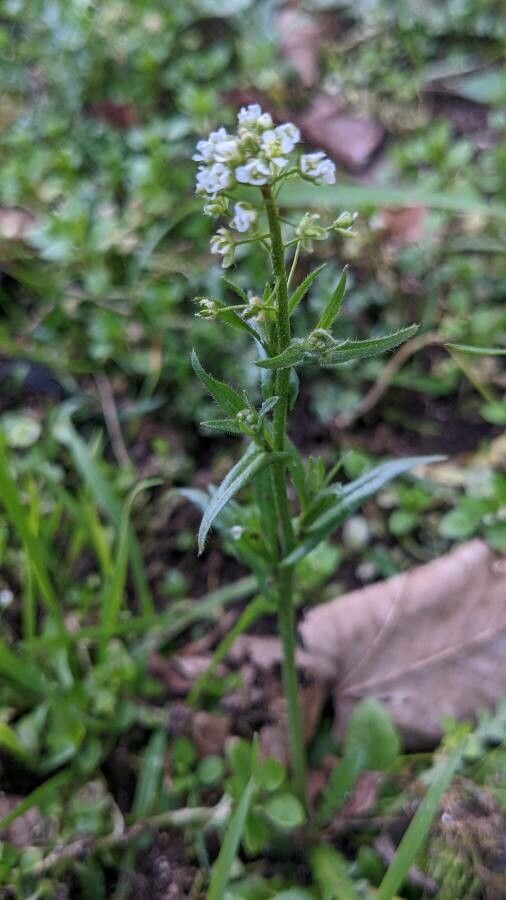
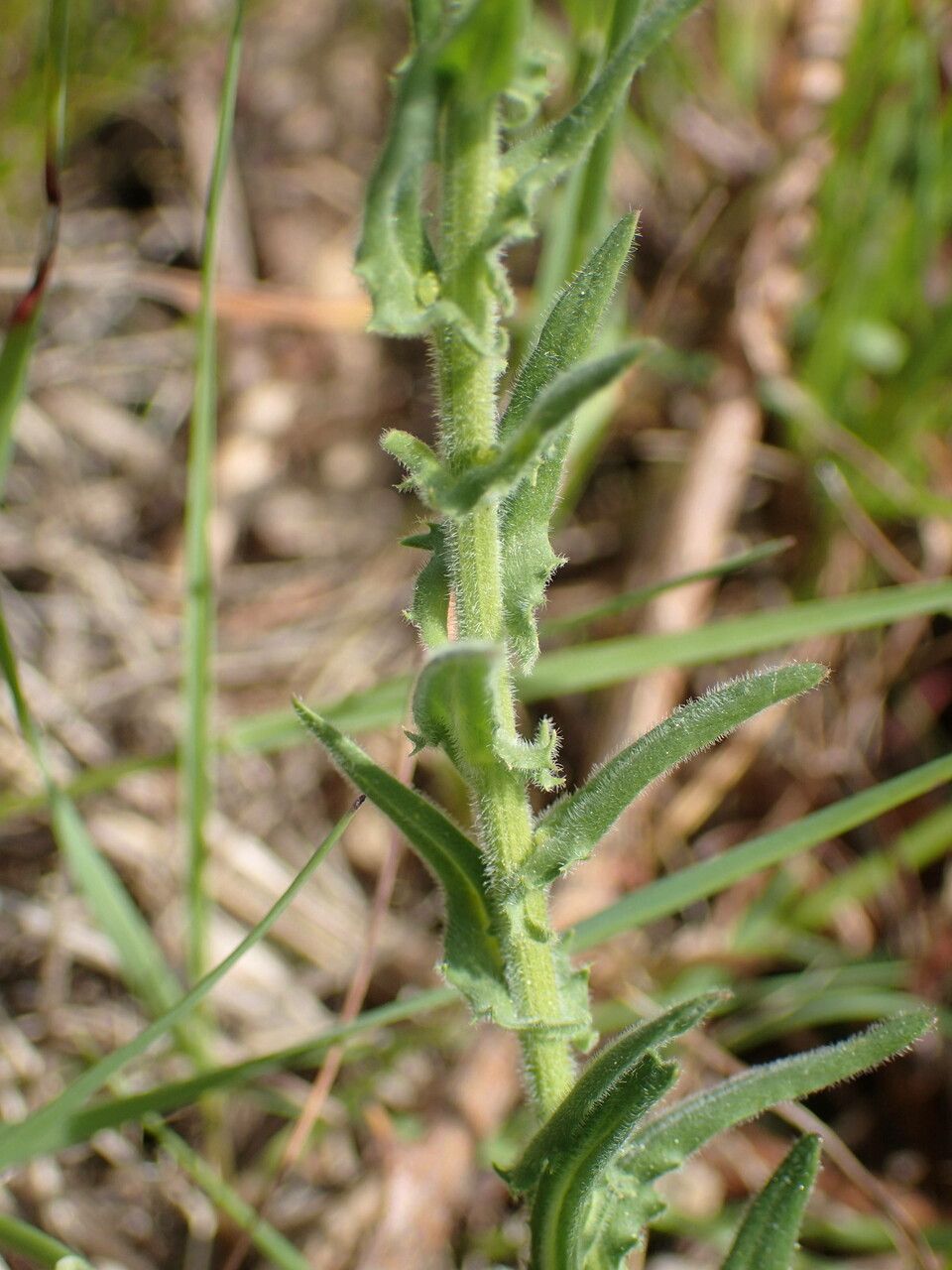
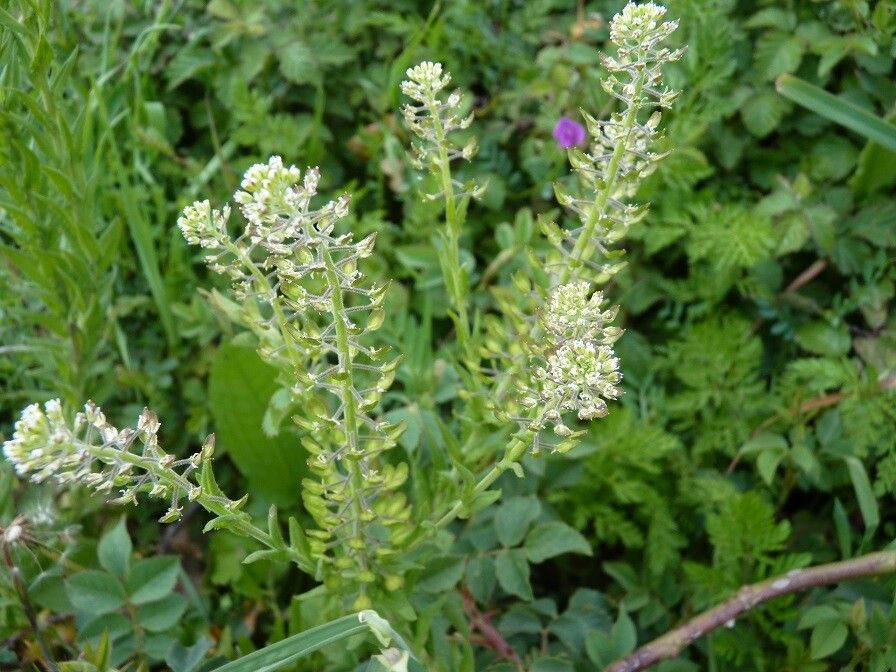
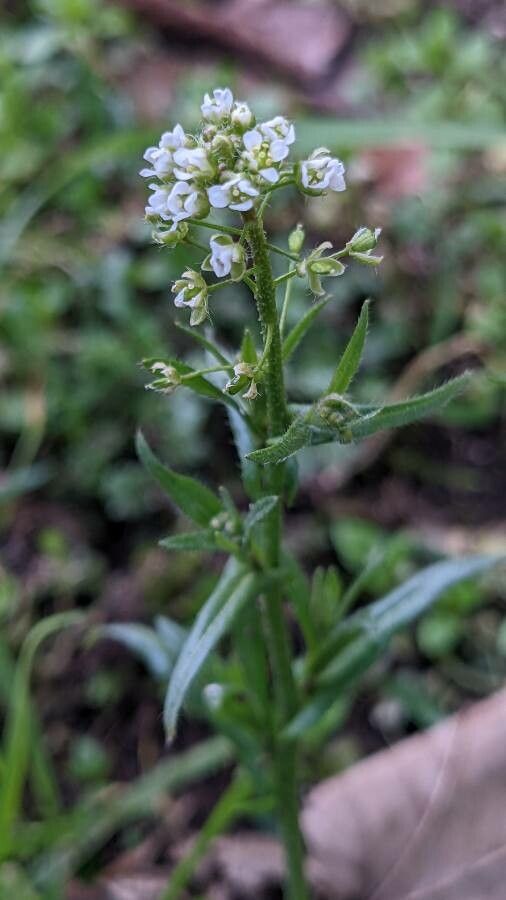
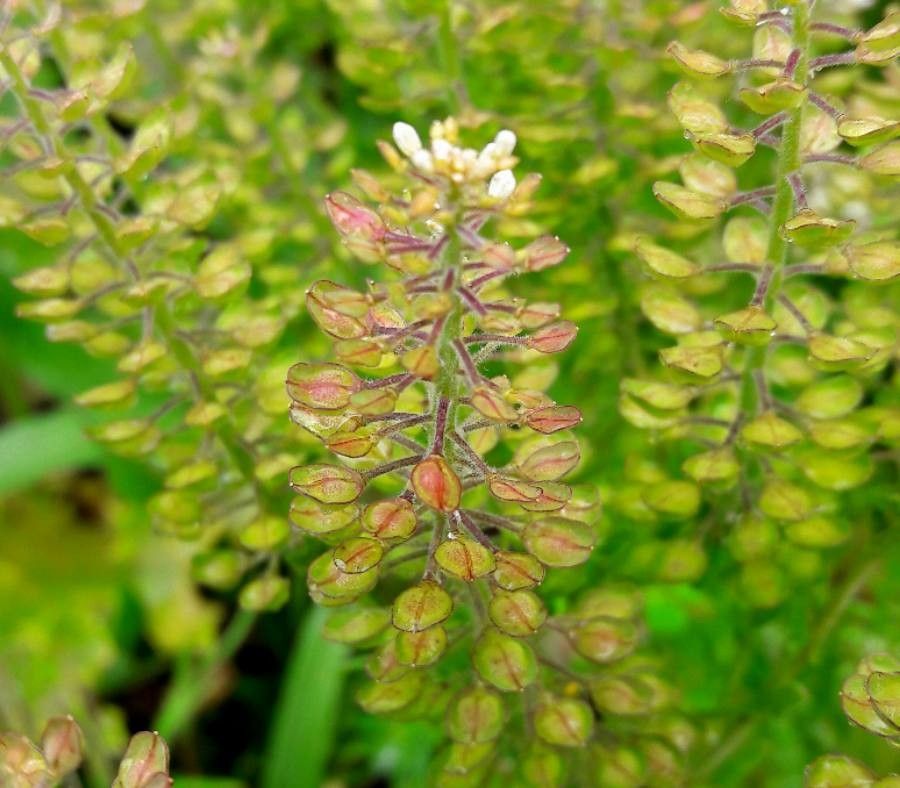
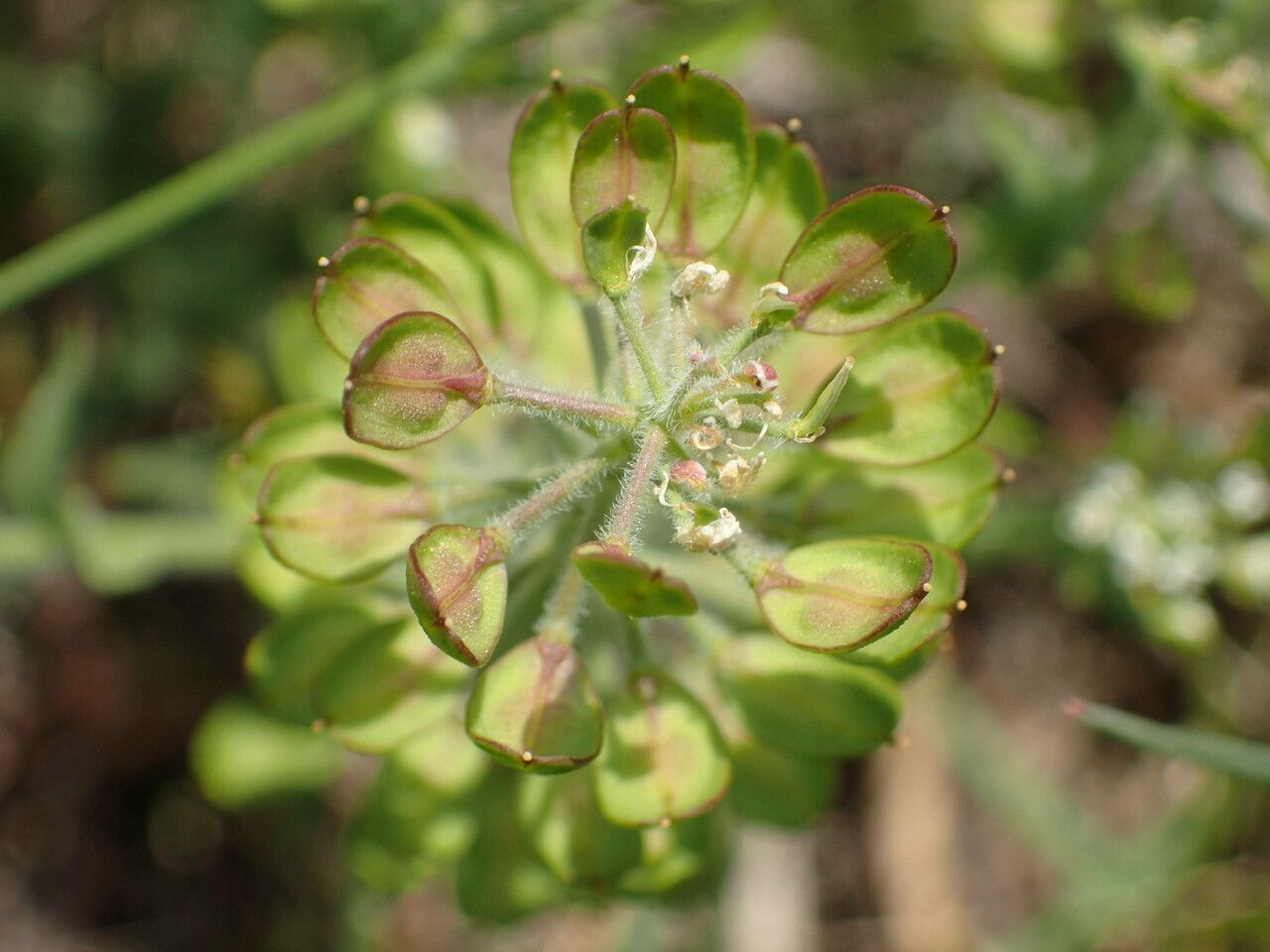
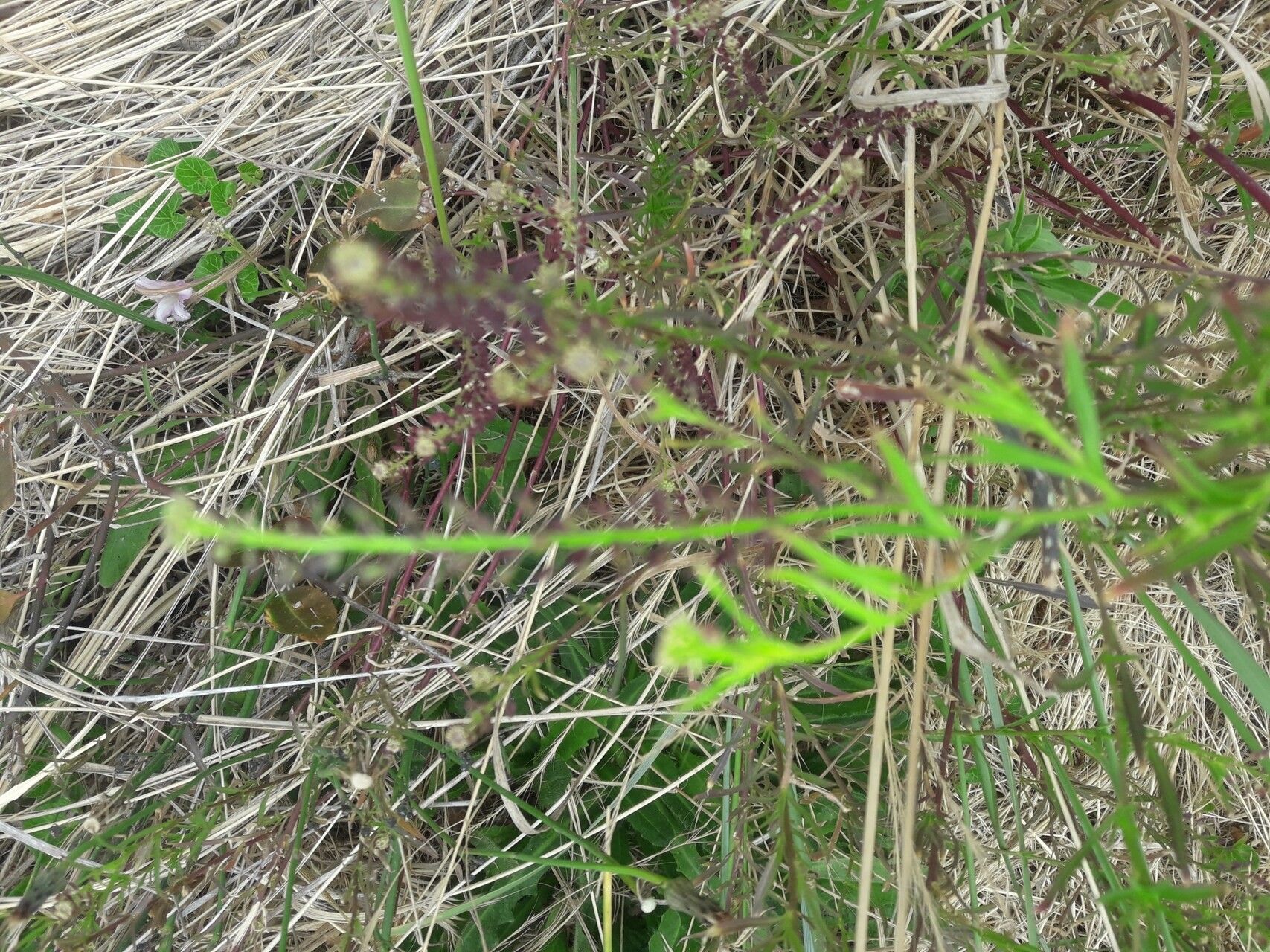
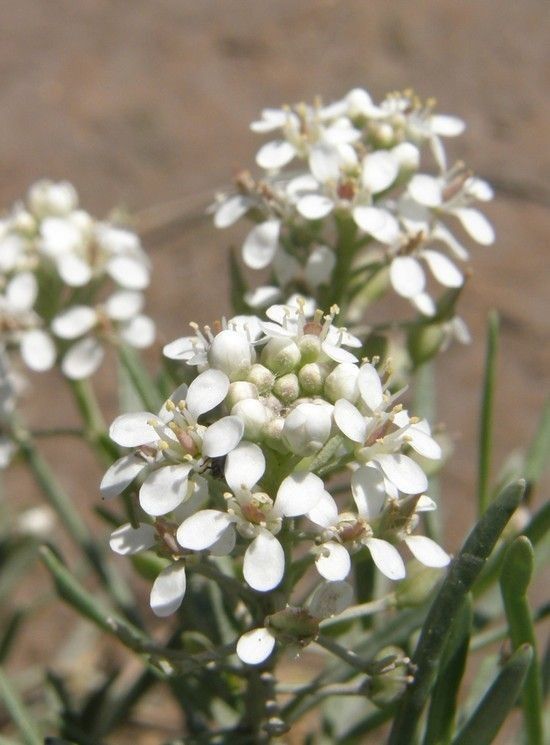
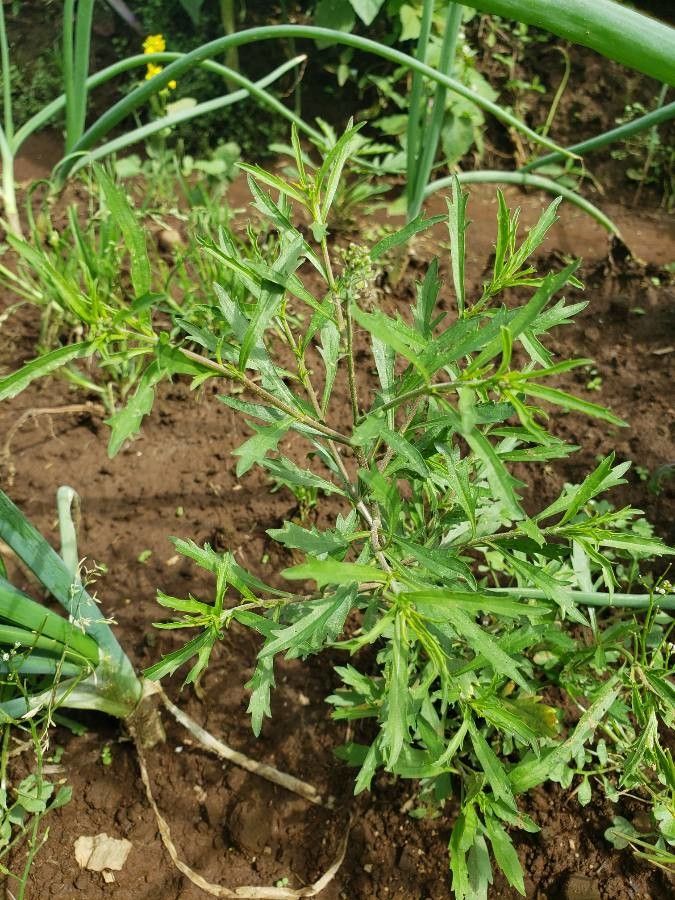
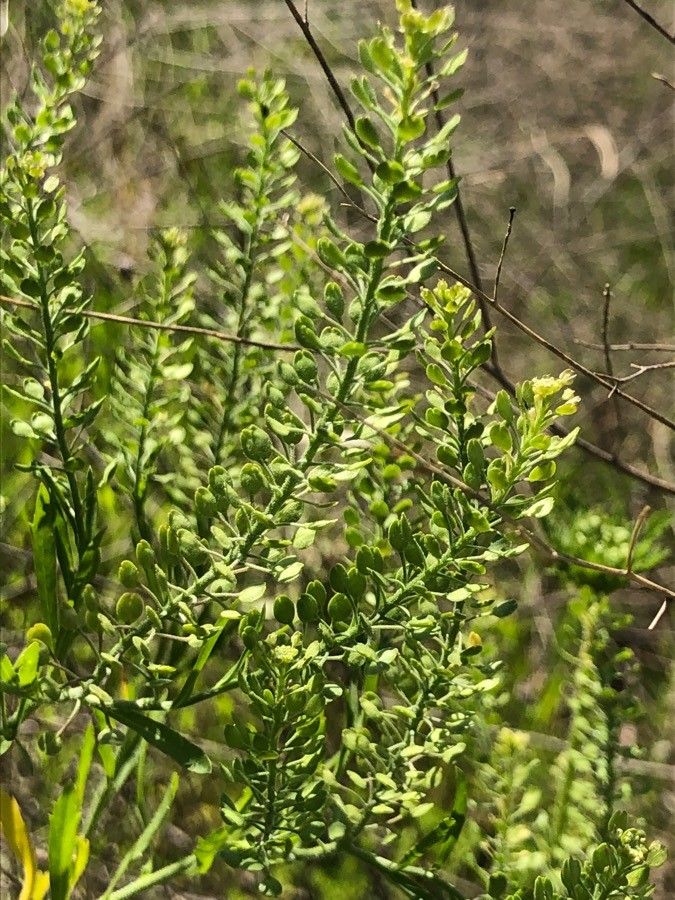
Lepidium campestre, the field pepperwort or field pepperweed or field cress, is usually a biennial with some form of annual plant in the Brassicaceae or mustard family, native to Europe, but commonly found in North America as an invasive weed. The most notable characteristic of field pepperweed is the raceme of flowers which forks off of the stem. These racemes are made up of first small white flowers and later green, flat and oval seedpods each about 6 mm long and 4 mm wide. Each seedpod contains two brown, 2.5 mm long seeds. The stem of field pepperweed comes out of a basal rosette of toothed leaves. The stem is covered in leaves, which are sessile, alternate and arrow-shaped. The entire plant is generally between 20 and 60 cm tall and covered in small hairs.
Field peppergrass has strong resistance to disease and is generally not likely to suffer from illnesses. That said, it can be affected by pests and diseases present in its environment. Such outbreaks are typically mild. Regarding care, this plant needs a moderate level of attention. It requires regular pruning to preserve a good appearance and support healthy growth. Applying fertilizer can also encourage blooming. Field peppergrass is appropriate for anyone with outdoor areas like a garden or patio and does not demand extensive gardening experience. It might need more care if kept indoors.
How to keep Lepidium Campestre.
Light
Field peppergrass thrives in full sun but can tolerate areas with reduced sunlight. This preference corresponds to its native habitats, which generally receive prolonged periods of sunshine. Notably, both excessive and insufficient light can result in suboptimal growth or health.
Water
Field peppergrass originates from temperate regions and thrives in conditions of moderate moisture. It prefers soil that consistently retains moisture, so it needs to be watered weekly to maintain an even level of dampness. Typically grown outdoors, field peppergrass is a hardy plant that flourishes when adequately hydrated, resulting in robust flowering and seed production.
Temperature
Field peppergrass is native to habitats where the average temperature falls between 68 and 95 °F (20 to 35 °C). Although it can tolerate cooler conditions, its best growth occurs within that range. Seasonal adjusters are generally not required.
Fertilizer
Field peppergrass responds well to frequent, weak applications of fertilizer to encourage healthy leaf growth. You should fertilize Field peppergrass about once a month during the summer. Nitrogen is important for foliage, and adding nitrogen-rich sources supports Field peppergrass in thriving.
Botanical profile.
- Plant Type
- Herb
- Life Cycle
- Annual, Biennial
- Genus
- Lepidium
- Family
- Brassicaceae
- Hardiness Zone
- 2
- Mature Height
- 20 cm to 61 cm
- Mature Spread
- 30 cm
- Leaf Color
- Green
- Leaf Type
- Semi-evergreen
- Flower Color
- White
- Flower Size
- 0.02 cm to 0.08 cm
- Bloom Time
- Late spring, Early summer, Mid summer
- Planting Time
- Spring
- Harvest Time
- Early summer, Mid summer
- Native Area
- Turkey, Sweden, Austria, Slovakia, Montenegro, Croatia, Slovenia, Belarus, Russia, Germany, Romania, Belgium, Portugal, Netherlands, France, Czech Republic, Bulgaria, Armenia, Poland, Greece, Ukraine, Serbia, Norway, Italy, Spain, Switzerland, Denmark, Finland, Albania, Ireland, United Kingdom, Hungary, Azerbaijan
Other names.
Reader questions.
How should I water my Field peppergrass plants?
To water Field peppergrass, you have a few options. You can use a garden hose with a spray nozzle, a watering can, or any other common watering tool. The plant is not too picky when it comes to water source - it can survive on rainwater, tap water, or filtered water. However, it's best to avoid watering this plant from overhead as it can harm the leaves and flowers and even cause diseases. For optimal watering, setting up a drip irrigation system is recommended. These systems ensure even and direct water application to the soil. If you have a container-grown Field peppergrass, you can use a similar approach while changing the tools. Simply use a cup, watering can, or your tap to apply water directly to the soil.
What kind of sunlight does Field peppergrass need?
The Field peppergrass thrives in full sunlight, so it's important to give them enough space to evenly soak up the sun. Don't let the leaves go without sunlight as this could harm them. If you're planting them in pots, make sure to put them in windows with direct sunlight throughout the year. Avoid placing them in areas with only partial or filtered light, as this won't result in strong stems and healthy flowers. Keeping the Field peppergrass consistently exposed to sunlight is ideal.
Does Field peppergrass need different temperatures for different stages of growth?
To maintain the health and appearance of Field peppergrass during its growing stages, it is crucial to control the temperature in your growing space. Aim to keep the temperature between 65~75℉(18~25℃), with a preference for the cooler end of this range. However, ensure that the temperature does not drop below -5℉(-20℃), as extremely cold temperatures can impede the growth of Field peppergrass, although not as severely as high temperatures. Particularly during the budding stage, it is essential to avoid high temperatures, as this can prevent Field peppergrass from flowering altogether.
What should I do if I give my Field peppergrass too much or too little water?
To solve the problem of underwatering your Field peppergrass, simply water it more regularly when you notice it lacks moisture. Overwatering, on the other hand, can be more problematic and lead to diseases, decline, and death of the plant. To prevent this, choose a growing location with plenty of sunlight and good drainage to avoid waterlogged soil. If you have overwatered your Field peppergrass in a potted plant, consider changing it to a new pot with proper drainage. Use loose soil and an efficient draining pot when repotting the plant.
What happens if Field peppergrass doesn't get enough sunlight?
The Field peppergrass needs enough sunlight to maintain a healthy photosynthetic process. Lack of sunlight can cause the stems to become thin and long as they search for more sunlight. Without enough sunlight, they won't bloom or produce seeds. Additionally, inadequate sunlight can cause the older leaves to die and the new leaves to have a lighter color and smaller growth. While the Field peppergrass loves the sun, it can wilt under excessive heat and ultraviolet light during the summer. To protect them, consider covering them with a green-shaded net in the summer and using a fan to reduce heat indoors.
What is the best temperature for Field peppergrass?
Field peppergrass is a plant that thrives in cooler weather. To ensure its optimal growth, it is recommended to maintain temperatures between 65~75℉(18~25℃). While Field peppergrass can tolerate higher and lower temperatures, it is best to keep it within a few degrees of the ideal range whenever possible. If the temperature goes slightly above or below this range, the plant will still continue to grow, but extreme heat or cold can cause damage or hinder its growth. The upper temperature limit ranges from 75~85℉(25~30℃), and temperatures above 85℉(30℃) may lead to the plant dying. It is important to pay extra attention to the higher temperature range, as Field peppergrass prefers cooler environments.
How much water does my Field peppergrass need?
Field peppergrass requires regular watering throughout the growing season. In the spring, you should water it once a week. As the season progresses and temperatures rise, you may need to water it two to three times a week. Overwatering can harm the Field peppergrass, so be cautious not to exceed this recommended frequency. It's important to keep the soil relatively moist but not wet regardless of how often you water. If your Field peppergrass is in a pot, you will need to water it more frequently compared to plants growing in the ground. Potted plants can heat up and dry out faster, so watering a few times a week is usually necessary. In contrast, in-ground plants only need to be watered once a week.
How many hours of sunlight does Field peppergrass need each day to grow well?
To ensure the health and well-being of the plants, it is crucial to provide them with a minimum of 6 to 8 hours of sunlight each day. They particularly thrive when exposed to the morning light, particularly during the summer months. The Field peppergrass, in particular, requires full sun and benefits from as much sunlight as possible. With increased light exposure, these plants can enhance their food production, develop stunning blossoms, and ensure their survival.
Here are three tips for keeping the temperature of Field peppergrass under control.
Here are some tips for growing Field peppergrass indoors: Tip #1: Choose the coldest room with sunlight - Select the coldest room in your home to grow Field peppergrass. Look for a room that doesn't get too hot during the day but still receives a good amount of sunlight. Field peppergrass needs some sunlight to grow, but too much can be detrimental. Tip #2: Avoid high temperatures for proper flowering - Field peppergrass grows best during the spring and early summer. However, high temperatures during this time can negatively impact its flowering stage. This may cause buds to not open fully or at all, affecting the aesthetic quality. To ensure proper flowering, keep the temperature between 65-75℉ (18-25℃). Tip #3: Protect from frost - While Field peppergrass can tolerate lower temperatures down to -5℉ (-20℃), it cannot withstand significant frost. If exposed to cold temperatures in late fall or winter, Field peppergrass will show signs of frost damage. Look for wilting, discoloration, and browning/blackening of the plant. Any affected parts cannot be saved and should be pruned to keep the plant alive.
How much water does my Field peppergrass require?
Determining the right amount of water for your Field peppergrass can be approached in a few different ways. Some gardeners prefer to feel the soil to gauge its moisture level, suggesting that watering should continue until the top six inches of soil feel moist. On the other hand, you can use a specific measurement as a guideline. Typically, giving your Field peppergrass about two gallons of water per week should suffice, taking into consideration the temperature and how quickly the soil dries out. However, it's important to note that adhering strictly to this guideline may result in overwatering if your plant requires less water for some reason. When growing Field peppergrass in a container, a different method is used to determine the right amount of water. In this case, you should aim to moisten all layers of dry soil. To check for moisture, simply insert your finger into the soil. Additionally, you can continue watering until you notice a slight trickle of excess water flowing out through the pot's drainage holes.
Can the sun harm plants? How can we keep Field peppergrass safe from damage caused by sun and heat?
When the temperature rises above 90℉ (32℃), the Field peppergrass can be damaged by extreme temperatures, especially if they are exposed to many hours of sun. To protect them, it's best to provide some shade in the afternoon during the summer. Keep in mind that the sunlight in the summer is stronger and lasts 50% longer than in the winter. If the Field peppergrass is stressed by sunlight, make sure to keep them well hydrated. Water them when the top of the soil is about 2 inches dry and consider moving them indoors if it's too hot outside, especially if they are planted in containers. It is normal for the plant leaves to wilt during the day, as they usually recover at night. However, if you notice that the Field peppergrass is still drooping, it means the plant is losing water fast and needs to be watered.
Does Field peppergrass require varying temperatures for different seasons?
Maintaining a consistent temperature in your growing area is crucial, regardless of the season. If you live in an area with extreme winters or hot summers, it is recommended to keep your plants indoors. This allows you to create an ideal environment for Field peppergrass by keeping them in a cool room. However, if you choose to keep your plants outside, it's important to closely monitor the temperature. In regions where summers can reach high temperatures, ensure that your plants are not exposed to temperatures above 85℉ (30℃). Such high temperatures can quickly dehydrate and damage Field peppergrass, leading to their eventual death.