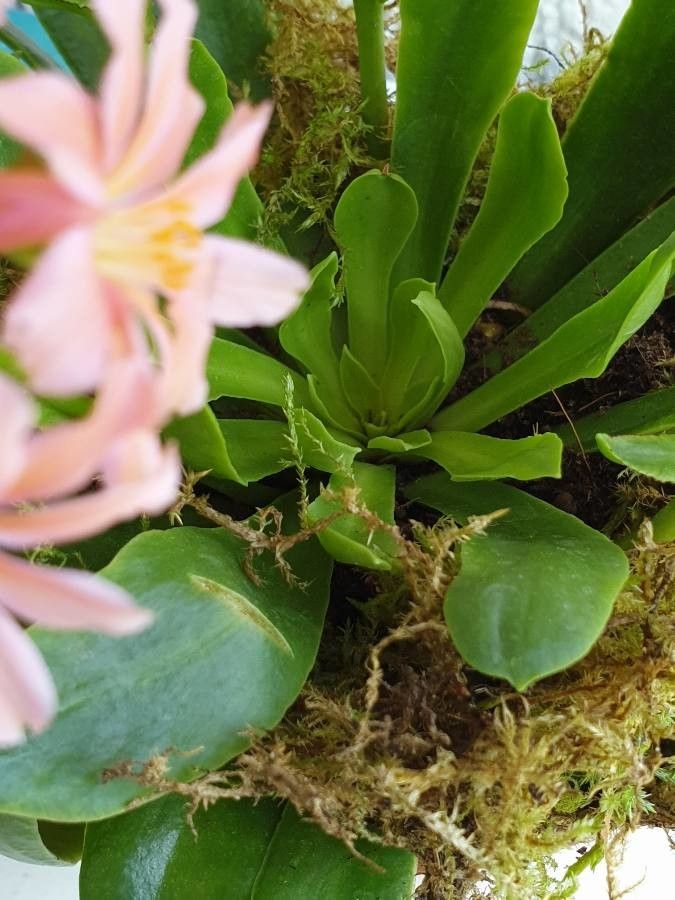
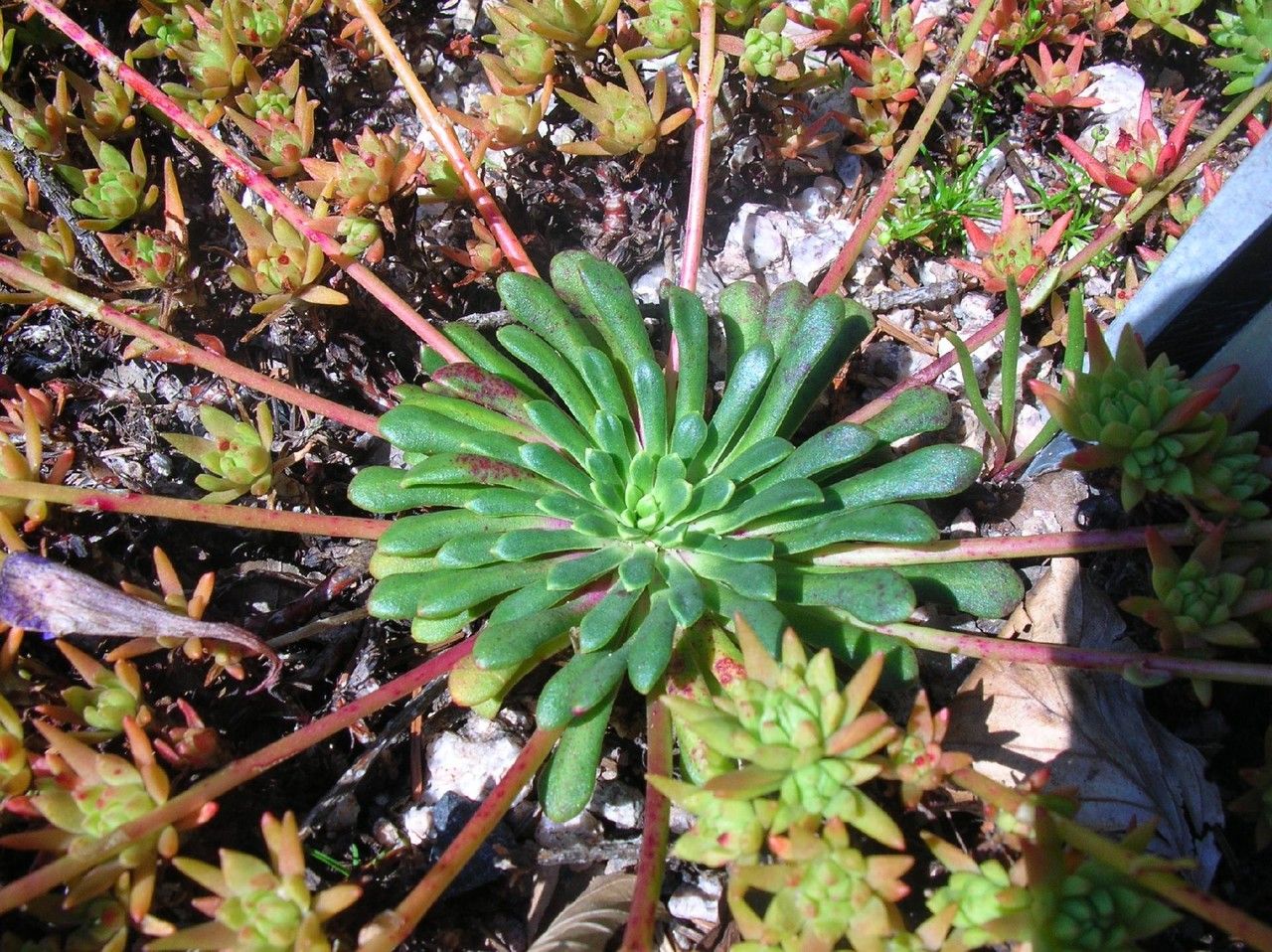
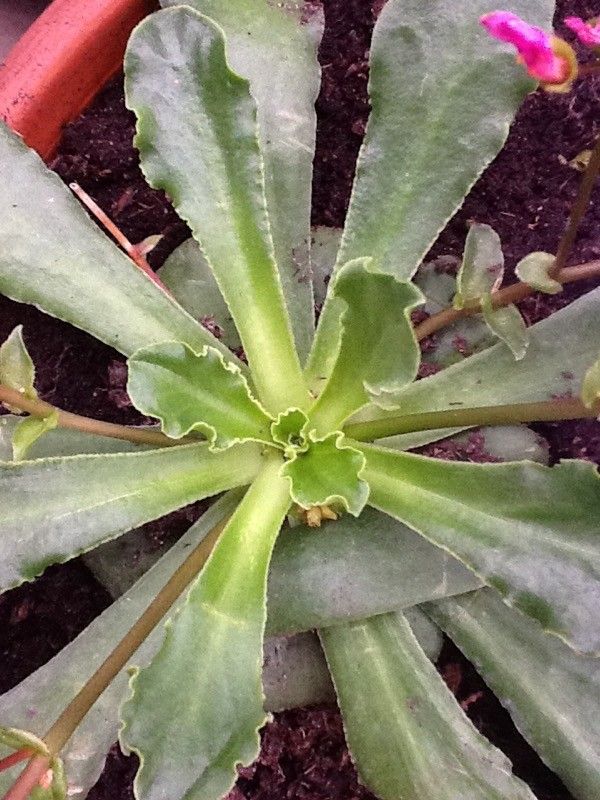
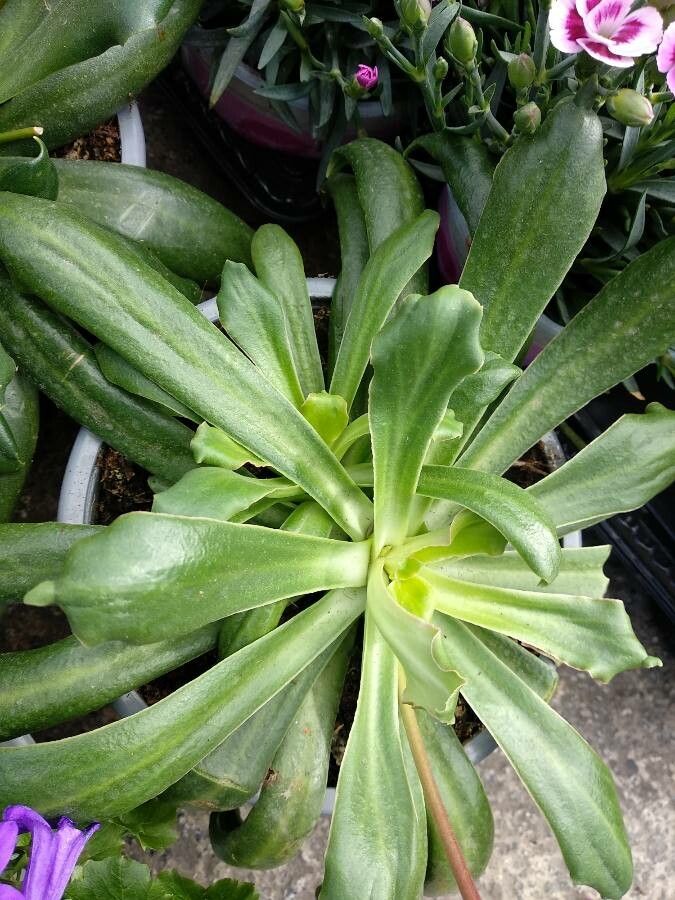
Lewisia kelloggii is a species of flowering plant in the family Montiaceae known by the common name Kellogg's lewisia. It is endemic to the Sierra Nevada of California, where it is known from several sites high in the mountains. It grows in rocky mountain habitat in granite and slate substrates. This is a perennial herb growing from a thick, short taproot and caudex unit. It produces a basal rosette of many thick, leathery, spoon-shaped leaves up to 9 centimeters long. The inflorescence bears several flowers, each on a very short stalk. The flower has 5 to 13 shiny white or pinkish petals just over a centimeter long. Under the petals are two sepals and two similar bracts lined with spherical resin glands. A population of Lewisia plants in the Sawtooth Range in Idaho were previously included in this species. Genetic analysis has shown that it is different enough to be considered a species of its own and has been named Lewisia sacajaweana, Sacajawea's bitterroot.
How to keep Lewisia Kelloggii.
Pruning
Pruning Kellogg's lewisia in early spring enhances both the plant's vigor and appearance. By removing dead foliage, you encourage bushy growth and improve its aesthetics. Pay special attention to leggy stems, making sure to use clean, sanitized tools for your cuts to prevent disease. This practice maximizes the plant's blooming potential and supports its overall health.
Botanical profile.
- Life Cycle
- Perennial
- Genus
- Lewisia
- Family
- Montiaceae
Other names.
Reader questions.
What are the sun requirements for Kellogg's lewisia?
Kellogg's lewisia (Lewisia kelloggii) thrives in conditions where it receives partial sun, meaning about 3-6 hours of sunlight daily. It's essential to observe the movement of sunlight through your garden carefully to find locations that offer an ideal mix of light and shade. This careful selection ensures that your plants remain happy and healthy.
What is Kellogg's lewisia?
Kellogg's lewisia, botanically known as Lewisia kelloggii, is a plant species with no additional details provided regarding its essential characteristics or symptoms. The provided information does not include descriptions of its appearance, habitat, or care requirements.