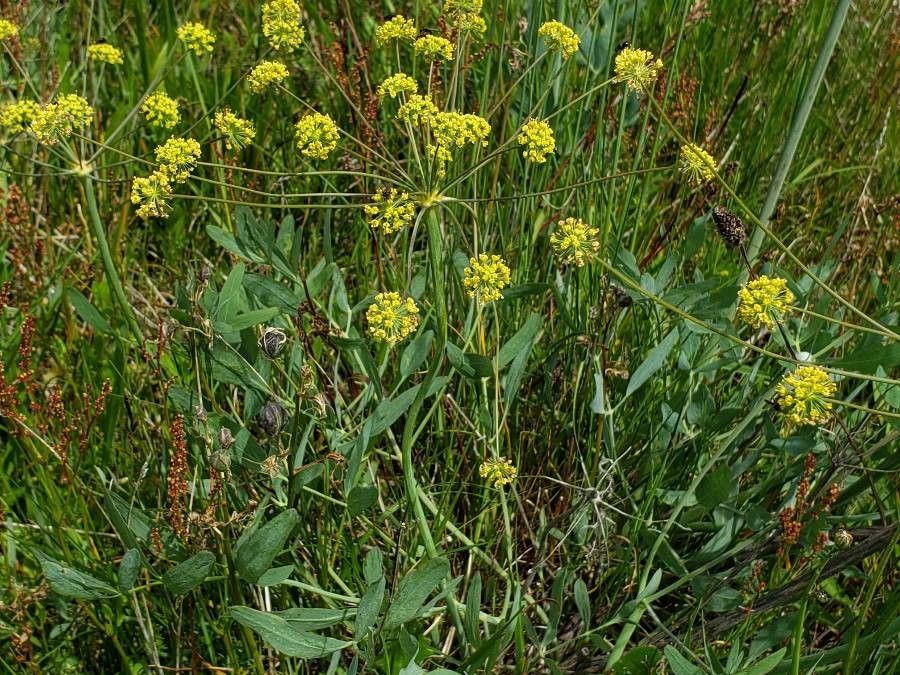
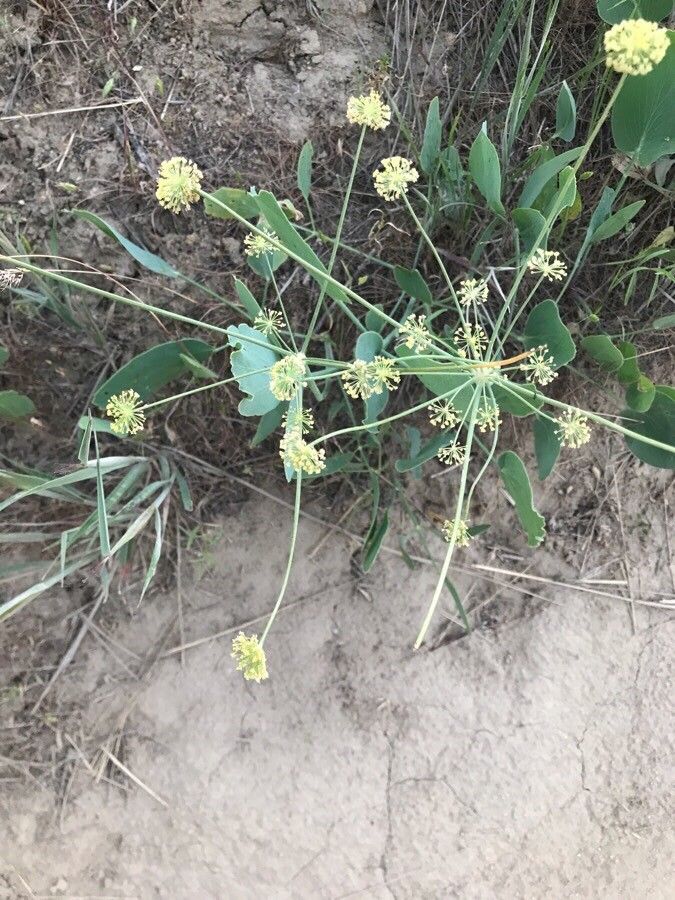
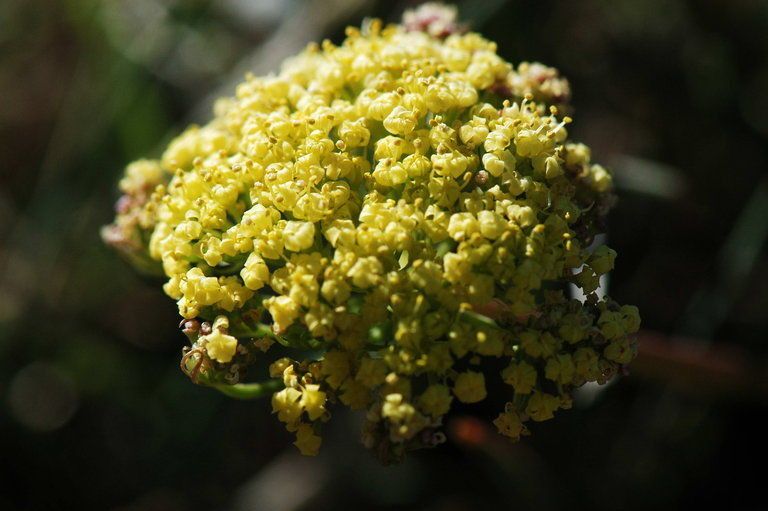
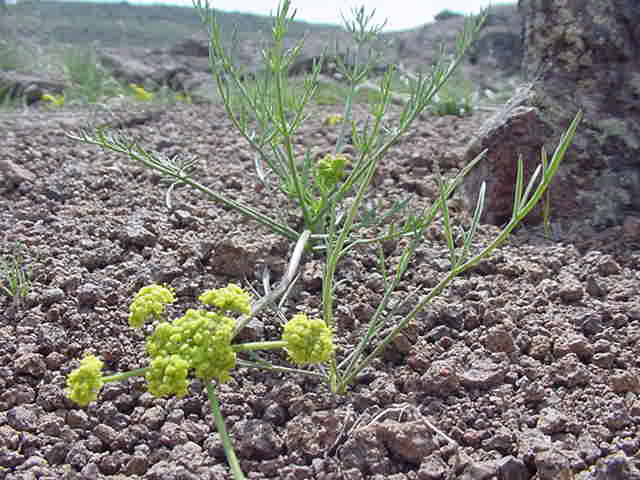
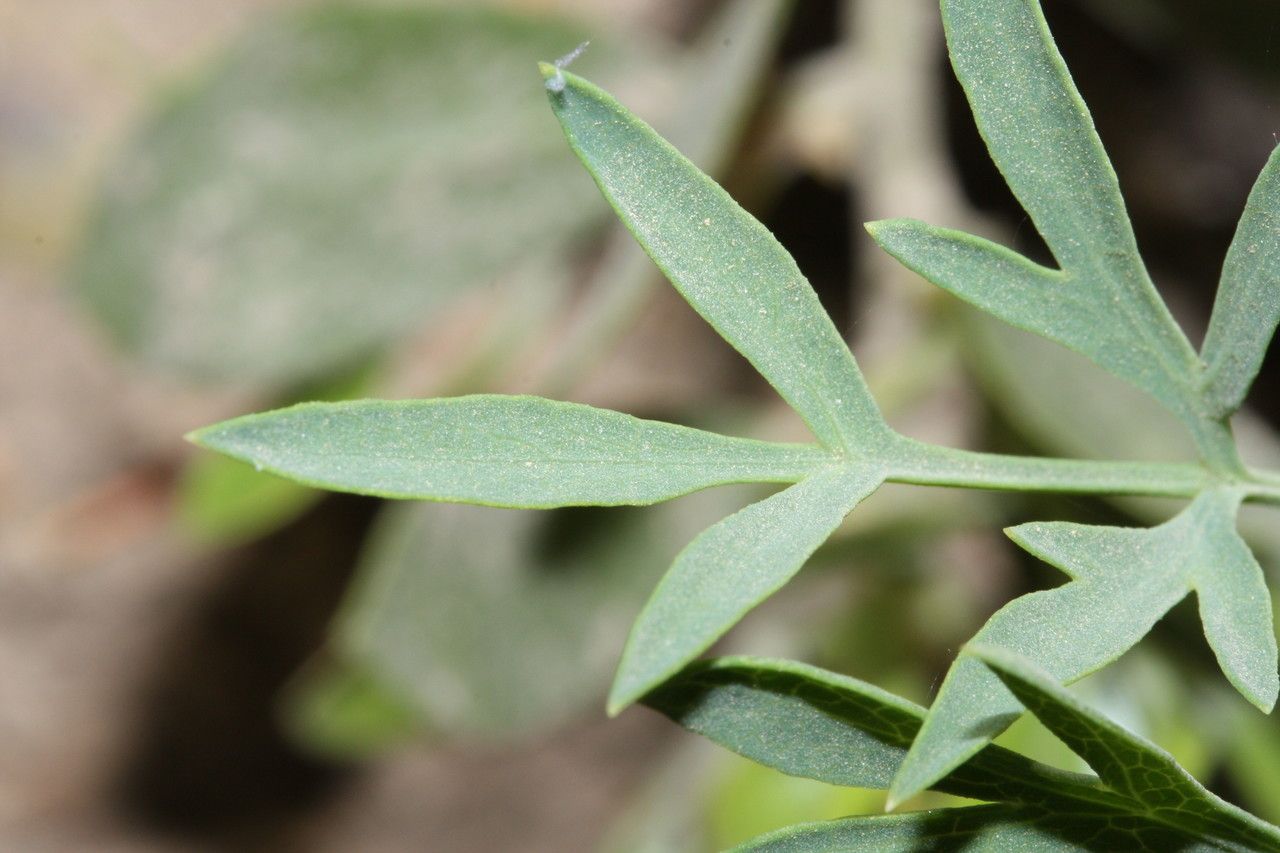
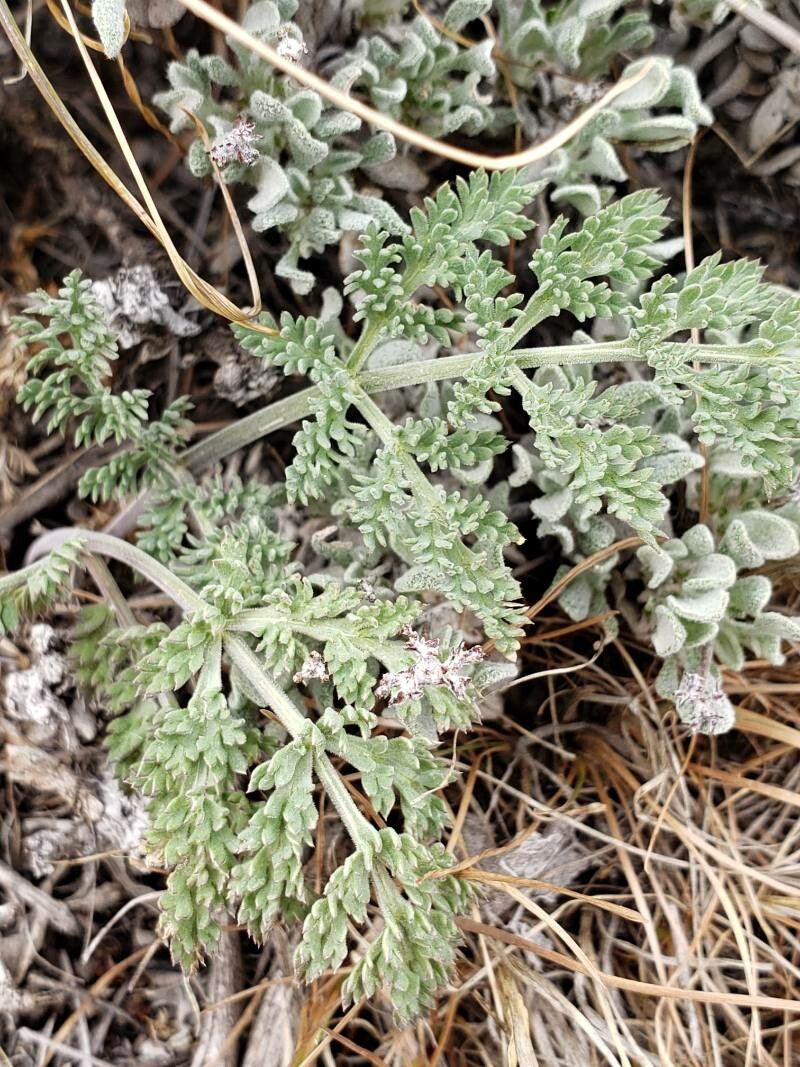
Lomatium nudicaule is a species of flowering plant in the carrot family known by the common names pestle lomatium,: 110 barestem biscuitroot, Indian celery and Indian consumption plant. It is native to western North America from British Columbia to California to Utah, where it is known from several habitat types, including forest and woodland. It is a perennial herb growing up to about 70 centimetres (28 in) tall from a thick taproot. It generally lacks a stem, the inflorescence and leaves emerging from ground level. The leaves are made up of many dull green, waxy lance-shaped leaflets each up to 9 cm long. The inflorescence is borne on a stout, leafless peduncle widening at the top where it blooms in an umbel of yellow or purplish flowers.
Barestem biscuitroot has strong disease resistance and is generally not prone to illness. However, it can be vulnerable to pests and diseases present in its environment. Such infections are typically mild. In terms of care, this plant needs a moderate level of maintenance. It should be pruned regularly to preserve a tidy appearance and support healthy growth. Applying fertilizer can also encourage flowering. Barestem biscuitroot is suitable for anyone with an outdoor area, such as a garden or patio, and does not require extensive care experience. It may need more attention when cultivated indoors.
How to keep Lomatium Nudicaule.
Light
Barestem biscuitroot is a sun-loving perennial herbaceous plant native to open habitats, where it often thrives in meadows and grasslands. It favors full sun but can tolerate partial sun conditions.
Water
Barestem biscuitroot flourishes in dry environments with little moisture, demonstrating excellent drought tolerance. It typically requires watering just once a week. Ideal for xeriscaping, this plant needs well-draining soil to prevent root rot. During the growing season, it absorbs more water to support its growth and development.
Temperature
Barestem biscuitroot naturally occurs in habitats where temperatures are ideally between 50 and 89.6 °F (10 to 32 °C). It prefers steady, moderate warmth and should be transferred to a cooler location if seasonal temperatures climb above this range.
Fertilizer
One fertilizer application in spring is generally enough for Barestem biscuitroot, although repeated feedings can boost growth. Apply fertilizer every month to six weeks. Fertilizing improves the leaves’ appearance and function, encouraging even color and a healthy texture. It also promotes root development and nutrient uptake, supporting the plant’s long-term health.
Pruning
Barestem biscuitroot benefits from light pruning, ideally done from early to late spring. To encourage healthy growth and prevent disease, trim away any dead or damaged stems, but avoid heavy pruning. For the best results and to maintain the plant’s health and appearance, use clean, sharp tools.
Botanical profile.
- Plant Type
- Herb
- Life Cycle
- Perennial
- Genus
- Lomatium
- Family
- Apiaceae
- Hardiness Zone
- 6-8
- Mature Height
- 25 cm to 76 cm
- Mature Spread
- 61 cm
- Leaf Color
- Green
- Leaf Type
- Deciduous
- Flower Color
- Yellow
- Flower Size
- 6.35 cm to 20.32 cm
- Bloom Time
- Early spring, Mid spring
- Planting Time
- Spring, Summer, Autumn
- Harvest Time
- Early summer, Mid summer
Other names.
Reader questions.
How should I water my Barestem biscuitroot during different stages of growth?
The water needs of the Barestem biscuitroot can vary depending on its growth stages. In the early years or after transplanting, it requires more water to support the development of new roots and future growth. These young roots benefit from slightly higher moisture levels. As the plant matures over a few seasons, its water requirements decrease. Additionally, during the bloom period, the flower development of the Barestem biscuitroot relies on a significant amount of moisture, so providing extra water during this time may be necessary.
What are the sunlight requirements for Barestem biscuitroot?
Barestem biscuitroot is a perennial herbaceous plant that thrives in open habitats such as meadows and grasslands. It prefers full sun, requiring more than 6 hours of sunlight daily, but can also tolerate partial sun conditions, which means about 3-6 hours of sunlight. It's essential to observe the movement of sunlight through your garden to choose the best spots that offer the right balance of light and shade, ensuring the plant's happiness and growth.
What is the ideal temperature range for Barestem biscuitroot?
Barestem biscuitroot flourishes in environments where the temperature ideally falls between 50 to 89.6 °F (10 to 32 °C). It prefers consistent moderate warmth throughout its growing season. If temperatures exceed this range over seasons, it's advisable to move the plant to a cooler area to maintain its health.
How does artificial lighting support plant growth indoors?
Indoor plants, including Barestem biscuitroot, require adequate lighting to grow optimally. When natural sunlight is insufficient, particularly during winter or in less sunny spaces, artificial lights become crucial. They promote faster, healthier growth by providing vital light. LED lights are a popular choice as they can be customized to provide specific wavelengths needed by plants. Full sun plants need 30-50W/sq ft of artificial light, partial sun plants require 20-30W/sq ft, and shade plants need 10-20W/sq ft. The light source should be placed 12-36 inches above the plant, mimicking natural sunlight, and most plants benefit from 8-12 hours of light per day.
How does Barestem biscuitroot respond to cold weather?
Given its strong cold resistance, Barestem biscuitroot usually does not require special frost protection measures during winter. However, in extreme cases where winter temperatures are expected to fall below -25°C, protective measures are important to shield the plant. Covering it with soil or straw can provide needed cold protection. Additionally, watering the plant abundantly before the first freeze in autumn to maintain soil moisture can help prevent drought and support the plant through winter and early spring.
What are the symptoms of inadequate light for Barestem biscuitroot?
When Barestem biscuitroot is placed in environments with inadequate lighting, several symptoms may emerge. These include smaller new leaves, leggy or sparse growth, faster leaf drop, slower or halted new growth, lighter-colored or chlorotic leaves, sunscald, leaf curling, wilting, and leaf scorching. These symptoms indicate the plant's struggle with insufficient light, affecting its overall health and ability to photosynthesize effectively.
What should I do if the Barestem biscuitroot experiences temperatures below -25°C?
While Barestem biscuitroot is generally cold-tolerant, temperatures falling below -25°C may lead to issues such as a decrease in springtime sprouting or no sprouting at all. In the spring, it's recommended to inspect the plant and remove any parts that have failed to sprout to encourage new growth.
How can I address insufficient sunlight exposure for Barestem biscuitroot?
To improve growth conditions for Barestem biscuitroot facing insufficient sunlight, gradually introduce the plant to sunnier areas. For indoor plants, this could mean moving the plant closer to a south-facing window or using artificial light, such as desk lamps or grow lights, for at least 8 hours daily. For outdoor plants, relocate them to brighter spots gradually to avoid sunburn. Removing obstructions that block sunlight or transplanting to a location with better light and drainage can also help. While parts of the plant that suffered might not recover, new growth should be healthy with increased light exposure.
How does high temperature affect Barestem biscuitroot and how can I mitigate it?
During summer, it's crucial to ensure that Barestem biscuitroot is not exposed to temperatures above 32°C. Exceeding 35°C can cause the plant's leaves to lighten in color, curl, become prone to sunburn, and in severe cases, lead to the entire plant wilting and drying out. To mitigate these effects, trim away sunburned and dried parts of the plant. If possible, move the plant to a shaded area, especially from the midday and afternoon sun, or utilize a shade cloth. Additionally, watering the plant in the morning and evening can help keep the soil adequately moist.